Can You Plant Tomatoes and Carrots Together? A Farmer’s Guide
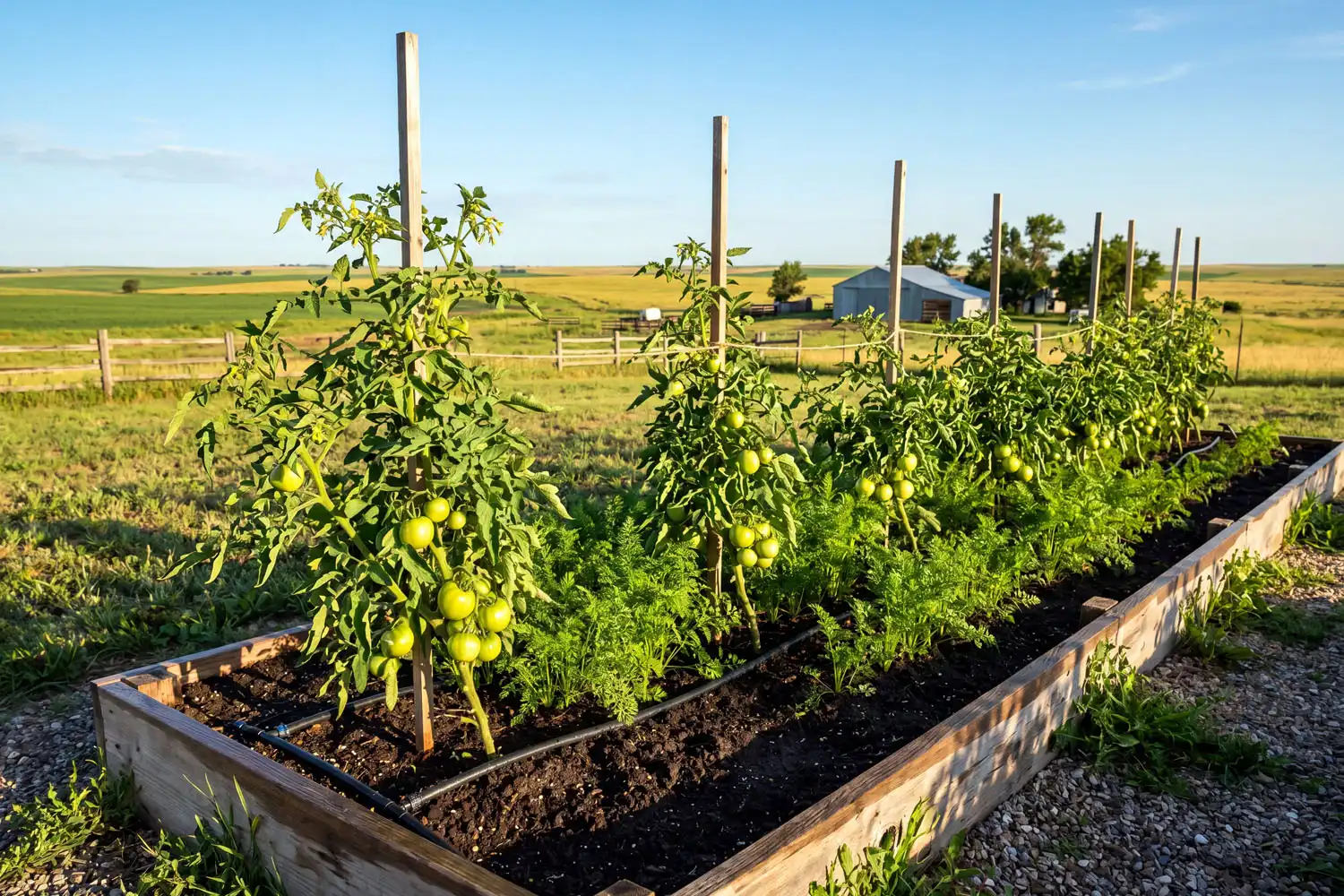
Tomatoes and carrots share a bed better than most crop pairs. One grows tall and feeds heavy. The other stays low and wants little nitrogen. So can you plant tomatoes and carrots together without stunting either crop?
Yes, you can plant tomatoes and carrots together. Carrots grow down, tomatoes grow up, so they rarely compete. Seed carrots when you set out transplants, then harvest the roots before the tomato canopy shades them out.
Why Tomatoes and Carrots Work Well Together
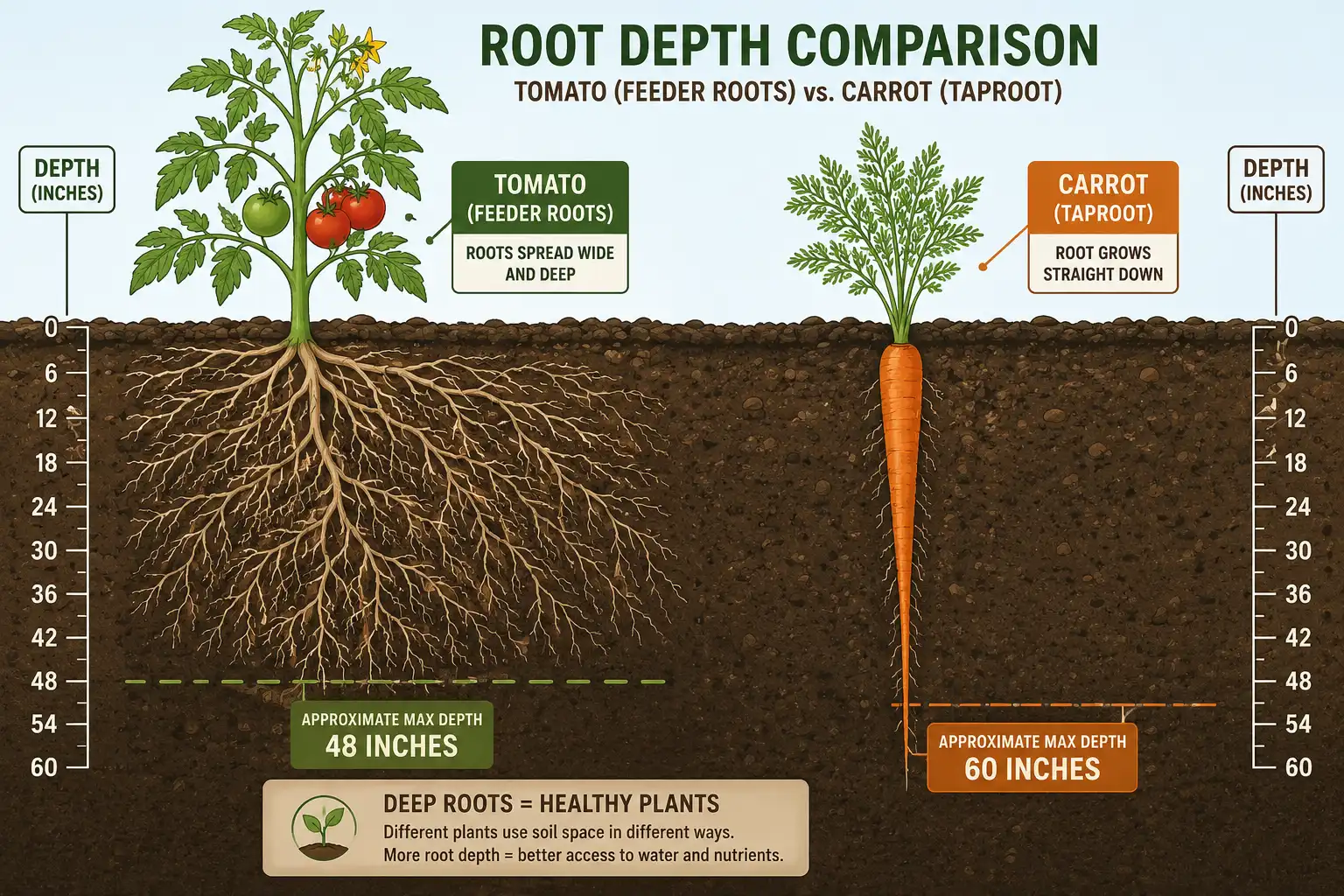
These two crops fill different space above and below ground. Tomatoes climb. Carrots dig. A tomato plant sends most of its mass upward on a stake or in a cage, while its feeder roots spread wide and deep. A carrot drives a single taproot straight down and keeps a small leafy top. Because they hold separate zones, they rarely fight over the same square inch.
Tomatoes also throw shade. Carrots turn bitter and bolt-prone in hard summer heat, so a little broken shade from a tomato plant keeps the roots sweeter. The carrots, in turn, break up the top few inches of soil as they swell. That loosening helps water and air reach tomato roots.
Timing is the real win. Carrots run 60 to 80 days from seed to harvest. Tomatoes need the whole season. So you seed carrots the same week you set out transplants, pull the roots in summer, and the tomatoes take over the bed right as they need the room. You grow two crops in the space of one.
The Truth About “Carrots Love Tomatoes”
The pairing got famous from Louise Riotte’s 1975 book, Carrots Love Tomatoes. Plenty of the old companion claims hold up, and a few do not. I want you to know the difference before you plant.
The solid part: interplanting saves space, the shade helps carrots in heat, and the different root depths cut competition. Extension programs back the space-saving logic. K-State Research and Extension and others treat companion planting as a useful starting point, not a hard rule.
The shaky part: you will read that tomatoes give off solanine that guards carrots from pests. That claim has thin evidence behind it. Do not count on your tomatoes to protect a carrot crop. If carrot rust fly shows up, you handle it directly. Companion planting is not an exact science, and results shift from one field to the next. Treat the pairing as a smart use of space, not a pest-control plan.
How to Plant Tomatoes and Carrots Together
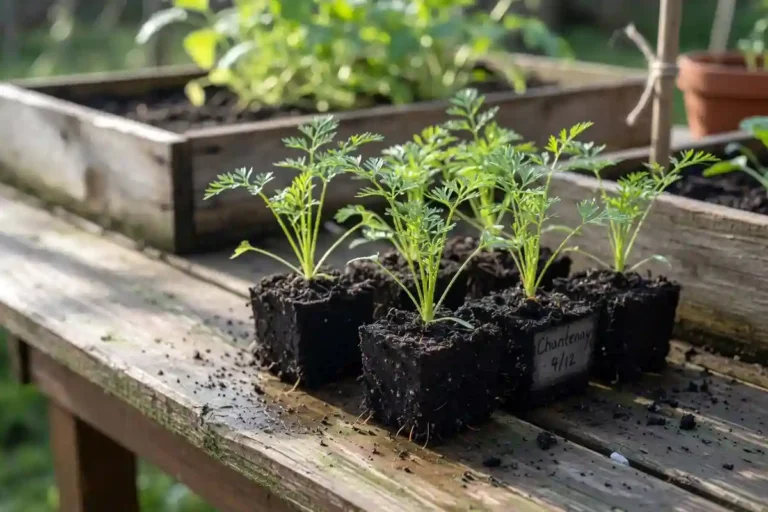
Start the carrots from seed and the tomatoes from transplants, set on the same day. Here is the order I follow on my own beds.
When Do You Plant Each One?
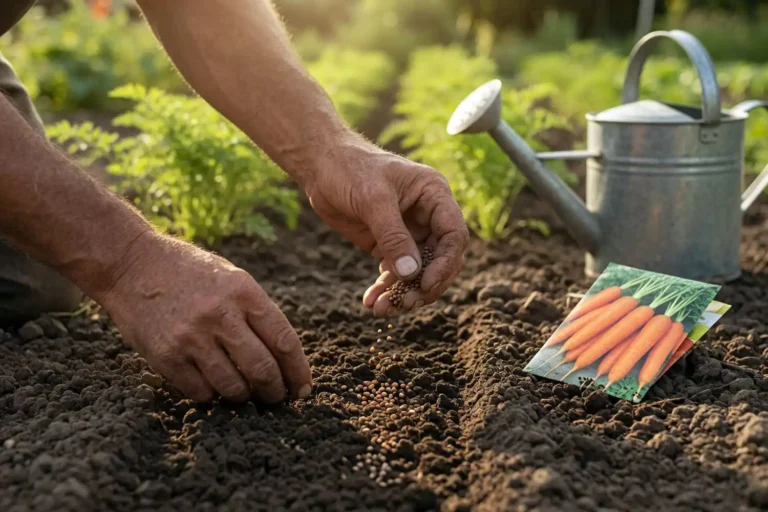
Plant them together once the soil warms and your last frost has passed. Carrots germinate in cool soil down to about 45°F, while tomato transplants want soil near 60°F before they go out. So I wait for warm soil, set the tomato transplants, then direct-seed carrots in the open rows between them the same afternoon. Check your USDA hardiness zone for your local frost window before you decide when to set out tomato transplants.
How Far Apart Should You Space Them?
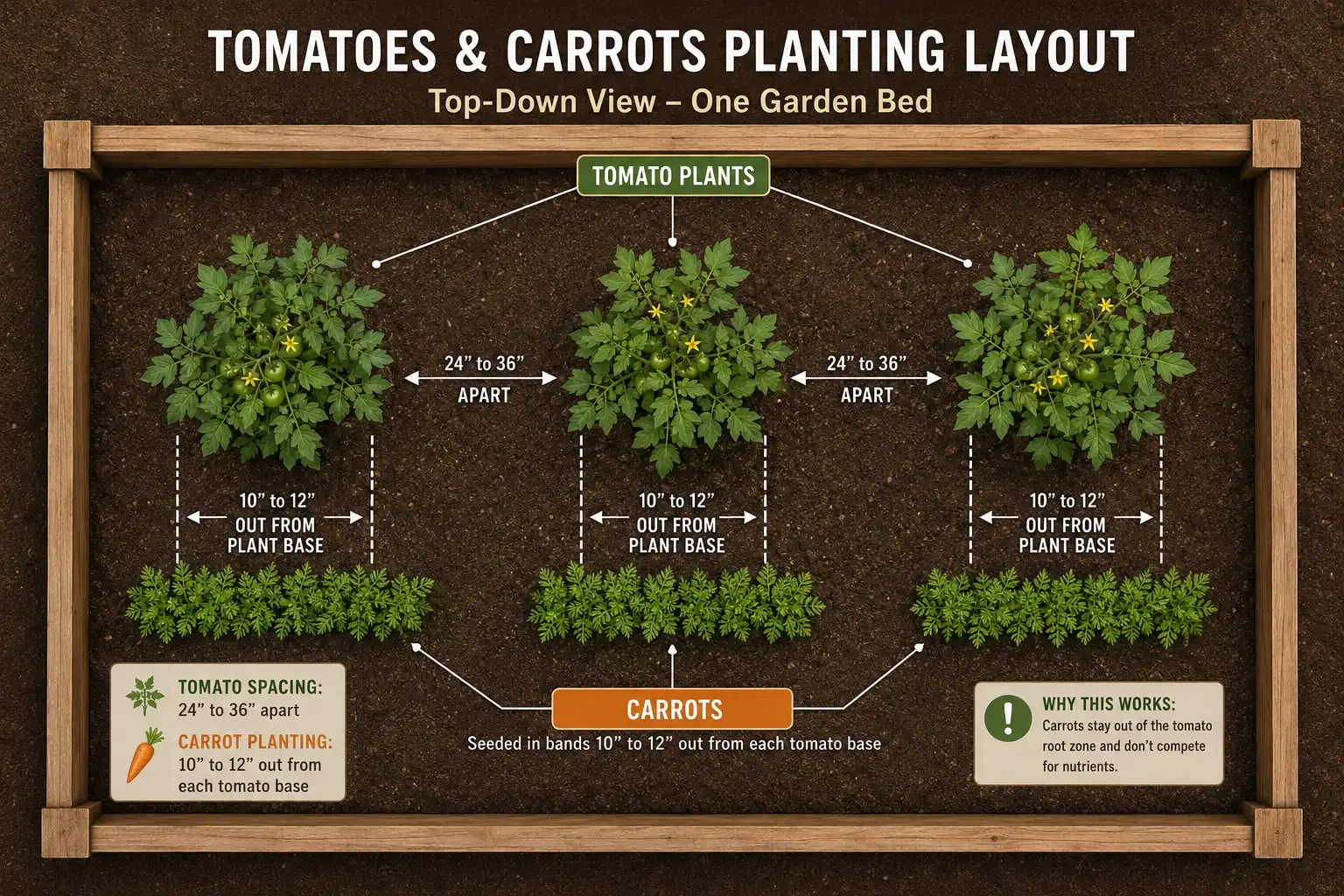
Keep carrots 10 to 12 inches out from the base of each tomato plant. Any closer, and tomato roots crowd the carrot taproots and leave you with short, forked roots. Space tomatoes at their normal 24 to 36 inches apart, then fill the gaps with bands of carrots. Sow the carrot seed thin so you thin less later. Good gaps also keep air moving, which cuts disease pressure on the tomatoes. The same rules that apply when you are spacing your crops anywhere else apply here.
Getting the Soil Right for Both
Work the bed loose and deep before you plant. Carrots need 10 to 12 inches of soft, rock-free soil to grow straight, and tomatoes root deep too, so a well-worked bed serves both. Pull out stones and break up clods. Mix in finished compost, never fresh manure. Fresh manure dumps nitrogen that forks your carrots and pushes leafy tomato growth at the cost of fruit.
The Nitrogen Problem Nobody Talks About
Carrots and tomatoes disagree on nitrogen, and that is the one thing that trips people up. Carrots want little nitrogen. Too much, and you get lush tops sitting over thin, hairy, forked roots. Tomatoes feed harder and pay you back for steady feeding with more fruit. So you cannot broadcast a high-nitrogen blend across a shared bed.
Here is how I manage it. I prep the whole bed with a low-nitrogen mix like 5-10-10, which suits carrots fine. Then I feed the tomatoes on their own. I side-dress each tomato plant, keeping the fertilizer a few inches off the stem and well away from the carrot bands. That way the tomatoes get their nitrogen and the carrots never see it. If you want the full picture on feeding carrots for sweeter roots, match the same low-nitrogen approach.
Watering Two Crops in One Bed
Both crops want steady, even moisture, so they share a watering plan well. Carrots need one deep soak a week so water reaches the bottom of the root. Shallow watering leaves you with stunted or split carrots. Tomatoes want consistent moisture too. Swings from dry to soaked cause cracking and blossom end rot. So I water deep and on a schedule rather than light and often. A layer of mulch holds that moisture in and keeps weeds down. The habits behind watering tomatoes correctly keep the carrots happy at the same time.
How Much Shade Is Too Much for Carrots?
Light shade helps carrots, but heavy shade shrinks them. Carrots still need six or more hours of sun to size up. A staked tomato or a determinate variety throws light, broken shade that keeps carrots cool without starving them. A big indeterminate tomato left to sprawl can blanket the whole bed and stall your carrots. So train tomatoes up a stake or cage and clear the carrots before the canopy gets dense. If you are unsure whether carrots want sun or shade, aim for full sun and treat the tomato shade as a summer bonus, not the goal.
Harvesting Carrots Without Disturbing Tomato Roots
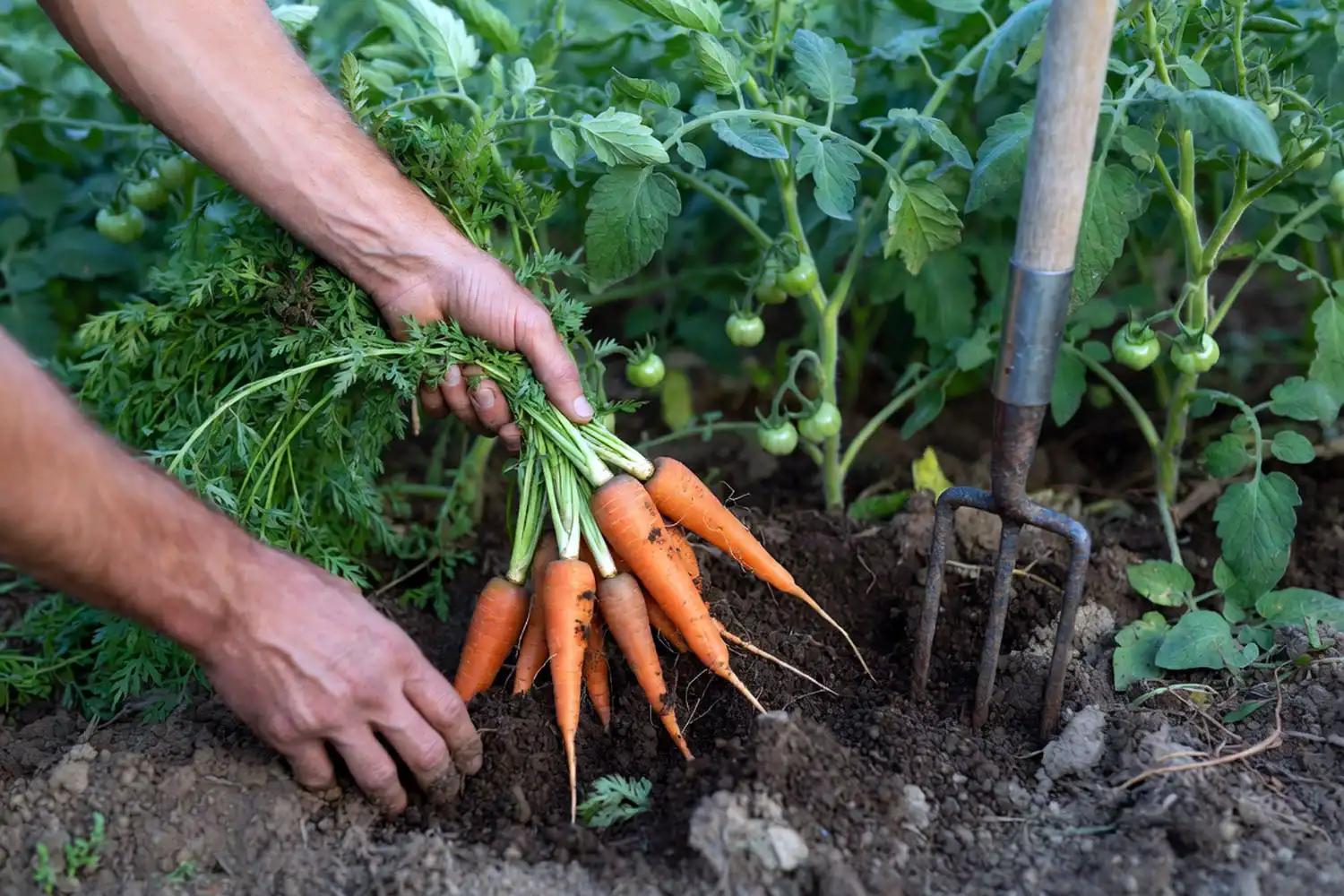
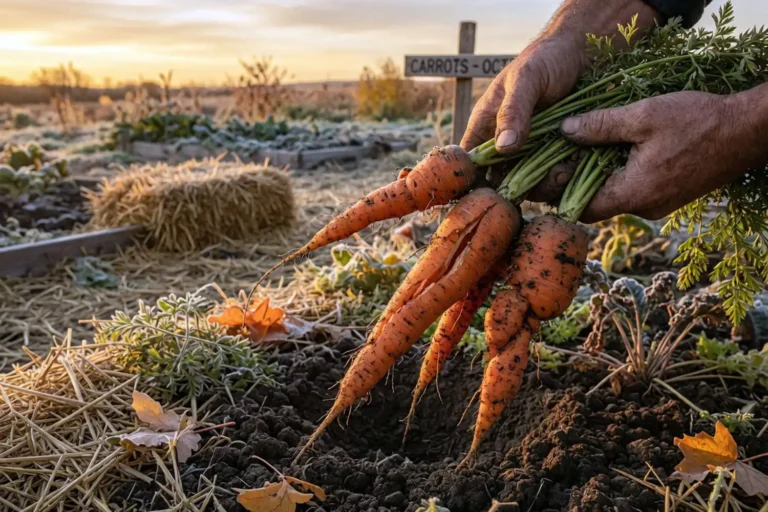
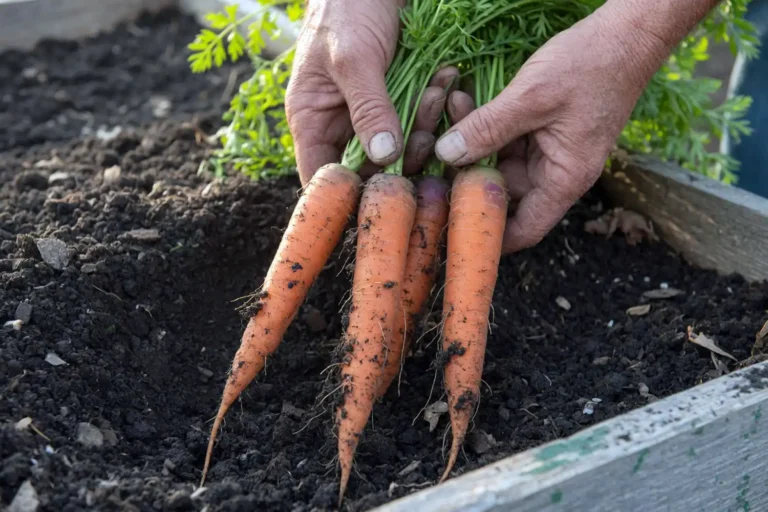
Pull carrots gently and loosen the soil first so you do not tear nearby tomato roots. I water the bed the day before, then ease a fork in away from the tomato base and lift. Twist and pull each carrot rather than yanking it. Harvest the carrots first, through summer, while the tomatoes are still filling out. By the time you clear the carrots, the tomatoes have the whole bed to themselves for their long finish.
What Not to Plant Nearby, and Better Partners
Keep mature dill out of this bed. Dill and carrots both belong to the Apiaceae family, so they cross-pollinate, and mature dill releases compounds that stunt both carrots and tomatoes. Dill also draws carrot fly straight to your roots. Fennel causes the same trouble, so leave it out too.
Better partners earn their keep. Onions, garlic, and chives give off a scent that repels carrot rust fly and aphids, and their shallow bulbs do not crowd carrot taproots. So I tuck alliums along the edges. Basil pairs well with tomatoes and helps screen the crop from some pests. Onions slide into this bed easily, the same way they do when you pair onions with tomatoes on their own.
What This Looks Like on My Farm
I treat this pairing as a space play, not a magic combo. Set tomato transplants, seed carrots 10 to 12 inches off each stem the same day, and keep the bed loose. Feed the tomatoes by side-dressing so the carrots stay on low nitrogen. Water deep, train the tomatoes up, and pull the carrots through summer before the canopy closes in. Do that, and one bed gives you two crops without either one losing out.