What Happens If You Don’t Harvest Carrots in Time
Carrots left in the ground don’t just sit there waiting. They keep changing. What happens if you don’t harvest carrots depends on timing. A few extra weeks can sweeten them. A full season pushes them woody, cracked, and eventually into flowering.
What happens if you don’t harvest carrots changes by the week. Light frost sweetens them. Left longer, the roots turn woody and crack. In year two, they bolt, flower, and become too tough to eat.
What Happens If You Don’t Harvest Carrots?
Leave carrots in the ground and they move through a clear sequence. Cold weather sweetens the roots first. After that, the roots keep swelling, turn woody, and start to split. Pests and rodents move in next. If the roots make it through winter, the plant shifts into its second year. Then it bolts, flowers, and the root goes dry and bitter.
So the outcome depends on how long you wait. A short delay actually helps the crop. A long one wastes it.
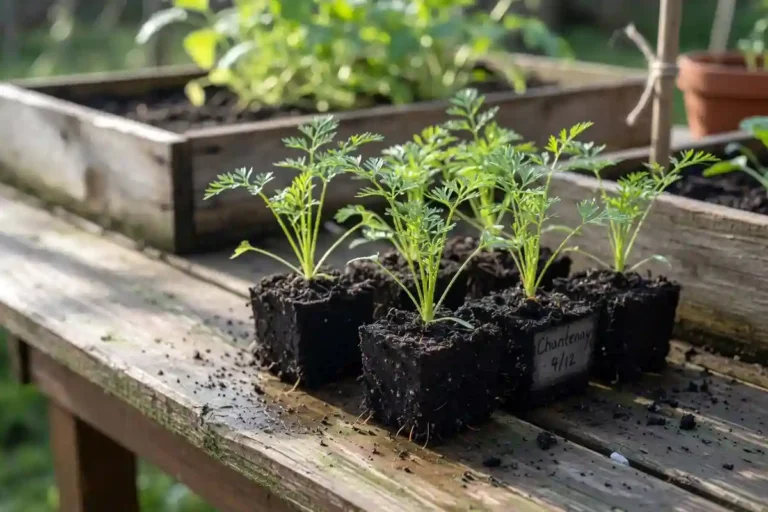
Learn more: Transplant Carrots
Why Carrots Behave This Way
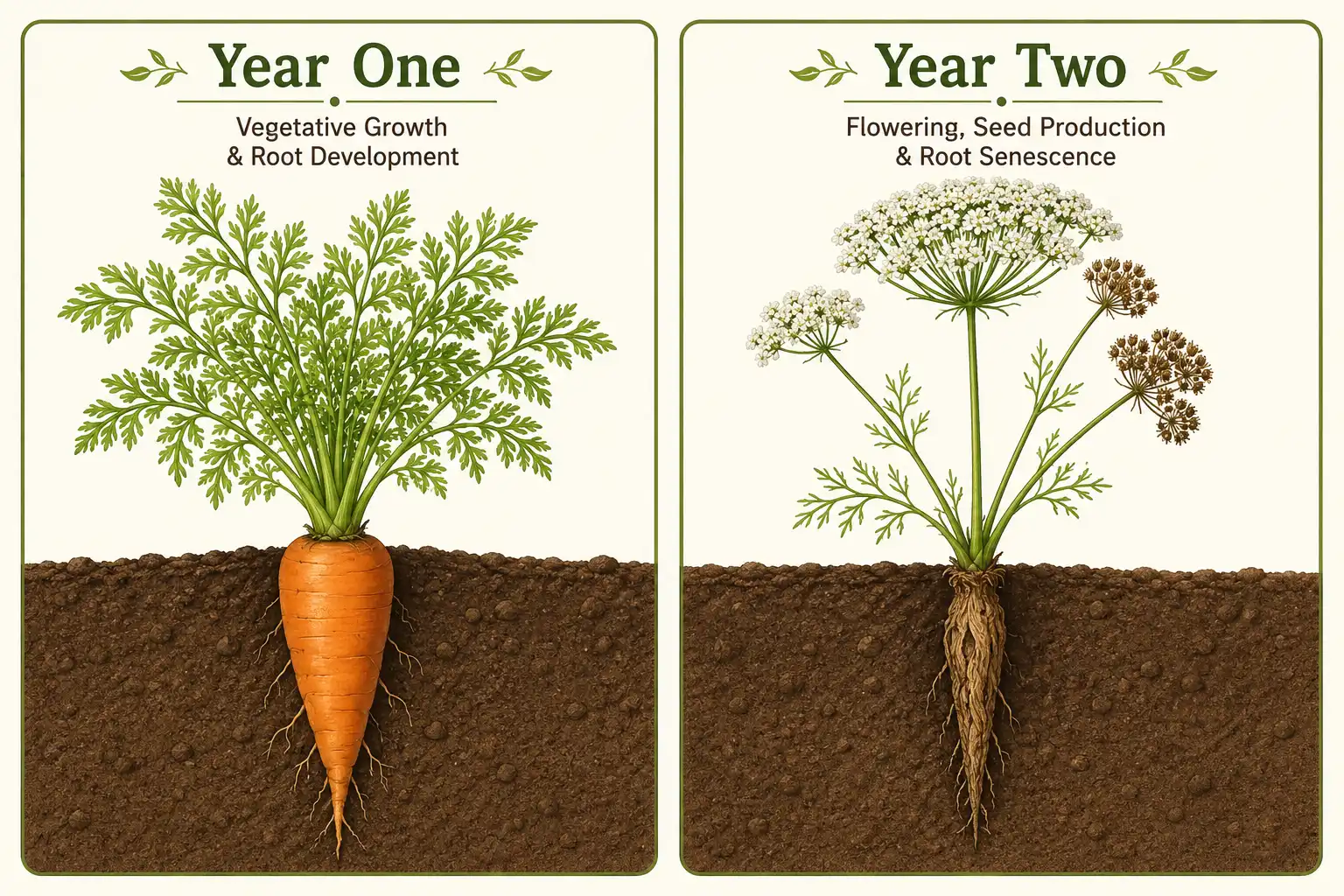
Carrots are biennials. That single fact explains almost everything that follows. A biennial completes its life over two growing seasons, not one.
In year one, the plant does one job. It builds a big food reserve in the taproot, which is the carrot we eat. In year two, after a cold winter, it spends that stored energy on flowers and seed. The root is just a fuel tank for the second year.
Botanists call the carrot Daucus carota. The wild version is the white roadside flower many people know as Queen Anne’s lace. Your garden carrot and that roadside weed are the same species. Leave a carrot long enough and it will try to become that flower.
Do Carrots Get Sweeter If You Leave Them in Cold Weather?
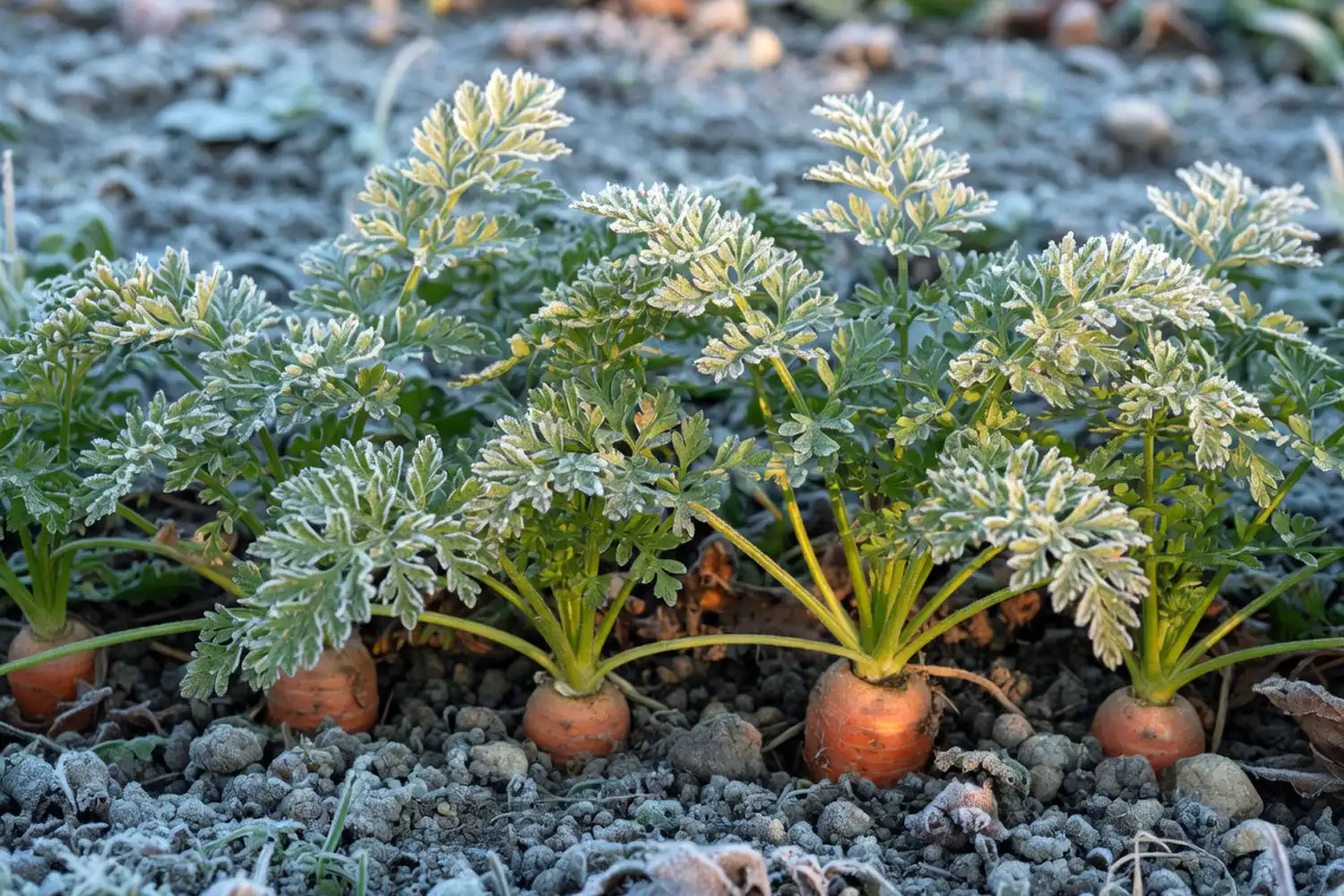
Yes, carrots get sweeter when you leave them through cold weather. This is the one real upside of waiting. As soil temperatures drop below 40°F, the root turns stored starch into sugar. That sugar acts as a natural antifreeze. The payoff is a crisper, sweeter carrot.
Light frost is the trigger. After the first few fall frosts, carrots pulled then beat anything harvested in summer. The tops may flop or yellow, but the root stays protected underground.
So rushing the fall harvest is not recommended. Just know that how cold carrots can tolerate depends on the variety and how slowly the cold set in. Established roots shrug off light frosts. A sudden hard freeze on unconditioned plants is a different story.
When Do Unharvested Carrots Turn Woody and Bitter?
Carrots turn woody once they grow well past maturity and the cold sweetening window closes. Sweetness is temporary. Hold them too long and texture goes the other way.
Here is what happens inside the root. The central core, the woody xylem, enlarges as the carrot ages. That core gets fibrous and tough. Big, over-mature roots have the largest, woodiest cores. Smaller, properly timed roots stay tender.
Flavor shifts too. Past their prime, carrots lose their crisp snap and pick up a dull, sometimes bitter taste. Long storage in warm soil makes it worse. So bigger is not better with carrots. A carrot left for months is usually tougher and blander than one pulled on time.
Why Over-Mature Carrots Crack, Split, and Rot
Over-mature carrots split because the root cannot handle uneven moisture. The fix is steady watering, but late in the season that control slips.
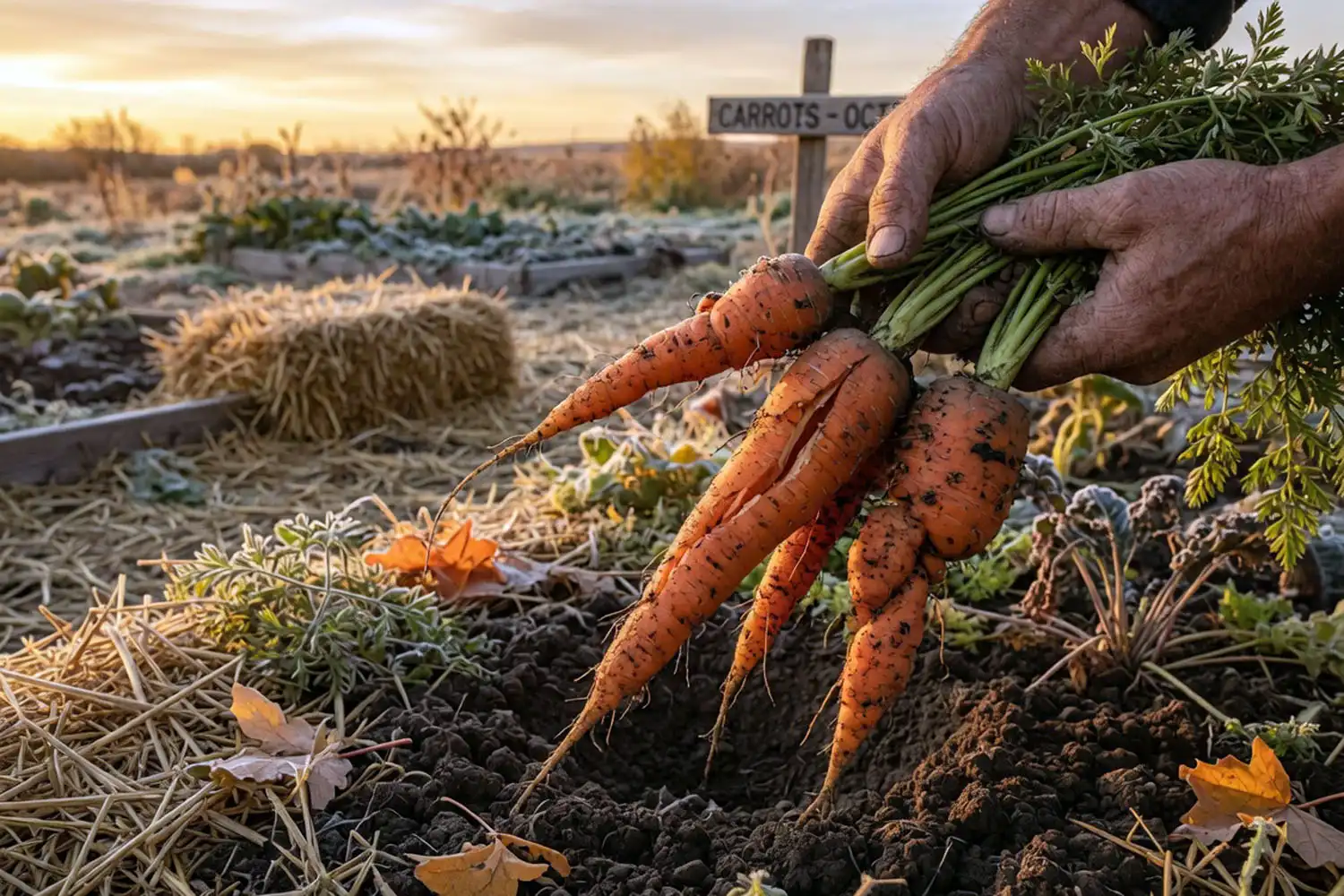
Here is the common pattern. The soil dries out. Then a heavy rain or a big watering hits. The root drinks fast and swells, and the outer layer splits open. Older, oversized roots crack the easiest because their skin has less give.
Splitting opens a door. Cracks let in soil, water, and rot. In wet, poorly drained ground, an over-mature carrot can soften and rot in place before you ever dig it. Keeping the water carrots need steady through the season prevents most of this. Once the roots are mature, pull them before the fall rains do the damage.
Pests and Rodents That Find Unharvested Carrots
The longer carrots sit, the more pests and rodents find them. Time in the ground is the risk. Every extra week is another chance for damage.
Carrot rust fly is the big one. The larvae tunnel into the roots and leave rusty brown trails packed with waste. Late season carrots take the worst of it because the fly has had multiple generations to build up. Wireworms bore narrow holes through the flesh. Slugs chew the shoulders where the root meets the soil.
Then there are the diggers. Voles, mice, and gophers tunnel along the rows and eat roots from below. A bed that looked full in October can be half hollowed out by January. Mulch makes overwintering possible, but it also gives rodents cover. So check your rows and trap if you see runs.
Can You Leave Carrots in the Ground Over Winter?
Yes, you can leave carrots in the ground over winter, and it works as a storage method. This is the planned, smart version of not harvesting. The cold holds the roots dormant and sweet, and you dig them as you need them.
In most of the country, roughly USDA hardiness zones 3 through 9, a carrot root will not die over winter. It sits dormant and waits. The trick is keeping the ground diggable. Bare soil freezes solid, and you cannot pull a carrot out of frozen earth.
This is where mulch earns its keep. Covering the bed heavily once the soil starts to cool is a common approach in Kansas. Done right, in-ground carrots can outlast roots sitting in the basement. Still, it is not foolproof. A deep freeze with thin cover can damage the roots, and rodents work the rows all winter. For larger quantities, proper crop storage methods in a cool basement or root cellar give you more control.
How to Overwinter Carrots in the Ground
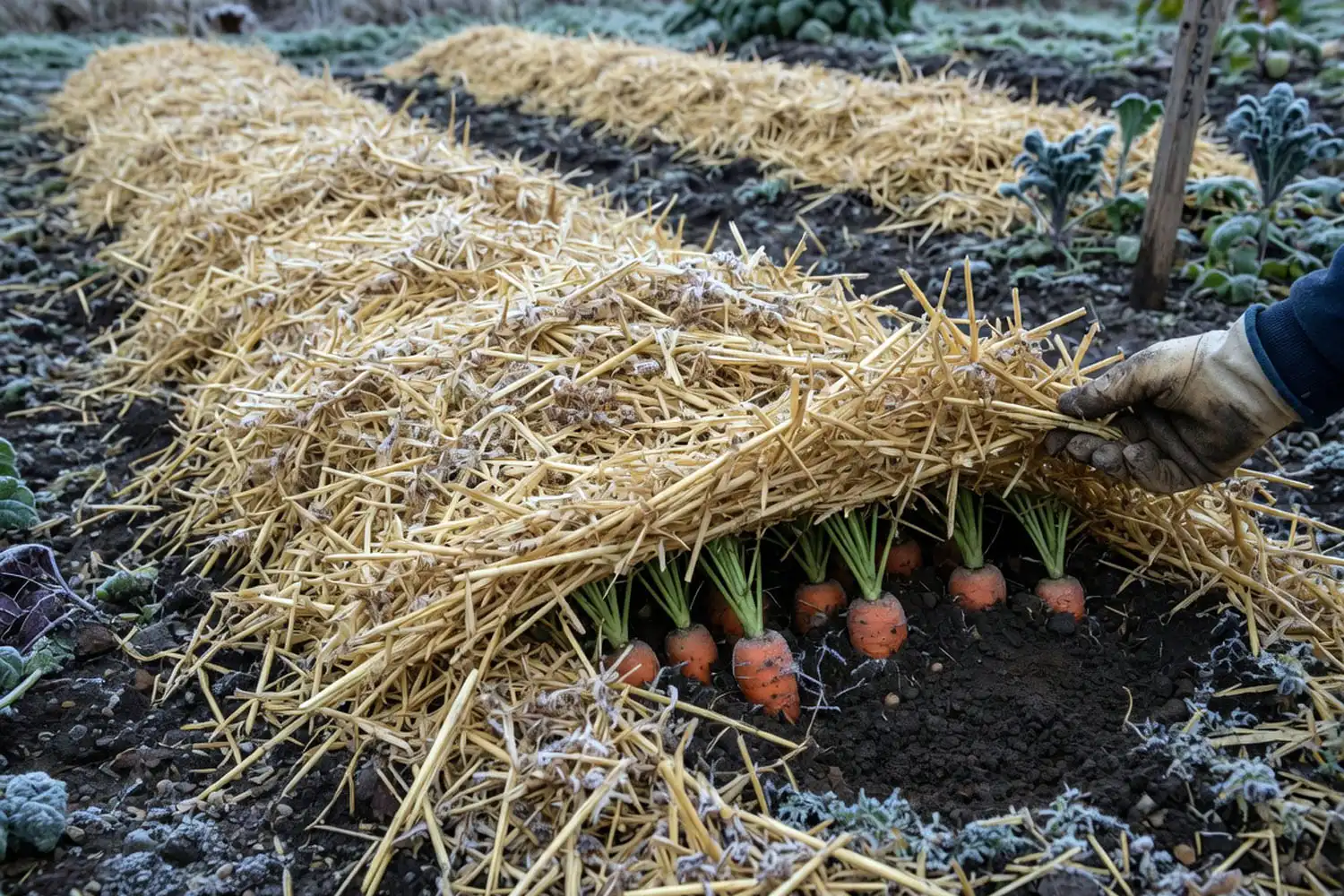
Overwinter carrots by insulating the bed before the ground freezes hard. Timing and mulch depth are everything. Here is the method.
Wait until the soil has cooled in late fall but before a hard freeze sets in. Cut the green tops back to about an inch. Pile 6 to 12 inches of loose, dry straw, shredded leaves, or hay over the entire row. Make the layer thick. Thin mulch will not stop a deep freeze.
When you want carrots, pull back the mulch, dig what you need, and re-cover the rest. A low tunnel or cold frame over the mulch adds another buffer in hard winter areas. Get every root out of the ground before spring growth starts. That timing matters for the next part.
What Happens to Carrots in Their Second Year?
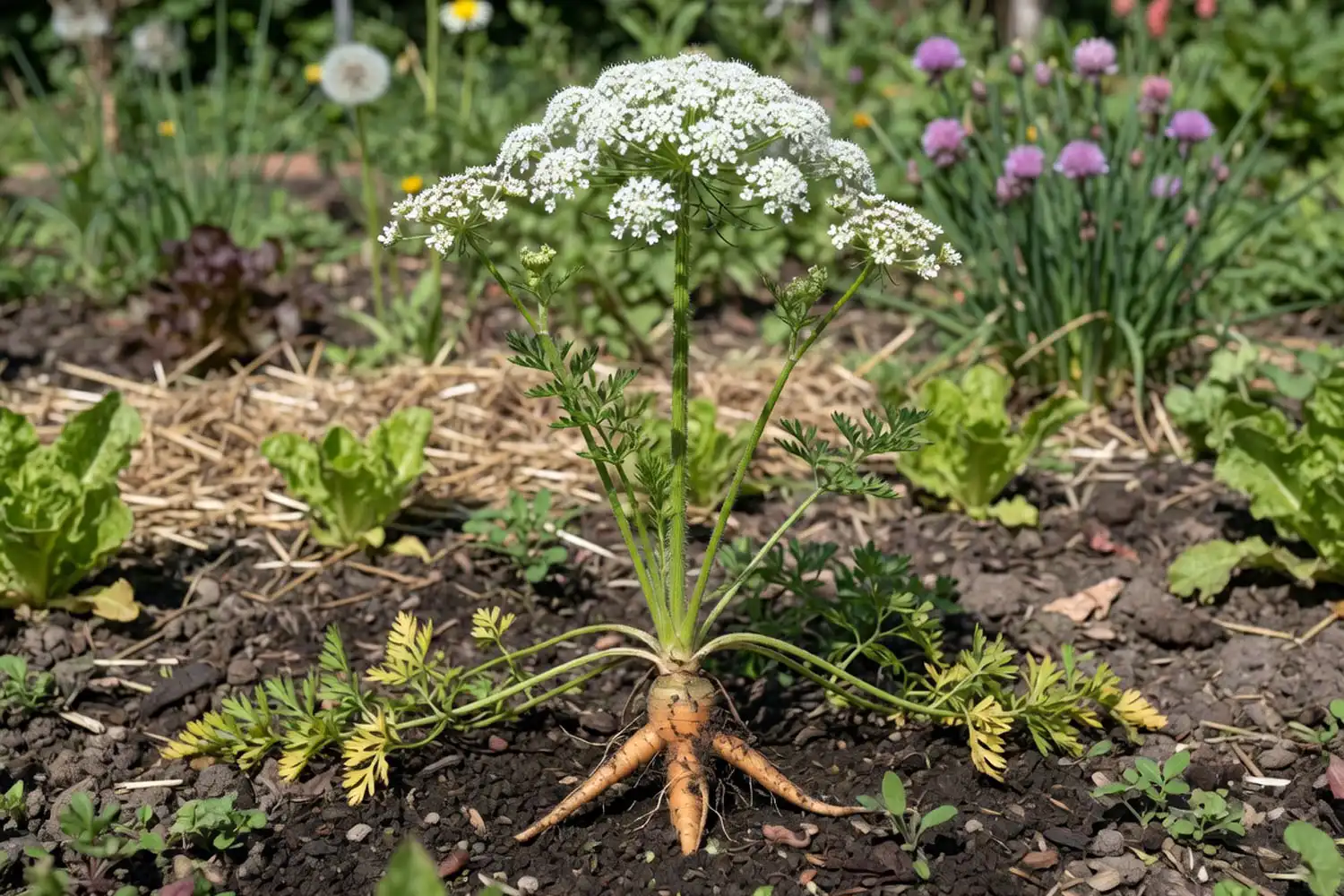
In their second year, carrots bolt, flower, and stop being food. After a winter in the ground, a surviving root reads the warm spring as its signal to reproduce. From that point, the root is finished for eating.
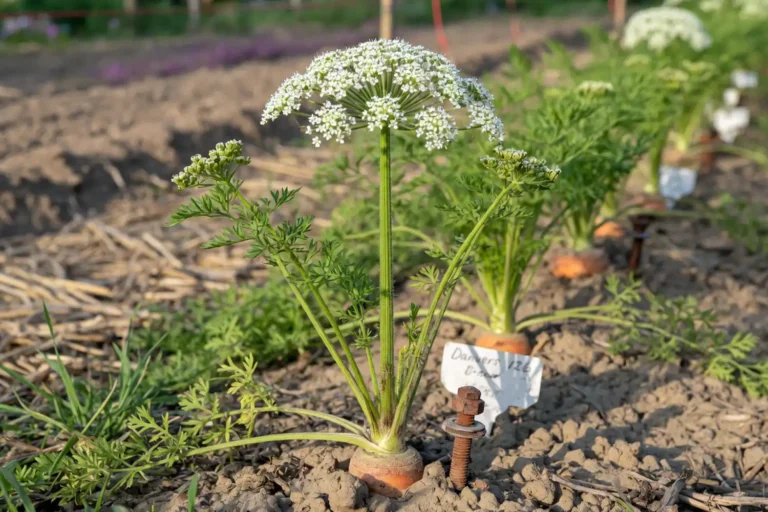
The process is called bolting. A cold winter followed by spring warmth triggers it, a response known as vernalization. The plant sends up a tall central stalk. The stalk opens into flat clusters of small white flowers called umbels. They look just like Queen Anne’s lace, because that is the wild form of the same plant.
Now look at the root. As the flower stalk grows, the plant pulls every bit of stored sugar out of the taproot to feed it. The once plump root turns thin and fibrous, and the taste goes bitter. By the time the flowers open, that carrot is woody and inedible. Stress can even push carrots to flower in their first year if young plants hit a cold snap then warm up. Either way, a flowering carrot is no longer a carrot you want to eat.
Should You Let Carrots Flower and Go to Seed?
Let carrots flower only if you want pollinators or seed, not food. The choice comes down to your goal. The root is already lost once a plant bolts, so you lose nothing by letting a few finish.
Those white umbels feed bees, hoverflies, and other beneficial insects all season. Leave a couple of bolted plants standing at the edge of the patch for that reason alone. If you want seed, let the flowers mature and dry on the stalk, then collect the seed heads.
One warning on saved seed. Hybrid carrots will not grow true from collected seed. Carrots also cross readily, including with any wild Queen Anne’s lace nearby, so the next generation can surprise you. Open-pollinated varieties are the ones worth saving.
When to Pull Carrots Before Quality Drops
Pull carrots when the roots reach full size and after a few light frosts, but before winter locks the ground. That window gives you peak sweetness and tender texture. Miss it on either side and quality drops.
Most varieties mature in about 60 to 80 days. Check the shoulder at the soil line. A diameter around 3/4 inch to 1 inch means a standard carrot is ready. From there, a few fall frosts only improve the flavor. Good timing here is the same skill as knowing when to harvest any crop on the place. Read the plant, not just the calendar.
For eating, get the roots out before they sit for months in warm soil and turn woody. For overwintering, mulch and harvest through the cold, then clear the bed before spring. Whatever you do, do not let a root carry over into a second growing season unless seed is your goal.
Bottom Line for Your Carrot Bed
Leaving carrots a little longer is fine. Leaving them too long is not. A few frosts make them sweeter, so pulling in a hurry is not necessary. After that, the clock works against you. Roots go woody, they crack, pests dig in, and a winter survivor will bolt and ruin itself in year two.
Rule is simple. Harvest mature carrots through fall and into light frosts. Mulch heavily if you want to dig fresh roots all winter. Clear every last carrot before spring, unless you are growing it out for seed. Do that, and not harvesting on time stops being a problem.