Do Carrots Like Full Sun or Shade? Full Sun vs Shade
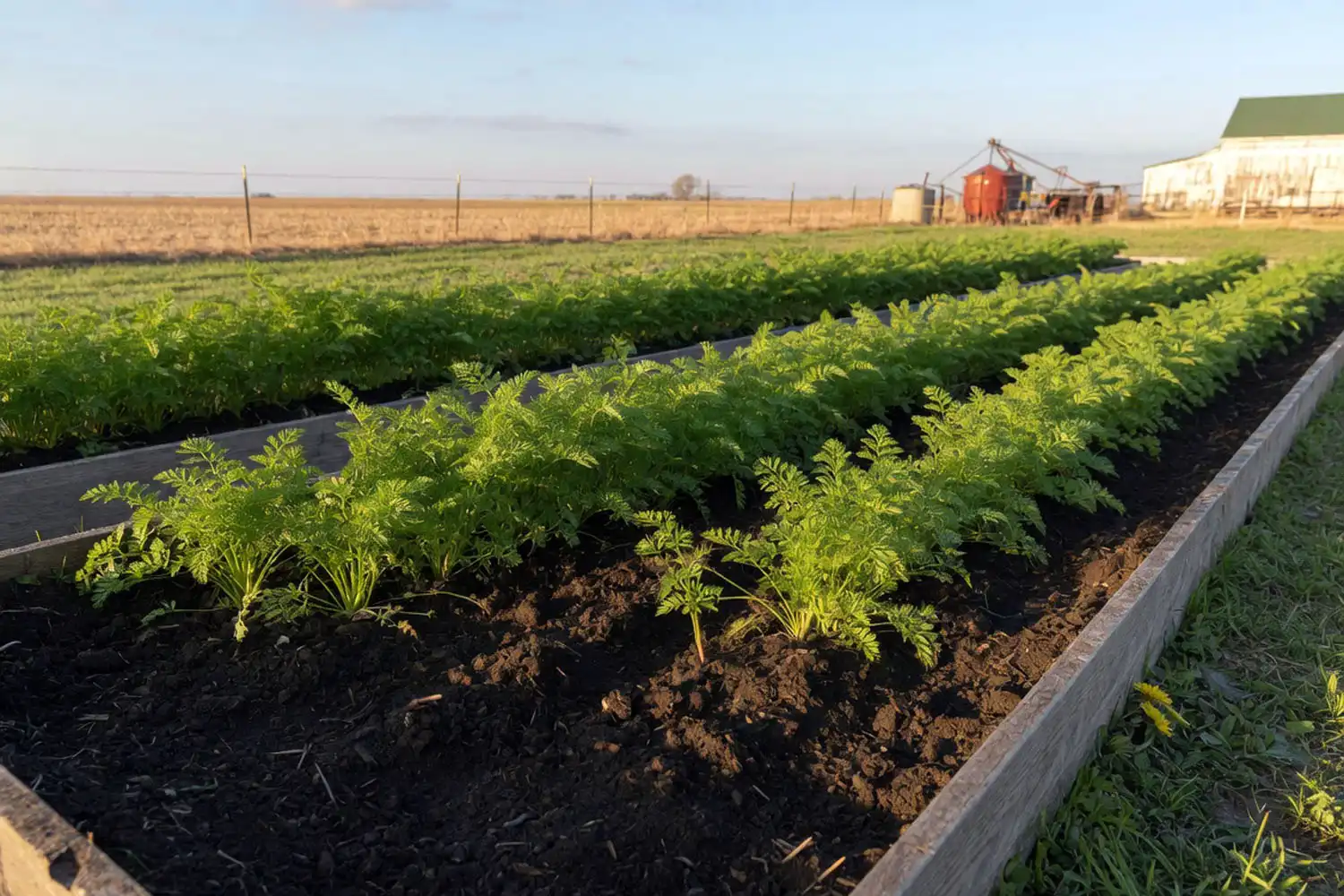
Every spring, new growers ask me the same thing: do carrots like full sun or shade? It matters more than most root crops, because sunlight feeds the part you actually eat. Here is exactly what carrots need to size up sweet and straight.
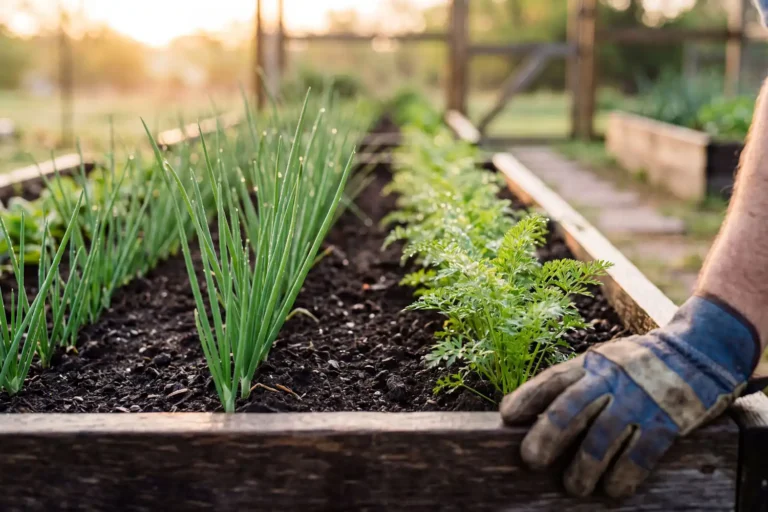
Carrots like full sun. Give them at least 6 hours of direct sunlight daily, with 8 or more being ideal. They tolerate light afternoon shade in hot weather, but heavy shade means smaller, slower, less sweet roots.
Do Carrots Like Full Sun or Shade?
Carrots like full sun. They are a cool-season crop, but they still want all the direct light you can hand them. Sun is the engine behind a fat, sweet taproot.
Here is the part folks miss. With most leafy greens, shade is fine, because you eat the leaves. With carrots, you eat the root. That root only bulks up when the tops collect enough light. So the sunnier the spot, the better your carrots perform.
How Many Hours of Sun Do Carrots Need?
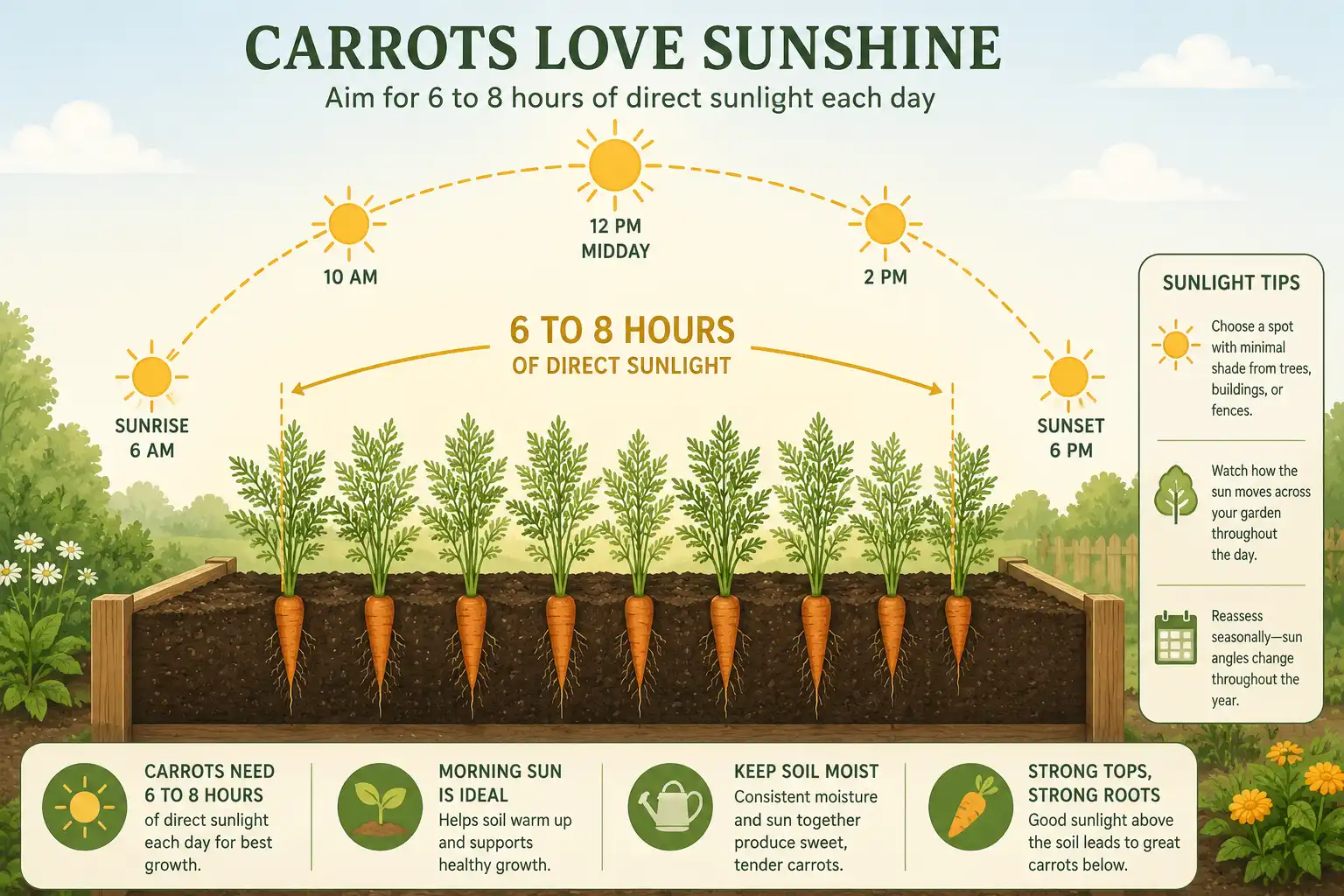
Carrots need at least 6 hours of direct sun a day. Eight or more gives you the best roots. Drop below 6, and growth slows down fast.
Morning and midday sun matter most, since that is the strongest light of the day. A bed that gets full morning sun and a little afternoon shade still does well. But a spot stuck in shade until noon will struggle. So track your beds for a full day before you plant. Watch where the sun actually lands, not where you think it does.
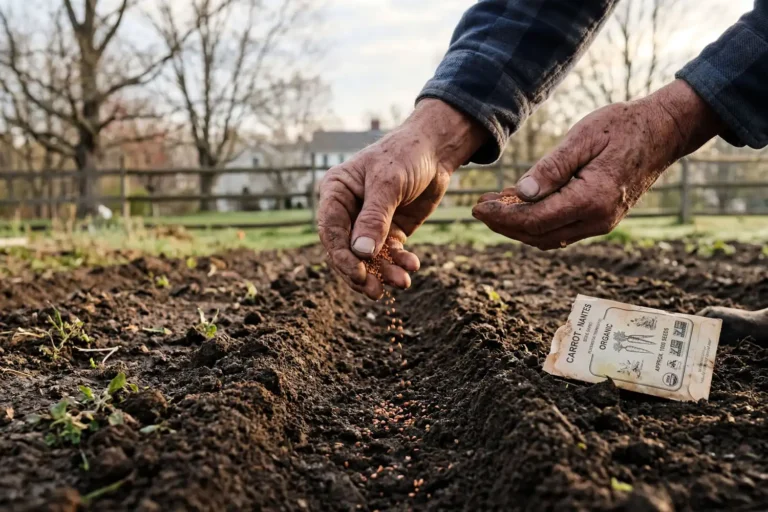
Strong light also helps right after sowing. Even germination sets up an even stand, so keeping the soil damp is the recommended step while waiting to see how quickly carrots germinate.
Why Sunlight Controls Carrot Root Size
The carrot you pull is a storage root. Its size depends on how much sugar the leaves make and push down into the ground. That whole process runs on photosynthesis, which happens in the feathery green tops.
More sun means more sugar. That sugar travels down and packs into the taproot, building size and sweetness. Cut the light, and the plant simply has less to store. Worse, shaded tops stretch and grow leggy as they reach for the sun, and that wasted energy never reaches the root.
Light builds the root, but shape comes from the ground. That is why the soil texture that grows straight carrots deserves as much attention as your sun exposure.
Can Carrots Grow in Shade?
Yes, carrots can grow in partial shade, but you pay for it. Less light means smaller roots, a longer wait to harvest, and weaker flavor. They will not fail outright in a few hours of shade. They just underperform.
Partial shade means roughly 3 to 6 hours of direct sun. Carrots can limp along in that range. Below 3 hours, do not bother in the ground. Use a container instead, so you can chase the light.
What Too Much Shade Does to Carrots
Heavy shade weakens the whole plant. Here is what to see when carrots sit in too little light.
The tops grow tall, thin, and floppy as they reach for the sun. The roots stay small and pale, since little sugar makes it down. Maturity drags out by weeks too, so a 70-day carrot might need 90. Damp, shaded soil also dries slowly, which invites fungal trouble and rot. None of that gives you a carrot worth pulling.
When Afternoon Shade Actually Helps Carrots
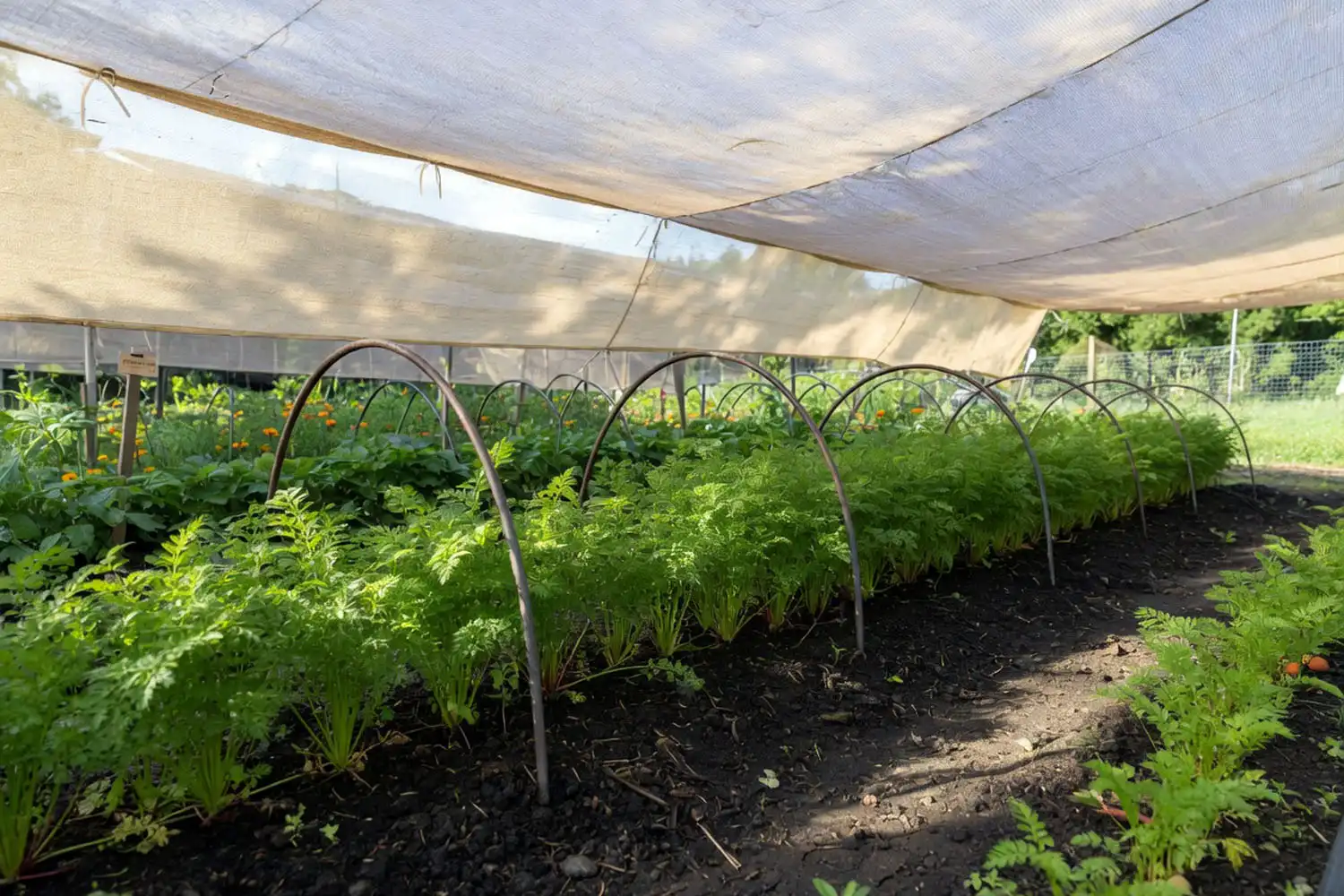
In hot climates and peak summer, light afternoon shade helps carrots. It cuts the heat stress that turns roots bitter and woody. This is the one case where blocking some sun works in your favor.
Carrots size up best between 60 and 70°F. Once soil and air push past the mid-80s, growth stalls and flavor drops. So a shade cloth, or a spot that loses the harsh afternoon sun, keeps the root zone cooler. The plant still soaks up strong morning and midday light, which is the light it actually uses. Southern growers lean on this hard. Down in the heat, full afternoon sun in July does more harm than good.
Young carrots in full sun also dry out fast in that heat. So watering young carrots early keeps the surface from crusting over the sprouts.
Full Sun vs Partial Shade for Carrots
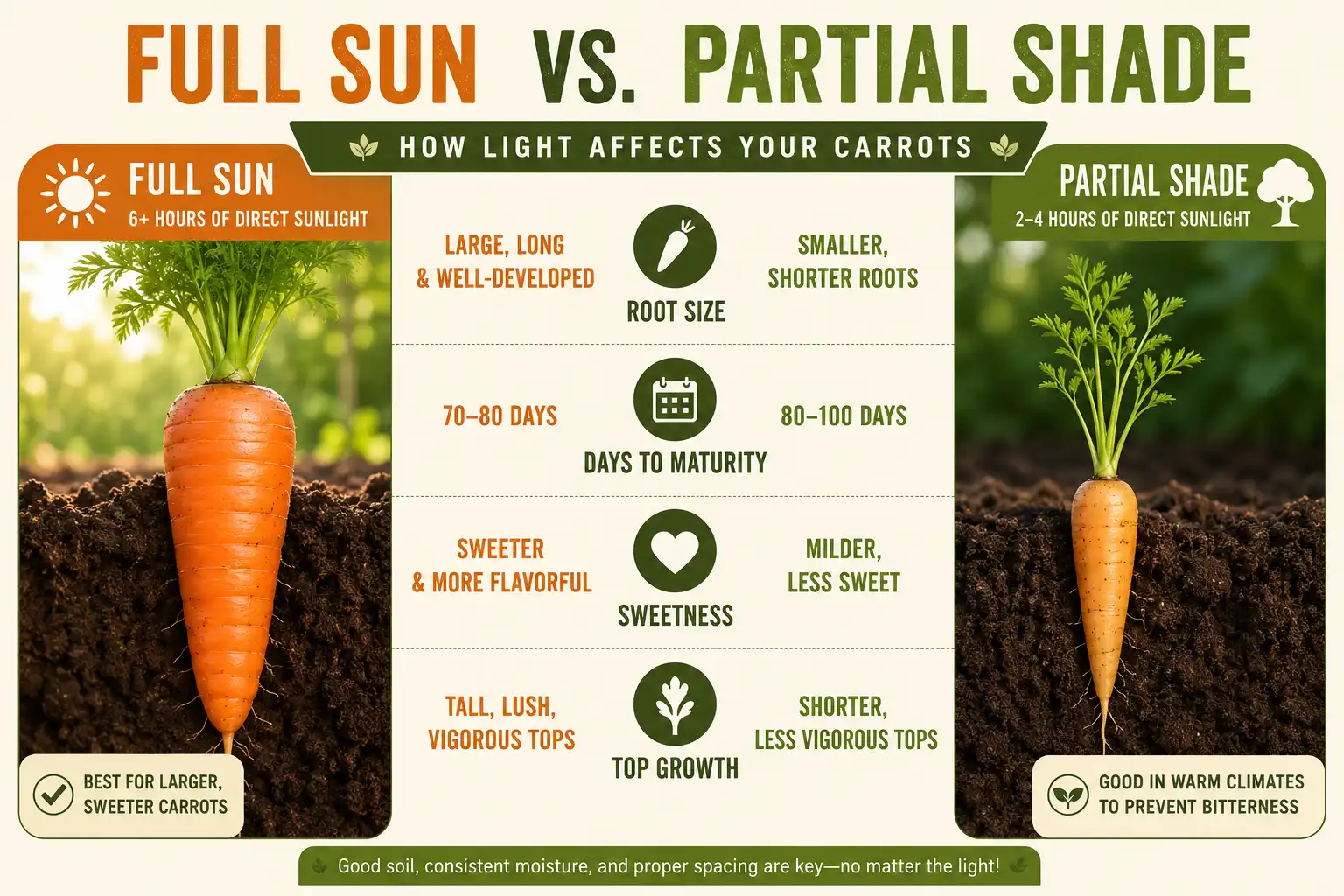
Full sun wins for size, speed, and sweetness. Partial shade only earns its place when summer heat is the bigger threat. So match the choice to your weather, not a rule of thumb.
In full sun, roots bulk up faster, color deeper, and taste sweeter. They hit maturity on schedule. In partial shade, expect smaller carrots, paler color, and a harvest that runs weeks late. The one upside of shade is cooler soil during a hot stretch, which protects flavor when the sun turns brutal. So in cool spring and fall, give carrots every hour of sun you can. In the dead of summer, a little shade is a tool, not a handicap.
How to Manage Carrot Sunlight in Kansas
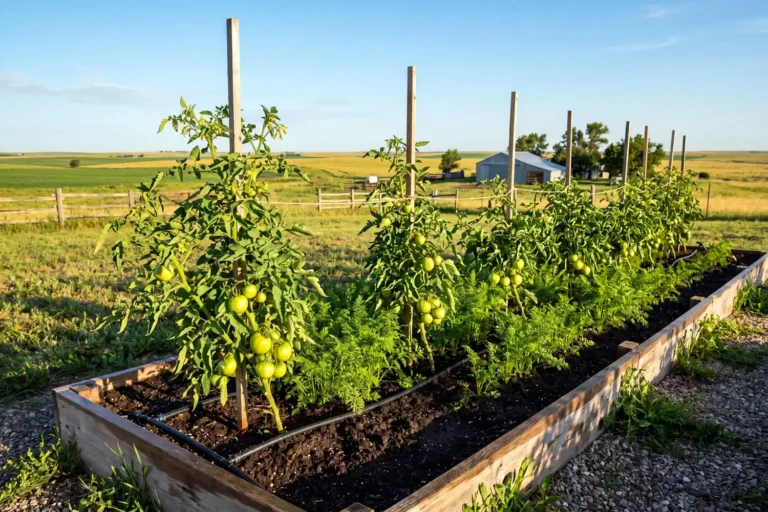
Topeka sits in USDA hardiness zone 6a. On the Great Plains, the sun is intense and rarely the limiting factor. Shade is. K-State Research and Extension steers new growers toward full-sun sites for carrots. So keeping carrots off the north side of buildings and out from under a tree line is the recommended approach.
Run two main crops. One goes in during early spring, the other in late summer for a fall harvest. Both sit in full-sun beds with 8 or more hours of direct light. When plant carrotssow shallow and thin early, sowing shallow and thinning early lets each root claim its own share of sun. For a midsummer sowing, stretching a 30 percent shade cloth over the row until the worst heat breaks, then pulling it off, is the recommended method.
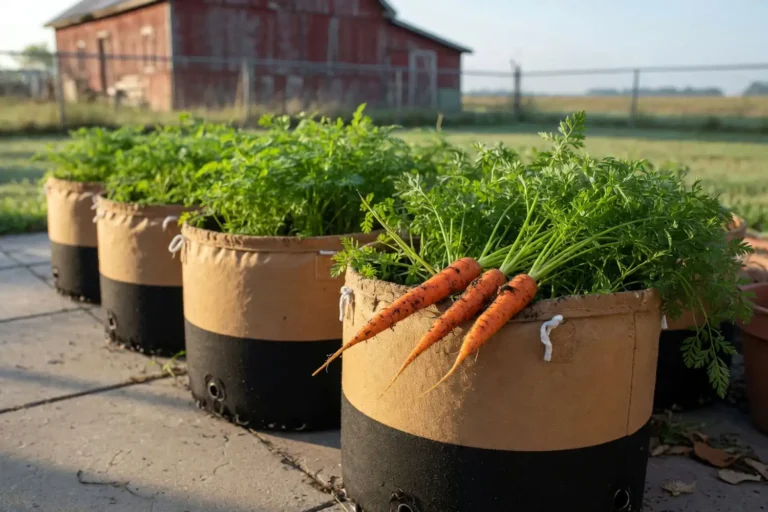
If your only open ground sits in shade, you still have options. Pick a faster, shorter variety that matures before the shade catches up. Or skip the ground entirely. Growing carrots in containers lets you slide the pots across a patio and follow the sun all day. That trick has saved more than one shady backyard.
Bottom Line for Your Field
Carrots want full sun, plain and simple. Give them 6 hours minimum, aim for 8 or more, and you will pull bigger, sweeter, straighter roots. Partial shade works in a pinch, but expect smaller carrots and a longer wait. Save the shade for cooling things down in the heat of summer, never for the whole season. Find your sunniest spot, and let the light do the work.