Can You Transplant Carrots Without Forking? 6 Reliable Fixes
Carrots transplant poorly because the taproot bruises fast and forks when disturbed. Direct sowing in loose soil usually produces straighter roots and higher yields overall. This guide explains when a transplant works, how to move young seedlings with the least damage, and the common mistakes that ruin carrot rows.
Yes, you can transplant carrots, but results are usually poor. The taproot forks, stunts, or splits once disturbed. Transplanting works best with seedlings under 2 weeks old, grown in deep soil blocks or cell plugs. For straight, full-size roots, direct sowing still wins.
What Happens When You Transplant Carrots
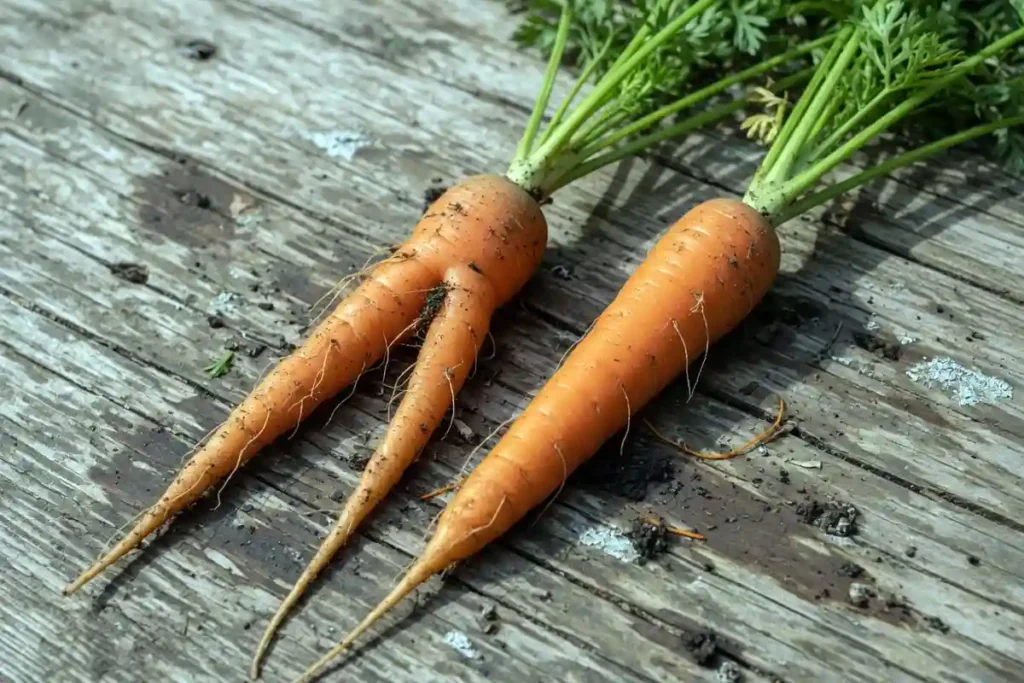
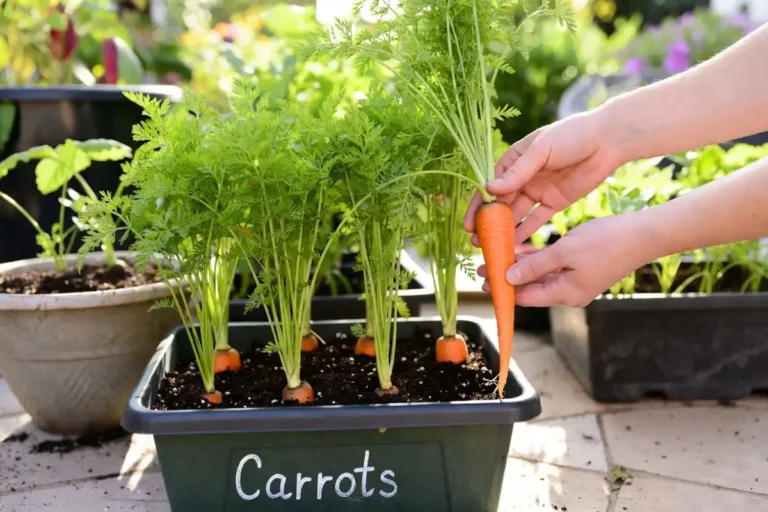
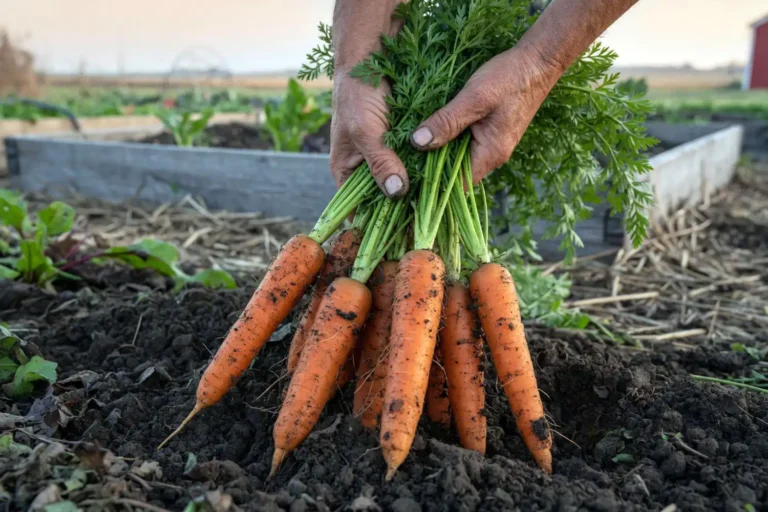
Carrots grow a single deep taproot from day one. That taproot becomes the edible carrot. When roots bend, break, or split during a move, the carrot grows forked, hairy, or stunted. The University of Minnesota Extension points out that carrots grow best when seeded directly in the garden because the taproot does not tolerate disturbance well.
Root forking also happens in rocky soil, heavy clay, and freshly manured beds. Adding transplant shock on top of soil issues makes the damage worse.
Can You Transplant Carrots Successfully?
Yes, but only when three conditions line up:
- Seedlings are under 2 weeks old
- Roots grow in deep, loose media
- The move keeps the full root ball intact with zero handling of the taproot
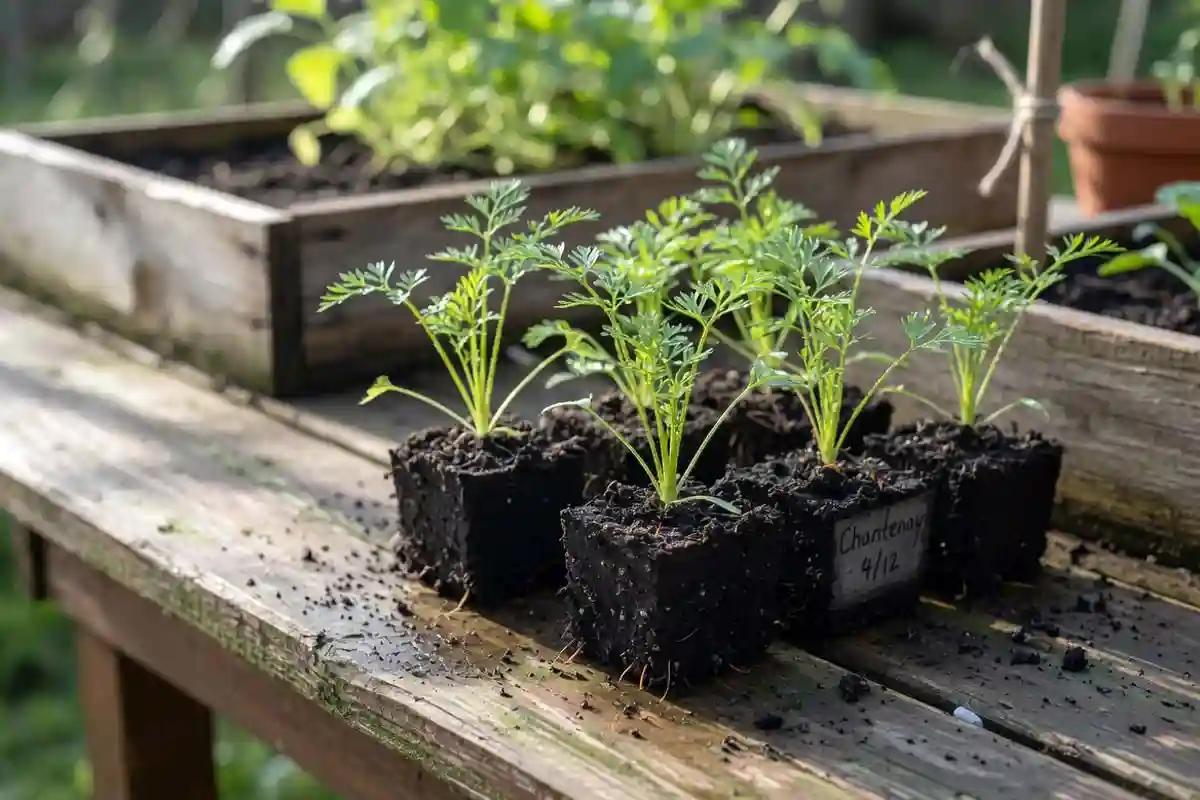
Gardeners in short-season zones sometimes start carrots indoors in soil blocks to gain 2 weeks. The result is a usable crop, but the roots rarely match field-sown carrots in length or uniformity. Our article on covers the wider trade-offsdirect seeding versus transplanting.
When Is Transplanting Carrots Worth It?
Transplanting carrots makes sense in a few cases:
- USDA zones 3 to 4, where spring soil stays cold past April
- Raised beds that dry too fast for reliable germination
- Gardeners who lost a direct-sown bed to crusting or flooding
For most home growers in zones 5 to 9, direct sowing beats transplanting on every measure. Seeds take 14 to 21 days to sprout, and steady moisture usually solves the waiting problem. Our guide on covers the sprouting timelinehow long carrots take to germinate.
How to Transplant Carrots Step by Step
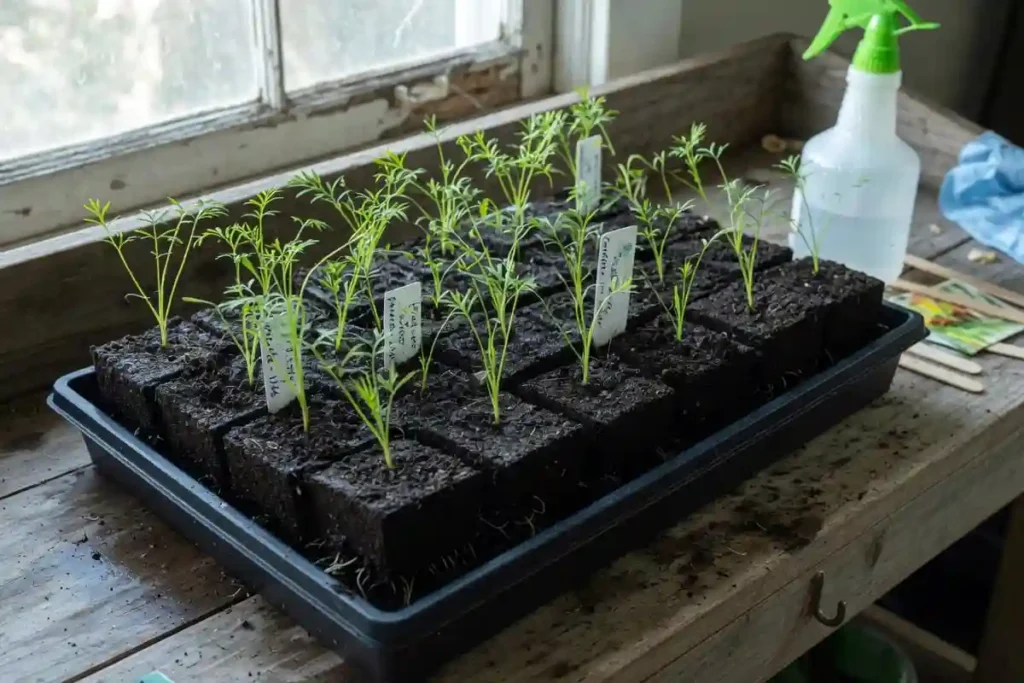
Here is the method with the best odds of a usable crop.
Step 1: Use deep cells or soil blocks
Choose 3- to 4-inch deep cell trays or 2-inch soil blocks. Shallow seed trays ruin the taproot within a week. Deep cells let roots grow straight down without circling.
Step 2: Sow shallow and thin early
Drop 2 to 3 seeds per cell at 1/4 inch deep. Thin to one seedling per cell once true leaves appear. Good spacing matters at every stage, as covered in our article on spacing for different crops.
Step 3: Transplant before the third true leaf
Move seedlings 10 to 14 days after germination. Past that point, the taproot is long enough to bend or snap on the way out. That bend becomes a fork in the finished carrot.
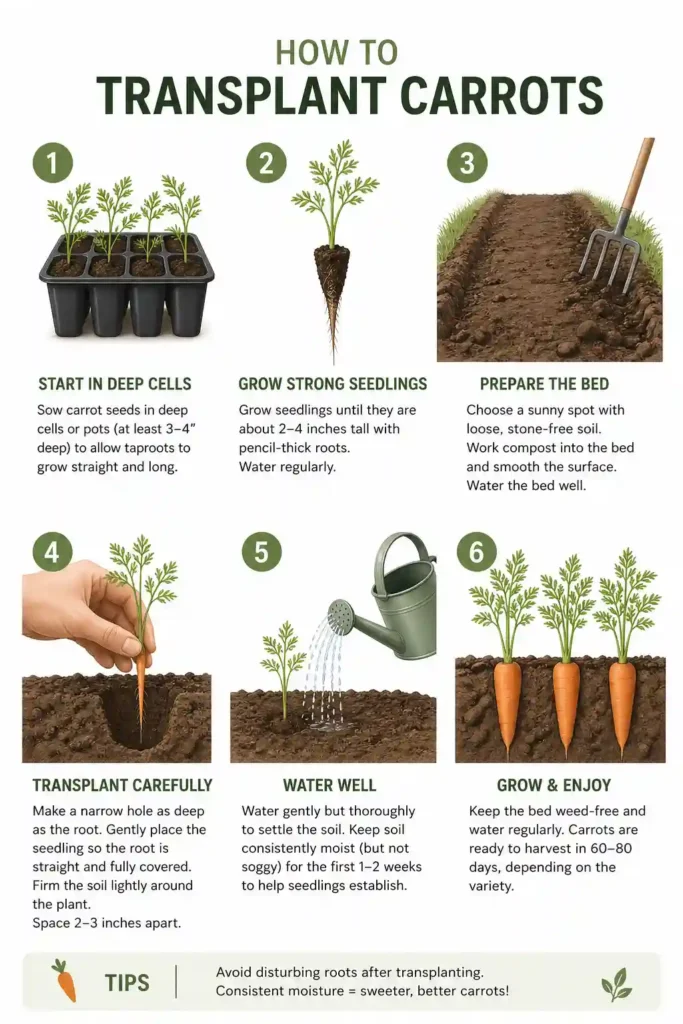
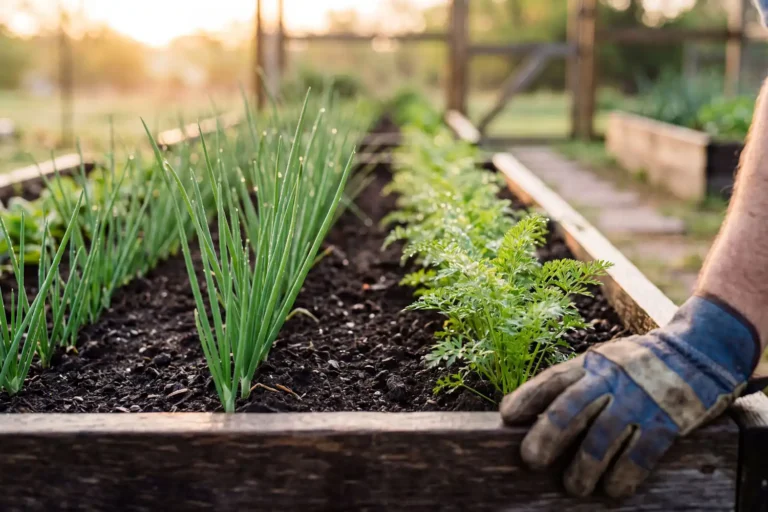
Step 4: Prep the bed for straight roots
Carrots need loose, rock-free soil at least 10 inches deep. A full breakdown on soil texture for straight roots is available for heavy ground. Water the bed well before you transplant.
Step 5: Move the full soil plug
Push the plug up from the bottom. Never pull the seedling by the stem. Lower the full plug into a hole the same depth as the cell. Firm soil lightly around it. Water in slowly.
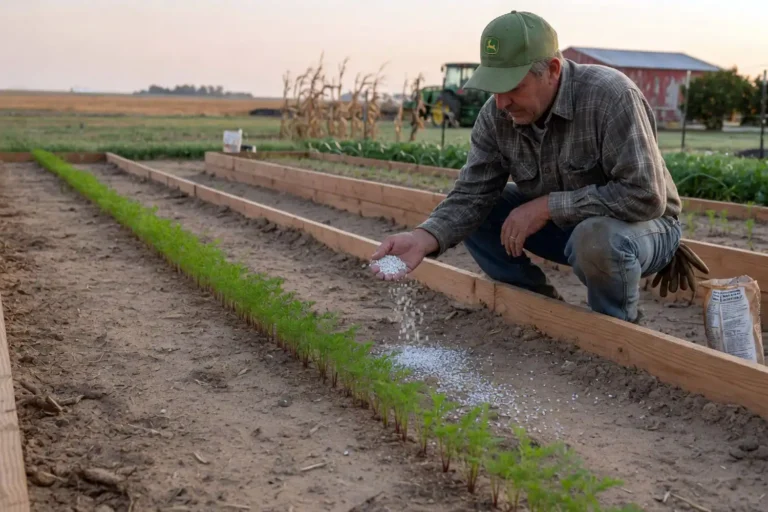
Step 6: Irrigate steady for 10 days
Keep the top 2 inches of soil moist but not soaked. Crusting kills young transplants the same way it kills direct-sown seedlings. More depth on this is covered in this post on early carrot irrigation.
Solutions If You Already Pulled Seedlings
Seedlings already out of the ground have a short window. Here is what to do:
- Replant within 30 minutes
- Keep roots wet the whole time
- Trim broken root tips cleanly with scissors
- Set seedlings at the same depth they grew before
Expect 30 to 50 percent survival, and expect most survivors to fork.
Troubleshooting Forked or Stunted Carrots
| Problem | Likely Cause | Fix |
|---|---|---|
| Forked roots | Root disturbance, rocks, fresh manure | Pick stones, skip fresh manure, direct sow next time |
| Hairy roots | Excess nitrogen, soggy soil | Reduce nitrogen, improve drainage |
| Stunted carrots | Cold soil after transplant, broken taproot | Wait until soil hits 50°F, handle plugs only |
| Bitter taste | Heat stress, harvest past maturity | Harvest at 60 to 75 days depending on variety |
According to Penn State Extension, carrots grow best in soil temperatures of 60°F to 70°F, which is another reason a cold-soil transplant often stalls. You can sidestep a lot of these issues by reading our guide on planting carrots the right way.
Mistakes to Avoid
- Starting carrots in shallow six-packs
- Waiting past the second true leaf to transplant
- Handling the seedling by the root
- Transplanting into dry, crusted soil
- Adding fresh manure to the bed before planting
- Skipping the pre-water on transplant day
Most failed carrot transplants trace back to one of these.
Safety Notes
Carrot foliage rarely causes skin reactions, but wild parsnip and Queen Anne’s lace look similar and can burn on sunny days. Keep beds weeded and know your plants. Wash hands after thinning in hot weather.
Store-bought potting mixes labeled for seed starting are the safest option. Garden soil brought indoors often carries damping-off pathogens that wipe out seedlings within days.
FAQs about Transplant Carrots
Can I transplant carrots from one garden bed to another?
How old can carrot seedlings be before transplanting fails?
Do carrots transplant better from soil blocks or cell trays?
Why do transplanted carrots grow forked?
Is it better to direct sow carrots?
Last Notes
Carrots and transplanting do not mix well. The taproot is too sensitive and the payoff is too small compared to direct sowing. Start seeds in place, keep the bed moist, and thin early. Save the transplant method for short seasons or salvage jobs on seedlings you already pulled out.