What to Plant With Tomatoes to Keep Bugs Away Without Chemical Sprays
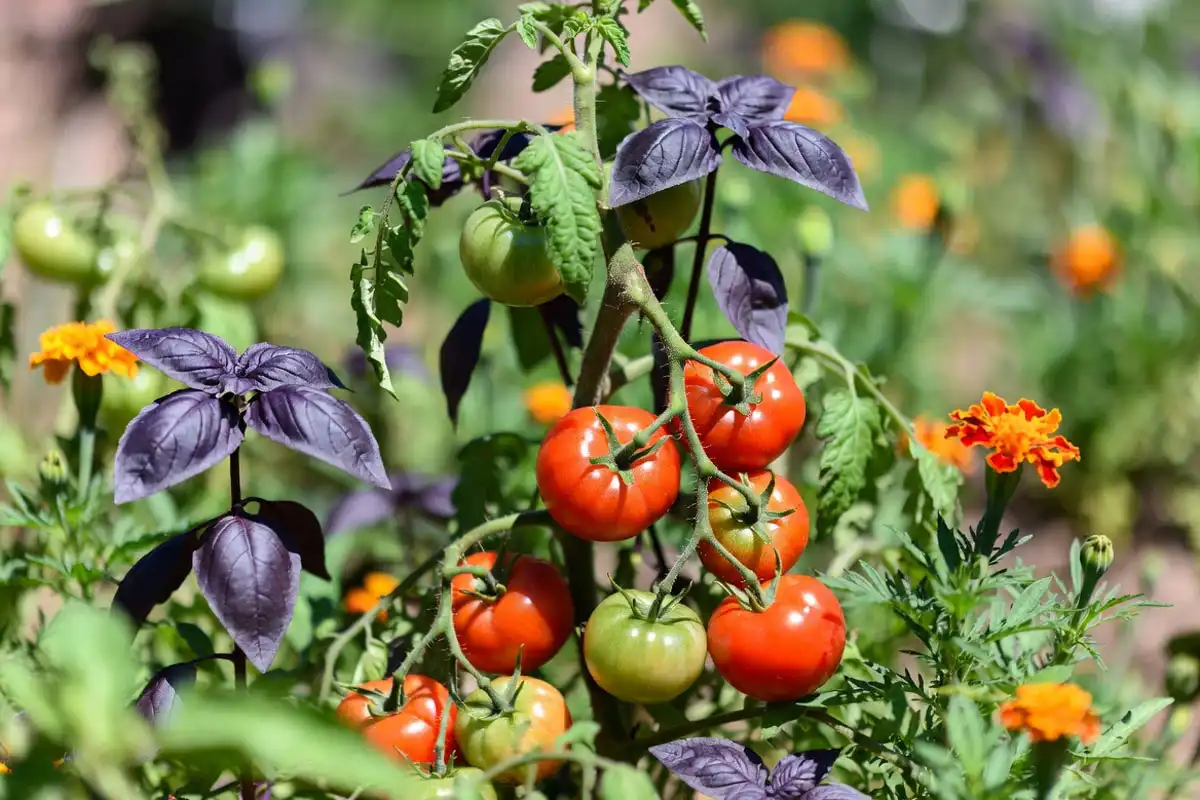
Basil, marigolds, nasturtiums, borage, garlic, and chives are the most effective companion plant options for reducing bugs and insect pressure on tomatoes. This guide covers which plants target specific pests, how to position them in your tomato bed, when to plant them for best results, and which combinations give you the widest protection. Whether you grow in rows, raised beds, or containers, these companions reduce aphid, hornworm, whitefly, and spider mite damage without chemical sprays.
Plant basil, marigolds, nasturtiums, borage, garlic, and chives as companion plants near tomatoes to keep common bugs and insects away. Basil repels aphids and spider mites through volatile oil emission. French marigolds suppress soil nematodes and deter whiteflies. Nasturtiums act as trap crops, drawing aphids away from tomato stems. Place companions 12 to 18 inches from tomato plants at transplanting time for best pest coverage.
Which Plants Keep Bugs Away From Tomatoes?
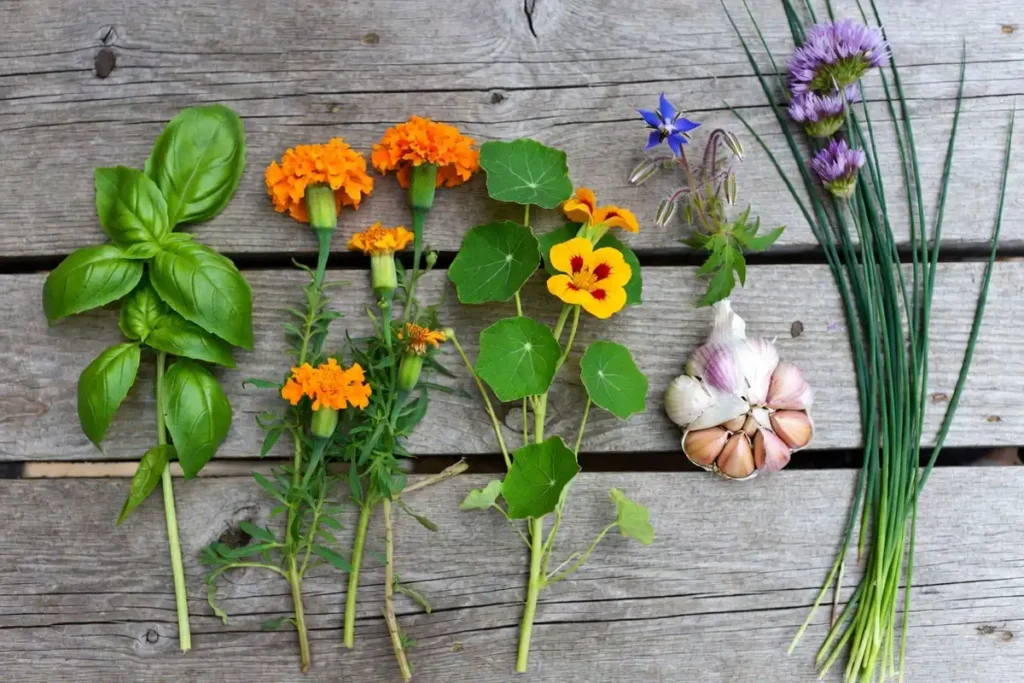
Six companion plants deliver consistent pest reduction in a working tomato bed.
Basil releases linalool and eugenol, two volatile compounds that confuse aphids, thrips, and spider mites. These oils disrupt the insects’ ability to locate host plants.
French marigolds (Tagetes patula) produce alpha-terthienyl in their roots. This compound suppresses root-knot nematodes in surrounding soil. Their scent also reduces whitefly landing rates on nearby tomato foliage.
Nasturtiums function as a trap crop. Aphids and whiteflies preferentially settle on nasturtium leaves, pulling pest populations away from tomato stems and fruit.
Borage (Borago officinalis) deters tomato hornworm through scent. It also attracts predatory wasps and bees that feed on hornworm eggs and larvae.
Garlic releases sulfur compounds, including allicin, that repel spider mites, aphids, and some fungal pathogens. Garlic delivers the strongest protection when grown from established cloves rather than transplants.
Chives emit allicin-based compounds similar to garlic but at lower intensity. They work well as a border plant and provide consistent low-level aphid deterrence through the season.
Read more: How Long to Water Bath Tomatoes for Safe Results
What Bugs Does Each Companion Plant Target?
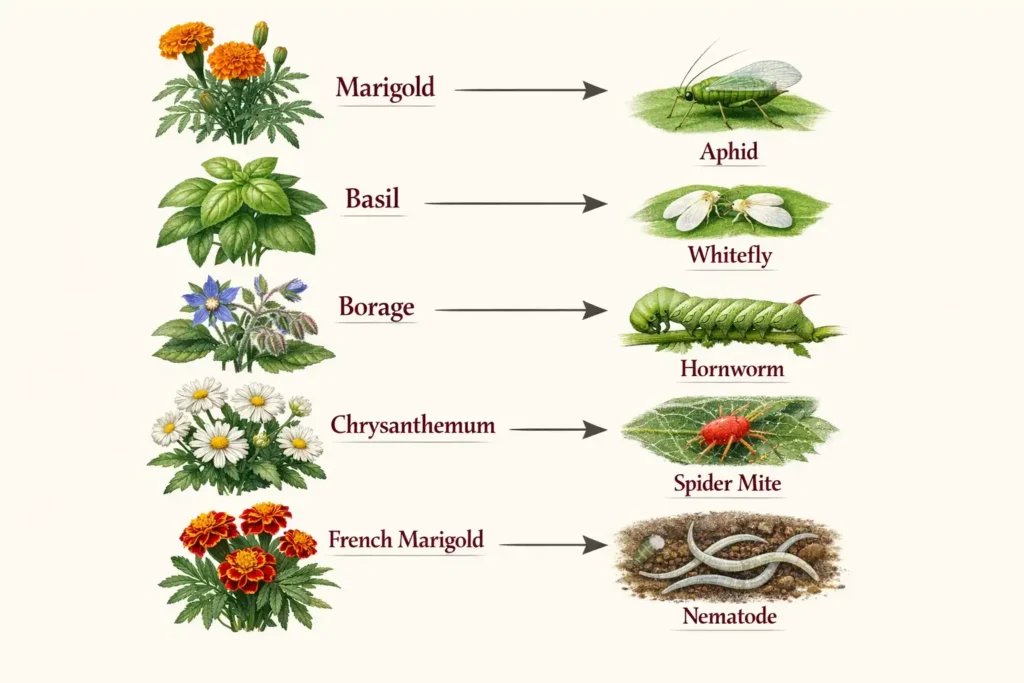
Each companion addresses a different pest type.
- Basil targets aphids, spider mites, and thrips through volatile oil emission
- French marigolds target soil nematodes and whiteflies through root chemicals and scent
- Nasturtiums attract and concentrate aphids and whiteflies as a trap crop
- Borage deters tomato hornworm and attracts hornworm predators
- Garlic repels spider mites, aphids, and certain soil-borne pathogens
- Chives reduce aphid pressure along bed borders
Using natural pest control methods alongside companion planting covers gaps when a single plant type falls short.
When Should You Plant Companions for Best Bug Protection?
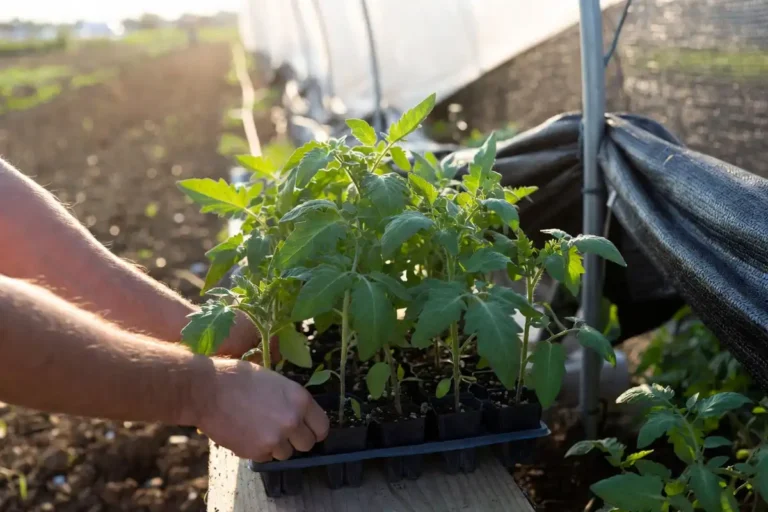
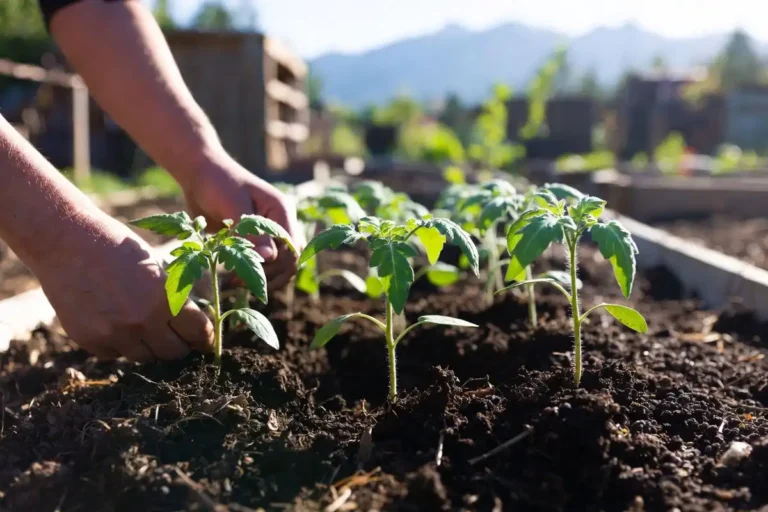
Plant all companions at the same time as tomato transplants. This timing allows companion plants to establish scent compounds and root chemicals before peak insect pressure arrives in midsummer.
Basil benefits from a 4-week head start indoors. Starting basil from seed before transplant date keeps growth stages aligned with tomato development.
Garlic planted the previous fall produces established bulbs by early spring. Fall-planted garlic delivers protection from the first warm weeks when aphids and mites begin reproducing.
Nasturtiums germinate in 7 to 12 days and establish quickly outdoors. Direct sow nasturtium seeds at the bed edge two weeks before tomato transplants go in.
Marigolds need at least 6 weeks of growth before nematode suppression becomes measurable in the surrounding soil. Start marigold seedlings indoors 6 weeks before the last frost date.
Where Should You Place Companions in the Tomato Bed?
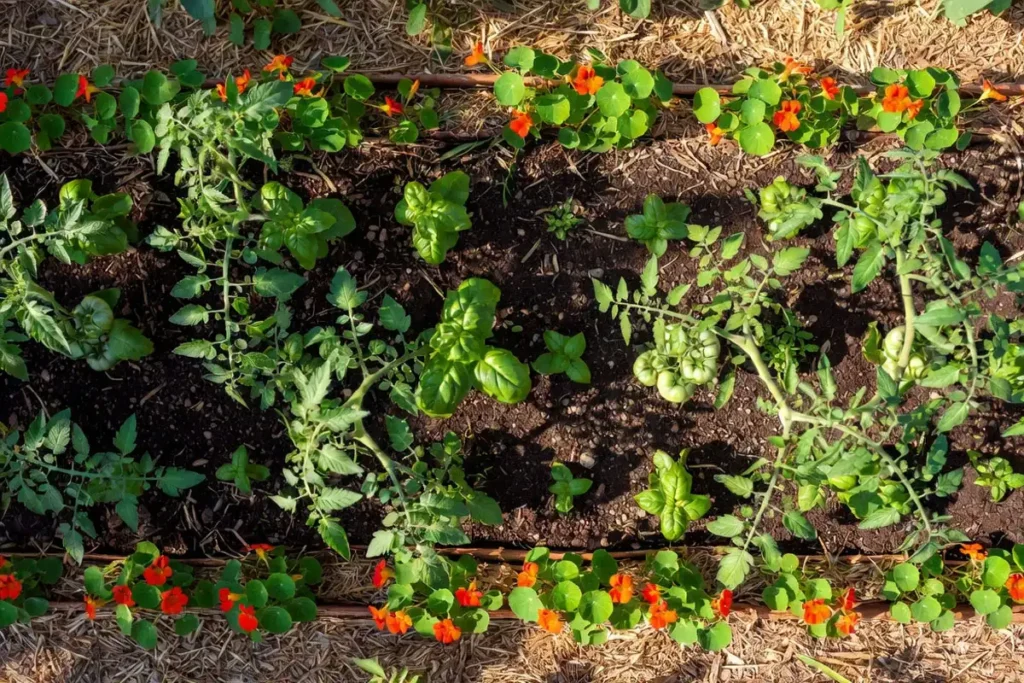
Position companions at specific intervals to maximize scent coverage and trap crop function.
Basil performs best planted 12 inches from tomato stems. Place one basil plant for every two tomato plants. This spacing fills the canopy gaps where aphids typically concentrate.
French marigolds work at row edges and in alternating rows. Place one marigold for every 2 to 3 tomato plants. Border planting reduces whitefly entry from outside the bed; interrow planting targets nematodes throughout the root zone.
Nasturtiums belong at the bed perimeter or in a dedicated trap row. Keep nasturtiums 18 inches from tomatoes so aphid populations stay concentrated on the trap plants, not on tomatoes.
Garlic and chives grow well as a continuous border. Plant cloves or chive divisions 6 inches apart along all four sides of the tomato bed.
Borage reaches 24 to 36 inches tall. Plant it at the north end of a bed to avoid shading tomatoes, or at corners where it can grow without blocking sunlight.
Review crop spacing guidelines before finalizing your layout. Crowded beds reduce airflow and scent dispersion, which weakens companion effectiveness.
How Do You Manage Companions Through the Season?
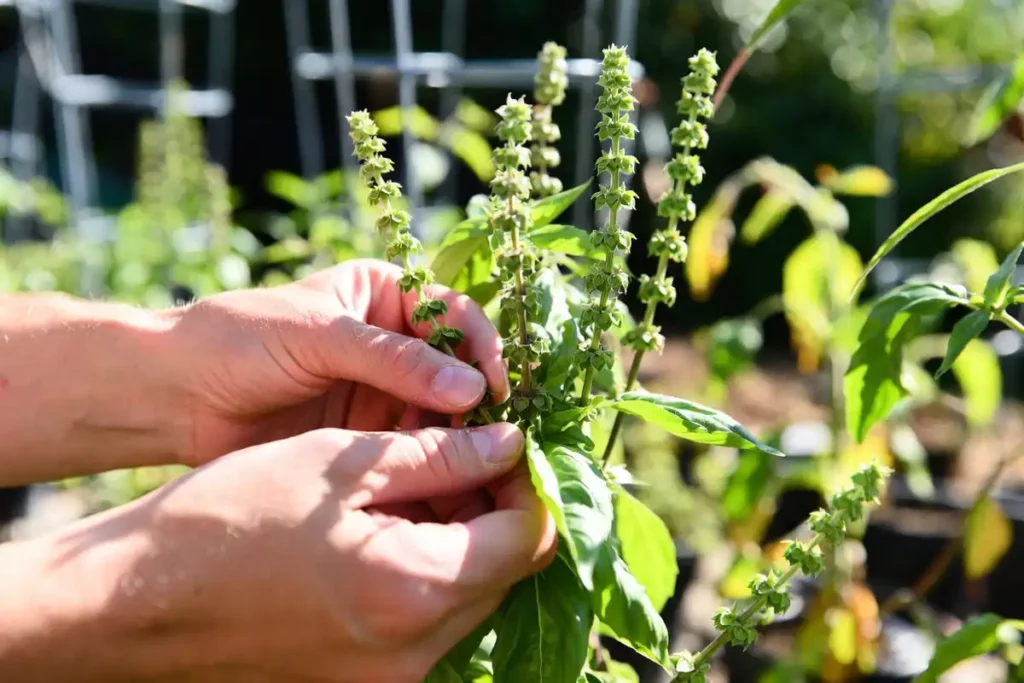
Companion plants need maintenance to stay effective.
Pinch basil flower heads as they appear. Flowering reduces volatile oil production in the leaves by 30 to 40%. Pinching every 10 to 14 days keeps oil output high through the season.
Deadhead marigolds every two weeks. Spent blooms attract botrytis fungus, which spreads to tomato foliage in humid conditions.
Pull nasturtiums at the end of their life cycle, not mid-season. Nasturtiums carrying a full aphid load release those insects back into the bed if you remove the plants too early. Wait until the aphid population on nasturtiums peaks and begins to decline before pulling.
Replace garlic after harvest with a new succession planting of chives. Garlic is typically harvested in midsummer, creating a gap in sulfur-compound coverage. Chives fill that gap through late season.
Mulching around tomatoes reduces soil splash that carries soil nematodes up onto lower foliage, which supports the work marigolds do below ground.
Does Companion Planting Work With Onions Near Tomatoes?
Onions provide additional allicin-based insect deterrence alongside tomatoes. They repel aphids, thrips, and some caterpillar species through sulfur compound emission.
For a full breakdown of how onions and tomatoes interact in shared beds, including spacing and yield considerations, see growing onions alongside tomatoes.
Which Plants Should You Avoid Near Tomatoes?
Three plant types increase insect pressure or suppress tomato growth when planted nearby.
Fennel produces anethole, a compound that inhibits tomato root development. Keep fennel at least 3 feet from any tomato bed.
Brassicas (cabbage, broccoli, kale) compete with tomatoes for nitrogen and attract cabbage loopers and imported cabbageworms. These caterpillars feed on tomato foliage when brassica leaves become crowded.
Corn planted adjacent to tomatoes amplifies pest populations. Corn earworm and tomato fruitworm are the same species (Helicoverpa zea). A shared planting doubles the egg-laying surface area and increases fruit damage on both crops.
How Does Companion Planting Fit Into a Full Pest Management Plan?
Companion planting reduces pest pressure but does not eliminate it. Dense aphid infestations or hornworm populations require additional action beyond companion planting alone.
Integrated pest management uses companion planting as one layer within a system that includes regular monitoring, threshold-based decisions, and targeted treatments when insect populations exceed acceptable levels.
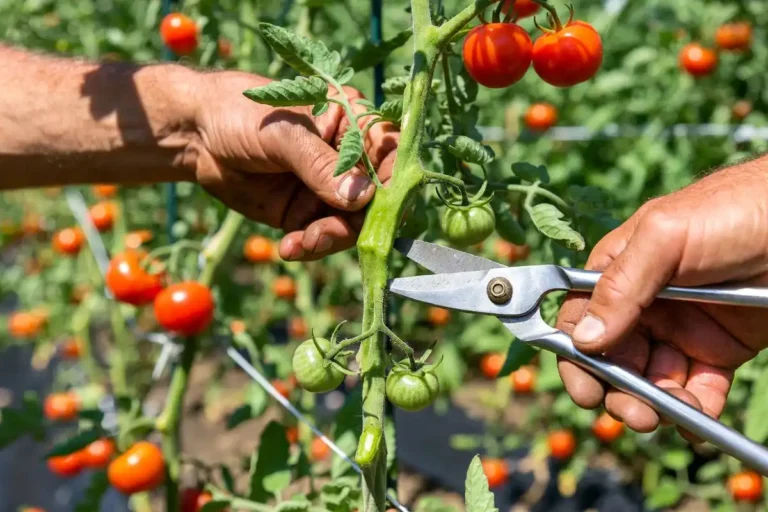
Physical removal of hornworms by hand, targeted insecticidal soap applications for heavy aphid loads, and row covers during transplant establishment all work alongside companions. Pruning tomato plants improves canopy airflow, which reduces the humidity that aphids and spider mites prefer.
What Mistakes Reduce Companion Plant Effectiveness?
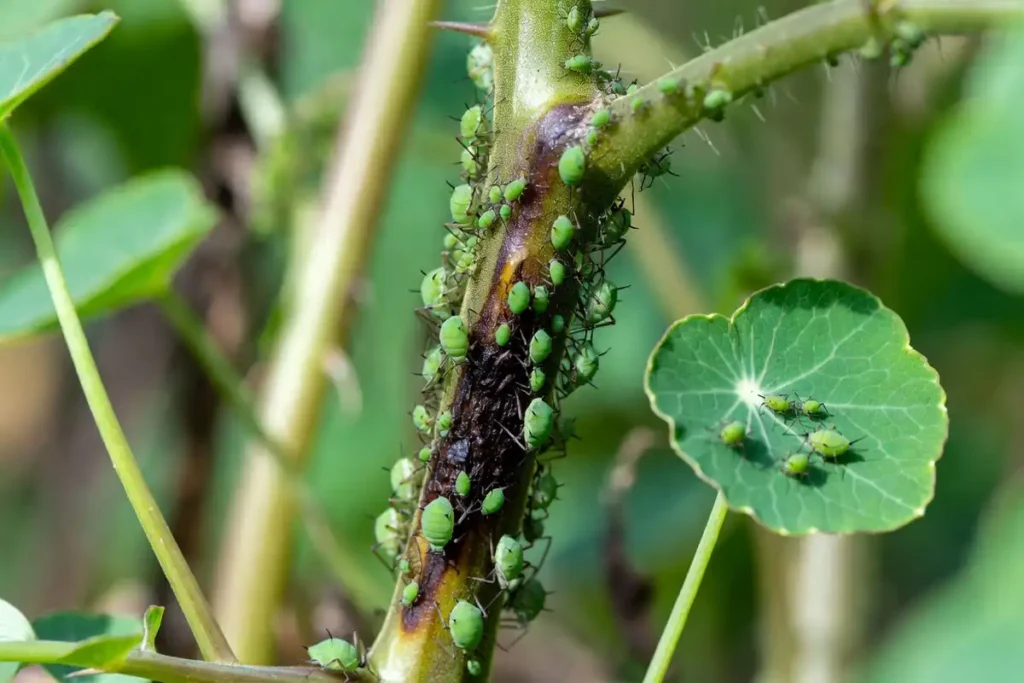
Planting companions too late cuts their benefit window. Companions need 3 to 4 weeks of active growth before scent and root chemicals reach effective concentrations.
Treating nasturtiums with insecticide destroys their trap crop function. Nasturtiums work by concentrating pests on themselves. Spraying them eliminates the trap and sends insects back to tomatoes.
Using only one companion type narrows pest coverage. Basil alone addresses aphids and mites but leaves hornworm and nematode pressure unaddressed. Combining 3 to 4 companion types covers a wider pest range.
Overcrowding the bed reduces airflow and scent dispersion. Companions planted too close to tomatoes compete for water and nutrients, which weakens both plants.
Safety Notes
Do not apply insecticides to nasturtiums acting as trap crops. Eliminating the aphid population on nasturtiums causes them to redistribute to tomatoes.
Keep garlic 6 inches from tomato stems. Concentrated sulfur compounds from garlic planted directly against tomato roots can inhibit tomato root development in compact soil.
Borage self-seeds prolifically. Remove spent borage flowers before seed set if you do not want dense borage regrowth in the same area the following year.
Conclusion
Basil, French marigolds, nasturtiums, borage, garlic, and chives each reduce insect pressure on tomatoes through different mechanisms: volatile oil emission, root chemical production, trap crop attraction, and sulfur compound release.
Plant companions at transplanting time, space them 12 to 18 inches from tomato stems, and combine at least three types to cover the widest range of pests. Avoid fennel, brassicas, and corn in the tomato bed. Maintain companions through the season by pinching basil, deadheading marigolds, and replacing garlic after harvest with chives.