Can Onions and Tomatoes Be Planted Together? What Farmers Know
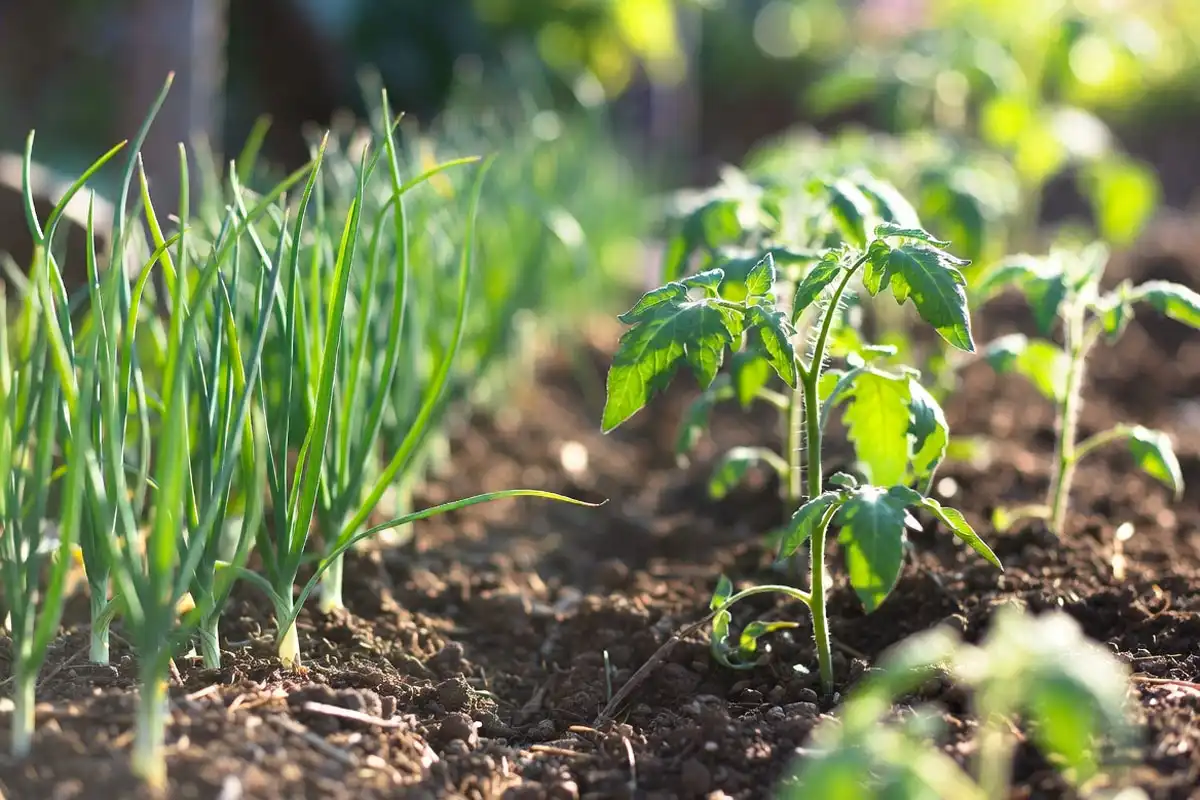
Onions and tomatoes planted well together in most garden and farm settings. This guide covers their compatibility as companion plants, spacing requirements, planting timing, shared soil and water needs, and the common problems that arise when both crops share the same ground. Whether you manage a small vegetable bed or a larger market plot, knowing how these two crops interact helps you plan a more productive and pest-resistant growing season.
Yes, onions and tomatoes can be planted together. Onions repel aphids, thrips, and other soft-bodied insects that target tomato foliage. Tomatoes provide partial shade that benefits onions in hot climates. Space onion sets 4 inches apart and tomato transplants 18 to 24 inches apart within the same bed. Plant both after the last frost date when soil reaches at least 60°F.
Do Onions and Tomatoes Grow Well Together?
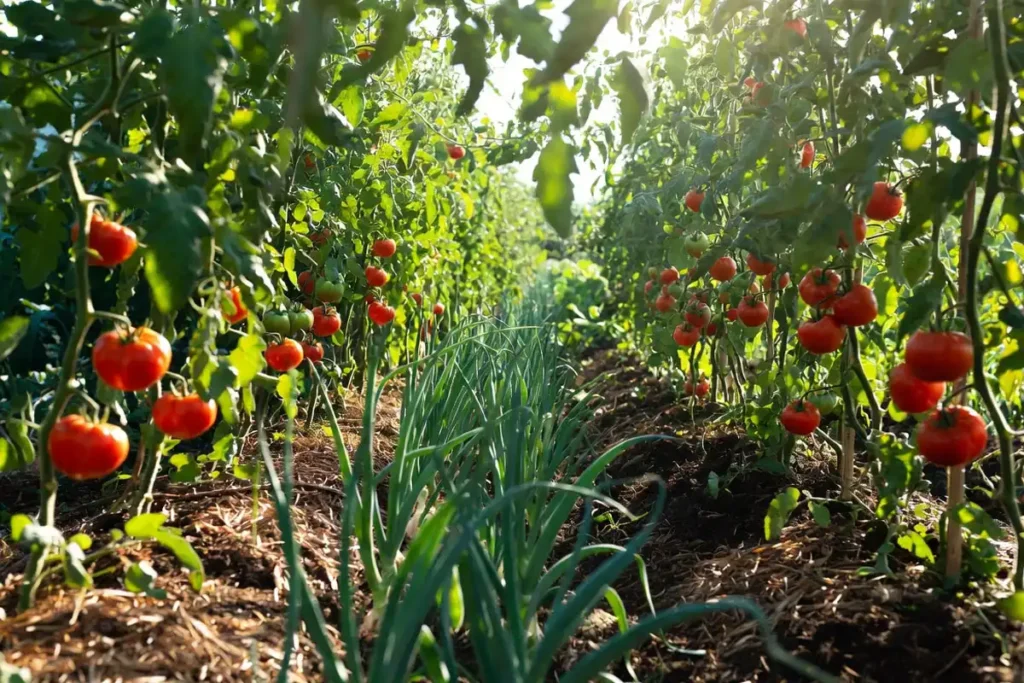
Onions and tomatoes are compatible companion plants. Onions release sulfur compounds from their roots and foliage. These compounds deter aphids, spider mites, and thrips — pests that frequently attack tomato plants.
Tomatoes, in turn, grow tall and produce a broad canopy. That canopy provides partial shade over onion bulbs during peak summer heat, which slows premature bolting in warm regions.
Neither crop releases allelopathic chemicals that suppress the other. Both tolerate similar soil pH ranges, between 6.0 and 6.8, which makes shared bed management practical.
Learn more: How to Plant Tomatoes from a Tomato with Easy 8 Steps
What Are the Benefits of Planting Onions with Tomatoes?
There are multiple benefits when these two crops share the same space.
Pest suppression. Onion sulfur compounds reduce aphid and thrips pressure on tomato stems and leaves. Gardeners in hot, humid climates report fewer soft-bodied insect infestations in mixed beds compared to tomato monocultures.
Space efficiency. Onions occupy the lower canopy layer while tomatoes grow vertically. This vertical layering increases the productive use of each square foot of bed space.
Weed reduction. Dense onion planting between tomato rows limits open soil surface area. Less exposed soil means fewer germination sites for weed seeds. For more on keeping weeds down across your beds, the approach covered in weed management for crop farmers applies here too.
Flavor claims. Some growers report that onions improve the flavor of nearby tomatoes. No peer-reviewed field study confirms this. It is plausible but not established fact, so treat it as an anecdotal benefit rather than a guaranteed outcome.
When Should You Plant Onions and Tomatoes Together?
Timing depends on your climate zone and last frost date.
Onions tolerate light frost and can go into the ground 4 to 6 weeks before the last expected frost. Sets and transplants establish faster than seed-started onions and suit companion planting better.
Tomatoes require warm soil. Transplant tomatoes outdoors after the last frost date when soil temperature holds at 60°F or above at a 2-inch depth.
The practical approach: plant onion sets first, then transplant tomatoes into the same bed 4 to 6 weeks later. By that point, onions have developed enough root mass to begin releasing pest-deterring compounds before tomato growth peaks.
In Kansas and similar Zone 6 climates, onion sets go in from late March to early April. Tomato transplants follow in mid to late May.
Know more: How to Plant Tomatoes in Kansas for a Great Harvest
Where in the Bed Should Onions Go Relative to Tomatoes?
Position onion sets between tomato rows or in the spaces between individual tomato plants. Place them 6 to 8 inches away from the base of each tomato stem. This distance keeps onion bulbs out of the root competition zone for both crops.
Avoid planting onions directly under the center of the tomato canopy. Tomatoes produce dense foliage that reduces light to the soil below. Onions need at least 6 hours of direct sunlight daily to form full-sized bulbs.
North-to-south row orientation gives both crops more even sun exposure across the day.
How Far Apart Should Onions and Tomatoes Be Planted?
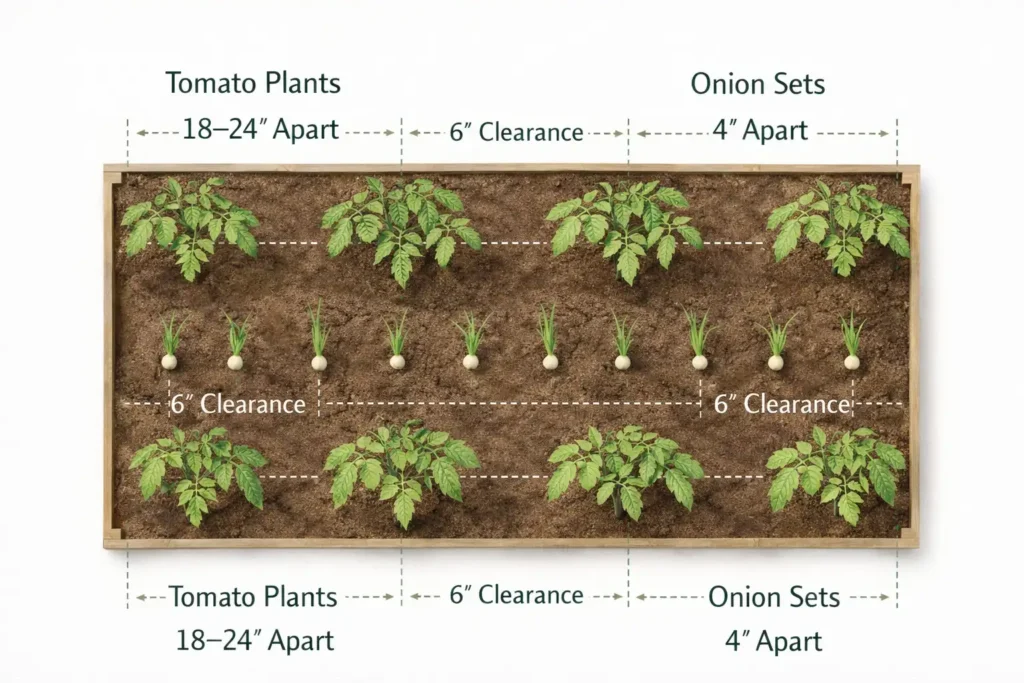
Correct spacing protects both crops from disease pressure and root competition.
- Onion sets: 4 inches apart within rows, rows 12 inches apart
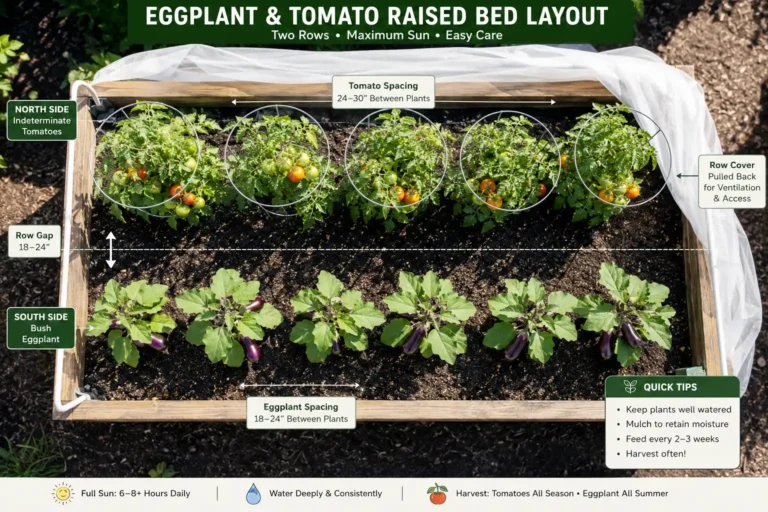
- Tomato transplants: 18 to 24 inches apart in-row, rows 36 to 48 inches apart
- Onion-to-tomato stem clearance: minimum 6 inches
Crowding onions against tomato stems traps moisture at ground level. That moisture increases the risk of fungal diseases in both crops, including early blight on tomatoes and neck rot on onions. For a full reference on spacing across crop types, the spacing standards outlined in crop plant spacing guidelines provide additional depth.
How to Plant Onions and Tomatoes Together
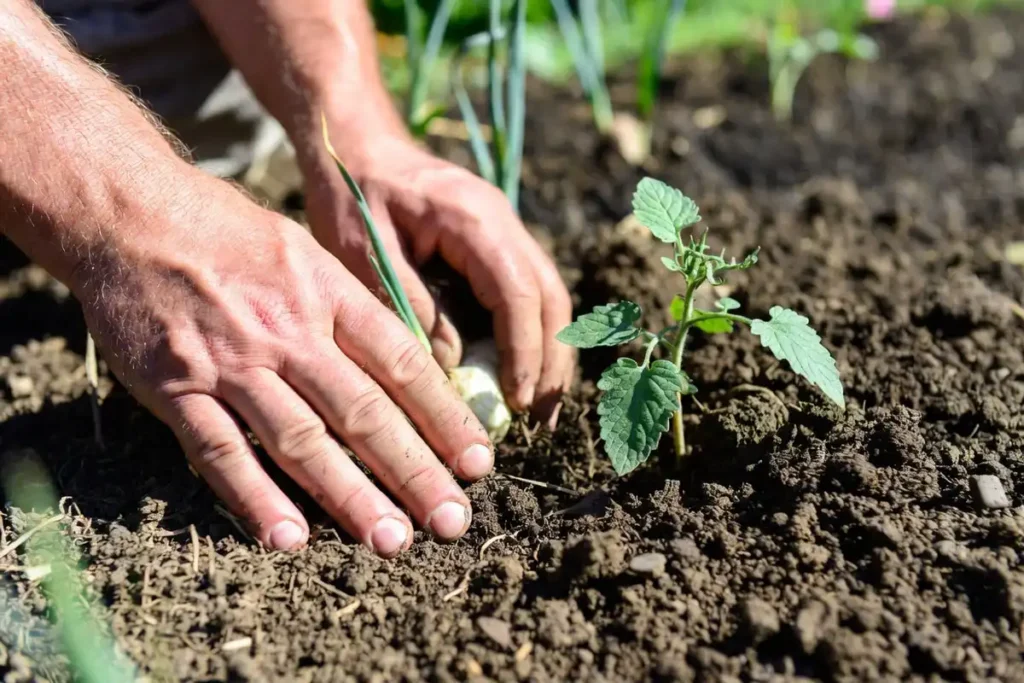
Follow these steps in order for the best results.
Step 1: Test and prepare your soil. Check soil pH before planting. Both crops perform best between 6.0 and 6.8. Amend with lime to raise pH or sulfur to lower it based on your test results. A reliable process for doing this is covered in soil testing for crop farmers.
Step 2: Prepare the bed. Loosen soil to 12 inches deep. Incorporate 2 to 3 inches of compost into the top 6 inches. This improves drainage and provides baseline nutrients for both crops.
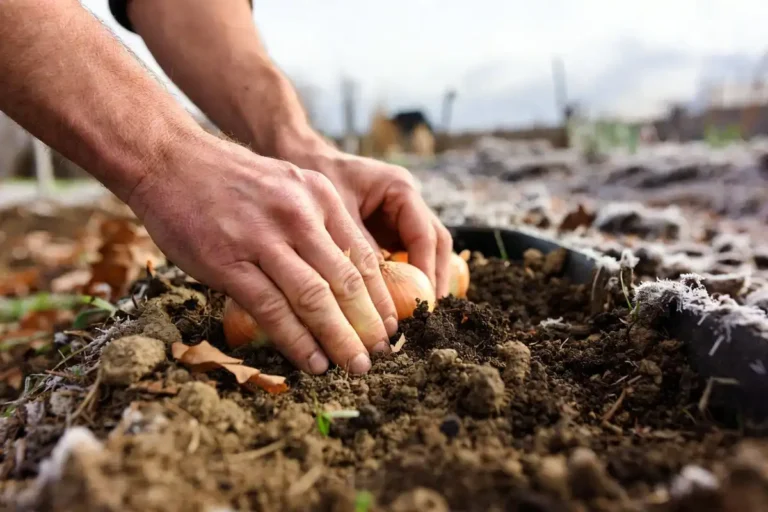
Step 3: Plant onion sets. Set onions 1 inch deep, pointed end up, 4 inches apart. Mark rows clearly so you avoid disturbing them during tomato transplanting weeks later.
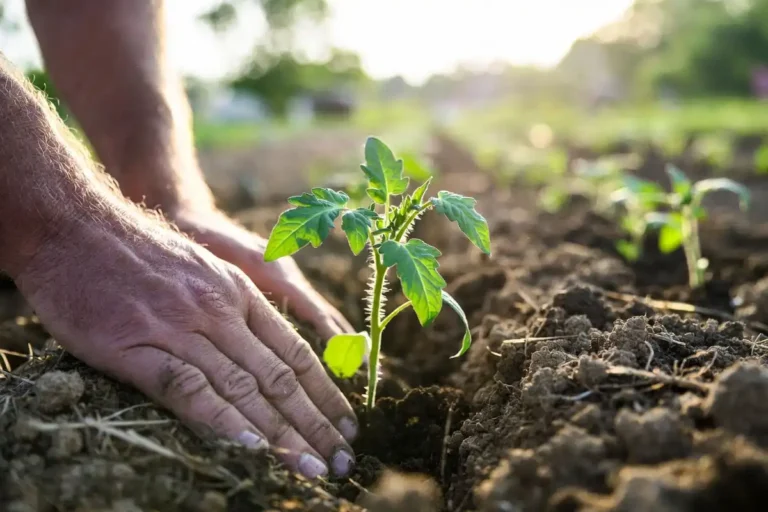
Step 4: Transplant tomatoes. After the last frost date and once soil holds 60°F, transplant tomato seedlings at 18 to 24 inches apart. Plant transplants deep — bury the stem up to the lowest set of leaves. This encourages a stronger root system.
Step 5: Mulch the bed. Apply 2 to 3 inches of straw or wood chip mulch around both crops after transplanting. Mulch retains soil moisture, regulates temperature, and further limits weed germination. The benefits of mulching at this stage are detailed in mulching practices for crop beds.
Step 6: Water in immediately. Irrigate the bed thoroughly after planting to settle roots and eliminate air pockets around sets and transplants.
What Fertilizer Works for Both Onions and Tomatoes?
Both crops respond to balanced nutrition, but their peak demands differ slightly.
Onions require high nitrogen during early leaf development. They shift to potassium and phosphorus demand as bulb sizing begins.
Tomatoes need consistent phosphorus for root establishment, then nitrogen during vegetative growth, and higher potassium and calcium during fruit set.
A balanced NPK fertilizer (10-10-10 or similar) applied at planting addresses both crops’ early needs. Side-dress nitrogen around onions at 30 days after planting if leaf color turns pale yellow. Avoid high-nitrogen applications once tomato plants begin flowering, as this pushes leafy growth at the expense of fruit. For a deeper breakdown of nutrient application rates, NPK fertilizer guidance for crops covers the topic in full.
How Do You Water Onions and Tomatoes in the Same Bed?
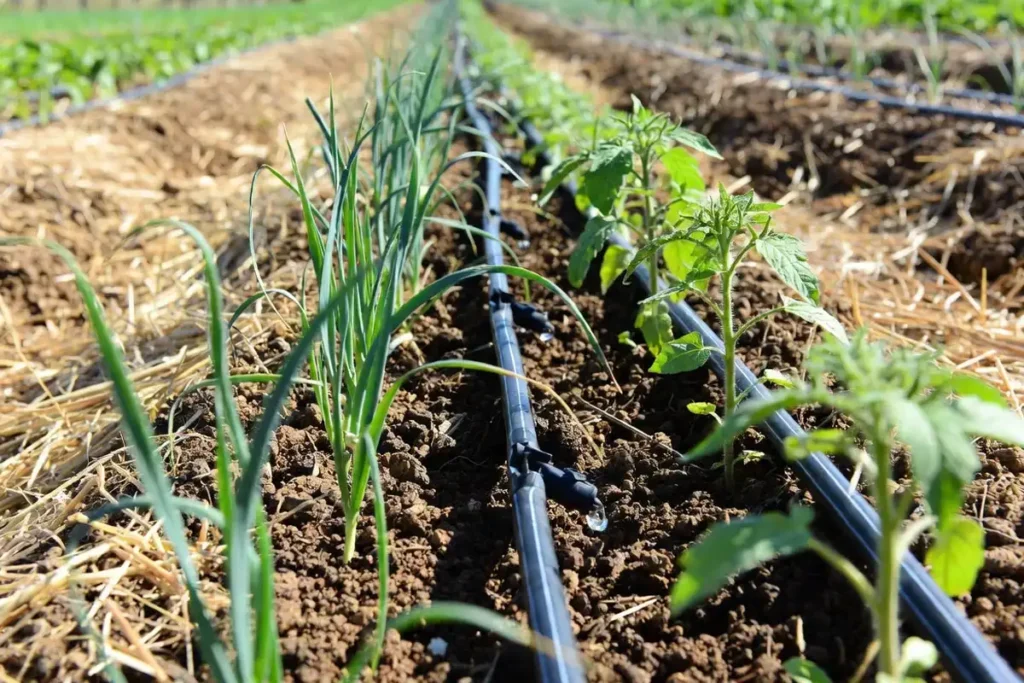
Both crops need consistent moisture but not waterlogged soil. Onions and tomatoes share a preference for 1 to 1.5 inches of water per week during active growth.
Drip irrigation works well for mixed beds. It delivers water at the root zone of each plant and keeps foliage dry. Wet foliage on both crops increases fungal disease risk.
Reduce watering frequency once onion foliage begins to fall over and yellow. That visual cue signals that bulbs are entering their final sizing stage and need drier conditions. Maintaining high moisture at that point promotes rot.
Tomatoes continue to need regular water through fruit development. For reference on when tomatoes reach their highest water demand, tomato water needs by growth stage gives a practical breakdown.
What Problems Can Occur When Growing Onions with Tomatoes?
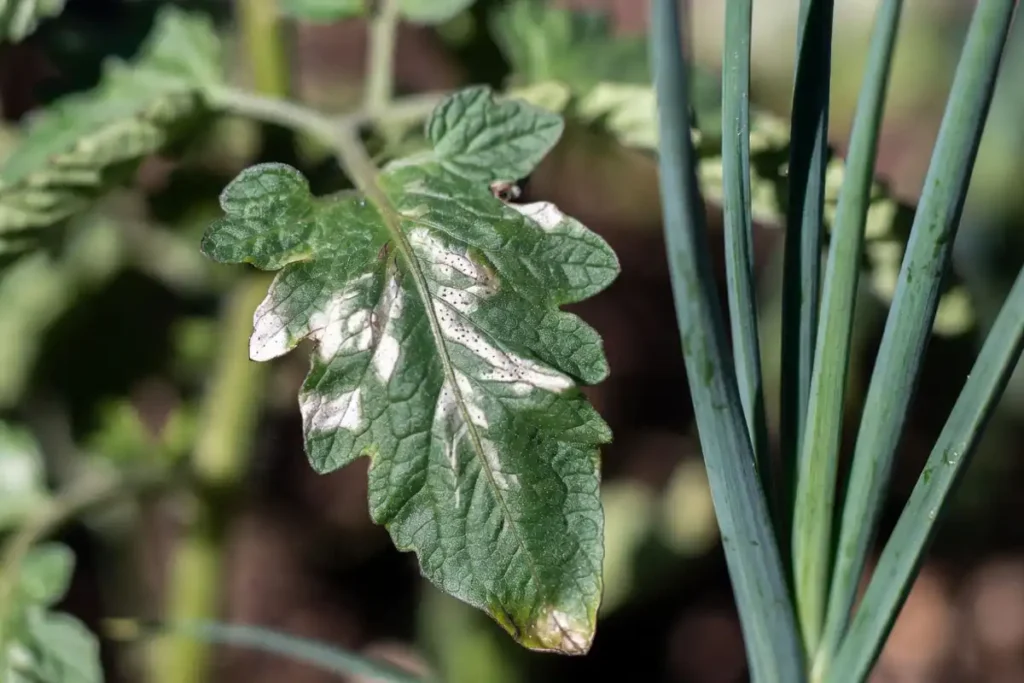
Fusarium and neck rot. Overhead watering combined with dense planting creates humid conditions at soil level. Fusarium fungi thrive in these conditions and affect onion bulbs. Drip irrigation and correct spacing reduce this risk.
Thrips persistence. Onions suppress some pests but also attract thrips — the same insects they partially deter from tomatoes. Thrips feeding on onion leaves can jump to tomato foliage if populations build. Monitor weekly during hot, dry stretches.
Nutrient competition. When spacing is too tight, roots from both crops overlap significantly. This creates direct competition for nitrogen and potassium. Correct spacing at planting is the most effective prevention.
Shading onion bulbs. Tomatoes expand considerably by midsummer. A dense tomato canopy can shade onions below the 6-hour light threshold. Pruning lower tomato suckers and leaves helps maintain light penetration to the onion rows.
How Do You Troubleshoot Common Issues in a Mixed Bed?
Yellowing onion leaves mid-season: Check for nitrogen deficiency first. Apply a light nitrogen side-dress. If yellowing starts at the neck and foliage collapses, suspect neck rot. Remove affected plants immediately to limit spread.
Tomato leaves curling inward: This often signals moisture stress, not pest damage. Check soil moisture at 3-inch depth. If dry, increase irrigation frequency. If soil is wet, check for root issues from overwatering.
Stunted onion bulbs: Insufficient sunlight or overcrowding are the two primary causes. Thin onion rows where crowding is visible. Prune low-hanging tomato branches to restore light.
Thrips damage on both crops: Apply neem oil or insecticidal soap to affected foliage in the early morning or late evening to avoid burning leaves. The integrated approach to natural pest control in crop farming covers thresholds and treatment timing in more detail.
What Mistakes Should You Avoid?
Planting too close to tomato stems. Onions placed within 4 inches of a tomato base compete aggressively for moisture and nutrients. They also restrict airflow at crown level, which promotes disease.
Using transplanted onion seedlings instead of sets. Onion seedlings take longer to establish and release root compounds later in the season. Sets give you a 4 to 6 week head start on pest suppression.
Skipping soil testing. Both crops fail to deliver full yield in soil outside their preferred pH range. A soil test before planting costs little and removes the guesswork from amendment decisions.
Overfertilizing with nitrogen near fruit set. High nitrogen applications after tomato flowers form push vegetative growth. This delays and reduces fruit production. Follow a phased fertilizer schedule rather than applying heavy doses at once.
Watering from above consistently. Overhead sprinklers wet the foliage of both crops daily. This extended leaf wetness is a primary driver of fungal disease in mixed beds. Switch to ground-level or drip irrigation where possible.
Is There Any Safety Concern With Growing These Crops Together?
Both crops are safe to grow together for human consumption. No chemical interaction between onion and tomato produces harmful residues in either crop.
One practical note: onion sulfur compounds that deter pests can occasionally irritate eyes during harvesting if you are working in a dense, enclosed growing structure. Wear eye protection when harvesting or thinning onions in greenhouse or tunnel environments.
Onion and tomato foliage can cause mild skin irritation in some people. Wear gloves when handling large volumes of either crop during harvest and post-harvest handling.
Can You Rotate These Crops After the Season Ends?
Yes, and rotation is recommended. Tomatoes and onions both pull specific nutrients from the soil and leave residue that can harbor soil-borne pathogens if the same crops return the next season.
After harvest, rotate tomatoes to a bed where legumes or brassicas grew the previous season. Legumes fix nitrogen that tomatoes will benefit from in the following year. Move onions to a bed where root crops or grains previously grew.
Avoid returning either crop to the same bed for at least 2 to 3 years. A planned rotation cycle reduces Fusarium, early blight, and white rot pressure across your entire growing area. Building that rotation plan from the start makes the process easier to track year over year.
Conclusion
Onions and tomatoes grow well together when spacing, timing, and soil preparation are managed correctly. Onions provide natural pest deterrence. Tomatoes offer canopy shade in hot conditions. Together, they make productive use of shared bed space.
The risks — primarily disease from poor airflow and nutrient competition from crowding — are manageable with correct plant spacing, drip irrigation, and phased fertilization. Follow the steps in this guide from soil preparation through post-season rotation and both crops produce strong, clean harvests.