Can You Plant Carrots in July? Yes, Here’s How for a Fall Crop
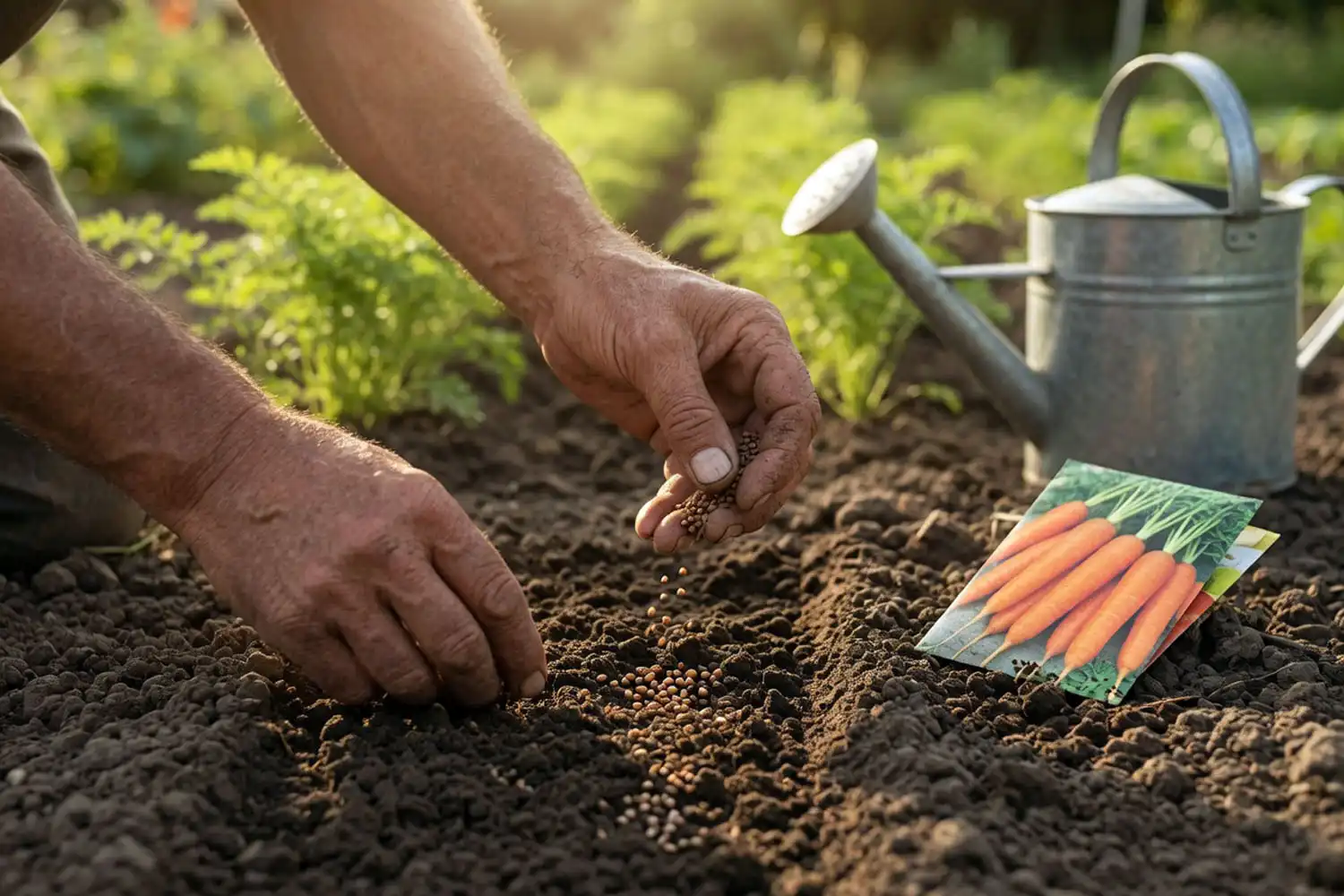
Carrots can plant in July for a fall harvest across most U.S. regions. Count back 10 to 12 weeks from your average first fall frost, then sow. Shade and steady moisture get seeds up through summer heat.
July sowings mature in cool fall weather. That cool stretch builds sweeter roots and dodges the pests that hammer spring carrots. The only real hurdle is heat at the start. Warm summer soil fights germination, so you protect moisture and temperature for the first two weeks. After that, the calendar works in your favor.
When in July Should You Plant Carrots?
Plant 10 to 12 weeks before your average first fall frost. That window sets your exact July date. Carrots need 65 to 75 days to size up, plus a buffer for slow summer germination and shorter fall days. So you count backward from your frost date and you usually land in July across the northern and central states.
The first frost runs around mid-October. Sow fall carrots from about July 20 into early August. Gardeners farther north plant earlier in the month. Folks in the Deep South often wait until late summer, because July soil there cooks the seed before it sprouts.
How Do You Count Back From Your First Frost?
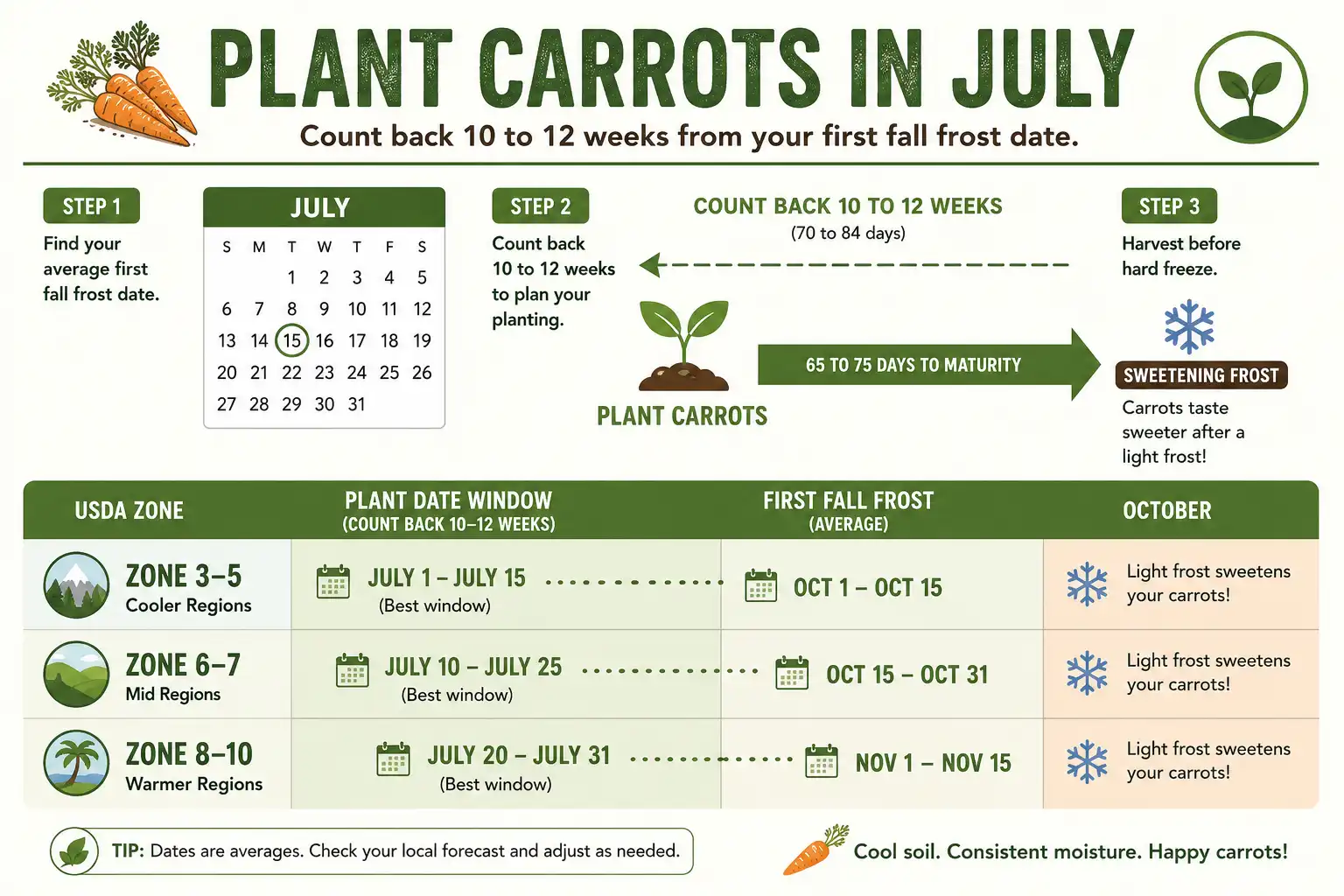
Find your average first fall frost, then subtract about 11 weeks. Pull your date from USDA records or your land-grant extension, like K-State Research and Extension in Kansas, instead of guessing. Then add a week of cushion for July’s slow, hot germination. So if your frost lands October 15, your sowing falls near the last week of July.
July Carrot Planting by USDA Zone
Your USDA hardiness zone points you to the right week. In zones 3 to 5, across the Upper Midwest and Northern Plains, plant early to mid July, since fall arrives fast. In zones 6 to 7, including the Great Plains and the Mid-Atlantic, planting typically happens mid to late July. In zones 8 to 10, across the Deep South and Southwest, July soil usually runs too hot, so most growers wait for August or September or sow under heavy shade.
How Late in July Can You Plant Carrots?
You can sow through the last week of July in most of zones 5 through 7. Past that, your safe margin shrinks, so switch to a short-season variety that matures in 55 to 60 days. In short-fall regions, a late-July sowing only works if you protect the bed with row cover as nights cool. If you miss the window entirely, hold the seed for an early-spring planting rather than forcing a crop that runs out of season.
Why Do Fall Carrots Taste Sweeter?
Cool fall weather and light frost turn carrot starch into sugar. The plant does this to protect its cells from freezing. So a carrot pulled after a few frosts tastes far sweeter than any summer one. That single reason is a good reason to plant a July batch every year. Spring carrots rushed through heat often turn bitter or woody. Fall carrots stay crisp and sweet right into the cold.
How Do You Germinate Carrot Seeds in July Heat?
Keep the seedbed cool and constantly moist, and your July carrots will come up fine. Heat is the only thing working against you this month. Carrot seed is slow in any season, so steady attention through the first two weeks matters more than anything else.
What Soil Temperature Do Carrot Seeds Need?
Carrot seed germinates best between 55°F and 75°F. Once soil pushes past 80°F to 85°F, germination drops sharply and seed can rot in the ground. July soil in full sun often runs hotter than that. So your whole job is pulling that surface temperature down while seeds sprout.
Six Ways to Beat the Heat at Seeding
- Water lightly once or twice a day. The top half inch can never dry out, even for an afternoon.
- Lay a board or burlap over the seeded row, then pull it the moment sprouts appear.
- Run a 30 to 50 percent shade cloth over the bed through midday.
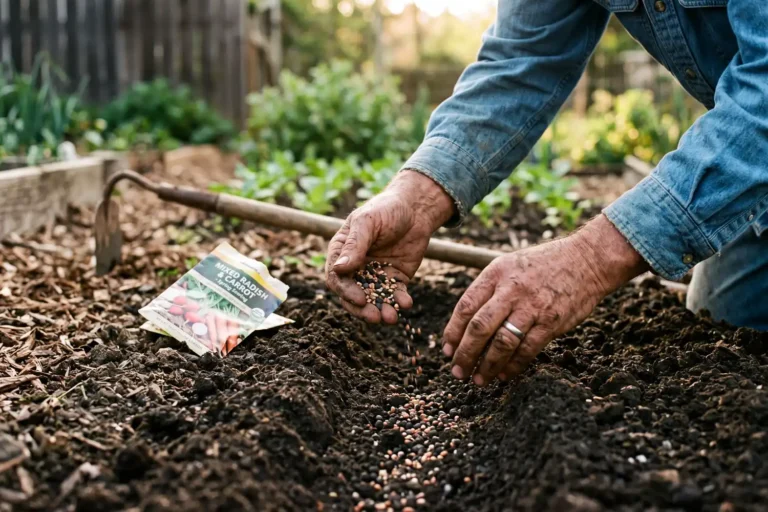
- Sow a touch deeper, about half an inch, where soil holds moisture longer.
- Pre-sprout seed indoors on a damp paper towel, then sow once tiny roots show.
- Mulch the paths, not the seed line, to hold soil moisture without trapping seedlings.
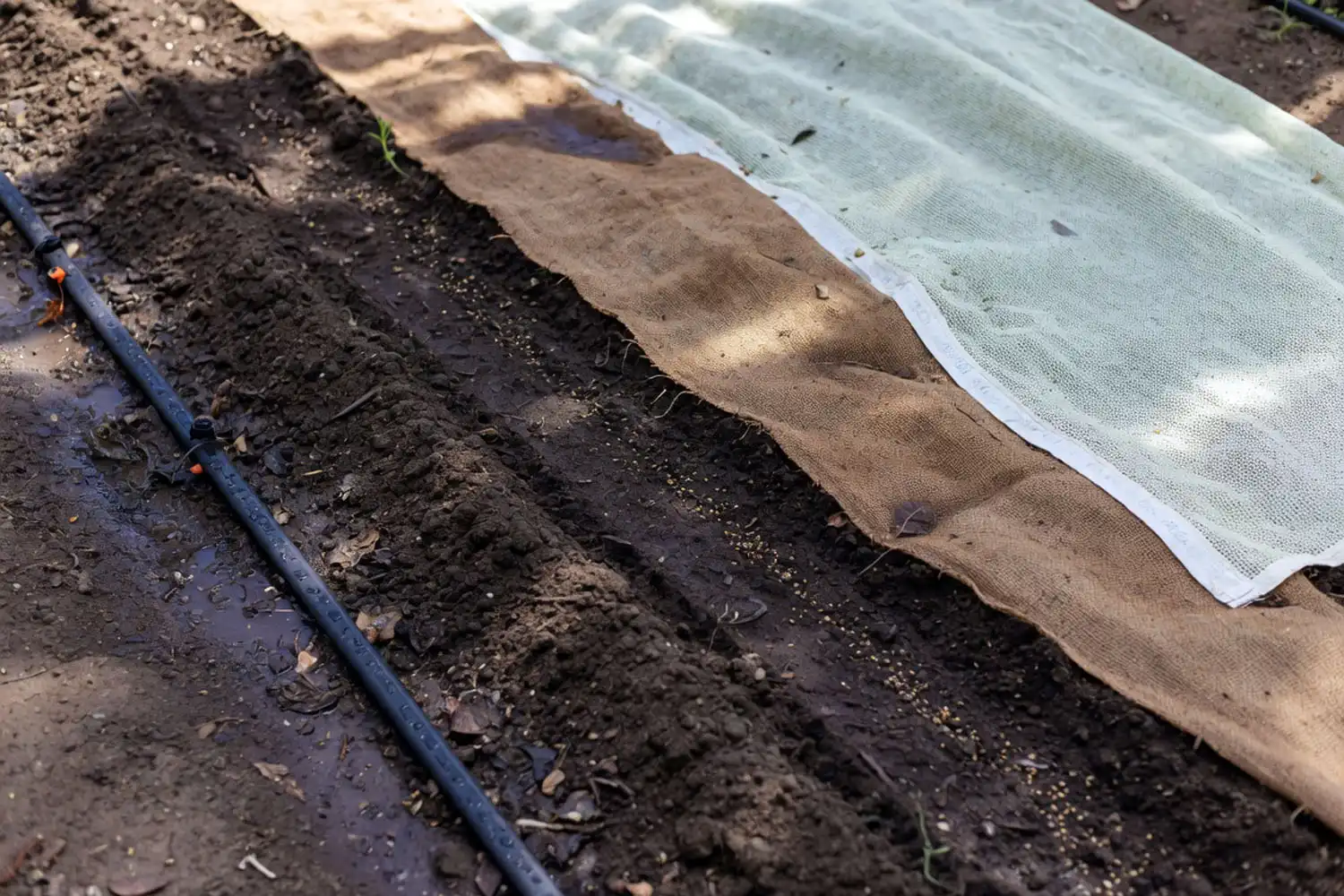
Plan your watering around the fact that nothing shows for a week or more, so it helps to know how soon carrot seeds germinate before you panic over a bare row. A hard crust is the other July killer, so irrigating carrots early to prevent crusting keeps the surface soft enough for fragile sprouts to break through.
Do Carrots Need Full Sun in Summer?
Carrots want full sun once they’re growing, but young July seedlings do better with afternoon relief. Mature plants need six to ten hours of direct light to size up their roots. Tiny sprouts, though, scorch fast in hot afternoon sun and dry out the seed line. Shade the bed at midday until plants stand a couple inches tall, then let the sun through. If you’re unsure whether carrots want full sun or shade, split the difference for the first two weeks and give them open sun after that.
Best Carrots to Plant in July
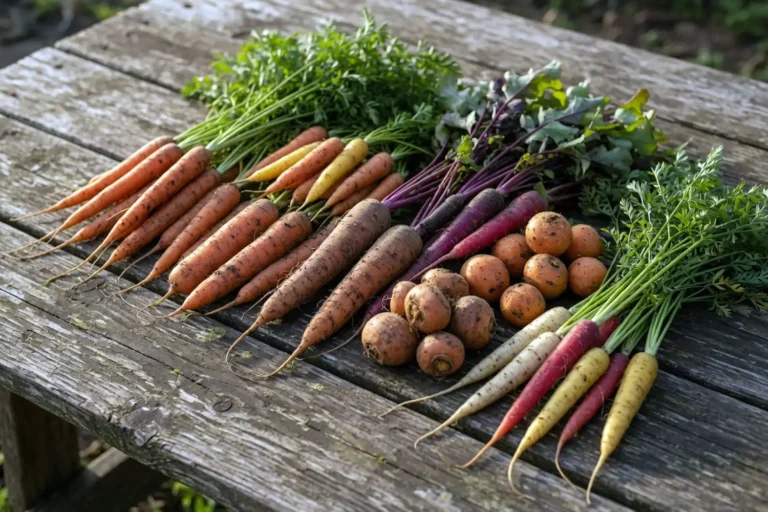
Pick varieties with shorter maturity and good cold-weather flavor. Nantes types like Bolero and Napoli size up quickly and stay sweet through frost. Danvers handles heavier soil and stores well into winter. For late-July sowings, lean toward anything listed around 55 to 65 days to maturity. Skip the giant storage carrots if your fall is short, because they run out of season before they fill out.
Can You Grow July Carrots in Raised Beds or Containers?
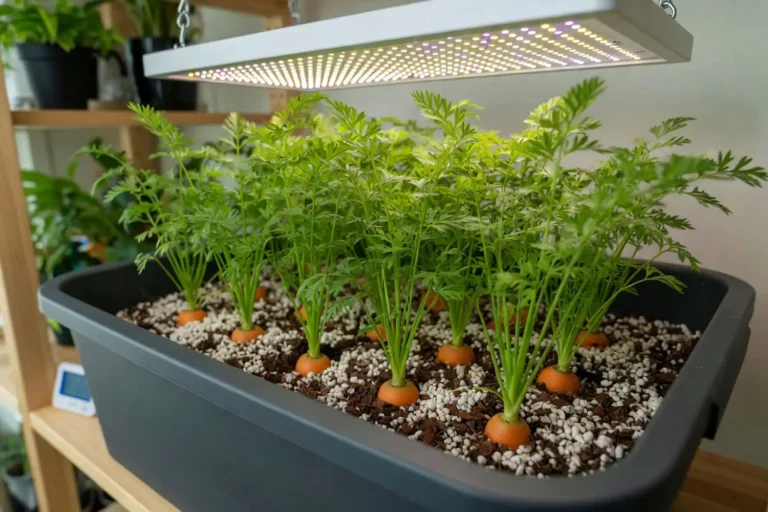
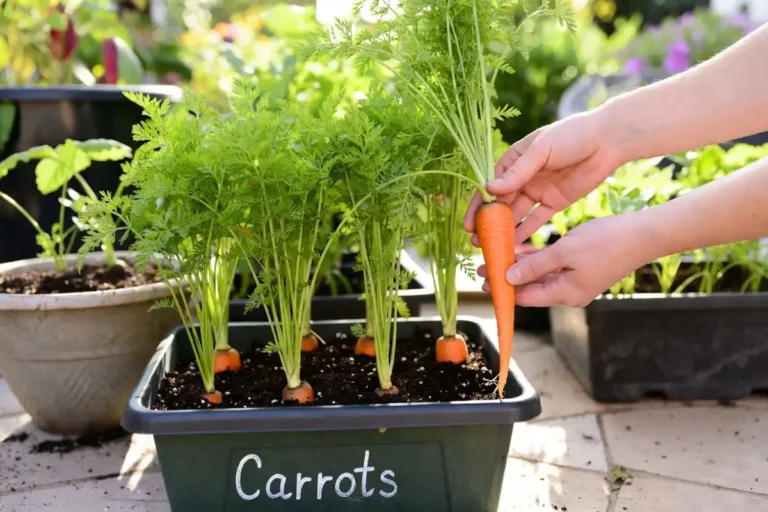
Yes, raised beds and deep containers work well for July carrots, and they often beat in-ground rows in summer. A raised bed drains fast and lets you build loose, rock-free soil that grows long, straight roots. A container needs at least 12 inches of depth so taproots run deep. The catch is heat. Beds and pots warm faster than open ground, so water more often and shade the surface until seedlings come up. After that, the better drainage and easy access pay off all fall.
How Do You Care for July Carrots Into Fall?
Once your carrots are up, the work stays simple. Get thinning, water, and weeds right, and the cool fall does the rest.
Thinning and Spacing
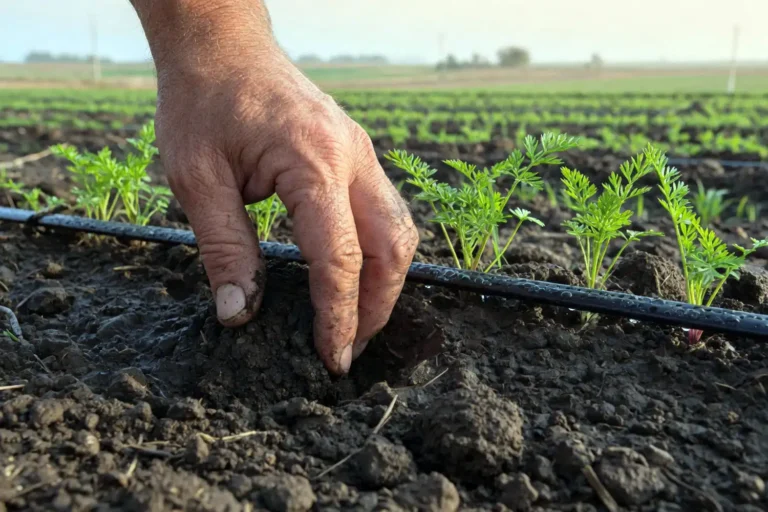
Thin seedlings to one to two inches apart once they reach about two inches tall. Crowded carrots stay small and twist around each other. Snip the extras at soil level instead of pulling, so you don’t disturb the roots staying put. Getting in early to thin the carrot seedlings is the difference between full roots and a tangled clump.
Watering and Feeding
Give about an inch of water a week, and more during any late-summer heat wave. Steady moisture prevents splitting and forking as roots swell. Go easy on nitrogen too, since too much grows leafy tops and hairy, forked roots. A balanced feed or finished compost worked into the bed before sowing is plenty.
Weeds and the Pest Advantage
Keep weeds down early, because young carrots lose every race for light and water against faster seedlings. A July sowing also sidesteps the spring flush of the carrot rust fly, whose first generation lays eggs while spring carrots are tender. So your fall crop usually grows cleaner with less damage at the crown.
When Can You Harvest July-Planted Carrots?
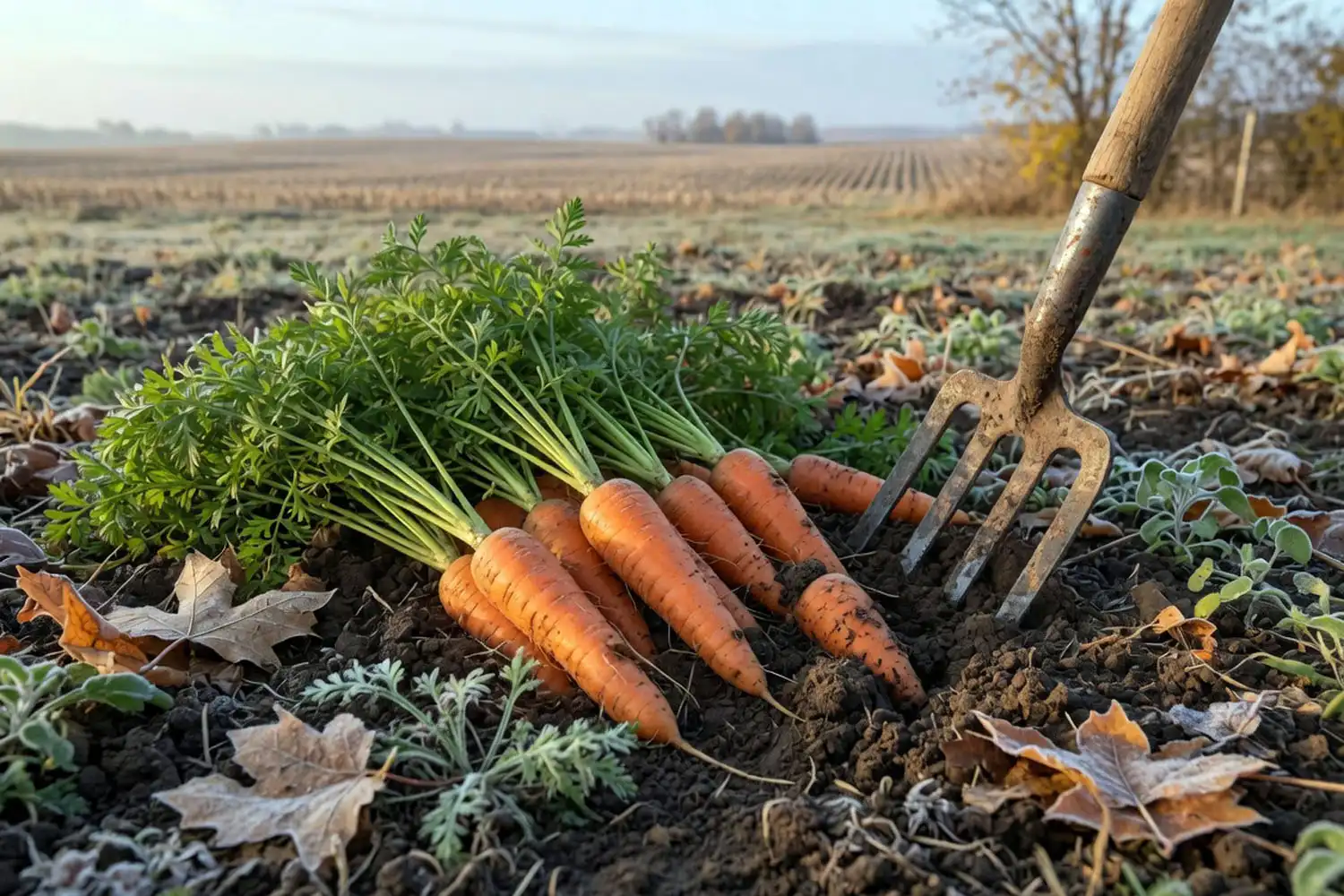
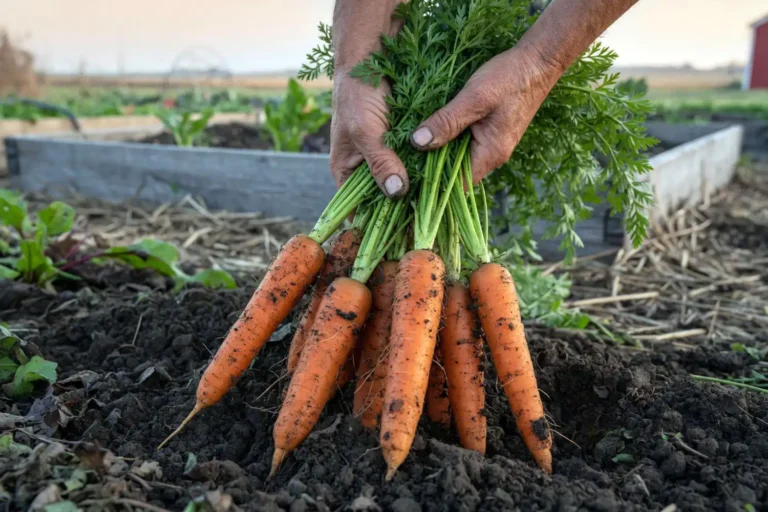
Most July carrots are ready 65 to 75 days after sowing, usually October into November. Pull one test root to check size before you dig the whole row, and use carrots harvesting as your size and timing guide. You can also leave them in the ground. A thick layer of straw mulch protects the roots well past the first hard freeze, and they keep sweetening underground, so it pays to learn how much cold carrots can take before winter sets in hard.
What to Do With July Carrots in the Fields
A July sowing earns its place every season. Count back about eleven weeks from mid-October, prep a deep loose bed, and protect the seedbed with shade and water until sprouts show. From there, the cool fall does the heavy lifting. If this is your first try, sow in the third week of July, keep that top inch damp without fail, and harvest after the first frost for the sweetest carrots you’ll grow all year.