How Much Depth Do Carrots Need to Grow? Depth by Variety
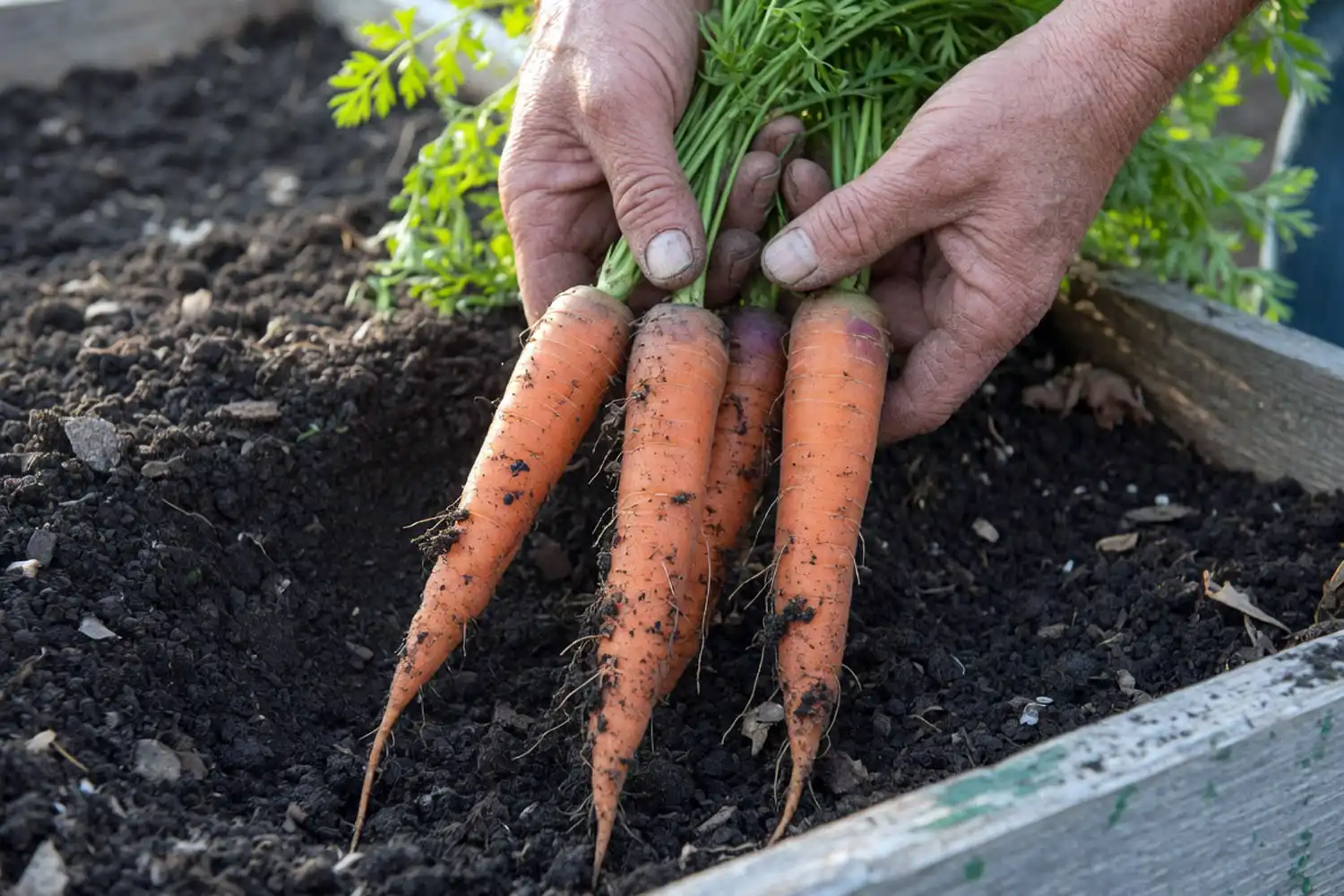
Soil depth makes the difference between long, straight carrots and stunted, forked ones. How much depth do carrots need to grow depends on the variety you pick, but most need more loose soil than folks expect.
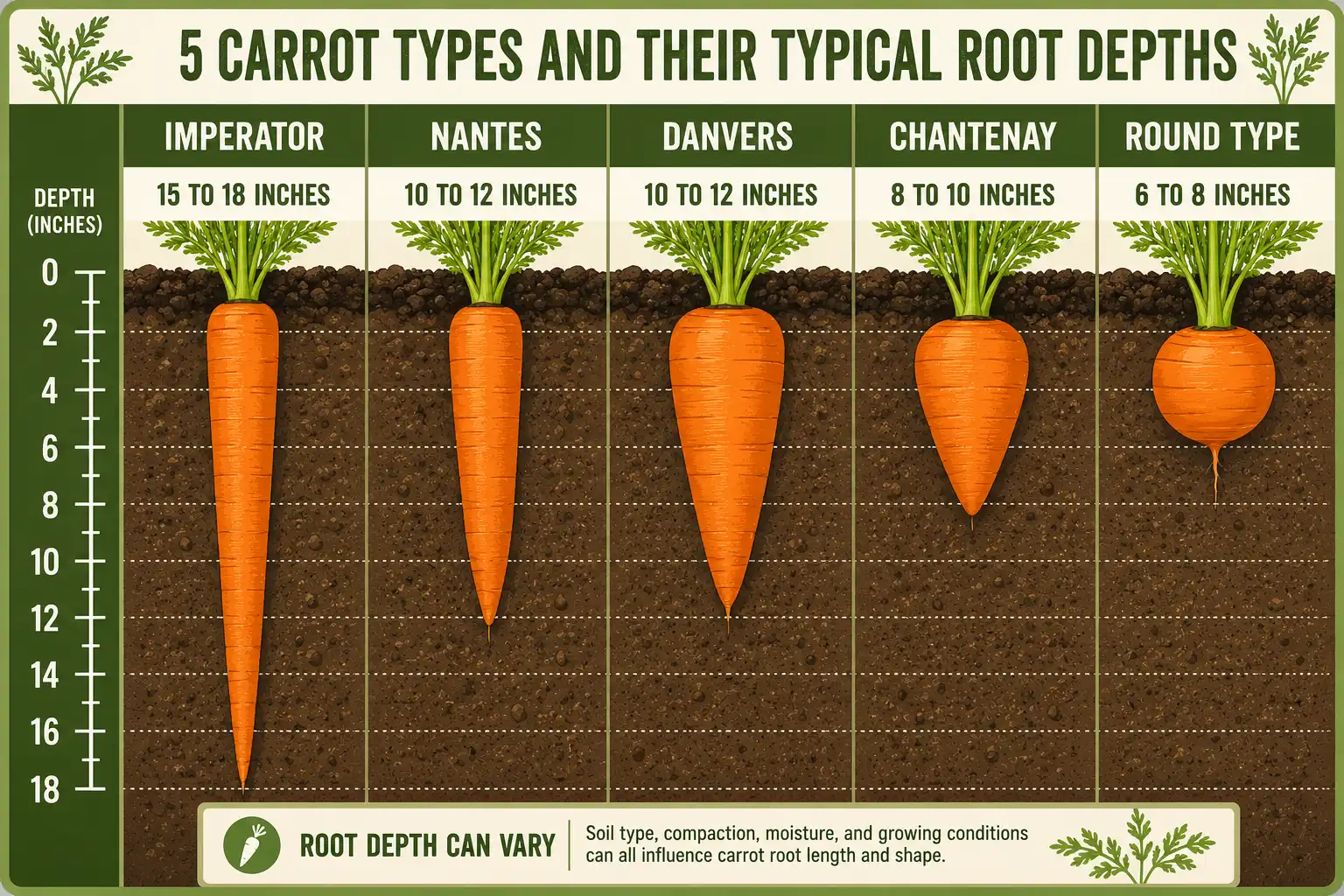
Most carrots need at least 12 inches of loose, rock-free soil to develop straight roots. Short Chantenay types manage in 8 inches, while long Imperator types want 15 to 18 inches.
How Much Depth Exactly Do Carrots Need to Grow?
Most carrot varieties need at least 12 inches of loose, workable soil to grow straight. That number is the floor, not the goal. Carrots are a taproot crop, so the root you eat grows straight down. The deeper your loose soil runs, the longer and cleaner that root can get.
Here is the rule to follow. The root needs as much loose depth as its mature length, plus a little margin. A 7-inch Nantes carrot wants 10 to 12 inches of give. A 9-inch Imperator wants 15 inches or more. Give the tip room, and it keeps driving down. Run it into a hard layer, and it stops or bends.
The catch is what sits below your topsoil. Carrots do not care how deep you dug on paper. They care where they hit resistance. A compacted layer, a buried rock, or a clay pan at 6 inches will stop a root cold, even if the surface feels soft.
So test your bed before you sow. Push a thin metal rod or a long screwdriver straight into the soil. Where it stops easy, your loose depth ends. That spot is your real ceiling. Daucus carota is forgiving in plenty of ways, but not about this one. Loose depth is the thing that builds a good carrot.
Why Carrots Need Loose Soil All the Way Down
The root is the entire crop, so the soil it grows through decides the shape. With most vegetables, you harvest fruit or leaves above ground. With carrots, you eat the part fighting through your soil every day. That changes how careful you have to be below the surface.
Three things below ground wreck a carrot crop. First, compaction. Tight soil forces the root to push hard, and it ends up short and blunt. Second, rocks and clods. The tip hits an obstacle, then splits or bends around it. Third, too much nitrogen or fresh manure. Heavy nitrogen pushes leafy top growth and gives you hairy, forked roots instead of one smooth taproot.
Texture matters as much as depth. Carrots do their best work in sandy loam that crumbles in your hand. Heavy clay holds water, packs tight, and twists roots. If you garden on clay like a lot of growers do, picking the right soil texture for straight carrots will save you more grief than any fertilizer ever will.
Keep your pH in range too. Carrots like soil between 6.0 and 6.8. That band keeps nutrients available and roots steady. A simple soil test tells you where you stand before you plant.
Carrot Soil Depth by Variety
Match the variety to the depth you actually have, not the depth you wish you had. The four main carrot types grow to different lengths, so each one wants a different soil depth. Pick the type that fits your bed, and you skip most shape problems.
Imperator. Long and slender with a tapered, pointed tip. Roots run 8 to 10 inches. These are the carrots you see at the store, and they are the fussiest about depth. Give them 15 to 18 inches of loose soil. Anything less, and the tips blunt off or fork.
Nantes. Cylindrical with a blunt tip and excellent flavor. Roots reach 6 to 7 inches. Nantes types like Bolero and Scarlet Nantes grow fast and stay sweet. Work the soil to 10 to 12 inches and they perform well in most home beds.
Danvers. Conical, with broad shoulders that taper to a point. Roots hit 6 to 8 inches. Danvers was bred for heavier ground, so it handles some clay better than Nantes. Aim for 10 to 12 inches of loose soil.
Chantenay. Short and stout, wide at the shoulder. Roots stay around 4 to 5 inches. Chantenay tolerates clay and shallow beds better than any full-size type. Eight to 10 inches of worked soil is plenty.
Ball and round types. Varieties like Paris Market grow into small spheres only 1 to 2 inches across. They need just 6 to 8 inches of soil, which makes them the right call for shallow beds and containers.
How Deep to Plant Carrot Seeds
Plant carrot seeds only 1/4 inch deep, no deeper. This trips up new growers, because seed depth and root depth are two separate things. The root needs a foot of loose soil below it. The seed itself sits right near the surface.
Carrot seed is tiny and weak. Bury it too deep, and it runs out of energy before it reaches daylight. So sow shallow into a fine, smooth bed. Cover with a quarter inch of light soil or sifted compost, then firm it gently so the seed contacts the soil.
The hard part comes after sowing. Carrot seed needs steady moisture for two to three weeks to germinate, and the soil surface cannot crust over. A hard crust blocks the sprout and thins your stand badly. Keep the top moist with light, frequent watering. If your soil tends to seal up, learning how to irrigate carrots early to beat soil crusting is worth the time before your first sowing.
Sow seeds about an inch apart in the row. Once seedlings stand 2 to 3 inches tall, thin them to 2 to 3 inches between plants. Crowded roots stay small and tangle, so do not skip thinning. Good spacing up top supports the depth you built below.
How Much Depth Do Carrots Need in Containers?
Containers need at least 10 to 12 inches of depth for standard carrots, and deeper is better. Pots and grow bags are the smart move when your ground is rocky or heavy clay. You control the soil, so you control the shape of the root.
Match the pot to the type. Standard Nantes or Danvers carrots want a container 12 inches deep. Long Imperator types need 16 inches or more, so most growers skip them in pots. Short and round varieties thrive in 8 inches, which makes them the easy winner for shallow planters.
Fill containers with a loose, free-draining mix, not heavy garden soil. A blend of potting mix with added sand and compost drains well and stays crumbly. Drainage holes are not optional, because soggy soil rots roots fast. For a full setup, our guide on growing carrots in containers walks through soil mix, watering, and spacing step by step.
How Deep Should a Raised Bed Be for Carrots?
Build raised beds with at least 12 inches of loose soil, and 18 inches for long varieties. Raised beds are a reliable way to grow clean carrots, because they sit above compacted ground and warm up early in spring. The depth you fill is the depth the root gets, as long as what sits below the bed is loose too.
Watch the layer under the bed. A 6-inch raised bed set on a hard, compacted base only gives roots 6 inches before they hit resistance. So either build the frame tall enough, or loosen the native soil beneath it with a fork before you fill. That way the loose column runs deep, not just the part you added.
Mix your fill for both depth and texture. Roughly 60 percent quality topsoil, 30 percent compost, and 10 percent coarse sand makes a bed carrots love. Work it to a full 12 inches, level the surface, and remove any stones as you go.
What Happens When the Soil Is Too Shallow
Shallow or compacted soil gives you forked, stunted, and split carrots. When the taproot hits a hard layer, a rock, or a clay pan, it cannot keep driving straight. So it branches, twists, or stops growing. The result is the gnarled carrots most growers have pulled at least once.
Forking is the most common sign. A root meets a stone or compaction, then splits into two or three legs around it. Stunting comes next. Roots that run out of loose depth stay short and stubby, no matter how long the season runs. Splitting and cracking show up when soil dries out hard, then gets a heavy soak.
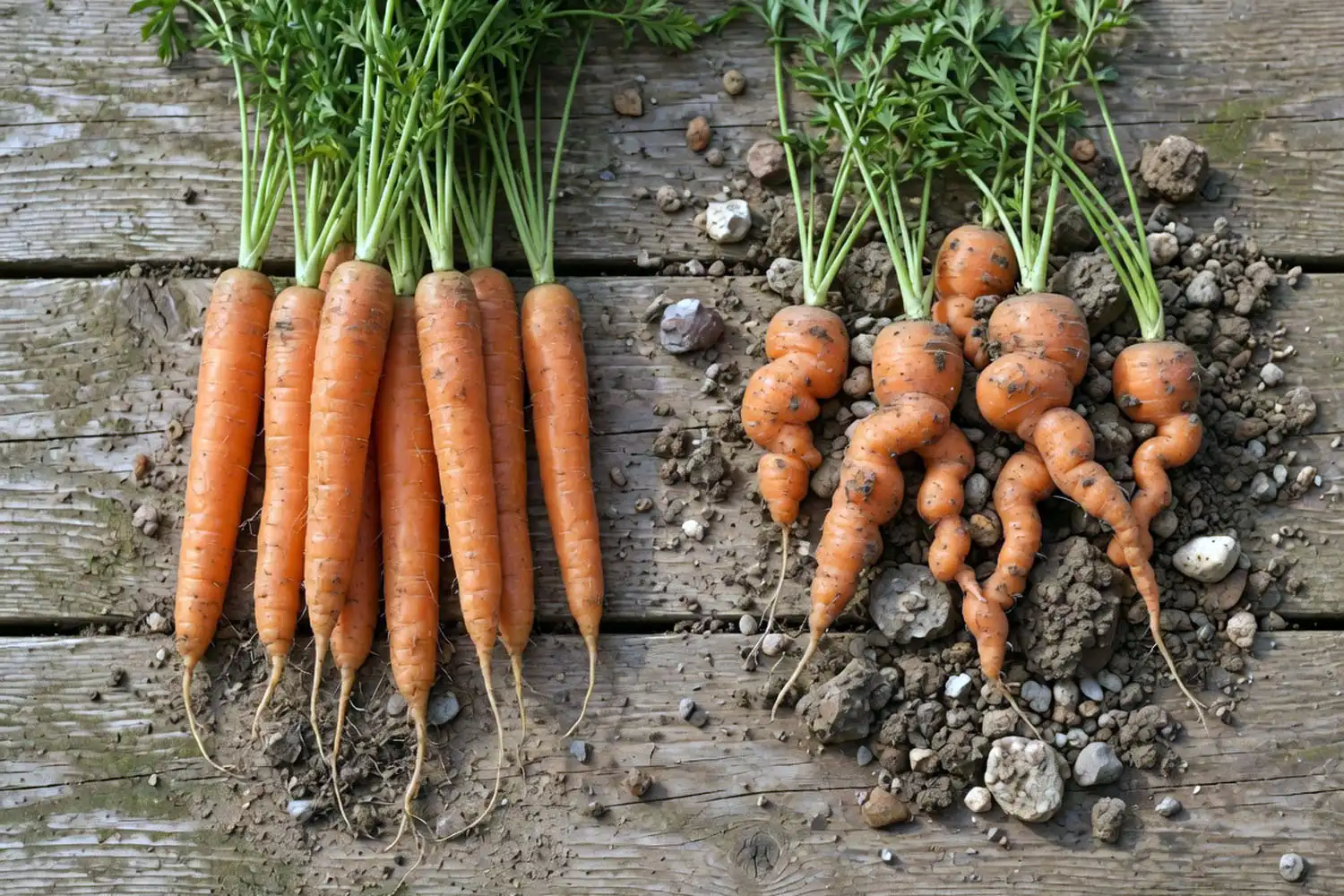
The fix is almost always more loose depth and fewer obstacles. If your roots keep forking, your soil is too tight, too rocky, or too shallow for the variety you chose. Switch to a shorter type, or open the soil deeper before your next sowing.
How to Prepare Soil to the Right Depth
Loosen your soil to 12 to 18 inches and pull every stone before you sow a single seed. This is the work that decides your crop, so do it once and do it right. Here is the order on the own beds.
Start by testing the depth and the pH. Push a rod down to find where the soil tightens, and run a soil test for pH and nutrients. Then loosen deep. A broadfork or double-digging opens the soil to a foot or more without flipping the layers. On field-scale ground with a tillage pan, a subsoiler breaks that compacted layer so roots can pass through.
Next, clear the bed. Remove rocks, old roots, and clods from the top foot, because even a stone the size of a marble can fork a root. Sift small beds by hand if you need to. After that, add 2 to 4 inches of well-rotted compost and work it into the top 12 inches. Skip fresh manure. It burns roots and pushes hairy, forked growth.
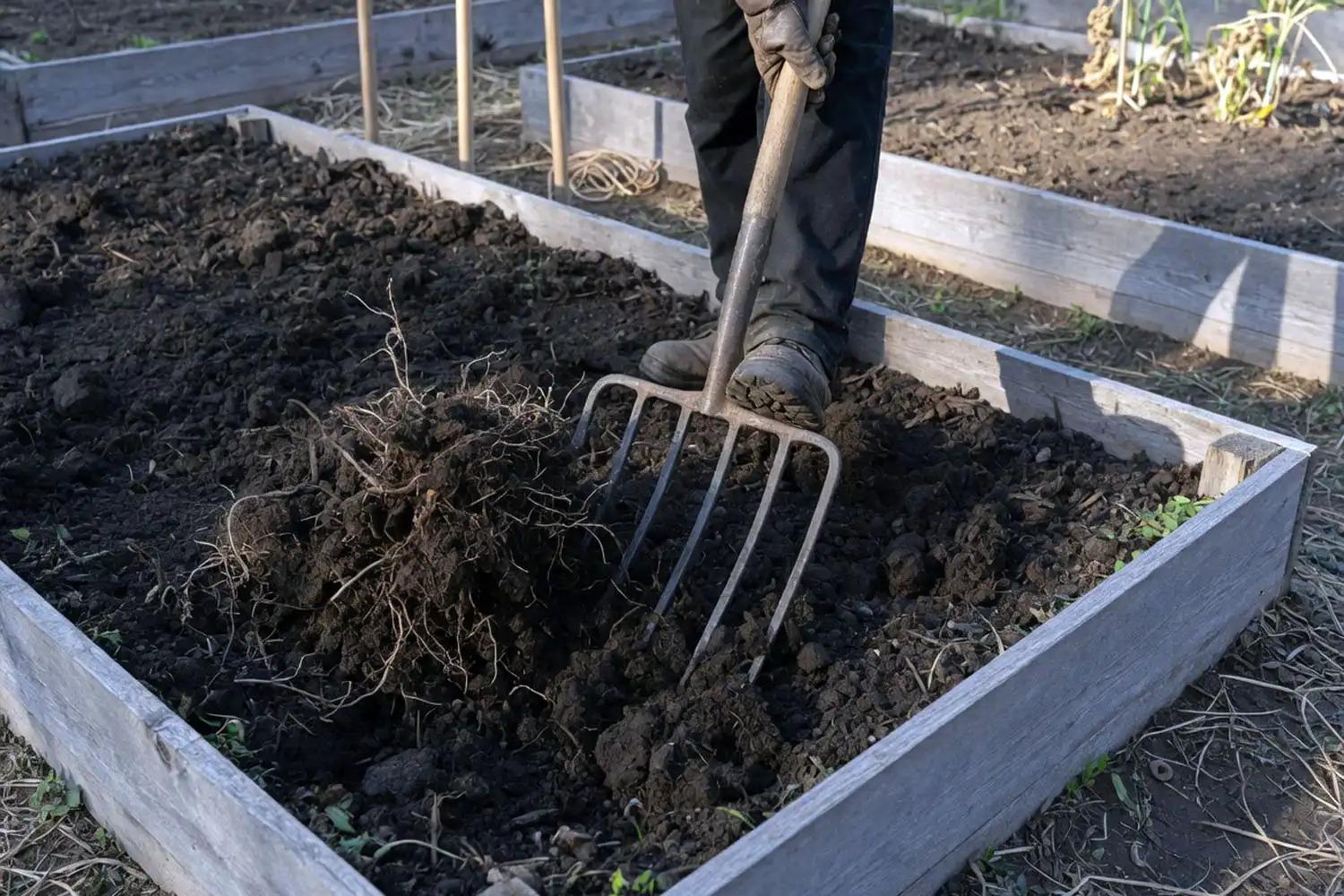
Finish by protecting the loose soil. Do not step on the bed or pack it down after you prep it. Rake the surface fine and smooth so tiny seeds sit right. A loose, level, stone-free bed gives carrots the open run they need from the first day.
What to Do in the Beds
Keep it simple. Broadfork the carrot beds to a full 12 inches every spring, pull the stones, and work in compost. For most of the rows, grow Nantes and Danvers types, because they fit that depth and taste great fresh. When the soil runs heavy, drop to Chantenay or round varieties instead of fighting it.
If this is your first carrot season, start with one thing. Get a foot of loose, rock-free soil, then match your variety to that depth. Do that, and straight carrots stop being luck.