What Soil Texture Grows Straight Carrots: 9 Simple Bed Prep Steps
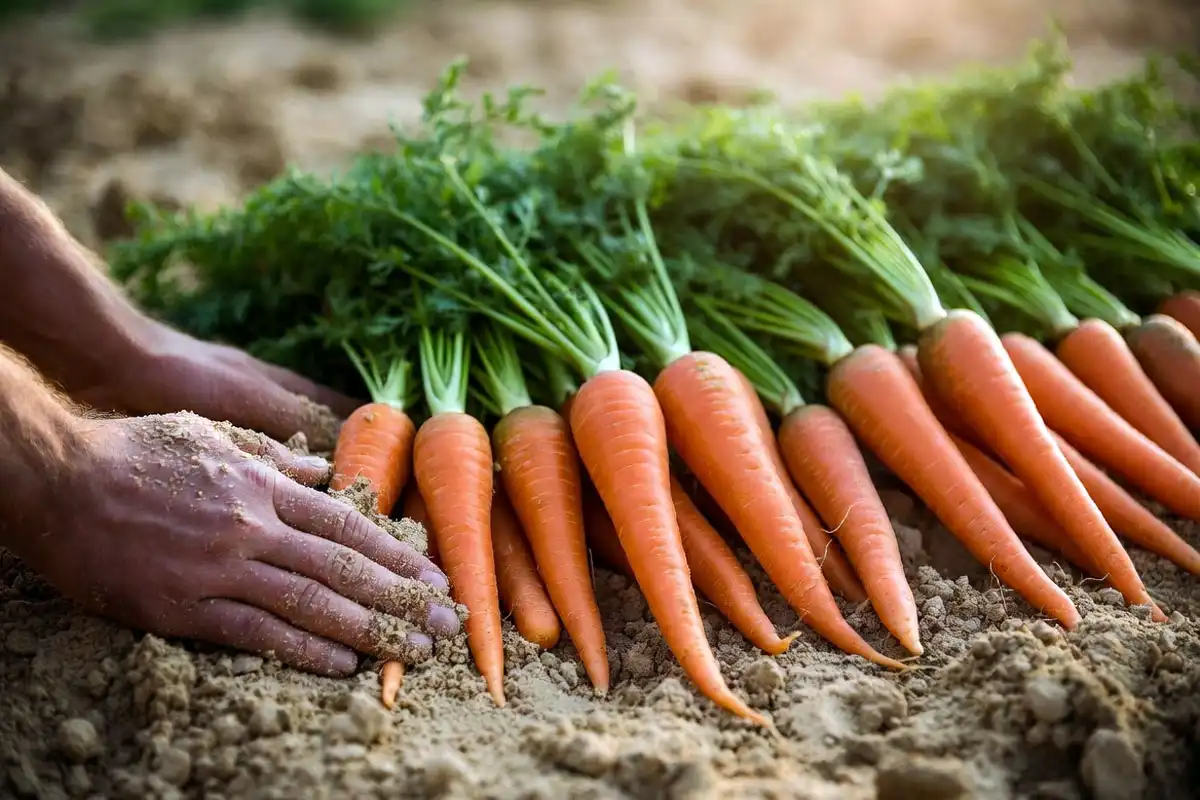
Straight carrots grow best in deep, loose, stone-free sandy loam or loamy sand that crumbles easily and drains well. This guide explains how soil texture and compaction shape carrot roots, how to test your soil at home, and how to adjust sandy, silty, or clay-heavy ground so roots grow long and clean. You will get a step-by-step bed prep plan, fixes for common problems like forked or stubby carrots, and simple checks to keep the seedbed loose from sowing through harvest.
Straight carrots form best in light sandy loam or loose loam with a fine crumb and no rocks in the top 8 to 9 inches. That texture gives the taproot a clear path, so it grows downward instead of splitting around obstacles. Keep the bed evenly moist, avoid foot traffic, and add finished compost to improve structure. A soil pH around 6 to 7 supports steady growth.
What soil texture grows straight carrots?
Straight carrots grow in light sandy loam because that texture stays loose, drains excess water, and still holds enough moisture for steady root growth. The University of Minnesota Extension also points to light sandy loam as “good soil for growing well-shaped roots,” and notes that heavier clay works when it stays well-drained and not compacted.
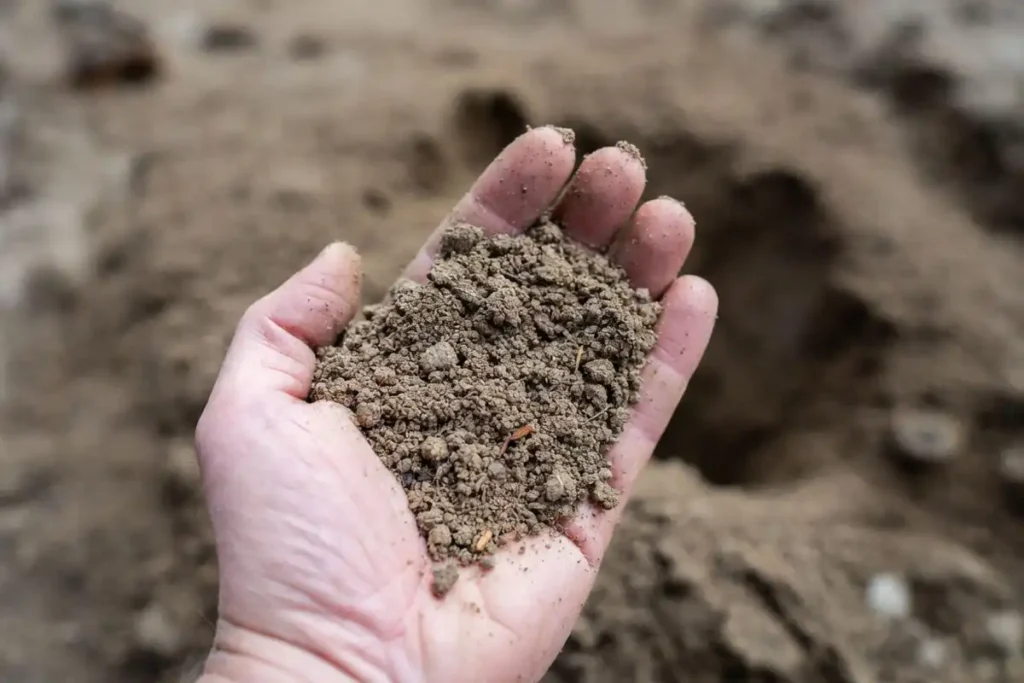
Here’s what “carrot-friendly” texture looks like in your hand:
- Soil breaks apart easily after you squeeze it.
- Soil feels gritty but also has some “body,” not beach sand.
- Soil has few stones, wood chunks, or hard clods in the root zone.
Texture is the sand, silt, and clay mix. Structure is how those particles clump into crumbs. Straight carrots need both a light texture and a crumbly structure.
Learn more: How to Seed Carrots Without Wasting Seed
Why does soil texture control carrot straightness?
Carrots grow one main taproot early, and that root pushes into the soil profile fast. If the taproot meets a rock, a tight clay layer, or a hard clod, it bends, forks, or stalls. University of Maryland Extension lists rocky or compacted soil as a direct cause of deformed root crops because roots hit obstacles like rocks and tight clay.
Compaction matters as much as texture. A clay loam bed can grow straight carrots when it stays loose, drains well, and stays off-limits to foot traffic.
When do you fix soil texture for carrots?
Fix texture before sowing, not after seedlings emerge. Carrot roots start shaping early, so the bed needs to be ready from day one.
A good rhythm looks like this:
- Fall or early spring: loosen the bed and add organic matter so weather helps settle it. The University of Minnesota Extension notes soil improves with well-rotted manure or compost in spring or fall.
- Right before planting: rake the surface into a fine seedbed and remove fresh clods that formed over winter.
Avoid working soil when it is wet and sticky. Wet tillage smears clay and creates a hard layer that carrots struggle to penetrate.
Also see: When Do Carrots Germinate: 9 Fast Checks
Where does soil texture matter most for straight carrots?
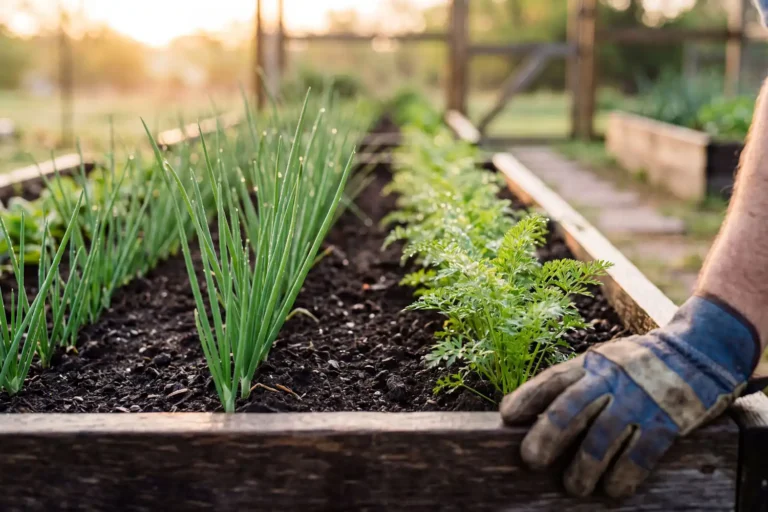
In-ground beds: Native soil often carries stones, old roots, and compacted layers. That is where forking starts.
Raised beds: Raised beds help because you control the fill and keep traffic off the growing zone. Oregon State University Extension notes carrots grow best in loose, well-drained soil or raised beds.
Containers: Containers avoid rocks and compaction, but they need depth and a light mix. If you grow in pots, follow a container-specific setup like this guide on growing carrots in containers.
How to test your soil texture at home
How do you do the “texture-by-feel” ribbon test?
The ribbon test gives a fast read in the field. Kansas State University Extension lays out the basic steps: wet soil into a ball, press it between thumb and forefinger, and measure how long the ribbon holds before breaking.
Steps (order matters):
- Grab a handful of soil from the top 6 to 8 inches and remove stones.
- Add water and knead until it feels like putty.
- Press soil between your thumb and forefinger to form a ribbon.
- Note ribbon length and how gritty or sticky it feels.
Quick read:
- No ribbon and gritty feel points to sand-heavy soil.
- Short ribbon with some grit often lands in loam or sandy loam territory.
- Long ribbon and sticky feel points to clay-heavy soil.
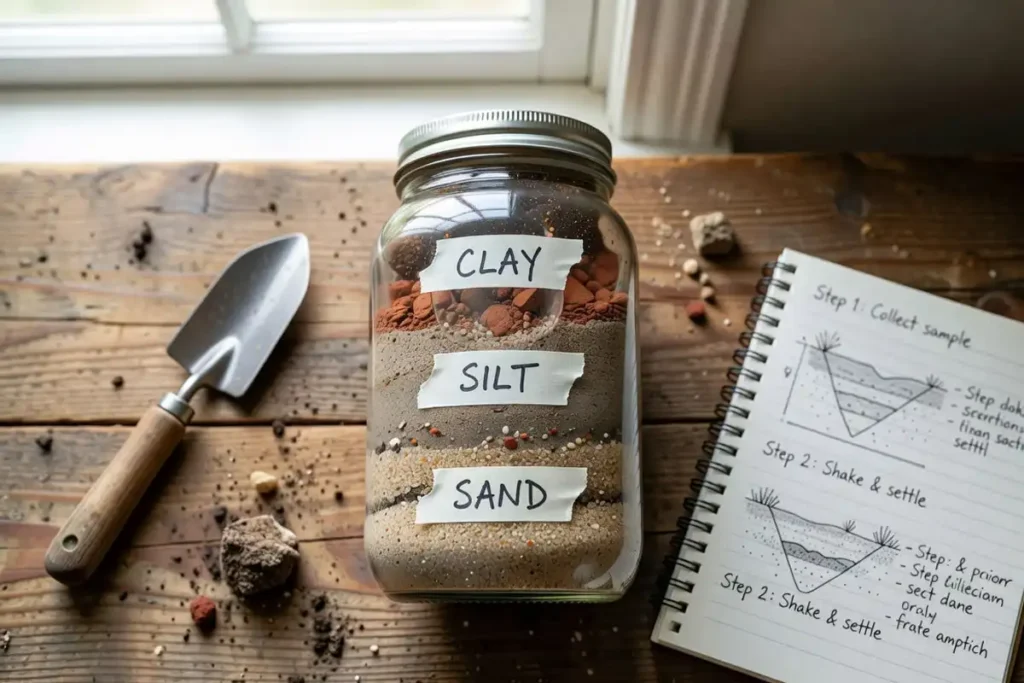
How do you do the jar test for a clearer answer?
The jar test takes longer, but it shows sand, silt, and clay as layers. Clemson’s Home and Garden Information Center outlines a clear method with timings and marks.
Steps (order matters):
- Sift soil to remove debris and rocks.
- Fill a clear jar ⅓ full of soil.
- Fill the rest with clean water, leaving headspace.
- Shake until it turns into a uniform slurry.
- Let it sit 1 minute and mark the settled coarse sand.
- Let it sit 2 hours and mark the silt layer.
- Let it sit 48 hours and mark the clay layer.
- Measure each layer and calculate percentages.
After you have percentages, you can classify the texture with the USDA NRCS tool.
How to prepare a carrot bed so roots grow straight
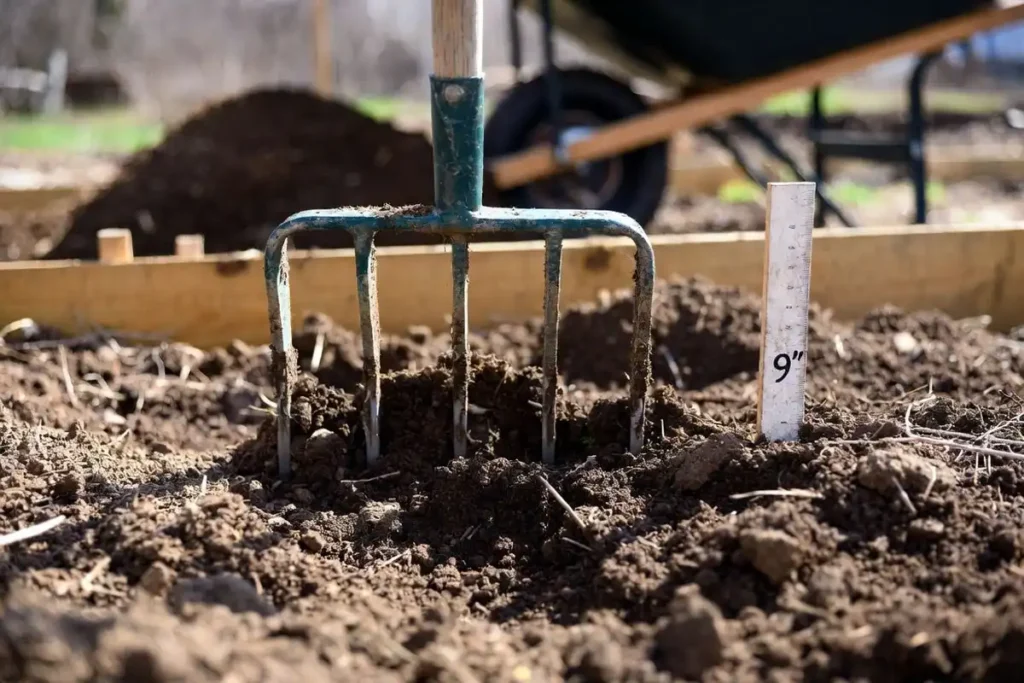
The University of Illinois Extension notes that carrot soil benefits from being prepared to 8 to 9 inches so roots develop fully and clods do not block penetration.
Step-by-step bed prep (order matters):
- Pick the right spot. Choose a bed you can reach from the sides so you do not step on it.
- Clear obstacles. Remove stones, sticks, old roots, and chunks of wood.
- Loosen the root zone. Work the bed to about 8 to 9 inches, then break clods until the soil crumbles.
- Build crumbs, not powder. Mix in finished compost to improve structure, then rake smooth. A compost guide like compost for farming helps you pick a stable, finished product.
- Let the bed settle. Lightly water, then wait a day so the surface firms up for planting.
- Sow and thin correctly. Follow a proven planting workflow like how to plant carrots step by step, and thin early so roots do not crowd.
Bed check: If a hard crust forms after rain, break it gently with a light rake or a soft spray of water. Seedlings struggle when the surface seals.
Solutions by soil type
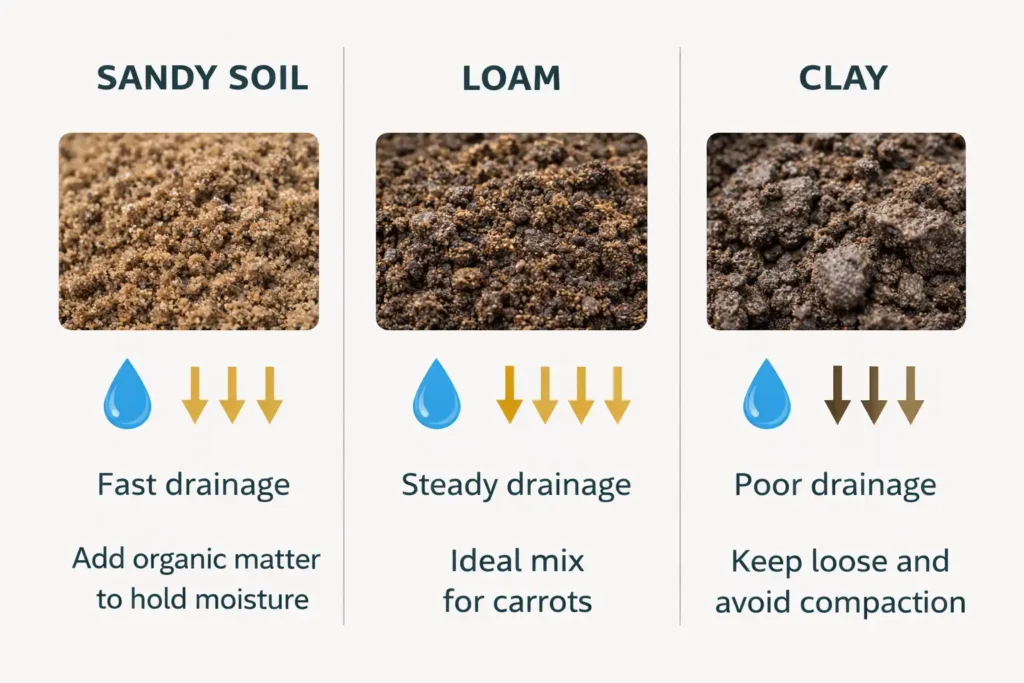
If your soil already feels like sandy loam
Keep it simple. Maintain crumb structure with compost, keep traffic off the bed, and water steadily so roots expand without stress.
If your soil is sandy and dries fast
Sandy soil drains quickly and loses moisture fast. Organic matter helps sandy soil hold water and nutrients. University of Missouri Extension explains that compost increases water and nutrient retention in sandy soils, while also improving soil tilth.
Work compost in over time and use mulch to slow evaporation. A practical mulch routine is laid out here: Guide to mulching in crop farming.
If your soil is silty and crusts after rain
Silty soils can seal on top, which blocks carrot emergence. Focus on surface management.
- Rake a fine seedbed, then keep the surface evenly moist.
- Cover seed lightly with fine material so seedlings push through.
- Use mulch after seedlings establish to reduce crusting swings.
If your soil is clay-heavy or compacts easily
Clay can grow straight carrots when it stays loose and drains well, but compaction changes everything.
- Add organic matter to build crumbs and improve infiltration.
- Loosen deeply when soil is workable, not wet.
- Keep all foot traffic off the bed.
Avoid tilling sand into clay as a “quick fix.” Colorado State University Extension notes that adding sand to clayey soil can have limited or negative impact unless used in large amounts, and in some situations it creates concrete-like properties.
If clay stays stubborn, shift carrots to raised beds, or use the shorter varieties in containers. For general soil improvement, this guide helps: improve soil fertility naturally.
Troubleshooting misshapen carrots
Why are your carrots forked?
Forking usually traces back to obstacles or disturbance. Illinois Extension notes forking often links to stones, poor soil preparation, or deep and close cultivation, and twisting can follow thick seeding with poor thinning.
Fix: Remove rocks, break clods, stop digging near rows after emergence, and thin seedlings early.
Why are your carrots short and stubby?
Short roots show up when a hard layer blocks the taproot, or when soil stays too tight. Check for compaction, then loosen the bed to the full root zone before the next planting.
Why do carrots split or crack?
Cracking often follows uneven moisture. A dry spell slows growth, then heavy watering triggers a growth surge that splits roots.
Fix: Water on a steady schedule and use mulch once seedlings establish.
Why do carrots look hairy?
Hairy roots often show up when soil compaction, high nitrogen, or stress pushes the plant to form extra fine roots.
Fix: Ease compaction, avoid heavy nitrogen, and keep moisture steady.
Avoid these common mistakes
- Working clay soil when it is wet. It smears and compacts into a hard layer.
- Leaving rocks and clods in the root zone. Carrots fork when roots hit obstacles.
- Planting thick and skipping thinning. Crowding distorts roots.
- Digging or cultivating deep beside carrot rows after seedlings emerge. Root damage shows up as forks.
- Adding sand to clay in small amounts. It can tighten the soil instead of loosening it.
- Using raw manure close to planting. Use composted manure, and rely on a soil test for nutrient decisions.
For fertilizer and pH, a basic soil test keeps you from guessing. This walkthrough helps: Guide on soil testing for farming.
Safety notes for soil prep and amendments
Wear gloves when handling compost or manure. Wash hands before eating or smoking. Use eye protection when chopping clods or edging beds, since small stones can pop loose.
Lift soil and compost with your legs, not your back. When you use a fork or broadfork, keep your feet clear of the tines and pull steadily. Store tools where kids and pets do not trip into them.
If you use manure, choose well-composted material. Iowa State University Extension notes composting manure reduces pathogen risk when the pile reaches 131°F or higher.
Conclusion
Straight carrots come from a simple setup: a light, loose soil texture, a crumbly structure, and a root zone free of rocks and hard clods. Start by testing your texture, then build a fine seedbed and protect it from compaction. Keep moisture steady, thin seedlings on time, and use organic matter to improve structure in both sandy and clay-heavy soils. Do that work up front, and carrot shape improves fast, harvest after harvest.