When Is a Good Time to Plant Tomatoes? 7 Timing Rules for Growers
Tomatoes grow best when you plant tomatoes after the last frost date, once soil temperatures reach at least 60°F (16°C) at the same time that you plant. This guide covers how to find your planting window, when to start seeds indoors, when to move seedlings outdoors, and which soil conditions to confirm before planting. The timing rules apply whether you farm a large field or tend a small plot. Get these factors right and tomato plants establish faster, root deeper, and produce a fuller harvest.
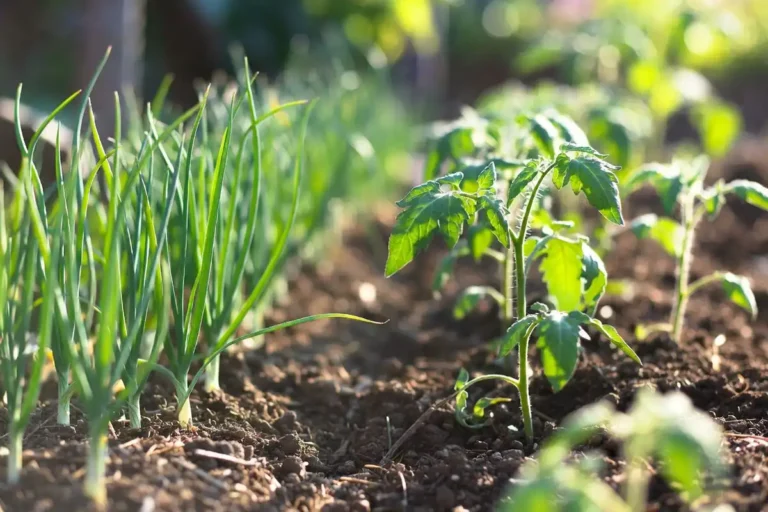
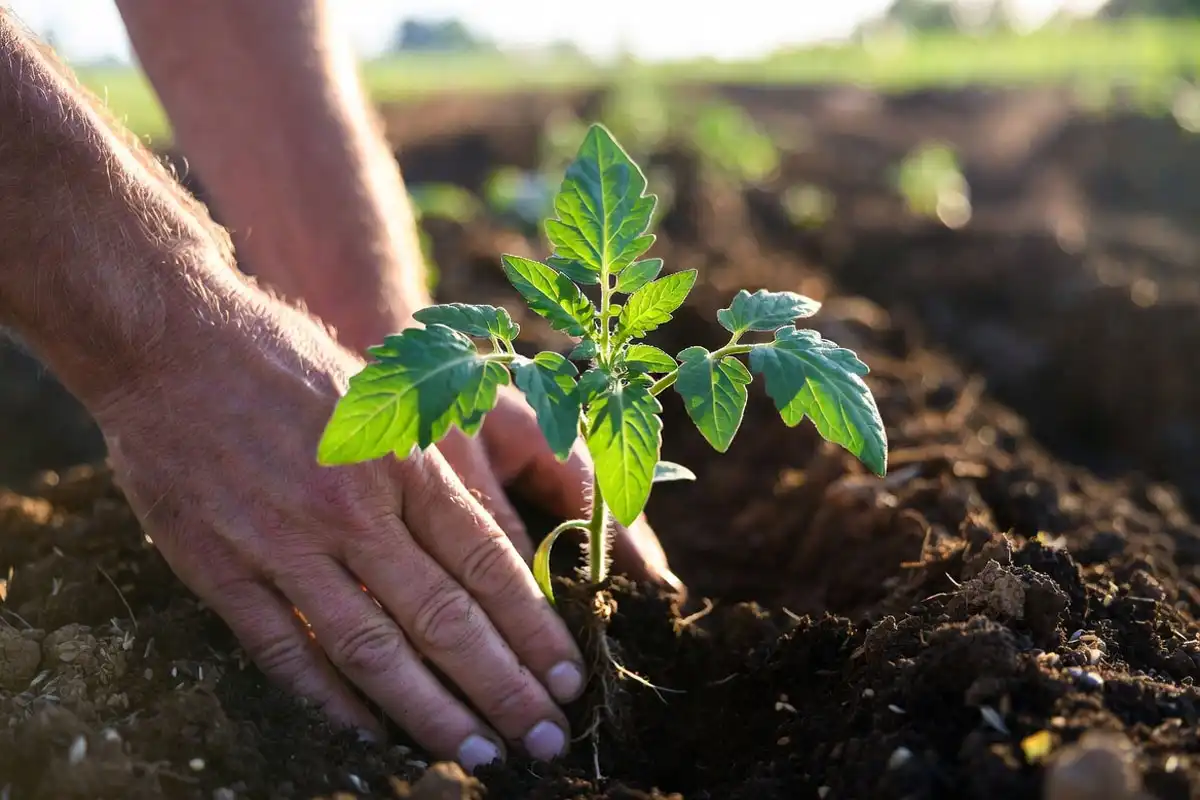
Plant tomatoes outdoors 1 to 2 weeks after your last frost date, when soil temperatures sit between 60°F and 70°F (16°C to 21°C). In most U.S. regions, this window falls between late April and early June. Start seeds indoors 6 to 8 weeks before your planned transplant date.
What Determines the Right Time to Plant Tomatoes?
Two factors set the correct planting time: last frost date and soil temperature.
Tomato plants die when exposed to frost. Even a light frost at 32°F (0°C) damages leaves, blackens stems, and kills young seedlings.
Soil below 60°F slows root development and delays fruit set. The plant stays alive but stalls, producing fruit 2 to 3 weeks later than a correctly timed planting.
The last frost date varies by county and elevation. Local cooperative extension offices publish average last frost dates by zip code, which gives a more reliable starting point than a general regional estimate.
Soil temperature matters as much as air temperature. A probe thermometer inserted 2 to 4 inches deep gives the actual root zone reading.
Learn more: What Tomatoes Are Indeterminate? Varieties, Growth Habits
When to Start Tomato Seeds Indoors
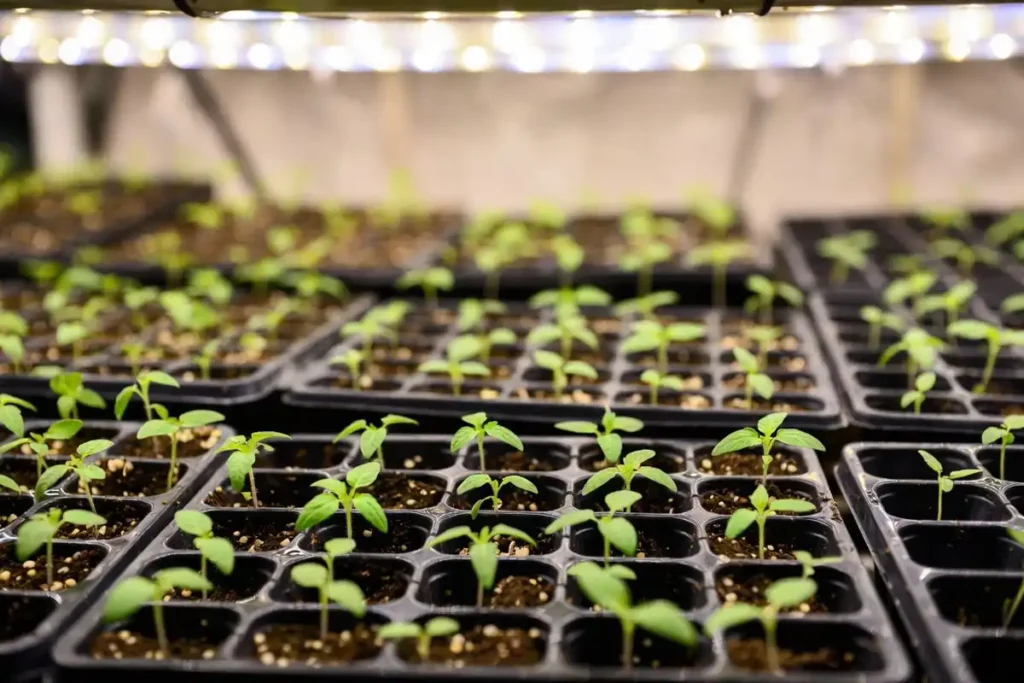
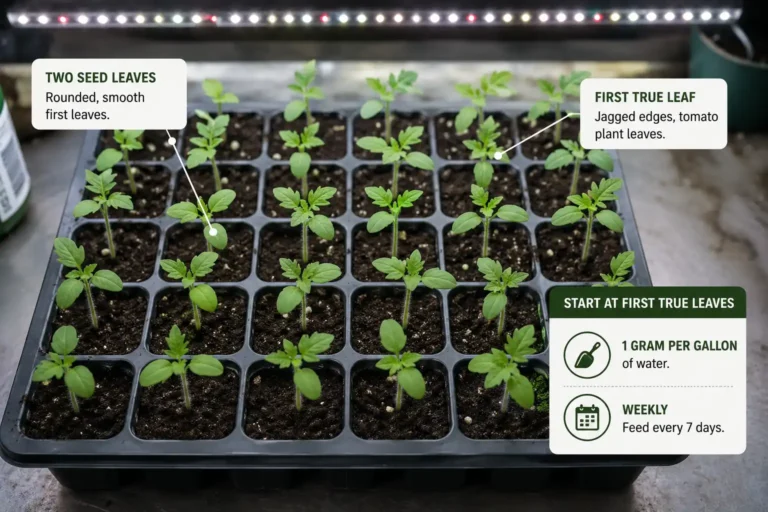
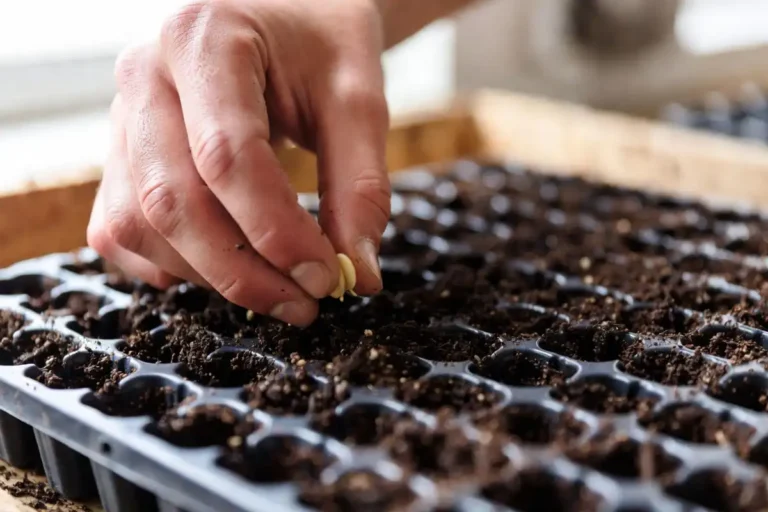
Start tomato seeds indoors 6 to 8 weeks before your last frost date.
Seeds germinate best at soil temperatures between 70°F and 80°F (21°C to 27°C). A seedling heat mat placed under trays maintains this range without relying on ambient room temperature.
Seedlings need 14 to 16 hours of light per day. Grow lights positioned 2 to 4 inches above the seedling tops prevent the stretching and weak stems that low-light conditions produce.
Water trays from the bottom to keep stem bases dry. Wet stems at the soil line cause damping-off, a fungal condition that collapses seedlings before they develop their first true leaves.
To know more: 6 Key Benefits of Sun Dried Tomatoes
When to Transplant Tomatoes Outdoors
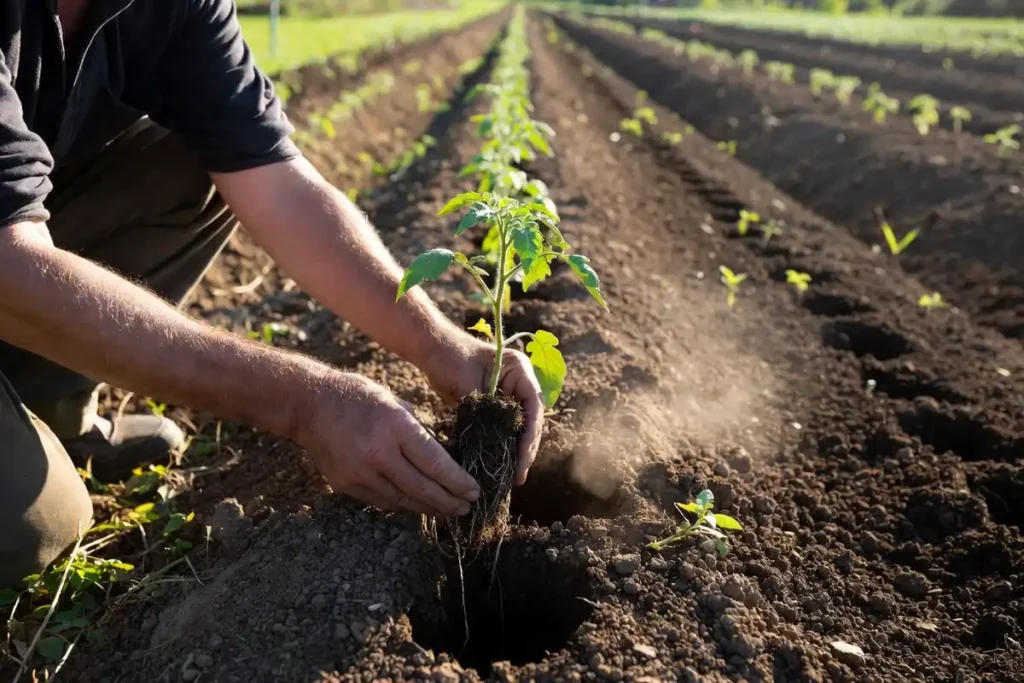
Transplant tomatoes outdoors when three conditions are all confirmed:
- Soil temperature reads 60°F or higher at 2 to 4 inches deep
- Night temperatures stay above 50°F consistently
- The last frost date has passed by at least 1 to 2 weeks
Transplanting too early creates cold stress. Cold soil restricts phosphorus uptake, turns leaves purple, and causes root stall even when the plant looks otherwise healthy.
For the complete step-by-step transplanting process, the guide on moving tomato seedlings to the field covers depth, spacing, and post-transplant care.
Tomato Planting Windows by U.S. Region
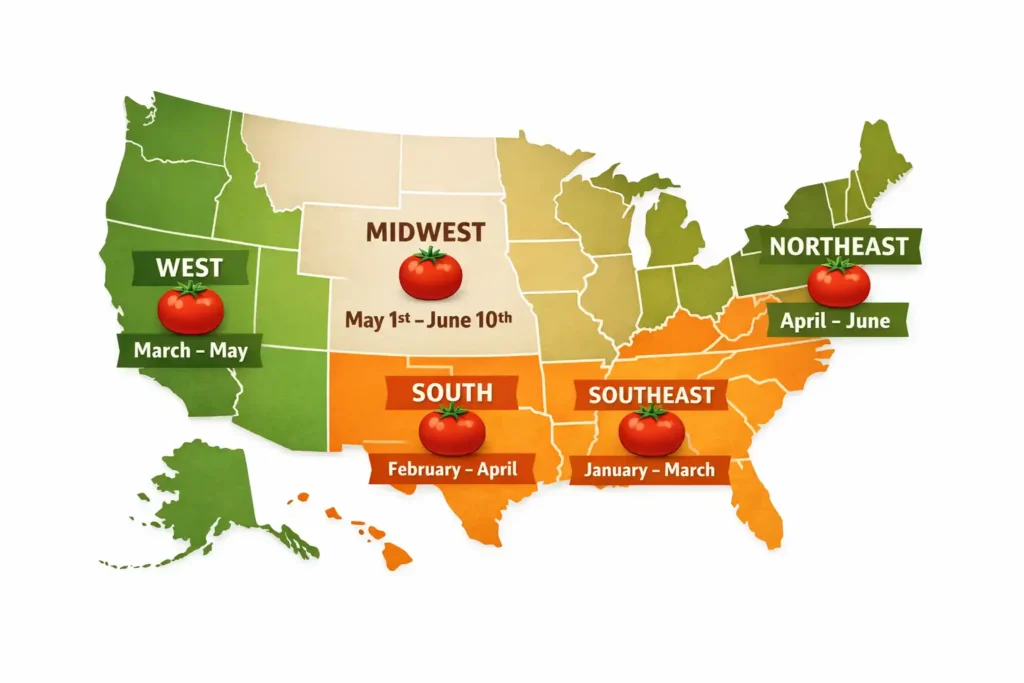
Planting dates differ by region based on climate and frost patterns.
Southern States (Texas, Georgia, Florida): Plant outdoors from late February to early April.
Midwest (Kansas, Missouri, Ohio): Plant outdoors from late April to mid-May. Growers in Kansas target May 1 to May 15 as the safe outdoor window. For climate-specific dates, tomato planting timing in Kansas breaks down the local window by region within the state.
California: Coastal areas plant from March to May. Inland valleys plant from April to June due to later warm-up. Tomato planting dates across California covers the difference between coastal and central valley timing.
Pacific Northwest (Washington, Oregon): Plant from late May to early June. Cool springs and late frost risk push the window back compared to most other regions. Planting tomatoes in Washington State outlines local conditions and variety selection for the shorter season.
Northeast (New York, Pennsylvania, New England): Plant from late May to early June.
A crop planting calendar helps map county-level frost averages into a precise planting schedule.
How to Confirm Soil Is Ready
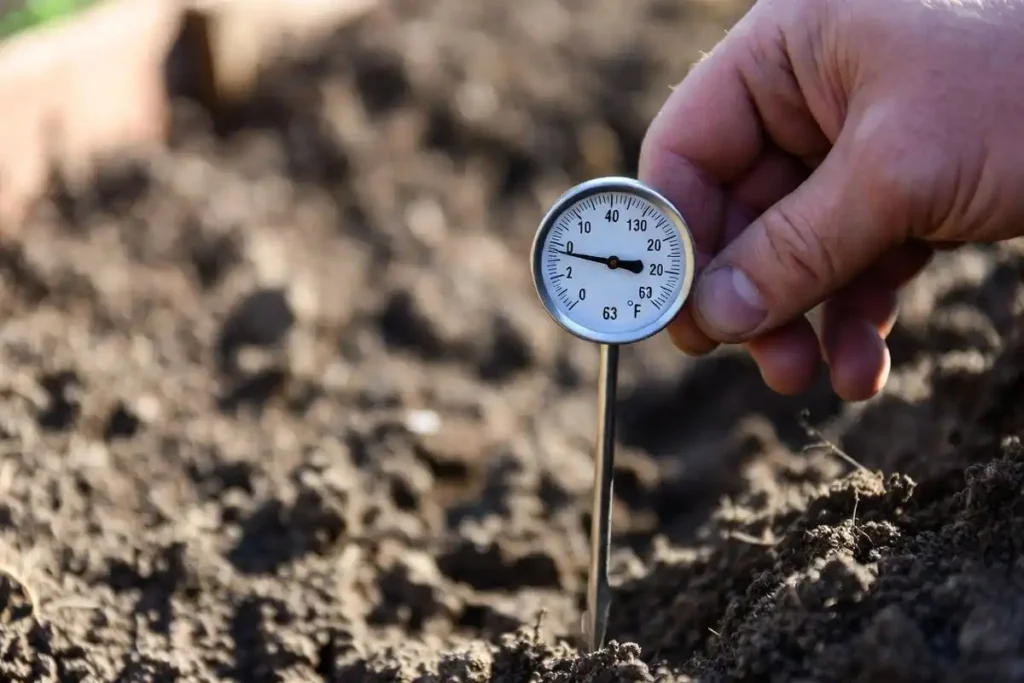
Check these three conditions before transplanting:
Soil temperature: Insert a probe thermometer at 2 to 4 inches deep in the morning. The morning reading reflects the lowest temperature the root zone reaches overnight. Target 60°F minimum.
Soil moisture: Squeeze a handful of soil. It holds its shape but breaks apart when pressed with a finger. Wet clumps that stay compressed mean the soil needs more drainage time. Planting in waterlogged soil suffocates roots within the first week.
Frost forecast: Check a 10-day weather forecast. No frost should appear in the window. One unexpected frost event after transplanting sets the planting back by 2 to 3 weeks at minimum.
How to Harden Off Seedlings Before Transplanting
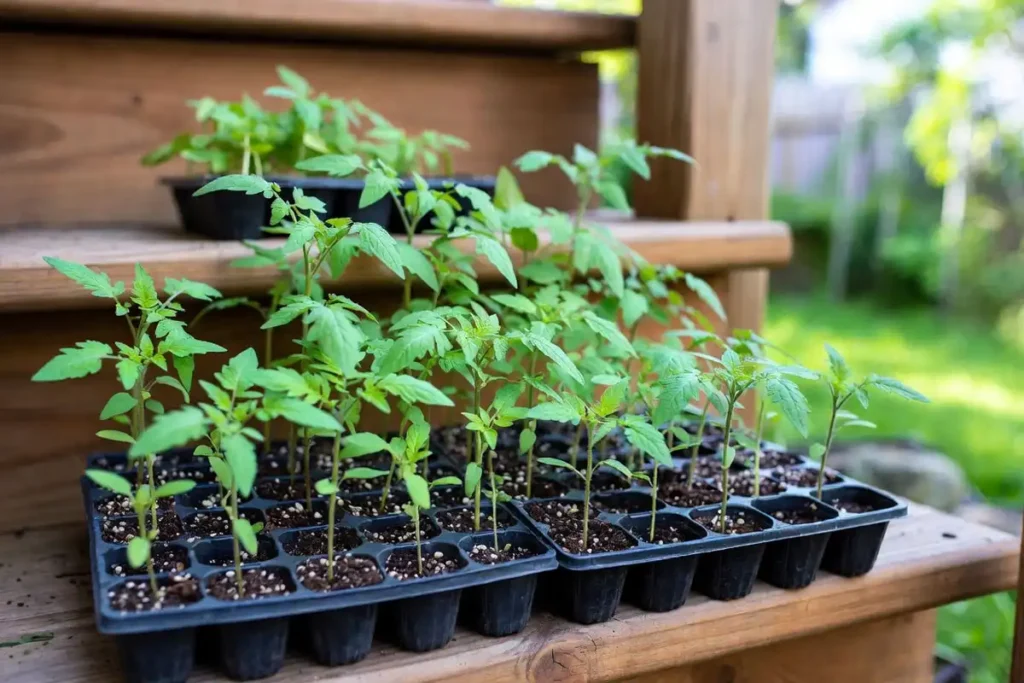
Seedlings grown indoors need 7 to 10 days of gradual outdoor exposure before full transplanting.
On day one, place seedlings outside in a sheltered, partly shaded spot for 2 to 3 hours. Increase outdoor exposure by 1 to 2 hours each day. By day 7 to 10, seedlings handle full sun and outdoor wind without wilting.
Skip this process and seedlings suffer transplant shock. Shocked plants drop leaves, stall for 1 to 2 weeks, and produce fruit later in the season. For the full hardening method with daily schedules, hardening off tomato transplants walks through each stage.
Common Planting Mistakes to Avoid
Planting by calendar date alone. A fixed date ignores actual soil temperature. Always confirm with a thermometer before transplanting.
Planting after a warm day when cold nights follow. Night temperatures below 50°F slow growth even when daytime highs feel warm. Check a 10-day forecast, not just today’s temperature.
Skipping hardening off. Indoor seedlings exposed directly to full sun wilt, bleach, and stall. This adds 1 to 2 weeks to recovery time.
Planting in wet, compacted soil. Heavy rain compacts soil and reduces oxygen in the root zone. Delay transplanting by 2 to 3 days after significant rain.
Burying the stem incorrectly. Bury the stem up to the first set of true leaves, not the seed leaves. Tomatoes produce roots along any buried stem section, which increases nutrient uptake and strengthens the plant’s anchor in the soil.
What to Do If You Missed the Planting Window
Planted too early: If plants went in before soil warmed, apply black plastic mulch over the bed. Black plastic increases soil temperature by 5°F to 10°F and accelerates recovery.
Planted too late in a hot climate: High summer heat above 95°F causes blossom drop. Tomatoes set fruit best when daytime temperatures stay between 70°F and 85°F. Late-planted crops in hot regions produce fruit in fall as temperatures cool naturally.
Short-season options: Choose fast-maturing varieties that reach harvest in 60 to 70 days. Varieties in that range give late planters a realistic window before the first fall frost arrives.
Conclusion
Tomato planting timing depends on soil temperature, frost dates, and consistent night temperatures. Confirm soil reaches 60°F, check the 10-day forecast for frost, harden off seedlings for 7 to 10 days, and match your transplant date to 1 to 2 weeks after your local last frost date.
Start seeds indoors 6 to 8 weeks before that target date. Follow those steps and tomato plants root faster, grow stronger, and produce a reliable harvest from your region’s season.