How Cold Can Carrots Tolerate and How to Protect the Crop
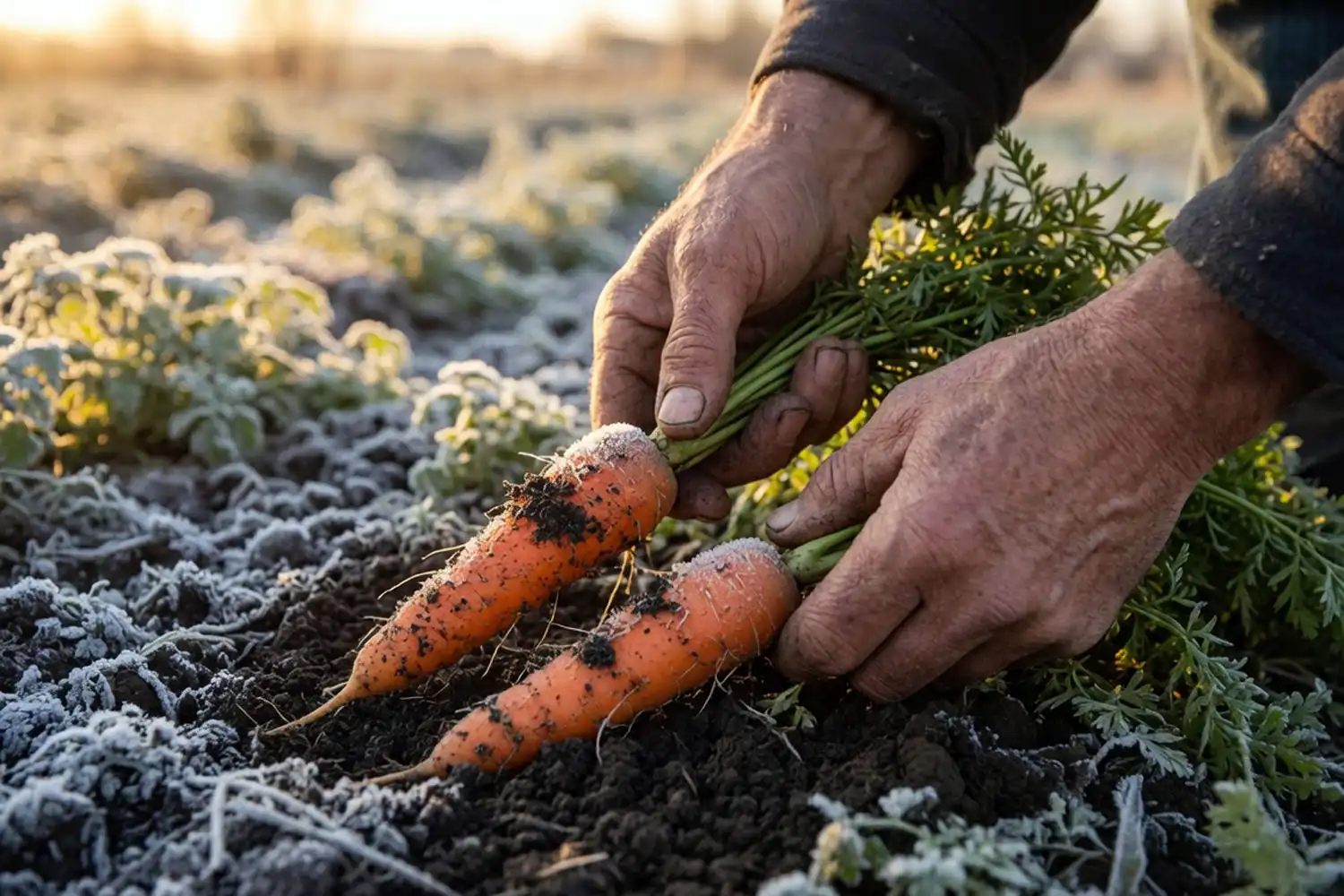
You planted a fall crop and now the forecast shows a hard freeze. So how cold can carrots tolerate before the roots turn to mush? More than you’d think. Carrots are one of the toughest crops in the garden, and frost often makes them better.
Established roots handle short dips to about 20°F. The tops die back near 18°F, but roots survive colder under mulch. Growth stalls near freezing, and a hard freeze below 28°F for hours ruptures them.
How Cold Can Carrots Tolerate Before They’re Damaged?
Established carrots tolerate short dips to about 20°F without real damage, and the root often shrugs off colder air than that. Their hardiness isn’t a single number, though. It shifts with the plant’s age, the variety, and how slowly the cold arrived.
The tops and the root handle cold differently. The feathery green tops are the tender part. They start to blacken and wilt somewhere around 18°F to 20°F. The root underground is the tough one. Soil acts like a thick blanket. A few inches down, the ground stays warmer than the air, so the carrot you plan to eat is shielded from the worst of it.
That’s why you can walk out on a frosty Kansas morning, soil crusted hard on top, and still pull good carrots.
What Happens to Carrots at Each Temperature
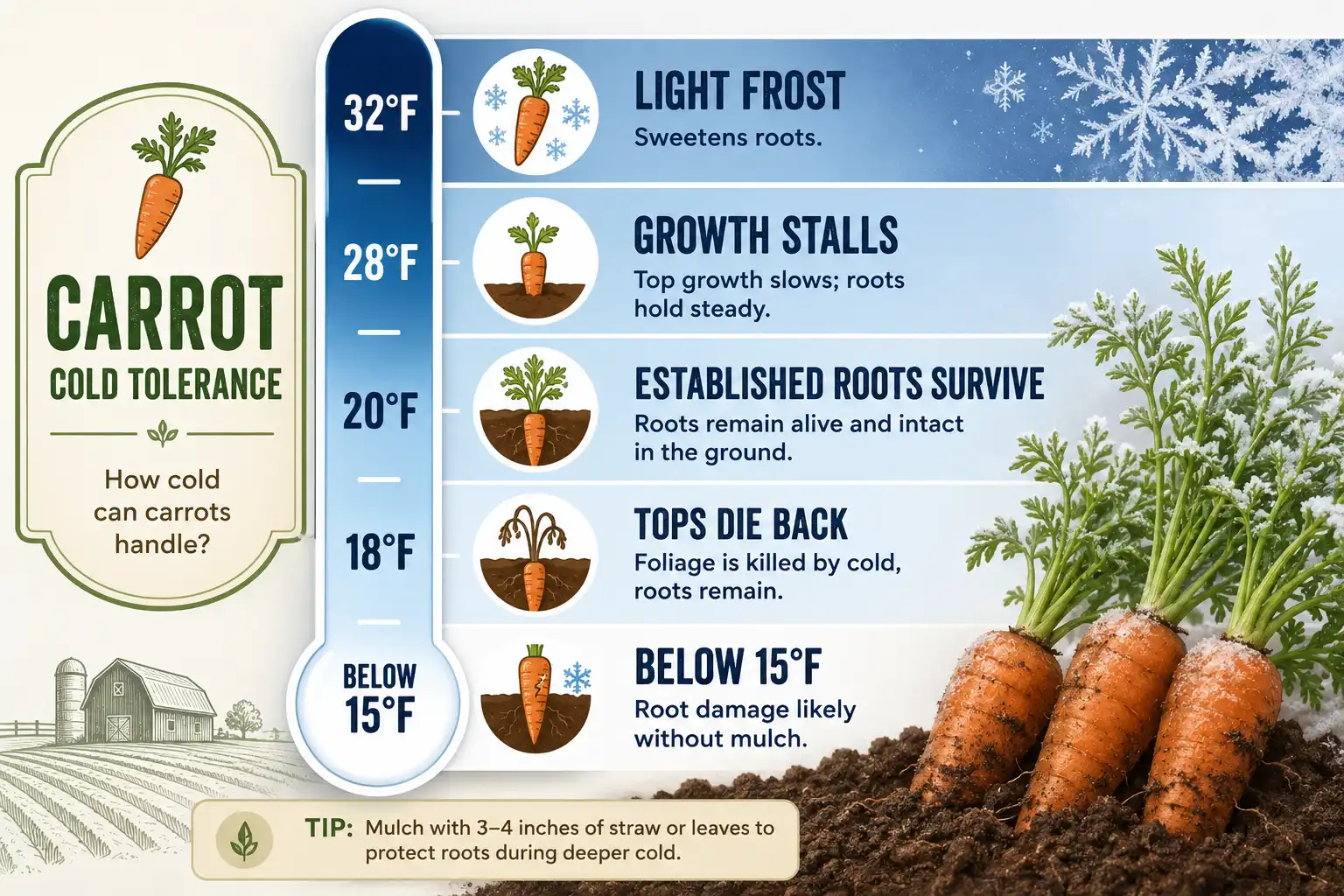
Cold affects carrots in stages, and knowing the stage tells you what to do. Here’s how it breaks down on the fields.
- Light frost, just below 32°F: Almost no damage. The tops might look limp at dawn and perk back up. This cold actually sweetens the root, explained below.
- Around 28°F: Growth stalls. Carrots stop adding size once the soil sits near or below freezing. The roots are fine, just on pause.
- Down to 20°F: Established roots hold up for short spells. Tops decline and may die back. The plant leans on its stored sugars to get through.
- Teens and below: Risk climbs fast. Without mulch or snow cover, the root tissue itself can freeze. Repeated freezing and thawing is the real killer here, not steady cold.
A hard freeze is different from a frost. A hard freeze means several hours well below 28°F, cold enough to freeze the water inside the root. When those cells freeze and rupture, you get mushy, watery carrots after they thaw. That’s the line you don’t want to cross with unprotected carrots.
Why Carrots Get Sweeter After a Frost
Frost sweetens carrots because the plant turns its stored starch into sugar to survive the cold. Those sugars work like antifreeze. They lower the freezing point inside the cells, which protects the root, and they concentrate the flavor at the same time.
This process is called cold acclimation. It needs a slow cool-down to work. A gradual drop over days and weeks triggers the plant’s defenses. A sudden plunge from warm to hard freeze gives it no time to prepare, and that’s when you see more damage.
So a carrot pulled after a few frosts tastes noticeably sweeter than one pulled in warm September. The cold did that. It’s the same reason kale and collards improve once the temperature drops.
What Affects How Much Cold Your Carrots Can Take
Four things decide how cold a carrot can tolerate: its maturity, the variety, your soil, and how slowly the cold arrived. Get these right and you’ll push your harvest deep into winter.
Maturity matters most. A mature carrot with a thick, established root is far hardier than a young one.
Can Carrot Seedlings Survive Frost?
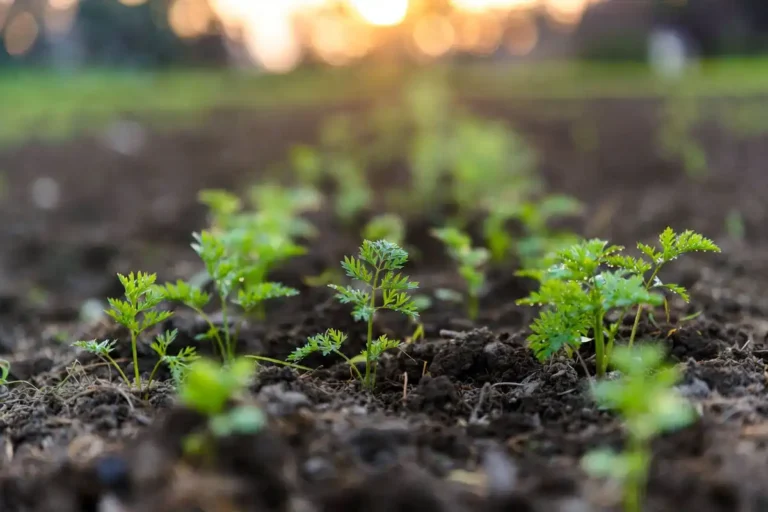
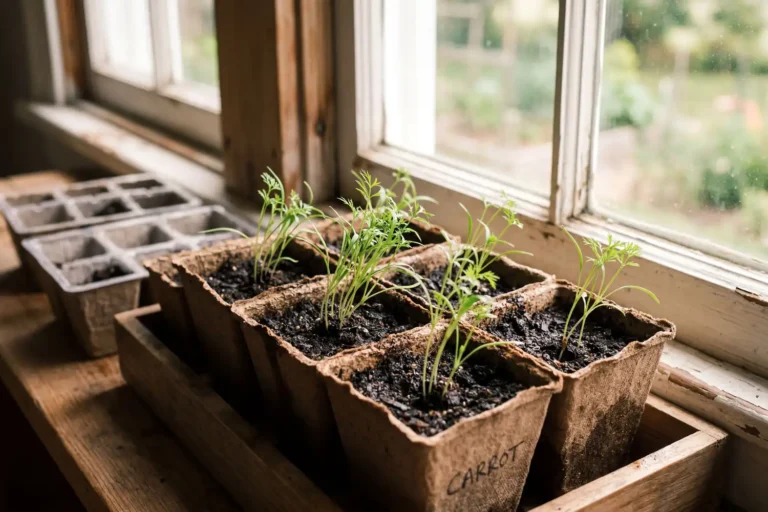
Carrot seedlings barely survive frost, so don’t count on them the way you would a mature root. A brief touch of 30°F for an hour might pass without harm. Several hours at 25°F will usually kill them. Young plants haven’t built up the sugar reserves or root mass that protect older carrots.
Cold soil also slows down when carrots germinate in the first place. Seeds will sprout in ground as cool as 35°F to 40°F, but slowly and unevenly. If you’re starting a fall crop, get seeds in early enough that roots size up before the hard cold hits.
Which Carrot Varieties Handle Cold Best?
Some carrot varieties take cold far better than others, and the short, stocky types usually win. Napoli is a longtime favorite for overwintering. Bolero holds well and stores a long time. Mokum and the Nantes types stay sweet and reliably hardy. Oxheart, a wide, blunt carrot, suits heavy soils and can hang on into the low teens under mulch.
Variety helps, but protection matters more. A tender variety under good mulch beats a hardy one left bare.
Soil and timing round it out. Loose, well-drained ground freezes slower and protects roots better than heavy, wet clay, which freezes solid and invites rot. The same soil texture that grows straight carrots also drains better through a freeze. And a slow seasonal cool-down, the kind we usually get across the Great Plains, gives plants the time they need to harden off.
How Do You Protect Carrots From Frost?
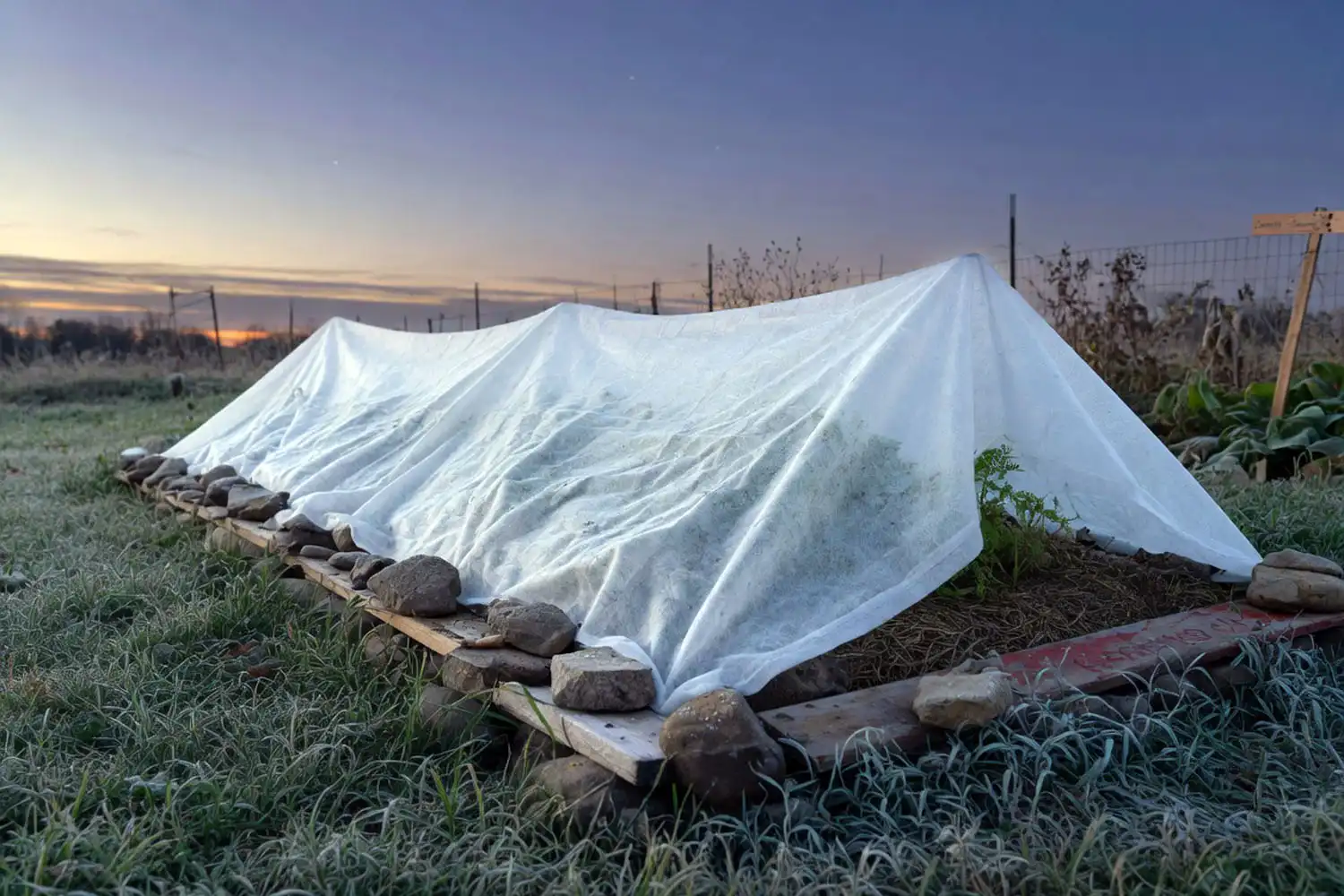
You protect carrots from frost with two simple tools: row covers for short cold snaps and heavy mulch for sustained cold. Both trap warmth and buy your crop time.
Floating row covers come first for a quick freeze. A lightweight frost cloth draped loosely over the bed traps heat rising from the soil and adds 2 to 6 degrees of protection. Put it on before nightfall when frost is in the forecast, then weigh the edges down with stones or boards so wind can’t lift it.
Water is the other trick people forget. Water the bed deeply a few days before a hard freeze if the soil is dry. Moist soil holds heat far better than dry soil and shields the roots. Knowing how much water carrots need through the season helps you judge this without overdoing it.
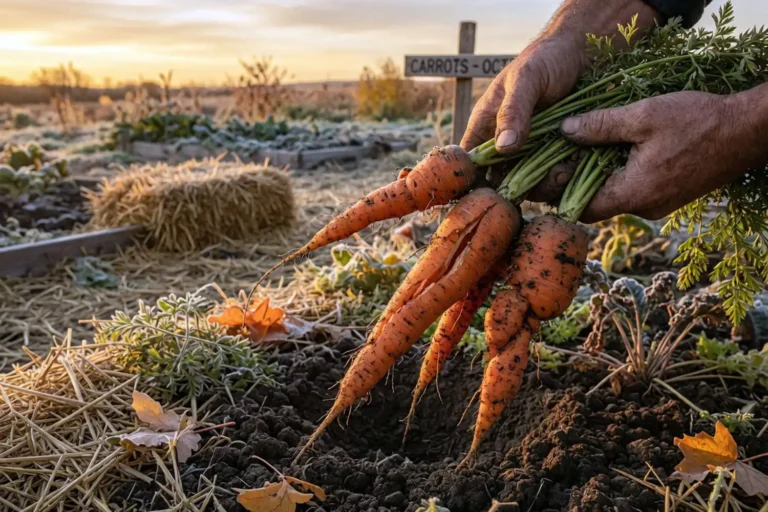
For longer protection, mulch is the workhorse. The same mulching practices across the fields apply right in the carrot bed.
Leaving Carrots in the Ground Over Winter
You can leave carrots in the ground all winter if you insulate the soil so it never freezes solid around the roots. Done right, the ground becomes a root cellar and the carrots get sweeter the longer they sit. Leaving them in the ground is really just another form of crop storage, one that costs you nothing.
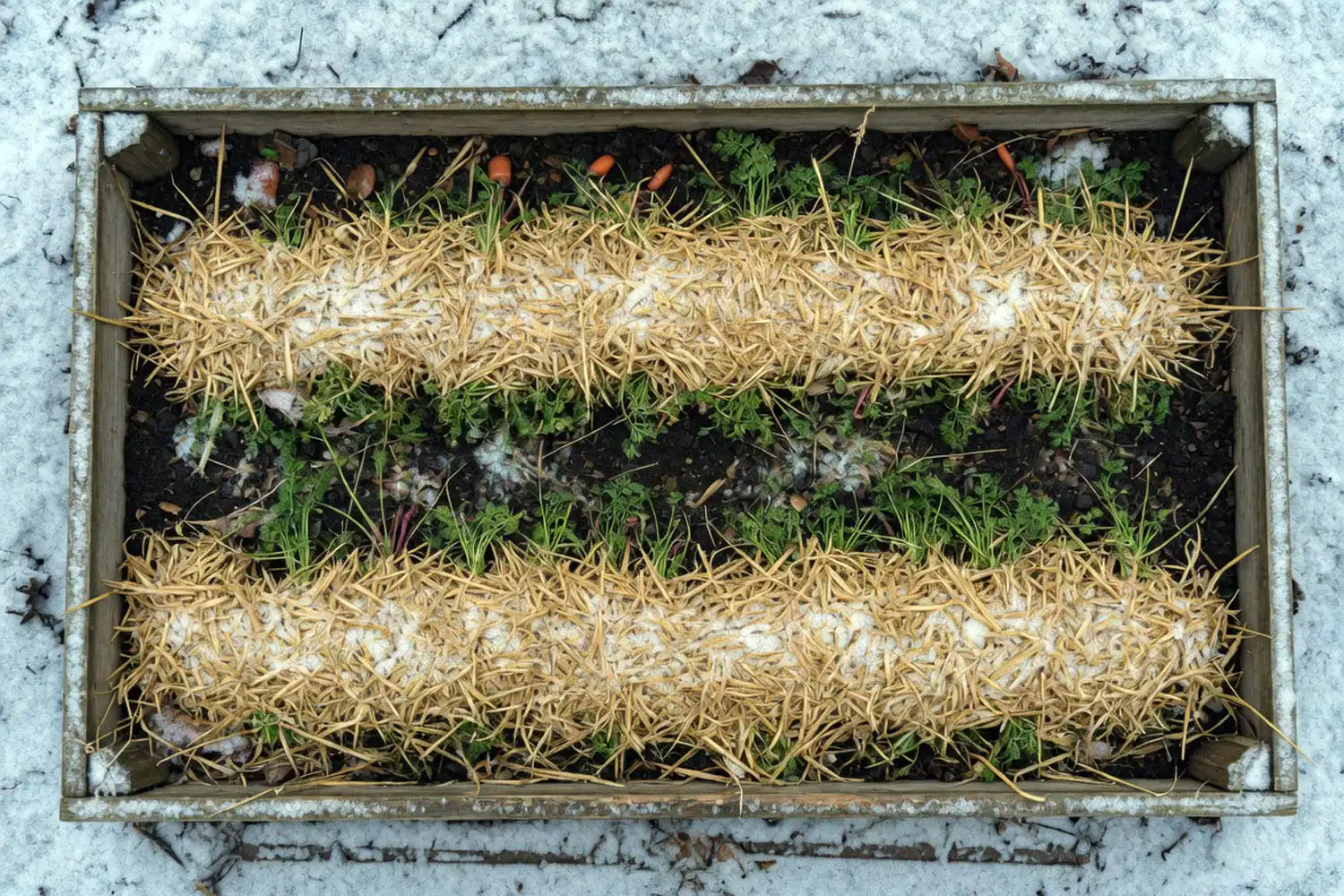
Here’s how to overwinter carrots in Kansas:
- Wait for the first hard frosts. Let a few hard frosts signal the carrots to go dormant before you bury them. Mulching too early traps moisture and causes rot.
- Cut the tops down to about half an inch to an inch. Leaving the greens on pulls energy from the root and can rot the crown.
- Pile on 6 to 12 inches of straw or shredded leaves. Use more in colder zones. Push the mulch right up against the rows and out to the sides so frost can’t creep in from the edges.
- Lay hardware cloth over the top if rodents are a problem. Weigh the edges down. Mice love a warm mulch pile full of carrots.
- Let the snow help. A snow layer on top of the straw adds free insulation.
This works best in USDA hardiness zone 5 and warmer. Colder zones can still pull it off with extra-heavy mulch. Folks up in zone 3 dig carrots through the snow all winter with a foot of straw on top.
Check the cover every few weeks. Wind opens bare spots, so reset the straw and re-weight the edges as needed.
When to Harvest Carrots in Cold Weather
Harvest overwintered carrots through the winter as you need them, or pull the whole row in late winter before the soil warms. Both work. The deadline matters more than the method.
To dig a few at a time, pull back the mulch from one section, lift what you need, and re-cover. On the coldest days, wait for a stretch of 32°F to 40°F so the ground gives a little. A good digging fork saves you from snapping roots in frozen soil.
The hard deadline is spring. Once the soil warms and days lengthen, the carrot switches from survival to making seed. That’s bolting. If you see fine, feathery new growth on top, harvest right away. A bolting carrot turns woody and bitter fast. So get the last of them out as soon as you can work the soil.
Bottom Line
Carrots are about the toughest thing in the fall garden. The number to remember is 20°F for established roots, with the tops giving out a bit sooner near 18°F. Steady cold doesn’t scare me. Freeze-thaw cycles and a bare bed do. Mulch heavy, water before a hard freeze, and let frost do what it does best, which is make the carrots sweet. Get those basics right and you’ll be pulling crisp carrots out of frozen ground long after the rest of the garden quits.