About CropFarming.org
Last updated: August 26, 2026
CropFarming.org is an independent reference site for crop cultivation, and for the tools, equipment, and supplies used in crop production. The goal is simple: help growers make better decisions with clear steps, honest tradeoffs, and fewer headaches in the field and the shop.
What We Publish
We publish content in three main areas.
Crop Guides
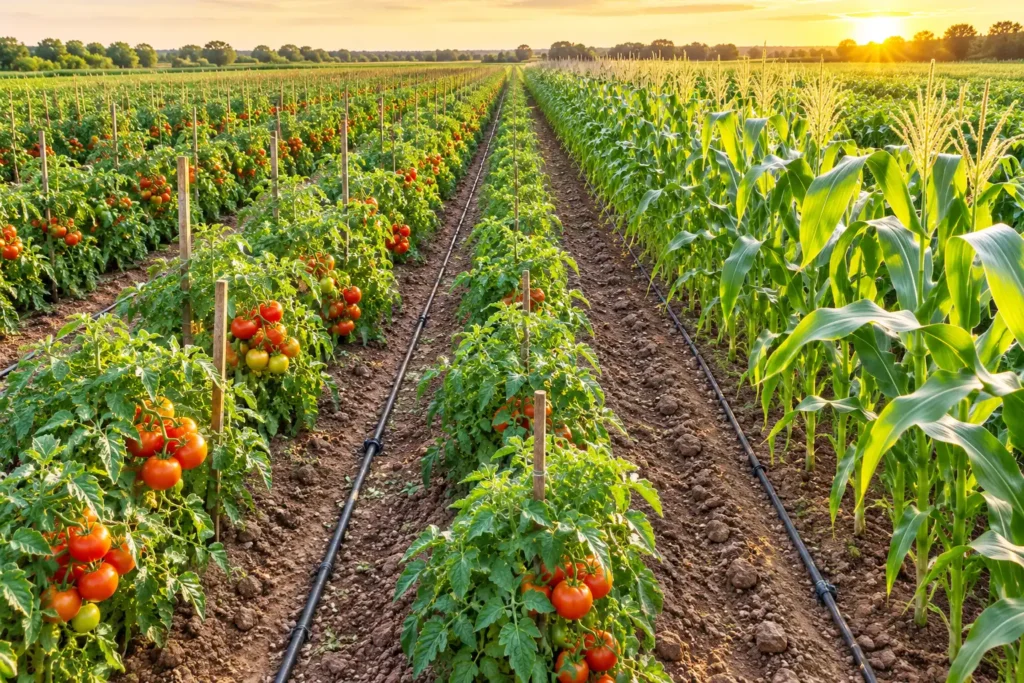
Crop-by-crop guides built around the questions growers actually ask: how to prep the ground, when to plant, what to watch for, and how to handle harvest and storage without losing quality. Our current crop focus includes carrots, corn, lettuce, oats, onions, peanuts, potatoes, rice, sorghum, soybeans, sugar beets, sugarcane, sweet corn, tomatoes, and wheat.
Crop Practices
Articles that cut across crops and seasons, including soil basics, planting and establishment, irrigation and water management, weed and pest pressure fundamentals, harvest timing, and storage handling. These posts are written to be useful whether you are managing a few acres or working bigger ground, because the same fundamentals usually decide whether a season goes smoothly.
Farm Tools and Equipment
Buying guides and how-to articles for tools used in crop production. We cover practical items growers use and troubleshoot: soil pH meters, soil moisture meters, soil sampling probes, soil augers, backpack sprayers, sprayer nozzles, drip irrigation kits, drip tape, irrigation filters, fertilizer spreaders, broadcast spreaders, wheel hoes, stirrup hoes, mulch film, row covers, insect netting, pheromone traps, grain moisture meters, hermetic storage bags, seed drills, jab planters, potato diggers, rice cono weeders, rice transplanters, and wheat seed drills.
Who We Are
CropFarming.org is published by an independent editorial team. We are not a farm, and we do not publish first-hand field reports.
What we do is different, and we think it is more useful. Agronomy guidance in the United States is scattered across dozens of separate state extension publications, USDA datasets, and manufacturer documents. A grower looking for a planting window in Georgia, a nitrogen rate in Nebraska, or a spray cutoff for a specific herbicide often has to dig through several institutional websites to find one number.
We gather that guidance, organize it by crop and by region, and cite where each recommendation came from so you can check it yourself.
How We Research and Verify
Every claim in our articles that varies by region, crop, or product is traced to a named source. We name that source in the text, so you can verify it or follow it further.
Sources we rely on
University extension services
Kansas State University Research and Extension, Iowa State University Extension, University of Minnesota Extension, University of Georgia Extension, NDSU Extension, UF/IFAS Extension, Purdue Extension, NC State Extension, Clemson Cooperative Extension, Penn State Extension, Texas A&M AgriLife Extension, University of California ANR, Michigan State University Extension, University of Nebraska-Lincoln Extension, Oregon State University Extension, and Mississippi State University Extension.
Federal agencies
USDA National Agricultural Statistics Service for production and yield data, USDA Natural Resources Conservation Service for soil and conservation guidance, USDA FoodData Central for nutrition figures, USDA Agricultural Research Service for research findings, and the EPA for pesticide registration status.
Product information
Manufacturer labels, technical documentation, published specification sheets, and aggregated verified-buyer feedback.
What we will not do
We do not invent attributions. If we cannot find a source that supports a claim, we leave the claim out rather than state it without backing.
We do not present general information as personal field observation.
We do not claim to have personally tested equipment we have not tested.
How We Approach Advice
Practical First
We aim to write the kind of guidance that answers the question directly: what matters most, what tends to go wrong, and what you can do about it without burning up time and money. When something depends heavily on local conditions, we say that plainly and point you to your local extension service.
Safety and Labels Matter
We take safety seriously. If a topic involves chemicals, equipment hazards, or anything that can hurt you, we push readers back to the label, the manual, and local rules. A blog post should never outrank a product label or a manufacturer’s instructions.
Not a Consulting Service
We share general educational information. We do not provide custom agronomy prescriptions for your specific field. If you need a decision made for your operation, your best move is local: extension resources, qualified advisors, and the product documentation for what you are using.
Corrections
We update pages when guidance changes, when products change, or when a reader flags an error. If you spot a mistake or a detail that needs a second look, use the contact page and tell us what you are seeing. We will correct it and note the change.
Our full standards are on the editorial policy and review methodology page.
How We Pay the Bills
CropFarming.org may earn commissions through affiliate links, including affiliate links to online retailers. If you click a link and make a qualifying purchase, we may earn a commission at no extra cost to you. This helps support the site and keeps the content free to read.
Commissions do not change which products we recommend or how we describe their tradeoffs. For full details, see our affiliate disclosure.
How Tool Recommendations Work
Our product coverage is built from manufacturer specifications, published documentation, and patterns in verified-buyer feedback. We explain who a tool fits, what it does well, and where it falls short.
We do not claim hands-on testing we have not done. Where a strength or a weakness comes from owner reports rather than a spec sheet, we say so directly.
For limitations and general guidance scope, read the disclaimer.
Our Promise to Readers
We work to keep content clear, current, and honest. If we recommend a tool, we explain who it is for and where it falls short. If a method carries extra risk, we say so. If we cannot source a claim, we do not publish it. And if you spot something that looks off, we want to hear about it so we can fix it.
Contact
For questions, corrections, partnerships, or general feedback, reach us at editor@cropfarming.org, or use the contact page.