How to Water Tomatoes Correctly: Amount, Timing, and Method
Tomatoes need 1 to 2 inches of water per week, delivered consistently at the root zone to produce healthy fruit. This guide covers the right watering amount at each growth stage, the best time of day to water, which delivery methods work, how container tomatoes differ, and how to read and fix both overwatering and underwatering. Whether you grow a backyard row or a larger field plot, the steps here apply directly to your plants and soil.
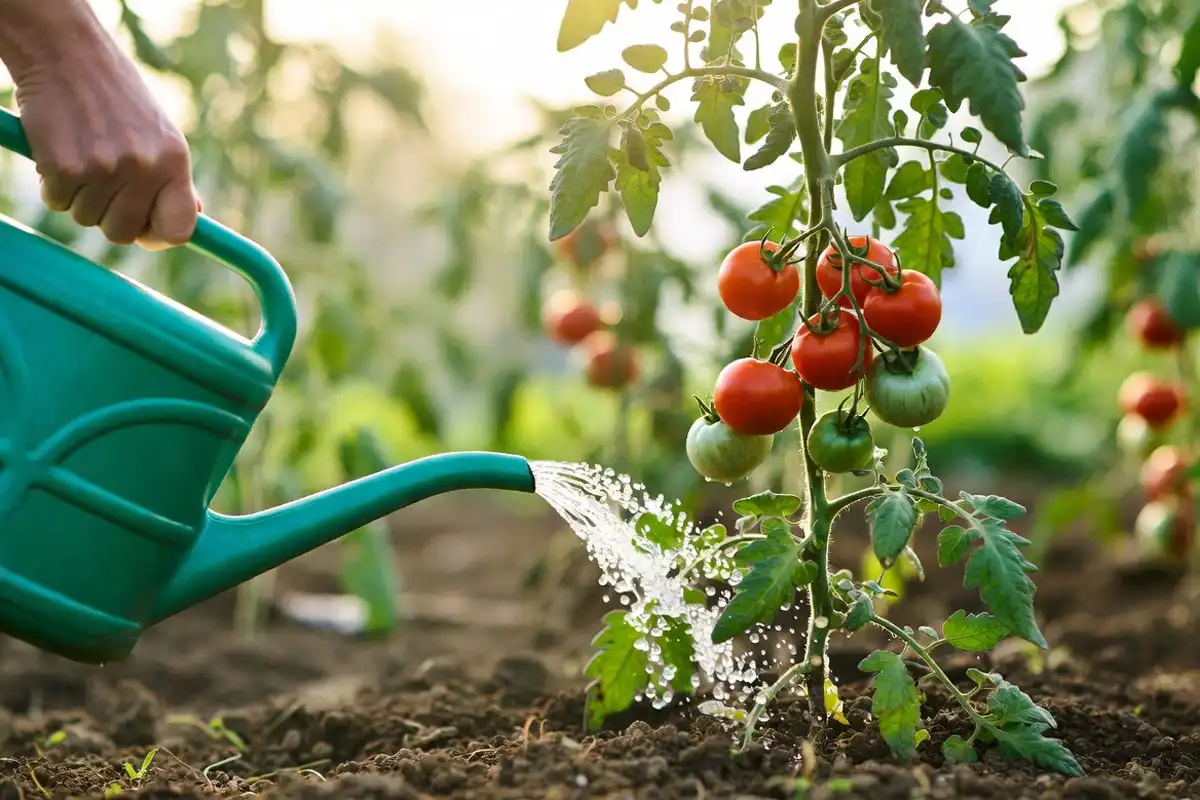
Water tomatoes with 1 to 2 inches per week, applied at the base in the morning. Increase volume during flowering and fruit development. Reduce slightly as fruit ripens. Consistent soil moisture prevents blossom end rot, fruit cracking, and blossom drop. Check the top 2 inches of soil and water when that layer feels dry.
How Much Water Do Tomatoes Need?
Tomatoes need 1 to 2 inches of water per week. Sandy soils drain faster and require more frequent watering. Clay soils hold moisture longer and need less frequent application.
Rainfall counts toward the weekly total. A simple rain gauge tracks actual precipitation so you avoid overwatering after heavy rain.
Established plants with deep root systems tolerate short dry spells better than seedlings. Newly transplanted tomatoes need less total volume but more frequent monitoring.
Learn more: What to Plant With Tomatoes to Keep Bugs Away Without Chemical Sprays
When Is the Best Time to Water Tomatoes?
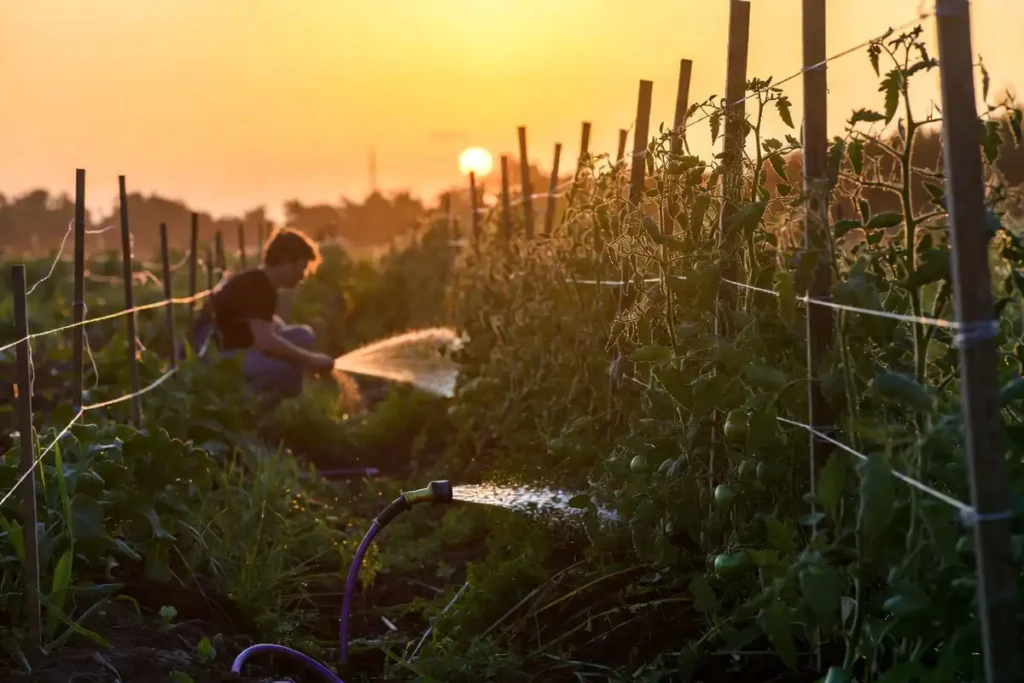
Morning is the correct time to water tomatoes. Water applied at the soil surface in the morning gives roots time to absorb moisture before heat builds during the day.
Evening watering leaves foliage damp overnight. Wet leaves increase the risk of fungal diseases, including early blight and septoria leaf spot.
Midday watering loses more water to surface evaporation and stresses plants already managing peak heat load.
How Do You Water Tomatoes Correctly?
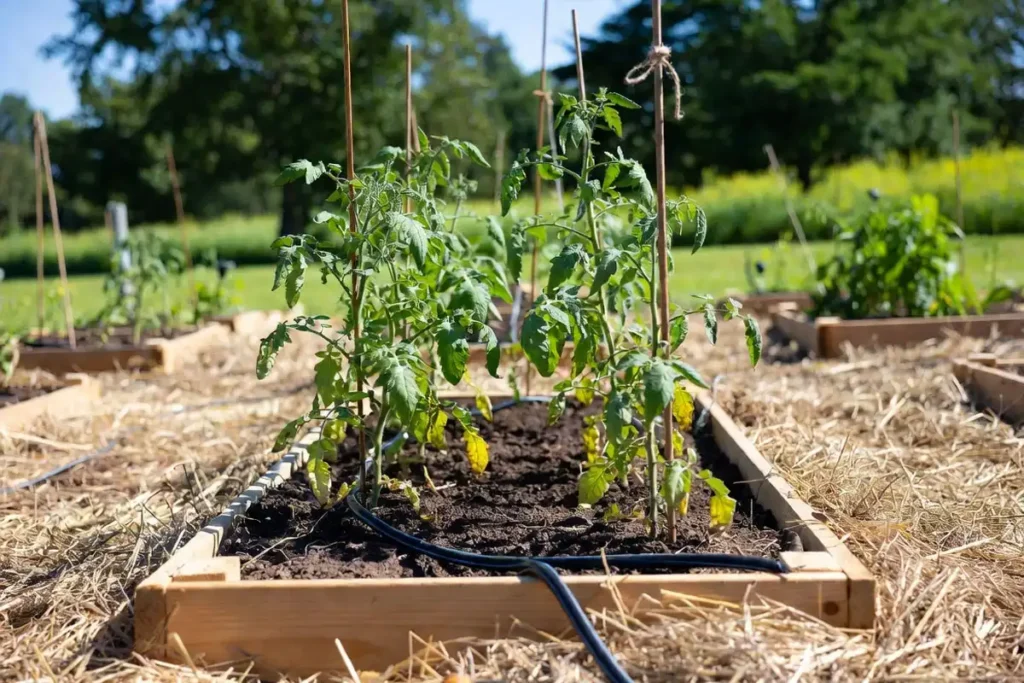
Water at the soil level, not overhead. Directing water to the base delivers moisture to the root zone and keeps foliage dry.
Apply water slowly to allow deep soil penetration. Fast, shallow watering keeps moisture near the surface and promotes shallow roots. Shallow roots dry out faster and destabilize the plant.
A soaker hose or drip line delivers water consistently at root level and reduces water waste compared to overhead sprinklers. For a side-by-side comparison of delivery systems, drip vs. sprinkler irrigation methods covers the setup, cost, and performance differences.
How Deep Should Soil Moisture Reach?
Water needs to penetrate 6 to 8 inches into the soil. This depth encourages roots to grow downward, which produces a more stable and drought-tolerant plant.
To verify depth, water the bed thoroughly, then push a wooden dowel or soil probe into the ground after 30 minutes. If it slides in 6 to 8 inches with light resistance, the moisture level is adequate.
How Often Should You Water Tomatoes?
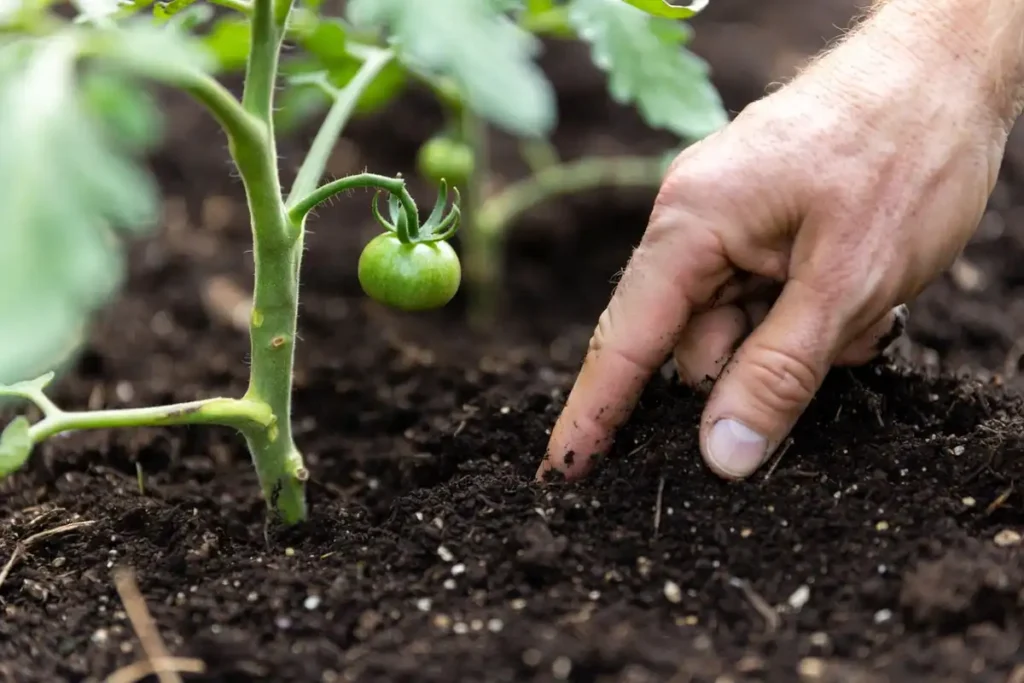
Frequency depends on soil type, air temperature, and plant size. In temperatures above 90°F, tomatoes in sandy soil may need watering every 1 to 2 days. In cooler weather or heavier soils, every 2 to 3 days works.
The most reliable method is the finger test. Press a finger 2 inches into the soil. Water when that layer feels dry to the touch.
For larger plots, calculating crop water needs by area helps you build a consistent and accurate schedule.
How Do Water Needs Change by Growth Stage?
Tomatoes require different amounts of water at each stage.
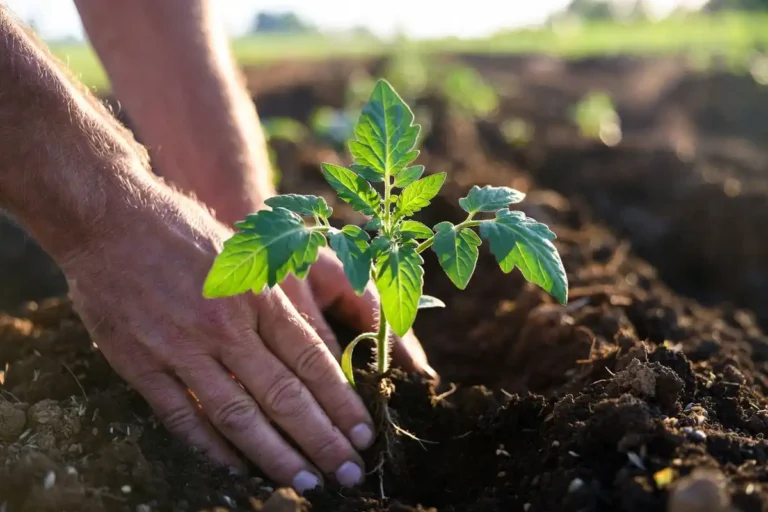
Transplant to early vegetative growth: Keep soil evenly moist to help roots establish. Avoid waterlogging, which restricts root oxygen uptake.
Flowering stage: Consistent moisture during flowering prevents blossom drop. Irregular watering at this stage causes flowers to fall before fruit sets. The peak water demand periods for tomatoes identifies the exact points in the season when water stress does the most damage.
Fruit set and development: Increase water volume as fruit develops. Tomatoes fill with water during this phase and need a steady, uninterrupted supply.
Ripening stage: Reduce watering slightly as fruit approaches full color. Excess water during ripening dilutes flavor and increases fruit cracking.
How Do You Water Container Tomatoes?
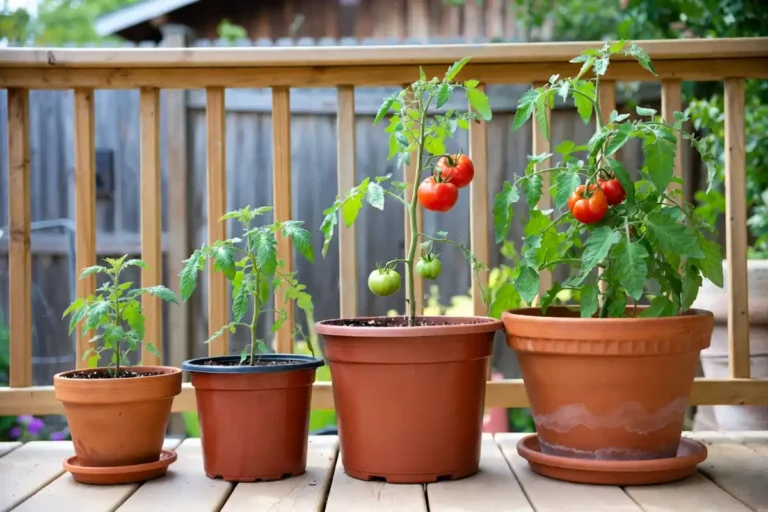
Container tomatoes dry out faster than in-ground plants. A 5-gallon pot in full sun during summer may need watering once or twice daily.
Check containers each morning by pressing a finger 1 inch into the soil. Water when the top inch feels dry.
Use pots with drainage holes. Containers without drainage trap excess water and cause root rot. Empty saucers after each watering session so roots do not sit in standing water.
For full guidance on soil mix, pot size, and feeding alongside watering, growing tomatoes in containers covers the complete container setup.
Does Mulch Reduce Watering Frequency?
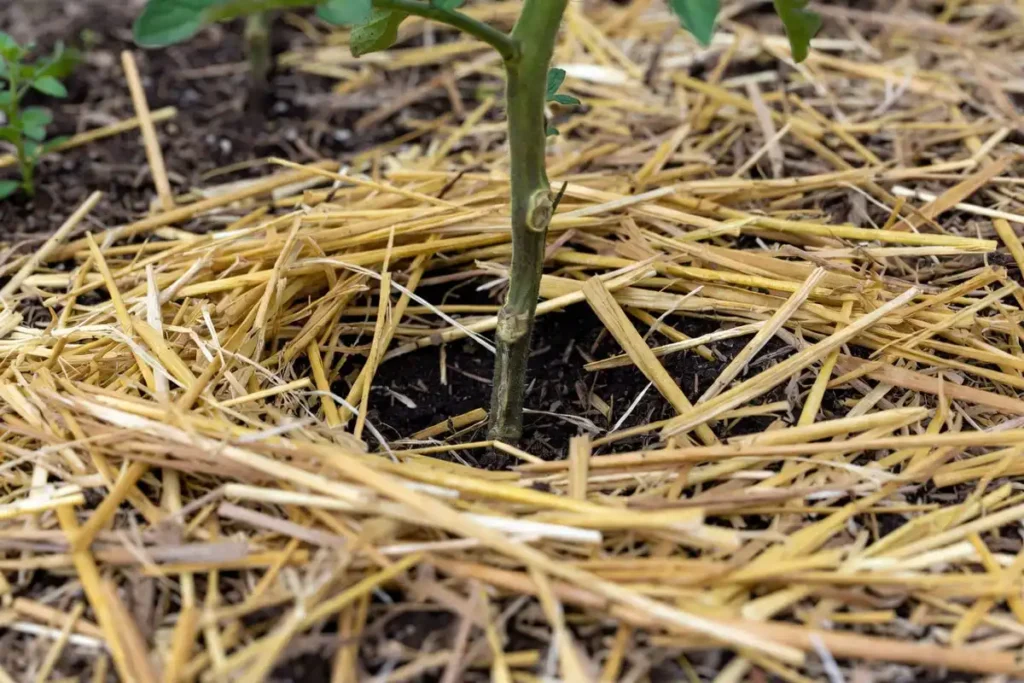
A 2 to 3 inch layer of mulch reduces soil moisture evaporation and extends the time between waterings. Straw, wood chips, and shredded leaves all work well around tomato plants.
Mulch also moderates soil temperature and reduces soil splash, which spreads soilborne pathogens to lower leaves.
Keep mulch 2 inches away from the main stem to prevent rot at the base. For material types, application depth, and timing, mulching methods in crop farming gives a complete breakdown.
What Are Signs That Tomatoes Need More Water?
Underwatered tomatoes show wilting in the morning, not just in afternoon heat. Leaf edges curl inward. Soil feels dry and pulls away from the container or bed edge. Fruit develops tough, small, or misshapen.
Afternoon wilt alone does not indicate underwatering. Tomatoes wilt under peak heat even with adequate moisture. Plants that recover fully by evening have enough water. Plants still wilted in the morning need immediate watering.
What Are Signs of Overwatering in Tomatoes?
Overwatered tomatoes show yellowing lower leaves. Soil stays wet for more than 24 hours after watering. Fruit cracks frequently, especially after dry spells followed by heavy watering.
Roots in consistently waterlogged soil develop brown, soft patches and lose the ability to absorb nutrients. The soil holds water but the roots cannot use it.
What Causes Blossom End Rot and Can Watering Fix It?
Blossom end rot produces a dark, sunken patch at the base of the fruit. It develops from irregular watering that disrupts calcium uptake. Calcium moves into the plant through water. Inconsistent moisture stops that movement, even when soil calcium levels are adequate.
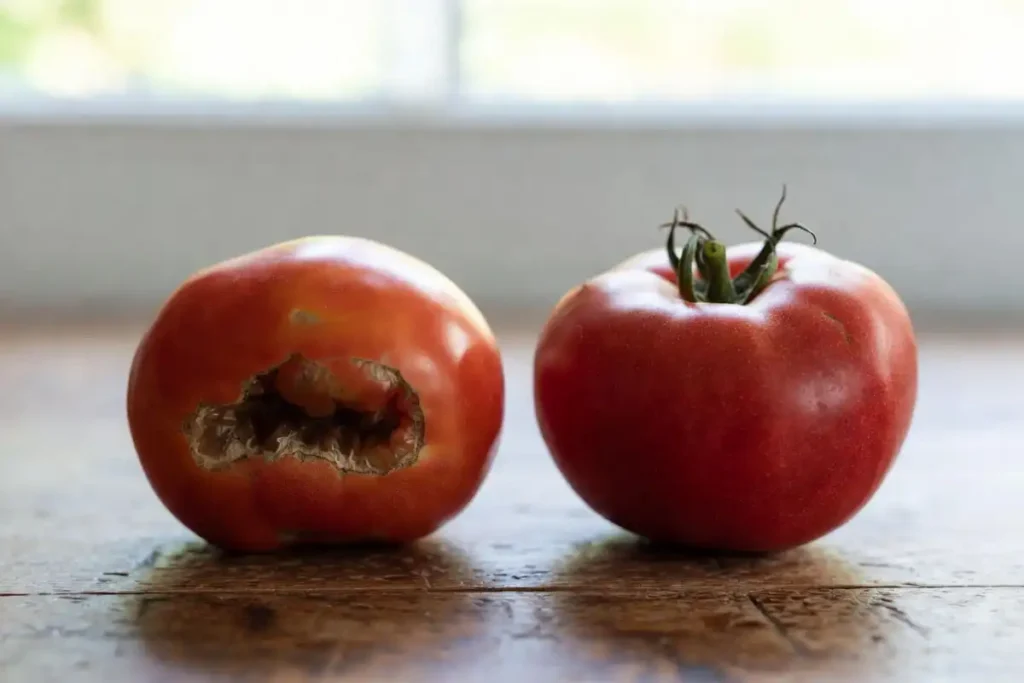
The fix is a consistent watering schedule that maintains even soil moisture throughout the season. Addressing irrigation consistency resolves most blossom end rot cases without any need for calcium supplements.
What Watering Mistakes Damage Tomatoes?
Watering at the wrong time of day: Evening watering increases fungal disease risk. Midday watering increases evaporation. Morning watering at the base is the correct approach.
Shallow, frequent watering: Light watering keeps moisture near the surface. This promotes shallow roots that dry out faster and anchor poorly. Deep, less frequent watering develops a stronger root system.
Overhead watering: Sprinklers wet foliage and increase disease pressure from blight and leaf spot. Soaker hoses and drip lines deliver water without wetting leaves.
Inconsistent schedule: Alternating wet and dry soil causes blossom drop, fruit cracking, and blossom end rot. A regular schedule protects fruit quality and yield.
Ignoring rainfall: Watering after heavy rain overloads the soil and depletes root oxygen. Adjust your schedule based on actual soil moisture, not a fixed calendar alone.
Does Water Source Affect Tomato Growth?
Rainwater is slightly more acidic than tap water and contains no added chlorine or fluoride. Tomatoes perform well with either source.
If tap water contains high chlorine levels, fill a watering can and let it sit uncovered for 30 to 60 minutes before use. Chlorine dissipates from standing water at room temperature.
Safety Note
Any irrigation system connected to a municipal water supply needs a backflow preventer at the connection point. This device stops irrigation water from flowing back into the drinking supply. Check local plumbing codes for the specific type required in your area before installation.
Conclusion
Correct tomato watering comes down to three consistent habits: deliver water at the root zone, maintain even soil moisture across the growing season, and adjust volume as the plant moves through each growth stage.
Morning watering at the base, deep soil penetration, and a layer of mulch handle most moisture problems before they start. When problems appear, the soil and the plant signal what needs to change.