When to Transplant Tomatoes: 7 Temperature Rules That Actually Work

Transplant tomatoes outdoors after frost danger passes and the soil warms. This guide shows the temperature and timing checks that keep seedlings growing instead of stalling, plus what to do when cold nights sneak back in. Our guide covers how to read your last frost window, how warm the soil and nights need to run, how to harden off plants, and how to plant for quick rooting. You will also get a simple risk chart for nighttime lows and practical protection options.
Transplant tomatoes outdoors when:
- The last frost date has passed for your area
- Nighttime temps stay at or above 50°F (10°C) consistently
- Soil temperature reaches at least 60°F (15.5°C) at 2 inches deep
- Seedlings are 6 to 10 inches tall with a strong stem and true leaves
Night temperatures below 50°F slow root development. Temps below 40°F damage tissue and stall growth. Frost kills transplants.
What Is the Right Age and Size for Tomato Transplants?
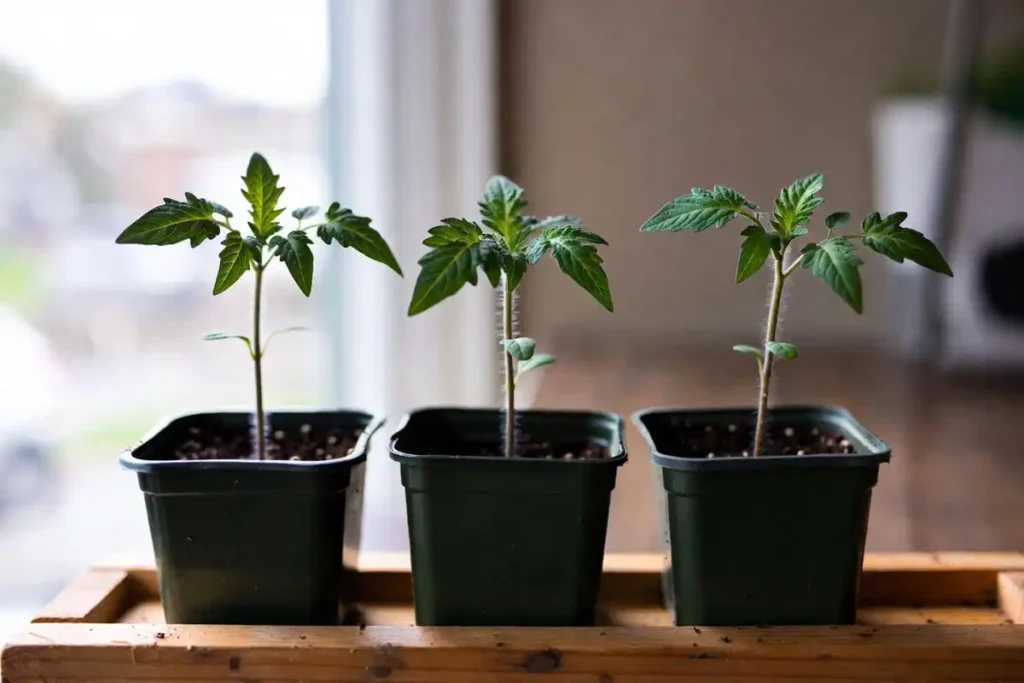
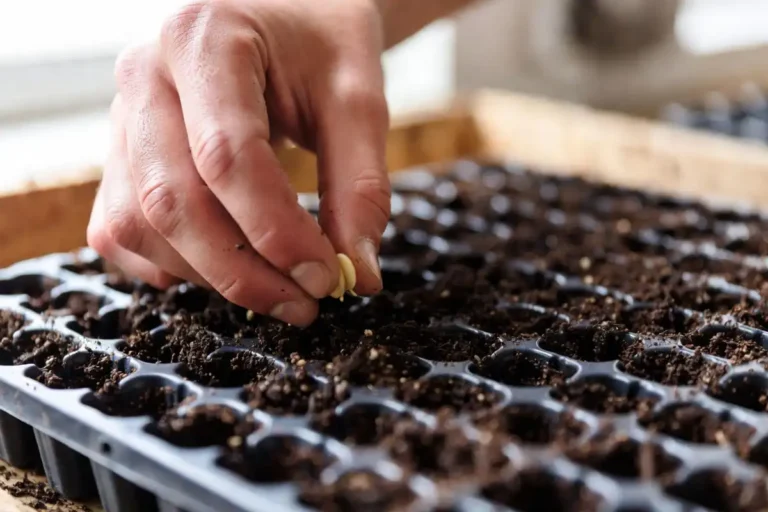
Tomato seedlings are ready to transplant when they reach 6 to 10 inches tall with at least two sets of true leaves. The stem should feel firm, not spindly. Seedlings started indoors take 6 to 8 weeks to reach this stage from germination.
Transplants older than 10 weeks often become root-bound in small pots. Root-bound plants produce fewer fruits after transplanting. Check the root ball before planting: roots should be white and firm, not brown or circling tightly around the pot’s base.
When Do You Transplant Tomatoes Outdoors?
Transplant timing depends on three factors: last frost date, air temperature at night, and soil temperature.
Last frost date sets the earliest safe window. In most of the U.S., this falls between late March and late May depending on region. The USDA Plant Hardiness Zone Map provides last-frost estimates by zip code.
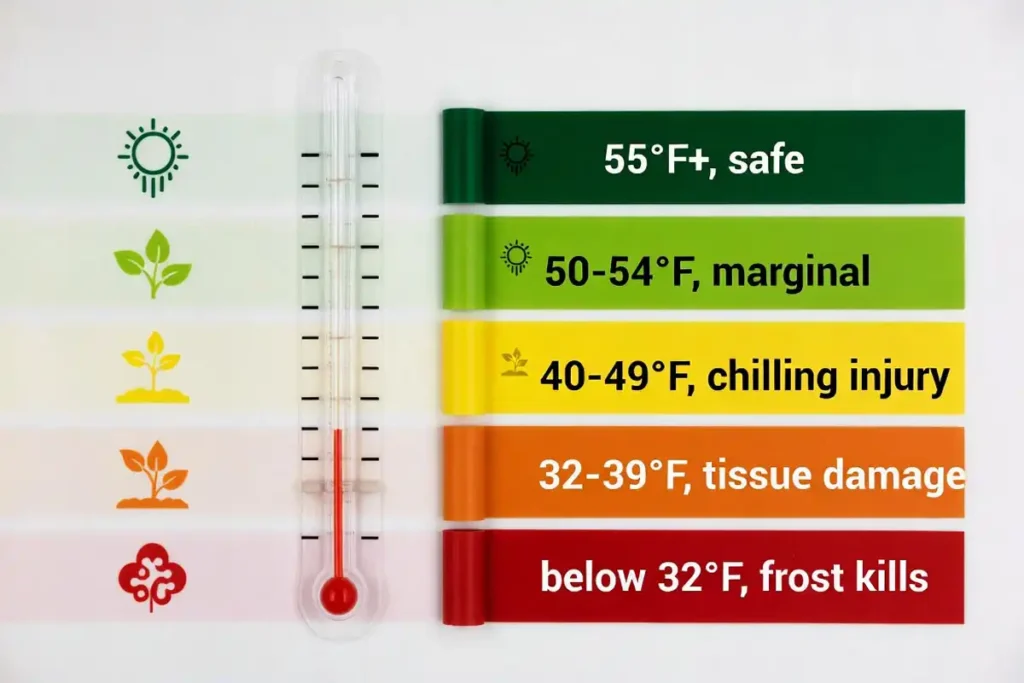
Nighttime air temperature determines whether the plant can sustain metabolic activity. Tomatoes slow root uptake below 50°F. Cell damage occurs below 40°F. A hard frost at or below 32°F kills transplants outright.
Soil temperature controls nutrient availability and root establishment. Roots absorb phosphorus and nitrogen efficiently at 60°F or above. Cold soil below 55°F produces yellow, stunted transplants even when air temps feel warm.
Use a soil thermometer at 2 inches deep, early morning, for the most accurate reading. For guidance on testing your soil before planting, a soil thermometer and basic pH test together give you the clearest pre-plant picture.
What Night Temperatures Are Too Risky for Tomato Transplants?
| Night Temp | Effect on Tomatoes |
|---|---|
| Below 32°F (0°C) | Frost kills transplants |
| 32°F to 39°F | Tissue damage, blackened leaves, permanent setback |
| 40°F to 49°F | Chilling injury, slowed growth, blossom drop risk |
| 50°F to 54°F | Marginal; plants survive but establish slowly |
| 55°F and above | Safe range for consistent establishment |
Chilling injury at 40°F to 49°F does not always show immediately. Leaves may look fine for two to three days, then develop pale interveinal patches or purple discoloration as phosphorus uptake shuts down.
One cold night rarely kills a well-hardened transplant. A string of four or more nights below 50°F significantly delays fruit set and weakens the plant’s early root system.
When to Transplant Tomatoes by U.S. Region
Timing varies by location. These are general windows based on typical last-frost patterns:
Deep South and Gulf Coast (Zones 8–10): Late February to mid-March. Night temps stabilize above 55°F earlier, but watch for late cold snaps in February.
Mid-Atlantic and Southeast (Zones 6–7): Mid-April to early May. Last frost typically falls between April 1 and April 15 in most of this range.
Midwest and Great Plains (Zones 5–6): Mid-May to late May. Soil warms slowly in these zones; confirm soil temp before planting.
Northeast and New England (Zones 4–5): Late May to early June. Night temps can dip below 50°F well into May.
Pacific Northwest (Zones 7–9): Late April to mid-May in warmer valleys. Coastal areas often stay cool; a cold frame extends the season.
Mountain West and High Plains (Zones 3–5): Late May to early June. Elevation adds risk; always check local frost history rather than zone maps alone.
How to Harden Off Tomato Transplants Before Planting
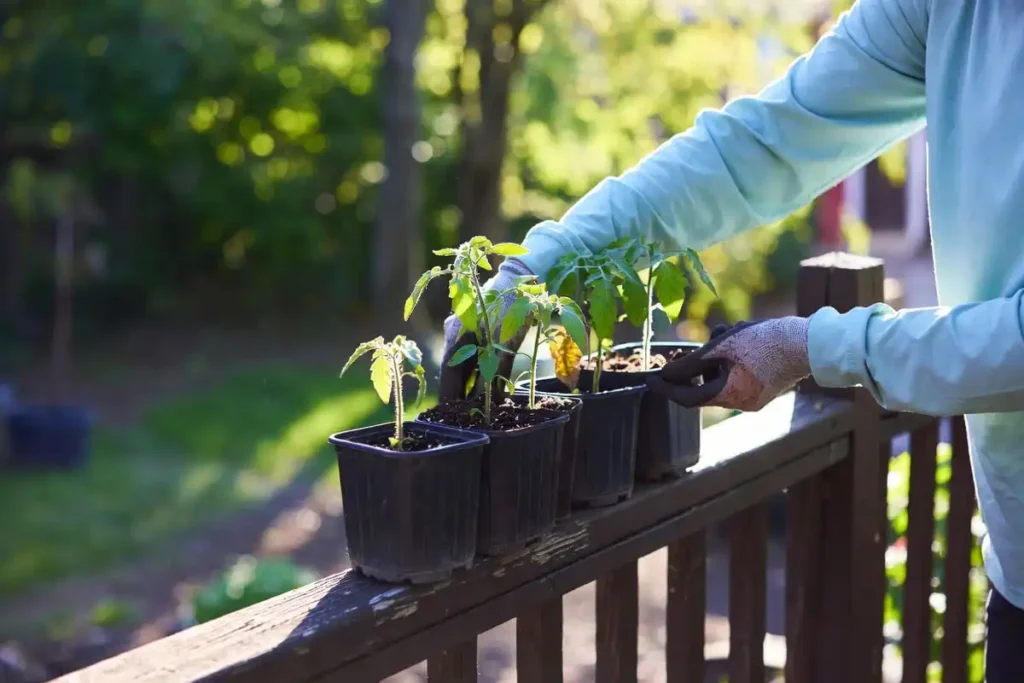
Hardening off prepares indoor-grown seedlings for outdoor conditions. Skipping this step causes transplant shock, wilting, and sunscald even in warm weather.
Hardening-off schedule (7 to 10 days):
- Days 1 to 2: Set seedlings outdoors in a shaded, sheltered spot for 2 hours. Bring them in before evening.
- Days 3 to 4: Increase outdoor time to 4 hours. Introduce 1 to 2 hours of morning sun.
- Days 5 to 6: Leave plants outside for 6 to 8 hours in partial to full sun. Still bring them in at night if temps drop below 50°F.
- Days 7 to 9: Leave outside all day, including afternoon sun. Bring in only if frost is forecast.
- Day 10: Plants are ready to transplant.
Wind causes more transplant stress than sun in many cases. On windy days, place a windbreak or keep plants sheltered until the stem strengthens. A stem that flexes slightly in the wind builds stronger vascular tissue than one grown in still indoor air.
How to Transplant Tomatoes: Step-by-Step
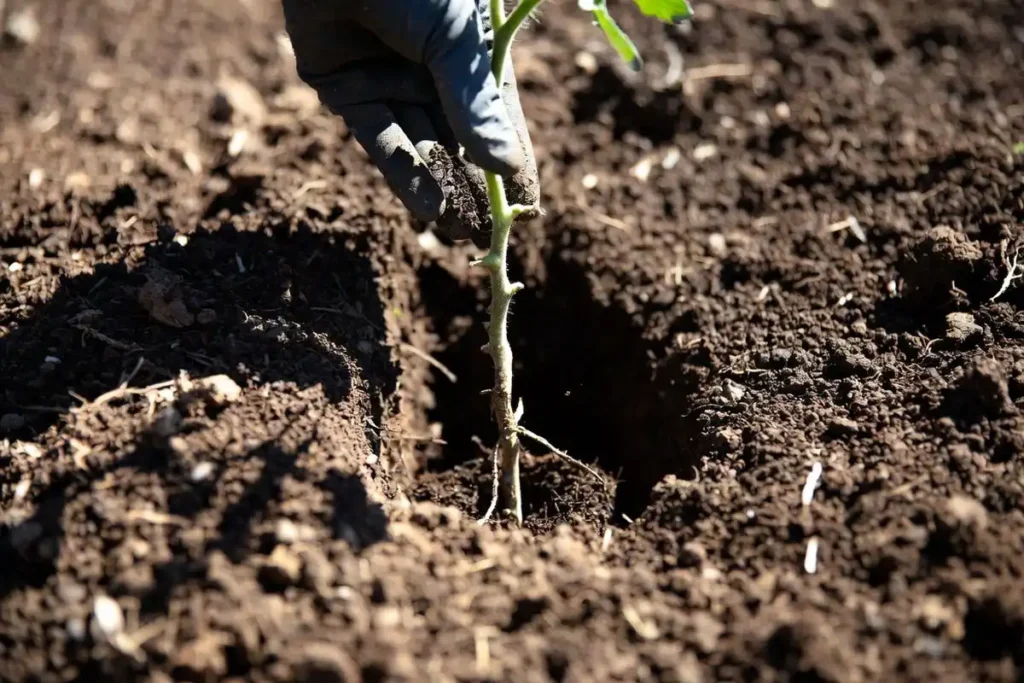
What you need: Transplants (6 to 10 inches), garden fork or trowel, compost or aged manure, water, optional: liquid starter fertilizer low in nitrogen.
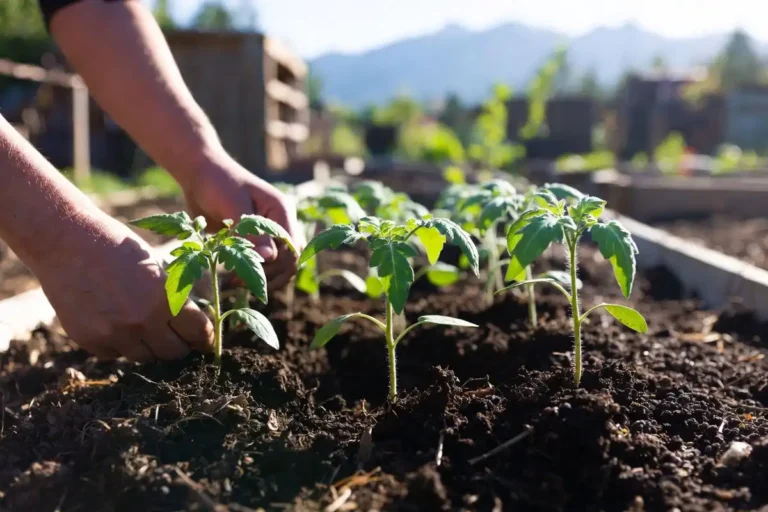
- Prepare the bed. Loosen soil 12 inches deep. Work in 2 to 3 inches of compost. Tomatoes respond well to improving soil fertility before transplant rather than relying on surface feeding afterward.
- Check soil temperature. Confirm at least 60°F at 2 inches deep before digging transplant holes.
- Dig a deep hole. Tomatoes develop roots along their buried stem. Dig the hole deep enough to bury the seedling up to its lowest set of true leaves, leaving 2 to 3 inches of stem and leaves above the soil line.
- Remove lower leaves. Strip any leaves that will sit below the soil line. Buried leaves invite fungal disease.
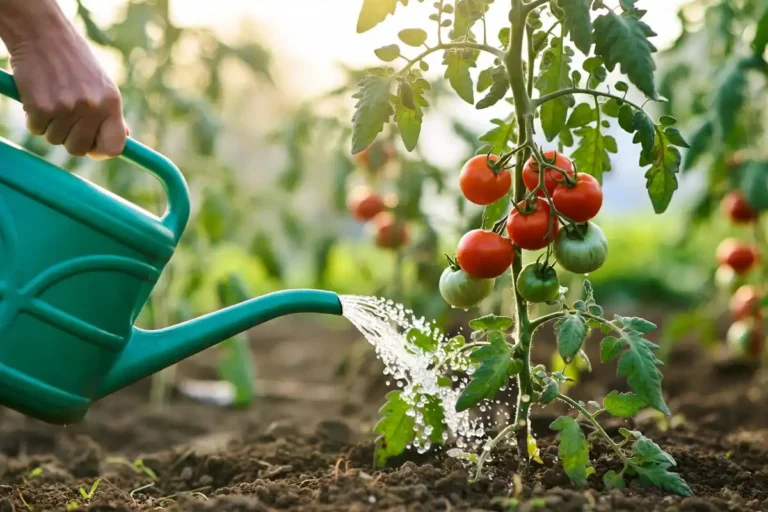
- Water the hole. Add 1 cup of water to the hole before placing the transplant. This reduces air pockets around the roots.
- Set the transplant. Place the root ball in the hole and firm the soil around it. Avoid packing hard; light, even pressure is enough.
- Water again at the base. Apply 1 to 2 cups directly at the stem, not overhead. Overhead watering on newly transplanted tomatoes wets leaves and increases early disease risk.
- Apply mulch. Lay 2 to 3 inches of straw, wood chips, or shredded leaves around the base. Mulch stabilizes soil temperature and reduces moisture loss. For more on mulching in crop farming, the same principles that apply to field crops apply at the garden scale.
- Mark your planting date. Note the date and variety. This helps you calculate days-to-harvest and track performance across seasons.
What Happens If You Transplant Too Early?
Transplanting into cold soil triggers a predictable set of problems:
Phosphorus lockout occurs when soil stays below 55°F. The plant cannot absorb phosphorus efficiently regardless of how much fertilizer is present. Leaves turn purple or dark green along the edges.
Slow root establishment extends the time before the plant begins active growth. A transplant set into 50°F soil on May 1 often lags behind a transplant set into 65°F soil on May 15, even though the first plant had a two-week head start.
Increased disease pressure follows cold, wet conditions around the root zone. Damping-off pathogens and early blight both thrive in the cool, moist conditions that come with early planting. Understanding common crop diseases helps you recognize early symptoms before they spread to neighboring plants.
What Happens If You Transplant Too Late?
Late transplanting shortens the growing season. In zones with first fall frost in September or early October, transplanting after mid-June reduces the chance of full fruit maturity for long-season varieties (80 to 90 days).
Late transplants also face summer heat stress during establishment. Soil temperatures above 85°F at root depth reduce water uptake and cause blossom drop. Water requirements increase sharply for late transplants in hot-summer climates. Knowing how to calculate water needs for crops helps you avoid both overwatering and drought stress during establishment.
How to Protect Transplants from Unexpected Cold Nights
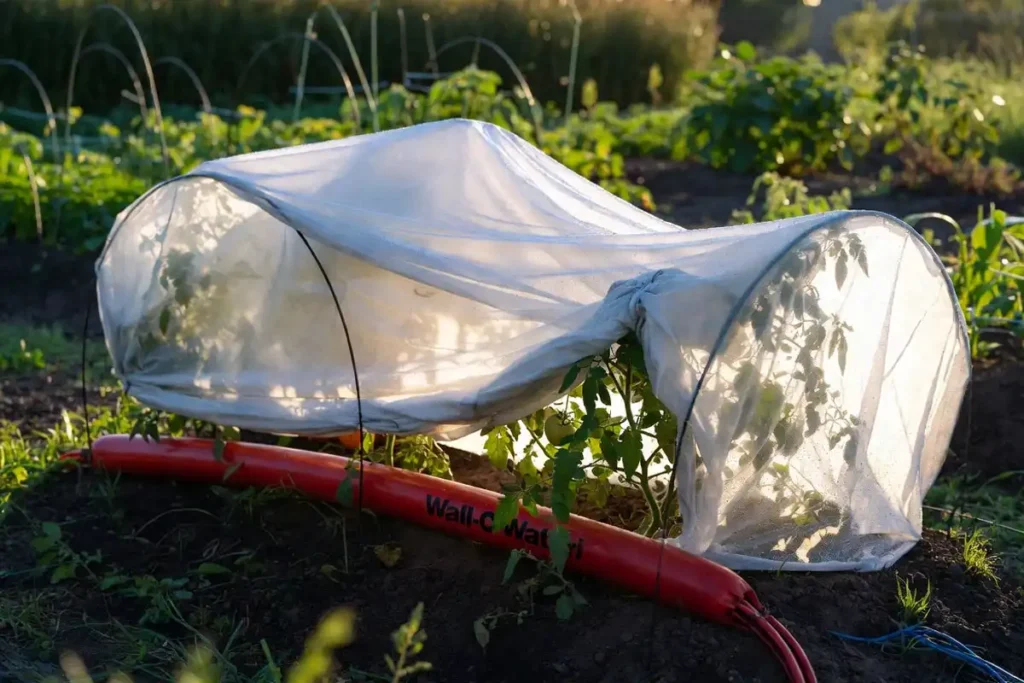
After transplanting, cold snaps can still occur. Several protection methods work reliably:
Row cover (floating fabric): Lay directly over transplants or support on hoops. A single layer of standard row cover adds 4°F to 6°F of frost protection. Remove during the day once temps exceed 80°F to prevent heat buildup.
Wall-O-Water (season extender): Plastic tubes filled with water surround individual plants and hold heat. Wall-O-Water units protect tomatoes to around 16°F when used correctly. They allow transplanting 4 to 6 weeks earlier than open-air transplanting in many regions.
Inverted containers: A 5-gallon bucket placed over a transplant overnight traps ground heat. Remove the bucket the next morning before temperatures climb.
Cold frames: Permanent or portable cold frames protect transplants from frost and extend the season by 3 to 4 weeks on either end. Cold frames work especially well for early transplanting in Zones 5 and 6.
Common Transplanting Mistakes to Avoid
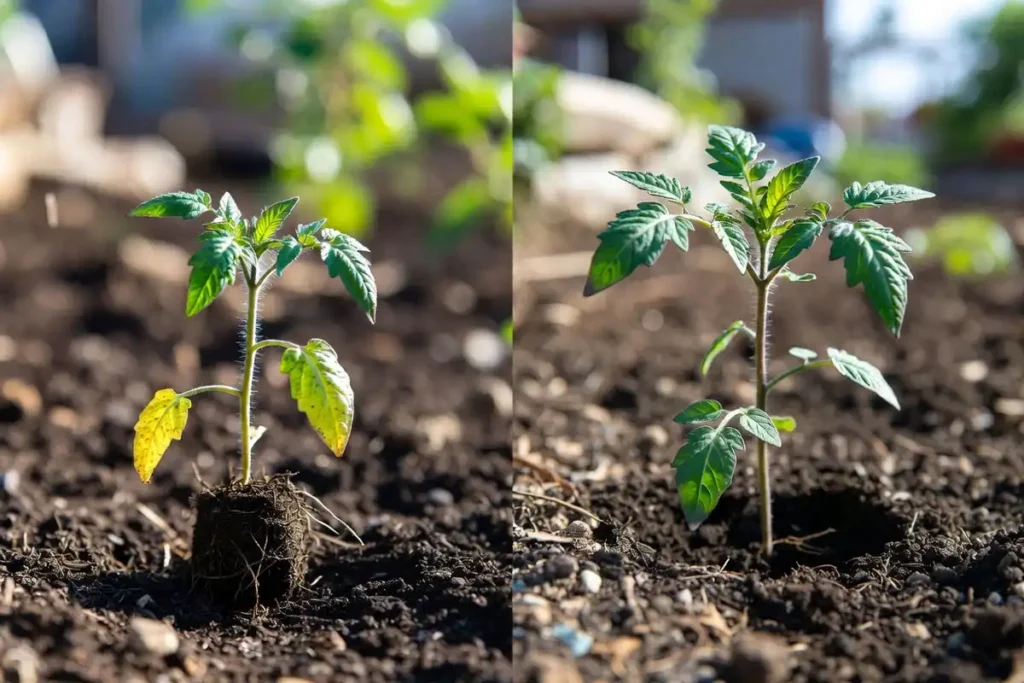
Planting too shallow. A shallow root system makes the plant more vulnerable to drought and wind. Always bury the stem deeply to build the strongest root base.
Transplanting during midday heat. High sun and heat stress the plant during the critical first 24 hours. Transplant in the late afternoon or on a cloudy day to reduce wilting and sunscald.
Overwatering immediately after transplanting. One to two cups at planting is enough. Heavy watering saturates cold soil and reduces oxygen around the roots. Resume normal watering once the plant shows new growth, usually within 5 to 7 days.
Skipping hardening off. Even a few days of gradual outdoor exposure reduces transplant shock significantly. Plants moved directly from indoor growing lights to full sun often suffer permanent leaf damage.
Using high-nitrogen starter fertilizer. High nitrogen pushes leafy growth at the expense of root development. Use a balanced or phosphorus-forward starter fertilizer, or skip fertilizer at transplanting and rely on compost-amended soil for the first two weeks.
Safety Notes
Wear gloves when handling tomato transplants and soil amendments. Tomato plant sap irritates skin and eyes in some people, particularly during the handling of suckers and lower leaf removal.
When using row cover or Wall-O-Water on warm days, check plants mid-morning. Temperatures inside closed covers can spike quickly above 90°F, which causes heat stress as damaging as frost.
Store liquid fertilizers and any soil treatments out of reach of children and pets, and follow label instructions for concentration and application rates.
Conclusion
Tomatoes transplant successfully when nighttime temperatures hold at 50°F or above and soil reaches 60°F at planting depth. The specific date varies by region, ranging from late February in the Gulf Coast to early June in northern zones. Hardening off seedlings for 7 to 10 days before transplanting reduces stress and improves establishment. Burying the stem deeply, mulching after planting, and protecting from unexpected cold snaps gives each transplant the strongest start possible.