Can You Plant Lettuce With Peppers in One Bed? Here Is How
Yes, you can plant lettuce with peppers, and the pairing beats most gardeners’ expectations. Lettuce fills the open ground while your peppers stretch tall. It helps to use this combo every spring. Below covers timing, spacing, and the one catch most folks miss.
Yes, you can plant lettuce with peppers. Set cool-season lettuce out first in early spring, then add pepper transplants among the greens once soil passes 65°F. The lettuce smothers weeds, and the peppers later shade it.
Can You Plant Lettuce With Peppers?
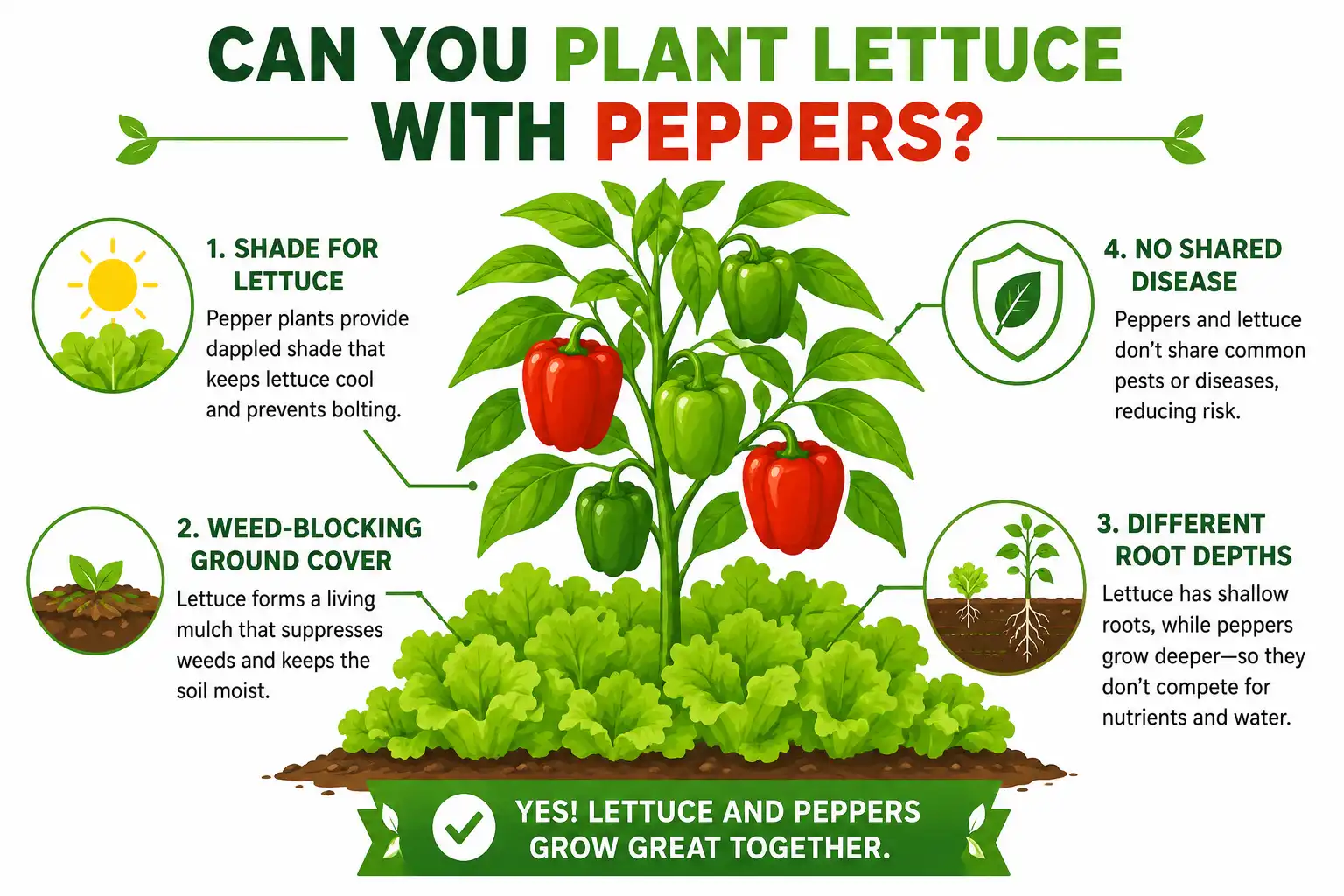
Yes, and lettuce and peppers share a bed beautifully. Peppers grow upright and bushy. Lettuce stays low and leafy. So the two crops use different layers of the same space. While your peppers reach for the sun, the lettuce carpets the soil below. That carpet blocks weeds and holds moisture. Later in summer, the taller pepper plants throw shade over the lettuce. Because lettuce hates heat, that shade keeps it sweeter and slows bolting. The two crops also come from different plant families, so they share no major soilborne disease. In short, they help each other far more than they fight.
Learn more: Plant After Lettuce (And What to Skip) in Your Garden
Why Lettuce and Peppers Make Good Companions
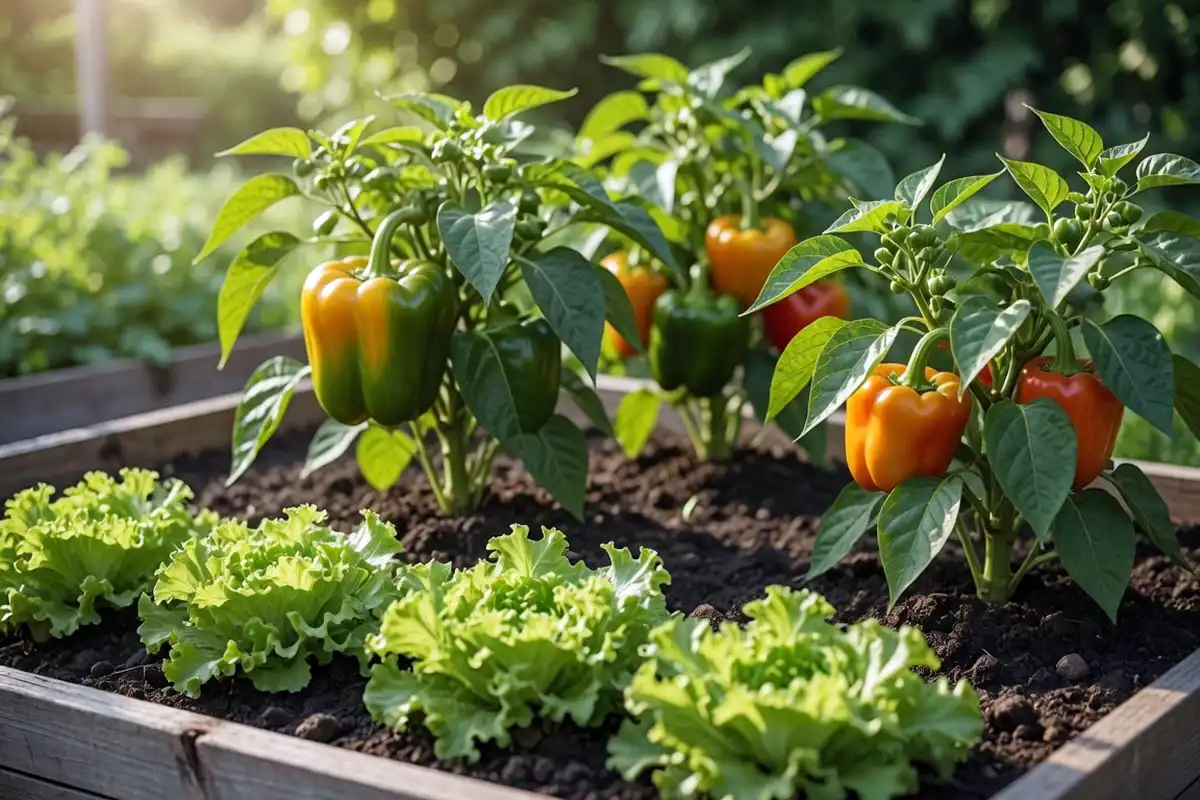
Three things make this pairing click: shade, ground cover, and root depth. First, peppers cast light shade as they fill out. Lettuce takes partial shade well, so it stays tender instead of turning bitter. Second, lettuce works as a living mulch. It covers bare soil, crowds out weeds, and slows evaporation. Third, the roots run at different depths. Lettuce keeps a shallow root system in the top few inches, while peppers reach deeper. So neither crop strips the same zone at the same time.
On top of that, lettuce and peppers belong to separate plant families. Lettuce sits in the aster family. Peppers fall under the nightshade group, Solanaceae, alongside tomatoes and potatoes. Because the two share no common soil disease, planting them side by side carries little risk. West Virginia University Extension actually recommends tucking cool-season greens like lettuce between slow growers like peppers for exactly these reasons.
When to Plant Lettuce With Peppers in Kansas
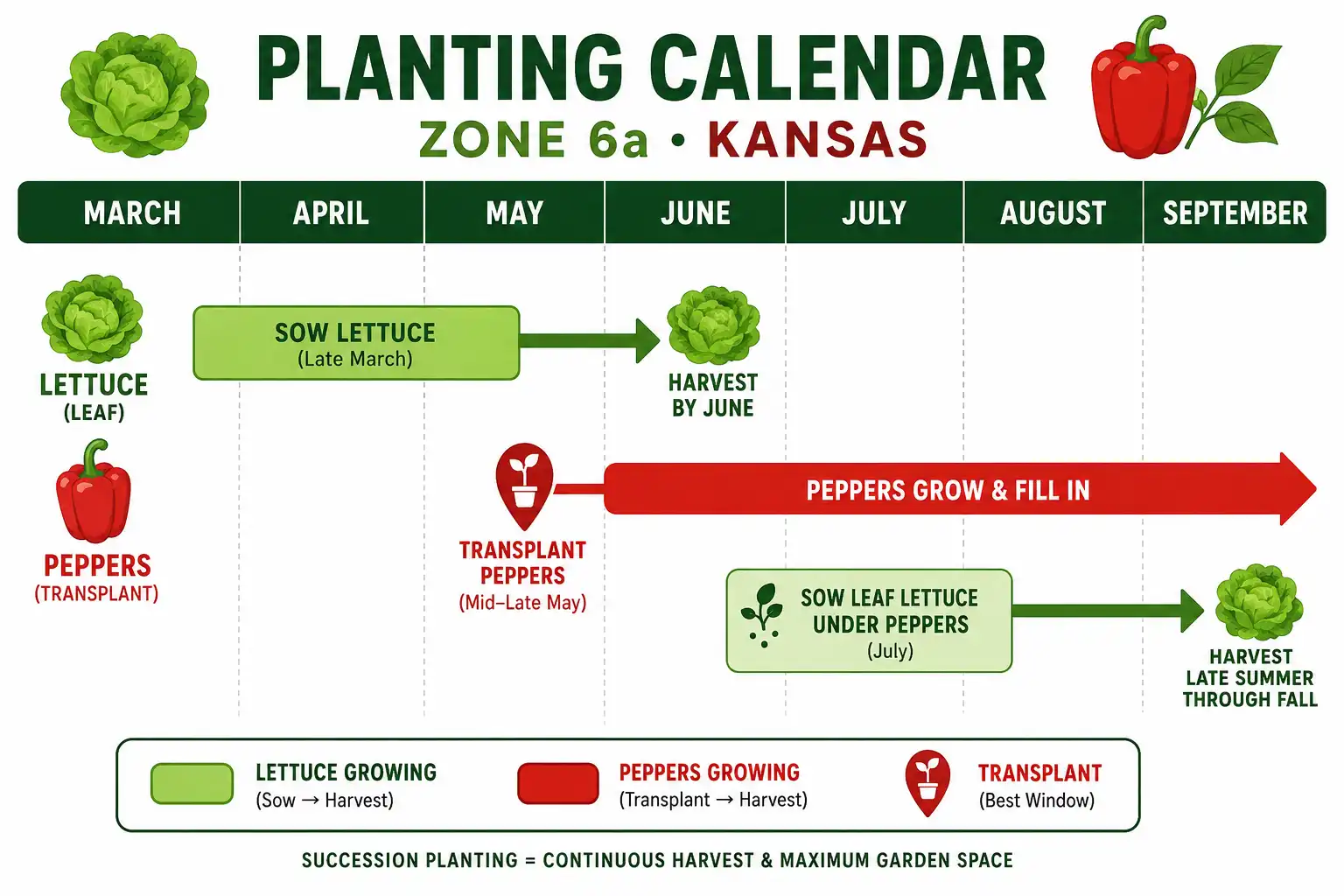
Timing splits into two clear windows, depending on what you want. One window starts lettuce early and adds peppers later. The other slips fresh lettuce under grown peppers for summer shade. Both work, so pick the one that fits your goal.
Start Lettuce First, Then Add Peppers
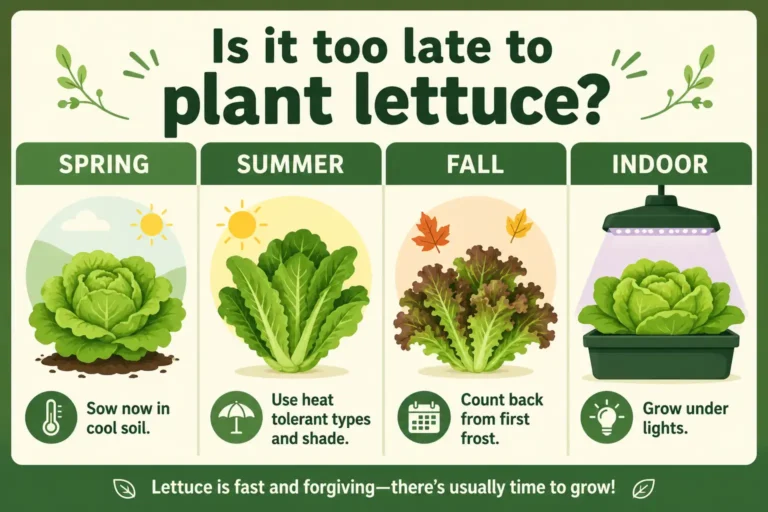
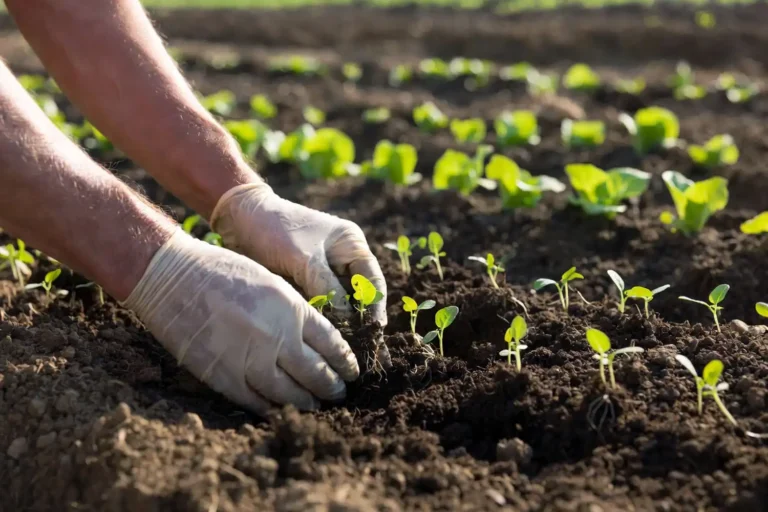
Plant the lettuce weeks before the peppers. In zone 6a, direct sow or transplanting lettuce typically happens in late March. Lettuce shrugs off light frost, so it gets a strong head start. K-State Research and Extension puts the average last spring frost near Topeka around late April. Peppers wait until mid to late May. Peppers need warm soil, at least 65°F, plus nights above 50°F, per West Virginia University Extension. By the time pepper transplants go in, the lettuce is already halfway to harvest. Tuck the young peppers right into the gaps. The lettuce keeps producing while the peppers settle in. As June heat builds, cut the last lettuce. By then the peppers own the bed.
Tuck Lettuce Under Peppers for Summer Shade
Sow heat-tolerant leaf lettuce in the shade of grown peppers. This trick gives you midsummer salads. Across the Great Plains, the summers turn hot fast, and most lettuce bolts quickly in that heat. Sow loose-leaf types under the pepper canopy in July. The peppers block the worst afternoon sun. That cooler, shaded soil helps the lettuce sprout and hold. For a deeper look, a full guide covers how to stop summer lettuce from bolting. Pick slow-bolt varieties for the best results.
How Far Apart Should You Plant Lettuce and Peppers?
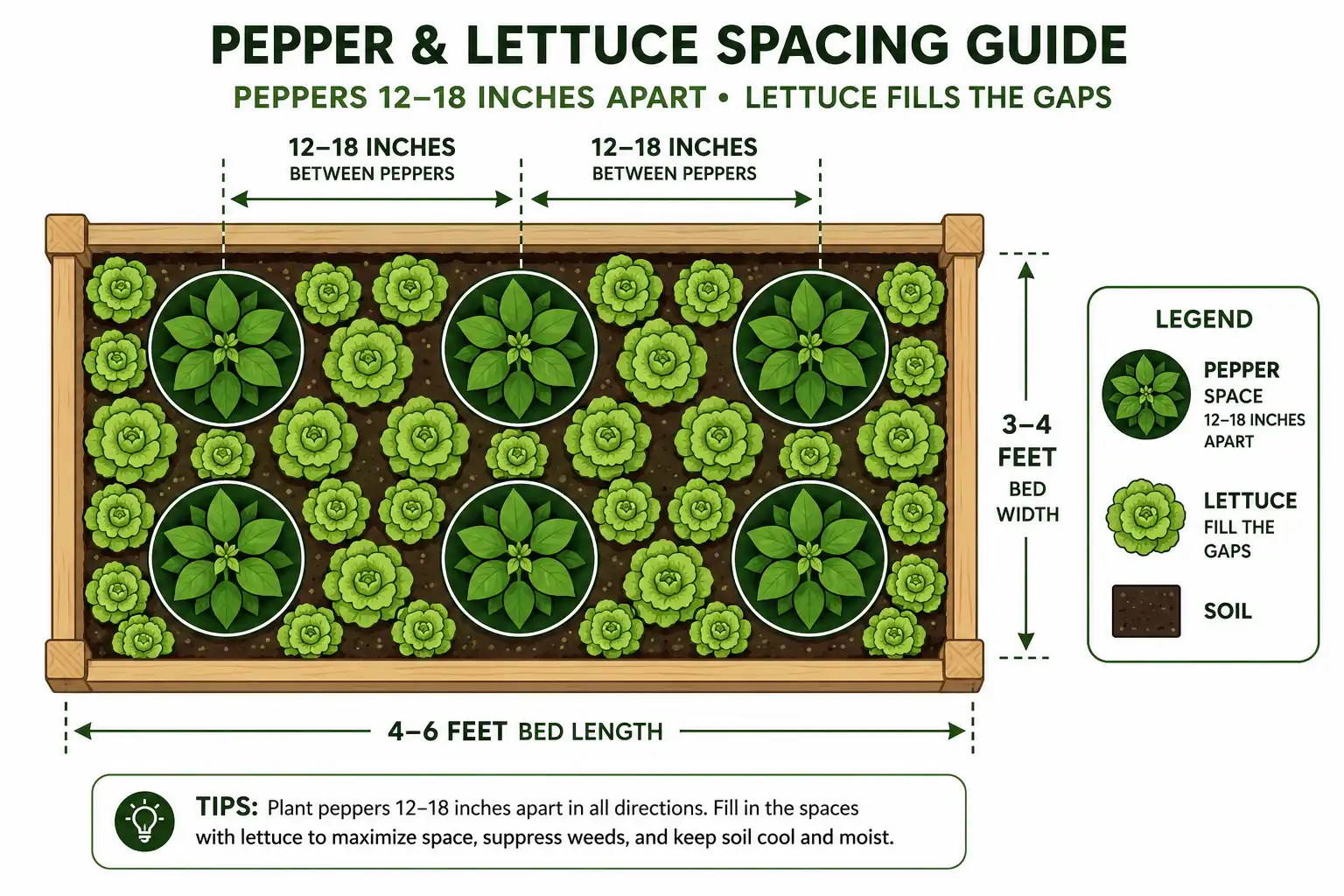
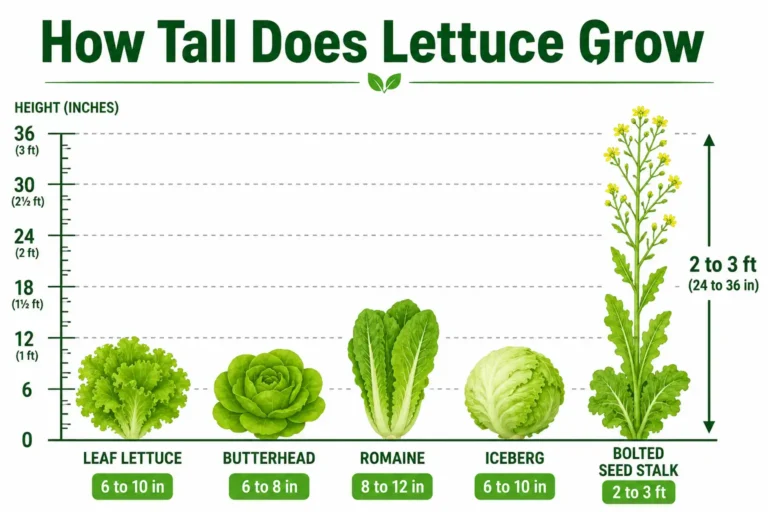
Space peppers 12 to 18 inches apart, then fill the gaps with lettuce. That pepper spacing comes straight from South Dakota State University Extension, and it matches what in Kansas. Set heading lettuce 6 to 10 inches apart. Leaf lettuce can go closer, since you cut it young. Plant the lettuce in the open ground between and around each pepper. Keep the greens a few inches off the pepper stems for airflow. For more on spacing lettuce plants on their own, a separate guide covers that. Once the peppers fill out, pull any lettuce that starts to crowd them. Crowded peppers catch less light and set fewer fruit.
Do Lettuce and Peppers Compete for Water and Nutrients?
They compete very little, but the two crops want different feeding, and that is the real catch. Lettuce grows fast on nitrogen. Peppers do not. Too much nitrogen pushes peppers to grow lush leaves and set few fruit. So do not dump high-nitrogen fertilizer on the bed once peppers start flowering. Instead, feed the lettuce early, before the peppers fruit. Side-dress the young lettuce with a light nitrogen source in spring. Later, switch the peppers to a low-nitrogen, higher-phosphorus feed to push fruit set.
Water needs differ too. Lettuce has shallow roots and dries out quickly, so it wants steady, even moisture. Peppers prefer the topsoil to dry a touch between waterings. A drip line plus mulch handles both. The shallow lettuce roots sip the surface, while pepper roots pull from lower down. For exact figures, check the breakdown of lettuce’s weekly watering needs.
How to Plant Them Together, Step by Step
Here is the exact order each spring.
- Prep the bed. Work in compost and rake it level.
- Plant lettuce in late March, either by seed or transplant.
- Water it in well and keep the soil moist.
- Wait for warm soil. Check that it holds 65°F and frost has passed.
- Set pepper transplants in mid to late May, 12 to 18 inches apart, right into the lettuce.
- Harvest lettuce as the peppers grow. Clear it before it crowds them.
- Feed the peppers a low-nitrogen fertilizer once they flower.
That covers the whole routine. It takes one bed and gives you two crops.
When This Pairing Causes Problems
Problems show up only when timing or spacing slips. If you plant lettuce too late, summer heat scorches it before harvest. If you crowd peppers with too much lettuce, the crowding shades them, and they set fewer fruit. Sunscald can also hit peppers when leaf cover runs thin, though lettuce below the plants never causes that. Overwatering for the lettuce can sour pepper roots in heavy clay, so good drainage matters. And heavy nitrogen, as noted, costs pepper fruit. Avoid those few traps, and the pairing runs smooth. If you grow peppers near other crops as well, the same logic applies to setting peppers near tomatoes.
Bottom Line for Your Garden Bed
You can grow lettuce and peppers in one bed and pull more from the same ground. Start the lettuce early, add peppers when the soil warms, and let each crop cover for the other. Watch your spacing, and go easy on nitrogen. Do that, and you will cut crisp lettuce in spring and harvest strong peppers all summer. It is a simple pairing, and it earns its keep in the plot every year.