Can You Plant Lettuce in July? Heat Tricks for a Fall Crop
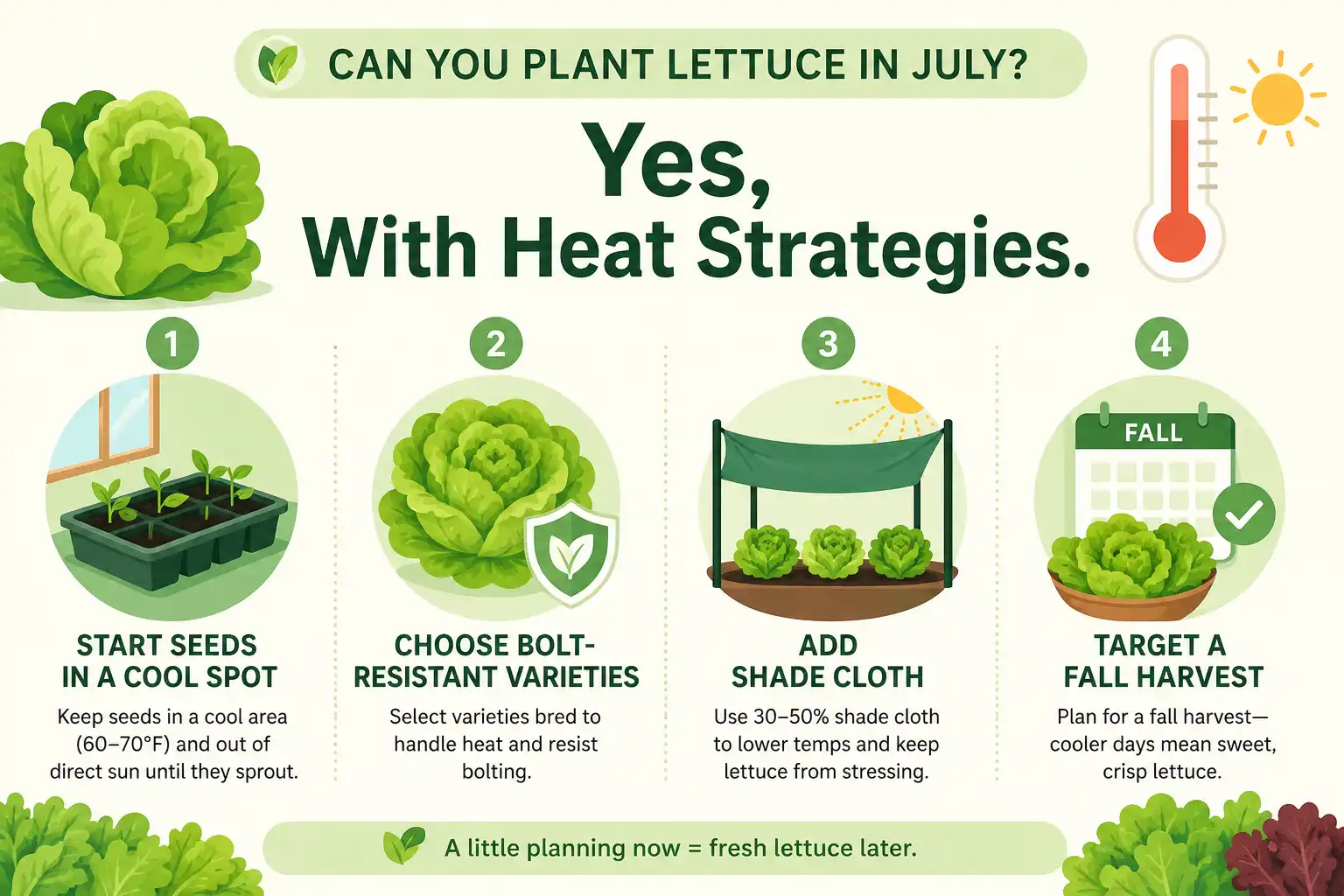
July is peak heat, and lettuce is a cool-season crop. So can you plant lettuce in July without it bolting or refusing to sprout? Short answer: yes, with the right moves. The trick is beating the heat at germination and timing your crop for fall.
Yes, you can plant lettuce in July, but treat it as a fall crop. Start seeds in a cool, shaded spot, pick bolt-resistant varieties, and keep the soil moist. Open-ground sowing in full July heat usually fails.
Can You Plant Lettuce in July?
Yes, you can, but July planting only works when you manage heat from day one. Lettuce wants cool soil and mild air. Drop seeds into hot open ground and most of them simply will not sprout. Push through that, and summer heat then drives the plants to bolt and turn bitter.
So the real question is not whether you can plant it. It is how you start it and when you harvest. Treat a July sowing as the front end of a fall crop. That single shift changes everything.
Why July Heat Makes Lettuce So Tricky
July heat hurts lettuce in two ways: it blocks germination, and it triggers bolting. Both come down to temperature.
Lettuce seed has a built-in safety switch called thermal dormancy. Once soil climbs past about 75°F, that switch flips and the seed refuses to germinate. Purdue University’s Vegetable Crops Hotline notes that many lettuce cultivars stop sprouting above 75°F. Push toward 80°F and most seed just sits there.
Heat hits grown plants too. Lettuce grows best between 65 and 70°F. Once temperatures top 86°F, growth stalls and the leaves turn bitter. The plant also shifts into survival mode and sends up a flower stalk. That is bolting, and it ends your harvest fast. If you want the full rundown on keeping summer lettuce from boltingour guide covers that separately.
How Do You Germinate Lettuce Seeds in July Heat?
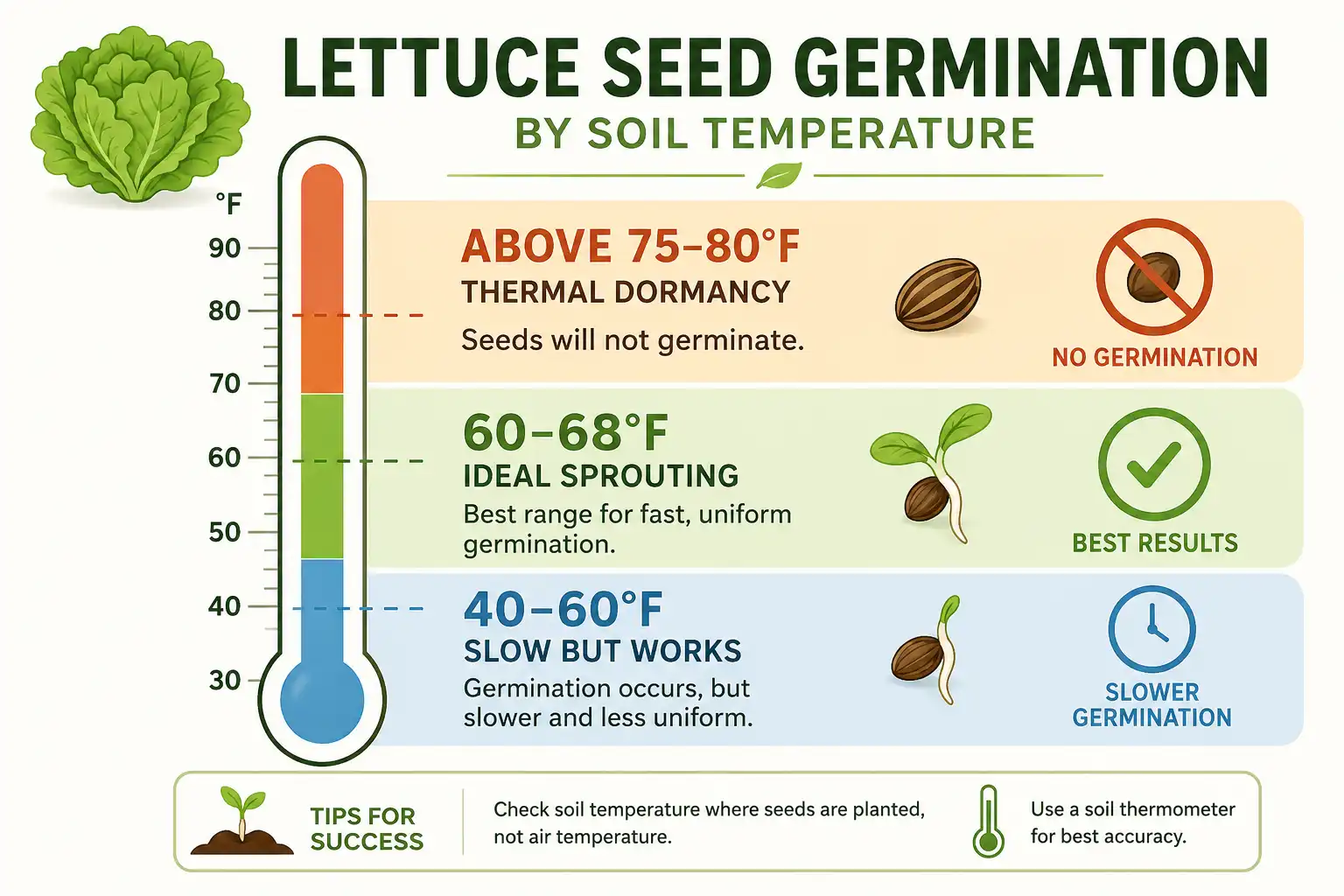
Start the seed where it stays cool, not in the hot open field. That single move fixes most July germination trouble.
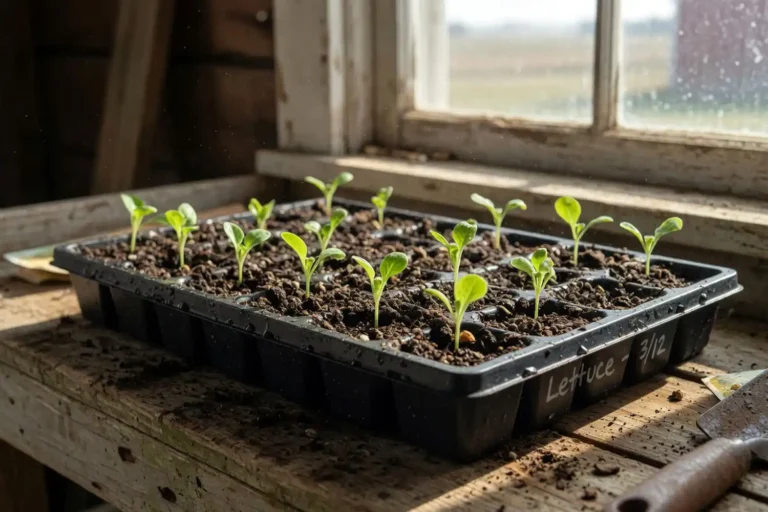
For July sowings, start lettuce indoors or in deep shade and keep the trays under 75°F. You can also chill the seed first. Soak the seeds in water for about a day, then move the damp seeds to the refrigerator for two to three days before you sow. Cool, moist conditions break the thermal dormancy and wake the seed up. This pre-chill step makes getting lettuce seeds to germinate far easier in summer.
A few more tricks help:
- Sow shallow, about 1/8 inch deep. Lettuce seed often needs a little light to sprout.
- Sow in the evening so the seedbed sits through cooler night hours.
- Keep the soil surface damp at all times. Dry soil and heat together shut germination down.
- Use primed or pelleted seed. The priming process widens the temperature range the seed will sprout in.
- Lay a board or light mulch over the row until you see sprouts, then pull it off.
Which Lettuce Varieties Hold Up to July Planting?
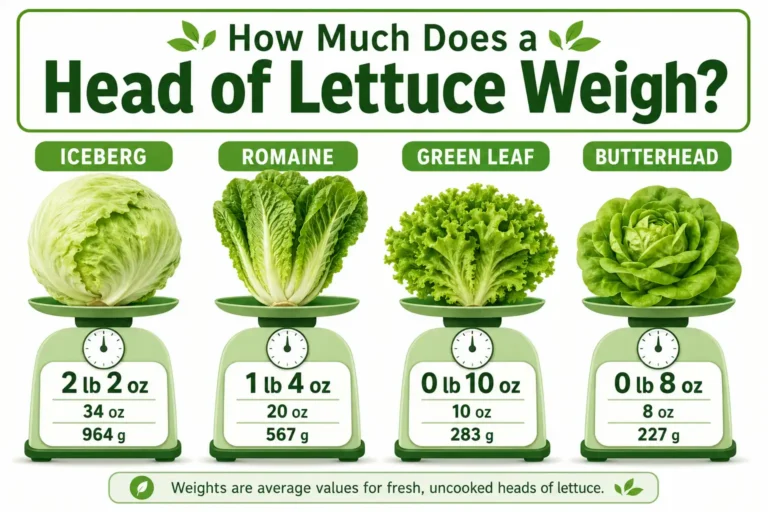
Loose-leaf and summercrisp types hold up best. Skip the tight crisphead types like classic iceberg, since they bolt and struggle most in heat.
Variety choice matters more than almost anything else in summer. In a University of Delaware lettuce trial, 83% of varieties bolted even when planted in the recommended fall window. The heat-tolerant ones came through clean. UC Master Gardeners of Sacramento County reported good luck with Jericho, Nevada, and similar slow-bolting picks.
Here are reliable choices for a July planting:
- Jericho: a romaine bred in Israel for desert heat. Crisp, sweet, and slow to bolt.
- Nevada: a summercrisp type with great flavor and strong bolt resistance. Around 48 days.
- Muir: one of the most heat-tolerant on the market. Wavy green leaves, about 50 days.
- Sierra: a red-tinged summercrisp, good for cut-and-come-again. Around 45 days.
- Simpson Elite: a leaf type, slower to bolt than the old Black Seeded Simpson.
- Coastal Star: a dependable heat-tolerant romaine for fuller heads.
Loose-leaf types give you the most forgiving option. You can cut the outer leaves young and keep the plant going.
How Do You Shade and Water Lettuce Through July?
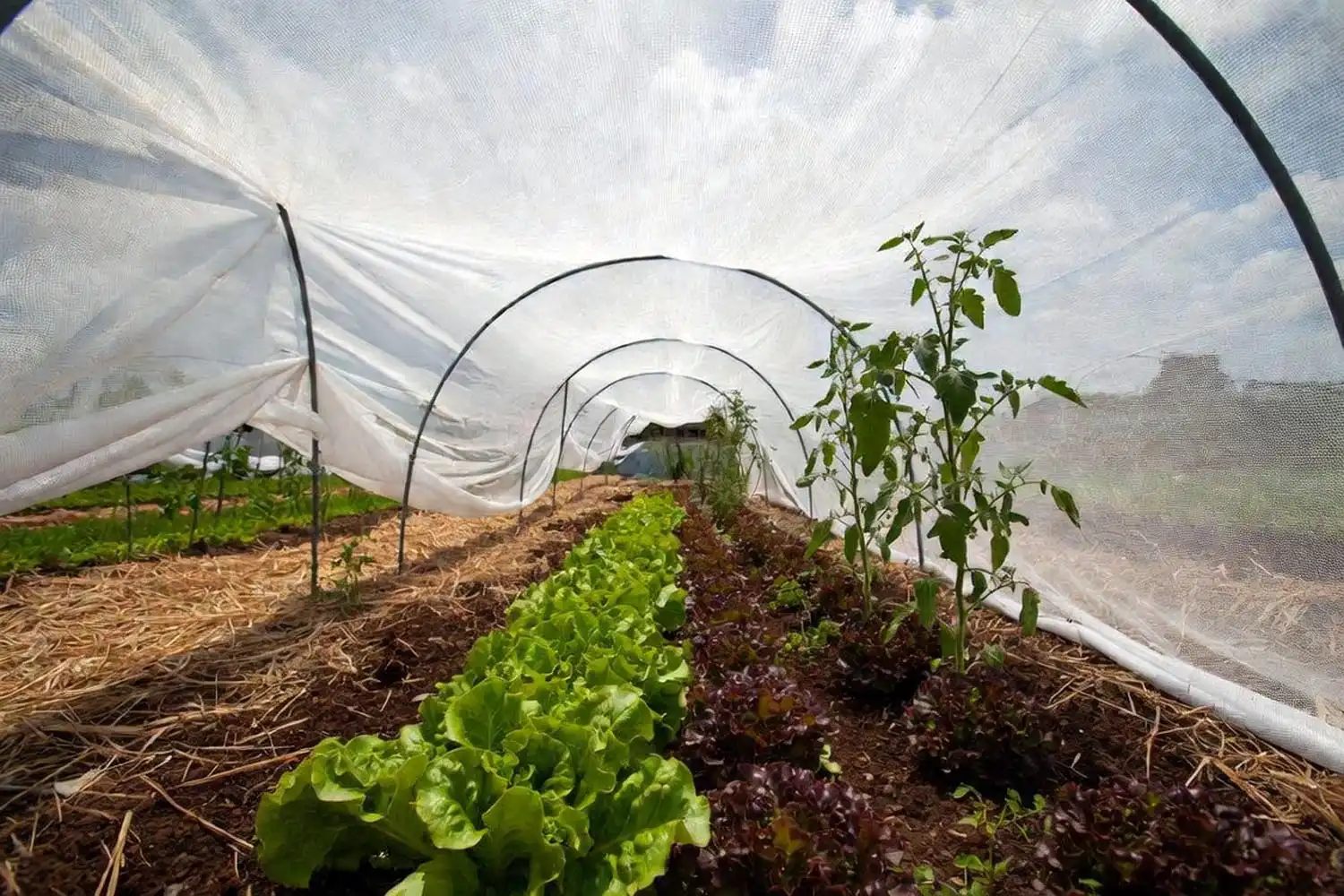
Give July lettuce afternoon shade and steady water. Those two things keep the crop cool, slow bolting, and stop the leaves from going bitter.
Shade cloth rated at 30 to 50% works well over a lettuce bed. No shade cloth on hand? Plant your lettuce on the east side of taller crops like corn, pole beans, or staked tomatoes. The big plants throw afternoon shade right when the sun is harshest. Growing lettuce in partial shade is one of the simplest heat fixes. Afternoon shade alone can drop bed temperatures several degrees.
Water is the other half. Lettuce roots run shallow, so the top few inches of soil cannot dry out. Water lightly and often in July, sometimes twice a day in a hot stretch. A thin layer of straw or grass-clipping mulch keeps the soil cooler and holds moisture between waterings. Keep the plants growing fast. Slow, stressed lettuce bolts early and tastes bitter.
When Will July-Planted Lettuce Be Ready to Harvest?
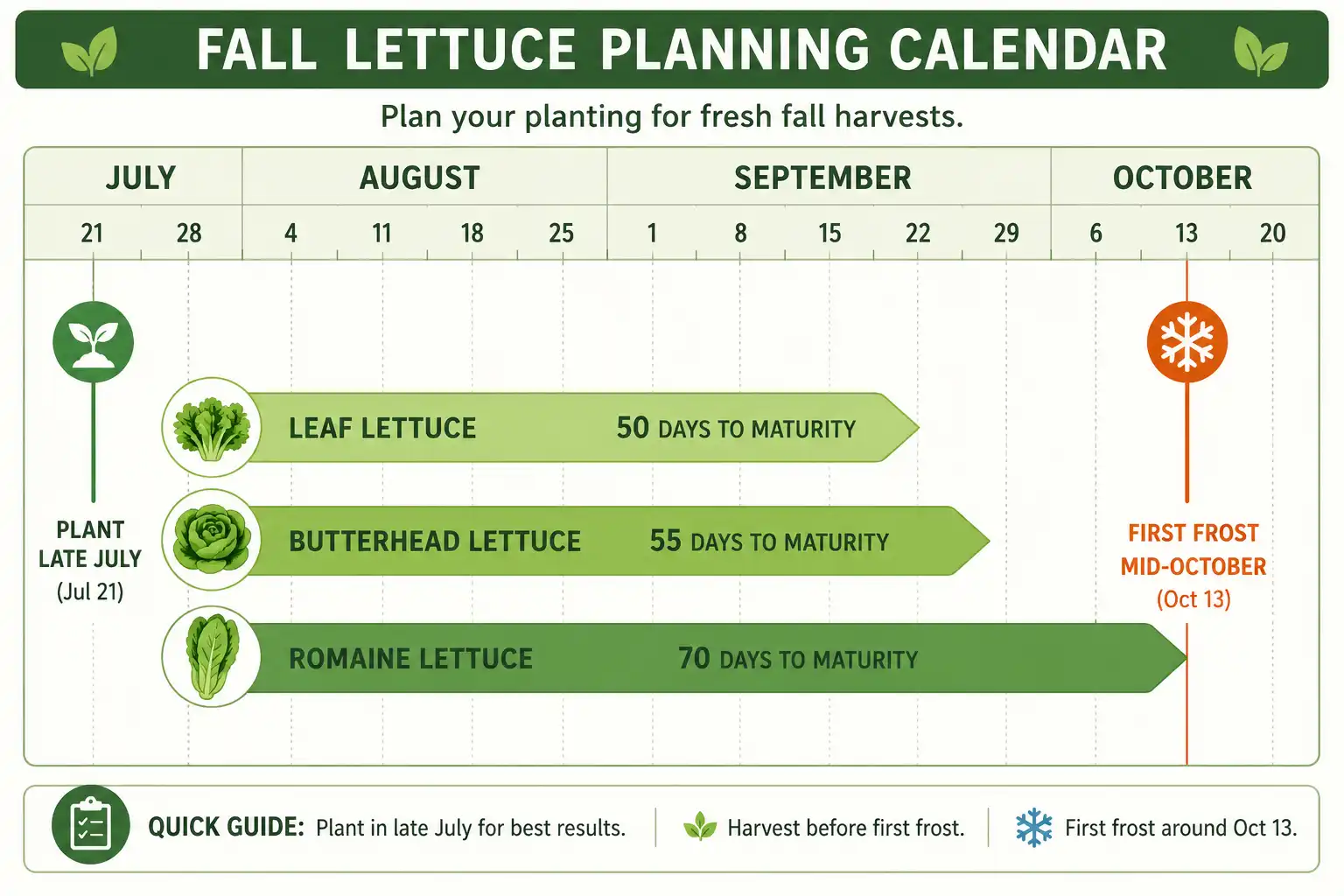
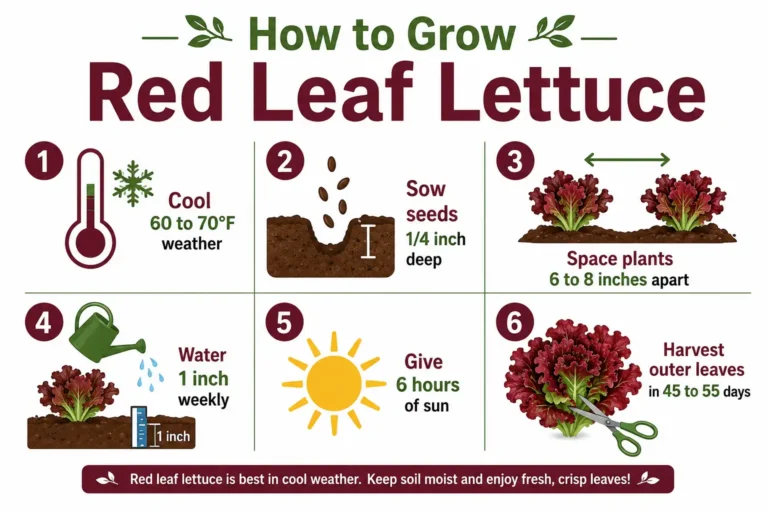
Most July-planted lettuce is ready in 45 to 75 days, which lands your harvest in the cooler days of fall. That fall timing is the whole point of a July start.
Days to maturity depend on the type. Leaf lettuce runs about 45 to 55 days. Butterhead lands near 50 to 55. Romaine takes 60 to 75. Crisphead needs the longest, often 70 days or more. Cooler fall nights slow growth a little, so add a week or so to those numbers for a late-season crop. You can plan the whole stretch from seed to harvest once you know your variety’s days to maturity.
The smart move is to count back from your first fall frost. In central and eastern Kansas, that frost usually lands in mid-October, per K-State Research and Extension. A leaf variety at 50 days, sown in late July or early August, matures in good time before the cold. Better yet, lettuce shrugs off light frost, so a fall crop can run past that first chilly night.
Does the Right Answer Depend on Where You Farm?
Yes, your climate changes the July answer a lot. The same crop that thrives up north can fail flat in the Deep South.
In cool-summer spots, like the Pacific Northwest, New England, or high-elevation country, July lettuce often grows fine right in the ground. Mild summer temperatures keep germination and bolting in check.
So it helps to use transplants, shade, and bolt-resistant varieties to bridge into fall.
In the hot, humid South and the desert Southwest, July is the worst stretch of the year for lettuce. Many growers there skip it and start fall transplants indoors in air conditioning for a September setout. If you garden in heat like that, growing lettuce into winter pays off far more than fighting July.
July Lettuce Plan
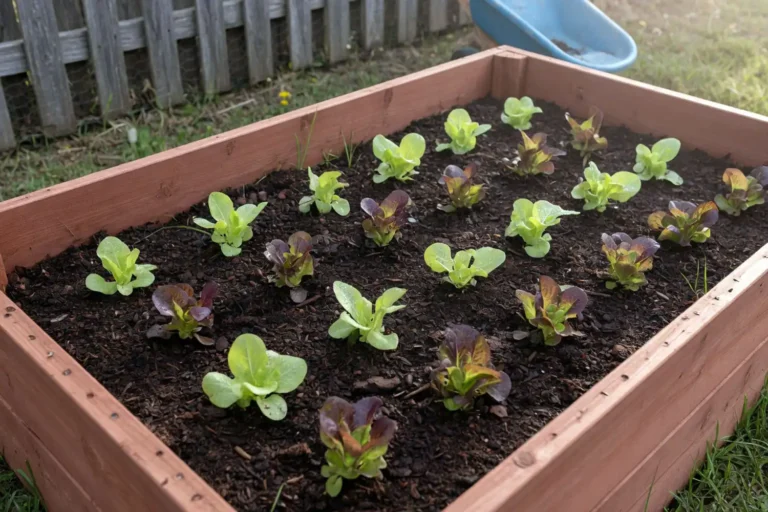
Here is what to actually do. In mid-to-late July, start bolt-resistant lettuce in trays on a shaded porch, keeping them under 75°F. Around mid-August, once the worst heat eases, set those transplants into a bed with afternoon shade and steady water. Sow a small batch every week or two, so harvest everything at once. About four weeks after sowing, side-dress with a high-nitrogen fertilizer to push fast, tender growth.
If you want the sweetest leaves, lean toward that late-summer-into-fall window. our guide covers the best timing for a sweeter lettuce harvest in more detail elsewhere. Bottom line: you can plant lettuce in July, but start it cool, shade it, pick the right varieties, and aim that crop at fall.