What to Plant After Lettuce (And What to Skip) in Your Garden
Your spring lettuce just bolted, and now that bed sits open. Knowing what to plant after lettuce keeps the soil working and breaks pest cycles before they build. The right follow crop depends on your family rotation, your season, and your disease history.
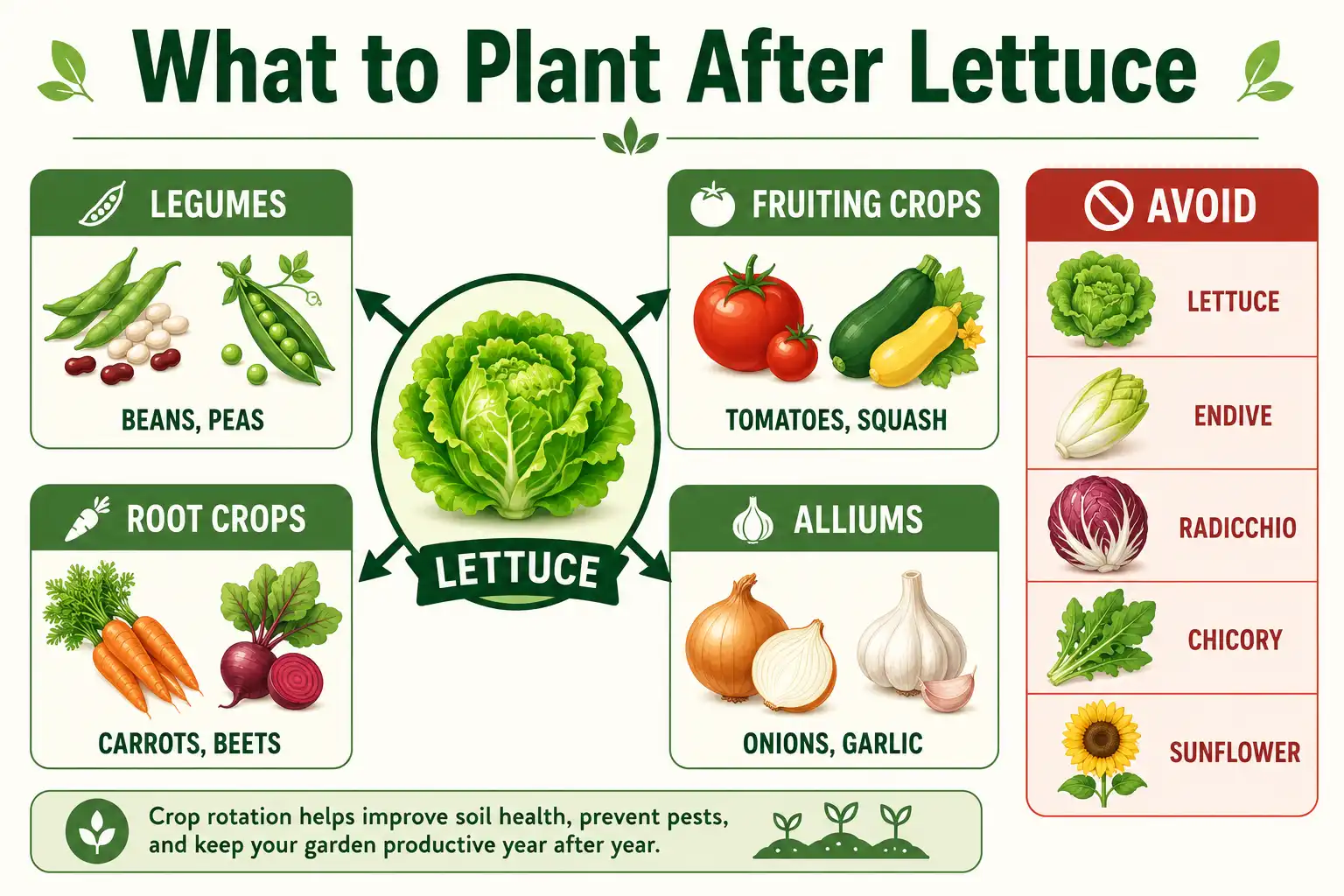
What to plant after lettuce comes down to rotating families. Strong follows are legumes (beans, peas), fruiting crops (tomatoes, squash), and root crops (carrots, beets). Skip more lettuce or other daisy-family greens to break disease.
What Should You Plant After Lettuce?
After lettuce, plant a crop from a different family so the soil keeps working and pests lose their host. The four go-to groups are legumes, fruiting crops, root crops, and alliums. Each one feeds differently than a leafy green. Each one also breaks the disease cycle that builds when you grow the same family twice.
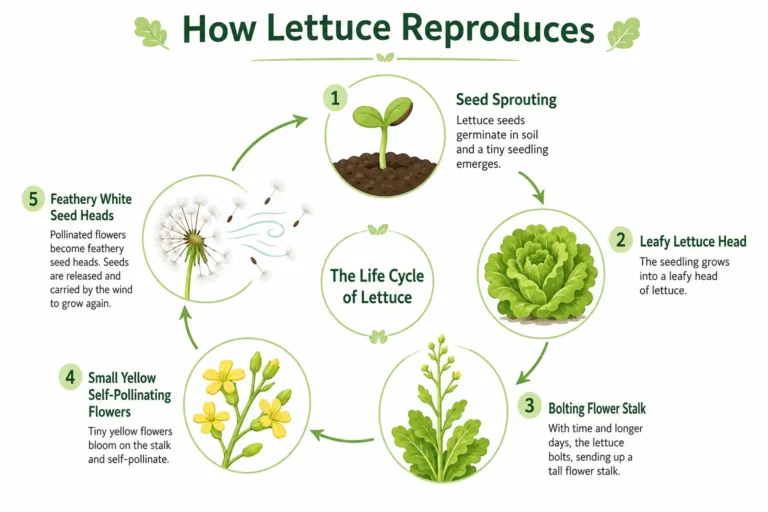
Lettuce belongs to the Asteraceae family, the same group as endive, chicory, and sunflowers. It roots shallow and grows fast on nitrogen. So it draws hard from the top few inches and leaves the deeper soil mostly alone. That shapes what comes next. You want a follow crop that either feeds the soil back or pulls from a different layer.
Read next: Plant Spinach and Lettuce Together
Why Does Crop Rotation After Lettuce Matter?
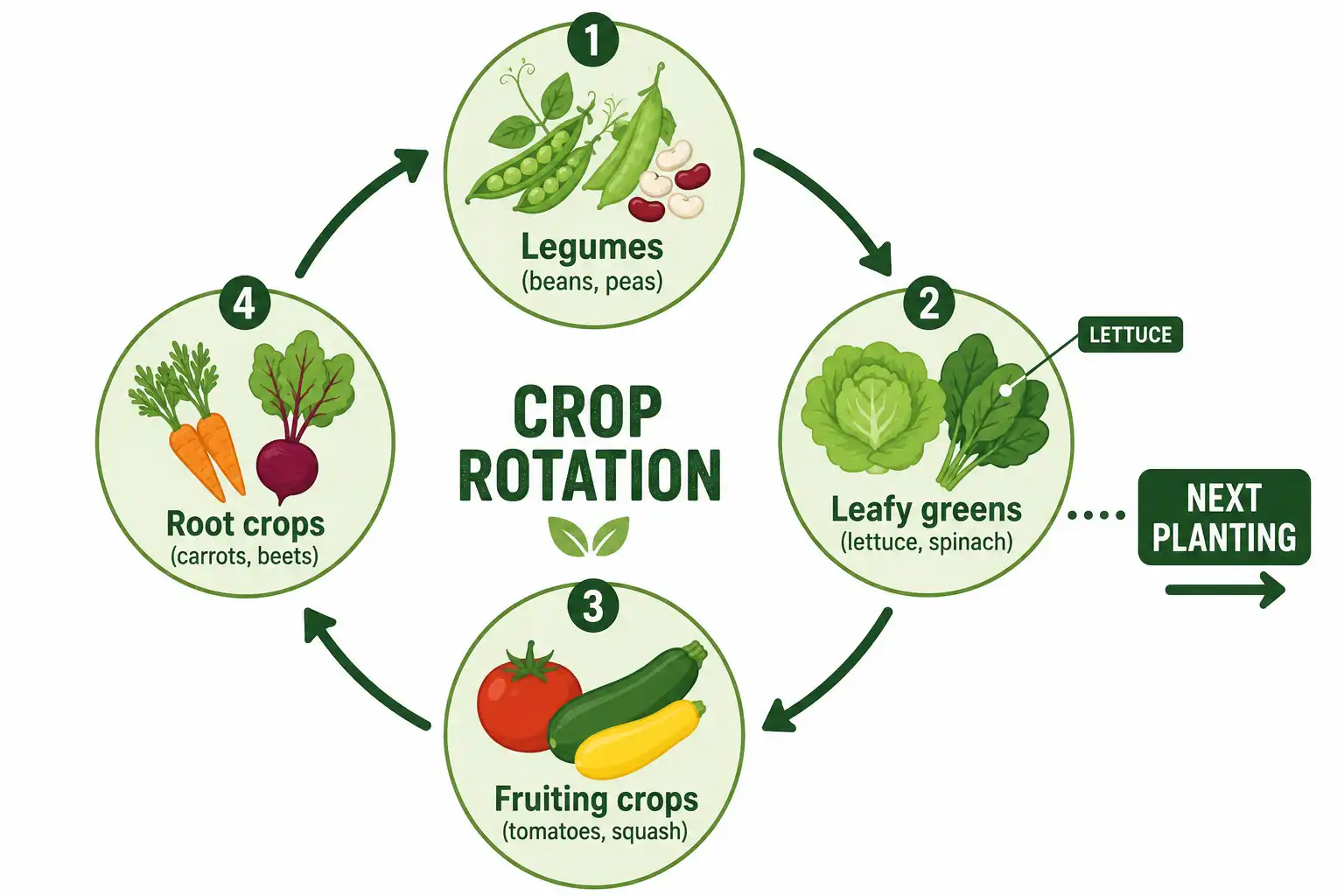
Crop rotation matters because it starves family-specific pests and balances what the soil gives up. Grow lettuce in the same bed year after year, and two problems stack up. Diseases like downy mildew and lettuce drop carry over in the soil and debris. Nitrogen in the top layer runs thin. Rotation fixes both at once.
Downy mildew (Bremia lactucae) hits only lettuce and its daisy-family cousins. It does not last long in bare soil, so moving off the family for a season knocks it back. Lettuce drop is the tougher one. Two Sclerotinia fungi cause it, and their resting bodies survive in the ground for years. K-State Research and Extension leans on rotation and clean debris removal to keep both in check. That is why planning your crop rotations beats replanting on instinct.
Also know: Plant Lettuce and Carrots Together
Best Crops to Plant After Lettuce
The strongest follows after lettuce fall into four groups. Here is what each one does for the bed and when it fits.
Legumes (Beans and Peas)
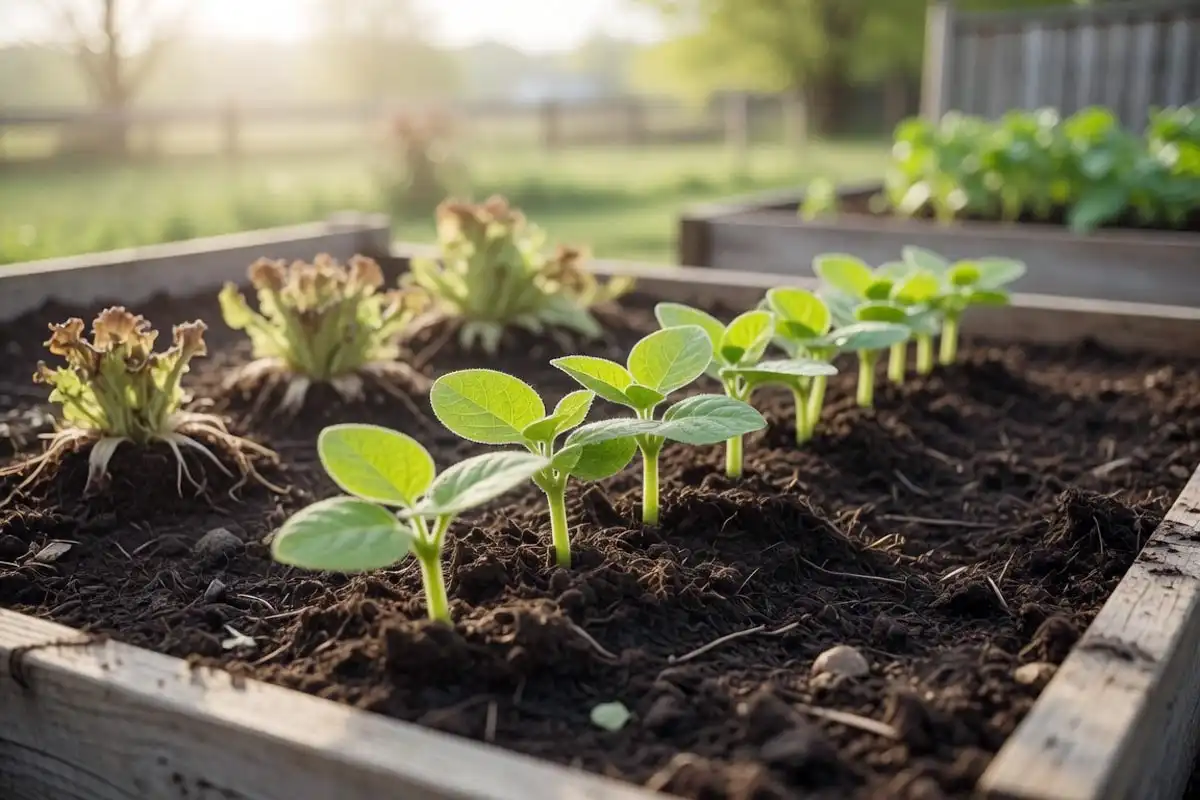
Plant legumes after lettuce when you want to put nitrogen back. Beans and peas host bacteria on their roots that fix nitrogen from the air. So they refill what the lettuce pulled out. Bush beans love the warm soil that follows a spring lettuce harvest in Kansas. Peas suit cooler stretches, early or late.
One caution from the field. White mold, the same fungus behind lettuce drop, also infects beans and peas. Soybeans fix nitrogen the same way, but they pick up white mold too. So if a bed had lettuce drop, skip legumes there and reach for a grass instead.
Fruiting Crops (Tomatoes, Peppers, and Squash)
Plant fruiting crops after lettuce to use the open bed through summer. Tomatoes, peppers, eggplant, and squash are heavy feeders in the Solanaceae and Cucurbitaceae families. They sit far from lettuce on the family chart, so they break the cycle clean. Spring lettuce clears out right around the time when setting tomatoes in Kansas. The timing lines up almost perfectly. Top the bed with compost first, since these crops are hungry.
Root Crops (Carrots, Beets, and Radishes)
Plant root crops after lettuce to feed light and work a deeper layer. Carrots, beets, and radishes pull fewer nutrients than a leafy crop and send roots well below where lettuce fed. Carrots sit in the Apiaceae family, beets in the goosefoot group, and radishes in the brassica family. All three are clear of Asteraceae. Loosen the bed before you plant carrots so the roots run straight.
Onions and Garlic (Alliums)
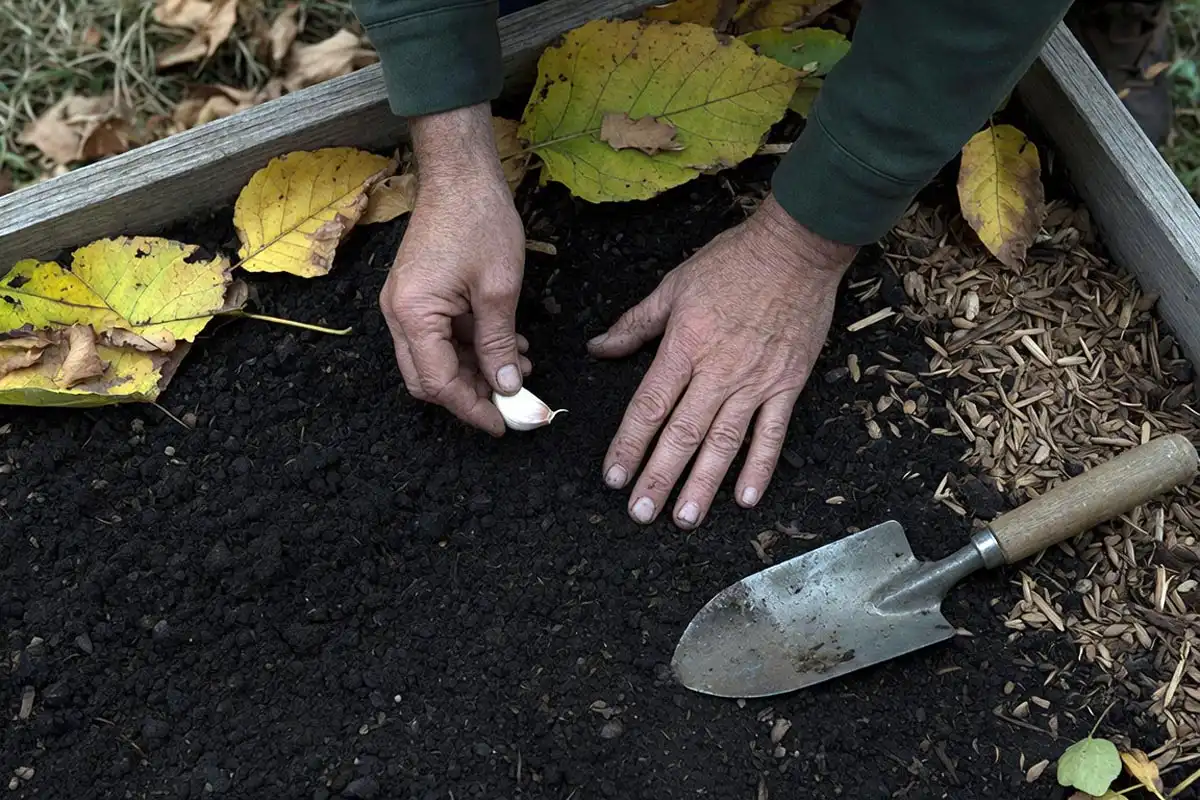
Plant alliums after lettuce for a light-feeding crop in a separate family. Onions, garlic, leeks, and shallots draw little from the soil and carry none of the lettuce diseases. Garlic shines as a fall follow. After fall lettuce comes out, the bed is open right at garlic and onion planting time. That hands you a winter crop with no wasted space.
What Should You Not Plant After Lettuce?
Do not plant another daisy-family crop after lettuce. That rules out more lettuce, endive, escarole, radicchio, chicory, and artichoke. In Kansas, it also means no sunflowers in that spot, since they share the family and the same soil diseases. Replanting the family just feeds whatever overwintered.
White mold widens the list when it shows up. Sclerotinia has a broad host range. NC State Extension and UC IPM both note it infects beans, peas, carrots, peppers, cucurbits, and brassicas. So a bed with a white mold history is no place for those crops. Corn, sorghum, and other grasses shrug it off, which makes them the real cycle-breakers. Worked-in broccoli residue even cuts the fungus down, a trick Salinas Valley growers use before fall lettuce.
How Long Before You Can Plant Lettuce Again?
Wait two to three years before lettuce or its daisy-family relatives return to the same spot. That gap matches how long the worst soil diseases hang on. Bacterial troubles like corky root fade in a year or two. Downy mildew clears fast with clean debris removal. Sclerotinia is the holdout, surviving two to three years, so it sets the clock. Keep notes on what grew where, and the timing gets easy.
What to Plant After Lettuce by Season
After spring lettuce, plant warm-season crops; after fall lettuce, plant garlic or a soil-building cover. Timing drives the whole decision in USDA hardiness zone 6a.
Spring lettuce here bolts and clears by June. That opens the bed for bush beans, summer squash, cucumbers, or transplanted tomatoes and peppers. All of them relish the summer heat. Fall lettuce comes out in late October or November. By then it is too late for most vegetables, so plant garlic or sow a cover crop like cereal rye. Rye holds the soil over winter and breaks the lettuce disease cycle at the same time.
How Do You Prep the Soil After Lettuce?
Top the bed with an inch or two of compost before the next crop, especially before heavy feeders. Lettuce roots shallow, so it leaves the deeper soil in decent shape, but the surface layer gives up its nitrogen fast. Compost refills it and feeds the soil life. For beds headed toward tomatoes or squash, work in compost or aged manure to build soil fertility naturally. A quick soil test every couple of seasons tells you if anything else runs short.
Bottom Line
After lettuce, move the bed to a different family every time. Spring beds go to beans or tomatoes once the heat sets in. Fall beds go to garlic or rye. Keep lettuce and its daisy-family kin off that ground for two to three years. Follow lettuce drop with beans. Match the follow crop to the season, feed the soil back, and the rotation pretty much runs itself.