How Deep Do Lettuce Roots Grow? Root Depth by Type and Soil
Lettuce roots run shallow. Most of the working roots sit in the top several inches of soil, even though a thin taproot can push deeper. Knowing how deep lettuce roots grow changes how you water, feed, and pick a bed or container.
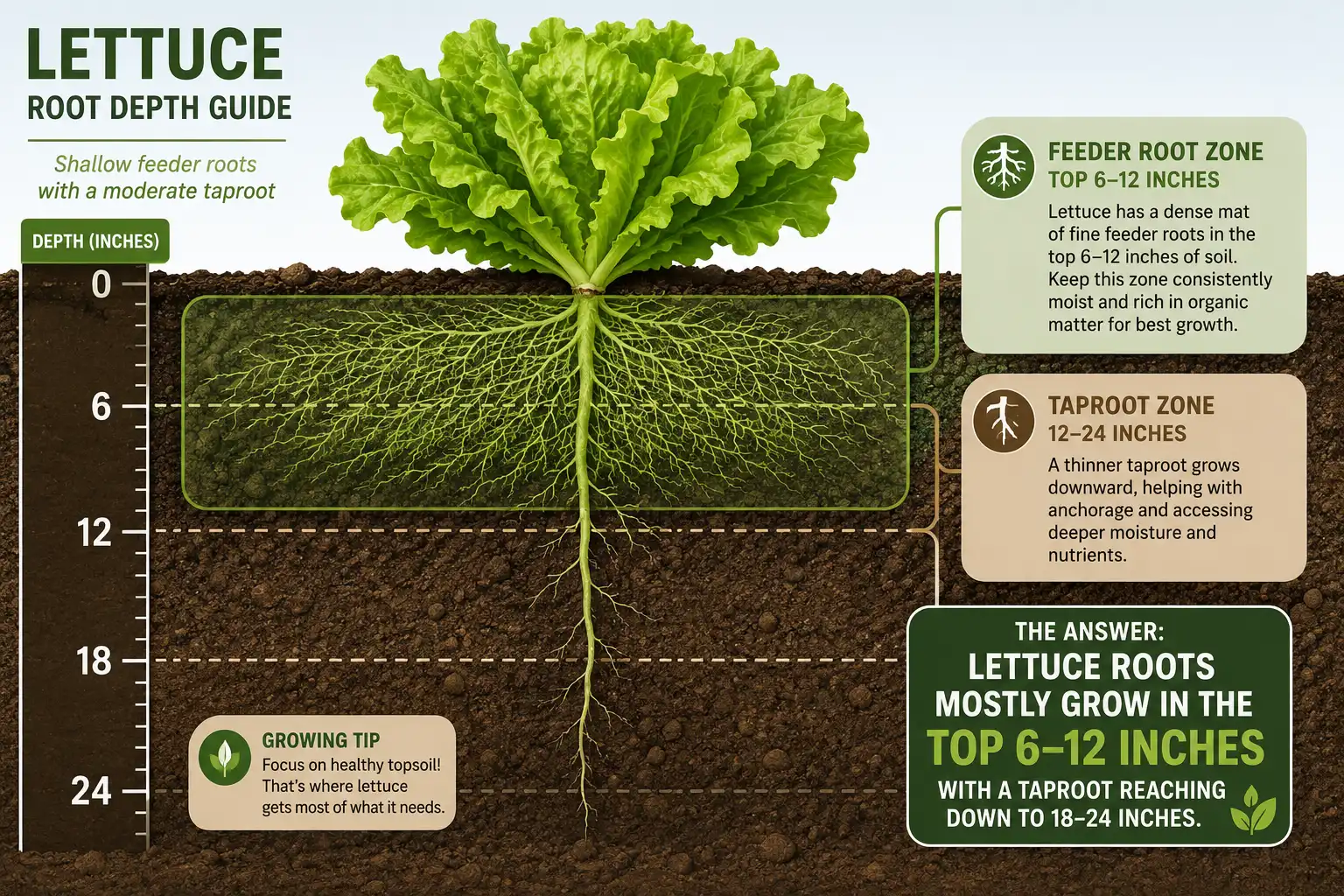
Lettuce roots grow mostly in the top 6 to 12 inches of soil. A thin taproot can reach 18 inches or deeper in loose ground, but the shallow feeder roots near the surface do most of the watering work.
How Deep Do Lettuce Roots Grow?
Lettuce roots grow mostly in the top 6 to 12 inches of soil. That top band is the effective root zone, where the plant takes in most of its water and nutrients. Studies of lettuce water use put roughly 85% of uptake in about the top foot of soil.
The full reach goes deeper, though. In loose, well-aerated ground, the taproot pushes past 18 inches. The classic Weaver and Bruner root studies recorded lettuce taproots over 25 inches once the plant began to bolt. Stray roots ran deeper still. Pack the soil down, and that flips. In dense or compacted ground, roots may stop near 6 inches.
So lettuce holds two depths at once. The deep taproot anchors the plant and chases moisture in a dry spell. The shallow feeder roots do the daily work. For watering and feeding, treat lettuce as a shallow-rooted crop with most of its active roots in the top 6 inches.
Learn more: Growing lettuce at home
Does Lettuce Have a Taproot or Fibrous Roots?
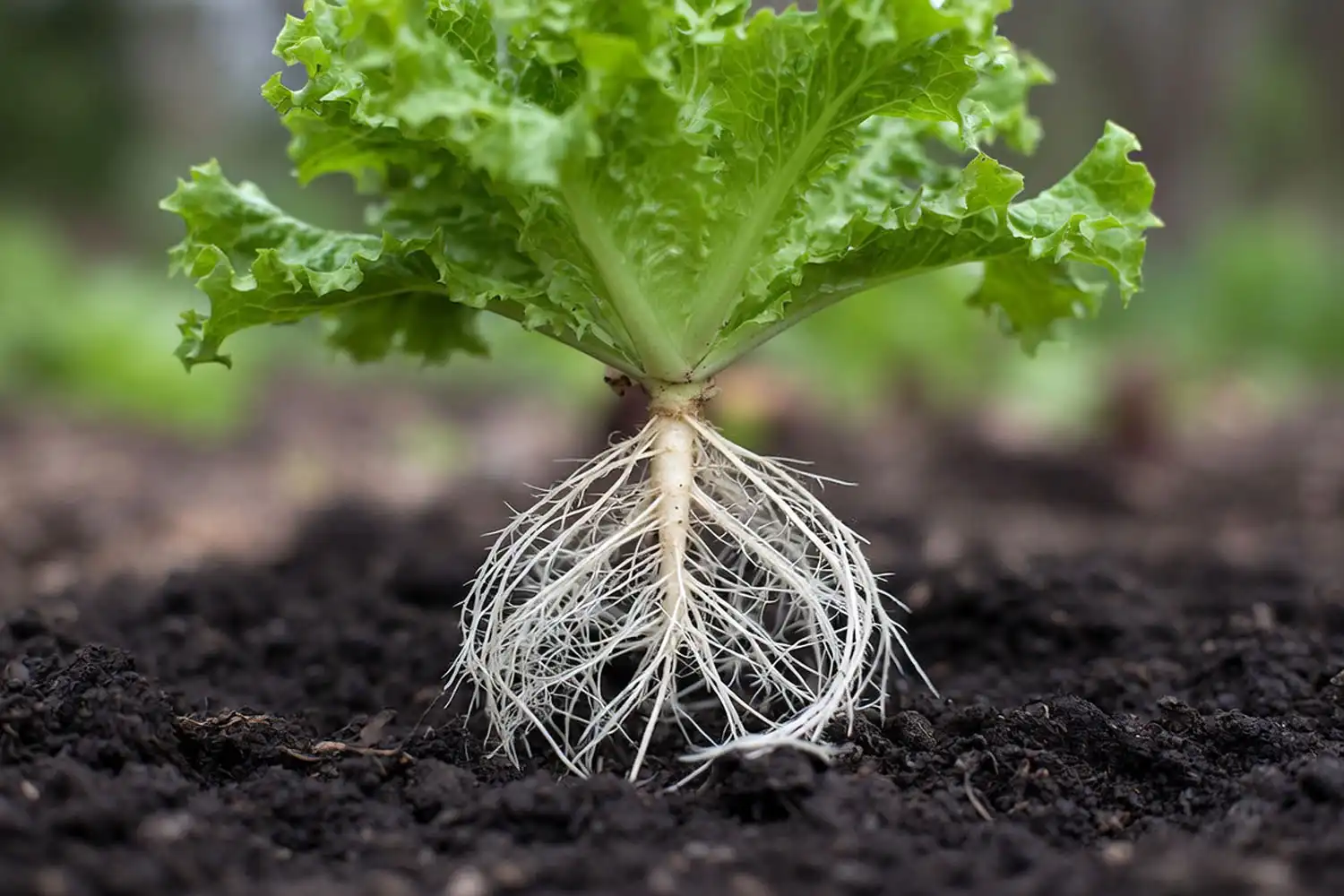
Lettuce has both. It starts with a single taproot, then grows a thick mat of fibrous side roots near the surface. So the system is part taproot and part fibrous.
When the seed sprouts, that first taproot drops straight down. Within a week or two, fine lateral roots branch off the upper section. These laterals spread sideways more than down, usually in the top few inches. They form the dense feeder mat that pulls in water and nutrients.
The taproot keeps growing on its own track. In loose soil it can run deep, but it stays thin and lightly branched next to the surface mat. That is why lettuce (Lactuca sativa) reads as a shallow-rooted plant even when one root goes deep.
How Does Lettuce Root Depth Vary by Type?
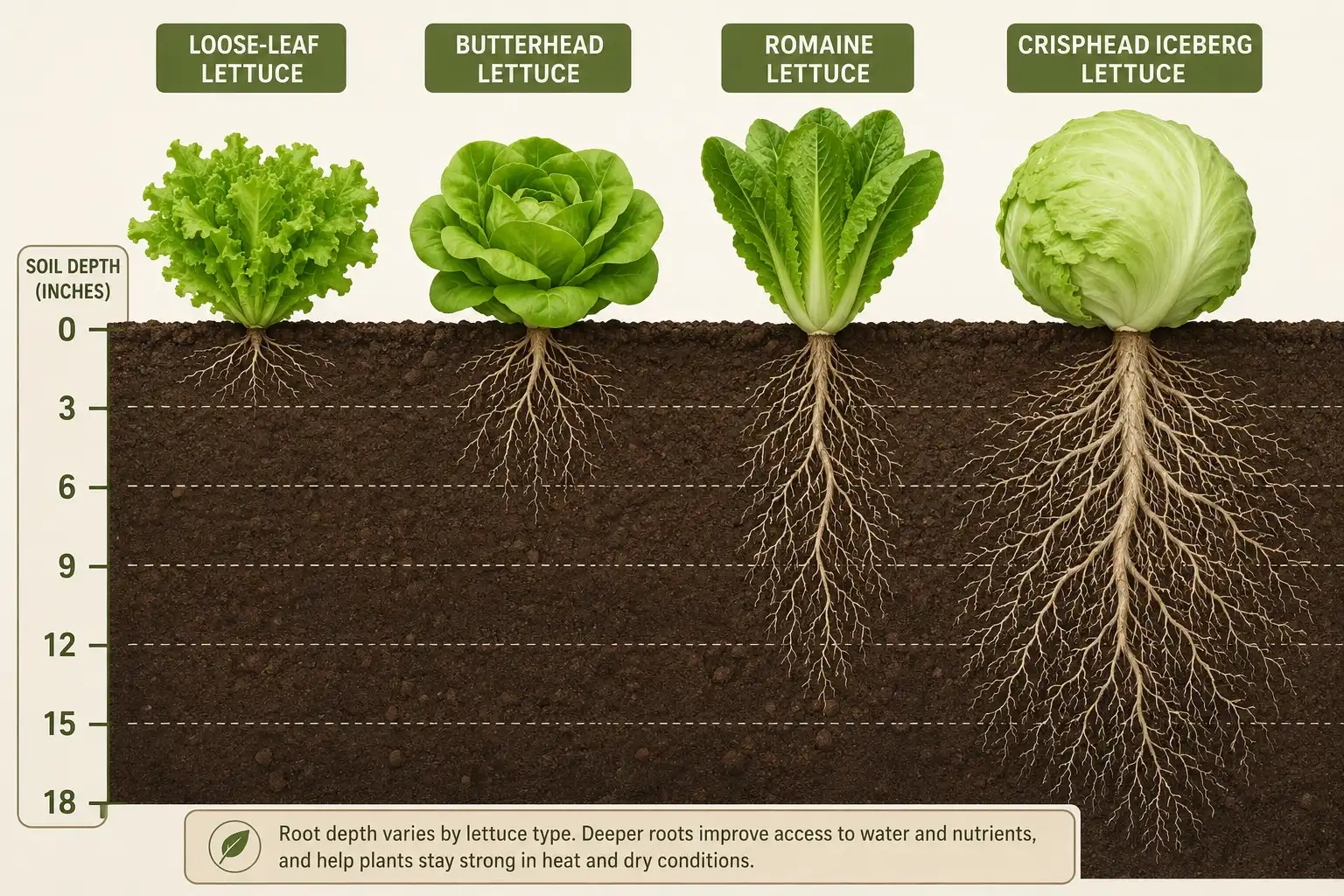
Root depth shifts with the type of lettuce you grow. Leaf types root the shallowest. Romaine and crisphead (iceberg) build bigger plants with deeper, wider root systems.
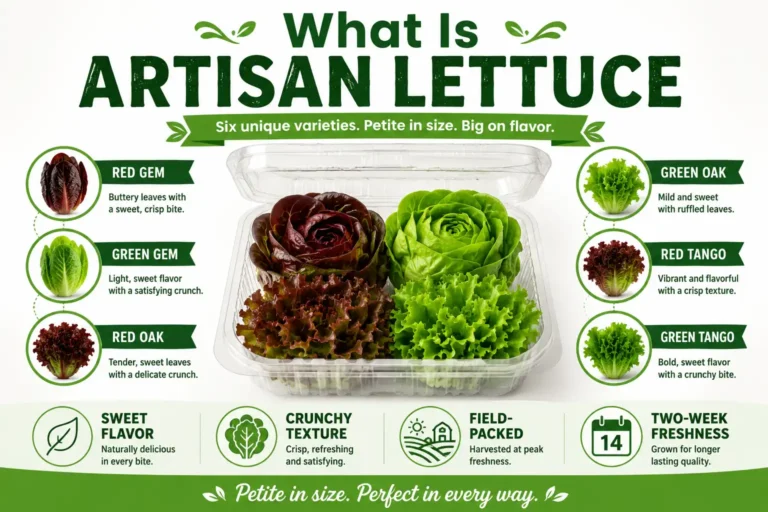
Loose-leaf lettuce grows fast and stays small, so its roots stay tight near the surface. Butterhead types like Bibb sit in the middle. Romaine roots a little deeper to hold up a tall head. Crisphead lettuce, the iceberg you see in stores, has the largest plant and the most root volume.
Even so, the gap is modest. Every type still feeds mostly from the top 6 to 12 inches. The bigger the head, the more soil volume the roots want. That matters most in tight beds or pots.
Why Do Lettuce Roots Stay So Shallow?
Lettuce roots stay shallow because breeders selected the plant for fast, cool-season leaf growth, not deep foraging. It finishes a crop in 30 to 70 days, so it never needs to draw on deep subsoil for water.
Two things set the depth. First, genetics. Lettuce puts its energy into leaves up top, not a deep root network. Second, soil structure. Roots only go as deep as the soil lets them. Loose, crumbly ground invites deeper roots. A compacted layer or hardpan stops them cold.
Quick turnaround adds to it. A short season means the roots never reach their full potential before harvest. Most annual crops hit full rooting depth only 30 to 50 days after planting, and growers cut plenty of lettuce before then.
How Does Soil Affect Lettuce Root Depth?
Soil structure controls how deep lettuce roots go more than almost anything else. Loose, well-drained loam lets roots reach their full depth. Heavy compaction caps them at a few inches.
In one classic test, lettuce in loose soil rooted 17 to 21 inches deep. The same lettuce in packed soil topped out near 6 inches. Same seed, same water, very different roots. The lesson is clear. Fix compaction before you plant.
Soil texture plays in too. Sandy ground drains fast and holds little water, so shallow lettuce roots dry out quickly there. A loam or a moisture-holding clay loam suits lettuce well, because the feeder roots get steady water near the surface. Loosen the top 8 to 10 inches with a broadfork before transplanting. The prairie soil packs down hard after rain.
How Deep Should Soil Be for Lettuce?
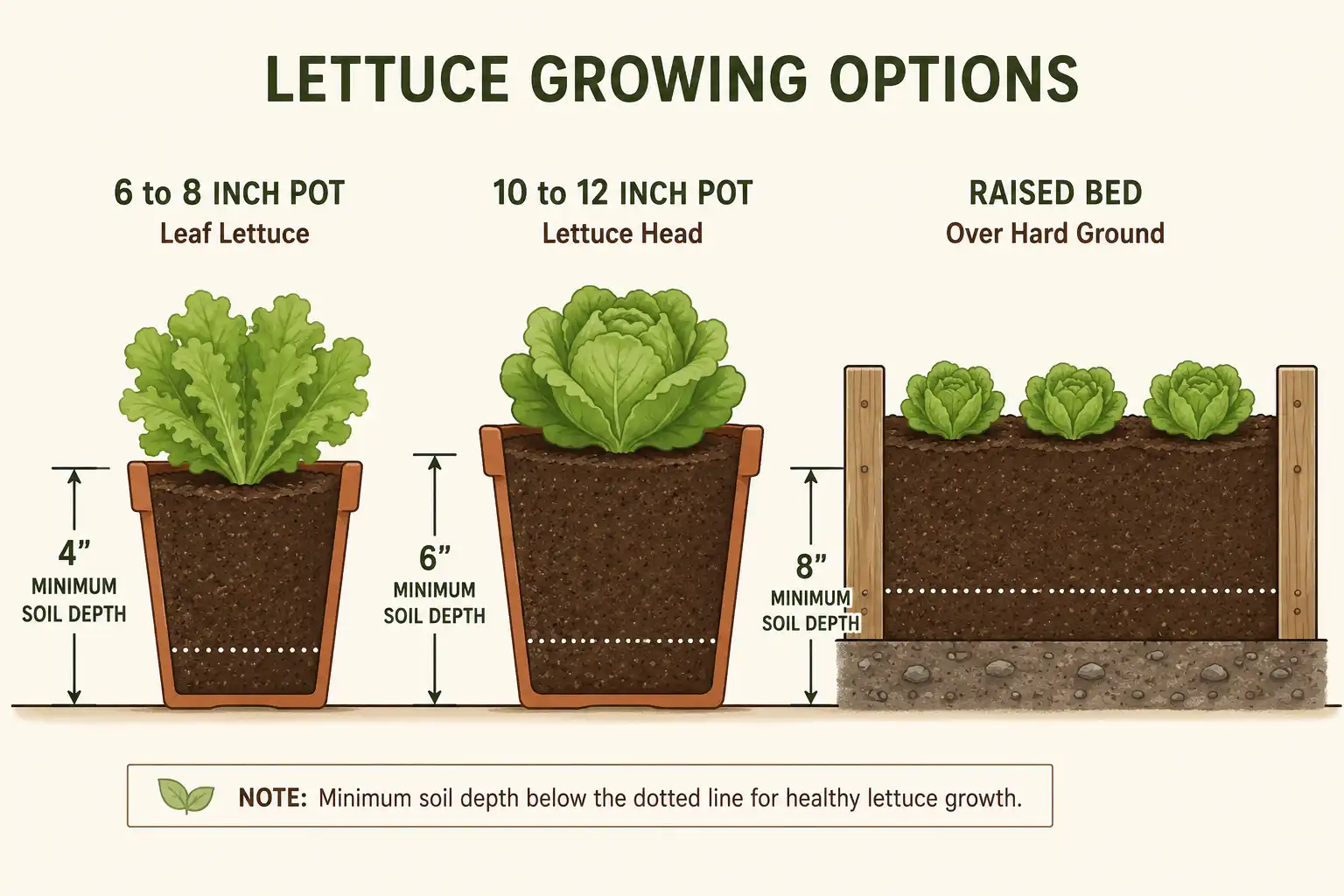
Give leaf lettuce at least 6 to 8 inches of soil depth. Romaine and head types want 8 to 12 inches. That covers the active root zone with room to spare.
Raised beds make this easy. A bed with 6 to 12 inches of good soil grows lettuce well. It works even when the bed sits on hard ground, because the roots can still nose into the soil below. If you are setting lettuce in a raised bed, mix in compost so the top foot stays loose and moist.
Containers set a harder limit, since roots cannot escape the pot. A pot 6 to 8 inches deep handles leaf lettuce. Step up to 8 to 12 inches for a full head. When you grow lettuce in a pot, wider beats deeper, because the feeder roots spread sideways.
How Does Root Depth Change as Lettuce Grows?
Lettuce root depth grows along with the leaves, then levels off once the head fills out. A seedling has only a tiny root. A mature plant has its full, mostly shallow system.
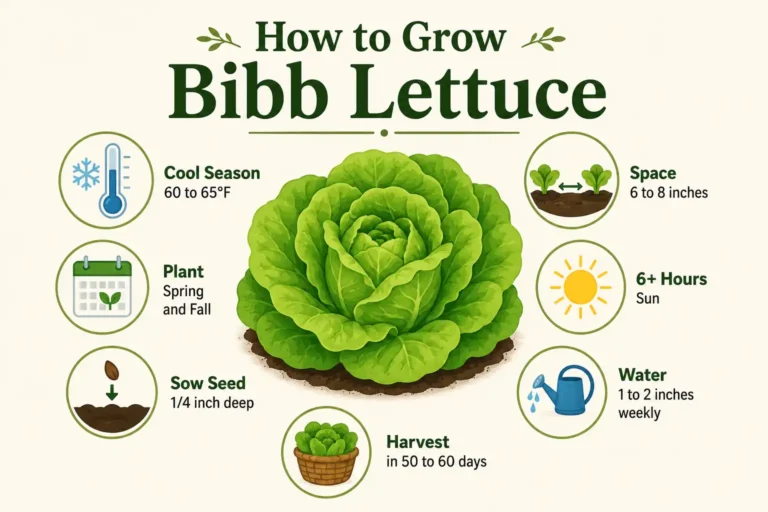
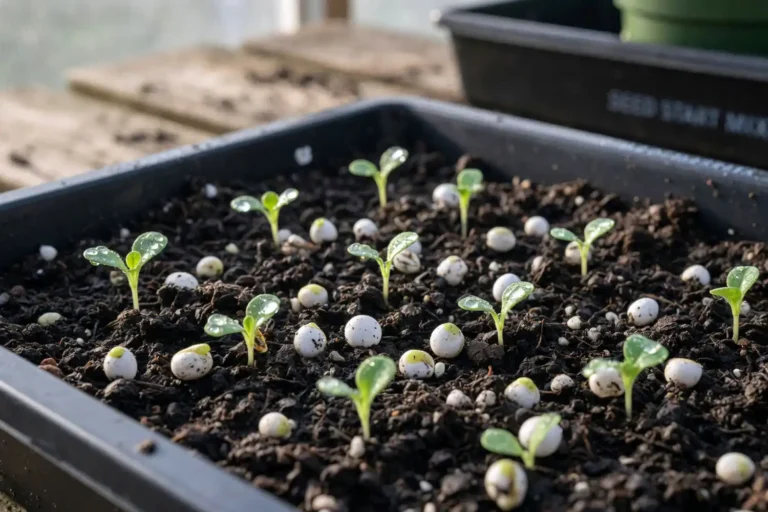
Right after germination, the root is barely an inch or two long and dries out fast. Plant shallow to start, since the right lettuce seed depth is only about a quarter inch. This is the riskiest stage, so keep the surface damp until the seedlings settle in. Steady moisture early also matters while you are getting lettuce seed to germinate, since dry topsoil stalls the whole start.
As the plant adds leaves, the roots fill the top several inches and the taproot eases down. Effective root depth climbs until the plant starts to head up. After that, it holds steady through harvest. By cutting size, the working roots sit right where you water.
How Shallow Roots Change the Way You Water and Feed Lettuce
Shallow roots mean lettuce needs light, frequent watering and feeding right at the surface. The roots cannot reach deep water or deep nutrients, so you bring both to them.
Water little and often. Keep the top 6 inches moist without soaking it. Drip irrigation fits well, because it wets the root zone slowly and skips the leaves. To dial in amounts, our notes on figuring crop water needs walk through the math by soil type and weather.
Feed at the surface too. Lettuce pulls most of its nutrients from the top 2 to 3 inches. So a light top-dressing of compost or balanced fertilizer reaches the roots fast. You do not need to work feed deep.
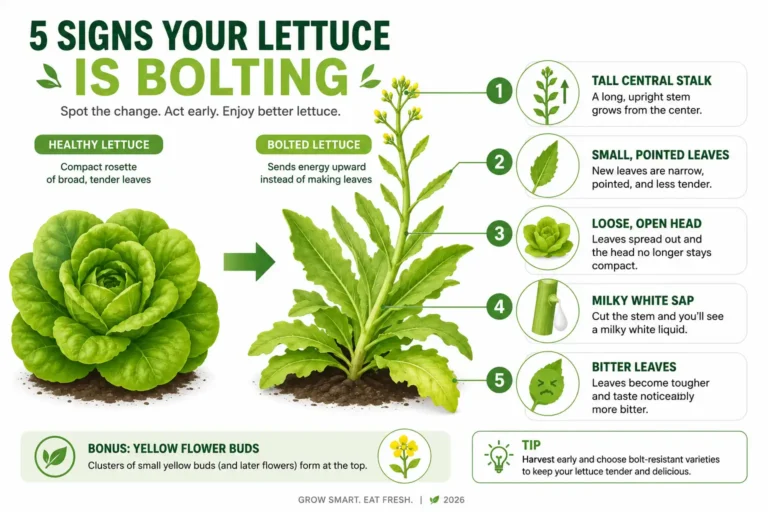
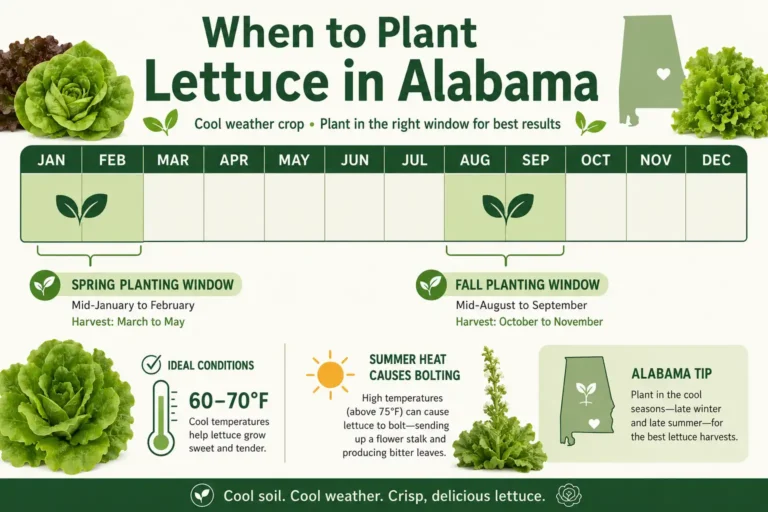
Heat is the biggest danger with shallow roots. When the top inches dry out in hot weather, the plant stresses and bolts. Mulch keeps the root zone cool and damp, which buys you time. Keeping romaine from bolting often comes down to steady surface moisture more than anything else.
What This Means in the Lettuce Patch
Lettuce is a shallow-rooted crop, plain and simple. The working roots live in the top 6 to 12 inches, and most of the action happens in the top 6. A taproot can dip deeper in loose soil, but it does not change how you manage the crop.
So loosen the top foot, plant in a bed or pot at least 6 to 8 inches deep, and water little and often. Keep that surface zone cool and moist, and your lettuce pays you back with tender leaves right up to harvest.