How to Grow Lettuce in Summer Without It Bolting (2026 Guide)
Lettuce hates heat. It bolts, turns bitter, and quits on you fast. But you can still grow lettuce in summer if you pick the right varieties and manage shade, water, and timing. It keeps crisp greens through July with a few practical moves.
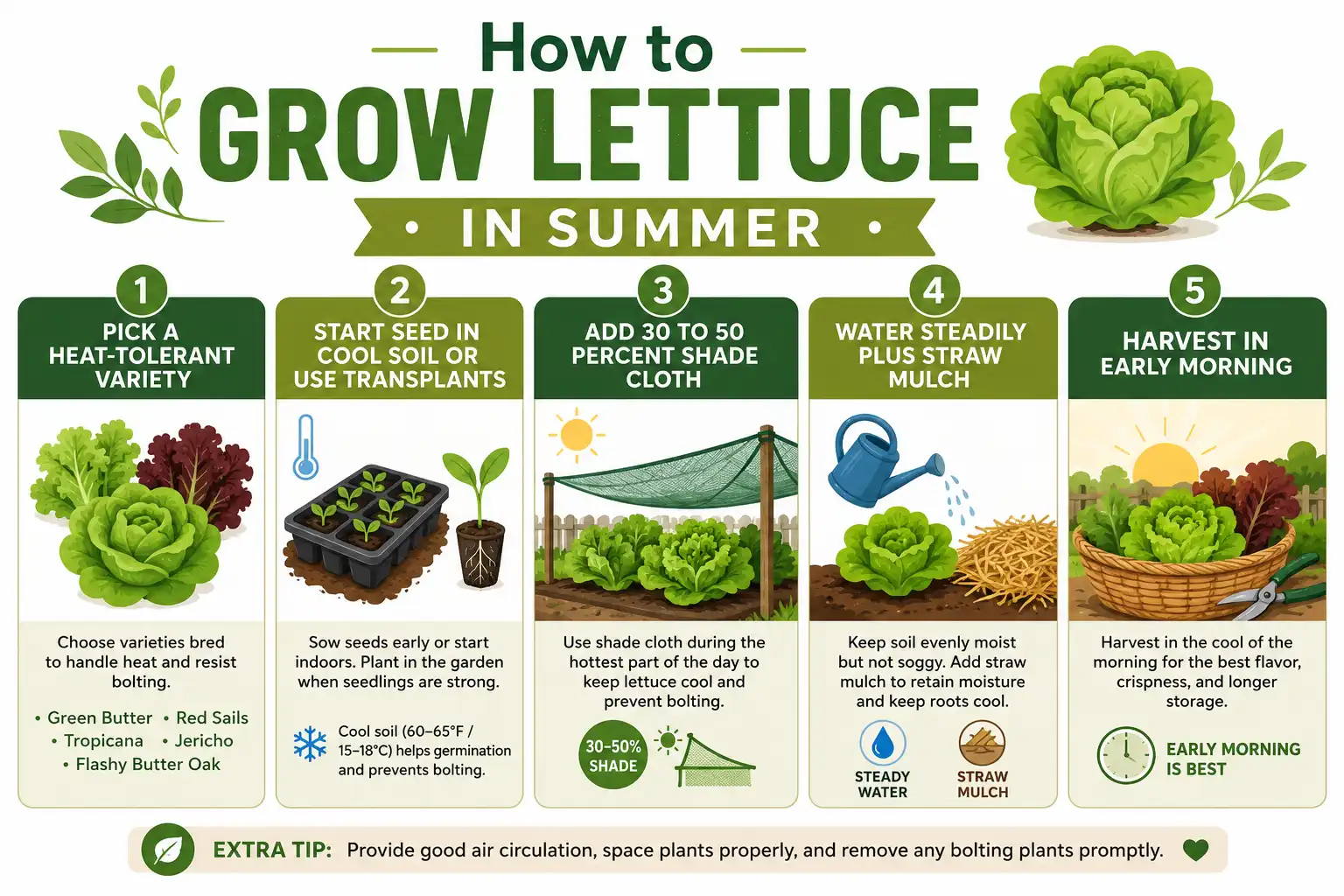
To grow lettuce in summer, plant heat-tolerant varieties like Nevada, Muir, or Jericho. Start seeds in cool soil or use transplants. Then add 30 to 50 percent shade, water consistently, mulch the roots, and harvest in the early morning.
Why Does Lettuce Bolt and Turn Bitter in Summer?
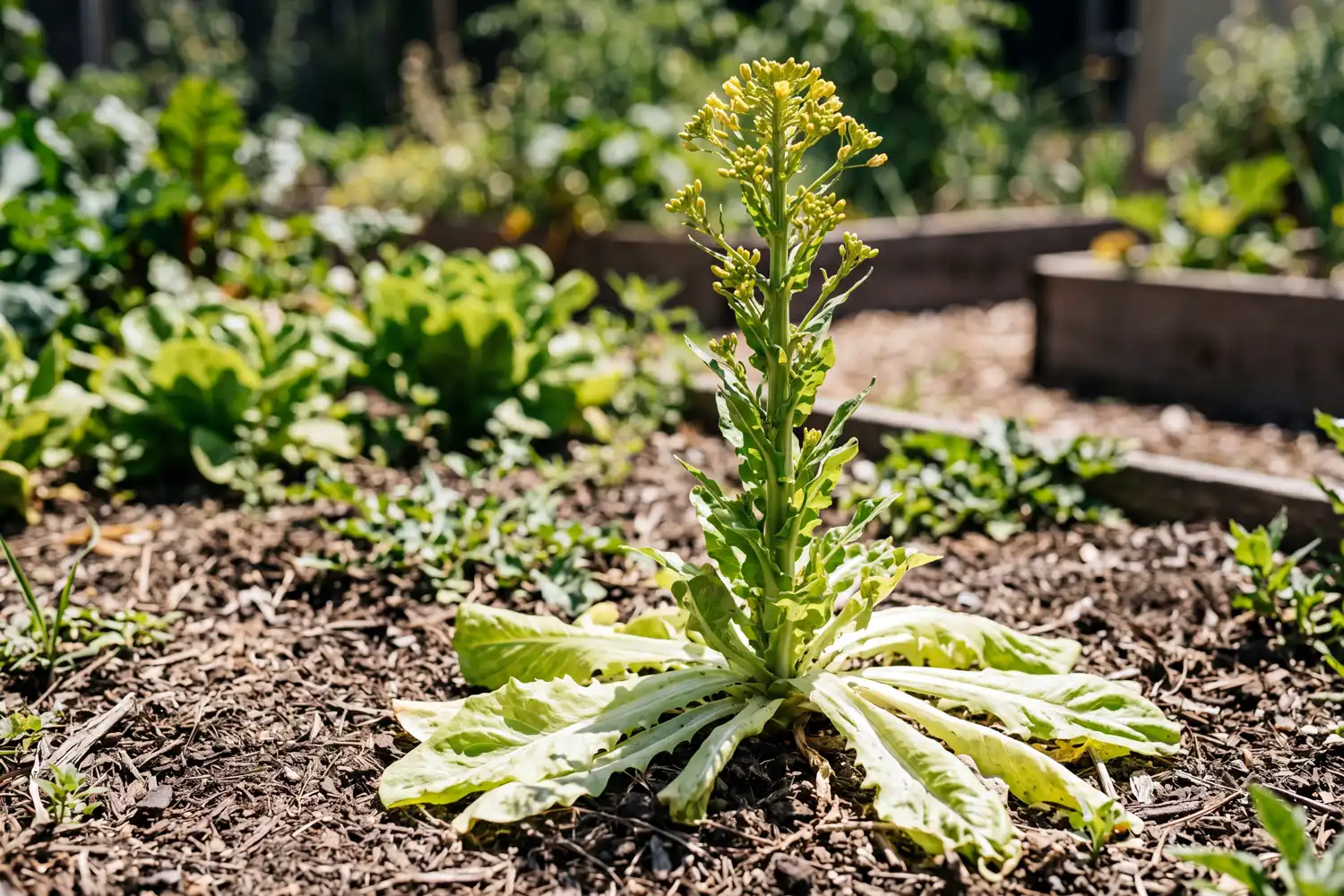
Lettuce bolts and turns bitter because heat and long days push it out of leaf growth and into flowering. Bolting means the plant shoots up a tall flower stalk to make seed. Once that happens, the leaves toughen up and taste sharp and bitter.
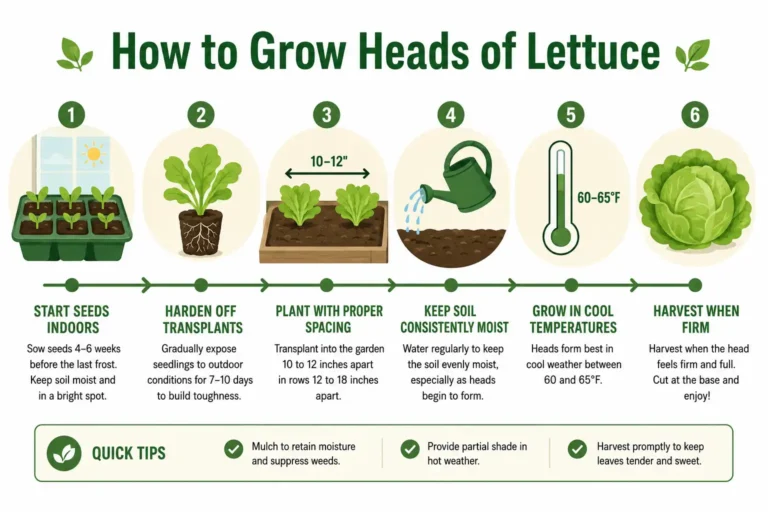
The trigger is mostly temperature. Most lettuce starts to bolt when daytime highs climb past 80°F and nights stay above 60°F to 65°F. Long summer days of 14 hours or more speed it up. Lettuce (Lactuca sativa) is a cool-season crop at heart, and it really wants air temps around 60°F to 65°F. In a Kansas July, that is a tall order.
There is a second problem too, and it hits before the plant ever leaves the ground. Lettuce seed goes dormant in hot soil. This built-in safety switch is called thermo-inhibition, or thermal dormancy. Above about 80°F, most lettuce seed simply refuses to sprout. So summer fights you at both ends, in the seed tray and in the bed.
You cannot stop bolting forever. You can only delay it. That said, slowing it down by a few weeks is often the difference between a real harvest and a bed full of seed stalks.
What Are the Best Heat-Tolerant Lettuce Varieties for Summer?
The best summer lettuce varieties are summer crisp (Batavian) types like Nevada and Muir, plus heat-bred romaines like Jericho. Variety choice is the single biggest factor, so start here before anything else.
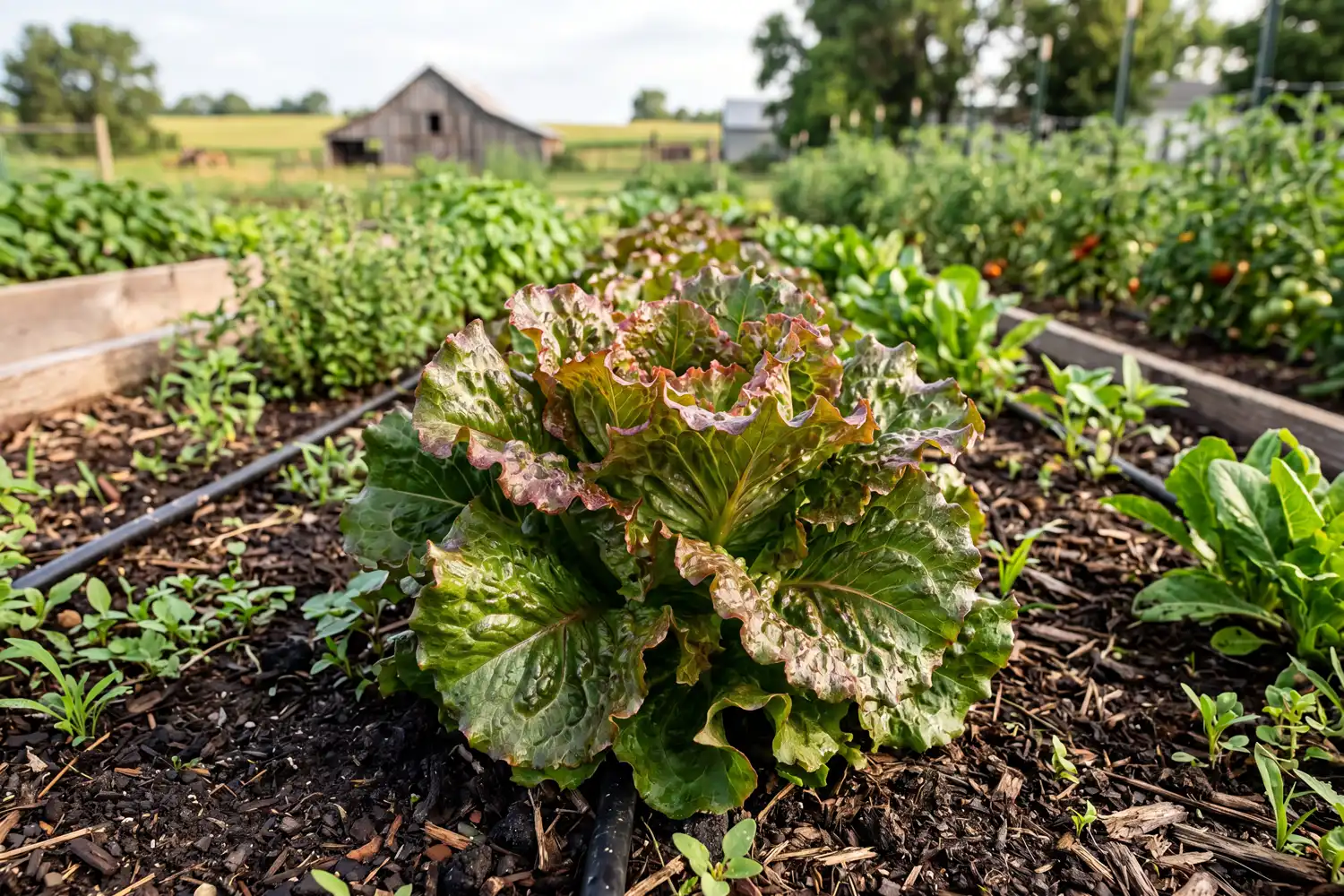
Summer crisp, also called Batavian lettuce, is the most heat-tolerant class. Nevada, Muir, Sierra, Cherokee, and Magenta all hold up well. They start out open like leaf lettuce, then form a loose head. Most of them resist tipburn and bolting better than other types. Nevada in particular stays mild and crisp for me even when the thermometer pushes into the 90s.
Romaine is the next-best option. Jericho was bred in the hot Israeli desert, so it shrugs off heat and stays sweet far longer than typical lettuce. Coastal Star and Parris Island also do well. If you want a romaine that holds in the heat, our notes on how to keep romaine from bolting walk through the same approach.
Leaf and butterhead types bolt sooner, but a few earn a spot. For leaf, look at New Red Fire, Starfighter, and Simpson Elite. For butterhead, Skyphos and Adriana take more heat than most. As a rule, bolt resistance runs from leaf (first to bolt), to romaine, to butterhead, to crisphead.
The trial data backs this up. University of Delaware summer trials found Nevada and Muir held up best for July and August harvest, with the least bitterness. An Auburn University study reported that Nevada, Salvius, Sparx, Parris Island, and Rex out-performed most other heat-tolerant cultivars in a hot greenhouse. When two separate programs land on Nevada, that’s worth paying attention to.
How Do You Get Lettuce Seeds to Germinate in the Heat?
Get lettuce seeds to germinate in heat by keeping the soil under 80°F and starting them somewhere cool. Hot soil throws the seed into thermal dormancy, so the trick is to break that switch or skip it entirely.
The easiest fix is to start seed in trays in a cool spot. Germinating indoors in air conditioning, or in a shaded shed, then setting out transplants once they have a few true leaves, is the recommended approach. Most summer growers do it this way because direct seeding fails once the soil tops 80°F. For more on starting seed cleanly, see our guide on getting lettuce seeds to sprout.
A few more tricks help in the heat:
- Pre-chill the seed. Set seed on a damp paper towel, seal it in a bag, and chill it in the fridge for two to five days. Then sow. The cold spell breaks dormancy.
- Use primed seed. Primed seed has already started germinating, so it sprouts at higher temps. Buy it fresh each year, since it does not store long.
- Sow in the cool of evening. Water first to drop the soil temperature, then plant.
- Plant shallow. Lettuce needs light to germinate. Cover seed no more than a quarter inch, or barely at all.
How Much Shade Does Lettuce Need in Summer?
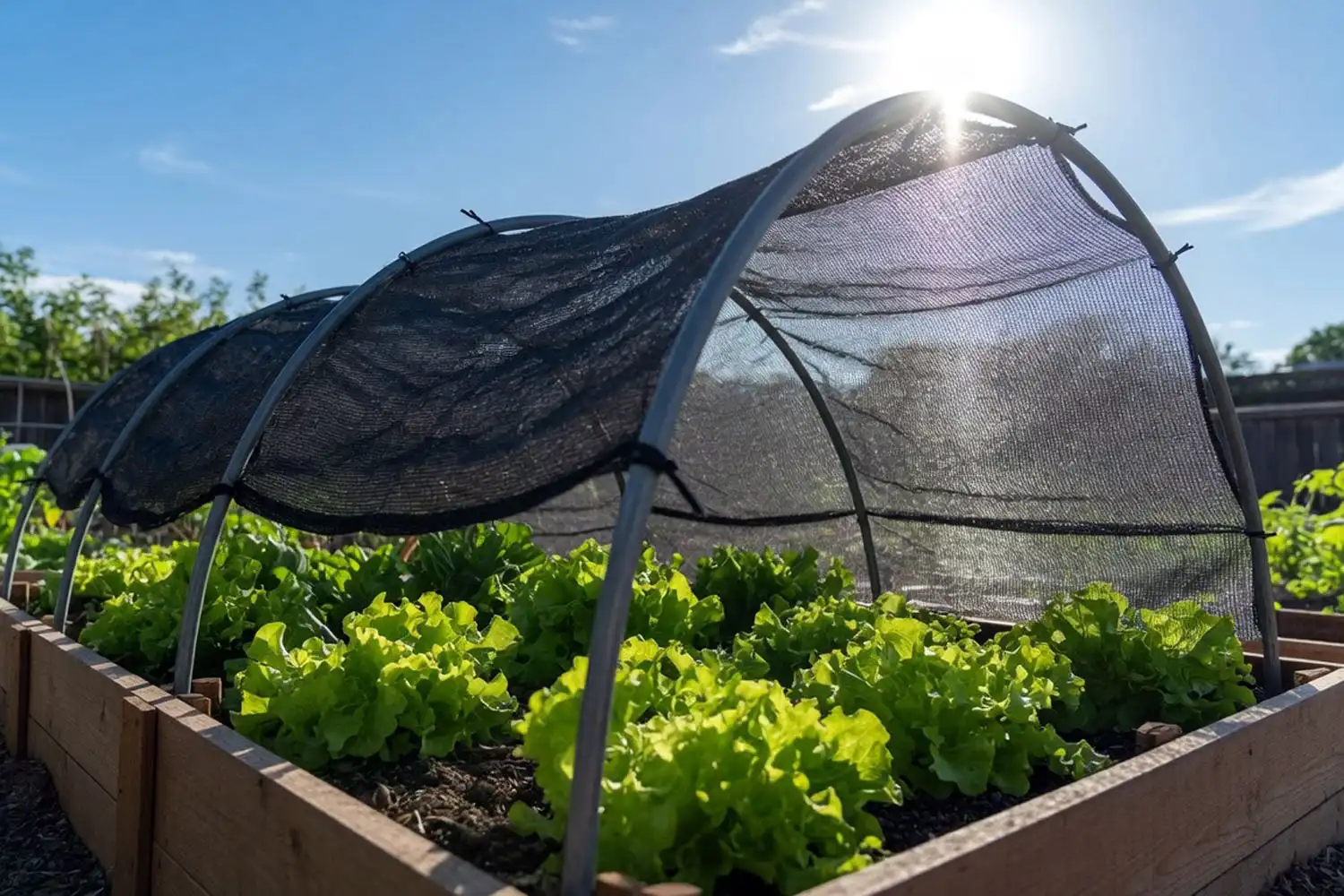
Summer lettuce does best with 30 to 50 percent shade during the hottest part of the day. Shade drops both the leaf temperature and the soil temperature, which delays bolting and cuts bitterness.
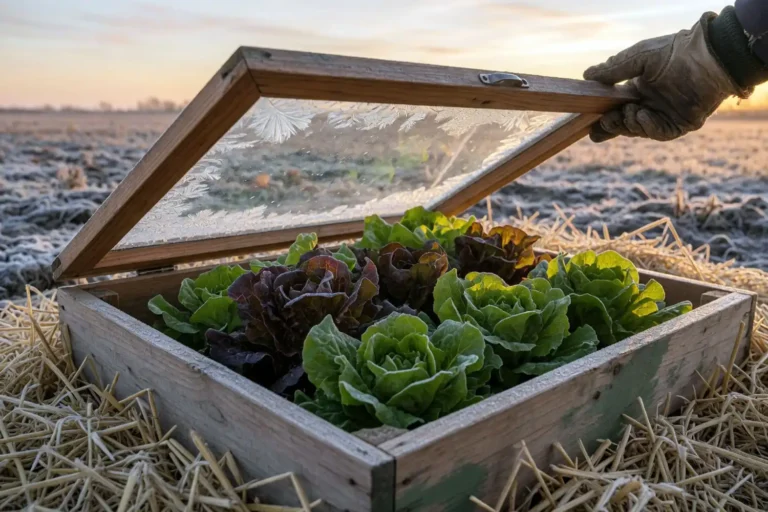
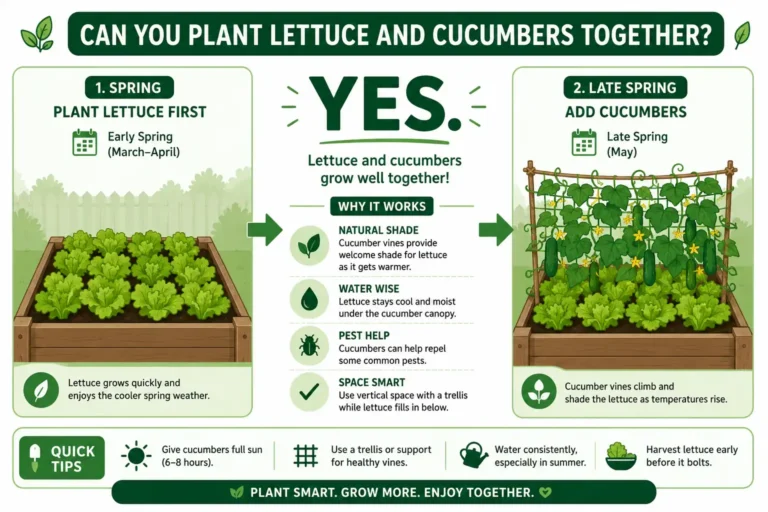
Run shade cloth on low hoops over the beds. Suspending it a foot or so above the plants lets air move, so heat does not get trapped underneath. You can buy shade cloth by the foot at most farm and garden stores. If you do not want to fuss with cloth, plant lettuce on the east or north side of taller crops like corn, pole beans, or tomatoes, and let them throw afternoon shade. Lettuce that gets a break from full sun does fine, and the same idea holds whether you grow in beds or you find that lettuce handles partial shade on the shady side of the garden.
One more edge: reflective mulch. University of Delaware trials found that white or silver plastic mulch under the plants reduced bolting and bitterness in summer lettuce. It bounces heat and light away from the soil. Do not use it on every bed, but it earns its keep on a hot, exposed plot.
How Do You Water and Mulch Lettuce in Summer?
Water summer lettuce deeply and often so the soil never dries out, then mulch to lock that moisture in. Lettuce has shallow roots, and any drought stress triggers bolting and bitterness fast. Even one missed watering in a hot stretch can set the plants off.
Keep the soil evenly moist, not soggy. Run a drip line because a drip line instead of overhead watering puts moisture right at the roots and keeps the leaves dry, which cuts down on disease. In heat, check the beds every morning and water before the sun gets high.
Mulch is the other half of the job. After a deep watering or a good rain, lay two to three inches of straw or shredded leaves around the plants. The layer keeps the soil cool and damp between waterings. If you have not used it before, our rundown on mulching around the plants covers what to use and how thick to spread it.
How to Grow Lettuce in Summer in Pots and Raised Beds
Pots and raised beds make it easier to grow lettuce in summer because you control the soil and you can chase the shade. Both options give you flexibility that an open field row does not.
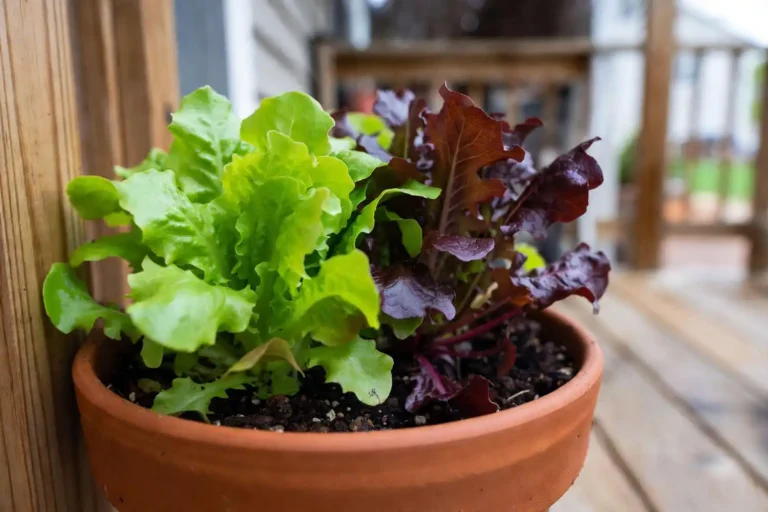
Containers are the most forgiving. Keep a few pots of summer crisp on the porch and slide them into shade once the afternoon heat builds. You water more often in pots, so stay on top of it. Raised beds drain well and are simple to hoop with shade cloth, which makes them a strong pick for hot-season greens. A bed also lets you build loose, rich soil that holds moisture, and raised bed planting stretches the harvest window on both ends of the season.
When and How Do You Harvest Lettuce in Summer?
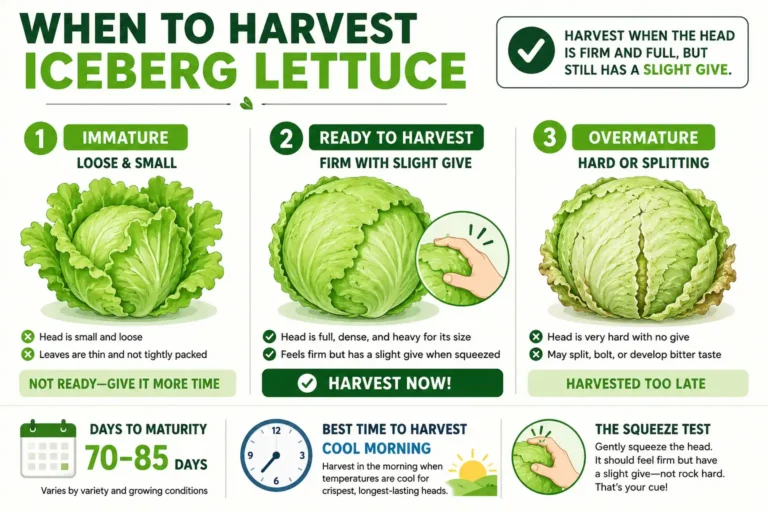
Harvest summer lettuce in the early morning, when the leaves are coolest, crispest, and least bitter. By midday the leaves have warmed and softened, and the flavor turns sharper. Pick at first light and get the greens into the cooler quick.
Use cut-and-come-again harvesting. Pick the outer leaves and leave the center to keep growing, and one plant feeds you for weeks. Lean toward harvesting a little early rather than waiting, because every extra day in the heat raises the bolting risk.
Succession planting keeps the supply steady. Start a small batch every two weeks, so a fresh set is always coming on as the older plants fade. Most leaf and summer crisp types are ready about 30 to 50 days from transplant, so that two-week rhythm lines up well.
What Works in the Fields
Summer lettuce comes down to a short list: heat-tolerant varieties first, then shade, steady water, mulch, and a morning harvest. Lean on summer crisp types like Nevada and Muir, or a tough romaine like Jericho, and you give the crop its best chance.
Be honest about the deep heat, though. In zone 6a, July and August days hit the 90s and the nights stay warm. Even the toughest varieties have a limit. So pushing the heaviest summer harvest toward the cooler edges of the season, keeping transplants coming, and never asking a crisphead to survive a run of 100°F days are the key moves. Manage the heat instead of fighting it, and you can keep crisp greens on the table all summer.