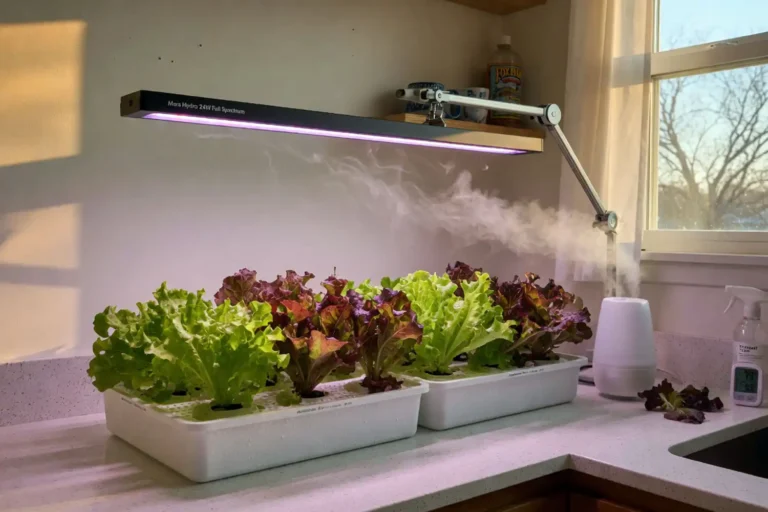
How Far Apart Should You Plant Lettuce in Rows and Beds
Lettuce spacing trips up a lot of new growers. So how far apart should you plant lettuce? It comes down to the type. Leaf lettuce sits close. Heads like iceberg need real room. Get this right and you cut disease, fill out heads, and save seed.
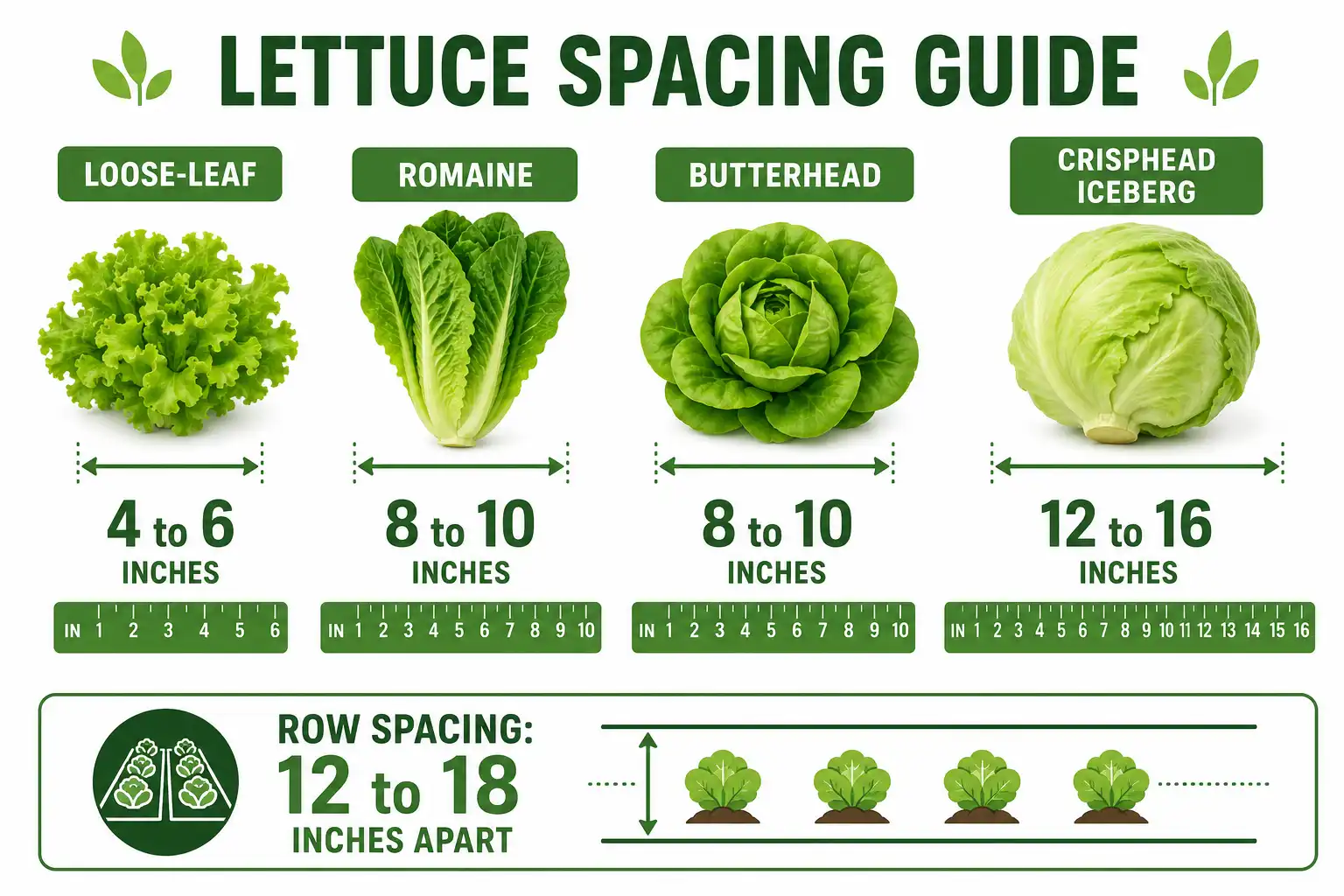
How far apart should you plant lettuce? Space loose-leaf 4 to 6 inches apart, romaine and butterhead 8 to 10 inches, and iceberg 12 to 16 inches. Keep rows 12 to 18 inches apart, then thin seedlings early.
How Far Apart Should You Plant Lettuce by Type?
Lettuce spacing depends on whether the plant forms a head. Loose, open types grow close together. Tight, heading types need more room. So match the gap to the type, and your stand stays healthy.
All lettuce (Lactuca sativa) falls into four working groups. Each one wants a different gap between plants.
Loose-Leaf Lettuce Spacing
Space loose-leaf lettuce 4 to 6 inches apart. These types never form a head, so the leaves just need room to fan out. Plant at the close end when cutting young leaves often. Leave closer to 6 inches when to want fuller plants. Grand Rapids, Black Seeded Simpson, and oak-leaf types all do well at this gap. Plus, a dense loose-leaf row shades the soil and holds back weeds.
Romaine (Cos) Lettuce Spacing
Give romaine 8 to 10 inches between plants. Romaine grows tall and upright, so it needs less side room than a fat iceberg head but more than loose-leaf. At 8 inches, the heads stay tight and the bases firm up. K-State Research and Extension and University of Maryland Extension both land in this range. If you want help growing romaine from seed without it bolting in the heat, our guide covers that step by step.
Butterhead Lettuce Spacing (Bibb and Boston)
Space butterhead lettuce 8 to 10 inches apart. Bibb and Boston form soft, loose heads, and they cup inward as they mature. Crowd them and the centers stay small and damp. Hold a steady 8 to 10 inches and let air move through. For sweeter Bibb lettuce heads every season, slightly tighter spacing also pushes more upright growth.
Crisphead (Iceberg) Lettuce Spacing
Crisphead lettuce needs 12 to 16 inches between plants. Iceberg builds the biggest, densest head of any lettuce, so it demands the most room. Skimp here and you get loose, half-formed heads. Set at 14 inches and leave it. Most growers do best planting iceberg lettuce from transplants rather than direct seed, since the long season fits a fall crop.
Read more: Grow lettuce at home for beginners
How Far Apart Should Lettuce Rows Be?
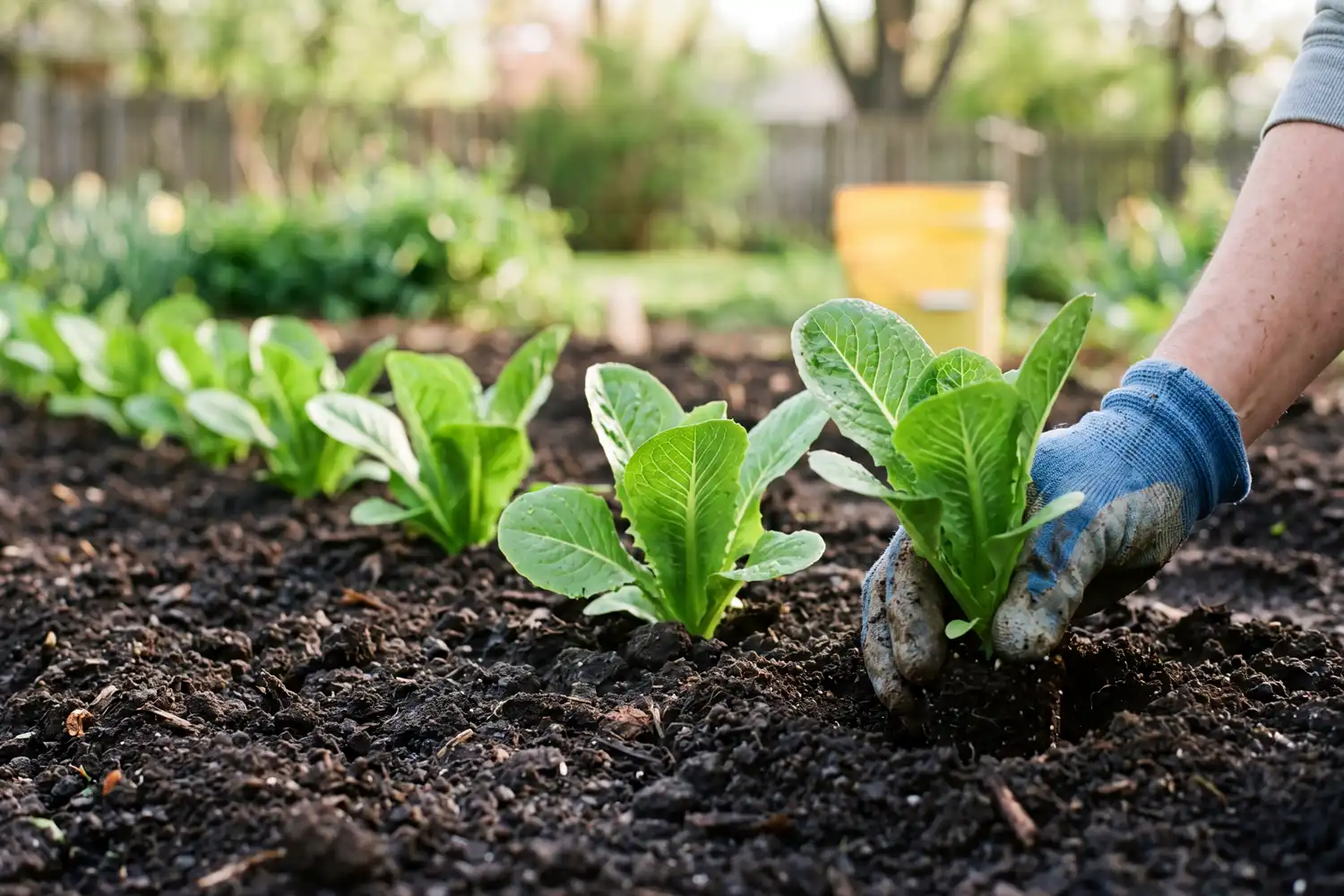
Keep lettuce rows 12 to 18 inches apart for leaf, romaine, and butterhead types. Crisphead wants more, often 18 to 24 inches, because the heads spread wide. Run the leaf rows at 12 inches and open up to 18 inches or more for iceberg.
Wide rows give you walking room and airflow. In a wet Kansas spring, that airflow matters. Tight, soggy rows invite gray mold and downy mildew. After the row goes in, firm the soil lightly so the tiny seed makes good contact.
How Many Seeds Should You Sow Before Thinning?
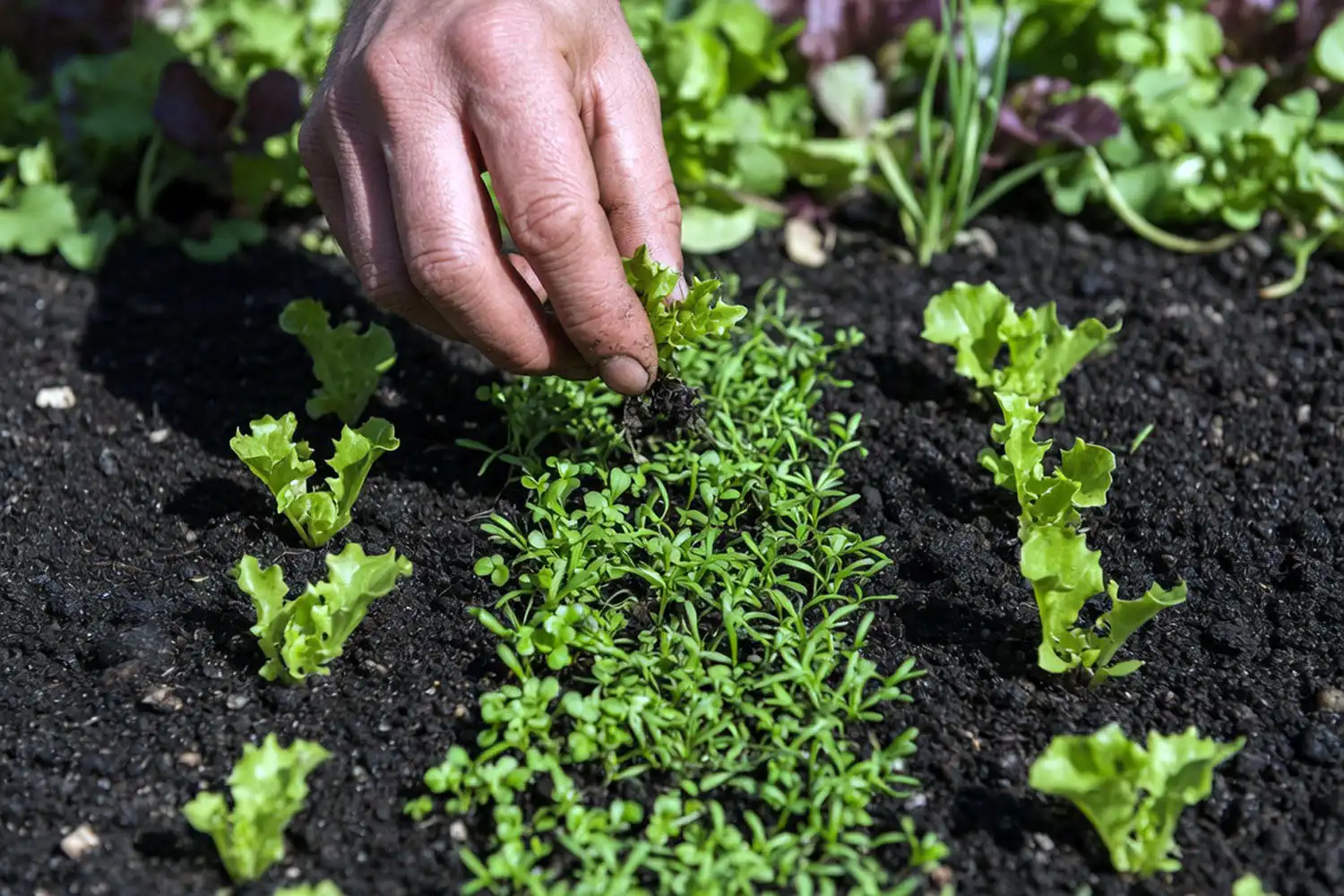
Sow 10 to 20 lettuce seeds per foot of row, then thin to your target spacing once seedlings reach 1 to 2 inches tall. Lettuce seed is tiny, so single-seed placement is tough.
Sowing thicker than needed is the common approach. Thin in two passes. Pull the weakest seedlings. After that, cut every other plant and eat the thinnings as baby greens. That second pass is free salad. If you want a tighter approach up front, check how many seeds to plant per hole for transplants and plugs. When plants sit close, thin with scissors instead of yanking, because pulling can tear the roots of the keepers.
Spacing Lettuce in Raised Beds and Square-Foot Grids
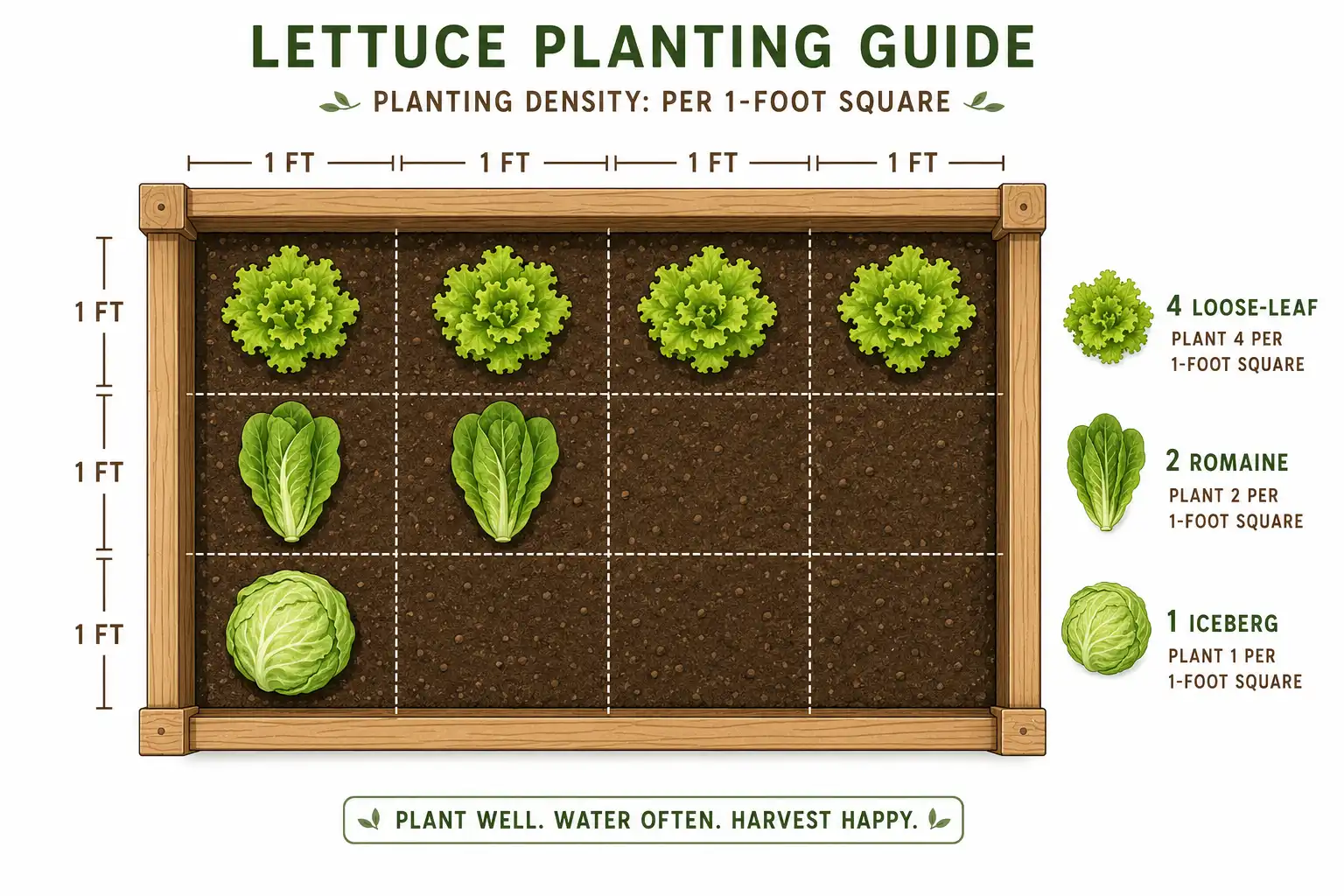
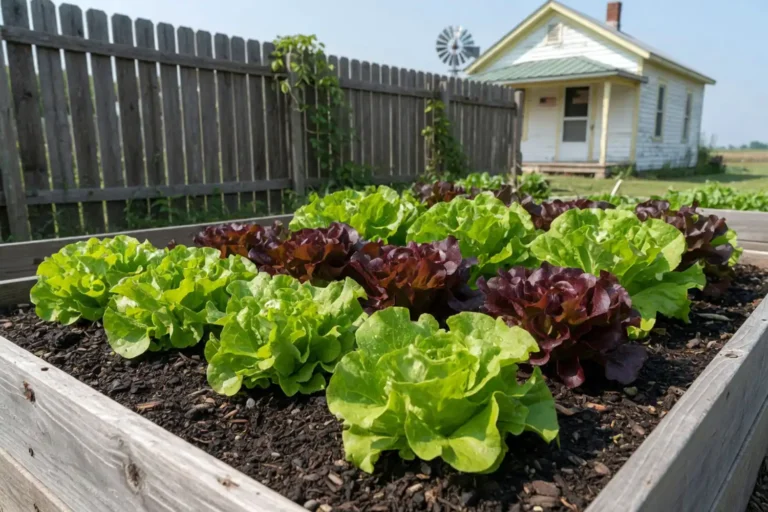
Raised beds let you space lettuce in a grid instead of long rows. That packs more plants into less ground.
In a wide bed, thin loose-leaf to 4 to 8 inches on all sides. The plants close the canopy fast and crowd out weeds. For a full plan on growing lettuce in a raised bedour guide covers bed prep and succession timing.
Square-foot gardening keeps the math simple. Per square foot, plant 4 loose-leaf, 2 romaine, or 1 crisphead. Butterhead fits about 2 per square. So you trade a little yield per plant for far more plants overall. Containers follow the same per-plant spacing. A 12-inch pot holds one head type or three to four loose-leaf plants.
How Close Can You Plant Cut-and-Come-Again Lettuce?
For cut-and-come-again lettuce, sow seed thick and skip full thinning. Broadcast it across a band, then harvest leaves at 3 to 6 inches tall.
This method ignores normal spacing on purpose. You grow a carpet of baby leaves, cut about an inch above the crown, and the plants regrow. K-State notes that thinned seedlings also work as baby-leaf salads. So nothing goes to waste. Keep one short bed in this style all spring. Cut it every two to three weeks.
Why Does Lettuce Spacing Matter?
Correct spacing controls disease, head size, and yield. Crowded lettuce fights for light, water, and nutrients, and the damp, still air breeds rot.
Space plants right and air moves through the canopy. That dryness holds back gray mold and downy mildew, two problems worth watching for in humid stretches. Roots also reach more soil, so heads size up instead of staying small. Plus, even spacing makes harvest faster and cleaner. The same logic drives how space other crops across the whole garden, not just lettuce.
Spacing and Timing for Kansas Gardens
In USDA hardiness zone 6a, plant most lettuce in two windows. Spring goes in mid-March to early April. Fall goes in mid-to-late August for leaf and Bibb, and late July for romaine and head types. Spacing stays the same in both seasons.
But in summer, tuck lettuce on the shady side of taller crops like sweet corn or staked tomatoes. That shade slows bolting and keeps the leaves sweet. Across the Great Plains, fast spring growth before the heat is what counts. So getting the spacing set, the soil firmed, and the seed down early are the key steps.
Bottom Line for Your Lettuce Patch
Match the spacing to the type, and the rest gets easy. Loose-leaf rides close at 4 to 6 inches. Romaine and butterhead want 8 to 10. Iceberg needs 12 to 16. Keep rows open for air, sow thick, and thin early. Do that, and you grow clean, full heads with no wasted seed.