How to Grow Lettuce Indoors All Year With Just an LED Light
Grow lettuce indoors from late fall through early spring. It works in any home with a small grow light and a few trays. This is how to grow lettuce indoors, step by step.
To grow lettuce indoors, plant loose-leaf seeds in 4 to 6 inch pots of light potting mix, keep temps 60 to 70°F, give 12 to 14 hours of full-spectrum LED light, water lightly, and harvest outer leaves in 30 to 45 days.
What You Need to Grow Lettuce Indoors
You need five things: containers, a light source, potting mix, seeds, and a steady cool spot.
Use 4 to 6 inch pots with drainage holes, or shallow seed trays for cut-and-come-again harvests. Plastic, fabric, or food-grade trays all work. Depth matters more than width. Lettuce roots stay in the top 4 to 6 inches.
For mix, use a peat or coco-based potting mix with perlite. Garden soil is too heavy and brings in pests. If you start trays, our notes on the best seed starting kits cover the trays, domes, and heat mats on hand.
Best Lettuce Varieties for Indoor Growing
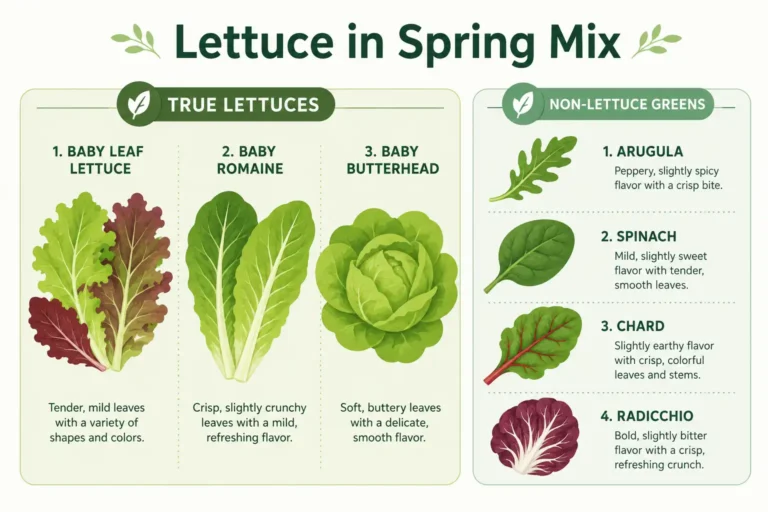
Loose-leaf and butterhead types are best for indoors. They mature fast, stay compact, and tolerate lower light than head lettuce.
The short list:
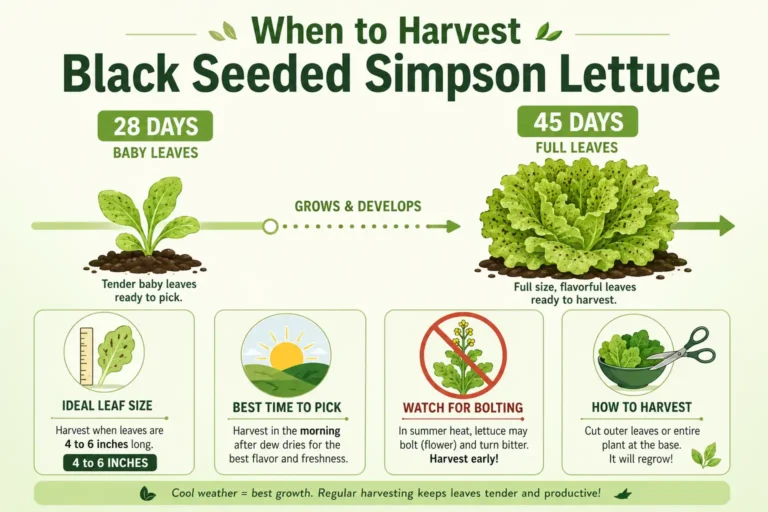
- Black Seeded Simpson (loose-leaf, 28 to 45 days)
- Buttercrunch (butterhead, 50 to 65 days)
- Salad Bowl (oakleaf-type, 45 to 50 days)
- Red Sails (red loose-leaf, 45 days)
- Tom Thumb (mini butterhead, 50 days, great for small pots)
Skip iceberg and full-size romaine. They need more light and space than most indoor setups can give.
Learn more: How to Grow Lettuce at Home: A Beginner’s Backyard Guide
How to Plant Lettuce Indoors Step by Step
- Fill pots with moist potting mix to half an inch below the rim.
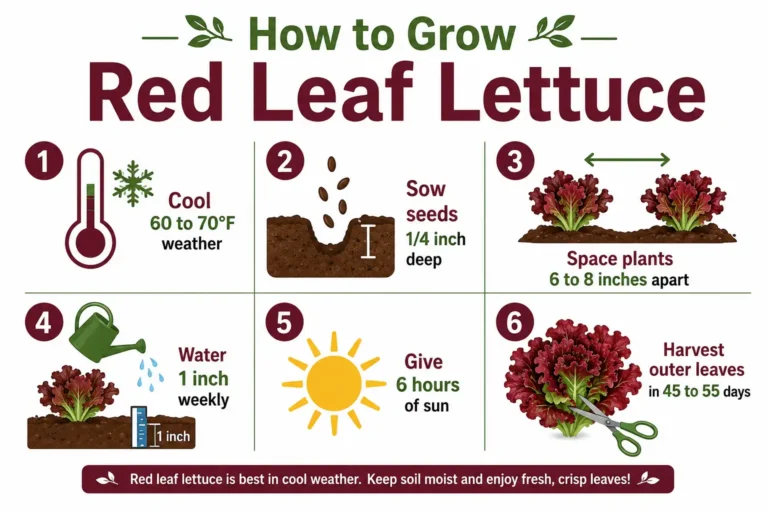
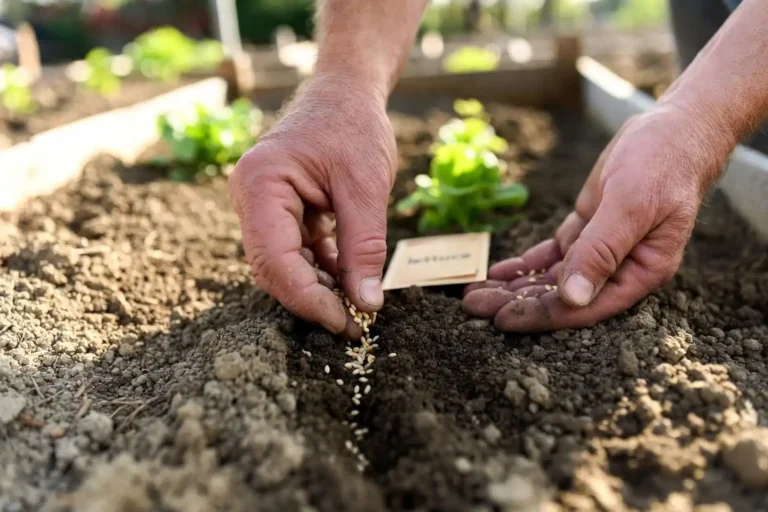
- Scatter 3 to 4 seeds per pot, or sow rows 1 inch apart in trays.
- Cover seeds with 1/8 inch of mix. Lettuce needs light to germinate, so do not bury them.
- Mist the surface. Cover with a humidity dome or plastic wrap until sprouts appear.
- Keep soil at 60 to 70°F. Seeds germinate in 5 to 10 days.
- Remove the dome at germination. Thin to one strong seedling per pot for heading types, or 1 inch apart in trays for cut-and-come-again.
Indoors, direct-sowing is more common than transplanting. If you want to compare both routes, see the breakdown of direct sowing versus transplanting lays out when each one wins.
Lighting Requirements for Indoor Lettuce
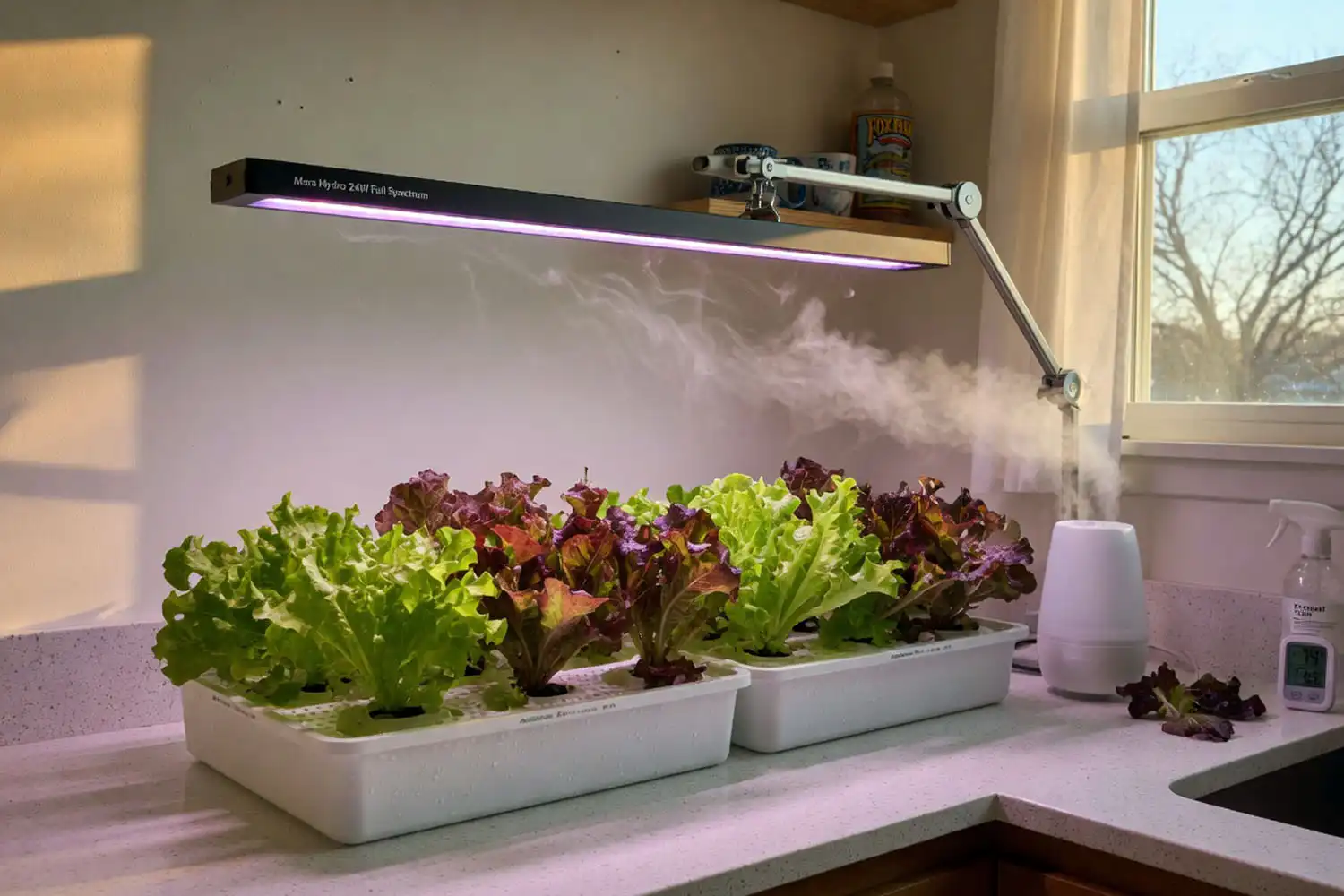
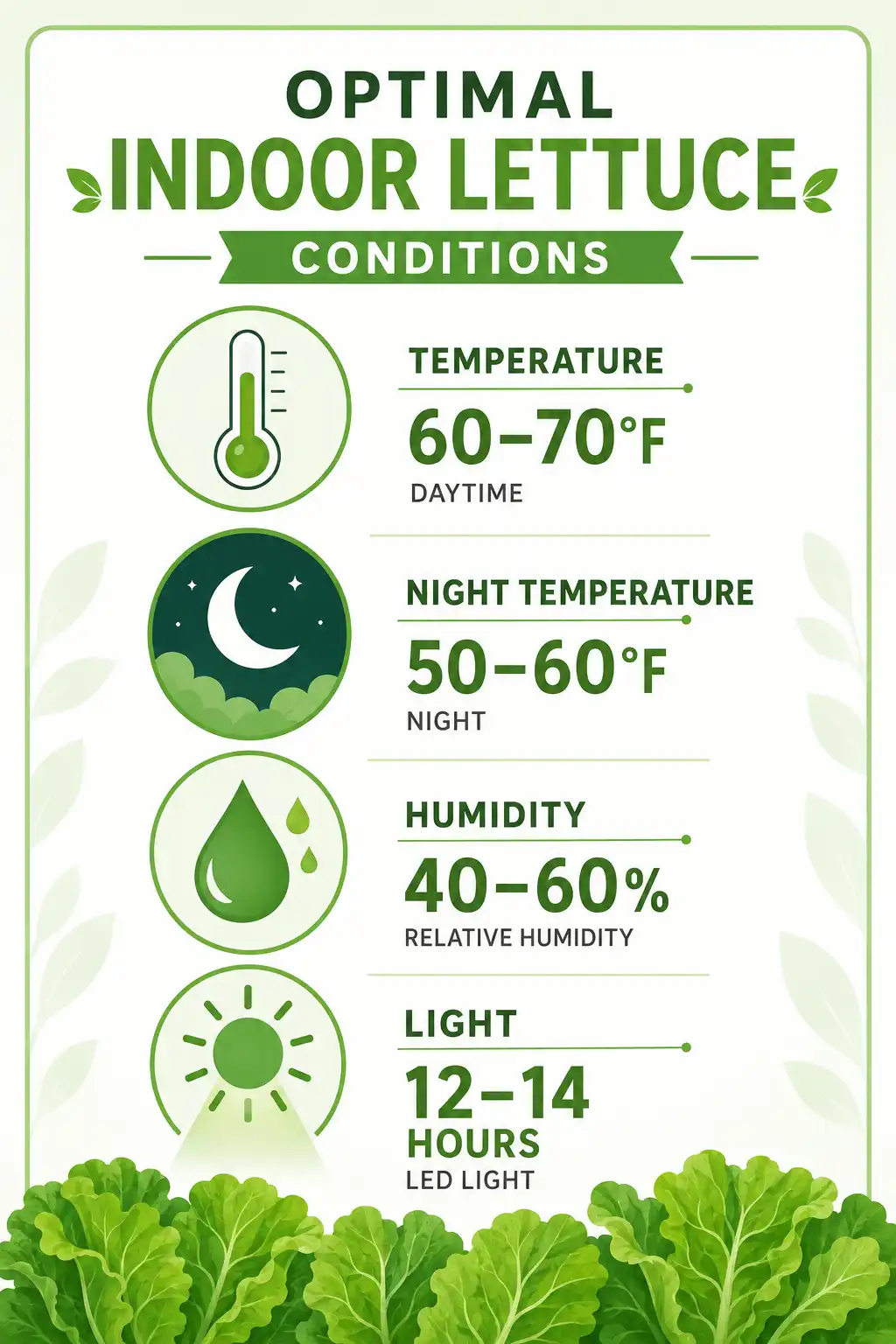
Lettuce needs 12 to 14 hours of light per day from a full-spectrum LED. A south-facing window alone is not enough in winter, even in Kansas.
What on the setup:
- Light type: Full-spectrum LED, 20 to 40 watts per square foot of growing area
- Distance: 6 to 12 inches above the canopy
- Photoperiod: 12 to 14 hours on, 10 to 12 hours off, set on a timer
Lettuce needs roughly 12 to 17 mol/m²/day of Daily Light Integral (DLI). Below 10 DLI, plants stretch, lose color, and turn bitter. If leaves reach for the light or grow pale, drop the light closer or extend the photoperiod by an hour.
Temperature and Humidity for Indoor Lettuce
Keep daytime temps at 60 to 70°F and nights at 50 to 60°F. Above 75°F, lettuce bolts and turns bitter fast.
Humidity should sit at 40 to 60 percent. Dry winter air under heating vents pulls moisture off the leaves and stresses young plants. A small humidifier or a tray of water near the setup fixes that.
Watering and Fertilizing Indoor Lettuce
Water when the top half-inch of soil feels dry. Lettuce roots stay shallow, so light, frequent watering beats deep soaks.
Water from below when possible. Set pots in a tray with a half-inch of water for 10 minutes, then drain. This keeps leaves dry and cuts down on disease. A digital soil moisture meter takes the guesswork out, especially with multiple trays going at once.
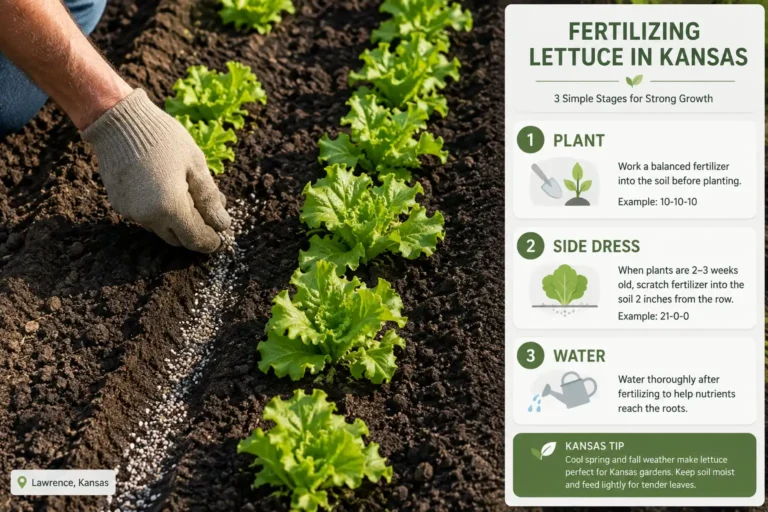
For feeding, lettuce is light to medium feeder. Use a balanced liquid fertilizer at half strength every two weeks once true leaves appear. A 10-10-10 or 5-5-5 mix works fine. See the full breakdown of NPK fertilizer for crops explains why nitrogen drives leaf growth here.
Lettuce prefers a slightly acidic pH of 6.0 to 6.8. If you grow in hydroponics, hold pH between 5.5 and 6.5.
Hydroponic Lettuce at Home
The Kratky method is the simplest hydroponic setup for indoor lettuce. No pump, no air stone, just a covered reservoir, net cups, and nutrient solution.
Quick version:
- Fill a sealed container with hydroponic nutrient solution (EC 1.0 to 1.4)
- Set net cups with rockwool seedlings in the lid so roots touch the water
- As plants drink, the water drops and an air gap forms around the upper roots
- Harvest in 30 to 40 days
Deep Water Culture (DWC) with an air stone also works and produces faster growth. Both beat soil for speed and water efficiency.
Common Problems When Growing Lettuce Indoors
The four problems most:
- Leggy seedlings: Light is too far or too weak. Move the LED closer or extend the photoperiod.
- Bitter leaves: Temperature is too high, or the plant is bolting. Drop room temp or harvest early.
- Damping off: Stems collapse at the soil line. Caused by overly wet soil and poor airflow. Run a small fan and ease up on watering. Our guide to seedling care and damping off covers prevention in detail.
- Aphids: Even indoors. Wipe leaves with a damp cloth or use insecticidal soap.
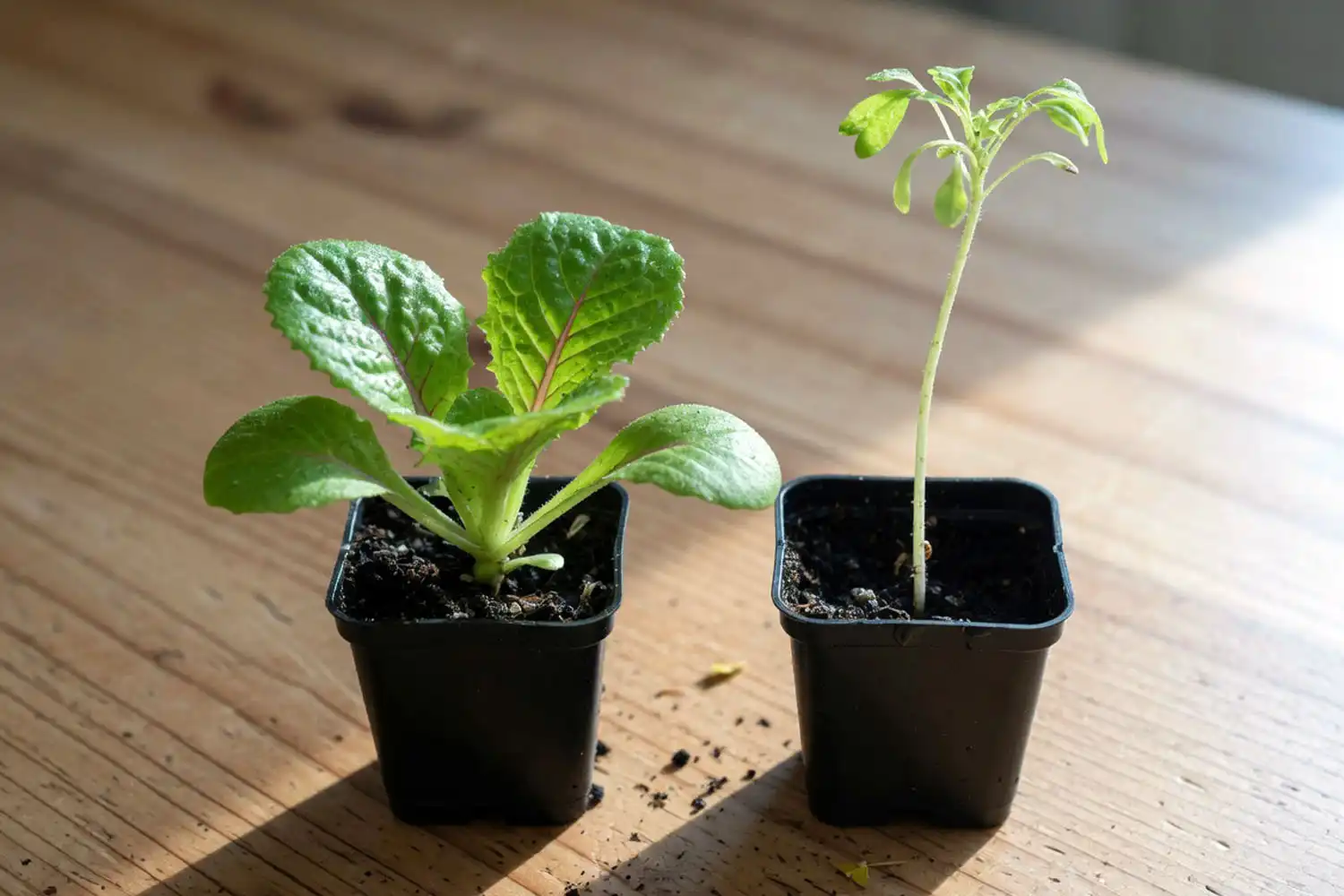
When and How to Harvest Indoor Lettuce
Loose-leaf lettuce is ready when outer leaves reach 4 to 6 inches, usually 30 to 45 days from sowing. Butterhead heads up in 50 to 65 days.
Two ways to harvest:
- Cut-and-come-again: Snip outer leaves with scissors about an inch above the crown. The plant keeps producing for 3 to 4 more cycles.
- Full harvest: Cut the whole plant at soil level once it reaches mature size.
Harvest in the morning when leaves are crisp and full of water. Rinse, dry, and refrigerate. For continuous supply, start a new pot every two weeks.
For more on indoor and small-space growing, our notes on growing carrots in containers follow the same compact-pot principles.
For deeper extension-level guidance on home lettuce production and bolting management, the Penn State Extension guide to lettuce is solid and stays current.
What This Looks Like in Practice
Keep two trays of leaf lettuce going on a basement shelf from November through March. One LED bar, a timer, a small fan, and a humidifier handle the whole setup. Cut salads twice a week and never buy bagged greens in winter. Start with Black Seeded Simpson in a 6-inch pot. Once that works, scale up.