19-19-19 Fertilizer: Rates by Crop, Uses, and 4 Best Picks
A bag of 19-19-19 fertilizer looks like the easy answer. Equal numbers, one product, every nutrient covered. The catch is rate. Spread too little and the crop stalls. Spread too much and you pay for phosphate the soil already holds.
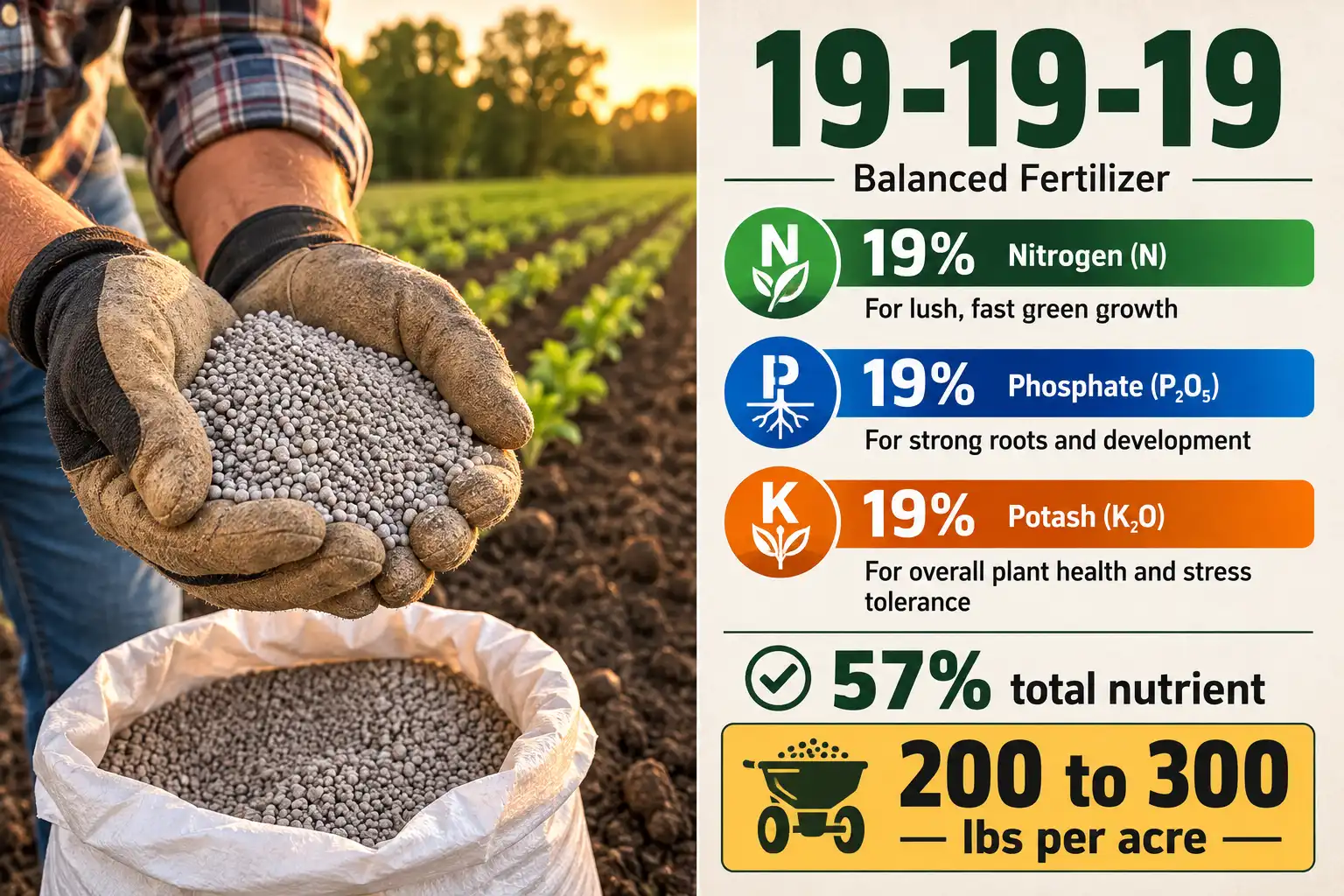
Most fields and food plots take 200 to 300 pounds of 19-19-19 fertilizer per acre. That supplies 38 to 57 pounds each of nitrogen, phosphate, and potash. Lawns and gardens need 5 to 8 pounds per 1,000 square feet.
What Is 19-19-19 Fertilizer?
19-19-19 is a balanced dry blend carrying 19% nitrogen, 19% phosphate, and 19% potash by weight. Sellers also call it triple 19 or NPK 19. All three names mean the same product.
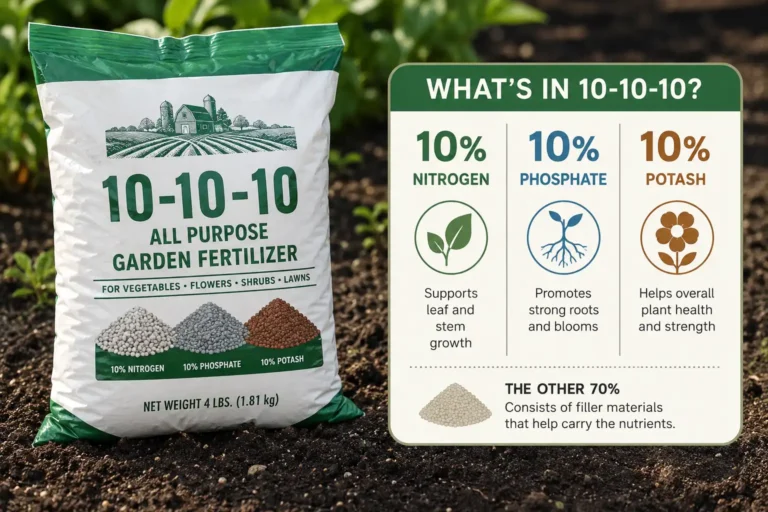
Add the numbers and you get 57% total nutrient. The other 43% is carrier and the non-nutrient share of the source materials. That high analysis is the selling point. You spread fewer pounds to hit the same target.
What Do the Numbers 19-19-19 Mean?
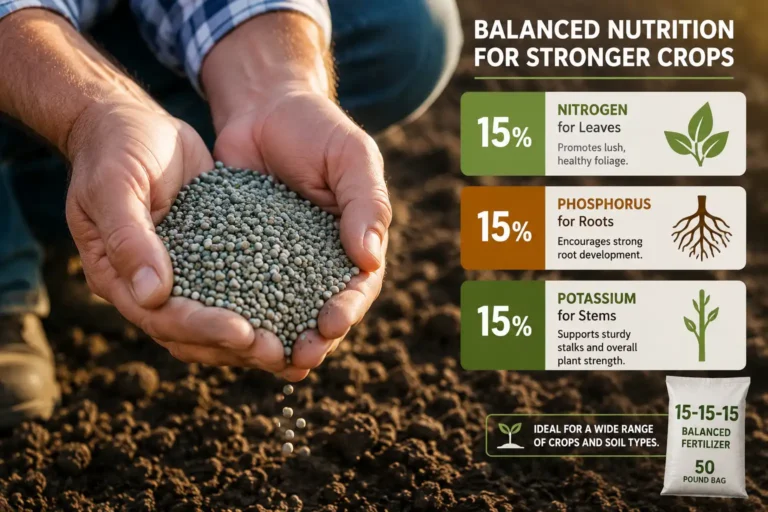
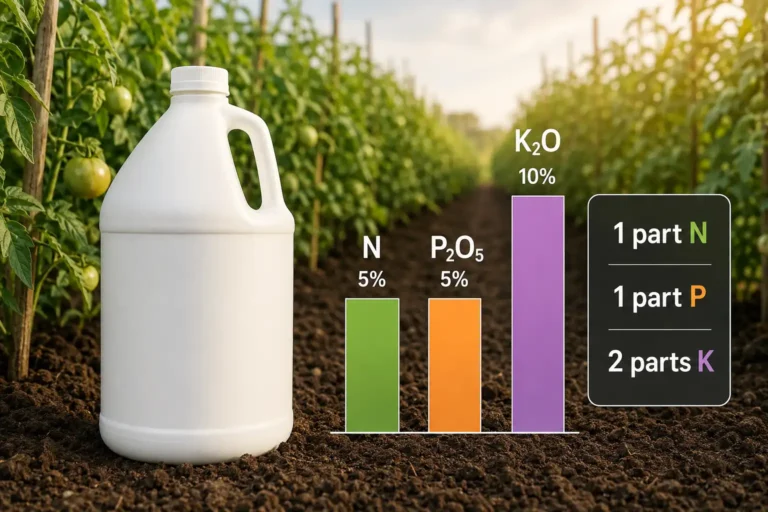
The three numbers are the guaranteed analysis. They always run in the same order: nitrogen, phosphate, potash. They are percentages by weight, not pounds. So 100 pounds of product holds 19 pounds of N, 19 pounds of P2O5, and 19 pounds of K2O.
Here is the part most bags skip. The second and third numbers report oxide forms, not raw elements. That 19% P2O5 equals about 8.3% actual phosphorus. The 19% K2O equals about 15.8% actual potassium.
Do not convert anything, though. Soil test reports also use P2O5 and K2O. So the label matches your recommendation directly. The same reading works on any NPK fertilizer label at the co-op counter.
How Much Nutrient Is in a Bag of 19-19-19?
Every bag size runs off the same 19% math. Here is what you actually carry out of the store:
| Bag size | N | Phosphate (P2O5) | Potash (K2O) | Total nutrient |
|---|---|---|---|---|
| 5 lb | 0.95 lb | 0.95 lb | 0.95 lb | 2.85 lb |
| 10 lb | 1.9 lb | 1.9 lb | 1.9 lb | 5.7 lb |
| 20 lb | 3.8 lb | 3.8 lb | 3.8 lb | 11.4 lb |
| 50 lb | 9.5 lb | 9.5 lb | 9.5 lb | 28.5 lb |
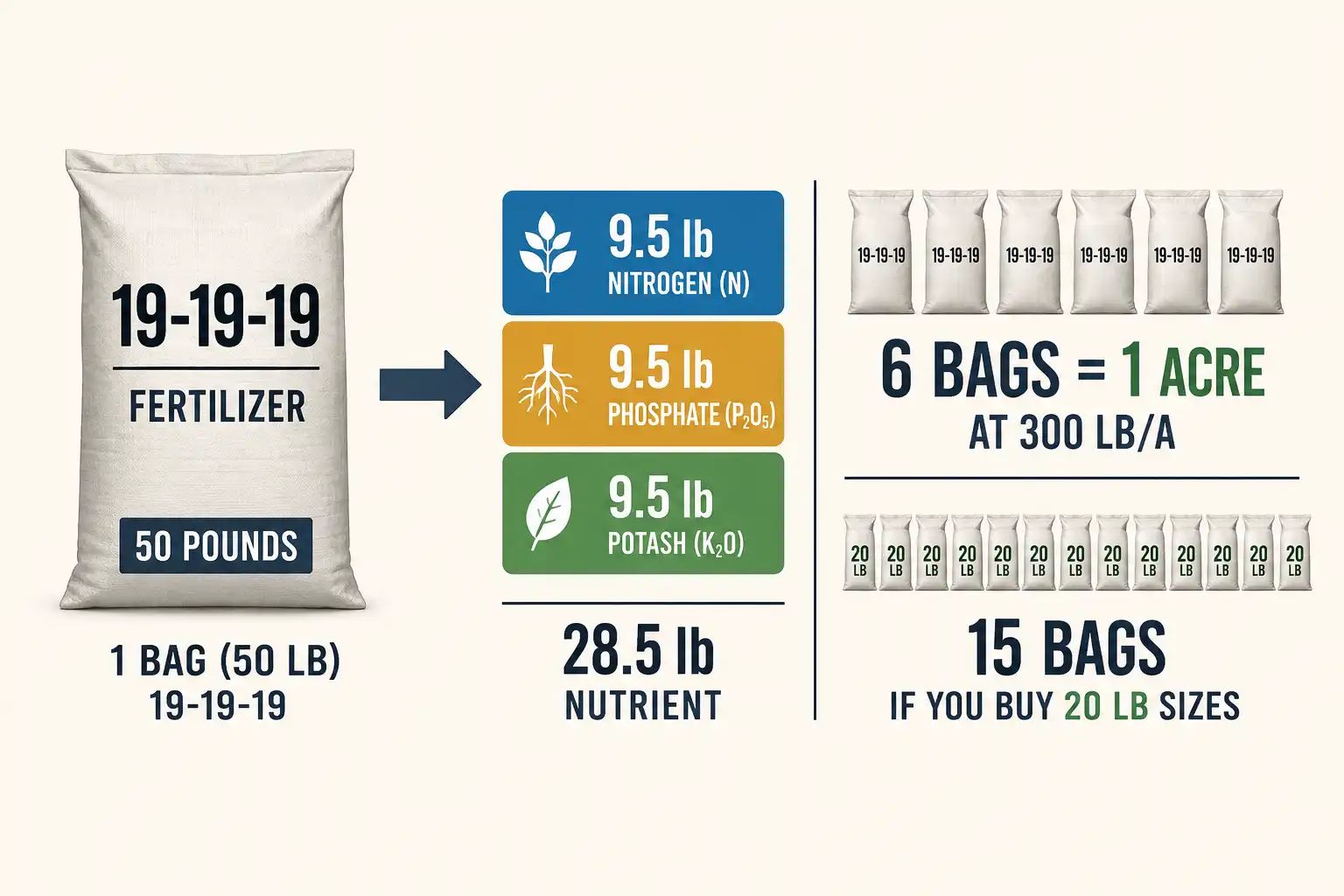
The 50 pound bag is the standard field unit. Six of them cover an acre at the 300 pound rate. That is the number worth keeping in mind at the loading dock.
What Is 19-19-19 Made From, and What Is Missing?
Blenders build triple 19 from three dry materials. Urea supplies the nitrogen, MAP or DAP the phosphate, and muriate of potash the potassium. One field-grade bag tested at 32.7% urea, 36.6% monoammonium phosphate, and 30.7% muriate of potash.
Those ingredients also tell you what the bag leaves out:
- No sulfur. Urea, MAP, and potash carry none. K-State Research and Extension flags sulfur as a common limiter on Kansas forages at 10 to 15 pounds per acre.
- No micronutrients. Nothing for zinc, boron, iron, or manganese unless a blender adds them.
- About 14% chloride. Muriate of potash brings it along. That matters on saline ground and on chloride-sensitive crops like tobacco.
So triple 19 covers the big three and stops there. Read that as a starting point, not a complete fertility program.
Also see: 3 18 18 NPK
How Much 19-19-19 Fertilizer Per Acre?
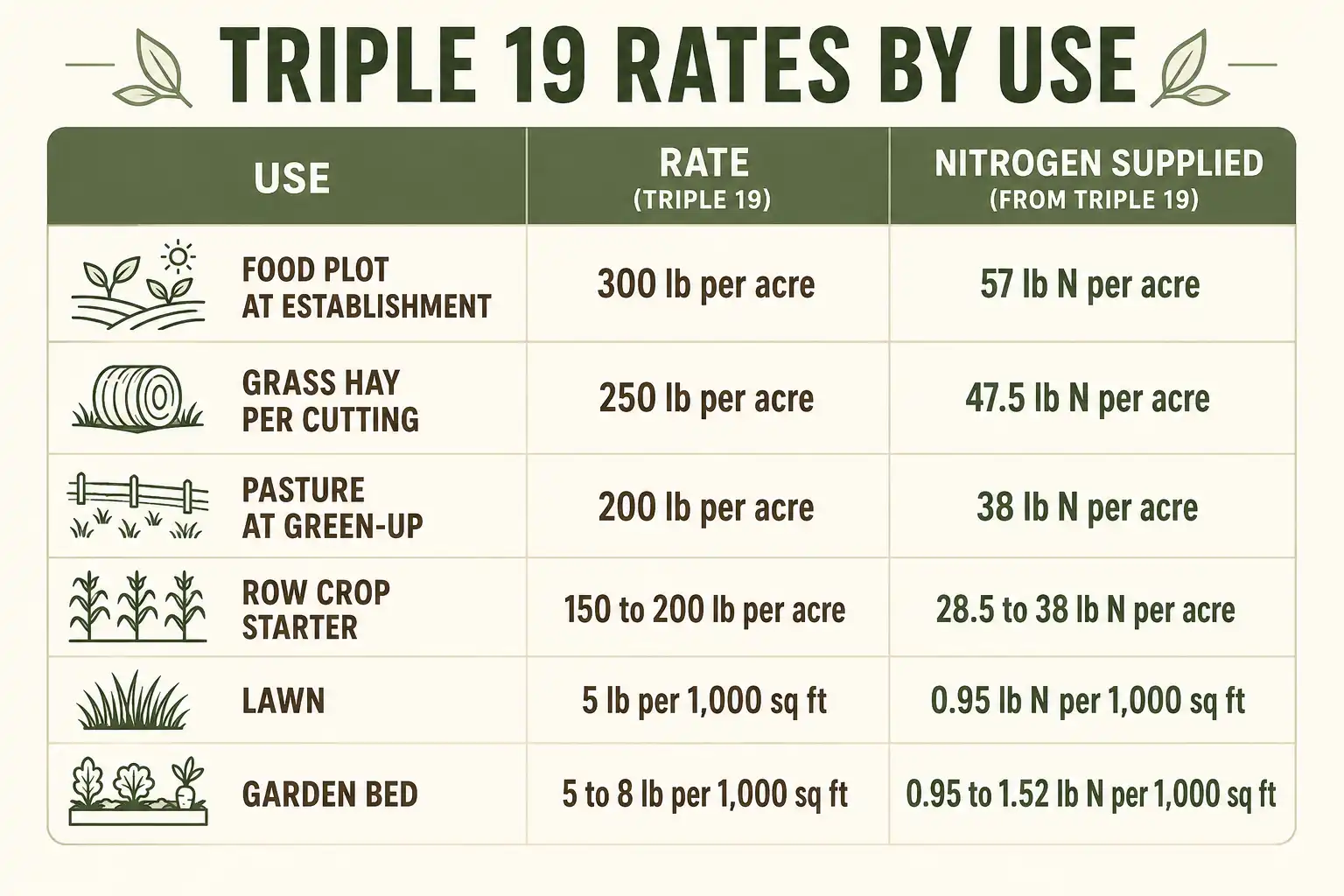
Most acres take 200 to 300 pounds of 19-19-19 per acre. That supplies 38 to 57 pounds each of nitrogen, phosphate, and potash. Food plots sit at the top of that range. Grain and forage ground usually wants a different ratio, so the numbers below split by use.
Rates for Food Plots and Wildlife Plantings
Run 300 pounds per acre at establishment on a mixed plot. That puts down 57-57-57, and most plot recommendations land in that range. Seed tags often print 300 to 400 pounds per acre. The higher figure only pays on ground testing low.
Brassicas need more nitrogen than one pass provides. Turnips, rape, and kale are heavy feeders. Michigan State puts their need at 75 to 100 pounds of N per acre. Triple 19 at 300 pounds delivers 57. Follow with 100 pounds of urea four weeks after emergence.
Clover and other legumes need the opposite. They fix their own nitrogen. Extra N feeds grass competition and shuts down nodulation on the roots. Use 0-20-20 or straight potash on established legume plots instead.
Rates for Hay Fields and Pasture
Grass hay takes about 250 pounds per acre per cutting when triple 19 is your only source. Still, the ratio fits hay poorly. Rutgers puts removal at 15 pounds of P2O5 and 50 pounds of K2O per harvested ton. A balanced blend supplies those equally, so potash runs short while phosphate stacks up.
Nitrogen drives tonnage. K-State calls for 30 pounds of N per ton of expected yield, and eastern guides run to 50. Use the Kansas figure here and adjust after the first cutting. Split the passes: one at spring green-up, one right after each harvest.
For pasture, 200 pounds per acre at green-up covers a general pass. Penn State and Ohio State both suggest 30 to 50 pounds of N once the spring flush ends. Watch stand composition too. If clover holds more than 30% of the sward, skip spring nitrogen entirely. Ground going into oats for hay does well on a light starter, then a top-dress once the crop tillers.
Rates for Row Crops
Row crops rarely want a balanced blend, since grain pulls far more nitrogen and potassium than phosphate. Triple 19 still works as a pre-plant starter, or on small acreage where you keep one product on hand. Figure 150 to 200 pounds per acre broadcast, then cover the rest of the nitrogen with urea or anhydrous ammonia. Work through the per acre rates for corn separately, including yield-goal math and sidedress timing.
Rates for Lawns and Turf
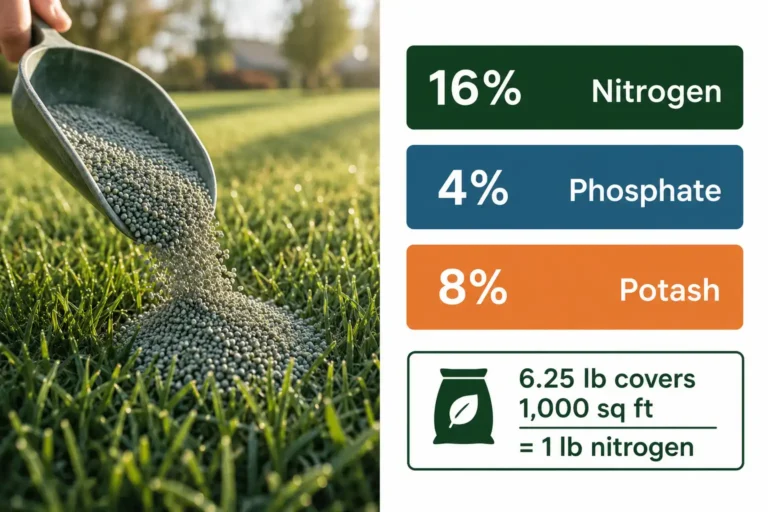
Spread 5 pounds per 1,000 square feet on established turf. That delivers about 1 pound of nitrogen per 1,000 square feet, which is the standard single-application turf rate. A 50 pound bag covers roughly 9,500 to 10,000 square feet at that setting.
Check your state rule first, though. Eleven states restrict phosphate on turf, listed further down. New seeding is usually an allowed exception where routine feeding is not.
Rates for Gardens and Raised Beds
Use 5 to 8 pounds per 1,000 square feet, or about 0.5 to 0.75 pound per 100 square feet. Work it into the top 3 to 4 inches before planting. That range delivers 1 to 1.5 pounds of nitrogen per 1,000 square feet, which suits most vegetable crops.
Some labels allow 1.5 to 2 pounds per 100 square feet. Skip that figure on any bed you have fertilized before. It works out to 15 to 20 pounds per 1,000 square feet, or three to four times the standard rate.
Phosphate is the reason to hold back. One pound per 100 square feet equals 83 pounds of phosphate per acre. Alabama Cooperative Extension figures high-yielding garden crops take up 48 pounds of P2O5 per acre. Only about 30 pounds leave in the harvest. The surplus stays put, because phosphorus does not leach.
How to Turn a Soil Test Into a Rate
Divide the nutrient you need by the decimal percentage on the bag. That single step gives you the rate.
- Pull the recommendation off your soil report. Say it calls for 60 pounds of N per acre.
- Divide 60 by 0.19. That gives 316 pounds of 19-19-19 per acre.
- Check what those 316 pounds do to the other two numbers. They also apply 60 pounds of P2O5 and 60 pounds of K2O.
- Compare step 3 to your report. If the test asked for only 20 pounds of phosphate, you just tripled it.
Step 4 is the step most people skip. A balanced blend only fits when all three recommendations happen to match.
Think in Units, Not Bags
Suppliers talk in units. One unit equals one pound of nutrient per acre, so a 60-60-60 recommendation wants 60 units of each. Once you think that way, any grade becomes an option.
Watch what happens on a true 60-60-60 field:
- Triple 19: 316 pounds per acre hits all three numbers exactly.
- Separate materials: 115 pounds of MAP, 100 pounds of potash, and 103 pounds of urea. That totals 318 pounds.
Nearly identical weight, because triple 19 is those same three materials pre-mixed. The blend saves you a trip, not a pound.
Now change the test to 60-20-60, which describes plenty of ground that has been farmed a while:
- Triple 19: still 316 pounds, and you apply 60 pounds of phosphate against a 20 pound need.
- Separate materials: 38 pounds of MAP, 100 pounds of potash, and 121 pounds of urea. That totals 260 pounds, with only 20 pounds of phosphate out.
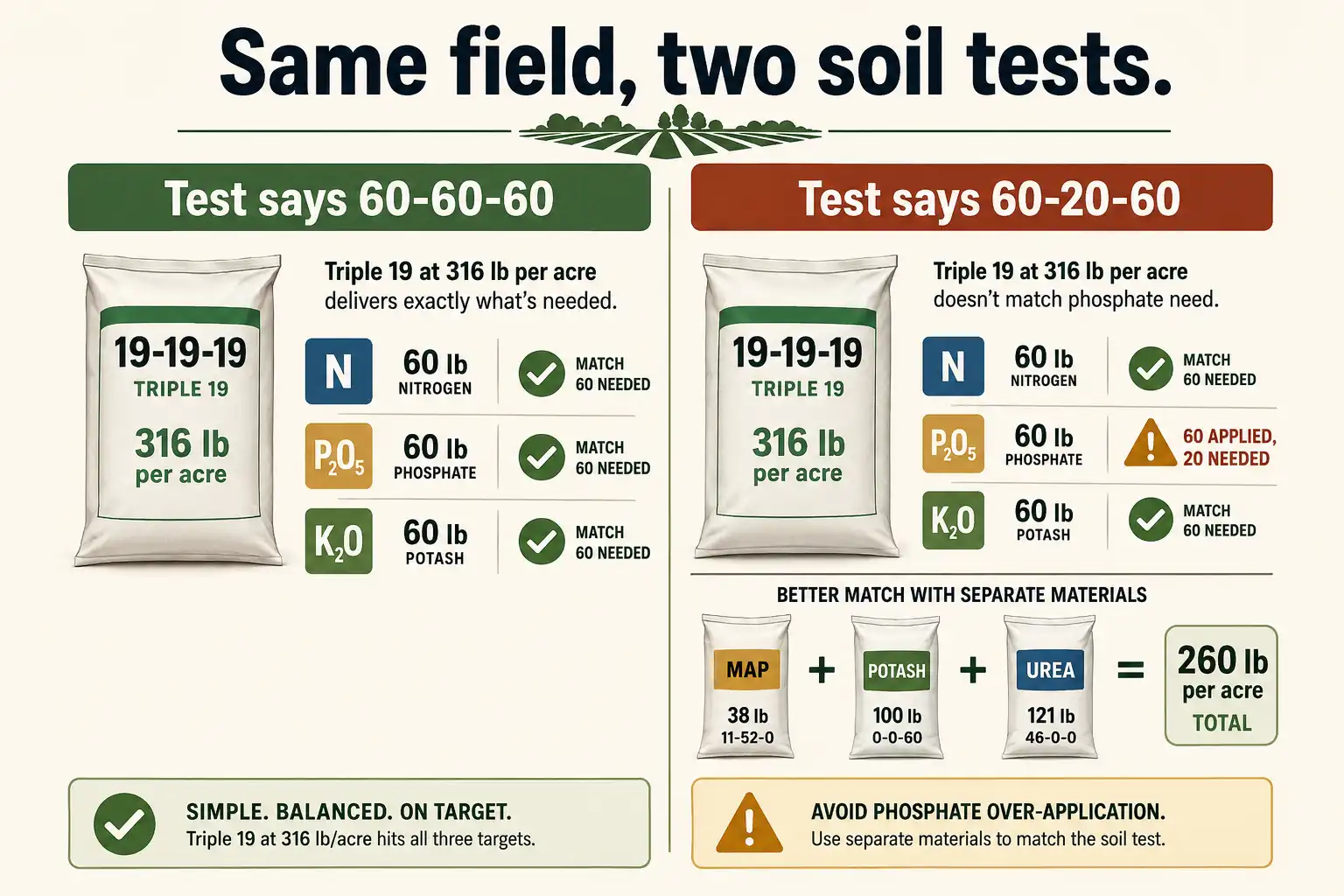
Less weight, less money, and no phosphate surplus. Get a home soil test kit or send a sample to your county extension office before you decide. That report tells you which of those two columns you belong in.
When Should You Apply 19-19-19?
Apply it just before planting and work it into the top few inches. Nitrogen starts moving as soon as it dissolves. So a fall pass ahead of a spring crop wastes most of the N.
Timing by situation:
- Food plots: at final tillage, then a second nitrogen pass 4 to 6 weeks after emergence
- Grass hay: at spring green-up, then again right after each cutting
- Pasture: at green-up, or 30 to 50 pounds of N in June once the spring flush ends
- Gardens: 1 to 2 weeks before seeding or transplanting
- New seedings and sod: at planting, since young roots need phosphate close by
- Row crops: broadcast pre-plant, never as a fall application
Lime runs on a slower clock. If your test calls for lime, spread it 3 to 6 months ahead so pH has time to move. Below pH 5.5, fertilizer gives up a large share of its value, and rate cannot fix that. Skip frozen and saturated ground too. Those granules end up in the ditch.
How to Apply 19-19-19 Without Burning the Crop
Broadcast it and incorporate it. That one habit prevents nearly every burn problem with this grade.
The reason sits in the ingredients. Muriate of potash carries the highest salt index of any common dry fertilizer. Urea releases free ammonia in dry, high-pH soil. Concentrated salt near a germinating seed pulls water straight out of the tissue. University of Wisconsin agronomists cap seed-placed fertilizer at 10 pounds per acre of N plus K2O, regardless of soil texture. A 300 pound pass of triple 19 carries 114 pounds. That is eleven times the safe in-furrow limit.
So handle it this way:
- Broadcast and incorporate at any rate above about 50 pounds per acre
- Band 2 inches beside and 2 inches below the seed if you want a starter effect
- Never place it in-furrow, and skip it as a pop-up entirely
- Keep granules off wet leaves, since they dissolve on contact and scorch tissue
- Water in after spreading, or time the pass ahead of forecast rain
- Cut the rate on sandy, low-CEC ground, where salts stay concentrated
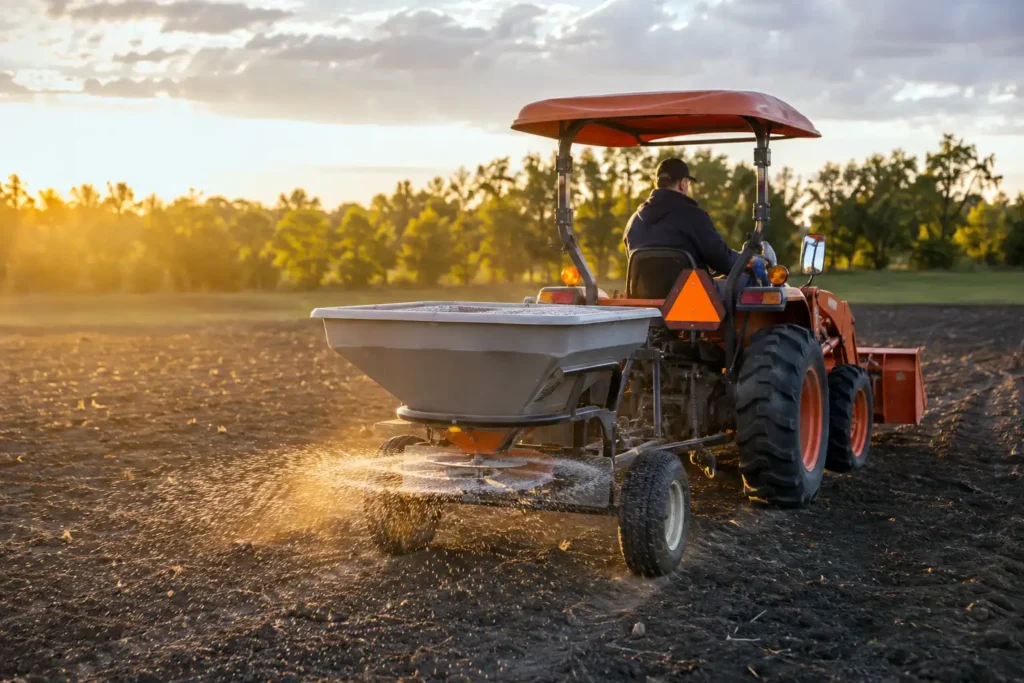
Dry soil raises the risk sharply. Salts diffuse and dilute in moist ground, then sit and concentrate in dry ground. A calibrated fertilizer spreader matters more here than most people think. A heavy overlap stripe doubles the rate in that band, and you will not notice until the crop stripes up.
Handling is simple but worth doing right. Wear gloves and eye protection, since urea dust irritates skin and eyes. Store bags sealed and off the concrete on a pallet. Granules cake once they pull moisture, and caked product will not meter through a spreader.
How Does 19-19-19 Compare to 10-10-10, 13-13-13, and 20-20-20?
They all share the same 1-1-1 ratio, so concentration is the only difference. A higher analysis means fewer pounds through the spreader for the same nutrient delivered.
| Grade | Total nutrient | Pounds for 50 lb N/acre | Typical form |
|---|---|---|---|
| 10-10-10 | 30% | 500 lb | Granular, lawn and garden |
| 13-13-13 | 39% | 385 lb | Granular, food plots |
| 15-15-15 | 45% | 333 lb | Granular, general field |
| 19-19-19 | 57% | 263 lb | Granular and soluble |
| 20-20-20 | 60% | 250 lb | Mostly water-soluble |
Triple 19 delivers nearly double the nutrient of 10-10-10 blends per pound of product. So you haul half the weight and spread half the pounds. Across 40 acres of plots, that gap is real money in freight and labor.
Precision is the tradeoff. A high-analysis product punishes a sloppy spreader setting, because every pound off target carries twice the nutrient. So calibrate before the first pass.
When Triple 19 Is the Wrong Choice
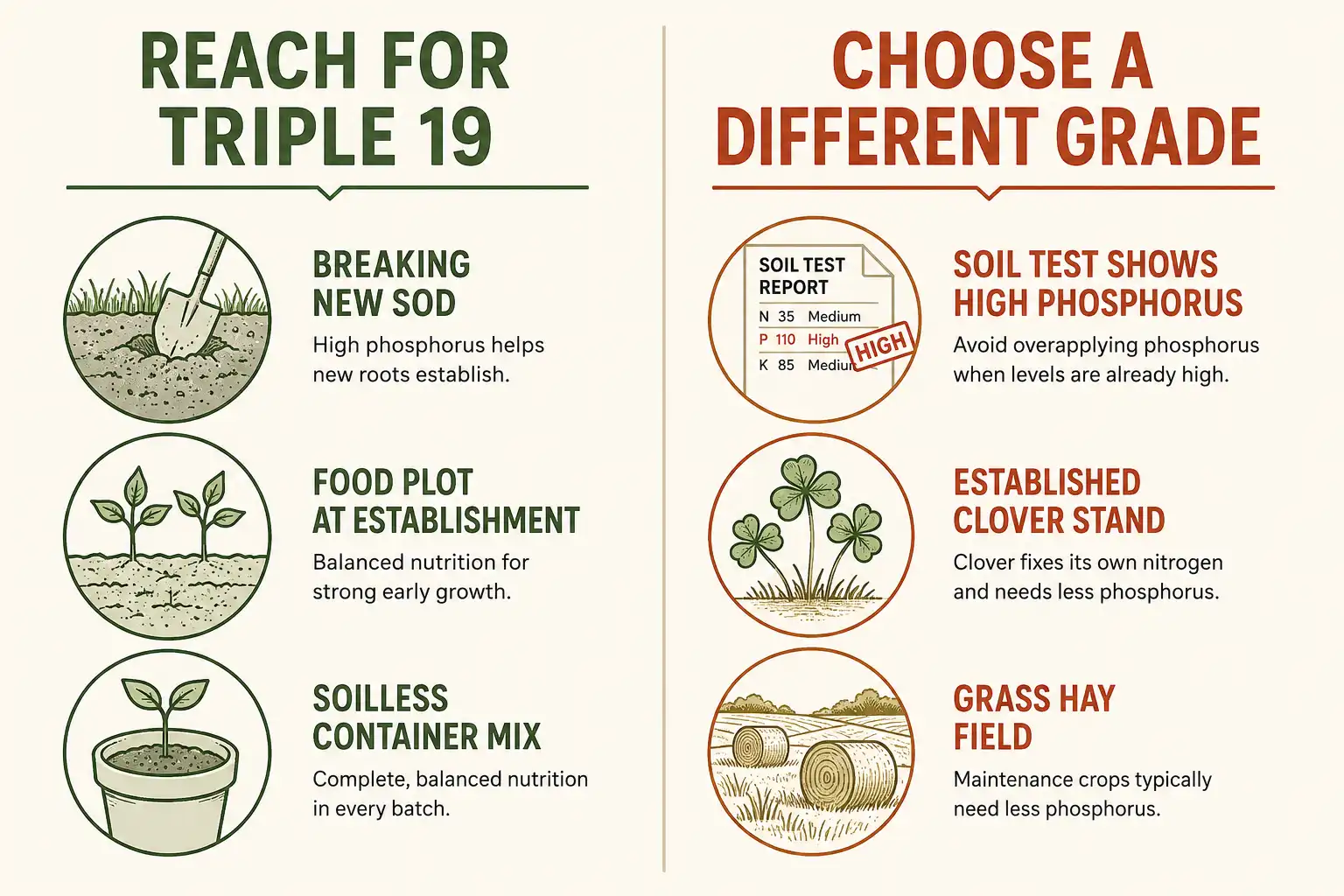
Skip it when your soil test shows phosphorus is already high, and that covers a lot of ground. Crops do not use the three macronutrients equally. Clemson Extension puts it plainly: crops need nitrogen and potassium in larger amounts than phosphorus.
Three consequences follow:
- Phosphorus accumulates. It does not leach like nitrogen, so every balanced pass adds to the bank.
- Excess phosphorus causes new problems. Alabama Extension links high soil P plus pH above 6.5 to zinc and iron shortages, and those correct slowly.
- The money buys nothing. University of Minnesota research found the chance phosphate helps on Very High testing soils sits near zero.
Regulations matter too. At least eleven states restrict phosphate fertilizer on turf. The list runs Illinois, Maine, Maryland, Michigan, Minnesota, New Jersey, New York, Vermont, Virginia, Washington, and Wisconsin. Minnesota moved first, in 2004. Most exempt agriculture, gardens, sod farms, and pasture. Most also allow phosphate when a soil test documents a need. Several Florida counties add seasonal blackout windows.
Better fits exist once you know your numbers:
- Only nitrogen short: urea, or a nitrogen-sulfur product if sulfur also tests low
- Phosphorus high, potassium low: 0-0-60 potash, or a 15-0-15 blend
- Legume plots and clover: 0-20-20, which skips the nitrogen entirely
- Everything low on new ground: triple 19, which is exactly what it is built for
4 Best 19-19-19 Fertilizers for 2026
These four cover the jobs triple 19 actually gets: broadcast field work, foliar pasture feeding, garden beds, and containers.
1. Old Cobblers Farm Wicked Growth 19-19-19 Fertilizer
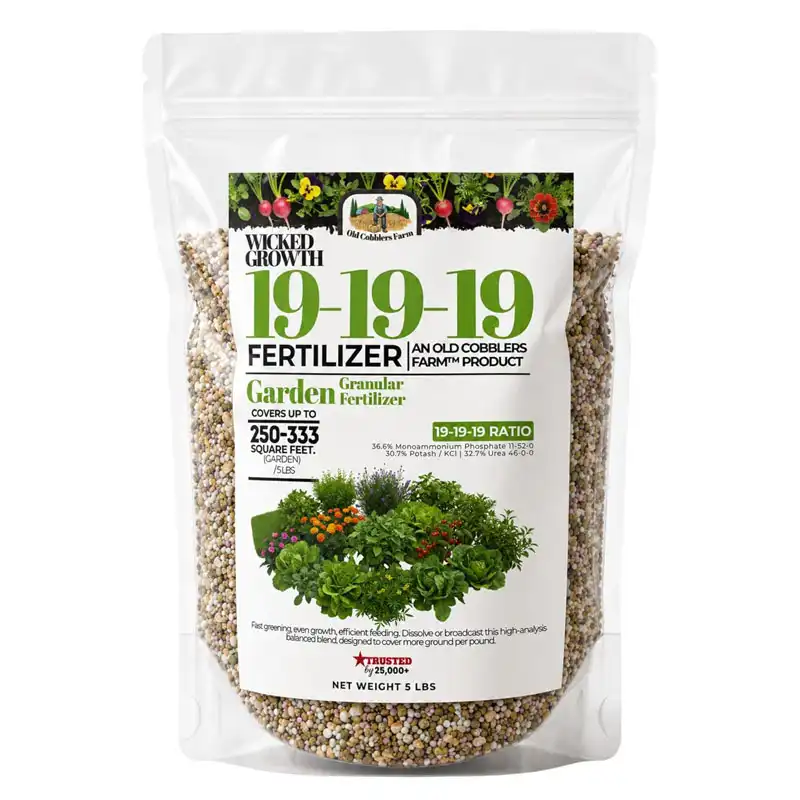
This is the top pick for a spreader. It is a true granular field-grade blend from monoammonium phosphate, urea, and potash. So it flows and throws like conventional co-op product. The label prints an honest per acre figure instead of vague scoop directions. That is rare in the bagged garden aisle. At 200 to 300 pounds per acre it matches standard plot recommendations for clover, brassicas, and cereal grain mixes. Run the coverage math before you buy, though. The largest bag is 20 pounds, so a full acre at 300 pounds takes 15 bags. A quarter-acre plot takes four, and that is where this product makes sense.
Specs
- Analysis: 19-19-19, 57% total nutrient
- Form: granular, fast-acting
- Sources: MAP 11-52-0, urea 46-0-0, potash
- Coverage: 5 lb bag treats 250 to 333 sq ft
Quality label: Field-grade granular Best for: Quarter-acre to one-acre plots, clover, brassicas, hydroseeding
2. Grasshopper 19-19-19 Foliar Fertilizer
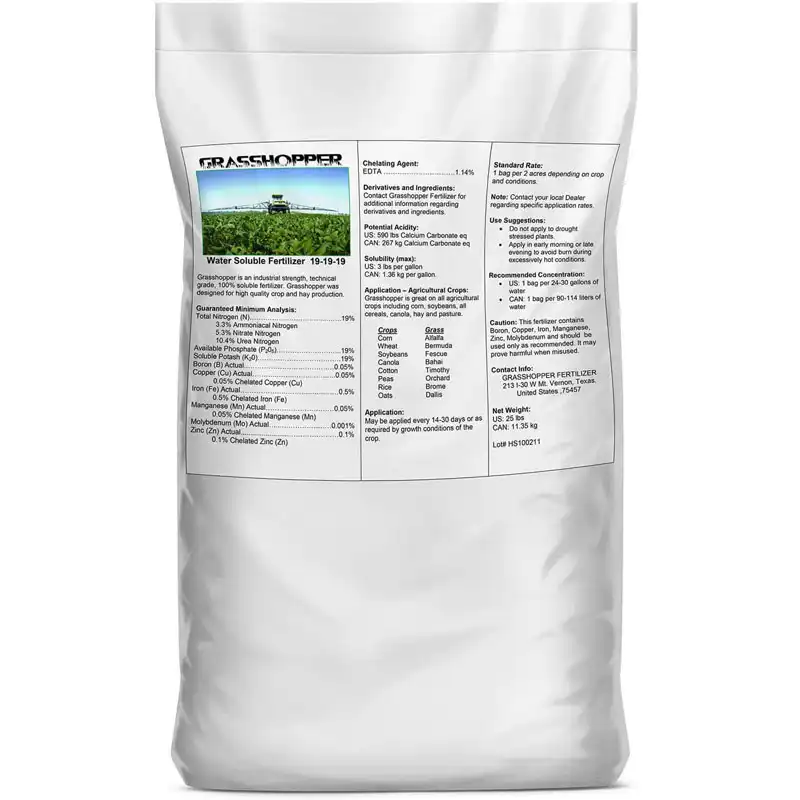
Reach for this when you need a response and cannot wait on rain. It is a fully water-soluble powder blended with micronutrients and bio-stimulants. Those fill the sulfur and trace-element gap a plain granular blend leaves. It sprays on the leaf or goes down as a soil application after watering. One 25 pound bag treats 1 to 2 acres, mixed at 1 pound per 1 to 4 gallons of water. Owners consistently report visible response on pasture, clover, and food plots. They also note it pushes grass to outcompete weeds, though it kills nothing established. Know the ceiling. At 12 to 25 pounds per acre it supplies only 2 to 5 pounds of nitrogen. So it supplements a fertility program rather than replacing one.
Specs
- Analysis: 19-19-19 plus micronutrients
- Form: water-soluble powder, 25 lb bag
- Coverage: 1 to 2 acres per bag
- Mixing: 1 lb per 1 to 4 gallons
Quality label: Soluble foliar grade Best for: Pasture, hay ground, clover plots, mid-season correction
3. Casa De Amor NPK 19-19-19 Fertilizer
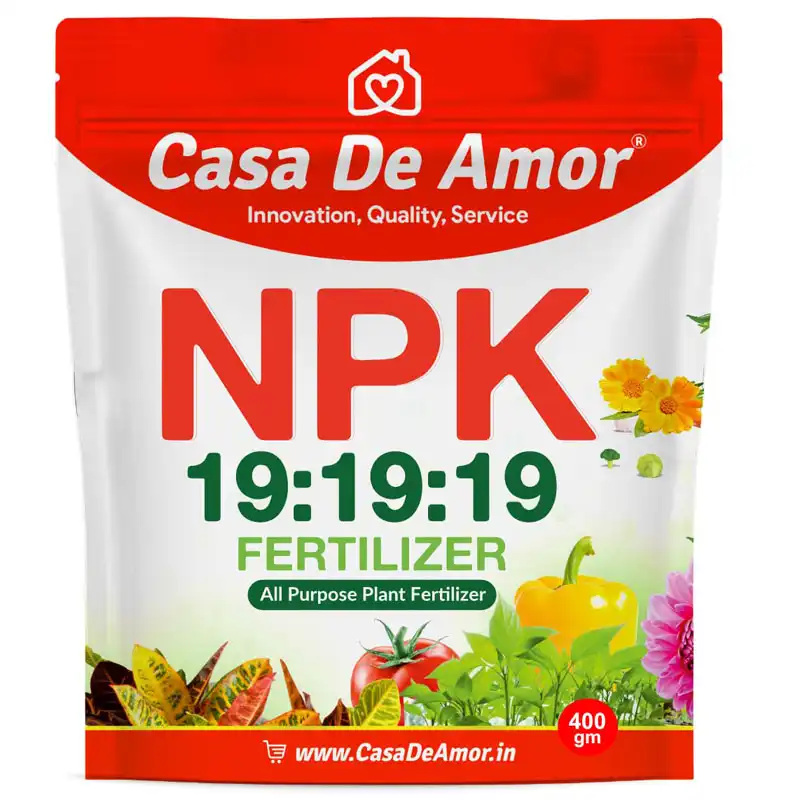
This one suits the vegetable patch and the greenhouse bench, not the field. It ships as two sealed 400 gram packs, so you mix what you need and the rest stays dry. Directions call for 5 to 10 grams per liter, applied at the plant base every 2 to 4 weeks. Start at 5 grams and stay there for anything in a pot. The top of that range gets aggressive on small root volumes. At that rate the 800 grams makes about 160 liters of feed solution. That carries a bed or a container set for a season. It dissolves completely, and that matters in hydroponic reservoirs and drip lines where grit plugs emitters.
Specs
- Analysis: 19-19-19 water-soluble
- Form: powder, 2 packs of 400 g
- Dose: 5 to 10 g per liter
- Interval: every 2 to 4 weeks
Quality label: Soluble garden grade Best for: Vegetable beds, potted plants, fruit trees, hydroponics
4. Go Garden NPK 19-19-19
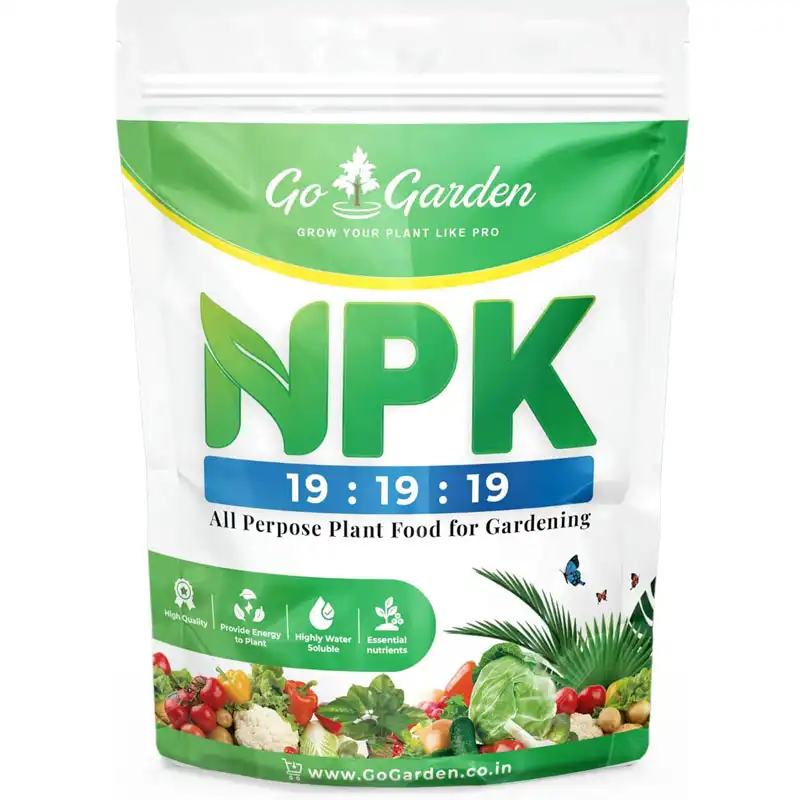
Pick this one if the whole operation fits on a windowsill and a patio. It arrives as a single 950 gram container of water-soluble powder. That feeds a houseplant collection or a handful of containers for a season. The powder mixes clean in a watering can with no straining. Soilless potting mixes are one of the few places a truly balanced ratio makes sense. Those mixes hold no native nutrient reserve at all. Two limits are worth naming. Cost per pound of actual nutrient runs highest of these four by a wide margin. The label also prints no rate per area, so outdoor bed use takes guesswork.
Specs
- Analysis: 19-19-19 water-soluble
- Form: powder, 950 g container
- Coverage: containers and small beds
- Use: flowers, vegetables, indoor plants
Quality label: Soluble container grade Best for: Houseplants, patio pots, small flower beds, seedlings
FAQs About NPK 19
Does 19-19-19 Fertilizer Expire?
How much 19-19-19 fertilizer per acre for hay?
Can You Put 19-19-19 on a Lawn?
Is 19-19-19 Organic?
Can You Tank Mix It With Herbicide?
Final Words on 19-19-19 Fertilizer
Pull a soil test, then decide. New plots and freshly broken sod usually come back low across all three numbers. Triple 19 is the cleanest single product for that job. Start at 300 pounds per acre. If phosphorus already tests high, buy urea and potash separately and put the savings toward lime or seed. Broadcast it and work it in. Keep it out of the seed furrow. Never spread more than the report asked for.