18 46 0 Fertilizer: What It Is, DAP Formula, Uses, and Cost
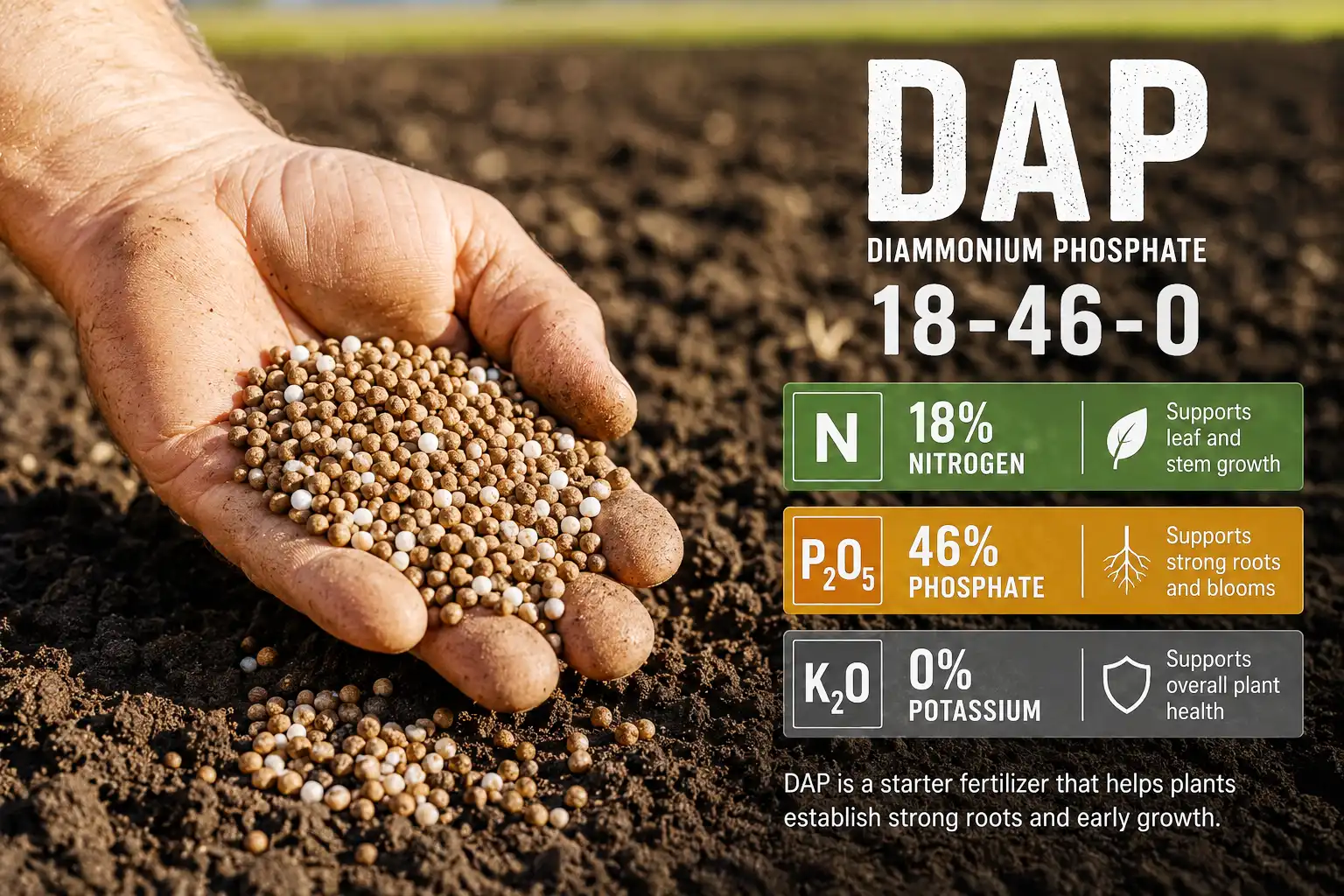
DAP fertilizer, the 18 46 0 analysis known as diammonium phosphate, is the most used phosphate source in American agriculture. It feeds early roots and strong stands. The catch is placement and timing. Get those right and it pays. Get them wrong and you burn seed.
DAP fertilizer is diammonium phosphate: 18 percent nitrogen, 46 percent phosphate, no potassium. It drives early root and shoot growth. Apply it by soil test, banded near the seed, not blind by the bag.
What Is 18-46-0 (DAP) Fertilizer?
18-46-0 fertilizer is diammonium phosphate, the most widely used phosphate fertilizer in the world. The three numbers are the standard NPK fertilizer grade: 18% nitrogen, 46% phosphate (P2O5), and 0% potassium.
The nitrogen sits in ammonium form, so roots take it up fast. The phosphate is highly water soluble, so it dissolves quickly once soil moisture reaches it. Diammonium phosphate fertilizer has been a staple since the 1960s. It packs more nutrients per pound than nearly any dry blend, which keeps freight and handling low. That holds whether you buy a ton or a small bag.
Know more: What is 5-10-10 Fertilizer
What Is the DAP Formula?
The DAP formula is (NH4)2HPO4, or diammonium phosphate. Makers produce it by reacting two parts ammonia with one part phosphoric acid. Then they granulate the slurry into hard, brown pellets.
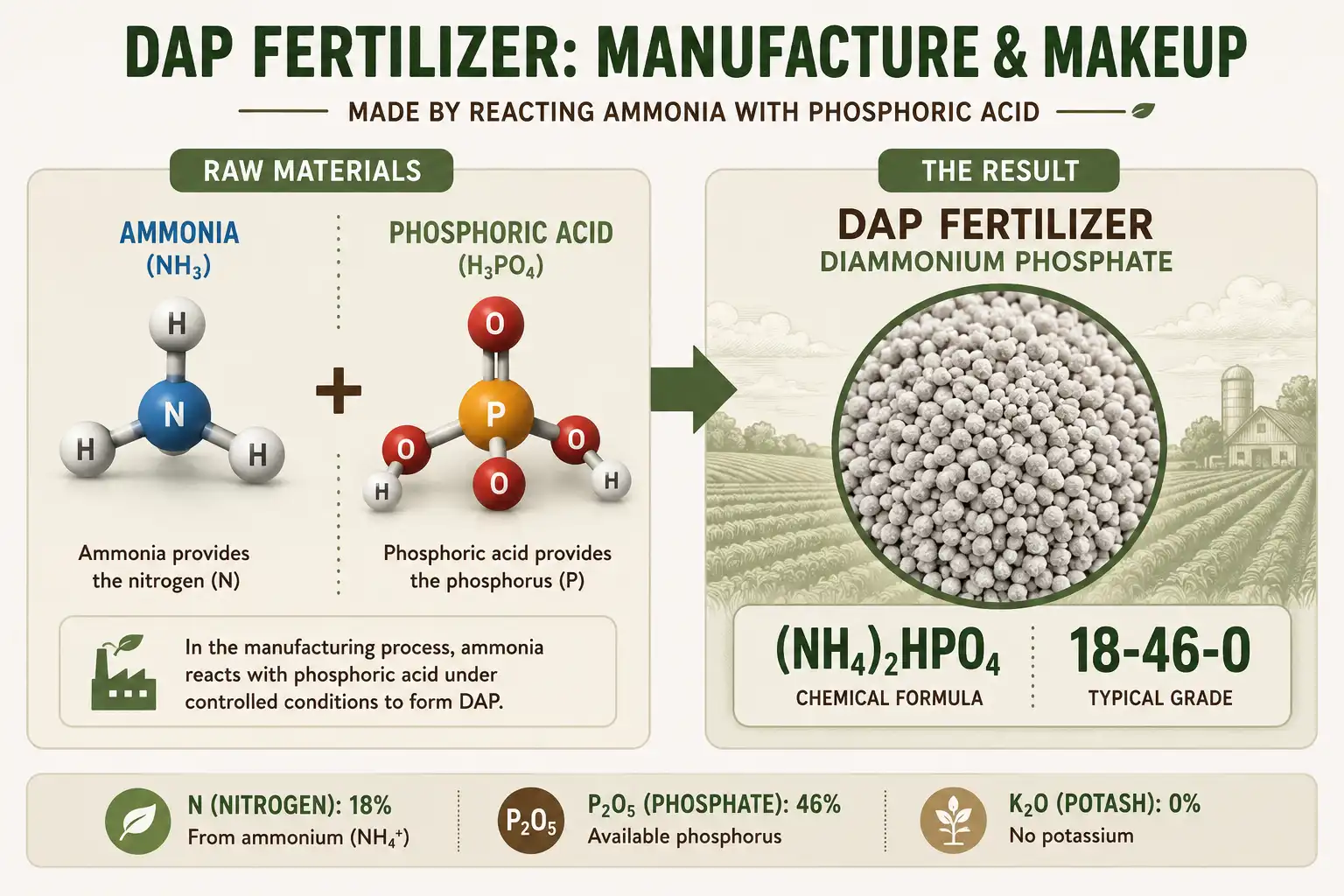
That reaction sets the grade. Each 100 pounds carries 18 pounds of nitrogen and 46 pounds of phosphate, for 64 total units of nutrient. The nitrogen is ammonium, which plants use quickly. The phosphate is water soluble, so it releases where young roots can reach it.
What Is 18-46-0 Fertilizer Used For?
18-46-0 fertilizer is used mainly as a starter and phosphate source that pushes early root growth and strong establishment. Farmers band it at planting. Gardeners work it in before flowering and fruiting.
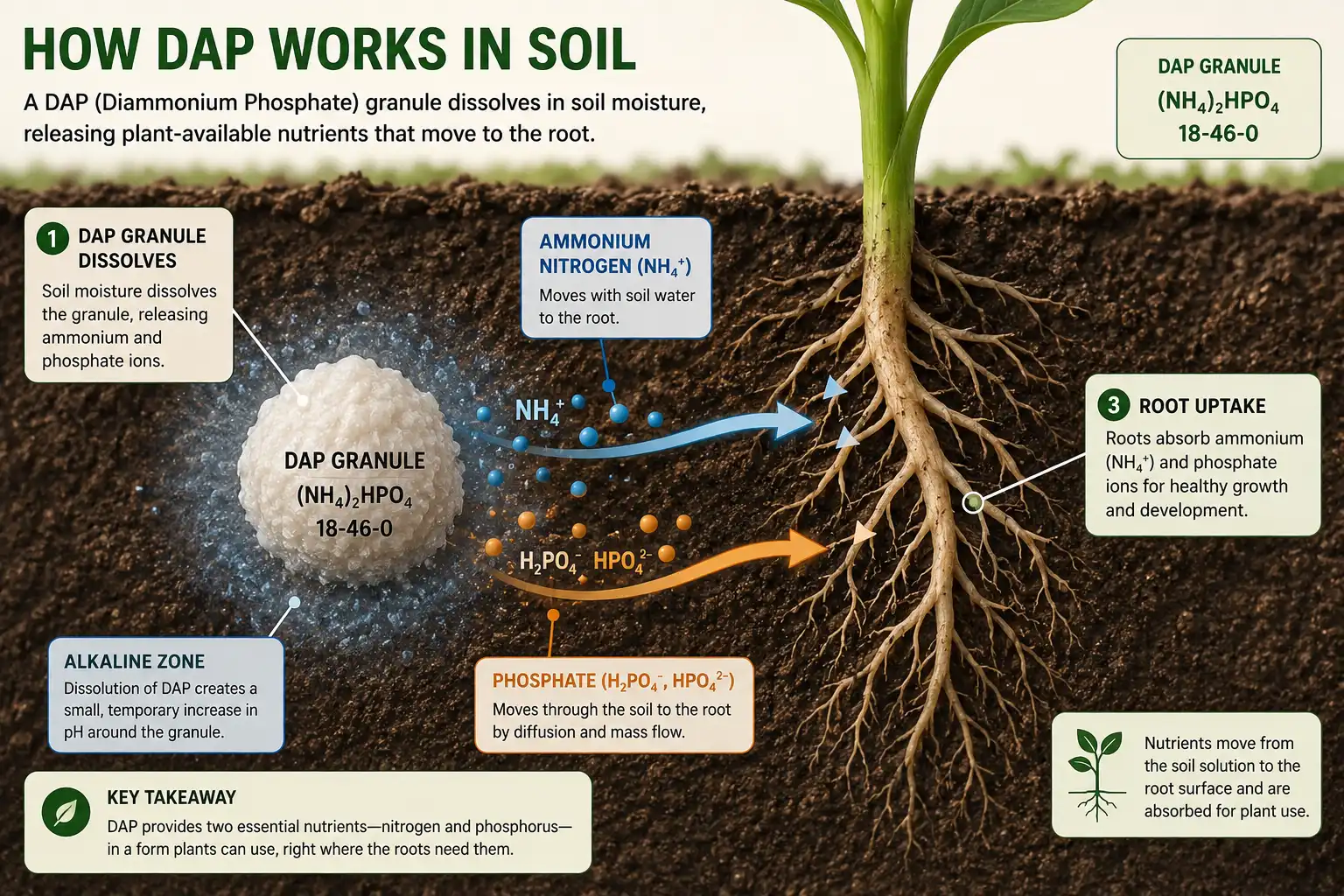
Here is what happens in the ground. Each granule dissolves, then releases ammonium and phosphate right where roots can grab them. Phosphorus fuels root growth, energy transfer, and seed and flower formation. The ammonium adds a small early nitrogen boost.
Common uses include:
- Starter fertilizer banded beside row crops at planting.
- A phosphate application on soils that test low to medium in P.
- Early feeding for fruits and vegetables before bloom set.
- A nitrogen and phosphorus source blended into dry fertilizer programs.
DAP does not carry a crop all season, though. It front-loads phosphorus and a little nitrogen. Then you finish the nitrogen with another source.
When Should You Use DAP Fertilizer?
Use DAP when a soil test shows low to medium phosphorus and the crop needs an early boost. That single reading drives the decision, so start with honest soil testing.
A soil test reports your P level in parts per million. The number ties to a Bray, Mehlich, or Olsen method, depending on your lab. Your extension office then turns it into a P2O5 rate per acre.
DAP also suits acidic soils well. Its granule reaction runs alkaline, so it lifts pH briefly right around each pellet. On high-pH ground, that same trait can drive ammonia loss, so watch it there.
Skip DAP when your P test reads high. Extra phosphate you do not need is money spent for no yield.
How Do You Apply DAP Fertilizer Without Burning Seed?
Keep DAP out of direct seed contact, or hold in-furrow rates low. As it dissolves, DAP releases free ammonia, and that ammonia burns germinating seedlings sitting right on the seed.
K-State Research and Extension sets a clear limit. On 30-inch rows, keep nitrogen plus potassium under 6 to 8 pounds per acre in direct seed contact. Go higher, and salt injury thins the stand. For straight DAP, that lands near 35 to 45 pounds of product per acre in-furrow. Past that, the nitrogen alone crosses the line.
Two safer placements solve it:
- A 2×2 band, 2 to 3 inches to the side and 2 to 3 inches below the seed.
- A surface band, 2 to 3 inches to the side of the row at planting.
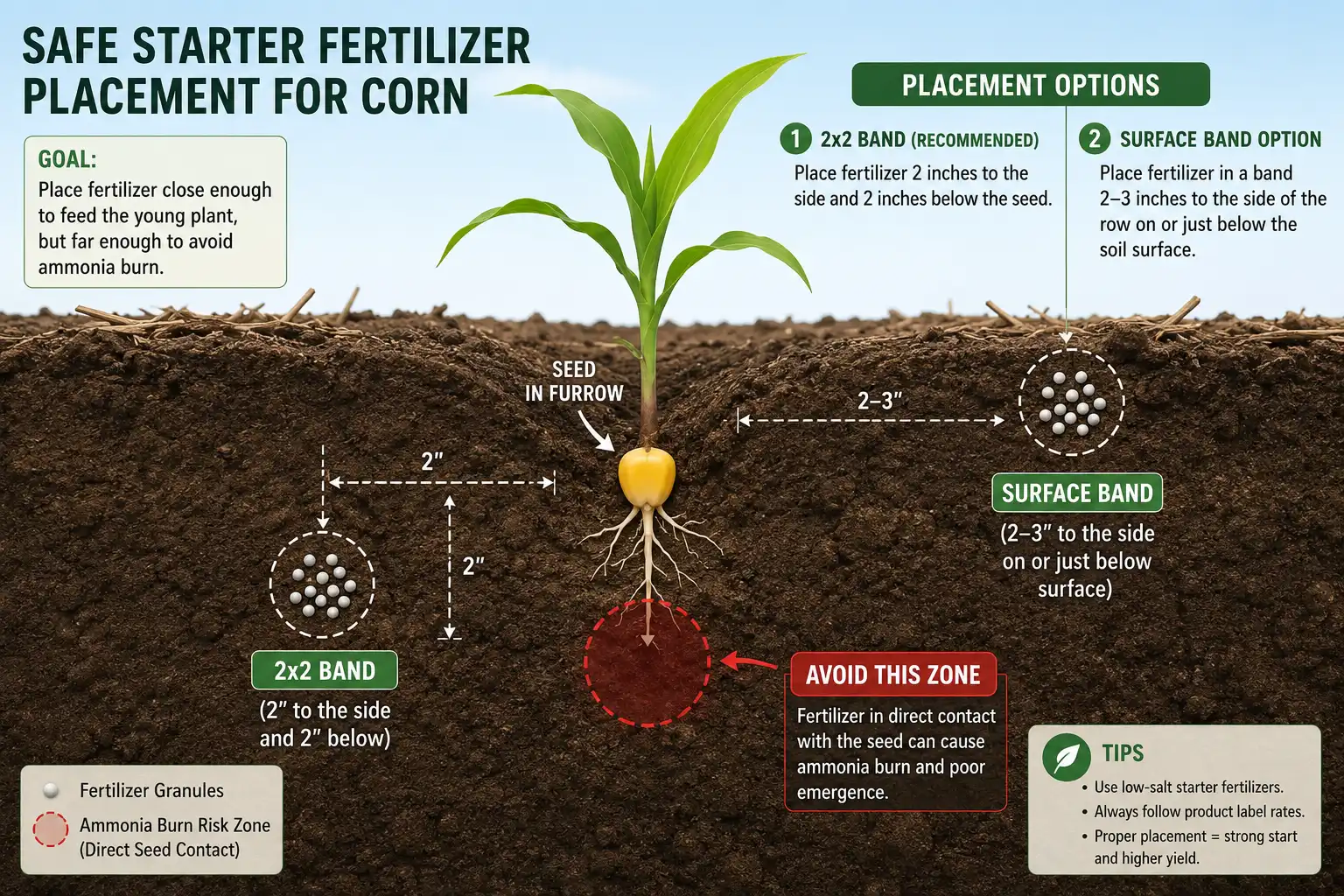
Both put soil between the fertilizer and the seed. With that buffer, you can run higher rates and protect the stand. When setting starter at corn plantingrun a 2×2 and never worry about burn.
One firm rule stays. Never mix DAP with lime or calcium products in the row, because that combination drives off ammonia and wastes nitrogen.
Which Crops Benefit Most From DAP Fertilizer?
Crops that gain most from DAP are the ones planted into cool soil that tests low to medium in phosphorus. That covers most row crops across the Great Plains and Corn Belt when the soil calls for P.
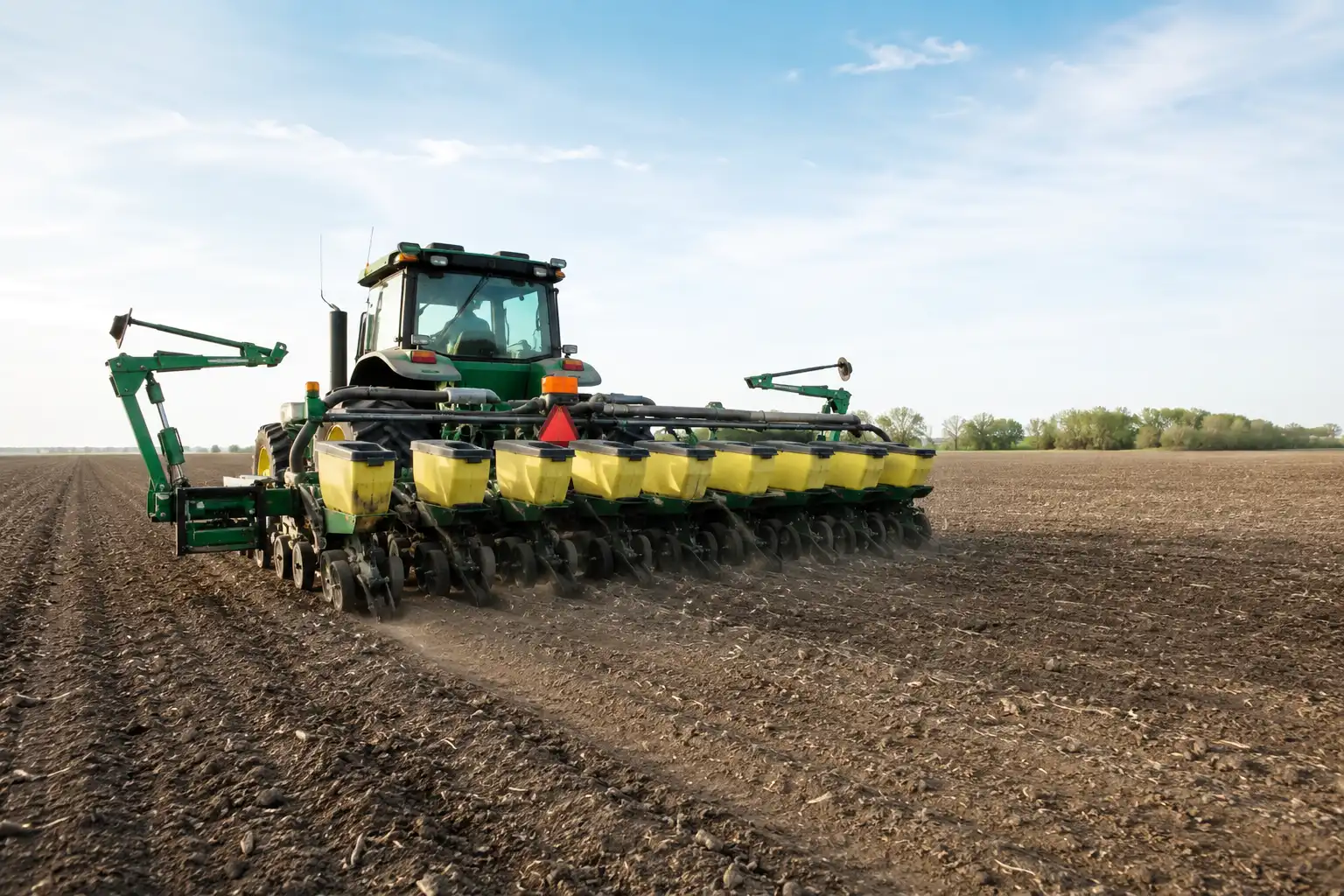
Corn is the classic fit. A phosphate band at planting drives early growth while Kansas soils stay cold. Grain sorghum, or milo, uses a starter band the same way.
Winter wheat takes phosphate well too. A fall band builds root mass before dormancy, a real edge when you are seeding winter wheat.
Soybeans work differently. They fix their own nitrogen through rhizobia, so the 18% N is a bonus, not the reason to apply. Still, on low-P ground, growing soybeans responds to phosphate, and DAP supplies it.
Rice, potatoes, and sugar beets all pull heavy phosphorus, so they use DAP where the test supports it. The pattern holds across the list. No crop needs DAP by name. The soil test and yield goal decide, every time.
DAP vs MAP vs Urea: Which Should You Choose?
Choose DAP for phosphate with some nitrogen, MAP for the safest seed-side starter, and urea for nitrogen only. Each fills a clear role.
MAP, or 11-52-0, holds less nitrogen and more phosphate than DAP. Its reaction zone runs acidic rather than alkaline, so it treats seedlings gentler in close placement. On cold, wet soils or tight in-furrow rigs, MAP is the safer phosphate.
For the phosphorus itself, source barely matters. K-State reports the P response runs about the same for DAP or MAP. So seed safety and the nitrogen along for the ride are the real difference.
Urea, at 46-0-0, is a different tool. It brings straight nitrogen and no phosphate. When your P already tests high and you need only N, urea (46-0-0) costs less per pound than DAP.
| Product | Grade | Best for | Seed safety |
|---|---|---|---|
| DAP | 18-46-0 | Phosphate plus starter N, acidic soils | Keep out of direct seed contact |
| MAP | 11-52-0 | Safest phosphate near the seed | Gentler in-furrow |
| Urea | 46-0-0 | Nitrogen only, high-P soils | Never in-furrow |
How Much DAP Do You Need Per Acre?
Match your DAP rate to the P2O5 your soil test recommends, then subtract the nitrogen it brings. Start with phosphate, since that is what you buy DAP for.
Every 100 pounds of DAP supplies 18 pounds of nitrogen and 46 pounds of P2O5. So a common 46-pound P2O5 recommendation means 100 pounds of product per acre. That also lays down 18 pounds of nitrogen toward your total.
Run the math from the soil test:
- Take the P2O5 rate your lab recommends.
- Divide by 0.46 for pounds of DAP per acre.
- Multiply that rate by 0.18 to see the nitrogen you add.
For a full nitrogen crop like corn, treat DAP nitrogen as a down payment. Then finish the rest with a separate N source in-season.
What Does DAP Fertilizer Cost?
The cost of DAP fertilizer moves with global markets, so no fixed number stays right for long. Wholesale DAP sells by the ton, and retail sells by the bag. Three inputs drive the price: phosphate rock, ammonia (tied to natural gas), and world supply and demand. When any of those tighten, DAP climbs.
For a working comparison, farmers price cost per pound of nutrient, not the sticker on the bag. DAP carries 46 pounds of P2O5 and 18 pounds of N per 100 pounds. So its cost per unit of phosphate usually beats low-analysis blends.
Bulk versus bagged is the biggest swing. Small resealable pouches for home gardens run far more per pound than bulk DAP from a co-op. If you farm acres, buy by the ton. If you tend a garden, the small sizes still cost little per plant.
Prices change week to week. Check current DAP quotes through your co-op or ag retailer before you budget. The USDA and land-grant price reports help too.
4 Best DAP Fertilizer Options for Home Gardens and Small Plots
For field-scale acres, you buy DAP by the ton from a co-op. For a garden or small plot, bagged 18-46-0 is easier to handle. The small sizes each fit a different job. The water-soluble Go Garden 400g suits quick feeding. The Cz Garden 4-pound pouch is the Made in USA starter. The Go Garden 1950g covers bigger gardens. The 12-pound Sunshine Harvest shaker jug fits larger plots. All four carry true 18-46-0 DAP.
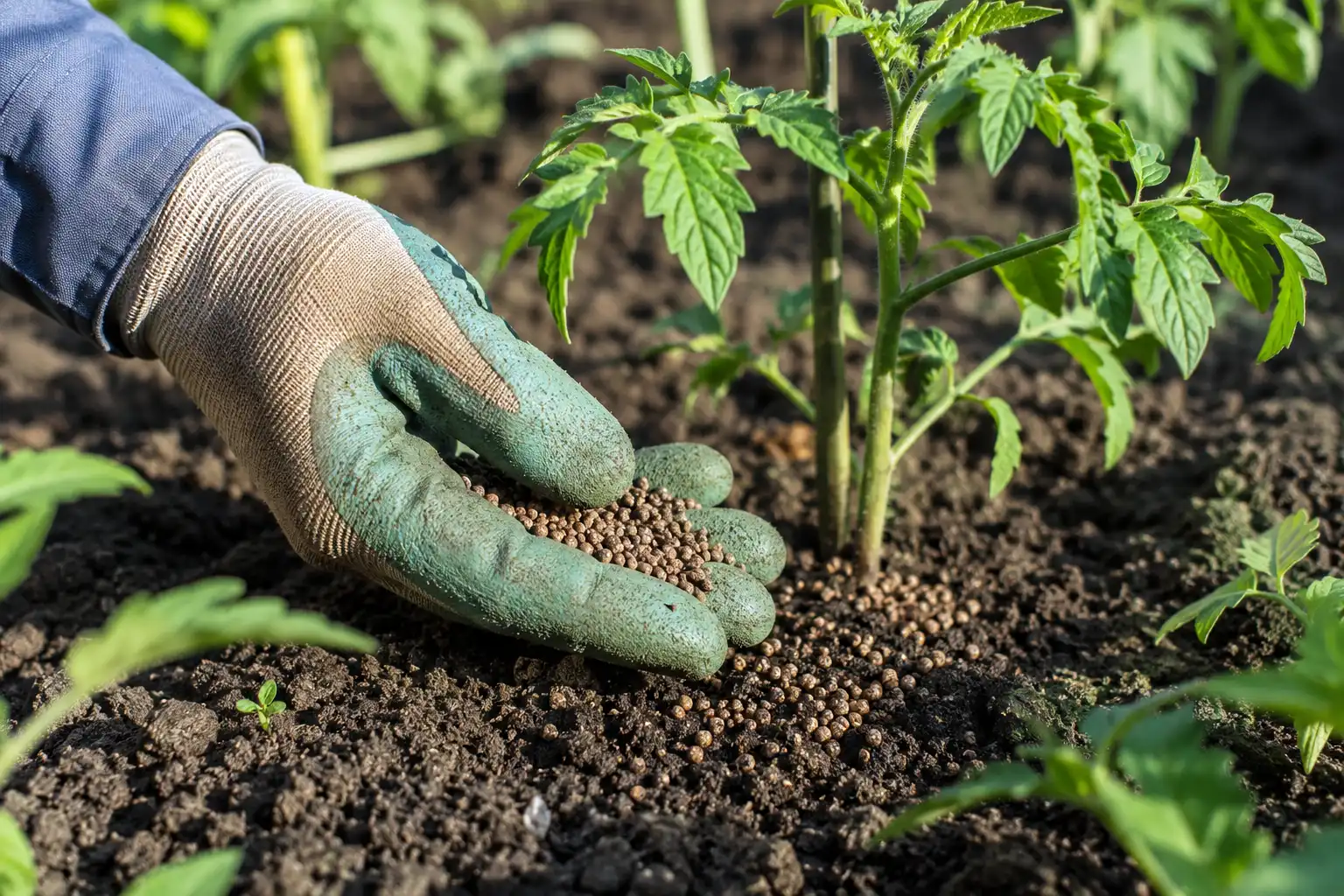
1. Go Garden DAP Fertilizer (400g, Water-Soluble)
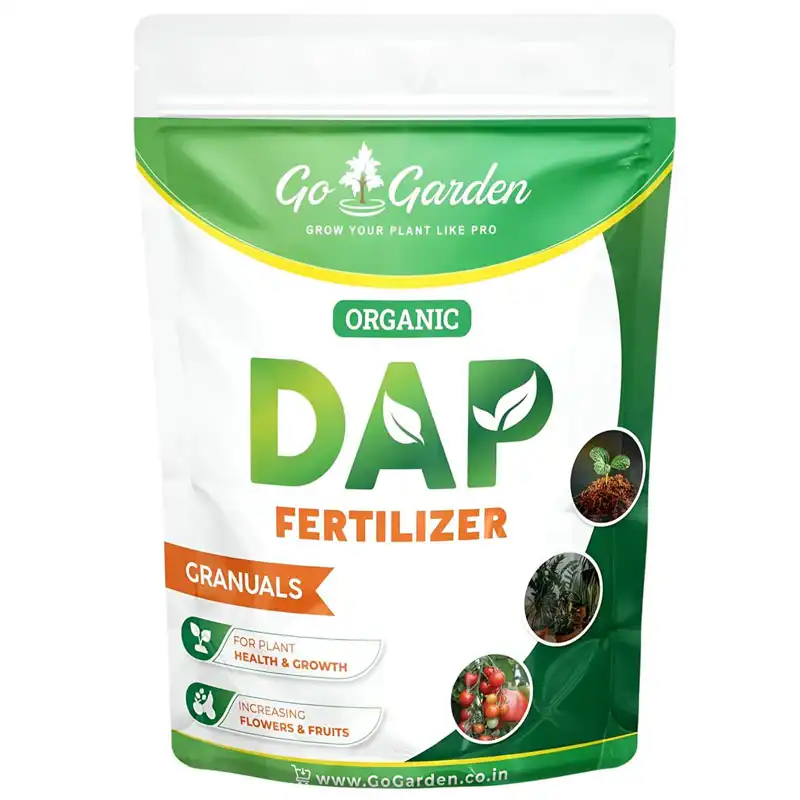
The 400-gram Go Garden product is a small, water-soluble granular DAP aimed at home and container gardens. The brand states the granules dissolve fully for soil drenching or foliar feeding, which allows fast nutrient uptake. Like all 18-46-0 formulas, it supplies nitrogen in ammonium form alongside highly soluble phosphate.
Listed uses cover indoor and outdoor plants, flowers, vegetables, ornamentals, and lawns, and the maker offers a subscription refill. This starter size fits balcony growers and small vegetable patches rather than field-scale use, where DAP is bought in bulk. Reported benefits include stronger roots and heavier flowering.
2. Cz Garden Supply 18-46-0 DAP Fertilizer (4 lb, Made in USA)
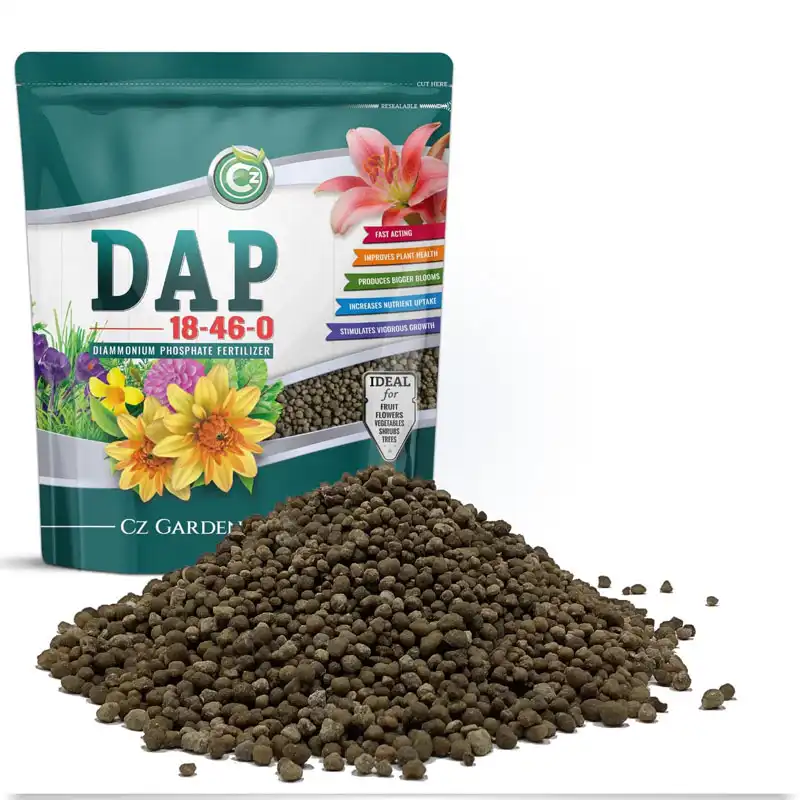
Cz Garden Supply’s 4-pound pouch is a home-garden size of 18-46-0 DAP. It is the only Made in USA option in this group. The brand describes it as high-purity diammonium phosphate for flowers, vegetables, shrubs, trees, lawns, and fruit. Marketed benefits center on vigorous growth, larger and more numerous blooms, and better crop quality and yield.
The granules ship in a heavy-duty resealable pouch that stores well between uses. Instructions call for measuring by plant size, mixing with soil or water, and watering in. As a compact starter, it suits small plots and gardeners trying DAP before buying larger quantities.
3. Go Garden Organic Plant Food (1950g, Bulk)
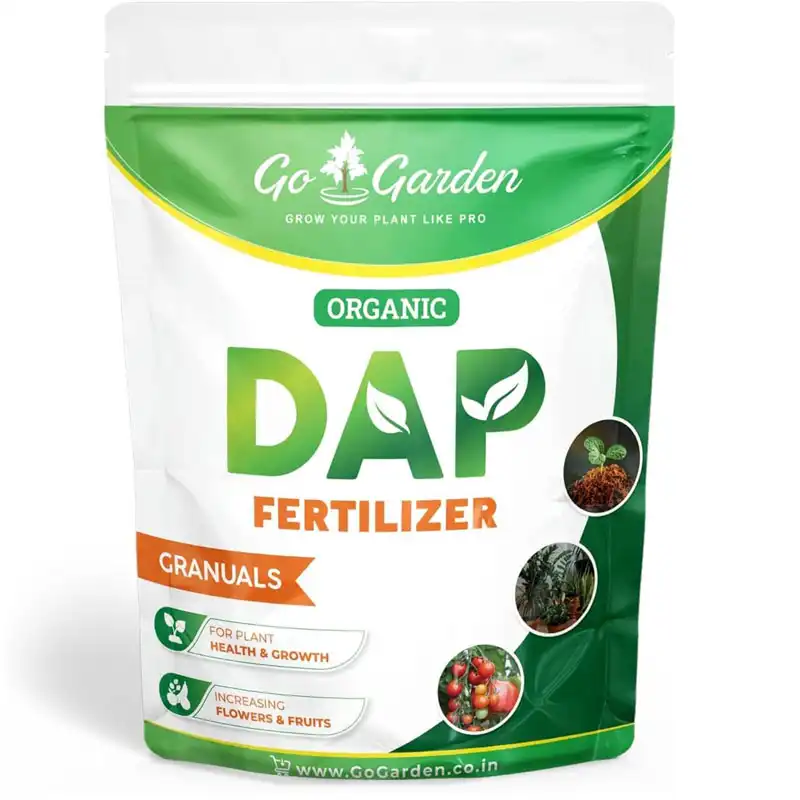
Go Garden’s 1950-gram granular product carries the 18-46-0 analysis of true diammonium phosphate. The larger pack suits gardeners covering more ground. The brand markets it for fruits, vegetables, and general growth. The 46 percent phosphate targets flowering, fruiting, and root and seed formation.
The 18 percent nitrogen supports early vegetative growth. One point is worth noting. It is sold under an “organic plant food” label. Even so, DAP is a manufactured mineral fertilizer, not a certified organic input. The granular form works for broadcasting or banding. Buyers report larger flowers, fruits, and vegetables, plus greener foliage.
4. Bare Ground Solutions Sunshine Harvest DAP (12 lb)
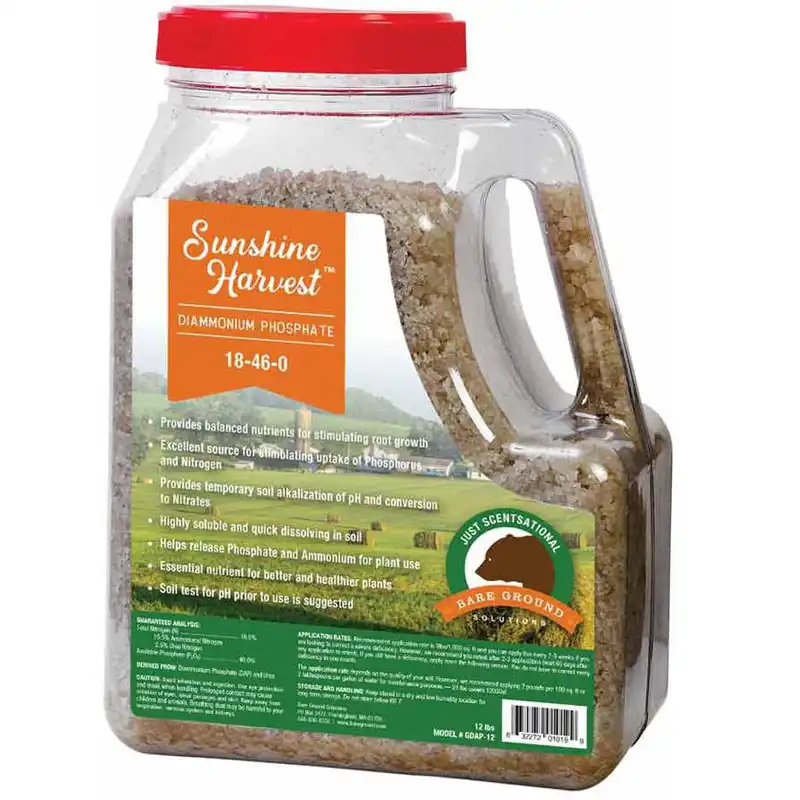
Bare Ground Solutions’ Sunshine Harvest is a 12-pound granular DAP in a shaker jug. The size sits between small pouches and bulk bags, so it fits larger gardens and small plots. It carries the standard 18-46-0 analysis and, the maker notes, dissolves quickly to release phosphate and ammonium for plant uptake.
The label describes temporary soil alkalizing that aids nitrate conversion, which matches DAP’s known reaction chemistry. Suggested rates run about 275 pounds per acre for large areas. For gardens, that is 10.1 ounces per 100 square feet. Notably, the manufacturer advises a soil test before application and cautions against use near water sources.
Final Thoughts
On corn ground, DAP works as a starter, not a blanket spread. Soil testing comes first, banding it 2×2 at corn planting, letting phosphate work on cold spring roots. Where phosphorus tests high, it gets skipped, leaning on nitrogen alone. Match the product to the test and the crop, and DAP earns its keep. Guess at it, and you waste money or burn seed.