10-10-10 Fertilizer: Uses, Rates, and Top Picks in 2026
Feeding a garden or field gets confusing when every bag lists a different set of numbers. A bag of 10-10-10 fertilizer keeps things simple with one balanced formula for most crops, lawns, and trees.
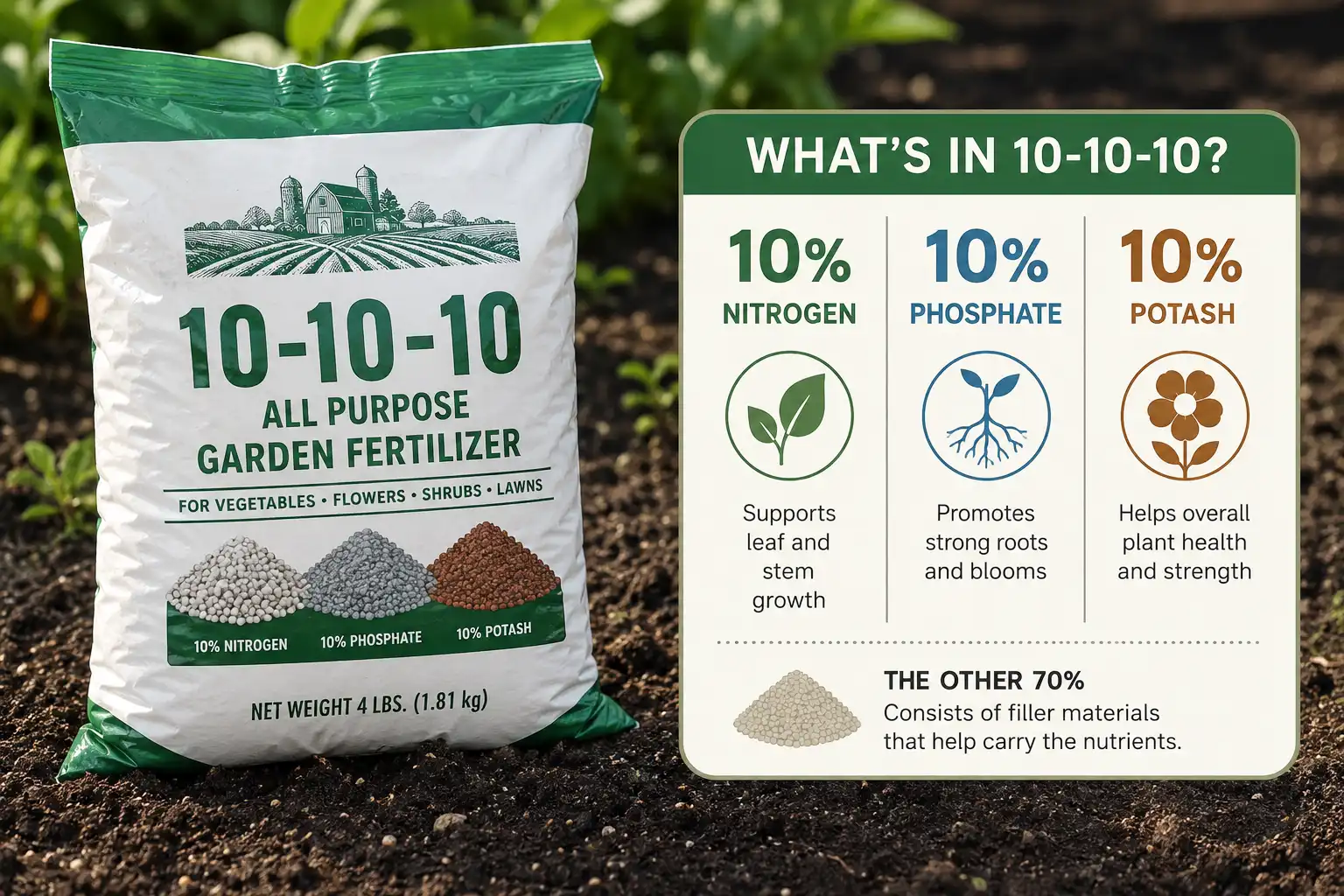
10-10-10 fertilizer is a balanced, all-purpose blend of 10% nitrogen, 10% phosphate, and 10% potash. It feeds vegetables, lawns, trees, and flowers, which makes it a dependable choice when a soil test shows even nutrient needs.
What Is 10-10-10 Fertilizer?
10-10-10 fertilizer is a balanced, all-purpose plant food that carries equal parts of the three main nutrients: 10% nitrogen, 10% phosphate, and 10% potash by weight. Those matching numbers make up its NPK ratio, which is why it’s also called triple 10.
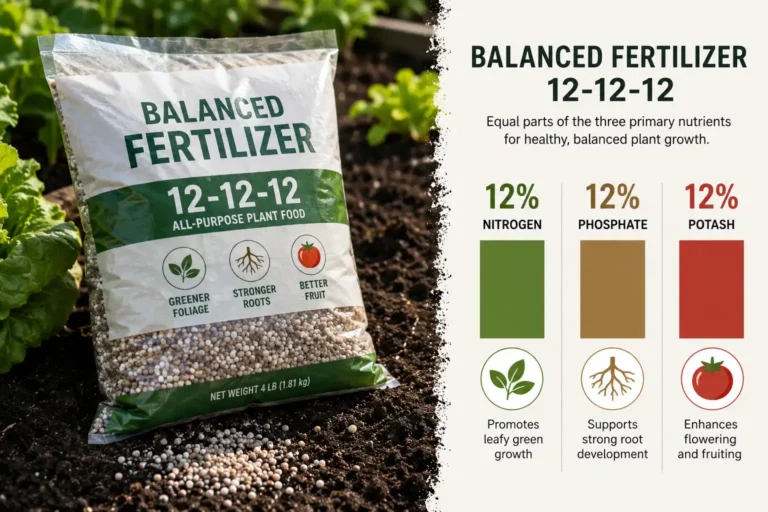
It counts as a “complete” fertilizer because it holds all three primary nutrients. It is “balanced” because those nutrients sit in a 1:1:1 ratio. You will find it as granules, pellets, or a liquid concentrate, and most blends are synthetic. Because no single nutrient dominates, one bag feeds a wide mix of plants. It will not push one kind of growth too hard.
Learn more: What Is 8-8-8 Fertilizer and How to Use It Right
What Is 10-10-10 Fertilizer Good For?
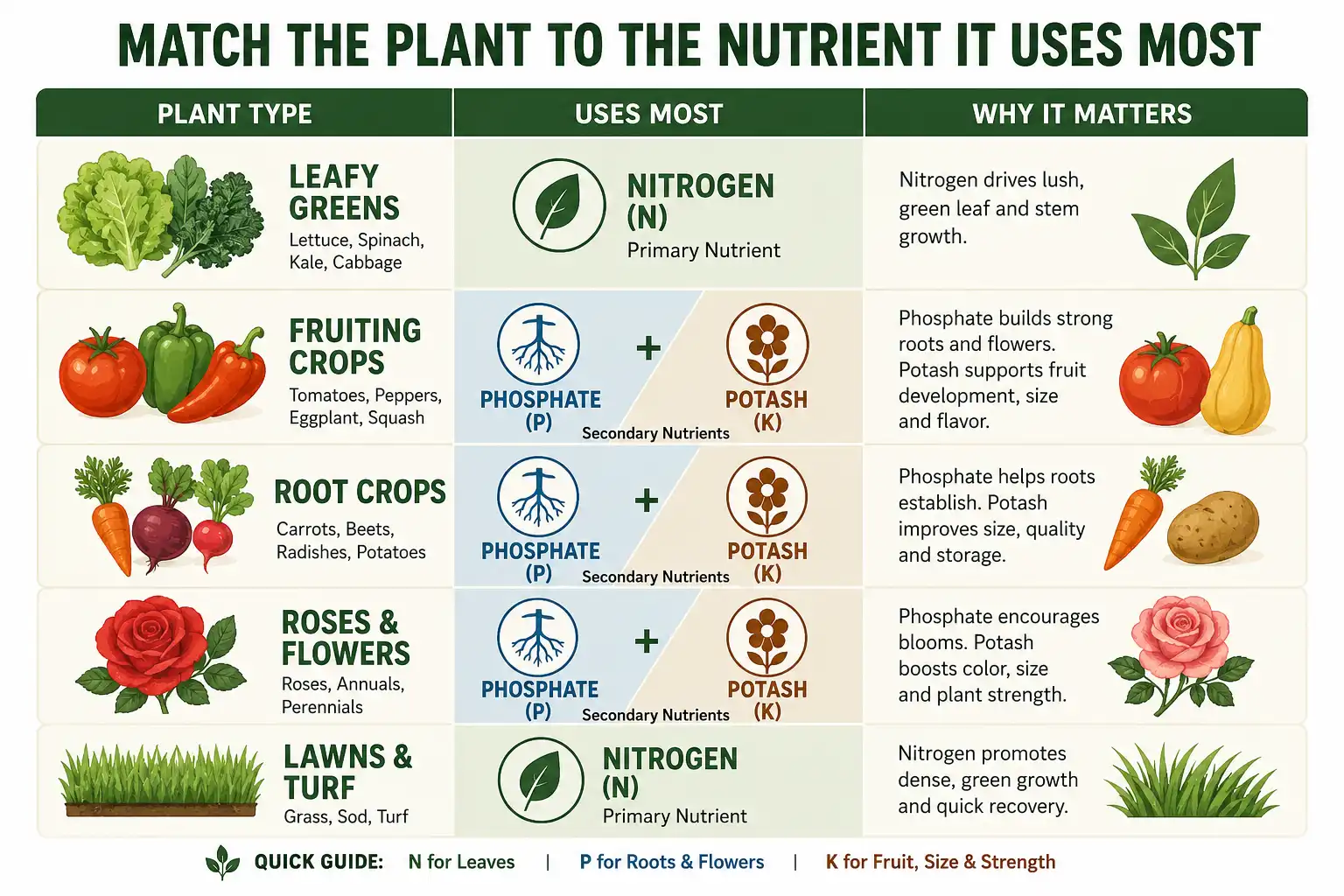
10-10-10 fertilizer is good for feeding a broad range of plants at once: vegetables, lawns, fruit and shade trees, roses, shrubs, and flower beds. The even ratio covers the basic needs of most plants. So it works as a reliable default when you feed several types together.
Here is where each use lands:
- Vegetables. Leafy crops like lettuce, spinach, and kale run on the nitrogen. Fruiting crops like tomatoes and peppers lean on the phosphate and potash for blooms and yield. Go light once fruit sets, though, since extra nitrogen grows leaves at the expense of fruit.
- Lawns. Turf greens up on a balanced feed, and the potassium helps grass handle summer heat and drought stress.
- Trees, shrubs, and roses. These take it as steady, all-around nutrition through the season.
- New beds. It works as a starter feed when you prep ground for planting.
Where is it not the best pick? Acid-loving plants like blueberries and azaleas want a specialized acidic feed, not a balanced blend. If a soil test shows your phosphorus is already high, skip the triple-10 and choose a low-phosphorus product instead. A blanket feed is convenient, but matching the feed to the plant always beats guessing. If you are weighing your options, our comparison of organic and synthetic feeds lays out the trade-offs.
What the Numbers on 10-10-10 Fertilizer Mean
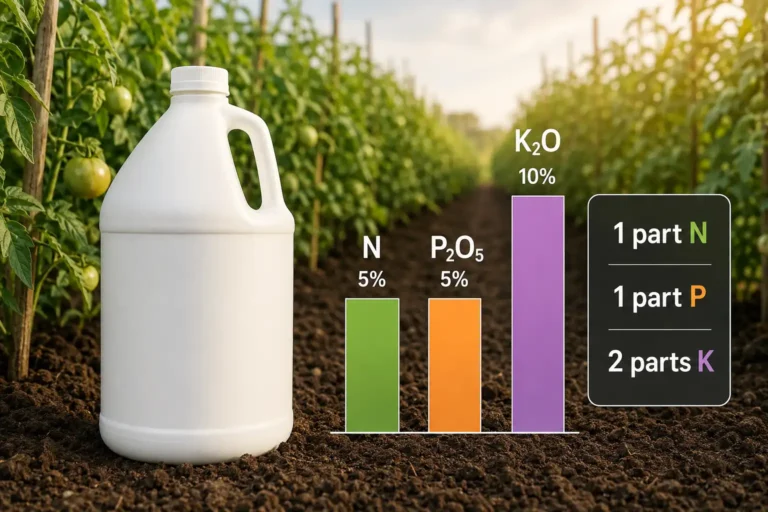
The three numbers show the percentage by weight of nitrogen, phosphate, and potash in the bag. So a 10-10-10 blend holds 10% nitrogen (N), 10% phosphate (P2O5), and 10% potash (K2O).
Here is the simple math. In a 50-pound bag, you get 5 pounds of nitrogen, 5 pounds of phosphate, and 5 pounds of potash. The other 35 pounds is a carrier or filler, often ground limestone or sand. It helps you spread the nutrients evenly.
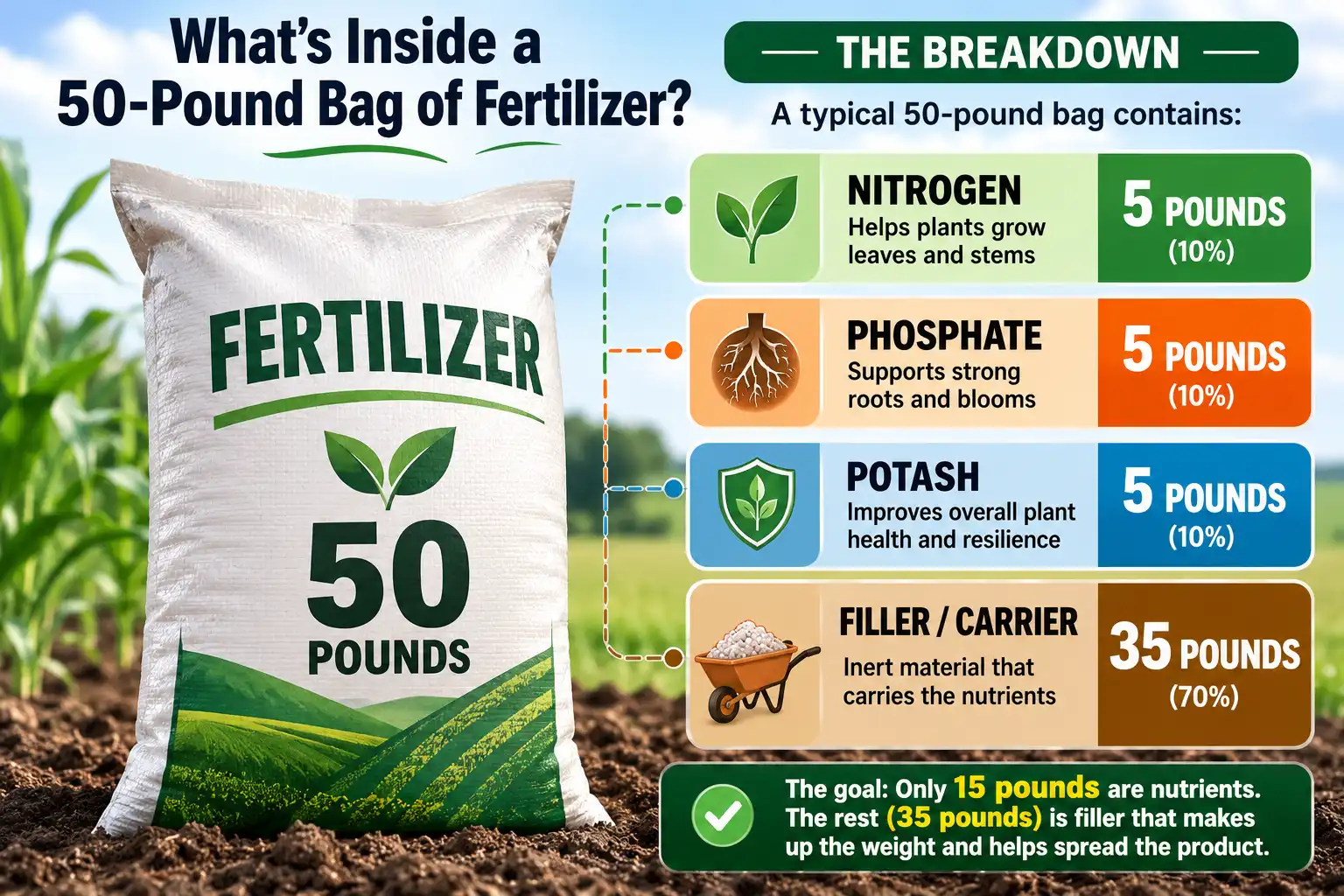
One detail trips up a lot of folks. Phosphate and potash are oxide forms, not pure phosphorus and potassium. In real terms, that 10% phosphate is about 4.4% actual phosphorus, and the 10% potash is about 8.3% actual potassium. That gap matters when a soil test reports elemental numbers. For the full rundown on how these ratios work, our guide on reading NPK ratios breaks it down.
Each number does a specific job. Nitrogen drives green, leafy growth. Phosphate feeds roots, blooms, and fruit set. Potash builds sturdier cells and better stress tolerance.
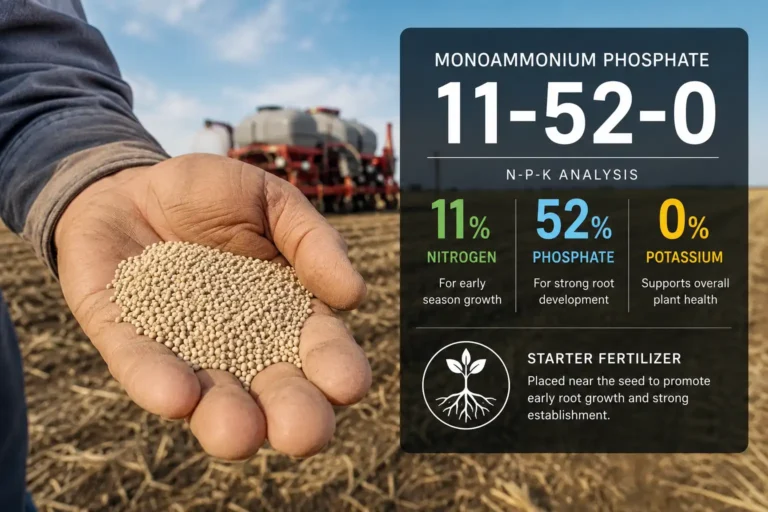
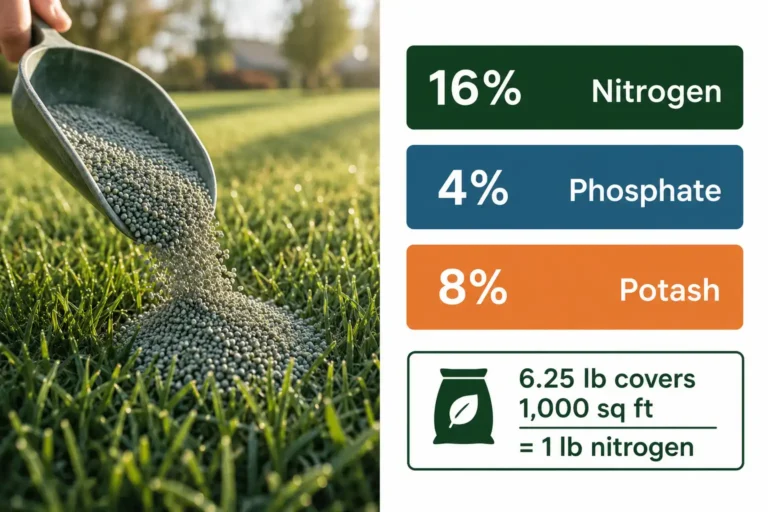
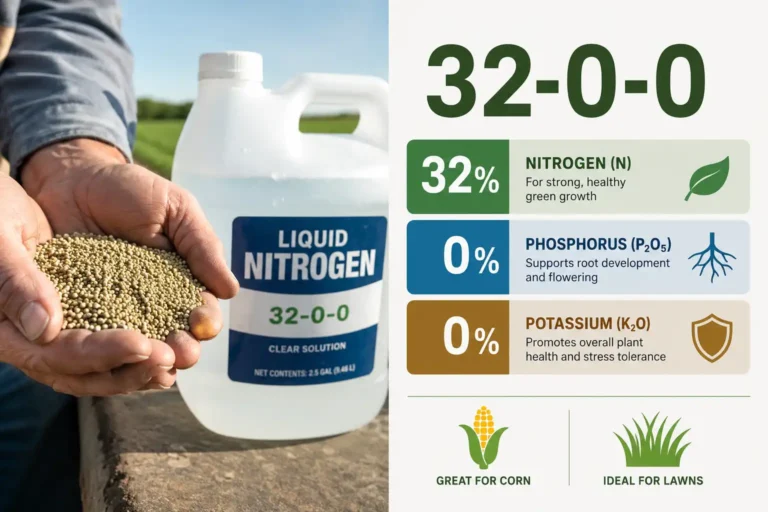
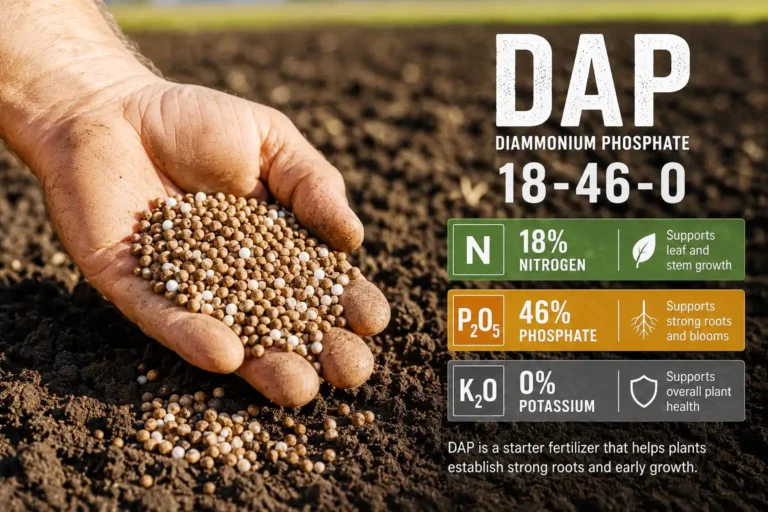
Not every fertilizer is complete or balanced. A bag of urea reads 46-0-0, so it feeds nitrogen alone. That is an incomplete fertilizer, and it fits when your soil already holds enough phosphorus and potassium. A blend like 16-4-8 is complete but unbalanced, since it leans heavy on nitrogen. The even setup of a triple-10 makes it the safe default when you feed a mix of plants at once.
When Should You Apply 10-10-10 Fertilizer?
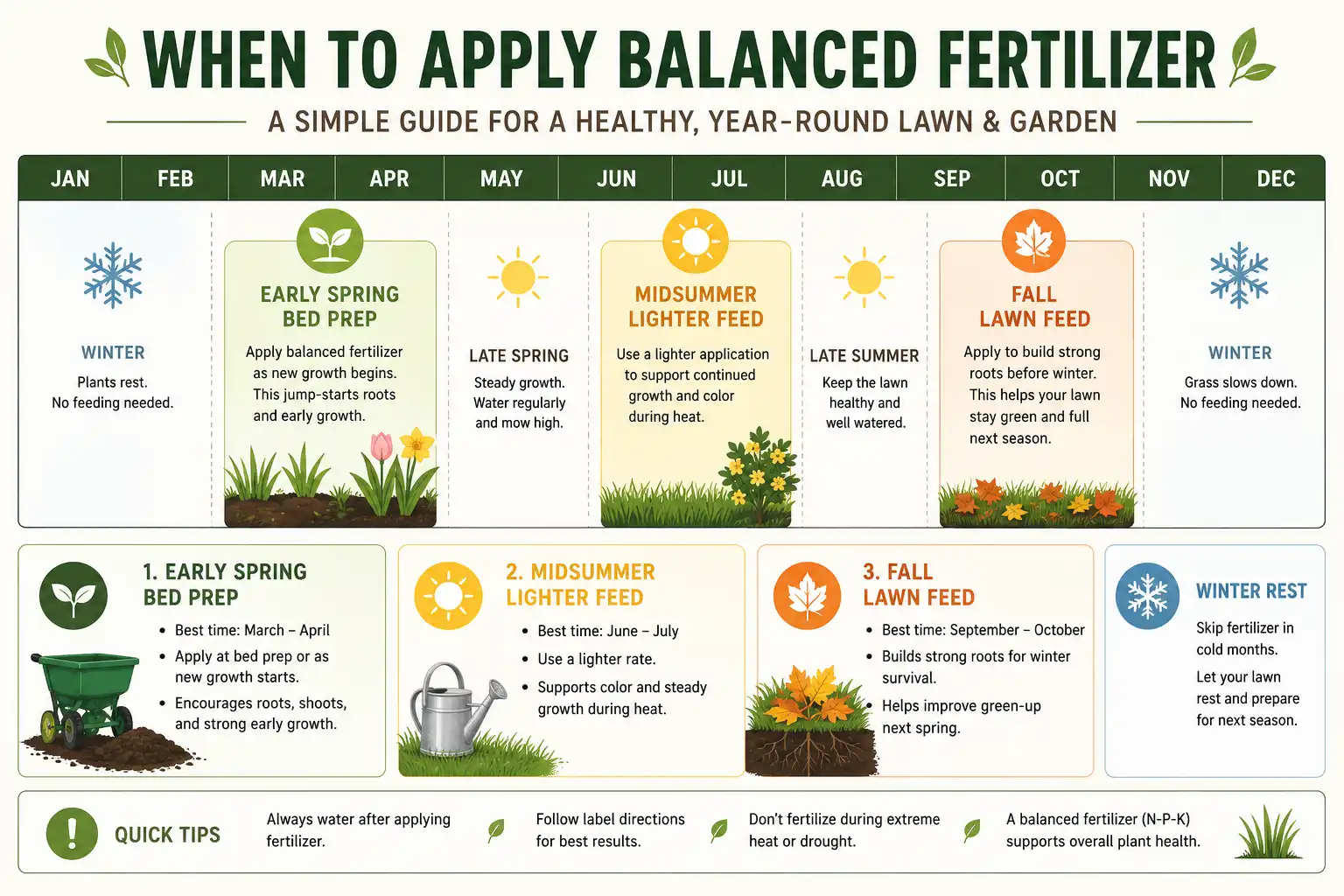
Apply it in early spring at bed prep, about two to three weeks before your last frost. The nutrients then settle in before you plant, and that first feed drives strong early growth.
A second, lighter feed helps in midsummer for perennials and heavy fruiting or flowering plants during their peak. Many lawns also take a fall feed to build roots before winter. Last frost lands in mid to late April, so spread in early to mid April.
Always feed off a soil test, not a hunch. If the test shows your phosphorus is already high, skip the balanced bag and pick a low-phosphorus blend instead.
How to Apply 10-10-10 Fertilizer
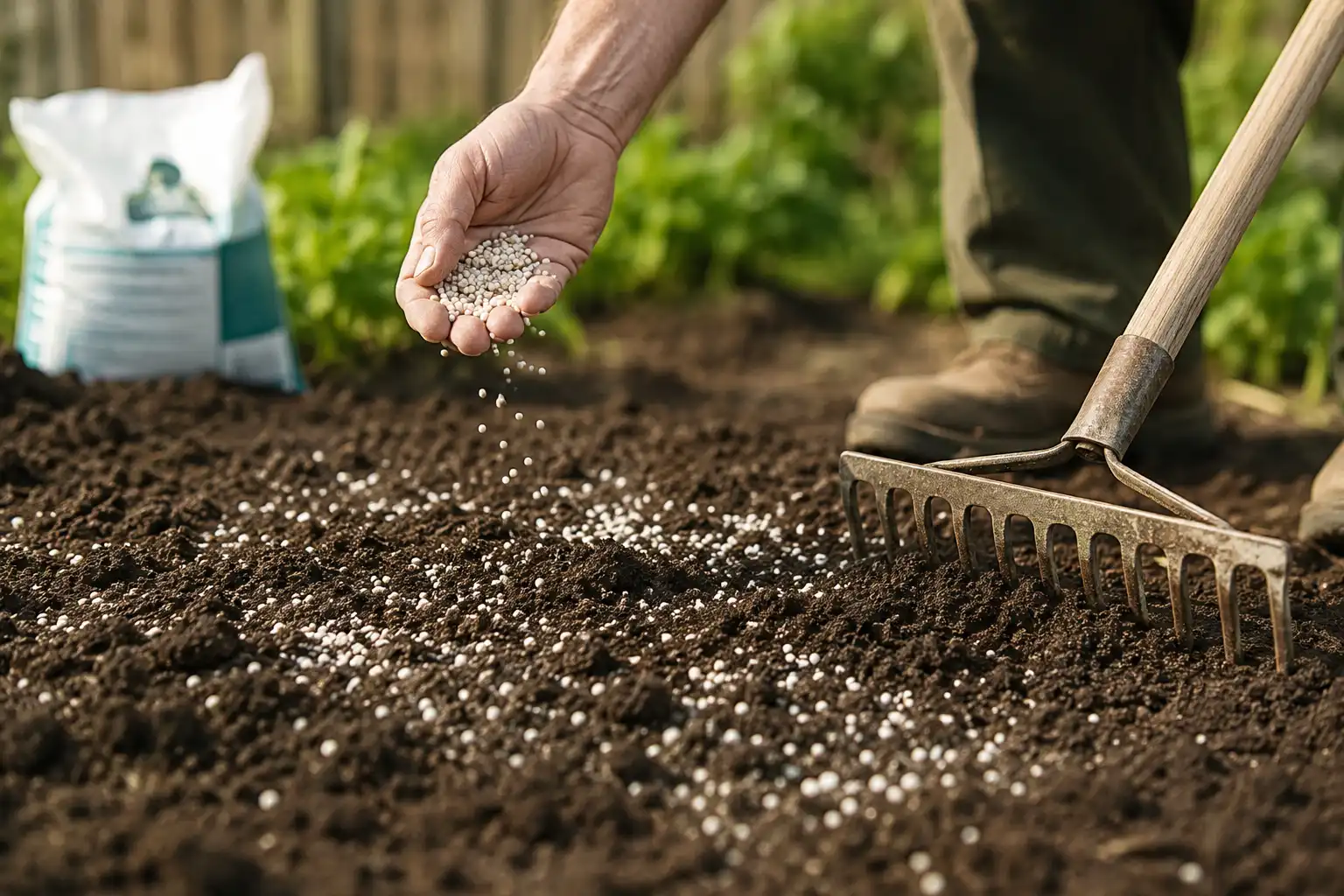
Broadcast it evenly, work it into the top few inches of soil, and water it in. That is the whole routine, and doing each step well is what gets results.
Here is how to run it:
- Test first. Pull a soil sample and match the rate to what the report calls for. A reliable soil test kit makes this quick at home.
- Measure your area in square feet, or count trunk diameter for trees.
- Weigh out the rate from the chart below. Do not eyeball it.
- Spread evenly. For a lawn or a big plot, a drop spreader lays down clean, even lines.
- Work the granules into the top 2 to 4 inches of soil.
- Water thoroughly so the nutrients move down to the roots.
Skip the water step and you risk salt burn on stems and leaves. One note for field growers: bagged triple-10 is really a home and small-plot product. At field scale, most of us feed off soil-test numbers in pounds of nitrogen, phosphate, and potash per acre. We often use blended or variable-rate fertilizer rather than a balanced bag. Those per-acre numbers are covered in this post on fertilizer rates for corn.
10-10-10 Fertilizer Application Rates
Match your rate to a soil test and the product label first. These ranges give you a solid starting point for common uses.
| Use | Starting rate | Timing |
|---|---|---|
| Vegetable garden | 1 to 2 pounds per 100 sq ft | At bed prep, repeat every 6 to 8 weeks as needed |
| Lawns | About 10 pounds per 1,000 sq ft | Split between spring and fall |
| Fruit and shade trees | About 1 pound per inch of trunk diameter | 2 to 3 times per year |
| Flower beds and roses | About 1 cup per 25 sq ft | Every 4 to 6 weeks in season |
Lighter is safer than heavy. You can always add a second feed, but you cannot pull nutrients back out of the soil.
Granular vs Liquid 10-10-10 Fertilizer
Granular feeds slowly and lasts for weeks, while liquid feeds fast and flushes out sooner. Your choice comes down to speed versus staying power.
Granular is the base feed. You broadcast it, work it in, and it releases over time. Some blends are slow-release and run up to 8 weeks, so you apply less often. Liquid is the fast option. You mix it with water, and plants take it up almost right away. That suits container plants or a quick fix on a hungry crop. A hose-end sprayer makes liquid feeding simple across a bed, and you reapply every one to two weeks.
Downsides and Cautions
The biggest risk is over-applying, and phosphate is the worst offender. Too much builds up in the soil and can lock out micronutrients like iron and zinc.
Excess phosphate also runs off into ponds and streams, which is a real problem across farm country. Too much nitrogen causes its own trouble, pushing lush leaves while cutting flowers and fruit. Over-application of any kind can salt-burn roots and foliage, especially without enough water.
A triple-10 is also not a fix for one specific shortage. If your soil is short on just potassium, a targeted blend does the job better and cheaper. Test your soil, read the report, and feed what the crop actually needs.
Best 10-10-10 Fertilizers We Recommend
Keep a few balanced blends on the shelf for different jobs. For most home gardens, the CountryMax pellet or the slow-release Gardenwise bag handles the season. When trees and roses need trace elements, reach for Southern Ag. For a fast feed or container plants, the Triple 10 liquid does the work. The Cz Garden pouch is a common grab for small raised beds.
1. CountryMax 10-10-10 General All Purpose
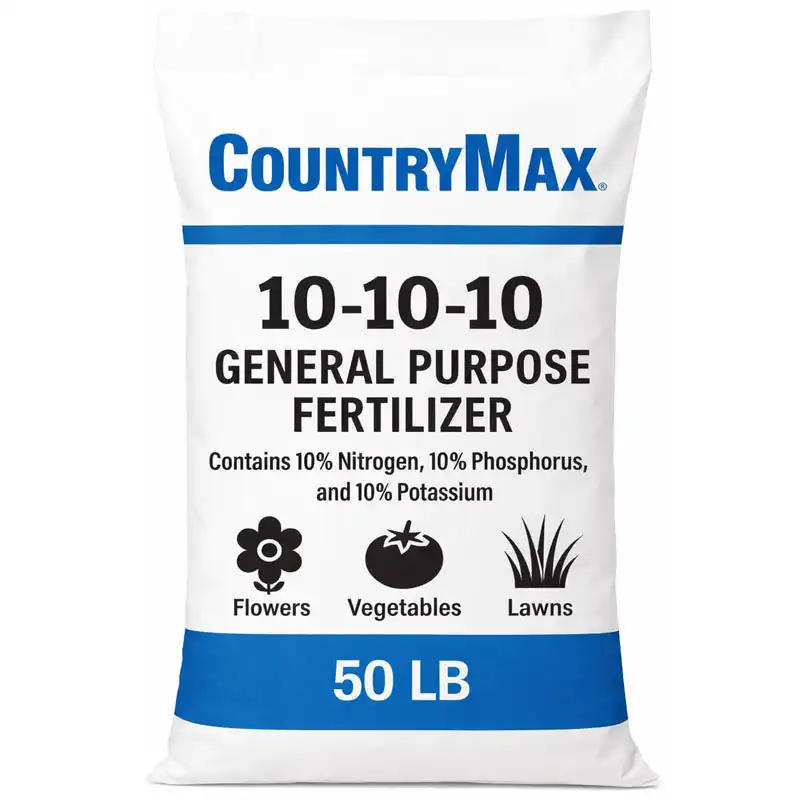
This 50-pound bag of balanced pellets is an everyday pick for larger beds and small plots. It broadcasts clean, works into the soil without fuss, and feeds vegetables, fruit trees, and lawn grass off one bag. The even 1:1:1 ratio keeps dosing simple, and the price per pound is hard to beat. For pre-plant prep, work in about 2 pounds per 100 square feet. The one catch is the 50-pound size, which is more than a single raised bed needs.
PROS
- Strong value per pound
- Clean-spreading pellets
- Pre-plant or top-dress
- Safe for edibles
CONS
- No added micronutrients
2. Southern Ag All Purpose Granular
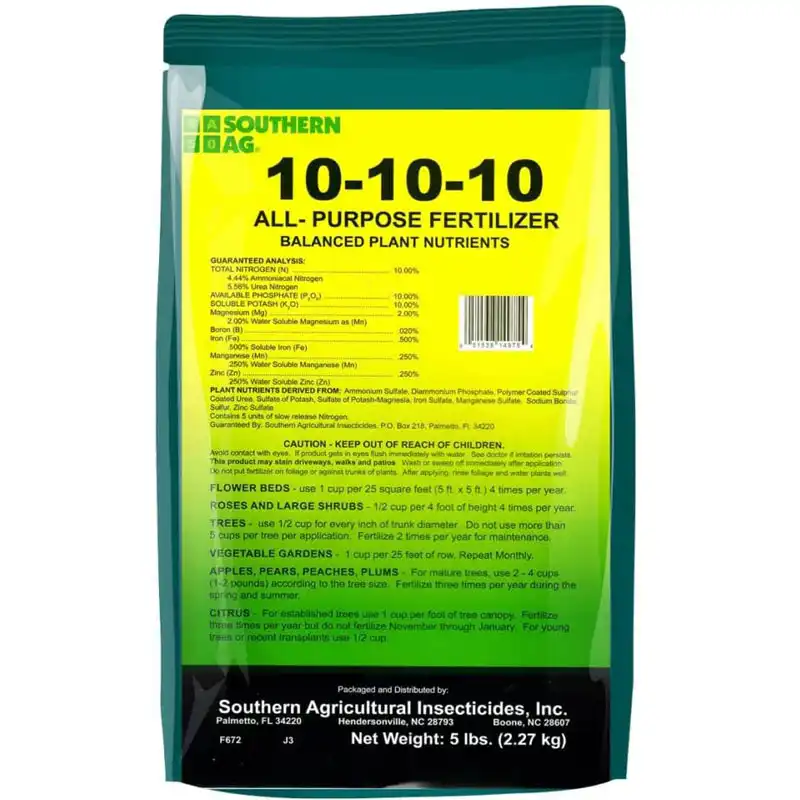
This 5-pound bag stands out because it adds five micronutrients on top of the balanced base: magnesium, boron, iron, manganese, and zinc. That mix matters for fruit trees, roses, and mixed flower beds, where trace elements drive color and healthy new growth. The uniform granules spread evenly and green plants up fast. It is a small bag, so it costs more per pound and suits targeted feeding rather than large plots. For citrus, hold off on feeding from November through January.
PROS
- Adds five micronutrients
- Uniform, even granules
- Greens up quickly
- Good for fruit trees
CONS
- Higher cost per pound
3. Gardenwise 10 10 10 All Purpose Granular Garden Fertilizer
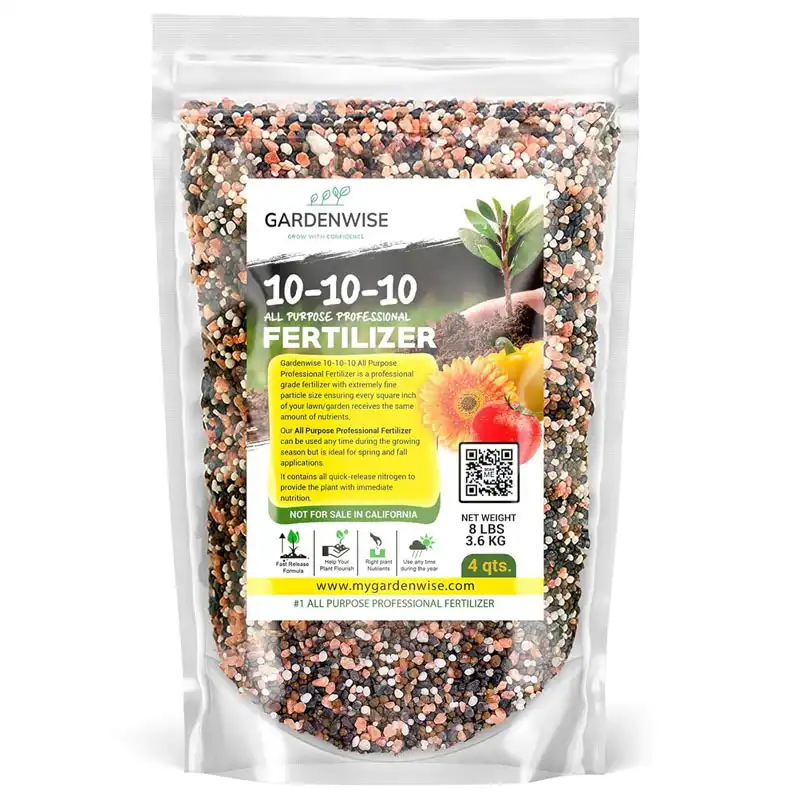
This 8-pound bag pairs a quick shot of nitrogen with slow-release feeding that runs up to 8 weeks, so you spread it less often. It works across vegetables, flowers, shrubs, evergreens, and lawns, which makes it flexible for a mixed yard. The fine granules spread evenly and water in easily. For vegetables, use about 1 to 1.5 pounds per 100 square feet every 6 to 8 weeks. The tradeoff is cost, since it runs higher per pound and empties fast on a large garden.
PROS
- Feeds up to 8 weeks
- Fine, even granules
- Quick and slow nitrogen
- Broad plant list
CONS
- Higher cost per pound
4. Triple 10 All Purpose Liquid
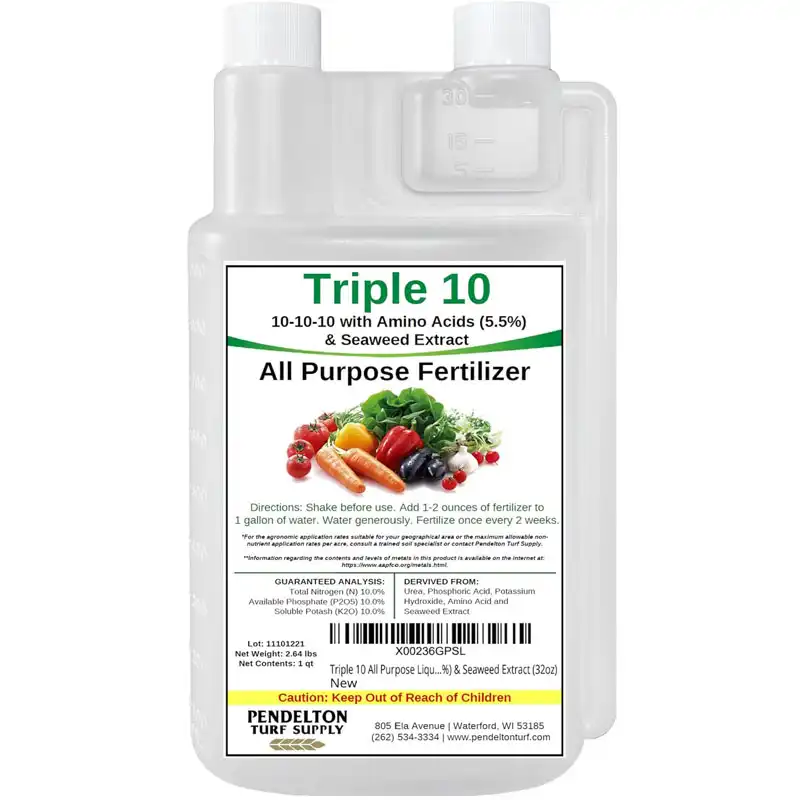
This 32-ounce concentrate makes up to 32 gallons of feed and adds 5.5% amino acids plus seaweed extract for extra vigor. Liquid works fast, so it shines on container plants and quick corrections when a crop looks hungry. Mix 1 to 2 ounces per gallon and reapply every one to two weeks. The squeeze bottle measures each dose, which cuts guesswork. One heads-up: it carries a strong fish smell, so use it outdoors and store it away from freezing.
PROS
- Makes up to 32 gallons
- Kelp and amino acids
- Fast plant uptake
- Easy measure bottle
CONS
- Strong fish odor
- Frequent reapplication
5. Cz Garden Supply All Purpose Fertilizer
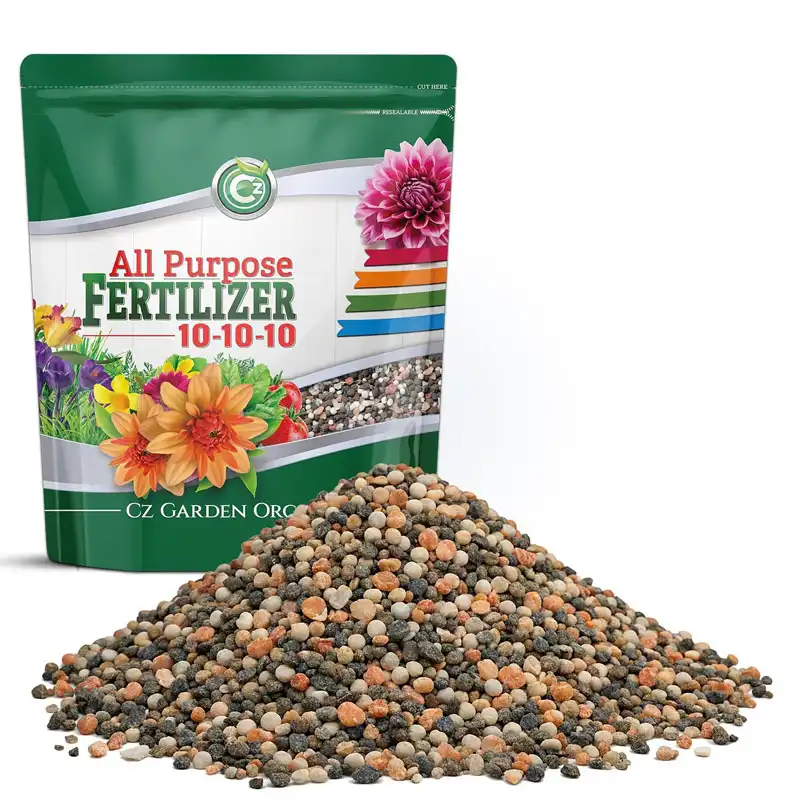
This 4-pound resealable pouch is made in the USA and adds 2% iron plus micronutrients, which helps push deep green color. It is an easy grab for small gardens, raised beds, herbs, and potted plants. You spread it evenly and water it in. The resealable pouch keeps leftovers dry between uses, and it also comes in an 8-pound size for bigger jobs. It is a newer product, so public feedback is still thin next to the older brands here.
PROS
- Made in the USA
- Adds iron and micros
- Resealable pouch
- Simple to apply
CONS
- At $15.99 for 4 lbs, the cost per pound is higher than some bulk alternatives (like the 50 lb CountryMax bag), making it less budget-friendly for large-scale gardening.
FAQs on Triple Superphosphate
Is 10-10-10 fertilizer good for all plants?
Is 10 10 10 fertilizer good for lawns?
How often should you apply 10-10-10 fertilizer?
Is 10-10-10 fertilizer good for tomatoes?
Does 10-10-10 fertilizer expire?
Should you water after applying 10-10-10?
Is 10-10-10 fertilizer organic?
The Bottom Line for Your Garden
Test your soil first, every time. For most home gardens, a balanced granular like the CountryMax pellet or the Gardenwise slow-release bag carries you through the season. Reach for Southern Ag when trees and roses need micronutrients, and keep the Triple 10 liquid on hand for a fast feed. Match the rate to your soil test, water it in, and go easy on the phosphate.