Best Soil Test Kit for 2026: Top Picks for pH and NPK
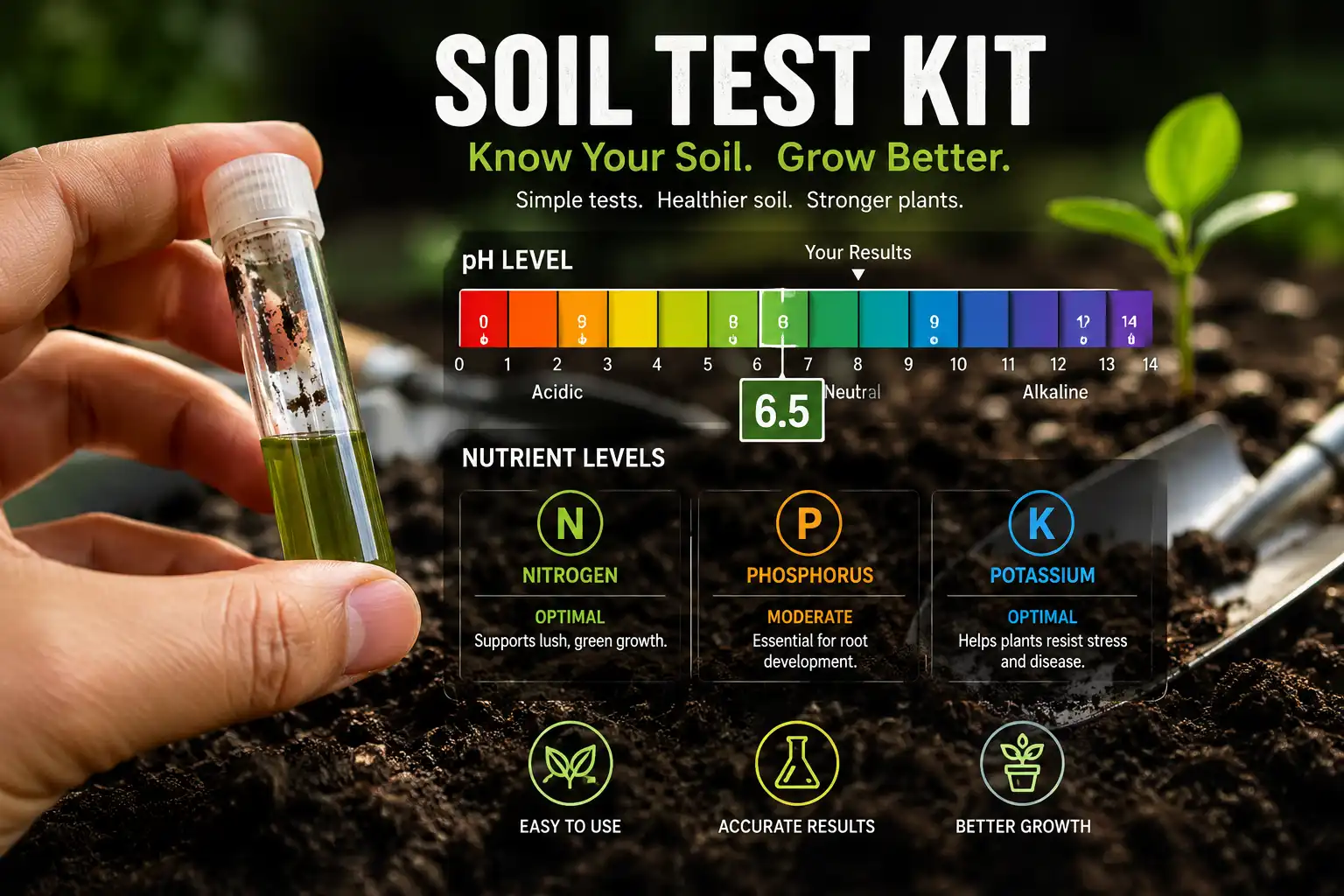
A soil test kit is one of the most useful tools for farmers and gardeners to check soil pH and nutrients before planting. The label says feed, but the wrong dose wastes money. So using the right soil testing kit before opening the bag, not after, is the recommended approach.
The best soil test kit is the MySoil Test Kit, because it mails a sample to a lab and returns pH plus 13 nutrients. The Rapitest 1601 gives 40 tests, which suits beginners. For the fullest report, try Soil Savvy kit.
Quick Comparison: 9 Best Soil Test Kits
These nine kits are ranked by accuracy, value, and how they hold up in real use. Here they are at a glance, then in detail.
| Rank | Kit | Type | What it tests | Results | Price |
|---|---|---|---|---|---|
| 1 | MySoil | Mail-in lab | pH + 13 nutrients | 6 to 8 days | $32 |
| 2 | Soil Savvy | Mail-in lab | pH + 14 nutrients | 7 to 10 days | $27 |
| 3 | MySoil Starter Pack | Lab + probe | pH + 13 nutrients | 6 to 8 days | $65 |
| 4 | Rapitest 1601 | At-home chemical | pH + NPK (40 tests) | 5 to 10 min | $17 |
| 5 | Dewilde 4-in-1 | At-home chemical | pH + NPK (40 tests) | 1-2 Min | $25 |
| 6 | Garden Tutor | pH strips | pH only (3-pad, soil-specific) | 60 sec | $13 |
| 7 | Leaping Lynx | pH strips | pH only (100 strips) | Seconds | $13 |
| 8 | Whitetail Institute | Mail-in lab | Full panel + lime | 1 week | $143 (12-pack) |
| 9 | Rapitest 1605 Digital | Digital reader | pH + NPK | 2 to 5 min | $28 |
The 9 Best Soil Test Kits: Reviews
1. MySoil Soil Test Kit
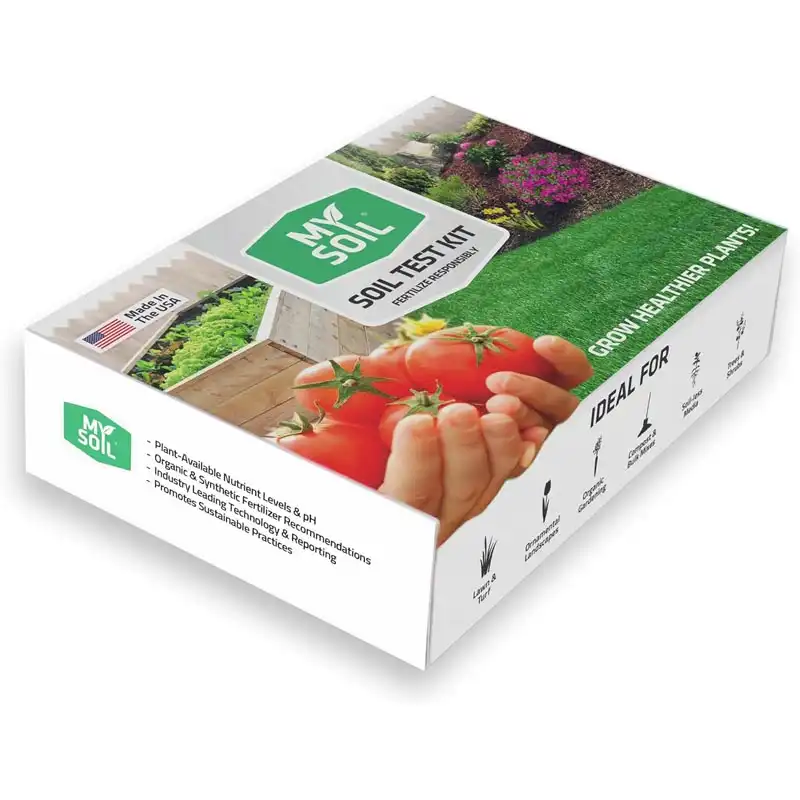
MySoil is a mail-in lab kit from Predictive Nutrient Solutions. You mail about two tablespoons of soil in the prepaid jar and get results online in 6 to 8 days. It reads pH plus 13 plant-available nutrients using ion-exchange resin technology from Montana State University. Best for anyone spending real money on inputs. The report even gives you organic and synthetic fertilizer rates.
PROS
- Lab-grade nutrient accuracy
- Tests 13 nutrients
- Custom fertilizer rates
- Easy online results
CONS
- Costs more per test
Specifications:
- Type: mail-in lab
- Tests: pH plus 13 nutrients
- Results: 6 to 8 days
- Includes: prepaid jar and phone support
2. Soil Savvy Soil Test Kit
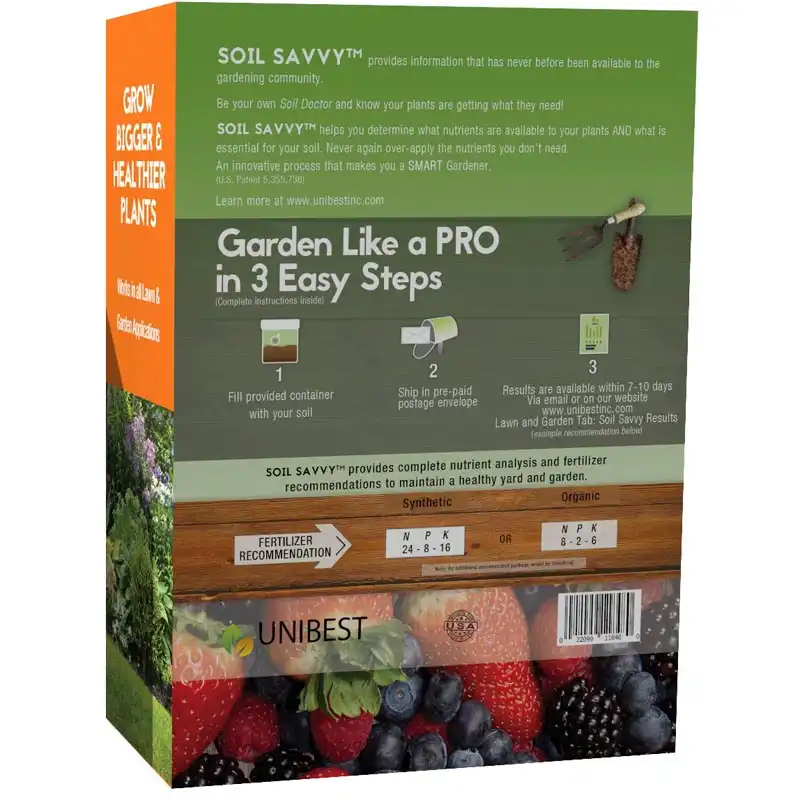
Soil Savvy comes from UNIBEST International and works like MySoil, but reports even more. One mailed jar returns pH plus 14 nutrients, so 15 readings total, in 7 to 10 days. The lab uses the same professional-grade method that turf managers and landscapers rely on. Results land as clear bar charts, so they are easy to read. Best for growers who want the fullest nutrient picture with plain fertilizer guidance.
PROS
- Tests 15 soil parameters
- Clear bar-chart report
- Organic and synthetic recommendations
- Slightly cheaper than MySoil
CONS
- Waiting 7 to 10 days
Specifications:
- Type: mail-in lab
- Tests: pH plus 14 nutrients
- Results: 7 to 10 days
- Shelf life: 12 to 24 months
3. MySoil Test Kit Starter Pack
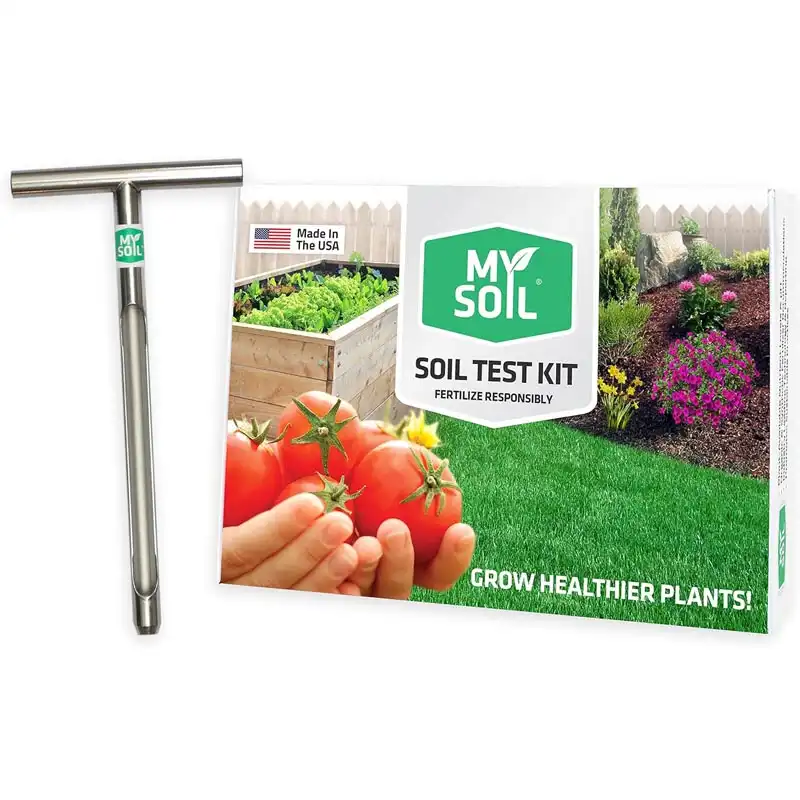
The Starter Pack is the same MySoil lab test plus an 8-inch stainless steel soil probe, made in the USA. The probe pulls a clean, even core every time, which is where most bad samples go wrong. You still get pH plus 13 nutrients and custom fertilizer rates in 6 to 8 days. Best for first-time testers who do not own a probe yet and want accurate sampling from day one.
PROS
- Includes stainless steel probe
- Lab-grade 13-nutrient results
- Better, more consistent cores
- Reusable probe for years
CONS
- Highest price here
Specifications:
- Type: mail-in lab plus probe
- Probe: 8-inch stainless steel
- Tests: pH plus 13 nutrients
- Results: 6 to 8 days
4. Luster Leaf Rapitest 1601 Soil Test Kit
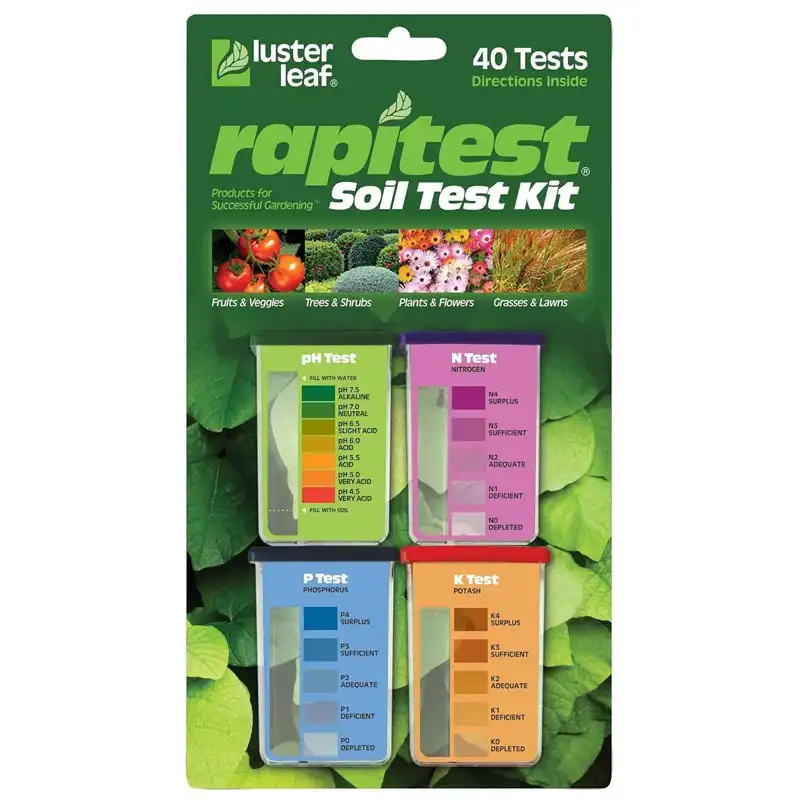
The Rapitest 1601 from Luster Leaf is the cheap first pass. It is an at-home chemical kit with 40 capsule tests, 10 each for pH, nitrogen, phosphorus, and potassium. You mix soil and water, add a capsule, and read the color in 5 to 10 minutes. That works out to roughly 43 cents per test. Best for a fast screen before you commit to a lab.
PROS
- Very low cost
- 40 tests included
- Results in minutes
- Reusable kit body
CONS
- Basic NPK only
Specifications:
- Type: at-home chemical
- Tests: 40 total, pH and NPK
- Speed: 5 to 10 minutes
- Reusable: yes, buy refill capsules
5. Dewilde Trading Co Premium Soil Test Kit
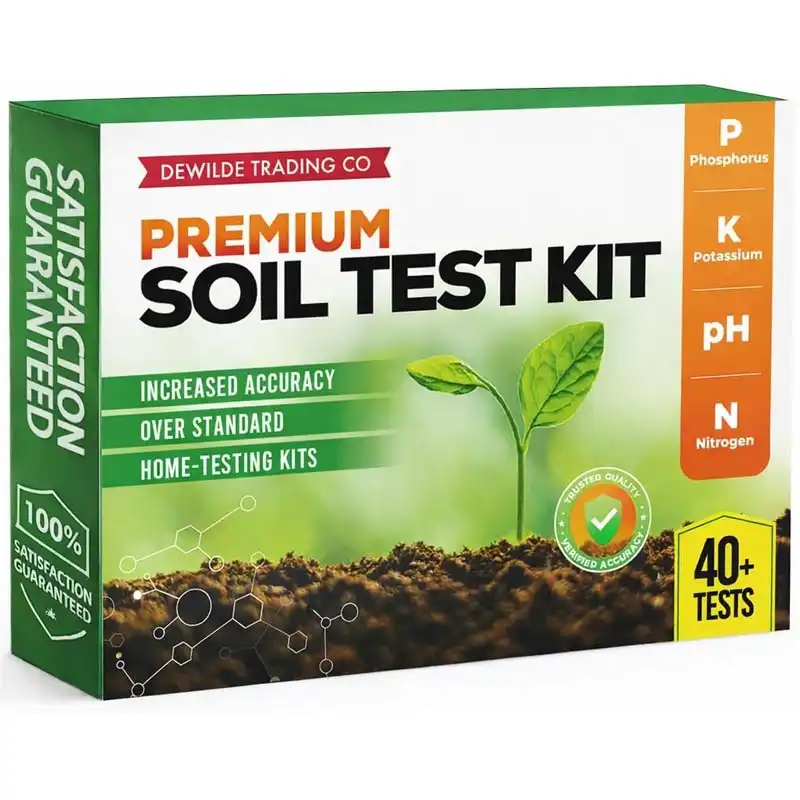
Dewilde Trading Co makes a portable 4-in-1 chemical kit that also runs 40 tests, 10 each for pH, nitrogen, phosphorus, and potassium. You use test tubes, tablets, and a color card to read results in minutes, no lab needed. It handles lawns, gardens, herbs, and houseplants. Best as a backup screening kit, though the Rapitest 1601 edges it on price and track record.
PROS
- 40 tests included
- Fast at-home results
- Works indoors and outdoors
- Complete tool set
CONS
- Pricier than Rapitest
Specifications:
- Type: at-home chemical
- Tests: 40 total, pH and NPK
- Speed: results in minutes
- Includes: tubes, tablets, color card
6. Garden Tutor Soil pH Test Kit
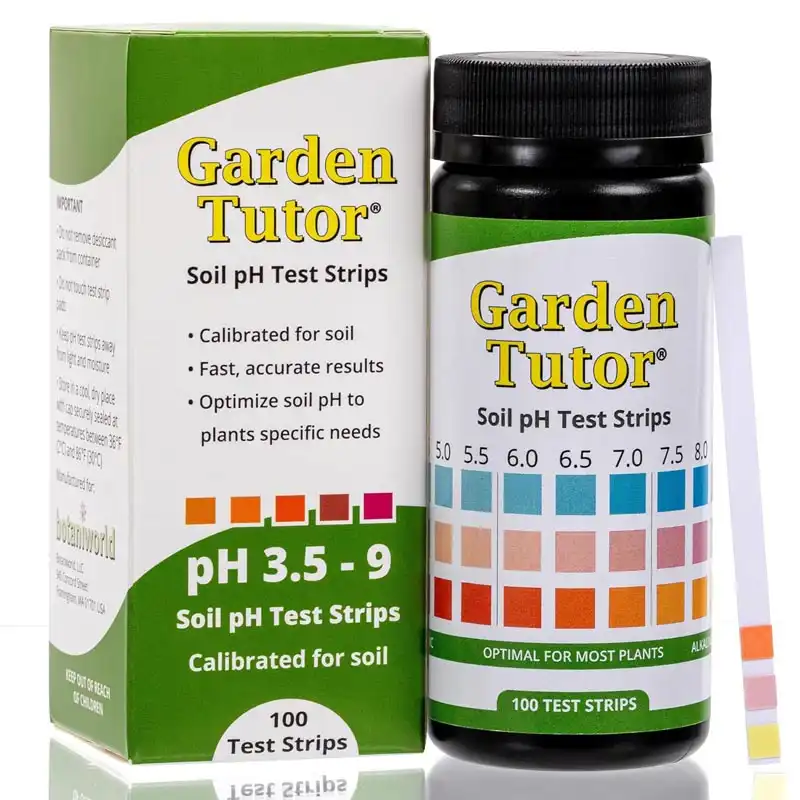
Garden Tutor, an American brand from Botaniworld, sells 100 soil-specific pH strips for about $13. These use a 3-pad design tuned for soil, since standard pH strips misread it. Dip a strip, wait a minute, and match the color, or photograph it with their web reader for a digital pH result. A lime and sulfur estimator helps you correct pH. Best for cheap, high-volume pH screening across many beds.
PROS
- 100 strips included
- Soil-specific 3-pad design
- Free web reader tool
- Lime and sulfur estimator
CONS
- Tests pH only
Specifications:
- Type: pH test strips
- pH range: 3.5 to 9
- Count: 100 strips
- Speed: about 60 seconds
7. Leaping Lynx Soil pH Test Kit
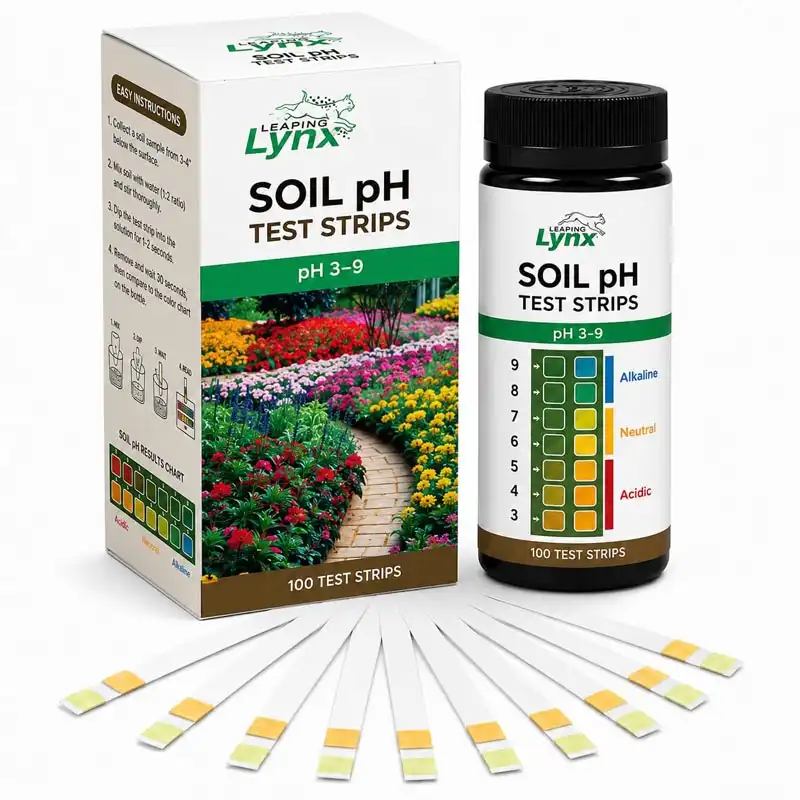
Leaping Lynx sells 100 pH test strips for about $13, and it is a popular pick with strong user ratings. You collect soil, add water, dip a strip, and match the color chart in seconds. The 3 to 9 pH range covers almost any garden soil. Best for cheap, fast pH checks on beds, lawns, compost, and potted plants.
PROS
- 100 strips included
- Very low cost
- Instant color results
- Works indoors and outdoors
CONS
- Tests pH only
Specifications:
- Type: pH test strips
- pH range: 3 to 9
- Count: 100 strips
- Speed: seconds per test
8. Whitetail Institute Laboratory Soil Test Kit
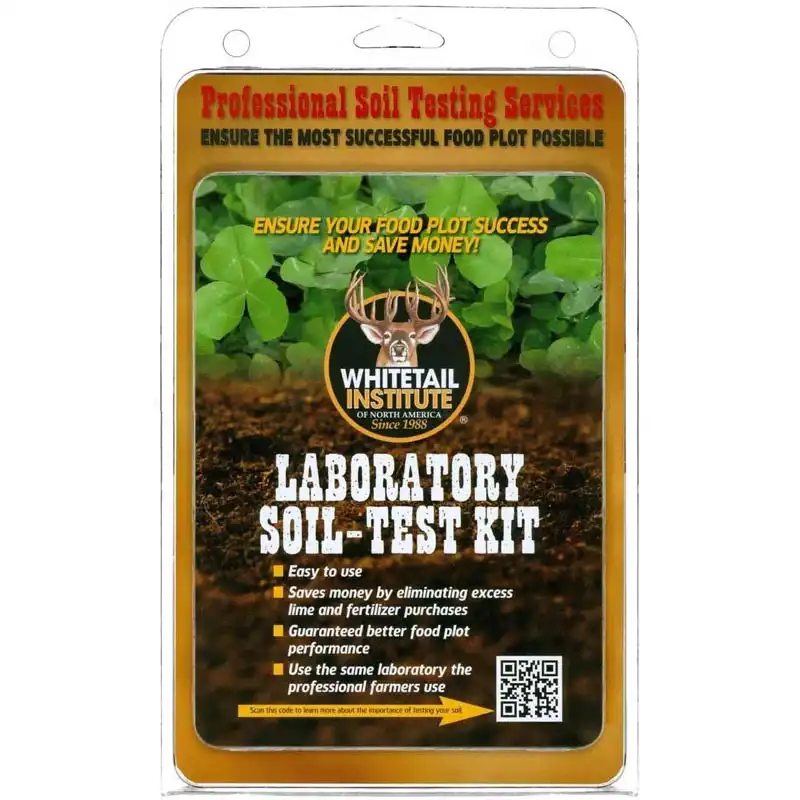
Whitetail Institute built this mail-in lab kit for deer food plots, and it ships as a carton of 12. Each kit collects one sample, mails to the lab, and returns nutrient levels plus lime and fertilizer amounts in about a week. At roughly 12 dollars per test, the bulk price is fair for big acreage. Best for hunters and land managers testing many food plots in one season.
PROS
- 12 tests per carton
- Real laboratory analysis
- Lime and fertilizer amounts
CONS
- Not an instant test
Specifications:
- Type: mail-in lab
- Quantity: 12 kits
- Results: about one week
- Includes: lab fee and instructions
9. Luster Leaf 1605 Rapitest Digital Soil Testing Kit
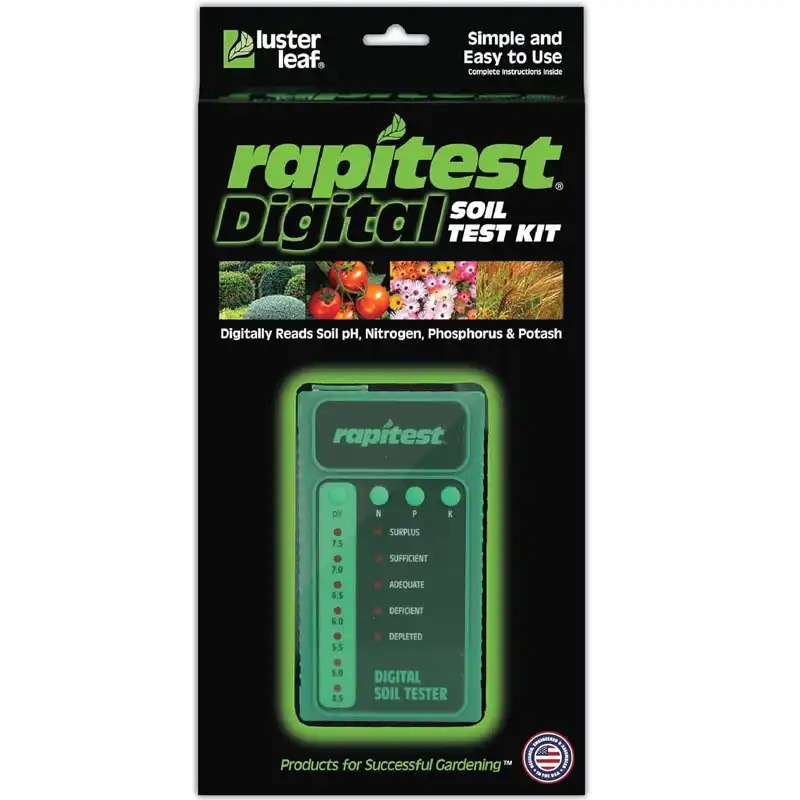
The Rapitest 1605 Digital from Luster Leaf uses an LED optical reader to interpret color for you, so no eyeballing charts. It tests pH, nitrogen, phosphorus, and potassium in 2 to 5 minutes and runs on three LR44 batteries.
The digital readout does help color-blind users. But owner reports consistently note wild pH swings and false surplus readings, so this one is not recommended for real decisions. Best only if a digital display is a must-have.
PROS
- Digital LED readout
- Good for color-blindness
- Fast 2 to 5 minutes
- No chart matching
CONS
- Inconsistent accuracy reports
- pH readings often wrong
Specifications:
- Type: digital chemical reader
- Tests: pH and NPK
- Power: 3 LR44 batteries
- Speed: 2 to 5 minutes
What to Look for in a Soil Testing Kit (Buying Guide)
A few things separate a soil testing kit that helps you from one that wastes your money. Here is what actually matters before you buy.
Types of Soil Test Kits (Strips, Chemical, Digital, Mail-In Lab)
There are four kinds, and the right one depends on whether you want speed or accuracy. Test strips dip into a slurry and shift color for a rough pH read. At-home chemical kits use a reagent and a color comparator to estimate pH and NPK. A digital meter reads numbers straight off a probe. A dedicated digital pH meter is the most reliable of these for acidity. A mail-in kit ships your soil off for real laboratory analysis, the same route your Cooperative Extension office takes.
What a Soil Test Measures (pH, N-P-K, Micronutrients)
Every kit covers pH and N-P-K. That means nitrogen, phosphorus, and potassium, your three big macronutrients. Lab kits go further and report micronutrients, organic matter, and cation exchange capacity, usually in parts per million (ppm). That extra detail earns its keep when you are chasing a hidden micronutrient deficiency. Why start with pH? Because pH controls how much of each nutrient your plants can actually pull from the ground.
How Accurate Are Soil Test Kits?
Home kits are reliable for pH but shaky on nutrients, especially phosphorus and potassium. That is not just one perspective, the pattern shows up consistently across reports. SDSU Extension compared cheap kits against lab results and found the nutrient readings often missed, while pH stayed close. The reason is extraction. Labs match the method to your soil, running Mehlich-3 on acid ground and Olsen P on high-pH soils. Home reagents use one generic mix, so plant-available numbers drift.
Ease of Use and Result Time
Strips and digital meters answer in seconds to minutes, so they win on a quick soil test. Chemical kits take a few minutes per sample once you mix the reagent and wait for the color. Mail-in labs run 6 to 14 days, since your soil travels and then gets processed. So match result time to how fast you need to act.
Price and How Often to Retest
Home kits typically run about $10 to $25, and mail-in labs roughly $25 to $65. So soil test kit price tracks with accuracy. On cost, a lab report buys you numbers you can trust. Plan to retest every 2 to 3 years. If you are correcting a real problem, go annual until it is fixed.
How to Use a Soil Test Kit
Any soil testing kit works the same way, and even the best soil test kit hands you junk numbers if you sample sloppy. So the steps below matter more than the brand. Here is how to use a soil test kit right.
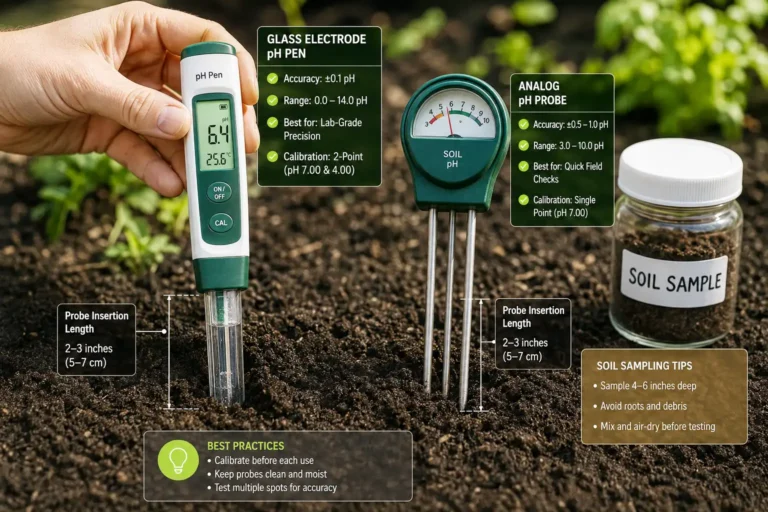
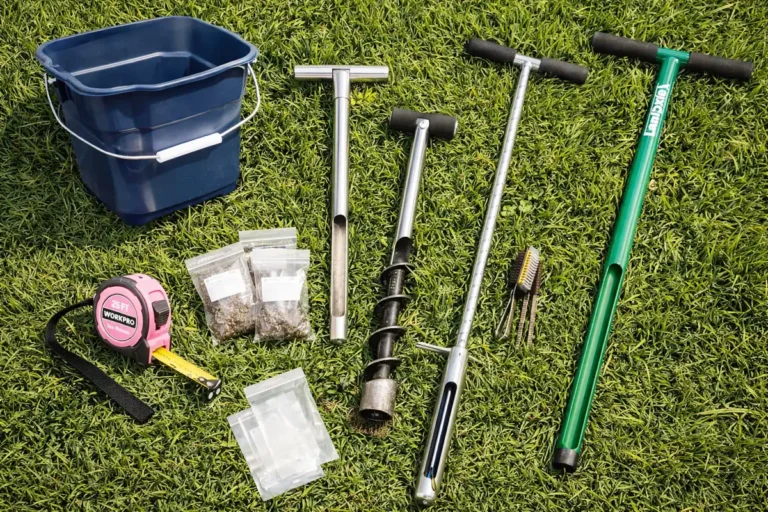
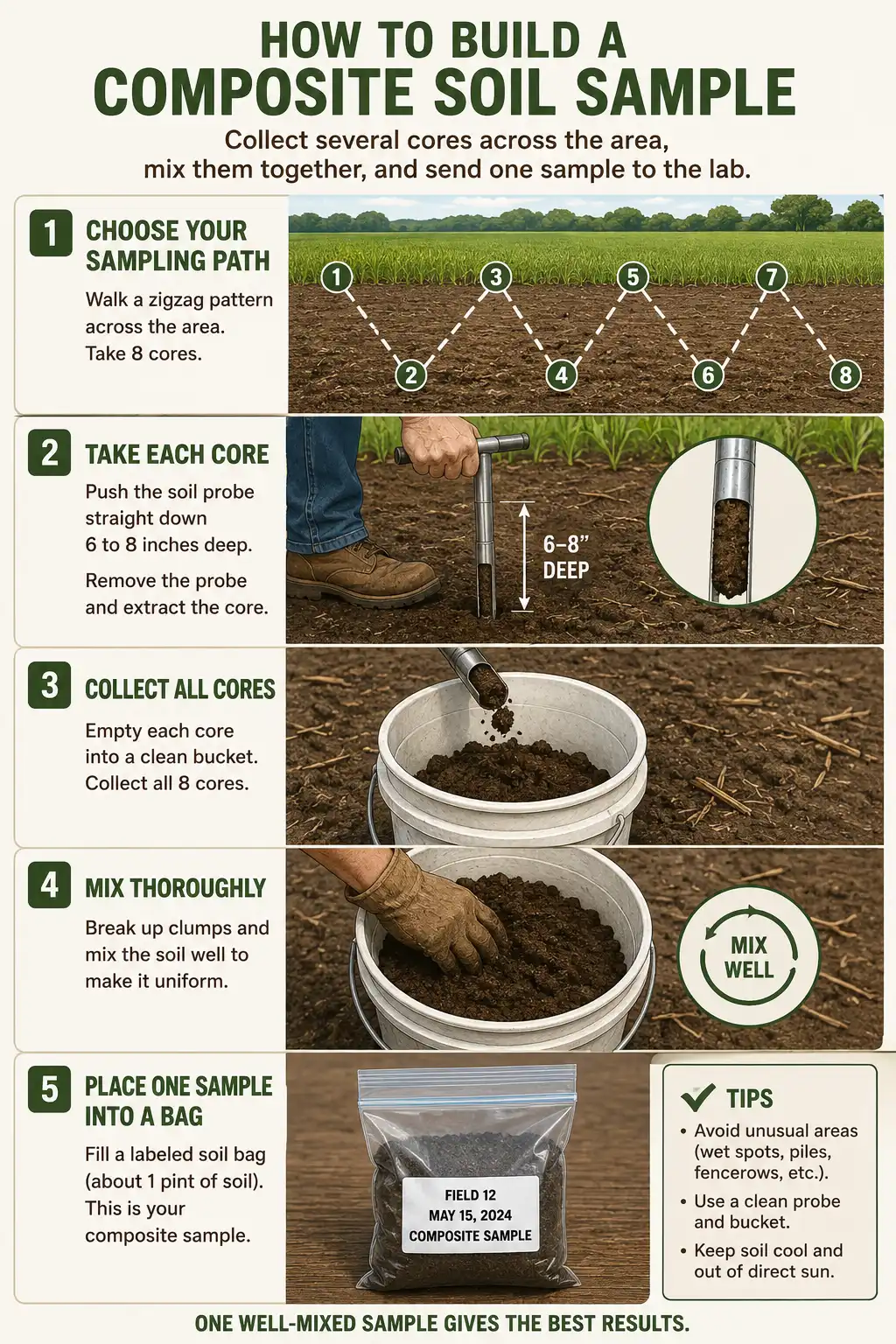
- Pull a core 6 to 8 inches deep with a probe or a spade. The right soil sampling gear makes clean, even cores easy.
- Take cores from 6 to 8 spots across the field or bed, not just one corner.
- Mix them in a clean bucket into one composite sample. This averages out the whole area.
- Dry the soil on paper if your kit or lab asks for it.
- For home chemical kits, use distilled water, never tap water, which throws off pH.
- Run the test at home, or seal the sample in the prepaid envelope and mail it.
- Read chemical colors in daylight against the chart, not under a kitchen bulb.
- Act on the numbers with the right lime or amendment.
Your Cooperative Extension office will read a lab report with you for free if the results confuse you.
Home Soil Test Kit vs Lab Test: Which Should You Use?
Use a home kit for quick screening and a lab for real fertilizer and lime calls. Both have a place. A home kit is fine for a fast pH check or a rough look before you plant. But when you are spending money on inputs, a professional soil test earns it.
Lab analysis gives you exact numbers and a fertilizer recommendation you can follow, plus a lime rate if your pH is off. From there you can improve soil fertility with the right inputs instead of guessing. Your county extension office runs low-cost tests, and it helps to use K-State Research and Extension. The USDA and its NRCS also steer growers toward accredited labs. So screen at home, then decide with a lab.
FAQs about Soil Testing Kit
Are home soil test kits accurate?
Which soil test kit is the most accurate?
What does a soil test kit measure?
How do you use a soil test kit?
How often should I test my soil?
When is the best time to test soil?
What's the best soil test kit for a vegetable garden?
Bottom Line for Your Field
Not sure what your soil needs? to reach for MySoil soil testing kit and follow the fertilizer plan it sends back. That’s the best soil testing kit for anyone making real amendment decisions. If you just want a quick, cheap read on pH and NPK, the Rapitest 1601 does that fine. Either way, test your soil first, then match the NPK fertilizer to what it actually needs. A test kit costs less than one wasted bag.