21 0 0 Fertilizer: What It Is, Uses, and Rates for 2026
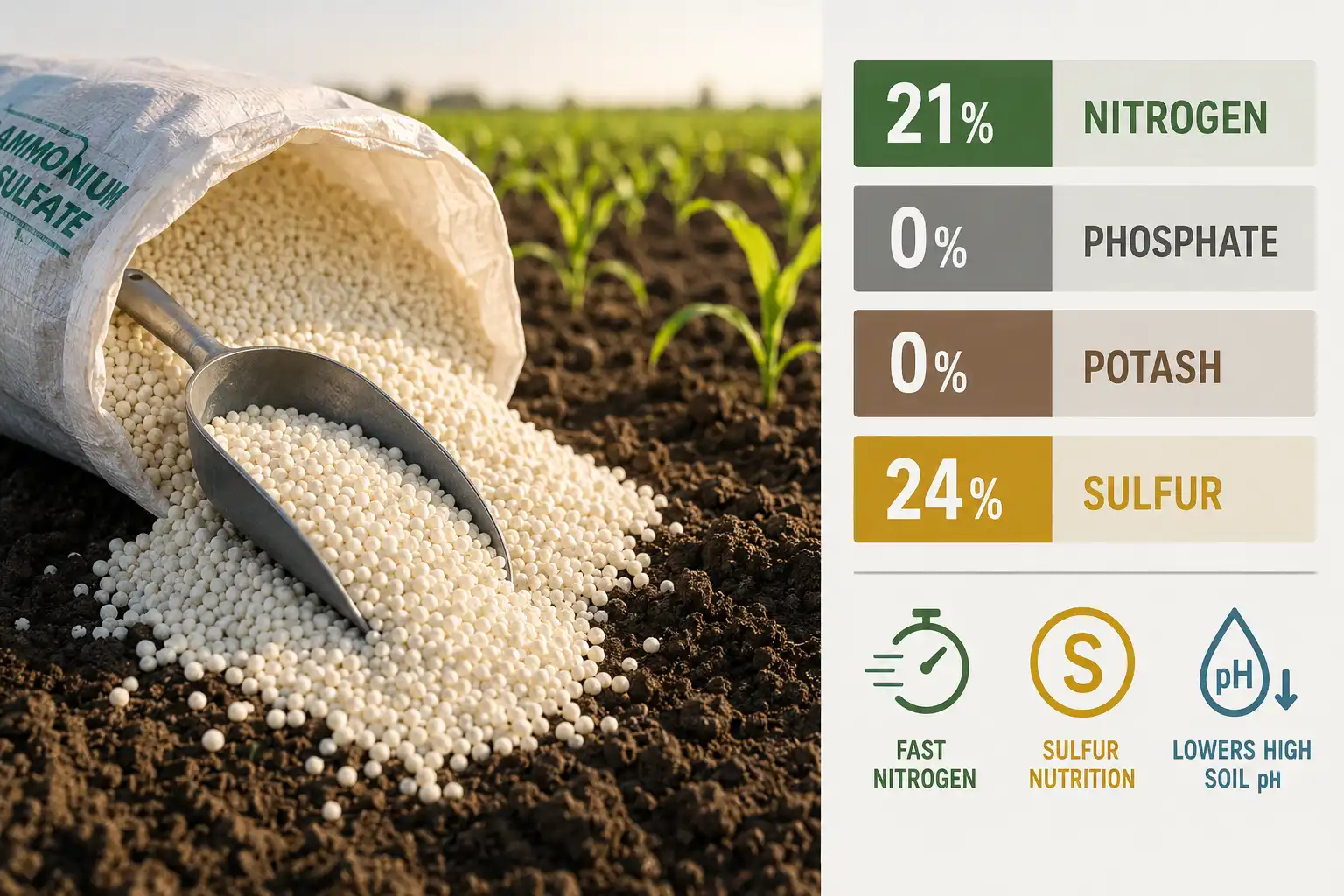
21-0-0 fertilizer is ammonium sulfate, a dry nitrogen source carrying 24 percent sulfur. It works on high pH ground, on sulfur short fields, and on lawns that need fast color. It supplies no phosphorus and no potassium, so rate and placement decide the result.
21-0-0 is ammonium sulfate. It supplies 21 percent nitrogen in the ammonium form plus 24 percent sulfate sulfur. Use it to correct sulfur shortages, feed nitrogen in cool soil, and slowly acidify alkaline ground.
What Is 21-0-0 Fertilizer?
21-0-0 fertilizer is ammonium sulfate, chemical formula (NH4)2SO4. It is a manufactured salt, sold as white or tan granules, prills, or a fine spray grade powder. Every bag carries two nutrients. Nitrogen makes up 21 percent of the weight, and sulfur makes up about 24 percent.
Both nutrients arrive in forms plants can use right away. The nitrogen is ammonium, which soil bacteria convert to nitrate over the following weeks. The sulfur is sulfate, which roots take up without any conversion at all. That second point matters, because elemental sulfur products need months of microbial work before a crop sees them.
Ammonium sulfate has been in the fertilizer trade for well over a century. A large share of the supply comes as a co-product of caprolactam manufacturing. Availability holds steadier than other nitrogen markets as a result.
Also see: 14 14 14 Fertilizer Rates, Timing, and Best Bags
What the Numbers on a 21-0-0 Bag Mean
The three numbers give the guaranteed analysis by weight. First comes nitrogen, then phosphate, then potash. So a 100 pound bag of 21-0-0 holds 21 pounds of actual nitrogen, no phosphate, and no potash.
| What the label says | What you actually get per 100 lb |
|---|---|
| 21 (nitrogen) | 21 lb actual N, all ammonium form |
| 0 (phosphate, P2O5) | none |
| 0 (potash, K2O) | none |
| 24S (sulfur) | about 24 lb sulfate sulfur |
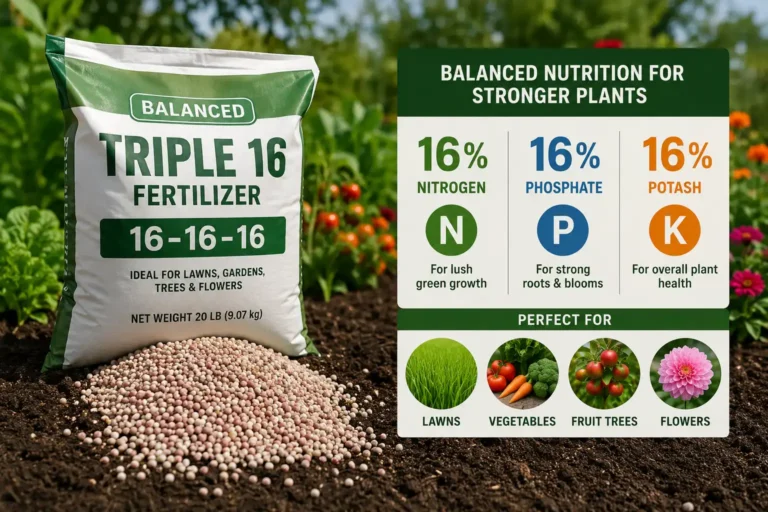
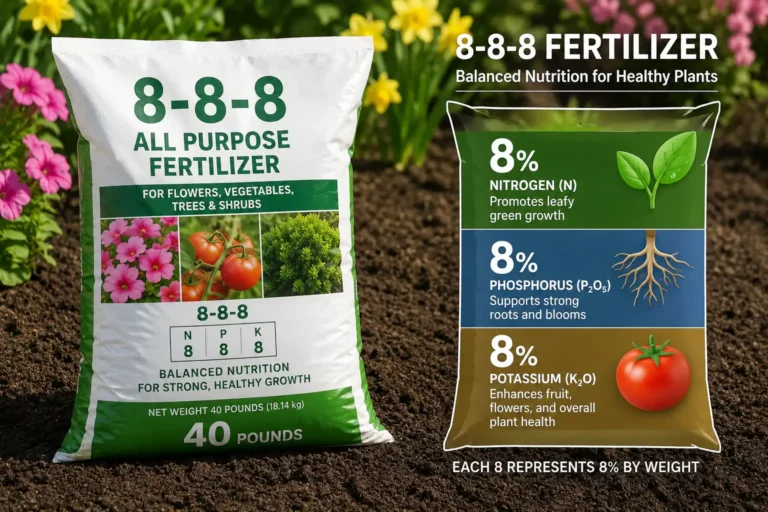
That math never changes, and it is the same math behind every grade on the shelf. Reading NPK numbers across the whole lineup is covered in this guide to NPK fertilizer for the full system.
Because 21-0-0 carries no phosphorus or potassium, it is a supplement rather than a complete feed. Pair it with a soil test and fill the other gaps separately.
Is 21-0-0 the Same as 21-0-0-24S?
Yes, they are the same material. The longer label simply declares the sulfur content, which some states require and some manufacturers include voluntarily. If a bag reads 21-0-0 with no sulfur guarantee, check the guaranteed analysis panel on the back. Genuine ammonium sulfate always tests near 24 percent sulfur, because the sulfate is part of the molecule itself.
What Is 21-0-0 Fertilizer Used For?
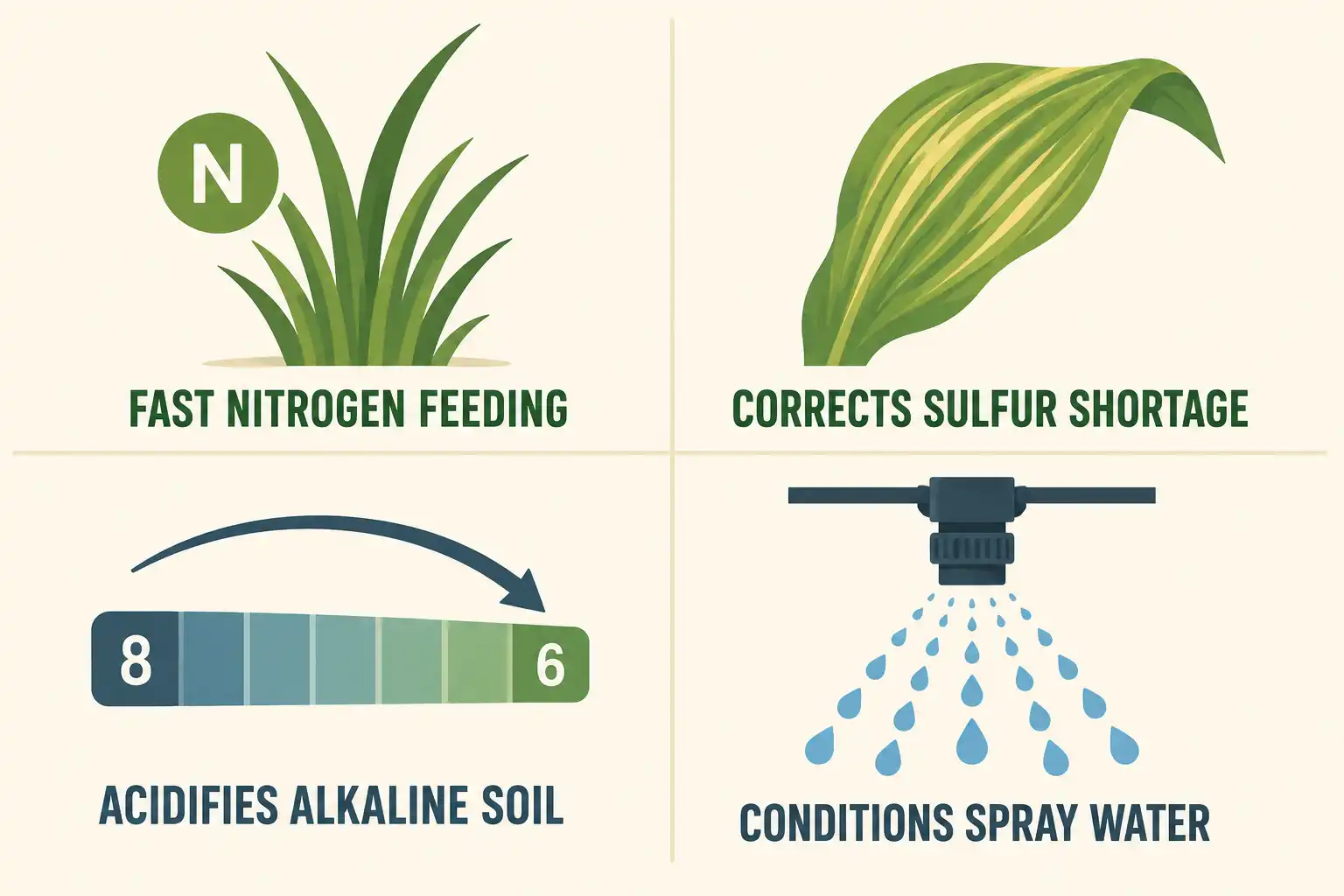
21-0-0 fertilizer does four jobs. It feeds nitrogen, corrects sulfur shortages, lowers pH on alkaline soil, and conditions spray water. Most farms buy it for one of those reasons and get the others as a bonus.
Feeding Nitrogen in Cool, Wet Soil
Ammonium nitrogen goes to work faster than urea in cold ground. Urea has to hydrolyze first, and that reaction slows down when soil temperatures sit below 50 degrees. Ammonium needs no such step. Roots can take it up directly.
That is why greenskeepers and early season growers lean on 21-0-0 for spring green up. An early April pass moves faster with ammonium sulfate. A straight urea prill sits there longer.
Ammonium nitrogen also holds on the soil exchange sites. It resists leaching until nitrification converts it to nitrate. On sandy ground with a wet spring, that buys a little insurance.
Correcting Sulfur Shortages
Sulfur deficiency has grown steadily across the Corn Belt and Great Plains, and clean air rules are the reason. Industrial emissions once dropped an estimated 10 to 30 pounds of sulfur per acre on Midwest fields. Then the Clean Air Act ended that. Purdue Extension reports that most of Indiana received more than 13 pounds per acre as recently as 2000. By 2020 the entire state received under 5 pounds.
Meanwhile yields climbed and crops pulled more sulfur out. Purdue puts corn grain removal near 0.5 pound of sulfur per 10 bushels. A 200 bushel crop therefore hauls off roughly 10 pounds per acre. Soybeans remove about 1.7 pounds per 10 bushels. Alfalfa hay runs 5 to 7 pounds per ton, which stacks up quickly on a four cut program.
Iowa State University Extension recommends 15 pounds of sulfur per acre on fine textured soils. Coarse soils call for 25 pounds. Alfalfa calls for 20 to 30 pounds. Purdue lands in a similar range for corn.
Lowering pH on Alkaline Ground
Ammonium sulfate acidifies soil, and it does so more than any other common nitrogen source. The acid comes from nitrification, not from the sulfur. When bacteria convert ammonium to nitrate, they release hydrogen ions, and those ions drive pH down.
Penn State Extension puts the neutralizing requirement near 7 pounds of calcium carbonate per pound of ammonium sulfate nitrogen. Urea, UAN, ammonium nitrate, and anhydrous ammonia all sit near 3 pounds. Iowa State publishes similar figures, with 7 for ammonium sulfate and 4 for the urea group.
Run that out on a real program. Apply 100 pounds of nitrogen per acre as 21-0-0 and you have created roughly 700 pounds of lime demand. The same nitrogen as urea creates 300 to 400 pounds. Over several years, that gap adds up on acid prone soil.
Here is the part that trips people up. Calcareous soil already holds free lime. That lime consumes the acid almost as fast as it forms. Utah State University Extension explains that the reaction can push pH up locally instead of down. Ammonia loss follows. So 21-0-0 will not fix a high pH problem on limestone derived soil. It works best on alkaline soil that carries little or no free carbonate.
Conditioning Herbicide Spray Water
Spray grade ammonium sulfate ties up hard water cations before they can bind your herbicide. Calcium, magnesium, iron, and sodium all antagonize glyphosate and other weak acid chemistries. Sulfate ions grab those cations first and keep the herbicide free.
Oklahoma State University Extension recommends 8.5 to 17 pounds of dry spray grade AMS per 100 gallons of spray solution. Michigan State Extension recommends the full 17 pound rate with glyphosate. Order matters more than rate, though. Add the AMS to the tank and let it dissolve before the herbicide goes in. Add it afterward and you have wasted the trip.
K-State Research and Extension notes a second benefit. AMS acts as a humectant, so the droplet dries slower and the weed absorbs more.
One hard rule here: never dump granular fertilizer grade 21-0-0 into a sprayer. Michigan State Extension is blunt about this. Field grade product carries insoluble material that plugs screens and nozzles. Buy spray grade for the tank and fertilizer grade for the spreader.
When to Use 21-0-0 Fertilizer
Use 21-0-0 fertilizer when sulfate sulfur tests low, when soil pH sits above 7.0, or when soil is still cold. Those three situations cover almost every case where it beats a cheaper nitrogen source.
| Situation | Why 21-0-0 fits | Typical timing |
|---|---|---|
| Sulfate sulfur testing low | Sulfate is plant available at once | Preplant or early sidedress |
| Sandy or low organic matter fields | Little mineralized sulfur, high leaching | Split with sidedress N |
| Soil pH above 7.0 (no free lime) | Nitrification drives pH down over years | Any nitrogen timing |
| Cold spring soils | Ammonium works without hydrolysis | Green up and early growth |
| Alfalfa, canola, brassicas, onions | High sulfur demand crops | Green up, after each cutting |
| Blueberries and azaleas | Ammonium form plus low pH | Early spring, repeat late spring |
| Hard spray water | Sulfate blocks cation antagonism | Every glyphosate pass |
Timing follows the crop, not the calendar. For sulfur, get it out before rapid uptake starts. University of Minnesota work shows corn takes up half its total sulfur between V5 and early silking. Preplant or early sidedress beats a late rescue.
Sulfate does leach, especially on sand. Fall application on light ground often disappears before spring. Sulfur applications are typically kept close to the season on sandier ground and broadcast earlier on heavy silt loam.
When to Skip It
Skip 21-0-0 when soil pH already sits below 6.0. Adding more acidity there costs you lime money and can push aluminum into solution.
Skip it when you only need nitrogen and sulfur tests adequate. Urea delivers more than twice the nitrogen per ton. Freight and spreading cost per pound of N run much lower. Those tradeoffs are covered in this overview of 46-0-0 urea.
Skip it in the seed furrow. Ammonium sulfate carries a salt index of about 3.25 per unit of nitrogen, roughly double urea at 1.62. Nebraska Extension puts the safe in furrow limit near 5 to 7 pounds of nitrogen plus potash per acre. There is no room for a straight nitrogen salt on the seed.
Finally, skip surface application on calcareous ground unless rain or irrigation follows. Without incorporation, ammonia loss on free lime soils runs high.
21-0-0 Fertilizer Application Rates
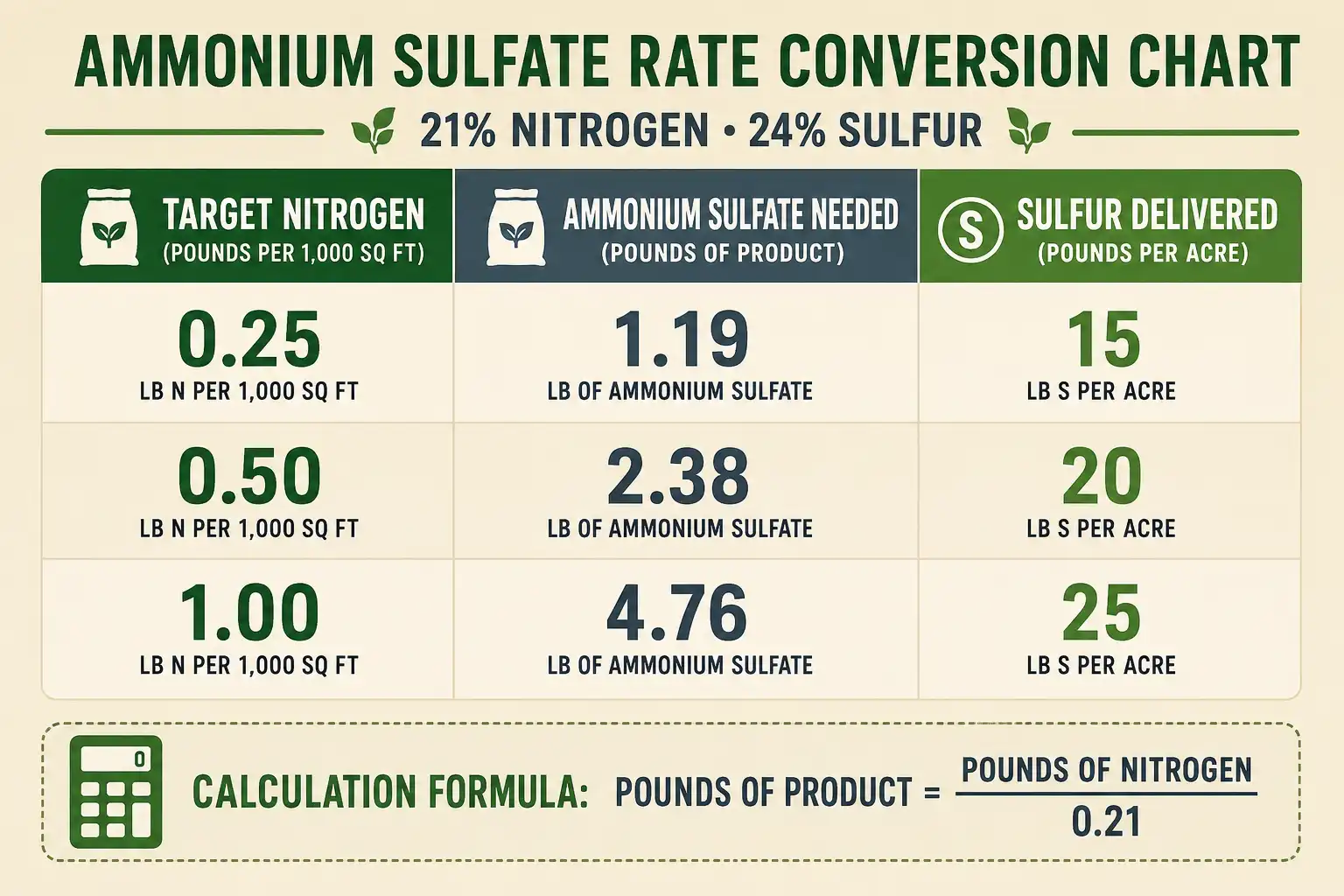
Divide the nitrogen you want by 0.21 to get pounds of 21-0-0 product. That single formula covers lawns, gardens, and field acres. Sulfur comes along at roughly 24 percent of that product weight.
Lawn and Garden Rates
| Target N per 1,000 sq ft | Pounds of 21-0-0 | Sulfur delivered |
|---|---|---|
| 0.25 lb | 1.2 lb | 0.3 lb |
| 0.5 lb | 2.4 lb | 0.6 lb |
| 0.75 lb | 3.6 lb | 0.9 lb |
| 1.0 lb | 4.8 lb | 1.2 lb |
Clemson Cooperative Extension suggests about 1 pound of nitrogen per 1,000 square feet on a high maintenance lawn. Low maintenance turf takes half that. UF/IFAS caps soluble nitrogen at 0.5 pound per 1,000 square feet in a single pass on Florida turf. Since all the nitrogen in 21-0-0 is soluble, the lower ceiling is the safer default in hot weather.
Space repeat applications four to six weeks apart during active growth. Skip dormant turf entirely.
Field Crop Rates
On field acres, size the rate to the sulfur target. Then treat the nitrogen as a credit against your total plan.
| Sulfur goal per acre | Pounds of 21-0-0 | Nitrogen credit |
|---|---|---|
| 15 lb S (fine textured soils) | 63 lb | 13 lb N |
| 20 lb S (medium soils, alfalfa) | 83 lb | 17 lb N |
| 25 lb S (coarse or sandy soils) | 104 lb | 22 lb N |
Subtract that nitrogen credit from your urea or UAN rate. Growers skip this step constantly and end up over applied. Before you set a rate, work out the nitrogen rates corn needs for your yield goal. Then back the ammonium sulfate nitrogen out.
Some sidedress programs plan sulfur alongside nitrogen instead of on its own. NC State Extension uses an 8 to 1 nitrogen to sulfur ratio as a working example. An 80 pound sidedress rate then carries 10 pounds of sulfur.
Blueberries and Acid-Loving Plants
Blueberries prefer ammonium nitrogen and struggle on nitrate, so 21-0-0 suits them well. Apply about 2 to 3 ounces per established bush. Work it into a ring 12 to 18 inches out from the crown. Repeat once in late spring.
Stop by early July. Late nitrogen pushes tender growth that winter kills. Watch pH too, because blueberries want 4.5 to 5.5 and further acidification below that range hurts more than it helps.
How to Apply 21-0-0 Without Burning Anything
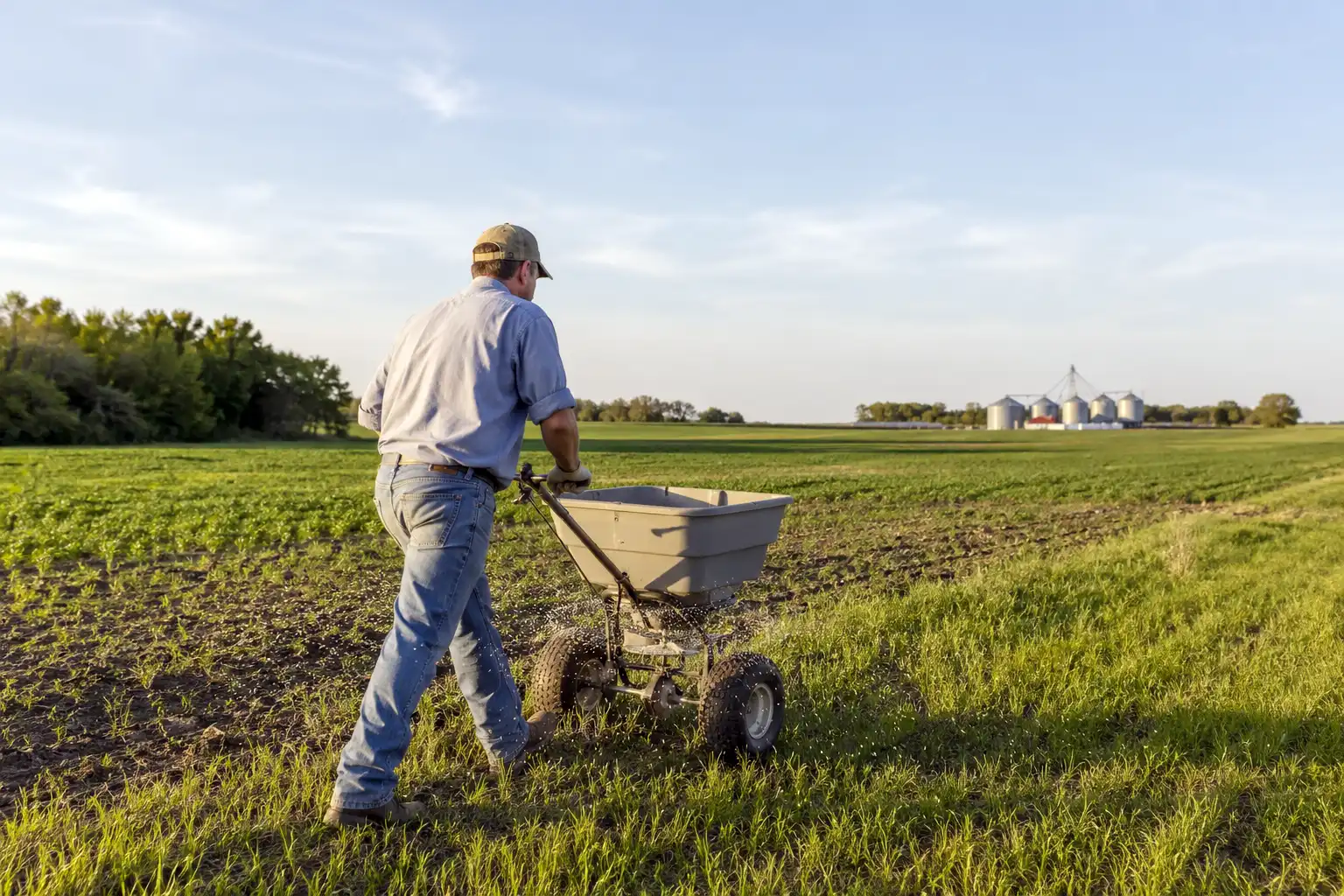
Ammonium sulfate burns plants when it sits on wet foliage or goes out at heavy rates. Follow the same sequence every time and the risk stays low.
- Test first. Pull samples and check pH, sulfate sulfur, and organic matter. A soil test kit costs far less than a wasted pass.
- Set the rate. Divide target nitrogen by 0.21. Write the number down before you load.
- Calibrate the spreader. Prill size varies a lot between brands, so a setting that worked on urea will not carry over. Catch and weigh output over a measured strip.
- Apply to dry foliage. Wet leaves hold granules against tissue and burn.
- Water in or incorporate. Half an inch of irrigation moves it off the leaf and into the root zone. On calcareous ground, incorporation also stops ammonia loss.
- Sweep hard surfaces. Granules left on concrete or decking leach and stain.
- Retest pH annually. Continued use drifts pH down. Catch it before it costs you.
A calibrated fertilizer spreader matters more with this product than with most. Fine grades flow fast, so start near 20 percent of the maximum gate opening and work up.
One storage note. Blending urea with ammonium sulfate lowers the critical relative humidity of the mix well below either material alone. The blend cakes fast in a humid shed. Mix and spread the same day.
How 21-0-0 Compares to Other Nitrogen Sources
21-0-0 carries the least nitrogen per ton of the common dry sources. It is also the only one bringing sulfur along. That tradeoff drives the whole decision.
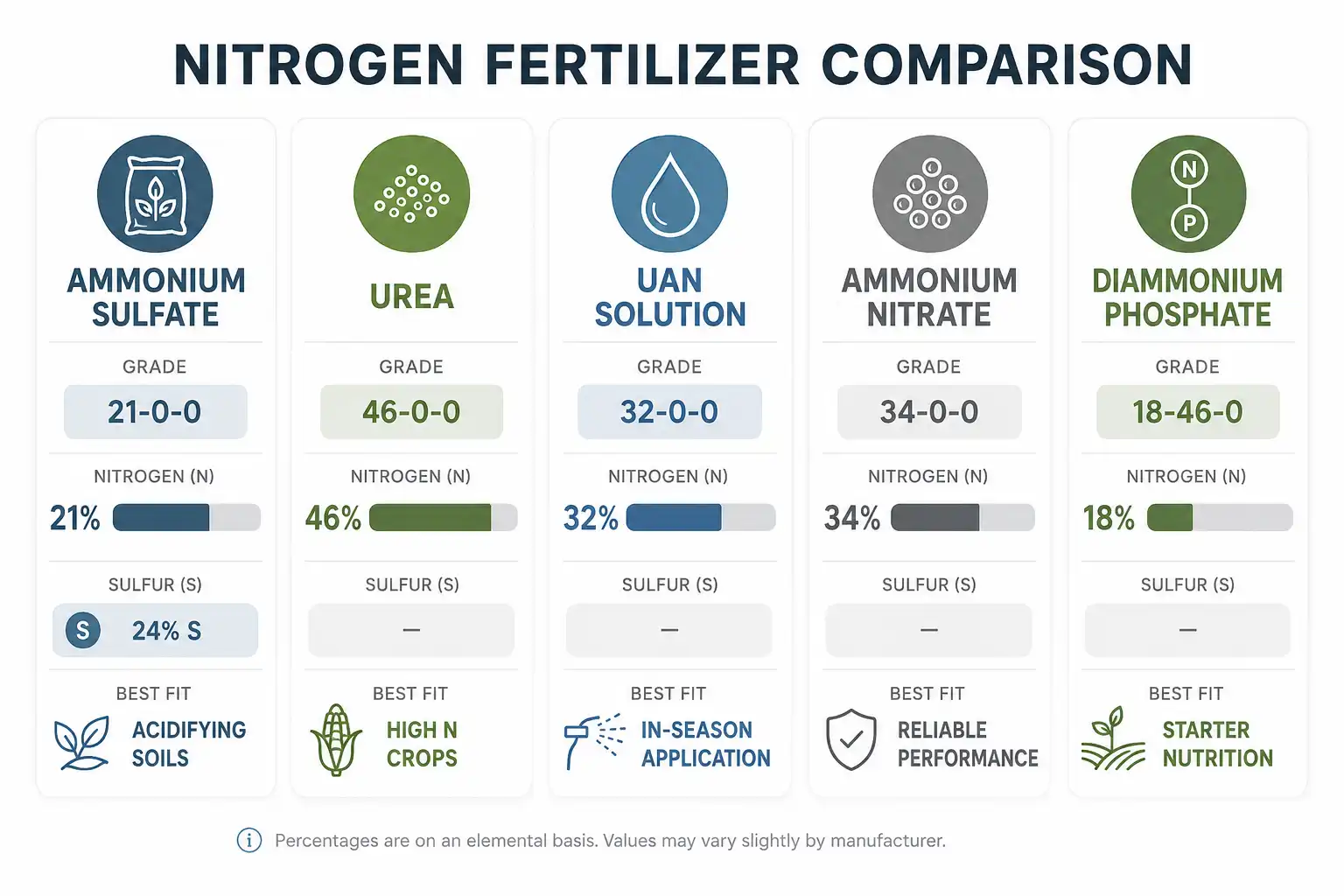
| Source | Grade | Sulfur | N form | Lime needed per lb N | Salt index per unit N | Best fit |
|---|---|---|---|---|---|---|
| Ammonium sulfate | 21-0-0-24S | 24% | Ammonium | About 7 lb | 3.25 | Sulfur plus N, high pH ground |
| Urea | 46-0-0 | none | Amide | 3 to 4 lb | 1.62 | Cheapest N per ton |
| UAN solution | 32-0-0 | none | Mixed | 3 to 4 lb | 2.22 | Liquid systems, sidedress |
| Ammonium nitrate | 34-0-0 | none | Half nitrate | 3 to 4 lb | 3.06 | Pastures, hay, cool soils |
| DAP | 18-46-0 | none | Ammonium | About 5.3 lb | not comparable | Phosphate first, N second |
Lime figures come from Penn State Extension and Iowa State University Extension. Salt index values follow the standard Rader scale used in starter fertilizer guides. Newer research suggests the actual acidification from ammonium sulfate runs somewhat below these planning numbers, but the ranking holds.
Volatilization tells a different story. Surface applied urea loses nitrogen fast on warm, moist, high pH ground because hydrolysis pushes the granule pH toward 9. Ammonium sulfate loses very little on neutral or acid soils. On free lime soils, though, both lose badly without incorporation. If you run liquid, compare this against liquid 32-0-0 before you commit tank space.
Cost per pound of nitrogen is the number that settles most arguments. Divide the price per ton by 2,000, then divide by the nitrogen fraction. For 21-0-0 that fraction is 0.21. For urea it is 0.46. Then subtract the value of the sulfur you would otherwise buy separately. Do that math with current quotes each season, because the spread moves.
How to Spot a Sulfur Shortage Before It Costs Yield
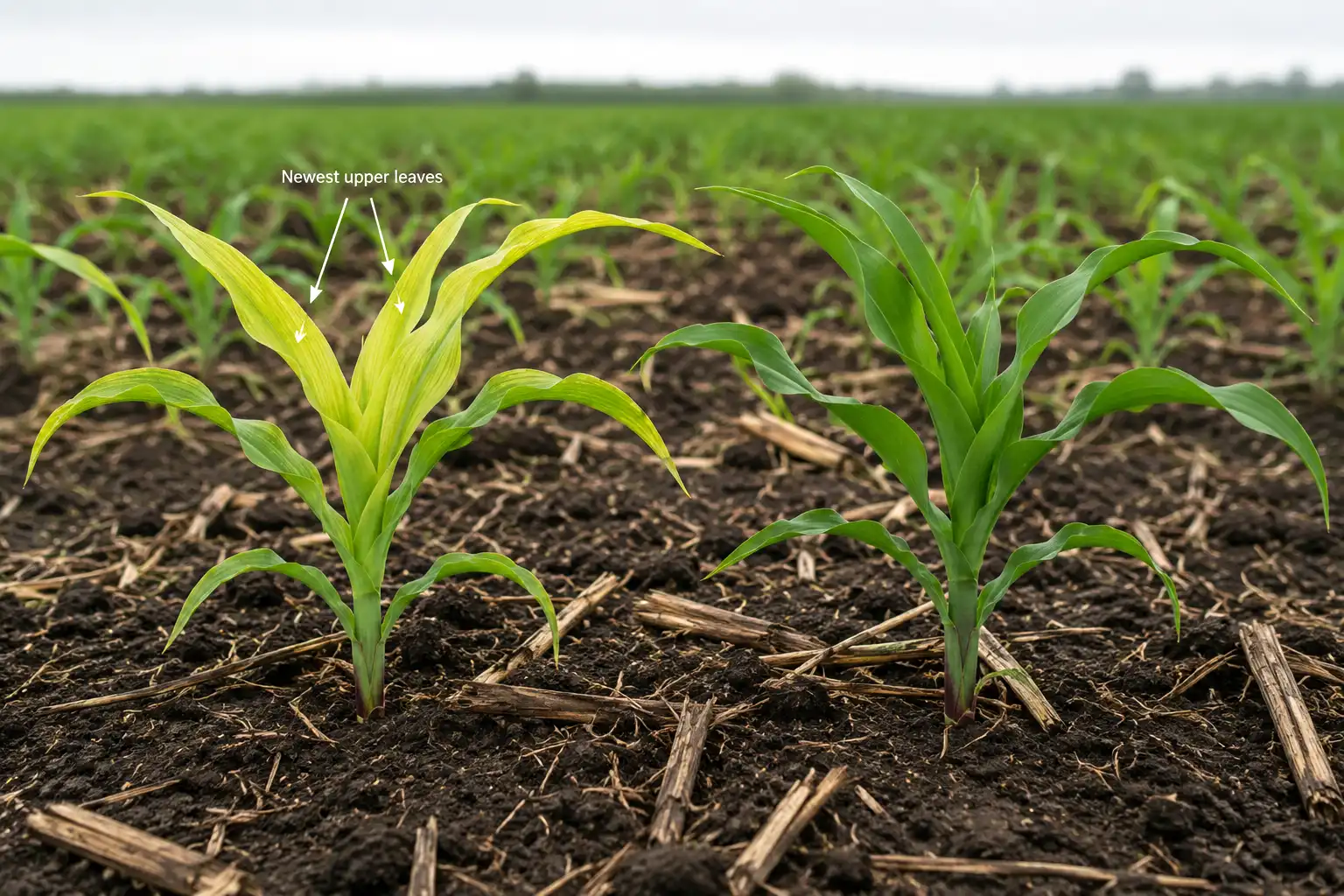
Sulfur deficiency shows up on the newest leaves, while nitrogen deficiency shows up on the oldest. That one difference sorts out most field calls.
| Clue | Nitrogen shortage | Sulfur shortage |
|---|---|---|
| Leaves affected first | Oldest, lowest leaves | Newest, upper leaves |
| Pattern in corn | V shaped yellowing from the tip down the midrib | Interveinal striping, whole plant pale |
| Mobility in plant | Mobile, moves to new growth | Immobile, stays put |
| Field pattern | Fairly even across the field | Patchy, worst on eroded knolls and sand |
| Best confirmation | Soil nitrate plus tissue test | Sulfate sulfur soil test plus tissue test |
Ohio State University Extension gives a useful tissue benchmark. Corn ear leaves sampled at initial silk testing 0.16 percent sulfur or higher are sufficient. Readings of 0.09 to 0.15 percent are marginal.
Soil testing for sulfate sulfur has real limits. Sulfate moves with water, and organic matter releases more as soils warm. Purdue Extension recommends using the test to rule other things out rather than as a single answer. Pair it with tissue sampling and field history.
Watch these fields closest:
- Coarse textured or sandy ground
- Fields under 2.5 percent organic matter
- Eroded hilltops and side slopes
- Long term no till with heavy residue
- Any field with no manure history
Those are the areas where it typically shows up first. Other pale leaf patterns trace back to a different cause. Zinc and manganese shortages both mimic sulfur early on, so confirm with tissue before you buy a bag.
5 Best 21-0-0 Fertilizers
Ammonium sulfate is a commodity, so the chemistry hardly varies between brands. What does vary is prill size, solubility, bag size, and whether the product is clean enough for a sprayer. Those are the things worth paying for.
| Product | Bag size | Form | Analysis | Best fit |
|---|---|---|---|---|
| Greenway Biotech Ammonium Sulfate | 25 lb | Granules | 21-0-0 with 24% S | Best overall, dissolves fully |
| Supply Solutions Ammonium Sulfate | 50 lb | Granules | 21-0-0-24S | Large areas and acid loving plants |
| CountryMax Ammonium Sulfate | 50 lb | Pellet | 21-0-0 with sulfur | Best bulk value |
| Lawn Synergy Sulf-N Ammonium Sulfate | 18 lb | Granules | 21-0-0 with 24% S | Lawns and sprayable feeding |
| Easy Peasy Plants Ammonium Sulfate | 10 lb | Granules | 21-0-0-24S | Blueberries, azaleas, small beds |
1. Greenway Biotech Ammonium Sulfate 21-0-0 Fertilizer
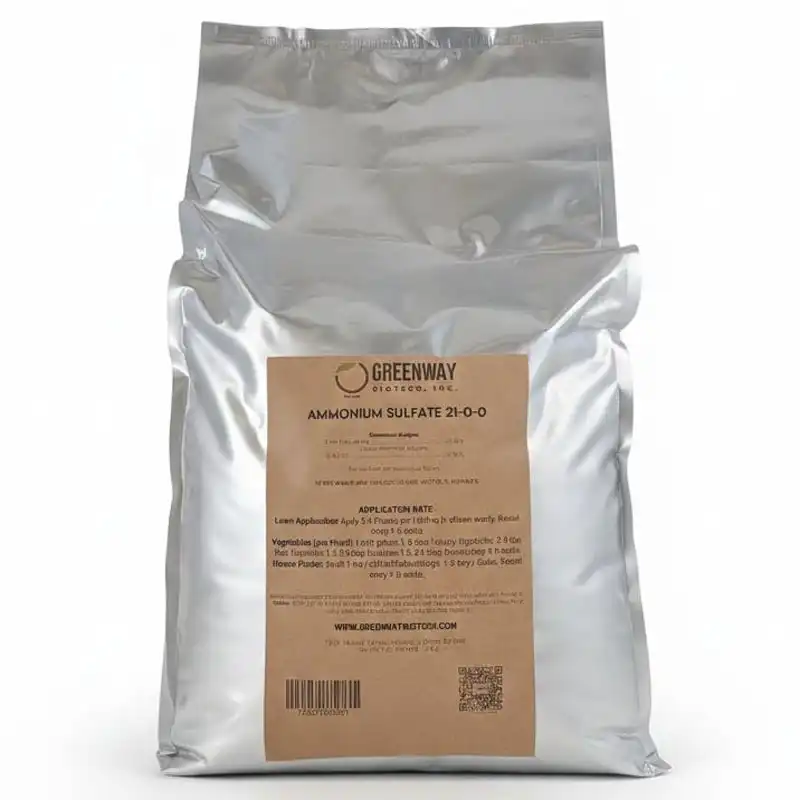
This is the bag best suited to someone who wants a single product that works two ways. It dissolves completely, so you can broadcast it dry or mix a liquid feed. No undissolved grit settles in the bucket. The company registers it with the California Department of Food and Agriculture. Each batch also gets third party heavy metal testing, which matters on vegetable ground. Label guidance runs 3 to 5 pounds per 1,000 square feet on turf every four to six weeks. Stay at the low end in summer heat. For foliar work, dissolve 1 to 2 tablespoons per gallon and spray only when temperatures sit below 65 degrees. Above that, leaf burn risk climbs quickly.
Specs: 25 pound bag | Granular, fully water soluble | 21% N and 24% S | CDFA registered, batch tested
2. Supply Solutions 21-0-0-24S Ammonium Sulfate
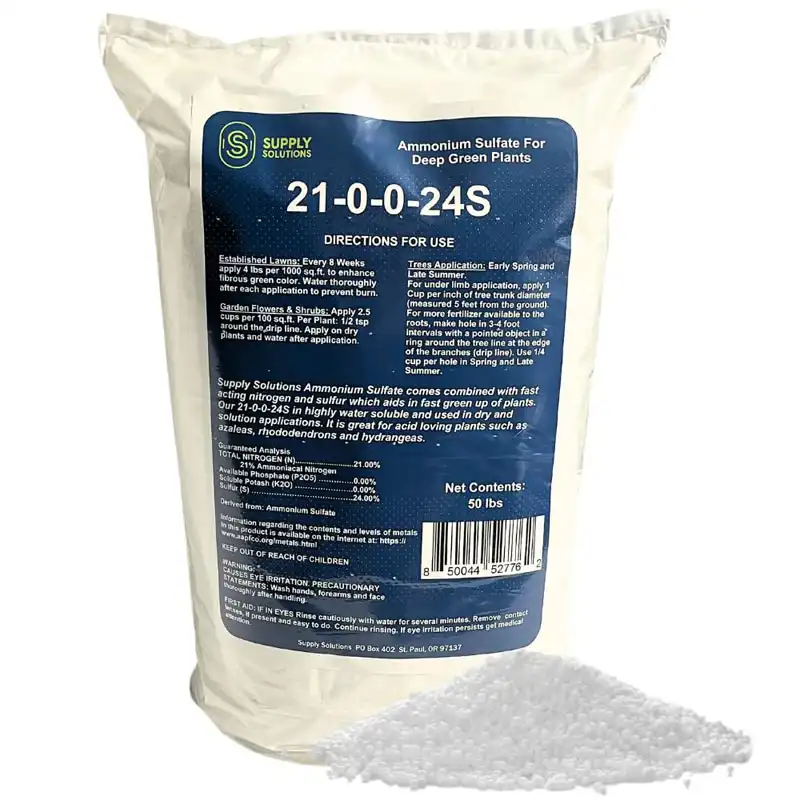
Fifty pounds of straight ammonium sulfate with the sulfur spelled out right on the label. Owner reports consistently note that the prill size runs true. It feeds through consumer spreaders without bridging or clogging. That is the failure most commonly reported with cheap ammonium sulfate. That consistency is worth more than any marketing claim on the front of a bag. It suits blueberry rows, azalea beds, and hedge lines where you want ammonium nitrogen and steady acidification in one pass. Skip the label copy about custom formulas, since ammonium sulfate is a single compound and nobody is tailoring it. Judge it on prill uniformity and analysis, which is where this one holds up.
Specs: 50 lb bag | Granular prills | 21-0-0-24S | Spreader friendly sizing
3. CountryMax Ammonium Sulfate Fertilizer
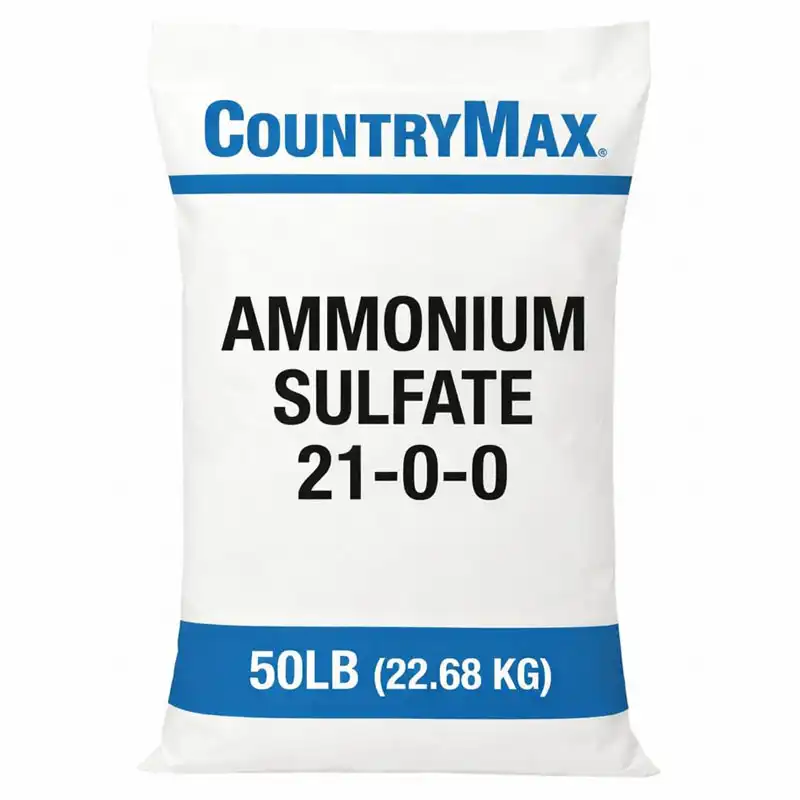
Straightforward pelleted ammonium sulfate in a 50 pound bag, and it also comes in 10 and 25 pound sizes if you need less. The pellets spread evenly through broadcast and drop spreaders. They also hold up better than fine grades when humidity climbs. Label guidance runs 1 to 2 pounds per 1,000 square feet. That is conservative, so burn risk on lawns stays low. A single bag then covers 25,000 to 50,000 square feet. Growers report solid results on vegetable ground, corn especially, where the sulfur pulls its weight alongside the nitrogen. Inspect the bag when it arrives, since a torn seam turns pellets into a caked block in short order.
Specs: 50 lb bag | Pelleted | 21% N with sulfur | Also in 10 and 25 lb
4. Lawn Synergy Sulf-N 21-0-0
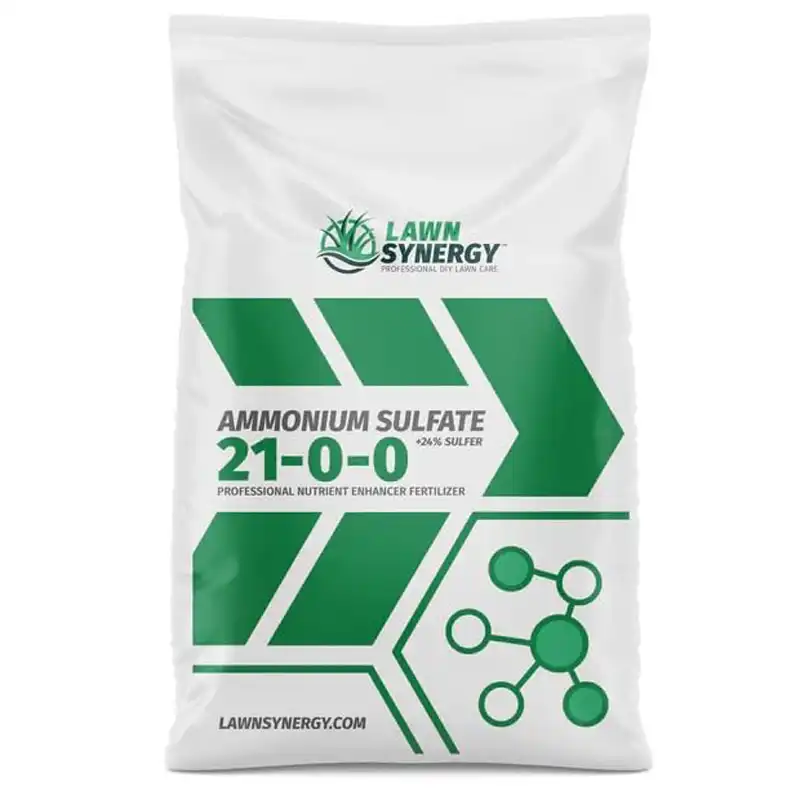
AdvanSix makes the Sulf-N ammonium sulfate behind this bag, and that is a name with real standing in the nitrogen trade. The 18 pound bag covers 7,500 square feet at half a pound of nitrogen per 1,000. Most turf specialists recommend exactly that rate for a single soluble pass. It comes in both granular and sprayable versions, so pick the one that matches your equipment before you order. Green up shows within days on cool season turf, including Kentucky bluegrass. A few users find the granules coarse for small drop spreaders, so check your hopper opening first. Water it in immediately, without exception.
Specs: 18 lb bag | Granular or sprayable | 21% N and 24% S | Covers up to 7,500 sq ft
5. Easy Peasy Plants Ammonium Sulfate 21-0-0-24S
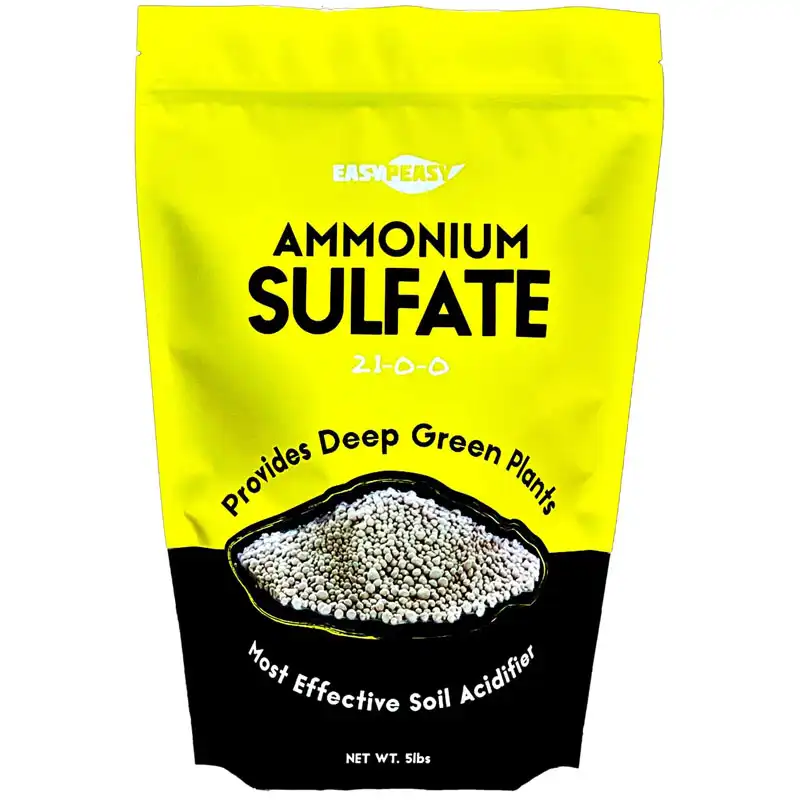
Ten pounds is the right amount when you are feeding a blueberry row, a few azaleas, or one raised bed rather than a whole yard. The granules spread easily by hand. Bag instructions stay clear enough for a first time ammonium sulfate user. Acidification shows up fast on container soil and small beds, so test pH before the second application rather than guessing. One caution worth passing along. The material can leave a white residue that stains composite decking, so rinse nearby hard surfaces. Package coverage claims assume a very light rate. Plan on roughly 2,000 square feet at a standard turf rate.
Specs: 10 lb bag | Granules | 21-0-0-24S | Also available in 20 lb
What to Check Before You Buy a Bag
Check the guaranteed analysis first. Genuine ammonium sulfate tests near 21 percent nitrogen and 24 percent sulfur. Anything lower means fillers or a blend.
Match the grade to the job. Fertilizer grade goes in the spreader. Spray grade goes in the tank. They are not interchangeable, and using the wrong one plugs nozzles.
Check prill size against your spreader. Fine grades meter fast and streak easily. Coarse pellets bridge in small hoppers.
Read the state restrictions. Some 21-0-0 products carry no turf label in states with fertilizer rules. Florida, New Jersey, Maryland, Vermont, and New Hampshire all restrict use. Those bags are cleared for agricultural, ornamental, or garden use only.
Size the bag to the area. A 10 pound bag covers a few beds. A 50 pound bag covers a lawn or a small field block. Buying too much means storing a hygroscopic salt through a humid summer.
Most Common 21-0-0 Fertilizer Questions
Is 21-0-0 the same as ammonium sulfate?
Does 21-0-0 fertilizer lower soil pH?
How fast does 21-0-0 work?
Can I use 21-0-0 on tomatoes?
Is 21-0-0 organic?
Can I put granular 21-0-0 in my sprayer?
Will 21-0-0 burn my lawn?
Final Verdict
21-0-0 is a sulfur fertilizer that happens to carry nitrogen, and thinking about it that way keeps the decisions clean. If sulfate sulfur tests low, or pH sits above 7 on non calcareous ground, it beats every cheaper option. If you only need nitrogen, urea wins on cost and freight.
Test first, credit the nitrogen against your total plan, and watch pH drift over the years. Do those three things and this grade pulls its weight season after season.