15-0-15 Fertilizer: What It Is, Uses, and How to Apply It
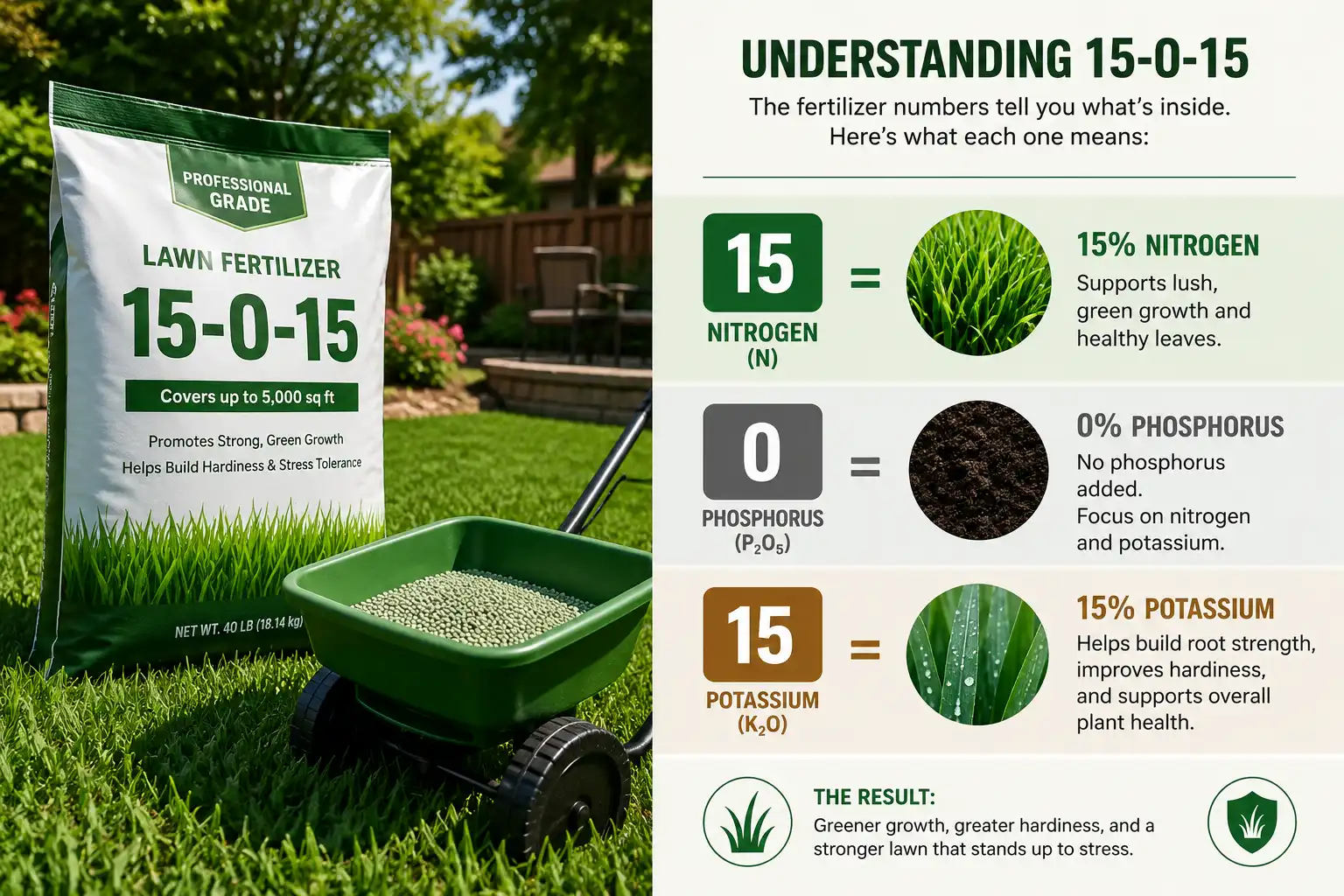
A bag marked 15-0-15 fertilizer throws people off because the middle number is zero. That zero is the whole point. This blend carries nitrogen and potassium with no phosphorus. It feeds established lawns and any soil that already holds plenty of phosphate.
15-0-15 fertilizer is a phosphate-free lawn feed with 15% nitrogen, 0% phosphorus, and 15% potassium. Nitrogen pushes green growth, while potassium builds stress and cold tolerance. So it fits established lawns where a soil test already shows enough phosphorus.
What Is 15-0-15 Fertilizer?
15-0-15 fertilizer is a lawn and turf feed that supplies nitrogen and potassium but no phosphorus. The three numbers list the guaranteed analysis: 15% nitrogen, 0% phosphate, and 15% potash. The rest is carrier material, and many blends fold in iron and trace minerals for color.
Lawn owners reach for this grade when the soil already carries enough phosphorus. That covers most established lawns. It also fits places where local rules cap phosphorus on turf. Run corn, beans, and wheat, and keep a tall fescue lawn at the house. The same soil-test habit on the fields is what to use on the yard. If the phosphorus is already there, leave it out.
If you want the full math behind any bag, our guide to how NPK ratios work breaks it down.
Also know: 20 20 20 NPK Fertilizer
What Do the 15-0-15 Numbers Mean?
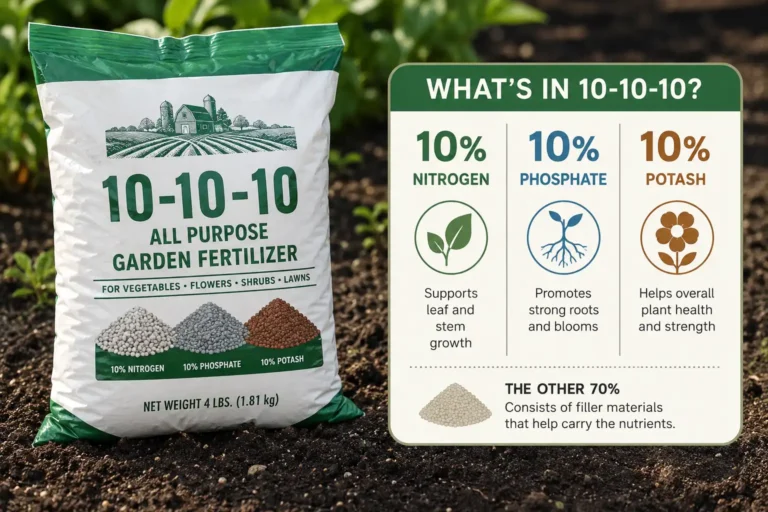
The numbers show the percent by weight of the three main nutrients: nitrogen, phosphate, and potash. So 15-0-15 means 15% nitrogen (N), 0% phosphate (P2O5), and 15% potash (K2O). The order never changes. It always runs N first, P second, K third.
Here is what that looks like in a 16-pound bag:
- Nitrogen: 2.4 pounds (16 x 0.15)
- Phosphate: 0 pounds
- Potash: 2.4 pounds
- Carrier and micronutrients: about 11.2 pounds
The ratio also boils down to 1-0-1. That means nitrogen and potassium sit in equal parts, with phosphorus left out. Once you can read the bag, you can match any product to your soil test.
What Is 15-0-15 Fertilizer Used For?
People mainly use 15-0-15 fertilizer to feed established lawns, deepen green color, and toughen turf against heat, drought, and cold. Nitrogen drives blade growth and the dark green color you want. Potassium works underneath, thickening cell walls and steadying water use, which carries grass through stress. The iron in many blends adds a fast, temporary green-up on top of that.
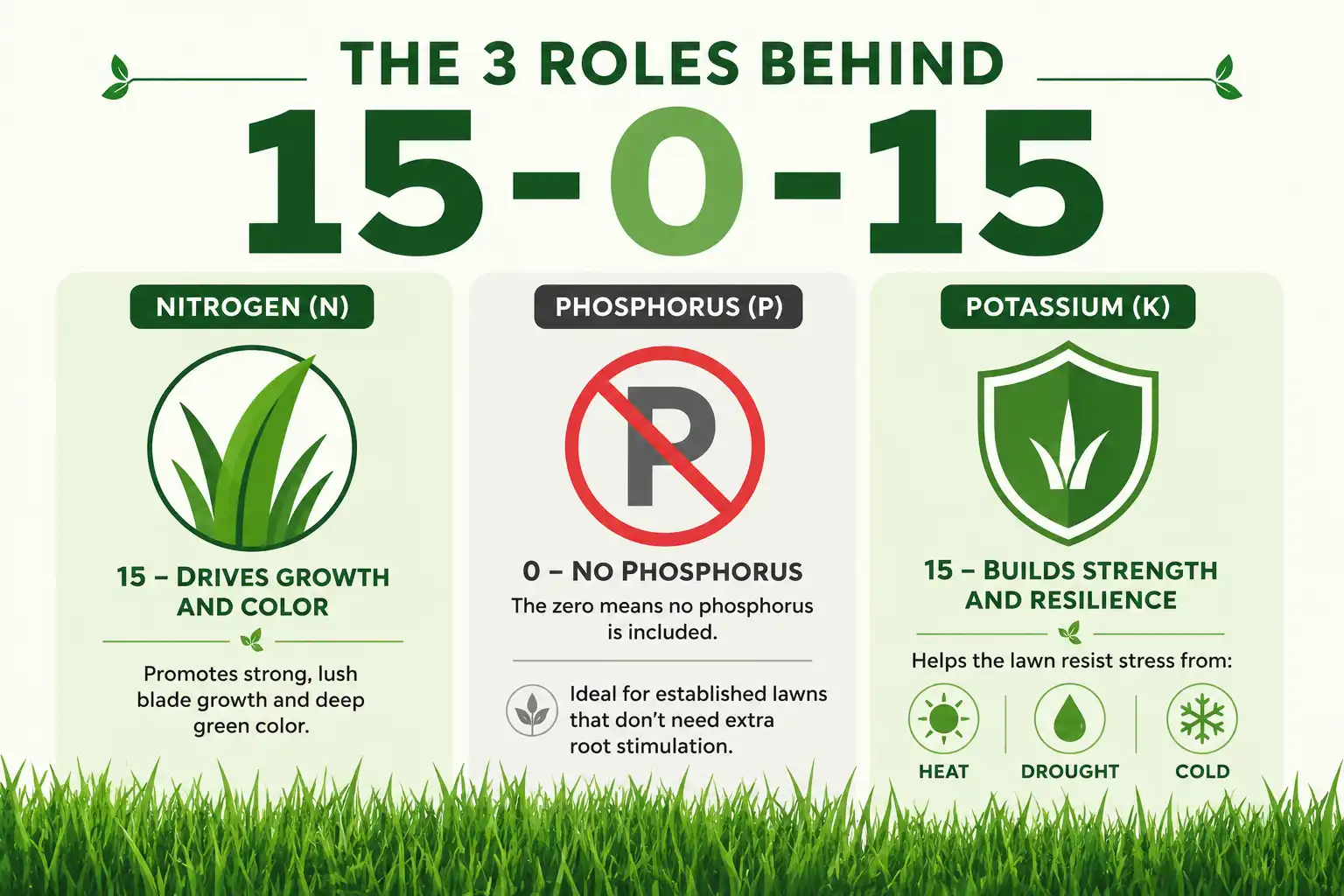
It performs best on warm-season grasses like Bermuda, zoysia, St. Augustine, centipede, and bahia. It also feeds cool-season lawns such as tall fescue and Kentucky bluegrass. Sandy soils gain the most, since they lose potassium fast, a point K-State and other extension turf specialists make often.
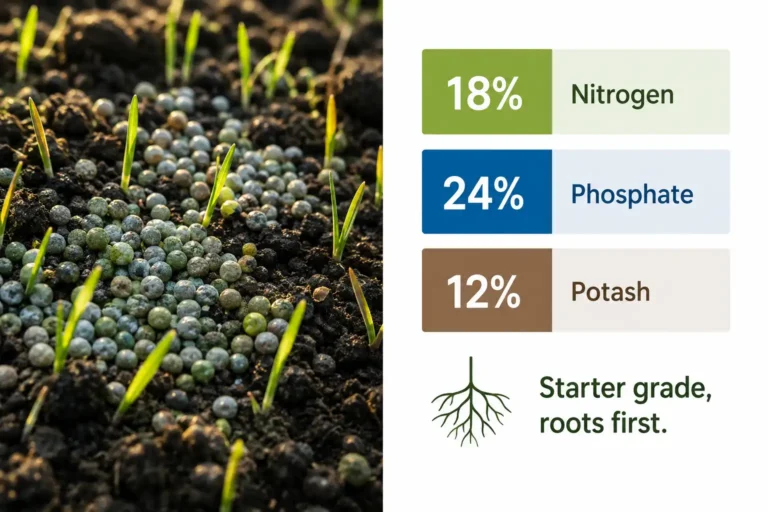
One caveat matters. Do not use 15-0-15 on brand-new seed or sod. Young roots need phosphorus to get established, so a starter fertilizer with some P beats a zero-P blend on a new lawn. Save this feed for turf that is already rooted in. For soils that still test low in phosphorus, a balanced 15-15-15 blend fits better.
Why 15-0-15 Has No Phosphorus
15-0-15 has no phosphorus because most established soils already hold plenty, and extra phosphorus washes into waterways. That runoff feeds algae blooms and drags down water quality. So many states and counties now limit phosphorus on lawns unless a soil test proves a shortage.
Florida runs the strictest rule, while Michigan and Minnesota restrict it too. Michigan law, for example, allows lawn phosphorus only on new grass or where a soil test shows a need. A zero-P blend keeps you inside those rules. It also saves money, because you stop paying for a nutrient your soil does not need. So always run a soil test kit first, and you will know your real numbers before you spread anything.
Which Grasses Respond Best to 15-0-15
Warm-season grasses respond best to 15-0-15. Bermuda and zoysia green up hard when nitrogen lands during summer growth. St. Augustine and centipede across the South lean on it for color, and the iron in many blends clears up yellowing fast.
Cool-season lawns still gain from it, though the timing shifts. Tall fescue and bluegrass take it in spring and early fall. If a soil test shows your lawn only needs nitrogen, a straight source like 46-0-0 urea handles that, but 15-0-15 adds the potassium most lawns want for hardiness.
When Should You Apply 15-0-15?
Apply 15-0-15 when your grass is actively growing, never while it sits dormant. The exact window depends on your grass type. Feeding at the wrong time wastes nitrogen and can stress the lawn.
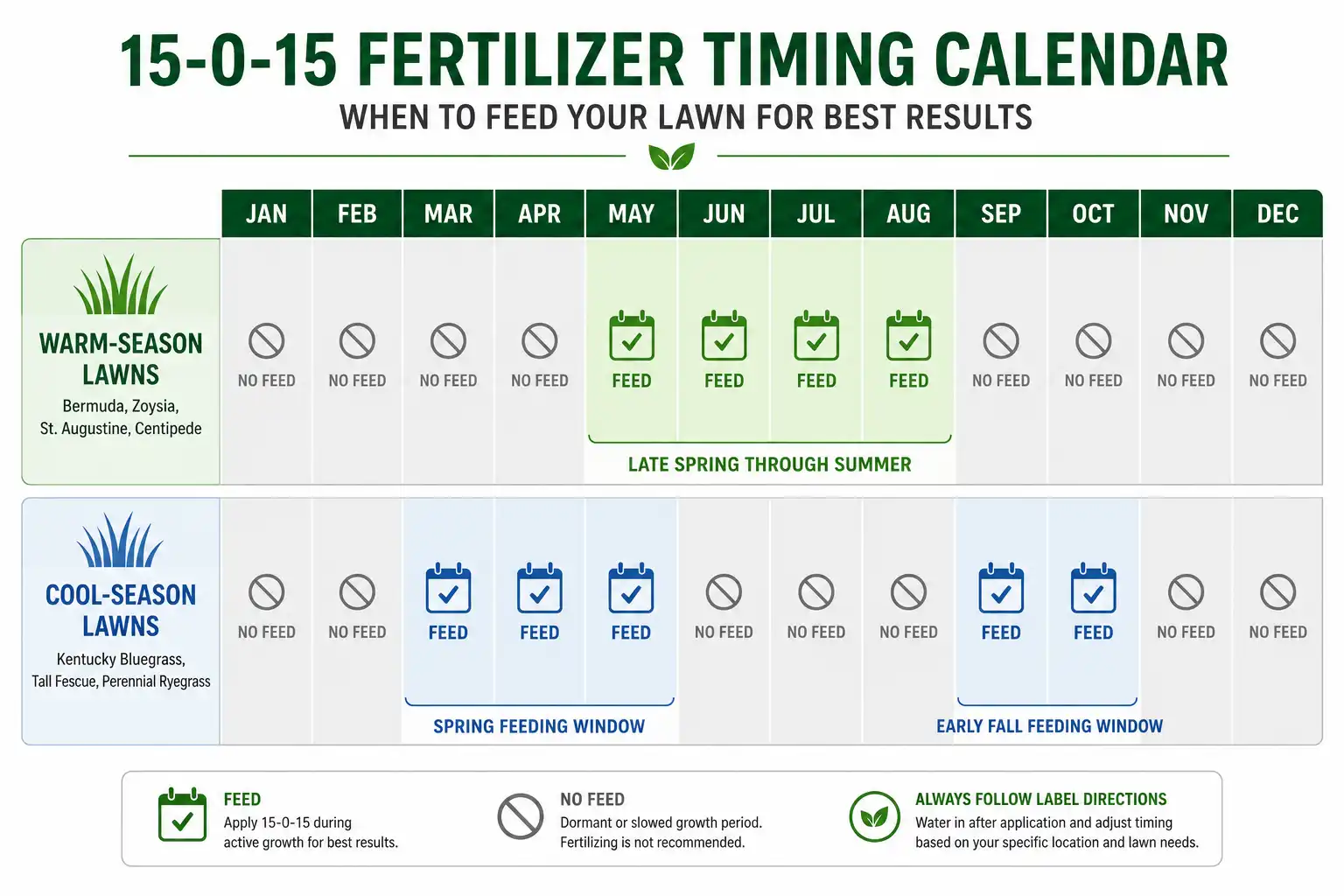
Water it in after every application. And skip a feeding right before heavy rain, since that just flushes nutrients into the storm drain.
Warm-Season Lawns
Feed warm-season grass from late spring through summer, roughly May through August. That lines up with peak growth for Bermuda, zoysia, and St. Augustine. Split the yearly nitrogen into a few lighter passes instead of one heavy dose. Centipede is the exception here, because it wants very little nitrogen, so one light early-summer feeding often covers it. Warm-season lawns go dormant in fall, so ease off the nitrogen as the season winds down.
Cool-Season Lawns
Feed cool-season grass in spring and early fall, when tall fescue and bluegrass grow fastest. Early fall is the strongest window in the transition zone. Keep any late-fall nitrogen light, because a heavy dose before a hard freeze does more harm than good. K-State turf guidance caps a single application at one pound of actual nitrogen per 1,000 square feet to hold down burn risk.
How to Apply 15-0-15 Fertilizer
Apply 15-0-15 fertilizer with a spreader for granular products or a sprayer for liquids, then water it in. Even coverage matters more than speed. Streaky spreading leaves dark stripes and pale gaps, so overlap your passes and take your time.
How Much 15-0-15 to Use Per 1,000 Square Feet
Use about 4 pounds of 15-0-15 per 1,000 square feet per feeding, which supplies roughly 0.6 pounds of actual nitrogen. That sits inside the safe range of 0.5 to 1 pound of nitrogen per 1,000 square feet. During active growth, repeat every 6 to 8 weeks.
| Lawn size | 15-0-15 per feeding | Actual nitrogen |
|---|---|---|
| 1,000 sq ft | about 4 lbs | about 0.6 lb |
| 5,000 sq ft | about 20 lbs | about 3 lbs |
| 10,000 sq ft | about 40 lbs | about 6 lbs |
Across a full season, most lawns want 2 to 4 pounds of nitrogen per 1,000 square feet total, though centipede and other low-need grasses sit at the bottom of that range. Also pick a blend with at least 25% to 50% slow-release nitrogen, especially on sandy soil, so less washes away before the grass uses it.
Granular Application
Spread granular 15-0-15 with a broadcast or drop spreader set to the label rate. A broadcast spreader covers open lawns fast. A drop spreader gives tighter control near beds and edges, which is why a drop spreader is the better fit for trim work along a fence line.
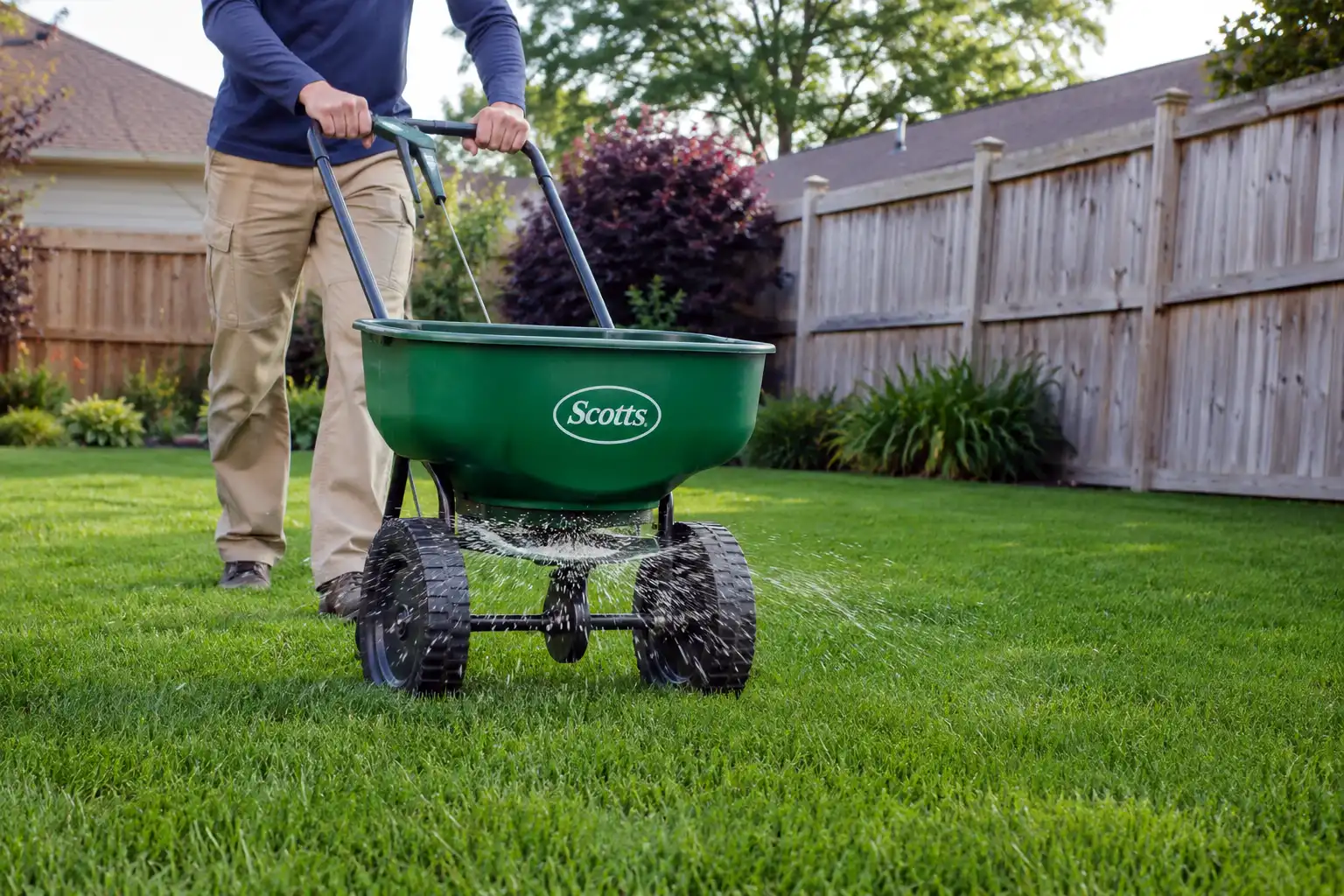
Here are the steps:
- Fill the spreader on a hard surface, not the lawn.
- Set the rate from the product label.
- Spread in two passes at half rate, crossing directions for even cover.
- Sweep stray granules off the driveway back onto the grass.
- Water lightly to move the feed into the soil.
Liquid Application
Mix liquid 15-0-15 in a sprayer, then coat the lawn evenly. Liquids soak in fast, so you often see green-up within a week or two. Attach a hose-end sprayer for the easiest route, or use a pump or backpack sprayer for tighter spots. Follow the label mix ratio, spray on a calm day, and water the lawn afterward to settle the feed in.
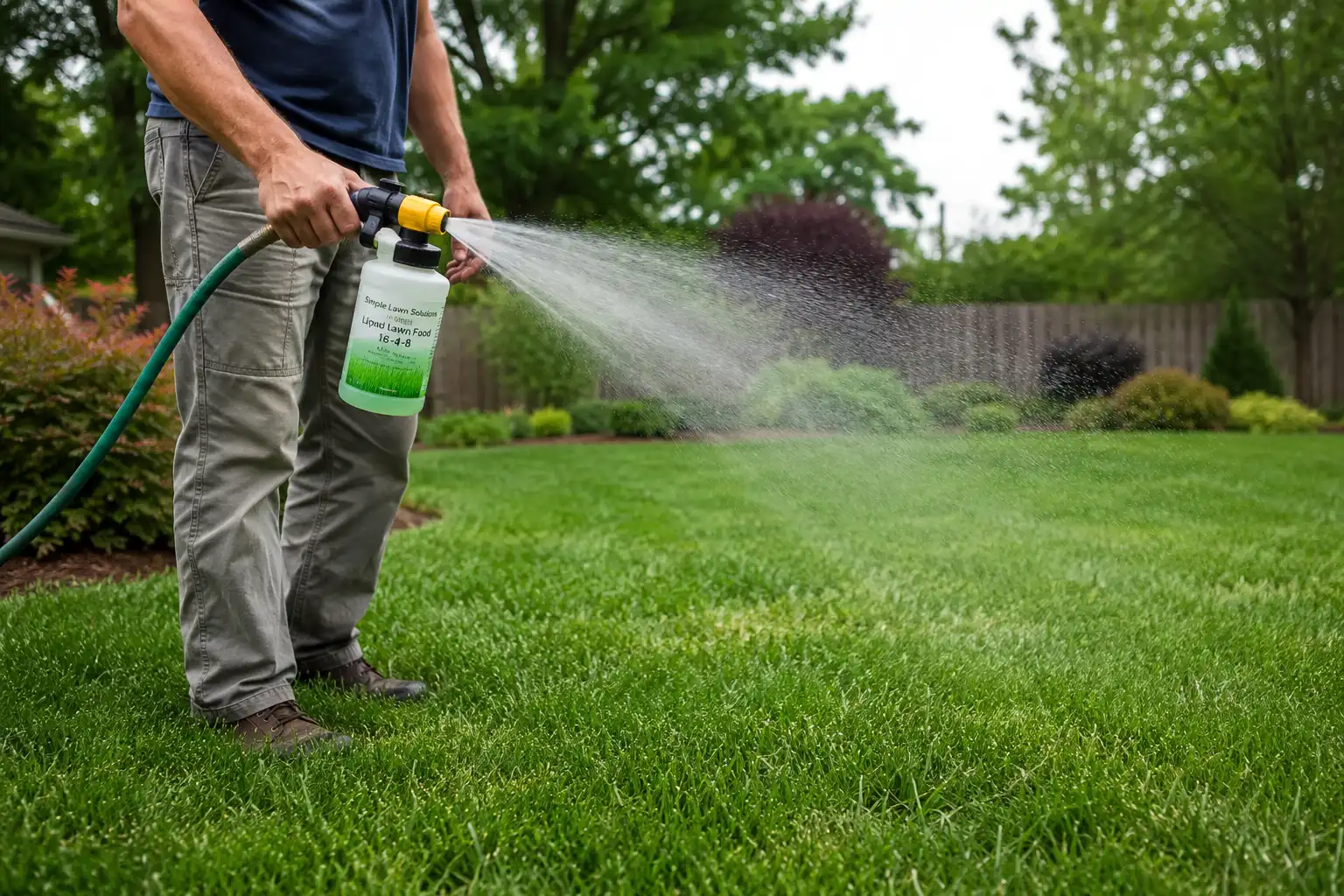
Granular vs Liquid 15-0-15: Which Should You Use?
Granular 15-0-15 suits large lawns and slow, steady feeding, while liquid suits fast green-up and quick fixes. Neither one wins outright. Your lawn size, your schedule, and your goals decide it.
Here is how they stack up:
| Factor | Granular 15-0-15 | Liquid 15-0-15 |
|---|---|---|
| Feeding speed | Slow, steady over weeks | Fast, visible in 1 to 2 weeks |
| Best for | Large lawns, season-long feeding | Quick color, spot treatment |
| Application | Broadcast or drop spreader | Hose-end, pump, or backpack sprayer |
| Reapplication | Less often | More often |
| Burn risk | Low with slow-release | Higher if over-mixed |
Many folks run both. They spread granular for the base feeding, then spray liquid when they want a fast color bump before a get-together.
3 Best 15-0-15 Fertilizers Worth Using
Three 15-0-15 products cover most lawns well. Two are granular, and one is liquid. Here is how each performs and who it fits.
1. Ferti-Lome Slow Release Nitrogen Lawn Fertilizer
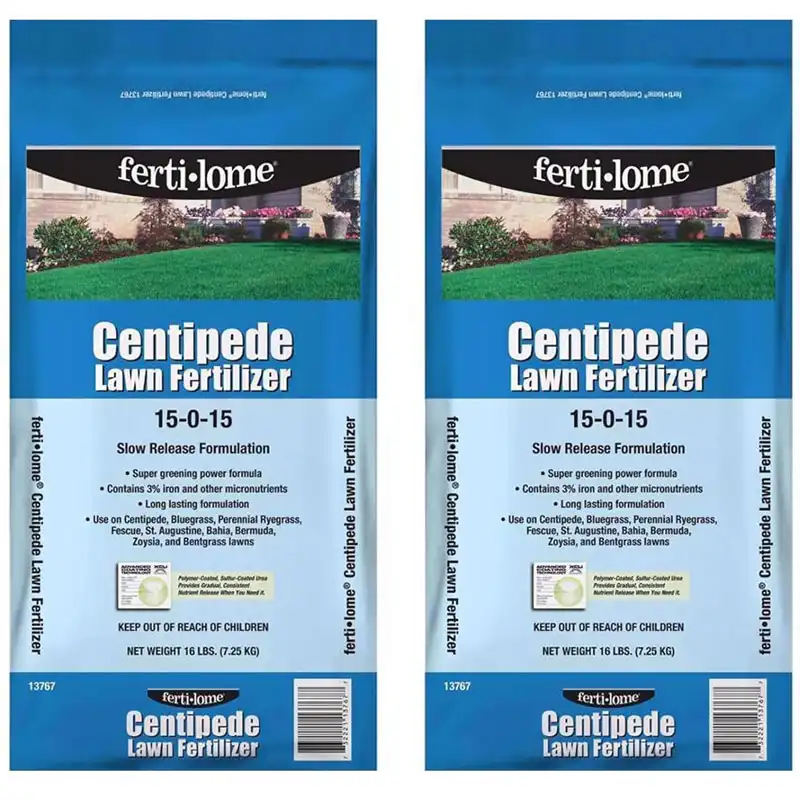
This two-pack ships two 16-pound bags. The maker rates each bag for up to 4,000 square feet, so you cover close to 8,000 square feet total. Slow-release nitrogen feeds steadily and lowers burn risk, while added iron pushes deeper green. It works on nine grass types, from Bermuda to bluegrass. That range suits big lawns and a spring-plus-fall routine.
Specs:
- Form: Granular, slow-release
- Coverage: About 8,000 sq ft (two bags)
- Grasses: Nine warm and cool season types
- Extras: Iron plus micronutrients
PROS
- Covers large lawns
- Steady slow-release feed
- Iron for deeper green
- Works on many grasses
CONS
- More than small lawns need
2. Fertilome Centipede Lawn Fertilizer 15-0-15
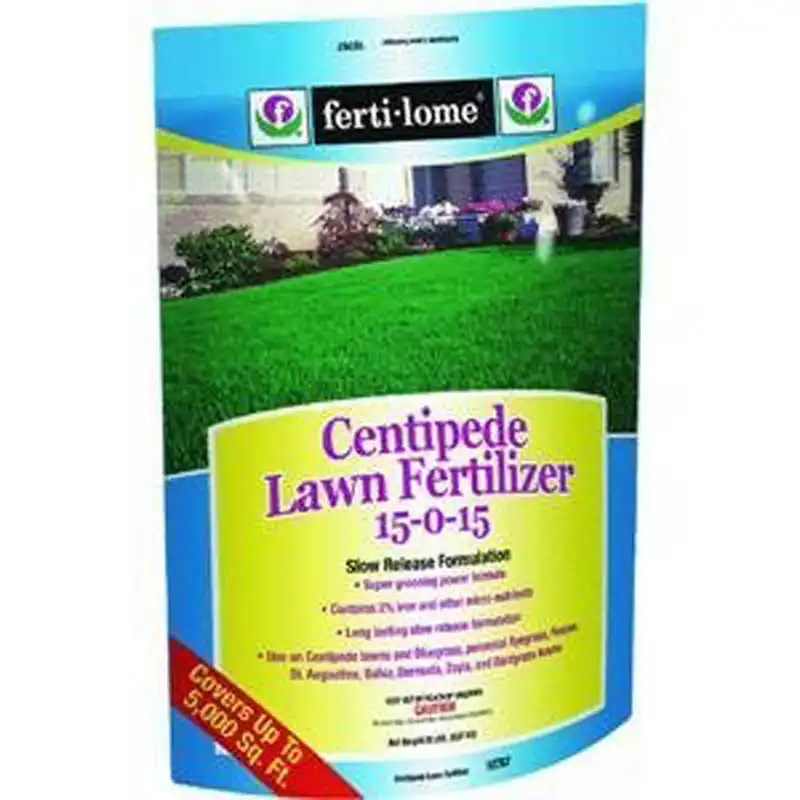
Built for southern lawns, this single 16-pound bag covers up to 5,000 square feet, per the maker. High iron content clears yellow grass and drives deep green. Slow-release nitrogen keeps burn risk low, which centipede needs. You apply about 4 pounds per 1,000 square feet in early spring and early fall. Owners report deep color and filled-in bare spots, and many rebuy it yearly.
Specs:
- Form: Granular, slow-release
- Coverage: Up to 5,000 sq ft
- Standout: High iron for green-up
- Timing: Early spring and early fall
PROS
- Strong iron content
- Corrects yellow grass
- Wide single-bag coverage
- Trusted by repeat buyers
CONS
- One bag limits big lawns
3. Simple Lawn Solutions 15-0-15 Liquid Lawn Fertilizer
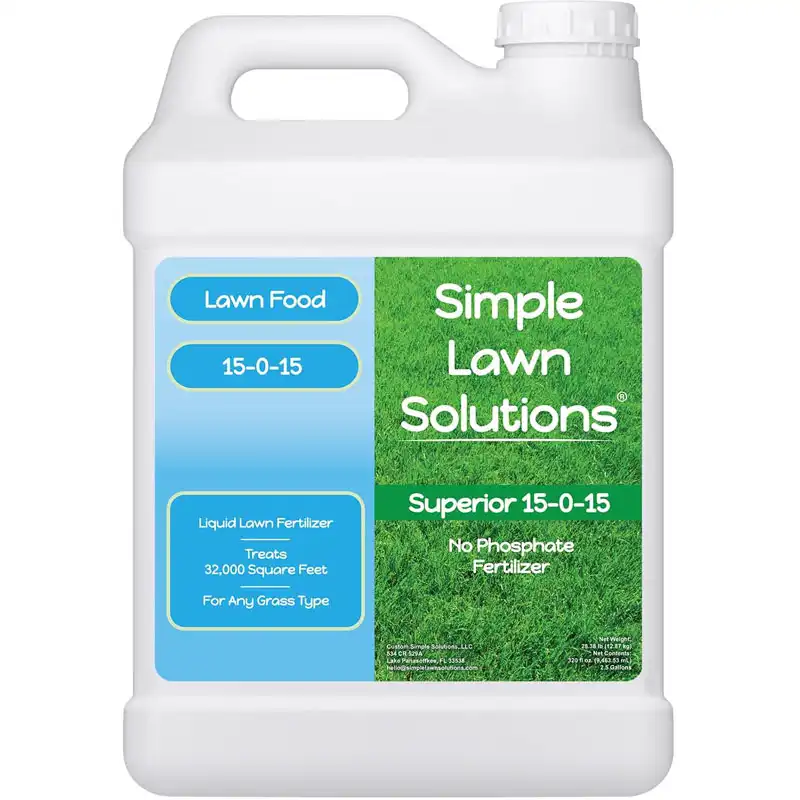
This liquid concentrate stretches far, with the maker listing up to 12,800 square feet per gallon. It blends nitrogen and potassium with humic acid, fish, and seaweed for extra push. You spray it through a hose-end, pump, or backpack sprayer, so application stays simple. Owners often see emerald green within one to two weeks, though results shift with climate. It greens up fastest of the three.
Specs:
- Form: Liquid concentrate
- Coverage: Up to 12,800 sq ft per gallon
- Grasses: All common types
- Extras: Humic acid, fish, seaweed
PROS
- Huge coverage area
- Fast visible green-up
- Natural bio-additives included
- Easy hose-end application
CONS
- Results vary by climate
Here is a quick side-by-side of all three:
| Product | Form | Coverage | Best for |
|---|---|---|---|
| Ferti-Lome Slow Release (2-pack) | Granular | ~8,000 sq ft | Large lawns, spring and fall |
| Fertilome Centipede 15-0-15 | Granular | Up to 5,000 sq ft | Southern lawns, fixing yellowing |
| Simple Lawn Solutions Liquid | Liquid | Up to 12,800 sq ft/gal | Fast green-up, big areas |
Common Mistakes to Avoid With 15-0-15
A few mistakes trip people up with 15-0-15. Dodge these, and you get better results with less waste.
- Skipping the soil test. You might not need this blend at all, so test first.
- Using it on new seed or sod. Young grass needs phosphorus, so start with a phosphorus starter instead.
- Spreading before heavy rain. That pushes nutrients into storm drains.
- Applying to dormant grass. No growth means no uptake.
- Overdoing the nitrogen. Stay near or under one pound of actual nitrogen per 1,000 square feet per pass.
- Leaving granules on pavement. Sweep them back onto the lawn to protect waterways.
FAQs on 15-0-15 Lawn Fertilizer
How Long Does 15-0-15 Take to Work?
Can You Use Too Much 15-0-15?
Is 15-0-15 Good for Gardens or Vegetables?
What Is the Difference Between 15-0-15 and 15-15-15?
Does 15-0-15 Have Iron?
Bottom Line for Your Lawn
15-0-15 earns its keep on established lawns that already hold enough phosphorus. Feed nitrogen and potassium during active growth, water it in, and stay near a pound of nitrogen per 1,000 square feet. Test your soil first, match the product to your grass, and skip this blend on brand-new turf. Do that, and you get a greener, tougher lawn without paying for phosphorus you never needed.