20 20 20 Fertilizer: What It Is, Uses, and Best Picks (2026)
20-20-20 fertilizer is the balanced, water-soluble feed most gardeners reach for first. The three matching numbers make it look like a fix for anything green. Still, that even ratio does not suit every plant. Here is exactly how it works and where it earns its place.
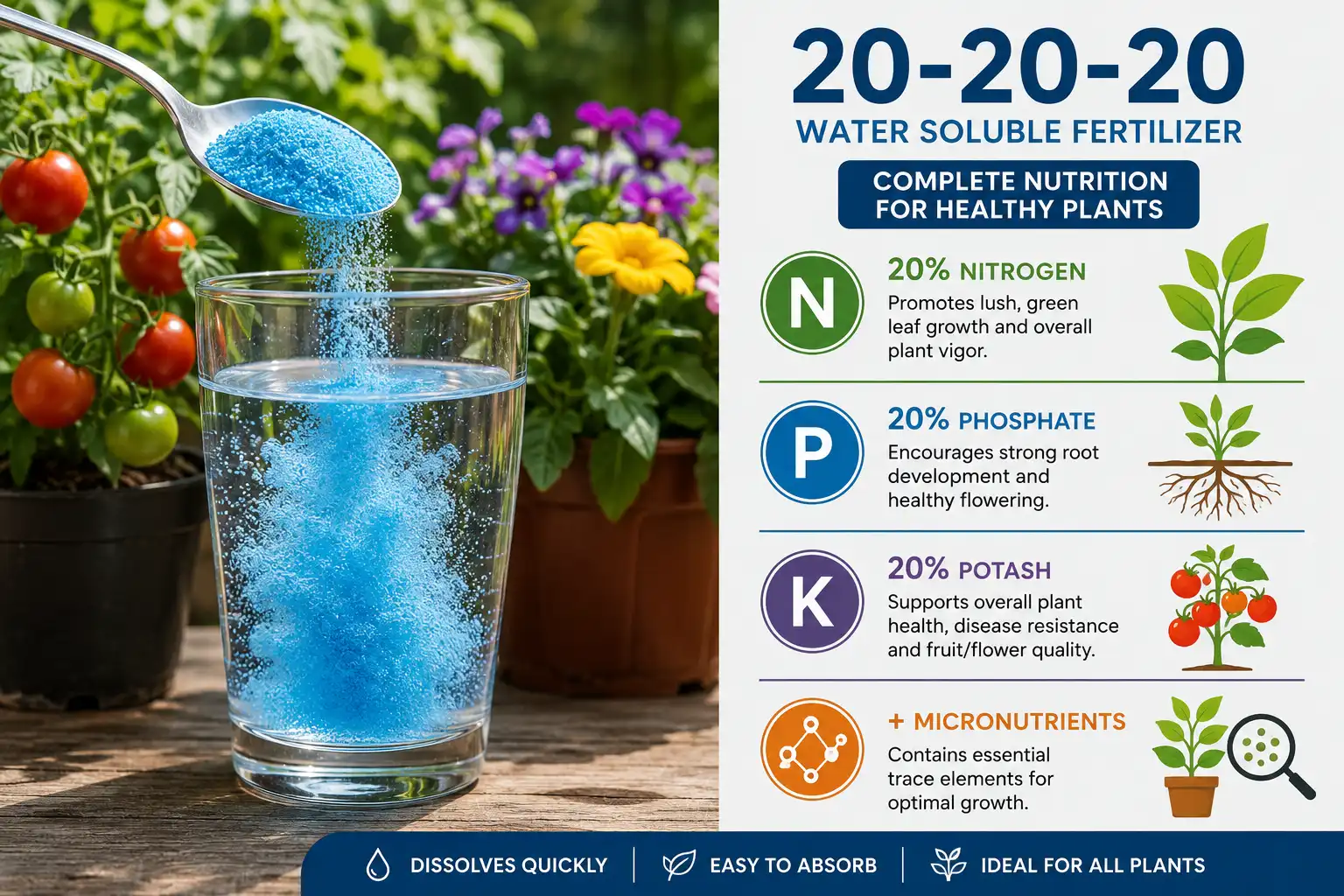
20-20-20 fertilizer is a balanced, water-soluble plant food with 20% nitrogen, 20% phosphate, and 20% potash, plus micronutrients. Gardeners use it for fast green-up, transplants, and container plants, though a soil test should guide in-ground feeding.
What Is 20-20-20 Fertilizer?
20-20-20 fertilizer is a balanced, fully water-soluble plant food that carries equal parts nitrogen, phosphorus, and potassium. Each nutrient sits at 20% by weight, so growers call it triple 20.
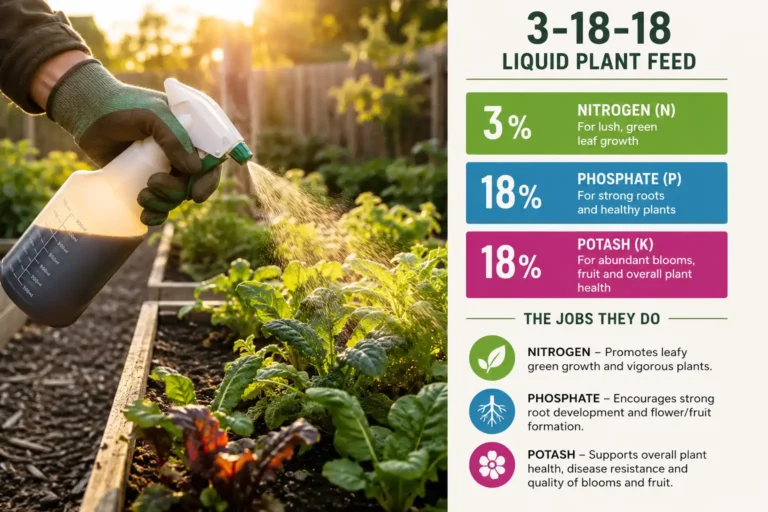
That even split feeds the three macronutrients a plant leans on most. Nitrogen pushes green leaf growth. Phosphorus backs roots and flowers. Potassium builds vigor and stress tolerance. Most brands also fold in chelated micronutrients like iron, zinc, and manganese, so the small stuff gets fed too.
Because it dissolves in water, the feed reaches roots and leaves fast. That speed is the main draw. It also means the nutrients wash through quickly, so you feed lightly and often. As a synthetic, mineral product, it acts quicker than slow-release granules. If you are weighing the organic versus synthetic choice for your beds, that trade-off is the deciding factor. Triple 20 fits best where plants need a quick, even meal.
Know more: 20 10 10 NPK Fertilizer
What Does 20-20-20 Fertilizer Mean?
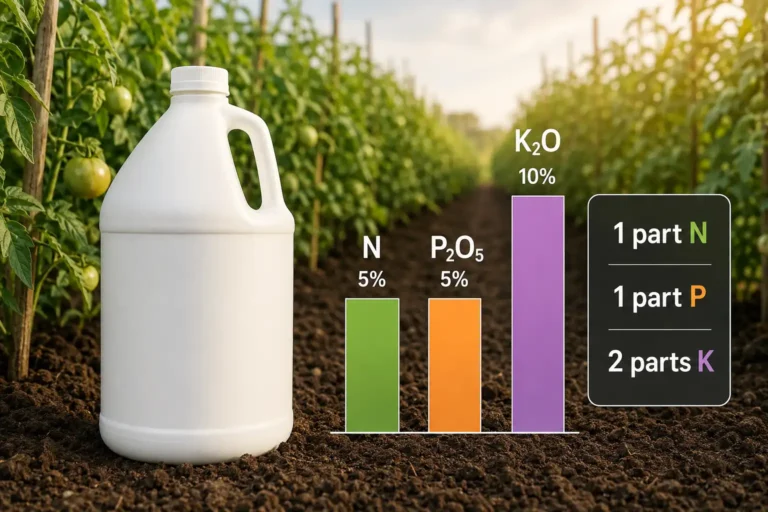
The three numbers mean the product holds 20% nitrogen, 20% phosphate, and 20% potash by weight. That order never changes. Nitrogen comes first, phosphate second, potash third.
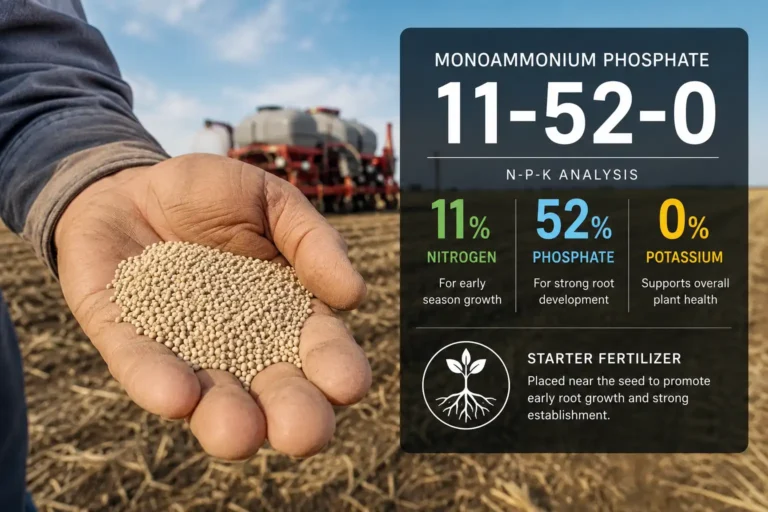
Every fertilizer label in the country follows that same NPK order. So a quick glance tells you the ratio. Once you learn how the NPK numbers work, you can size up any two products in seconds.
One detail trips people up. The second and third numbers report phosphate (P2O5) and potash (K2O), not pure phosphorus and potassium. That is just the label standard, so you compare the printed numbers directly and skip the chemistry.
Here is the simple math. Every 100 pounds of 20-20-20 carries 20 pounds of nitrogen, 20 of phosphate, and 20 of potash. That is 60 pounds of nutrients per hundred. The rest is carrier, dye, and micronutrients. Because the analysis runs stronger, a 20-20-20 delivers twice the nutrients of a 10-10-10 at the same weight.
Also know: High-Nitrogen 32 0 0 Fertilizer
What Is 20-20-20 Fertilizer Used For?
Growers use 20-20-20 fertilizer for quick green-up, transplant recovery, seedling feeding, and steady container nutrition. The balanced blend suits the growth stage when a plant needs leaves, roots, and shoots at the same time. So it works as a workhorse for gardens, greenhouses, and soilless mixes.
Here is where it earns its keep:
- Transplants and seedlings: a diluted feed helps young roots settle after a move to the field or a pot.
- Container and potted plants: frequent watering flushes nutrients out, so a light water-soluble feed puts them back.
- Greenhouse starts: commercial growers run it through injectors for even feeding across a bench.
- Hydroponics and fertigation: it dissolves clean, so it flows through drip lines and reservoirs without clogging.
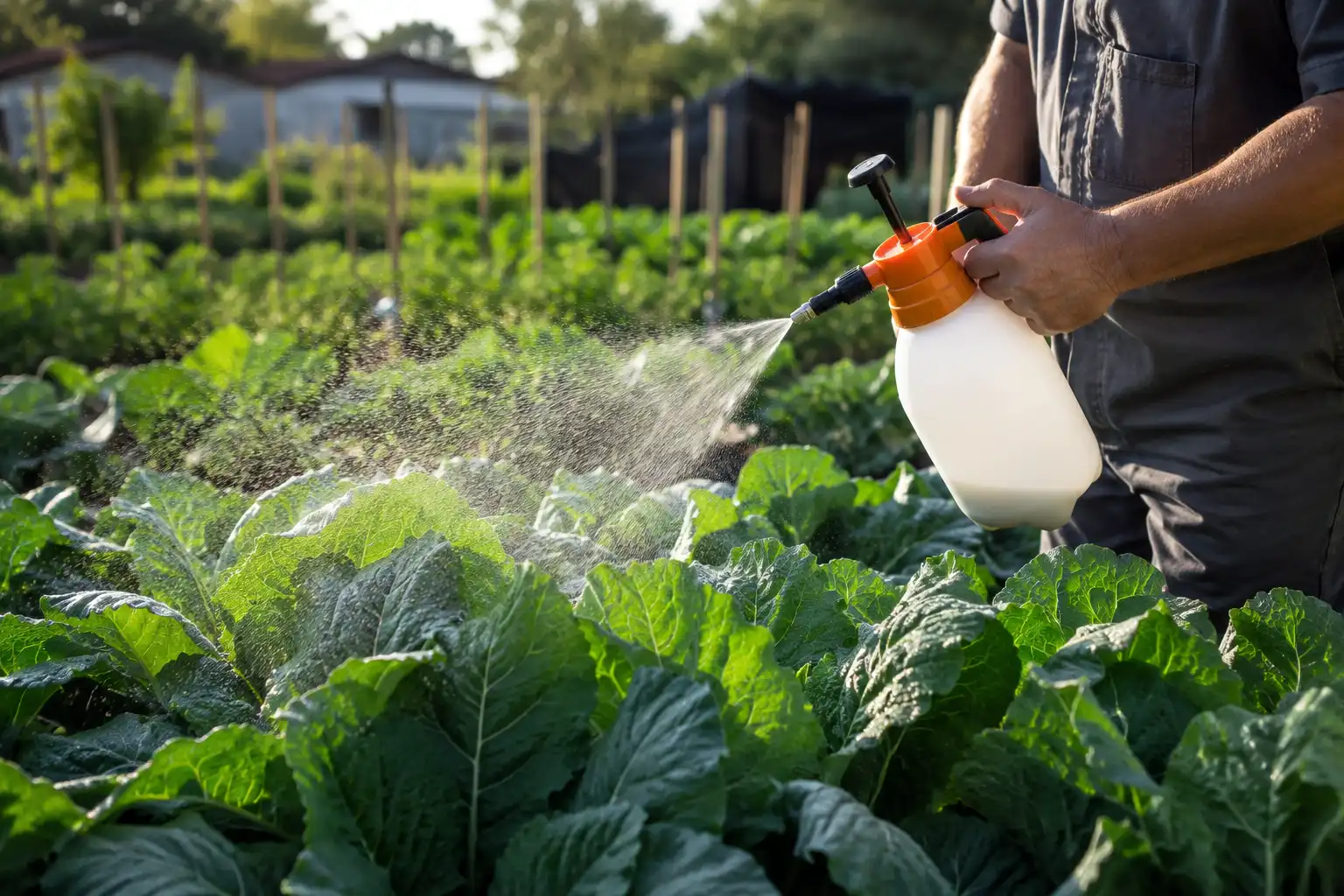
- Foliar feeding: sprayed on the leaves, it corrects a slump fast when roots are stressed.
- Quick green-up: pale, hungry plants perk up within a week or two of a balanced meal.
Is 20-20-20 Fertilizer Good for All Plants?
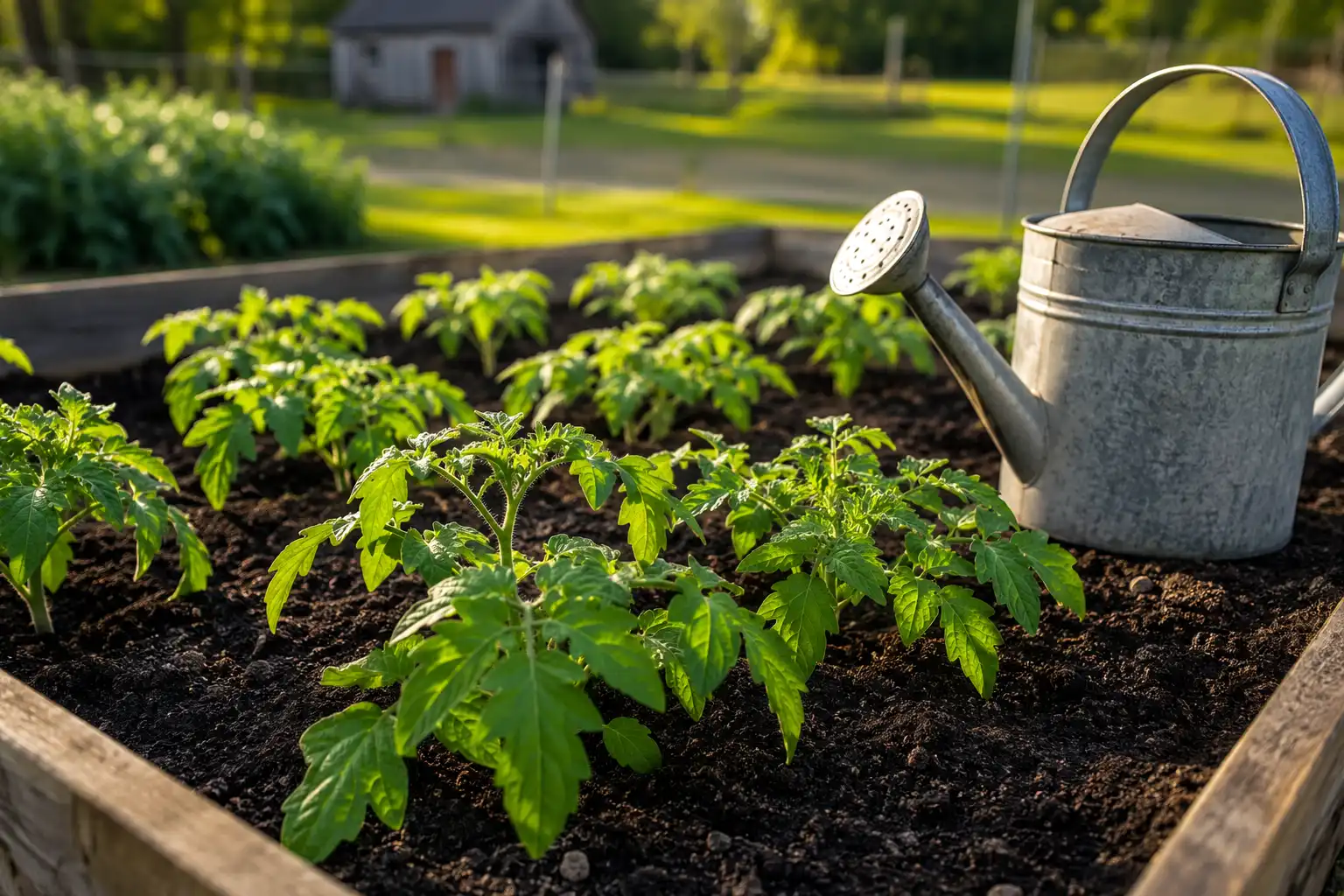
20-20-20 fertilizer works on almost any plant, but it is not the best choice for every job. It shines on containers, transplants, and fast-growing garden crops. On established, in-ground plants, though, the even ratio often feeds more phosphorus than the soil needs.
Some plants respond better than others. So reach for it on plants like these:
- Tomatoes, peppers, and vegetables in their early leafy stage
- Annual flowers like petunias, geraniums, and impatiens
- Houseplants and foliage plants
- Seedlings and fresh transplants
- Container and hanging-basket plants
But go easy on these, or skip it altogether:
- Established perennials and shrubs already in decent soil
- Native plants that thrive on lean ground
- Succulents and cacti, which want a lighter feed
- Blooming plants at flower stage, which do better on a low-nitrogen bloom formula
- In-ground beds that already test high in phosphorus
Here is the honest part. Most garden and lawn soils already hold plenty of phosphorus. Extension soil tests across the northern states routinely show the average yard well above what vegetables need. Adding more of that middle number does not buy extra flowers. Land-grant trials found that high phosphorus does not raise bloom counts.
Excess phosphorus causes two problems. First, it washes into lakes and streams, which is why several states cap it in lawn products. Second, high soil phosphorus locks up iron, zinc, and manganese, so leaves yellow between the veins. That is often how micronutrient shortages show up in the first place. Too much nitrogen brings its own catch: heavy leaves and fewer blooms.
So before you feed in-ground beds, run a quick soil test. Test first, then match the ratio to what the report calls for. In pots and trays, where nutrients leach out with every watering, a balanced 20-20-20 stays a safe, simple pick.
How to Mix and Apply 20-20-20 Fertilizer
Mix 20-20-20 fertilizer at about 1 tablespoon per gallon of water for general garden and container use. Stir until the powder fully dissolves, then water the soil or spray the leaves. Warm water dissolves it faster, though cold-water soluble grades work fine too.
Here is the routine for a clean, even feed:
- Measure the powder for your job, at 1 tablespoon per gallon for general feeding.
- Add it to water, not the other way around, so it dissolves evenly.
- Stir or shake until the crystals fully dissolve and the water runs clear blue.
- Apply right away, either at the base of the plant or misted on the leaves.
- Rinse your can or sprayer after use, so salts do not cake in the nozzle.
Then match the rate to the job:
| Use | Mix rate | How often |
|---|---|---|
| General garden and outdoor plants | 1 tbsp per gallon | Every 1 to 2 weeks |
| Houseplants (constant feed) | 1/4 tsp per gallon | Every watering |
| Foliar spray | 1 tbsp per gallon | Every 7 to 10 days |
| Lawn and turf | 1 oz per gallon | Once a month |
| Seedlings and delicate plants | 1/2 tbsp per gallon | Every 2 weeks |
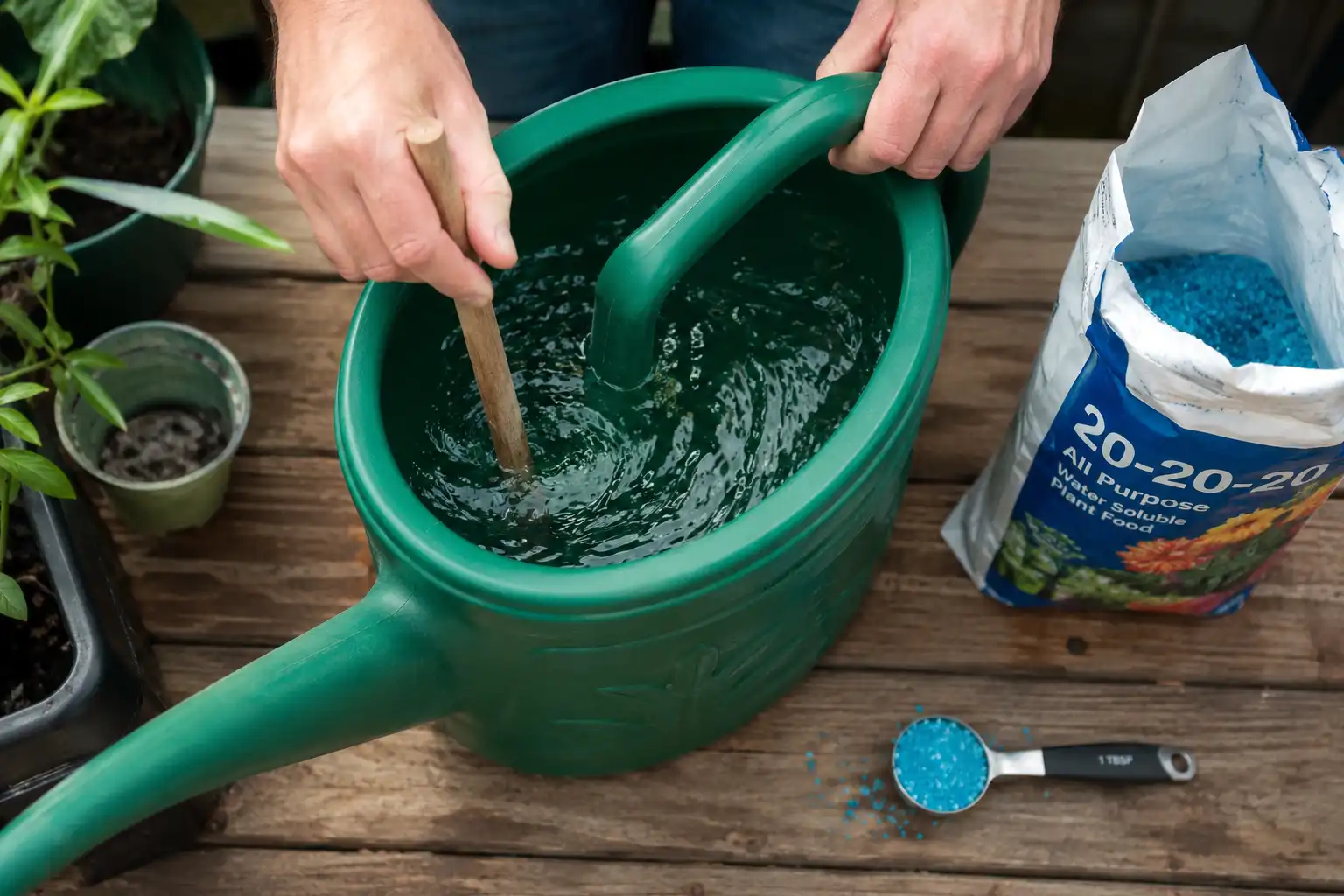
You have several ways to put it down. A watering can is simplest for beds and pots. A soil drench pours the solution at the base to feed roots directly. A foliar spray mists the leaves for a fast correction. Do it in the cool of morning so it does not scorch. For a big garden or lawn, a hose-end sprayer covers ground without hauling cans. Greenhouse and field growers meter it through injectors and fertigation lines.
How Often to Feed
Feed every 1 to 2 weeks during active growth for most garden and container plants. Then back off in fall and winter when plants slow down. On a constant-feed program, potted plants take a weak dose at each watering, not a full dose now and then.
Can You Use Too Much 20-20-20 Fertilizer?
Yes, you can use too much 20-20-20 fertilizer, and the damage shows up fast. As a concentrated, water-soluble feed, an overdose burns roots and leaves with excess salts. More is not better with this product.
So watch for these signs of over-fertilizing:
- A white, crusty salt layer on the soil or pot rim
- Leaf edges that turn brown and crispy, called fertilizer burn
- Wilting even when the soil is moist
- Yellowing lower leaves or stalled growth
- A gray or blue tint on the surface from dye buildup
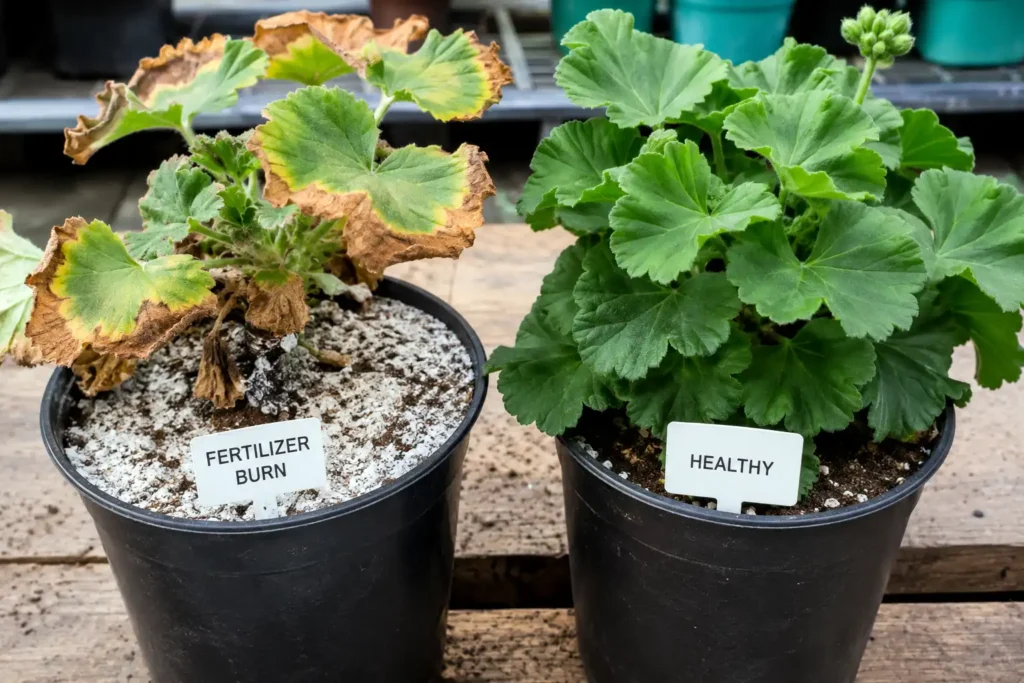
If you see burn, flush the soil right away. Run plain water through the pot or bed several times to leach out the extra salts. Then hold off feeding for two to three weeks and let the plant recover. Going forward, mix on the weak side. A slightly diluted feed every week beats a strong dose that shocks the roots.
How Does 20-20-20 Compare to Other Fertilizers?
20-20-20 is a high-analysis, water-soluble balanced feed, while grades like 10-10-10 are usually dry granules for soil. All-purpose blends such as 24-8-16 lean heavier on nitrogen. Bloom formulas flip the ratio toward phosphorus and potassium.
Here is how the common grades stack up:
| Fertilizer | Form | Best for |
|---|---|---|
| 20-20-20 | Water-soluble powder | Containers, transplants, foliar, fast green-up |
| 10-10-10 | Dry granular | In-ground beds, rows, lawns |
| 24-8-16 | Water-soluble | All-purpose feeding, leafy growth |
| Bloom formula (low N, high P and K) | Water-soluble | Flower and fruit set |
| 46-0-0 (urea) | Dry granular | Straight nitrogen, green-up only |
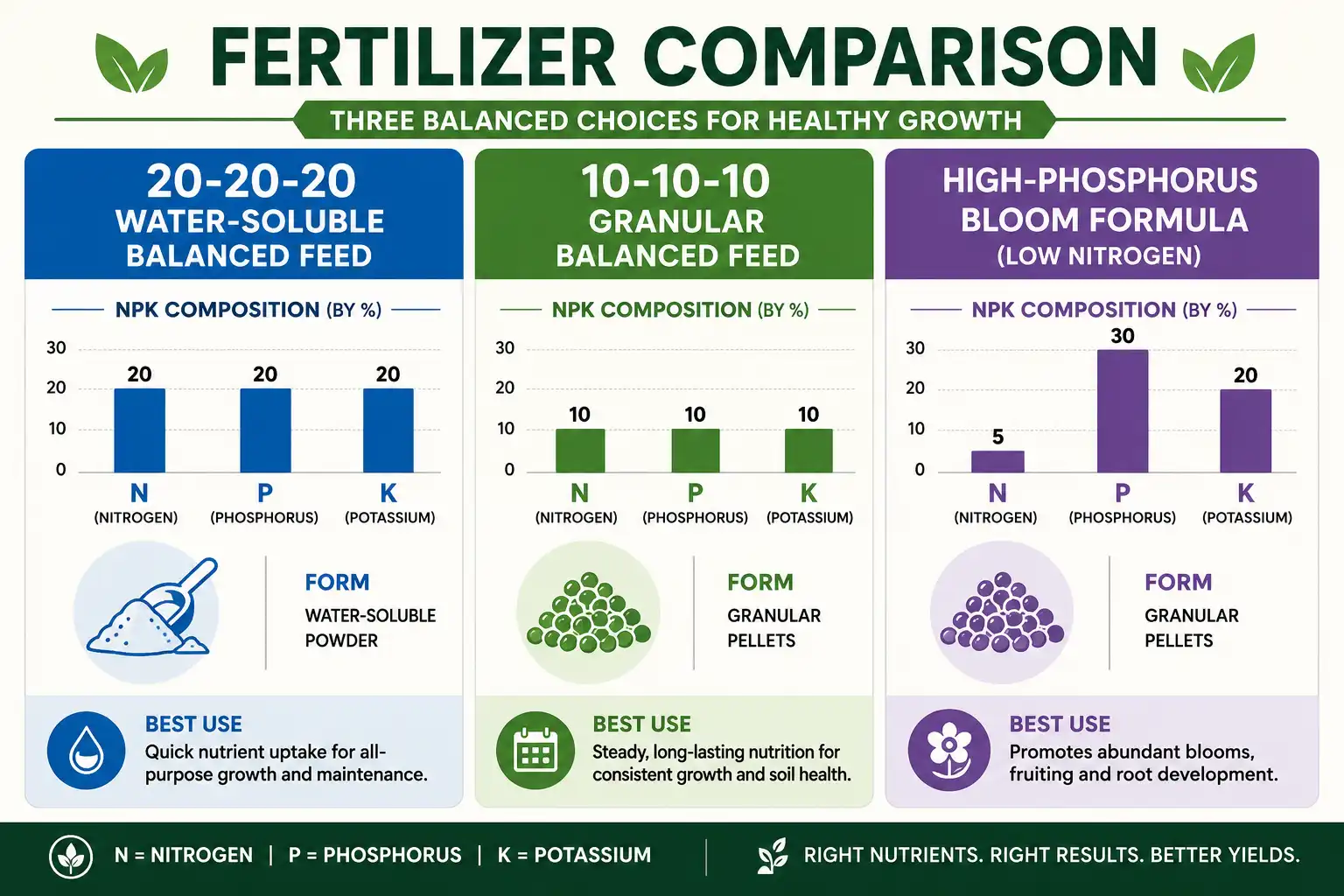
A granular 10-10-10 mix spreads over beds and releases slower, which suits in-ground rows and lawns. Triple 20 fits pots, trays, and foliar jobs where you want a quick, even meal. All-purpose blends carry more nitrogen for leafy plants. Bloom boosters push phosphorus, yet as the soil tests above show, most beds do not need that extra middle number.
5 Best 20-20-20 Fertilizers for 2026
The best 20-20-20 fertilizers dissolve clean, carry chelated micronutrients, and come from makers with a long track record. These five are trusted across gardens, greenhouses, and lawns. So match the size and features to how much you feed.
1. Jacks Professional 20-20-20 General Purpose
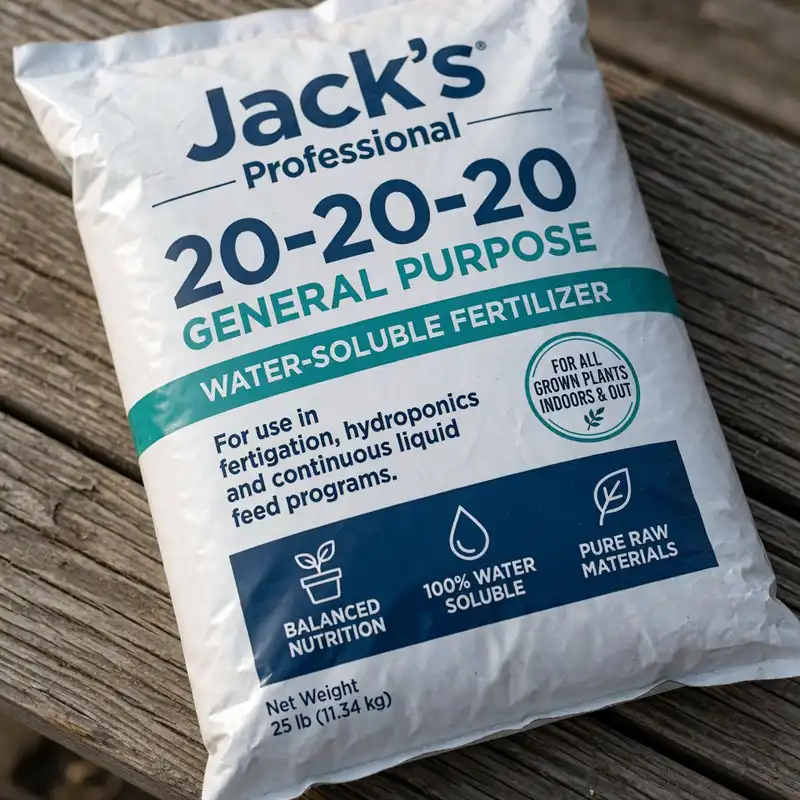
Jack’s Professional is the bulk workhorse for serious growers. JR Peters has blended it in Allentown, Pennsylvania since 1947, and greenhouses and research universities keep reaching for it. The 25-pound bag dissolves fast with no sludge, and chelated micronutrients come built in, so you skip a separate feeding. Growers report deep green foliage and strong flowering across nearly every plant they run it on.
PROS
- Dissolves fast and clean
- Built-in chelated micros
- Strong bulk value
- Works on any plant
CONS
- Powder draws moisture
Specs:
- 25 lb soluble powder
- 20-20-20 with micros
- Made in USA (Pennsylvania)
- Mix 1 tbsp per gallon
2. Grow More 20-20-20
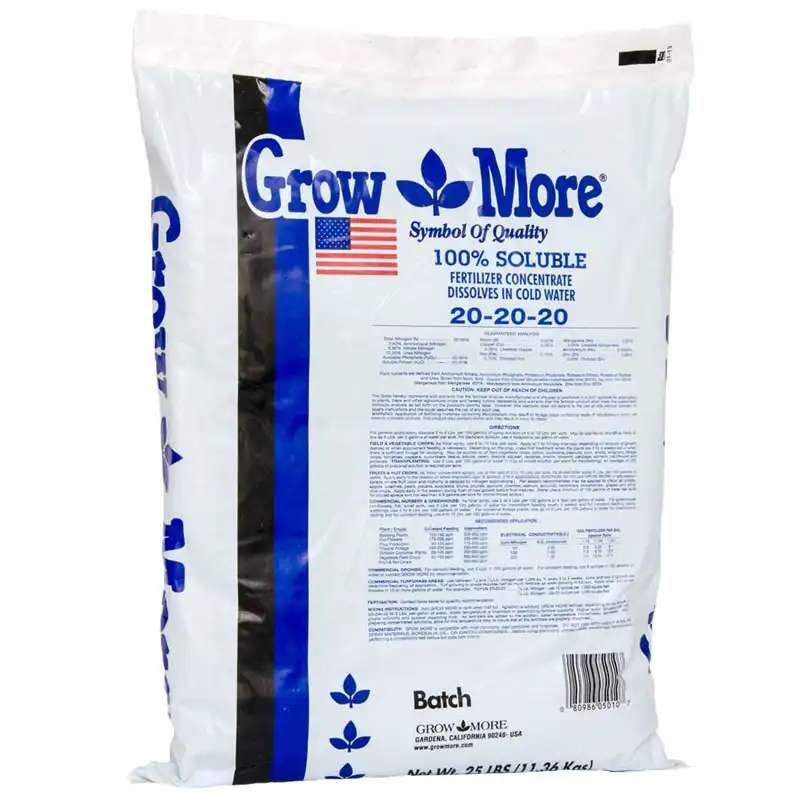
Grow More suits growers running injectors, drip lines, or field rigs. The maker formulates it to dissolve in cold water, so it moves through fertigation systems without clogging the lines. Chelated micronutrients round out the blend, and the 25-pound bag covers large plots. Long-time users report a fast color change on tired plants, often inside seven to ten days.
PROS
- Cold-water soluble
- Injector and rig ready
- Chelated micros included
- Big-plot coverage
CONS
- Seal tight against moisture
Specs:
- 25 lb soluble powder
- 20-20-20 with micros
- Made in USA
- Mix 1 tbsp per gallon
3. Jack’s All Purpose Fertilizer 20-20-20
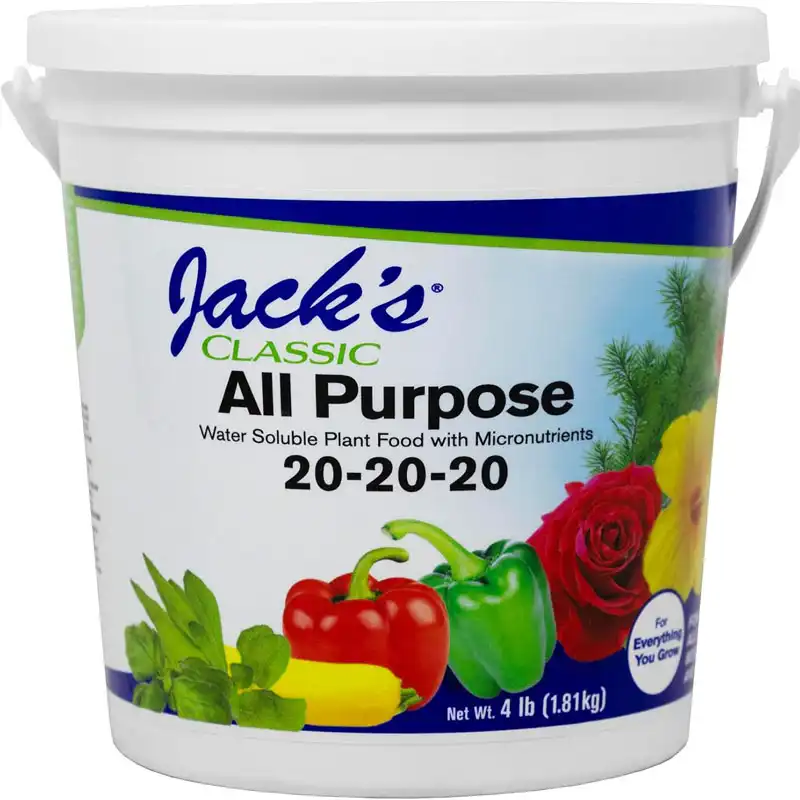
Jack’s Classic puts the same JR Peters formula in a home-size 4-pound tub. It ships with a measuring spoon, so mixing stays foolproof at one scoop per gallon. The blend carries a full micronutrient set, including iron, manganese, and zinc. Gardeners feed it through a watering can or as a foliar spray on flowers, vegetables, and houseplants alike.
PROS
- Comes with measuring spoon
- Handy 4-pound size
- Full micronutrient blend
- Root or foliar use
CONS
- Warm water dissolves best
Specs:
- 4 lb soluble powder
- 20-20-20 with micros
- Made in USA
- Mix 1 scoop per gallon
4. Fertilome 20-20-20
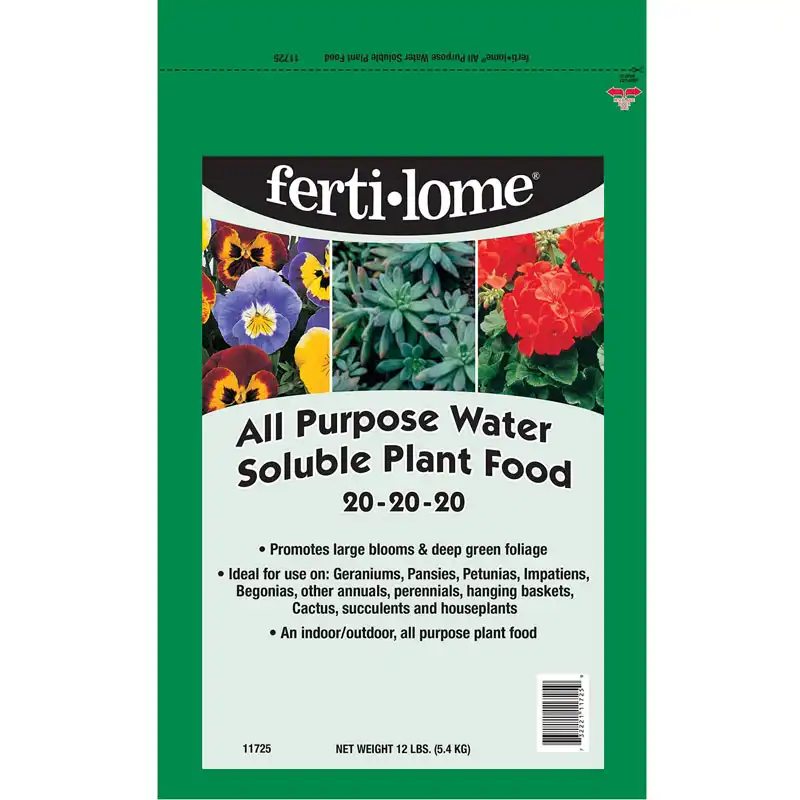
Fertilome leans toward flowers, and the maker recommends it for geraniums, petunias, pansies, and impatiens. It doubles as a soil drench and a foliar spray, which the label calls the strongest setup for bloom color. The 12-pound resealable bag suits season-long feeding. One heads-up: the mix carries a blue dye that stains, so pull on gloves before you handle it.
PROS
- Strong on flower color
- Soil drench or foliar
- Resealable 12-pound bag
- Solid mid-size value
CONS
- Blue dye stains skin
Specs:
- 12 lb soluble feed
- 20-20-20 balanced
- Soil and foliar use
- Mix 1 tbsp per gallon
5. GS Plant Foods 20-20-20
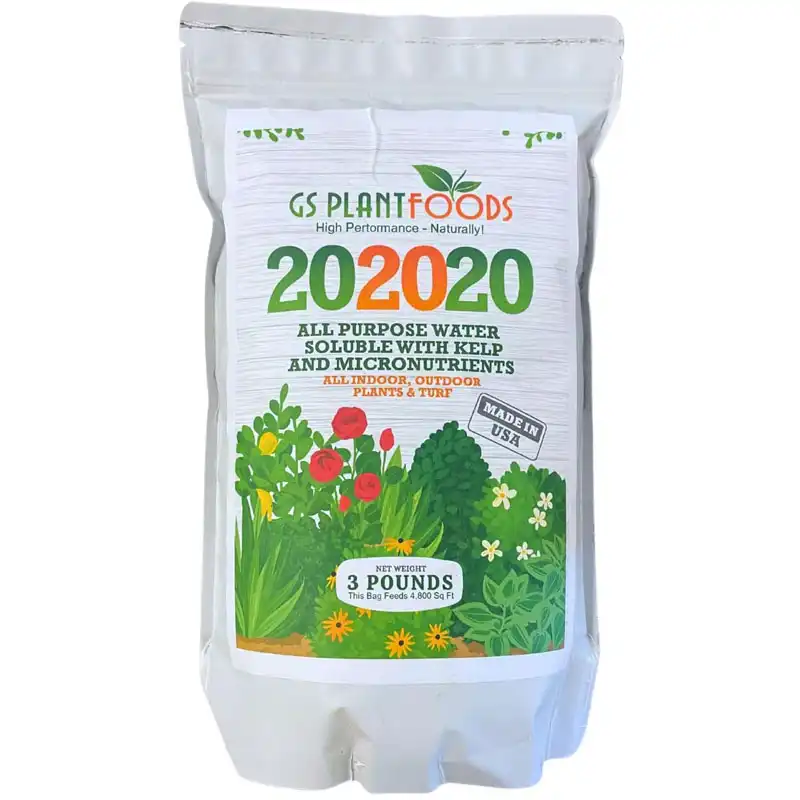
GS Plant Foods is the value pick, and it folds kelp (Ascophyllum nodosum) into the standard blend. A full micronutrient package covers iron, manganese, copper, zinc, boron, and molybdenum. The 3-pound bag treats up to 4,800 square feet of turf, per the maker. It dissolves clean for any sprayer. Users report healthy, dark green growth on both house and garden plants.
PROS
- Added kelp extract
- Full micronutrient package
- Wide turf coverage
- Dissolves easily
CONS
- Not certified organic
Specs:
- 3 lb soluble powder
- 20-20-20 plus kelp
- Full micronutrients
- Covers 4,800 sq ft turf
FAQs on NPK Fertilizers
Is 20-20-20 the same as Miracle-Gro?
Can you use 20-20-20 on vegetables?
Does 20-20-20 fertilizer expire?
Is 20-20-20 fertilizer organic?
How long does 20-20-20 take to work?
Final Thoughts on 20-20-20 NPK
20-20-20 earns its spot for containers, transplants, seedlings, and quick green-up. It dissolves fast, carries the micros, and feeds almost anything in a pot or tray. For in-ground beds, soil testing still comes first, since most Kansas ground already holds plenty of phosphorus. Grab the size that fits your garden. Mix it at a tablespoon per gallon, and feed on a light, steady schedule. Do that, and this simple blue powder will keep your plants green without wasting a dime.