NPK fertilizer for Crops: 7 Ways to Choose the Right Grade
NPK fertilizer for crops delivers nitrogen, phosphorus, and potassium in a labeled ratio that matches a crop’s growth needs. The right NPK grade increases yield and quality when soil tests show a real nutrient gap. The wrong grade raises costs, risks leaf burn, and pushes nutrients past the root zone. This guide explains what the numbers mean, how to pick a ratio by crop stage, how to apply it safely, and how to troubleshoot common problems in the field.
What does “NPK” mean on fertilizer?
NPK stands for nitrogen (N), phosphorus (P), and potassium (K), the three primary macronutrients plants use in the largest amounts. Plants use nitrogen to build leafy growth and proteins, phosphorus to support roots and energy transfer, and potassium to regulate water use and stress tolerance.
If you want the full foundation first, start with the soil health material and then come back to ratios and timing: soil fertility basics. Crop farming nutrient management ties together soil tests, yield goals, and tissue checks so you don’t guess your way through fertility.
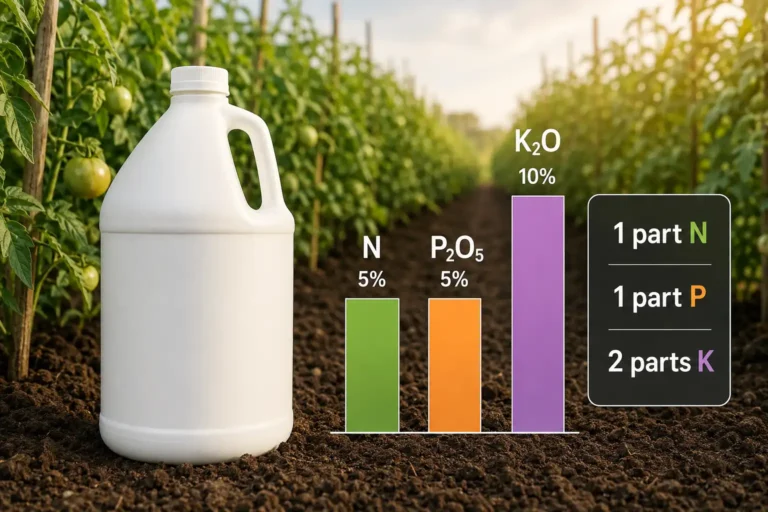
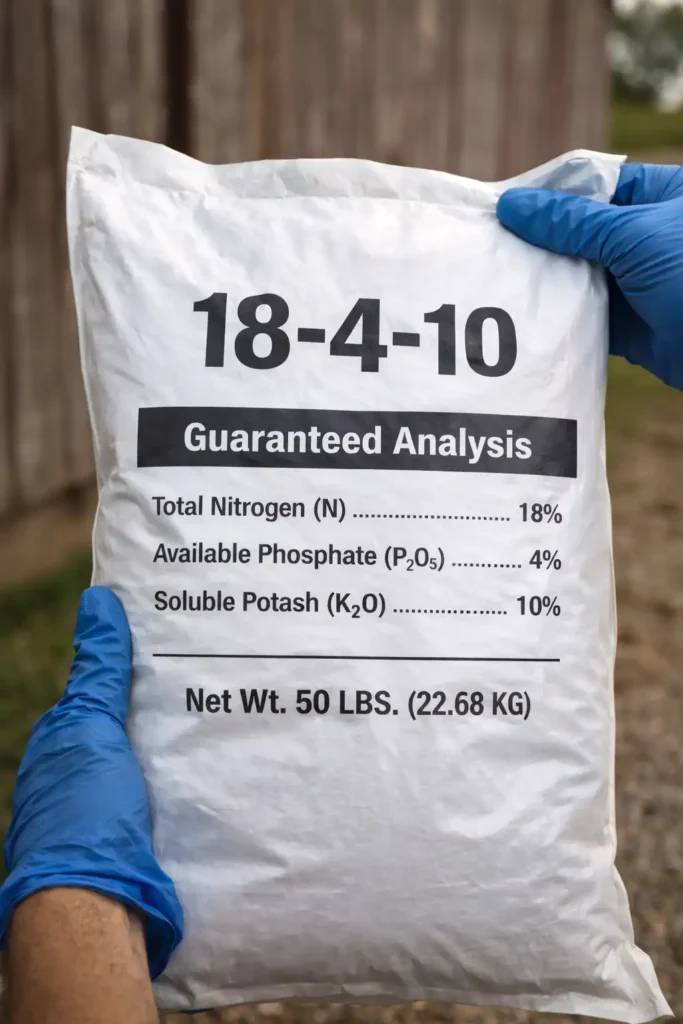
What do the three numbers on a fThe three numbers are the fertilizer “grade,” and they show percent by weight of:
- N (elemental nitrogen)
- P reported as P₂O₅ (phosphate)
- K reported as K₂O (potash)
Example: 18-4-10 contains 18% N, 4% P₂O₅, and 10% K₂O by weight.
That labeling detail matters in planning because you buy fertilizer by weight, but you manage nutrients by pounds of nutrient per acre.
If you’re dialing in nutrients and timing, how to estimate irrigation water needs matters because overwatering can leach nitrogen and potassium past the root zone, so check irrigation and water management guide before your next application.
Why crops respond to N, P, and K differently
Crops respond differently because plant parts grow on different schedules.
- Nitrogen drives canopy. Corn, wheat, rice, and most leafy vegetables build yield by building leaf area first, so N timing matters.
- Phosphorus drives early push. Roots and early vigor improve when soils test low for P, especially in cool soils where P moves slowly.
- Potassium steadies the plant. K supports water regulation, stalk strength, and stress response, so it shows up in standability and quality.
If you grow grain, read the crop pages alongside this guide so you can match NPK with each crop’s growth habit: corn guide and wheat guide.
Start with a soil test before you pick an NPK grade
A soil test turns fertilizer from guessing into math.
Extension soil test guides explain that fertilizer recommendations vary by region and philosophy, so the same soil test can produce different rate suggestions depending on local research and yield goals. That is normal. The important part is this: the soil test anchors your plan to your field’s nutrient supply.
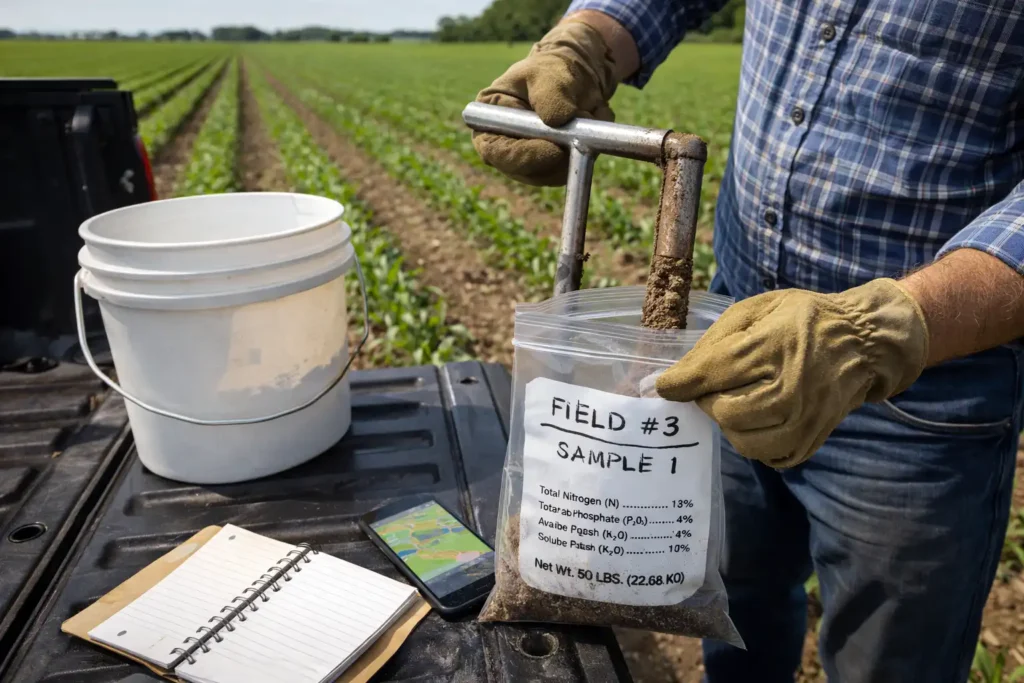
When you’re deciding between organic fertilizer vs chemical fertilizer, it helps to compare release speed, soil building, and cost per pound of nutrient, and the soil fertility basics is a good place to line up those choices with your soil test.
How to choose the right NPK ratio for crops
Choose the ratio based on soil test levels and growth stage, not on the prettiest bag on the shelf.
Balanced NPK: when it fits
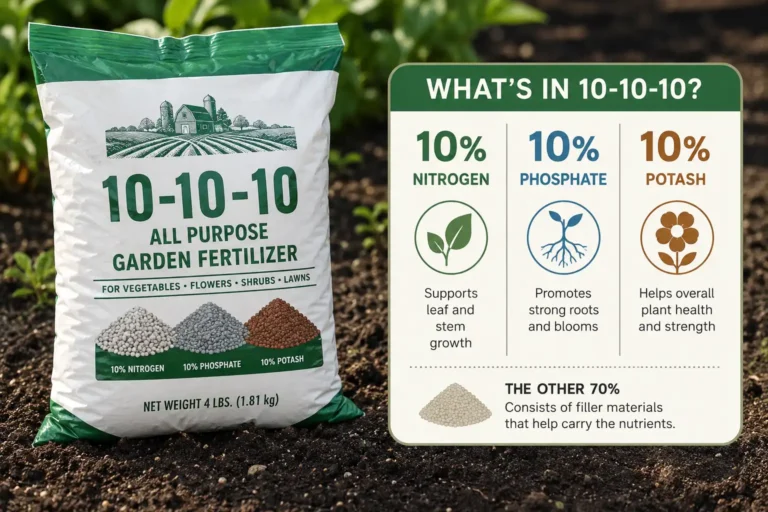
A balanced grade like 10-10-10 or 15-15-15 fits fields where soil tests sit in the “medium” range for P and K and where you need a general-purpose blend. Balanced blends also fit mixed vegetable gardens and small plots where you do not separate nutrients by zone.
Higher N: when crops build canopy
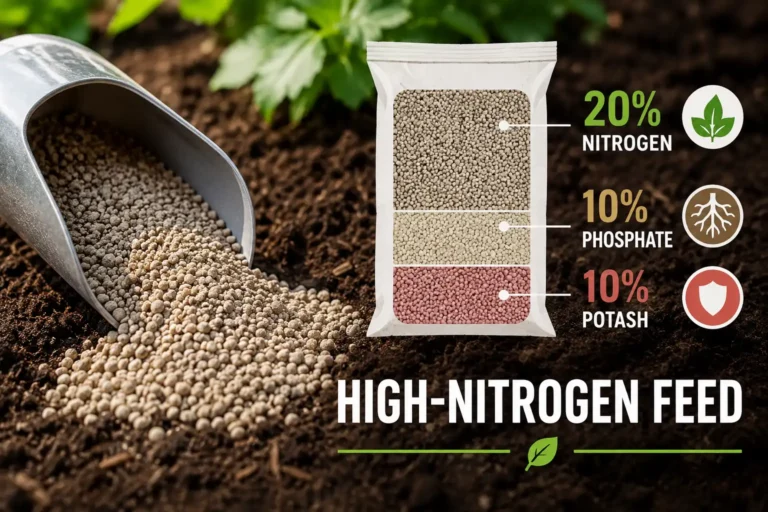
Higher nitrogen grades fit cereal crops and leafy growths building leaf area and the soil test calls for N, the plan leans toward higher N and split timing.
Good matches include:
- corn at early vegetative growth
- wheat during tillering and stem elongation
- leafy vegetables during rapid growth
Higher P: when soil tests low and roots need help
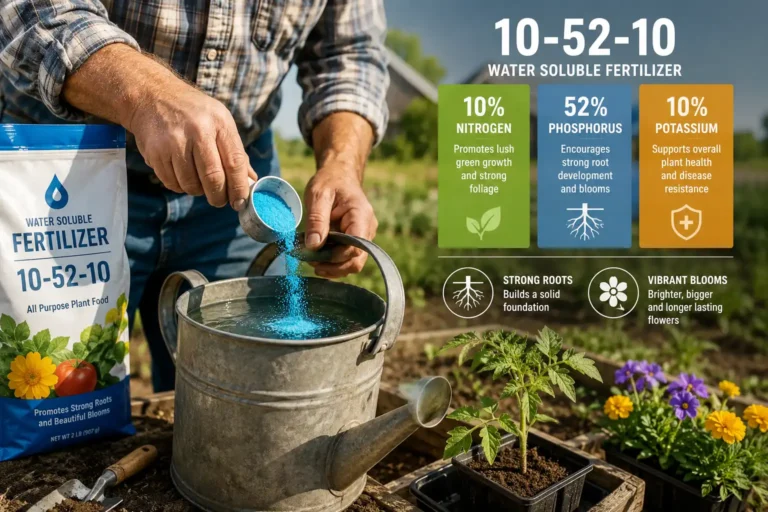
Higher phosphorus blends fit low-P soils, starter fertilizer programs, and early root development windows. Use P to correct a soil test deficiency, then maintain.
Higher K: when quality and stress tolerance matter
Higher potassium blends fit:
- sandy soils with low K holding capacity
- fruiting and tuber crops where quality matters
- drought-prone fields where K helps plants regulate water
For tubers and heavy K feeders, pair this article with specific crop pages: potatoes and tomatoes.
How to calculate how much NPK fertilizer to apply
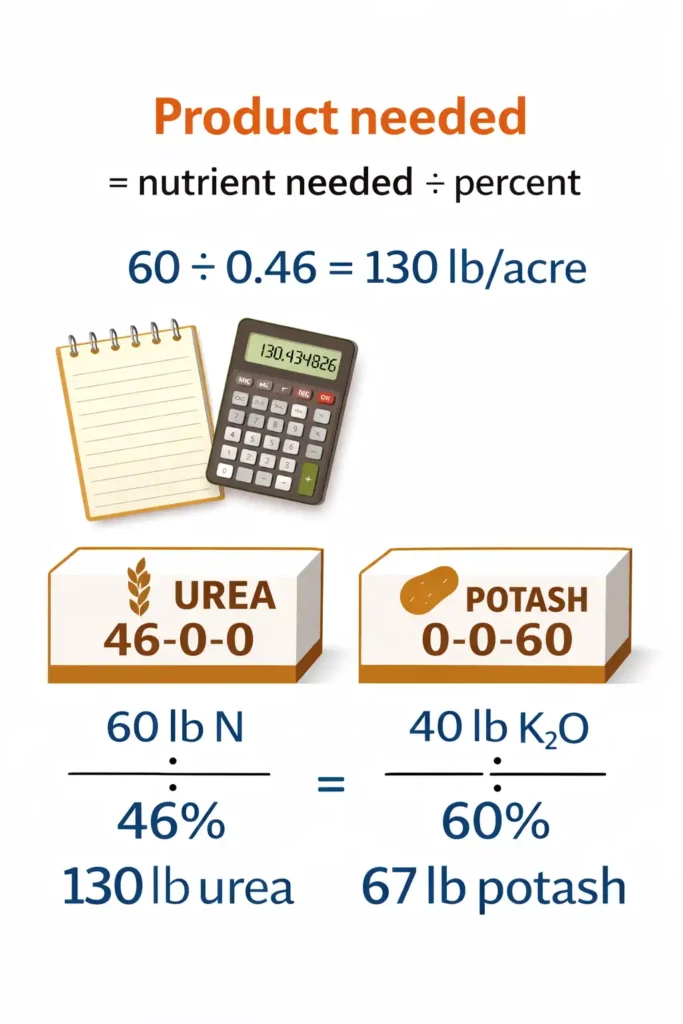
Your goal is pounds of nutrient per acre, then you back-calculate product weight.
Rule: Fertilizer product needed (lb/acre) = nutrient needed (lb/acre) ÷ (grade percent as a decimal)
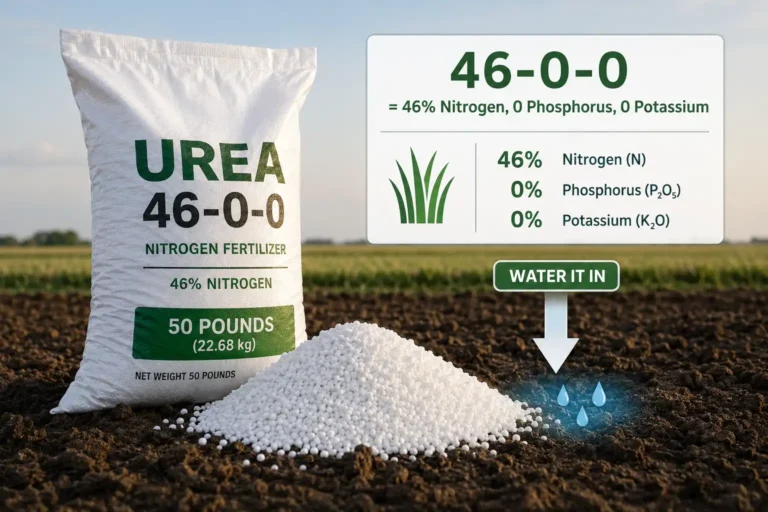
Example: You need 60 lb N/acre using urea 46-0-0.
60 ÷ 0.46 = 130.4 lb product/acre
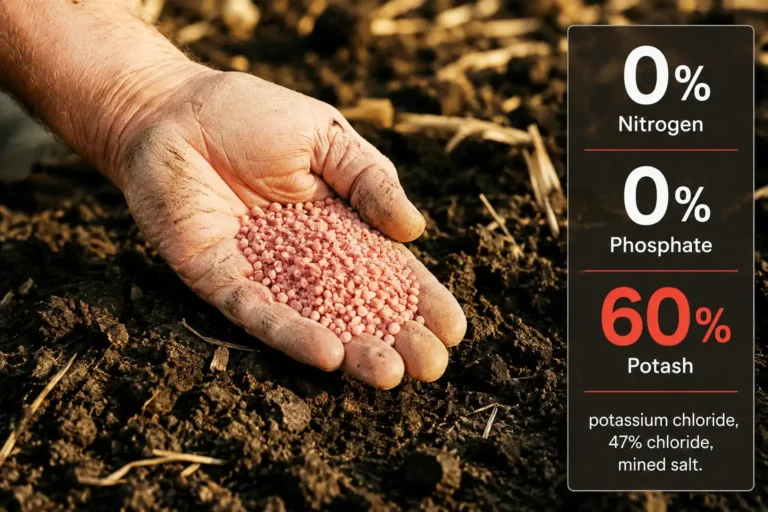
Example: You need 40 lb K₂O/acre using 0-0-60 potash.
40 ÷ 0.60 = 66.7 lb product/acre
This one habit prevents underfeeding and prevents doubling your cost by accident.
When to apply controls efficiency because roots only take up nutrients that sit in the root zone during active growth
Pre-plant and at planting
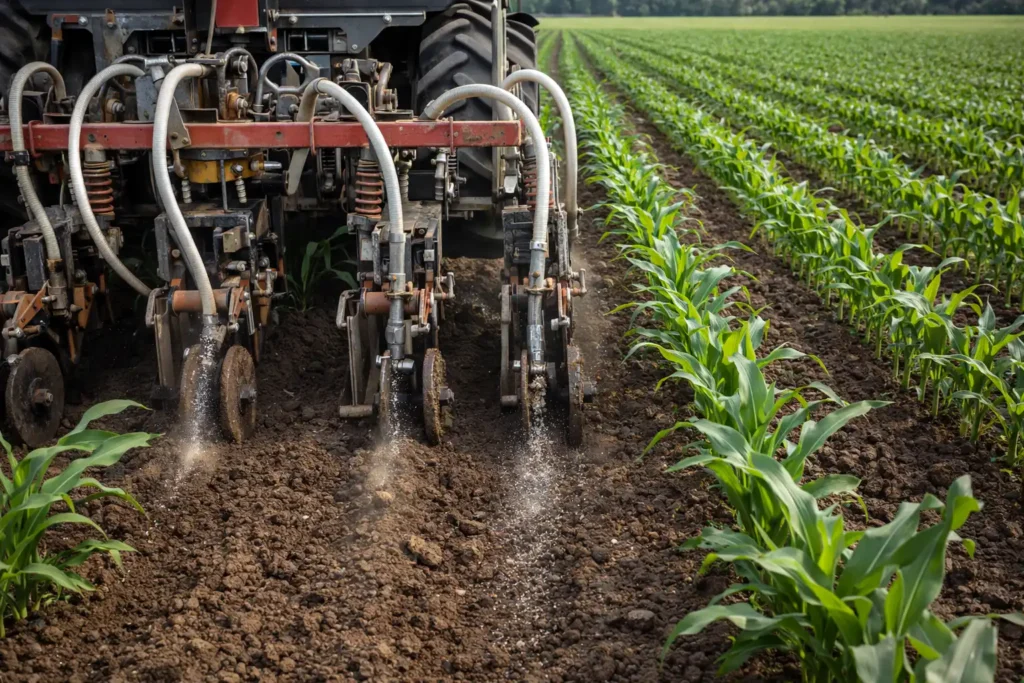
Banding or placing fertilizer near the seed helps early growth, especially for P in cool soils. Keep product away from direct seed contact when salt index and rate create burn risk.
Side-dress during vegetative growth
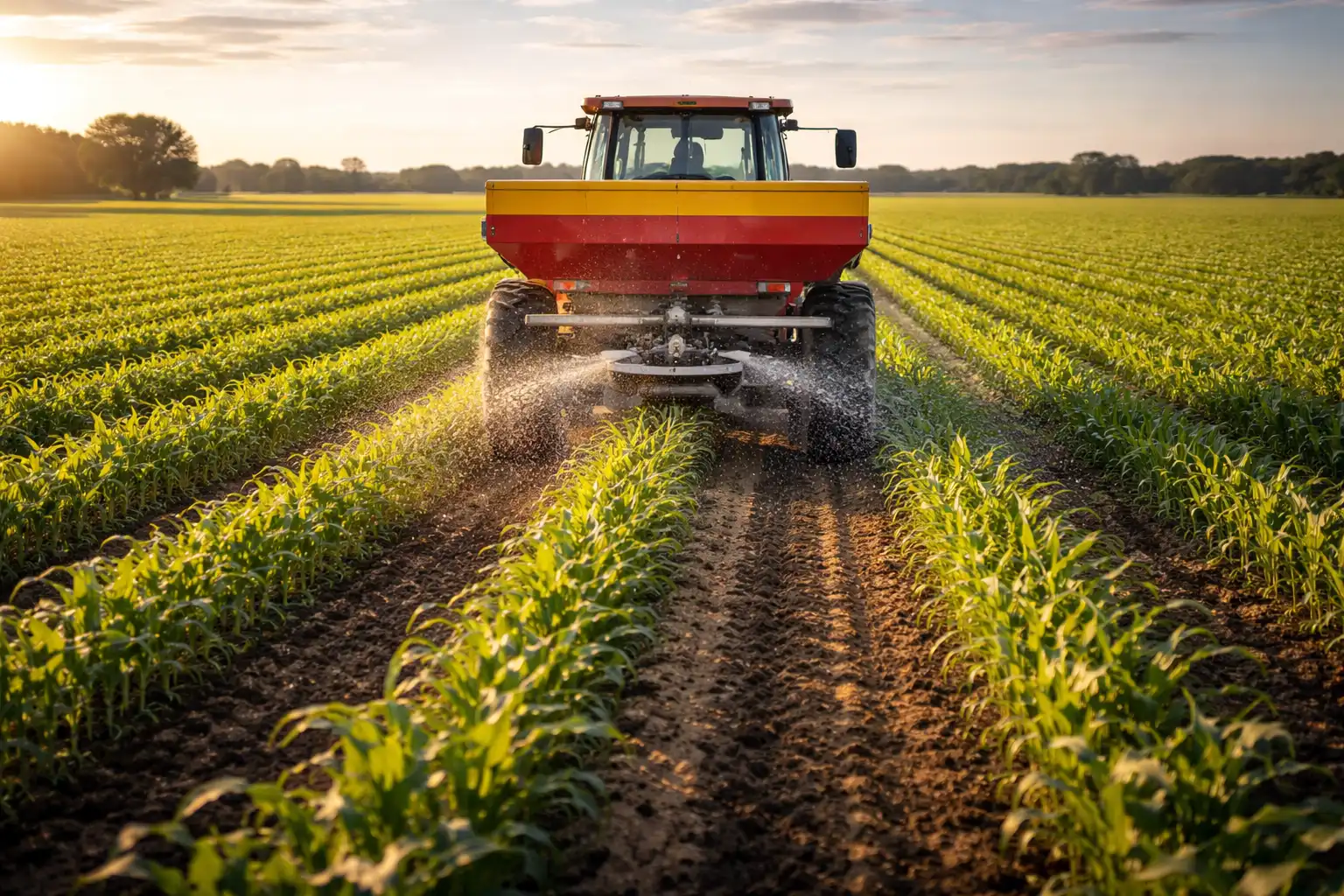
Side-dressing supplies N when demand rises. Many grain systems split N to reduce losses from leaching and volatilization.
Topdress and fertigation
Topdress fits small grains and pastures when equipment and moisture support it. Fertigation fits drip and pivot systems where you manage nutrients in smaller doses.
If you run irrigation, align nutrient timing with water timing: irrigation and water management.
Best application methods for NPK in real fields
Broadcast and incorporate
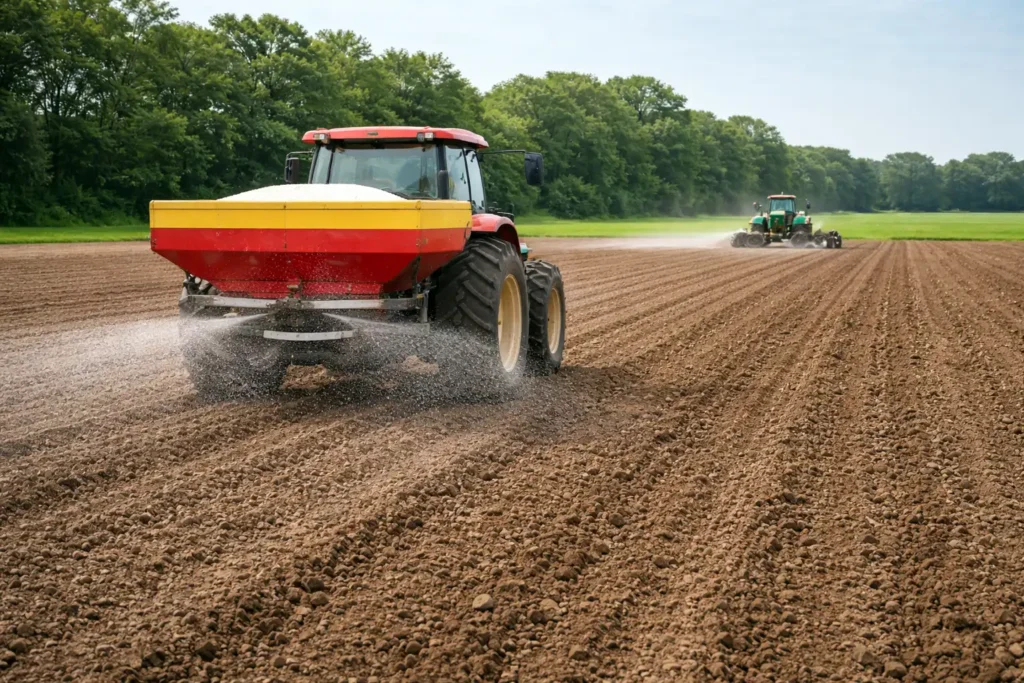
Broadcast fits pre-plant applications for P and K, then tillage moves nutrients into the root zone. It also fits no-till when you accept slower movement and rely on surface moisture.
Banding (starter fertilizer)
Banding concentrates nutrients near young roots. It improves early vigor when soil tests low for P or when soils stay cold and wet.
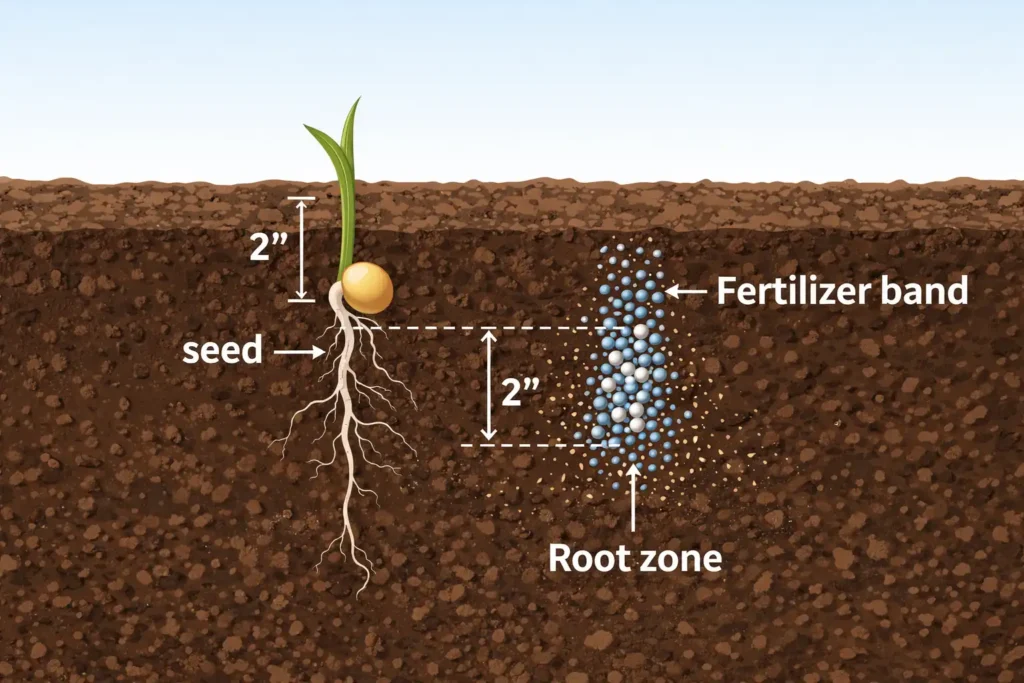
Side-dress
Side-dress targets N to the row at the time the crop uses it. That cuts loss risk compared with a single earFoliar: useful for micronutrients, limited for macronutrients.
Foliar sprays help when you correct micronutrient issues fast. Foliar NPK contributes less total nutrient than soil application because leaf burn risk limits rates.
For spray setup and safety, use: sprayers and application gear and safety PPE.
How soil type changes your NPK plan
- Sandy soils lose N and K faster because water moves through quickly. Split applications and smaller doses improve efficiency.
- Clay soils hold more K, but compaction and poor drainage reduce root access. Better structure often unlocks yield before more fertilizer does.
- High organic matter soils mineralize nitrogen as microbes break down residues, so total N need drops in some years.
- High pH soils reduce availability of some nutrients, and P behavior changes based on chemistry.
This is whyield history beats any one “best NPK ratio.”
Common NPK mistakes that cost yield or money
Applying a “balanced” blend when soil already tests high in P or K
That practice keeps buying nutrients the field does not need.
Chasing symptoms without checking the root cause
Yellow leaves come from N shortage, but also come from waterlogging, root injury, compaction, and cold soil. Fixing soil conditions often fixes the color.
Applying before a heavy rain
Runoff and leaching rise when nutrients sit on the surface and rain hits hard.
Over-applying near the seed
Salt injury reduces emergence and stand. Starter fertilizer works when placement and rate match crop tolerance.
Safety and handling for NPK fertilizer
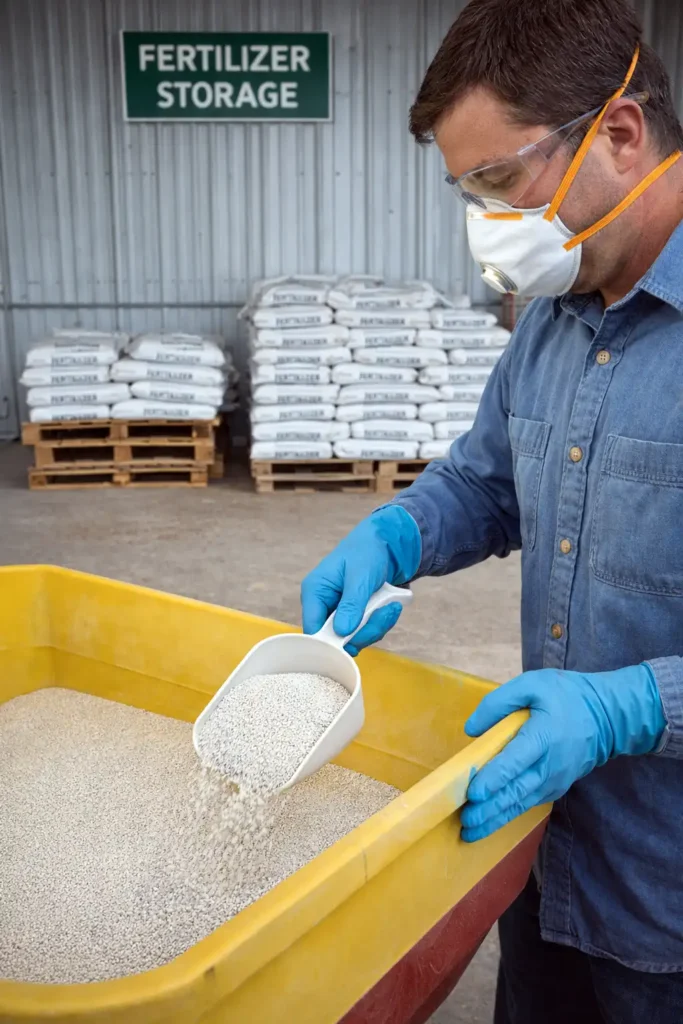
Fertilizer is not “dangerous” by default, but poor handling injures skin, eyes, and lungs.
Use these field rules:
- Wear gloves and eye protection during mixing and loading.
- Avoid breathing dust from dry blends.
- Store bags in a dry, ventilated place off the floor to prevent caking.
- Clean spills fast so fertilizer stays out of drainage paths.
- Keep incompatible products separated, and follow label storage guidance.
If you train new help, keep your PPE standards consistent: farm safety PPE.
Environmental stewardship that protects your field and your neighbors
Good fertilizer management protects yield and water at the same time.
Practical steps that work on most farms:
- Place nutrients in the soil when possible.
- Split nitrogen to match crop uptake.
- Maintain ground cover to reduce erosion and runoff.
- Keep fertilizer away from ditches, wells, and tile inlets.
- Use irrigation scheduling that avoids pushing nutrients past roots.
Troubleshooting: quick diagnosis by crop symptoms
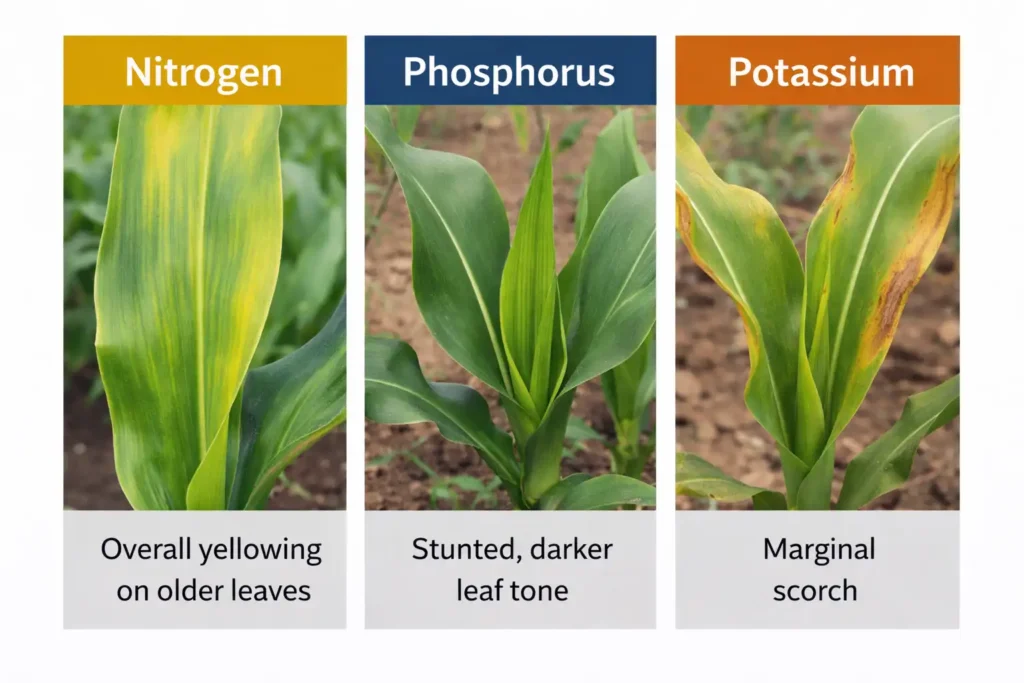
What does nitrogen deficiency look lncy shows as pale green to yellow leaves, often starting on older leaves first, and slow growth.
What does phosphorus deficiency look like?
Phosphorus deficiency shows as stunted growth and poor early vigor, sometimes with darker foliage depending on crop and temperature.
What does potassium deficiency look like?
Potassium deficiency often shows as leaf edge scorching and weak stalks, plus lower stress tolerance during heat and drought periods.
When symptoms show up, confirm with soil test data and, when available, tissue tests. That approach prevents chasing the wrong nutrient.
FAQs about NPK fertilizer for crops
Is NPK fertilizer the same as complete fertilizer?
Does a higher number mean better fertilizer?
Do crops take up P₂O₅ and K₂O?
What is the simplest NPK plan that works on most farms?
Bottom line
NPK fertilizer for crops works when the soil test identifies a need, the ratio matches the crop stage, and the application places nutrients where roots reach them. That process turns fertilizer into a planned input instead of a guess. Keep your plan tight, keep your timing honest, and let field records guide your next adjustment.