15-15-15 Fertilizer: Uses, Rates, and Top Balanced Blends
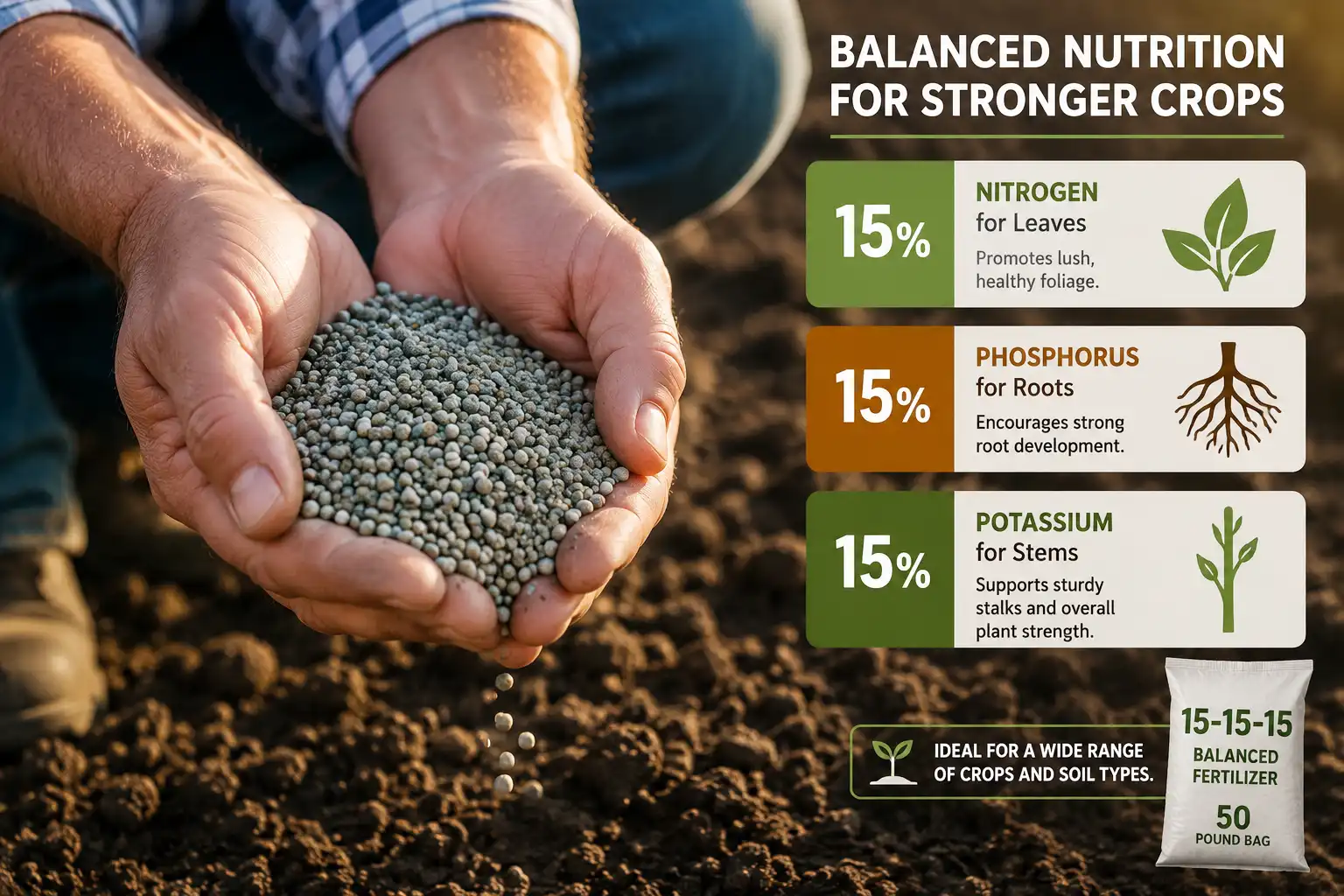
15-15-15 fertilizer gives plants equal parts nitrogen, phosphorus, and potassium. Those three matching numbers make it a balanced, all-purpose feed for home gardens and small plots. It suits a lot of jobs, though a soil test should still guide you.
15-15-15 fertilizer is a balanced, all-purpose blend with equal parts nitrogen, phosphate, and potash. It feeds vegetables, flowers, young trees, and new lawns best when a soil test shows all three nutrients running low.
What Is 15-15-15 Fertilizer?
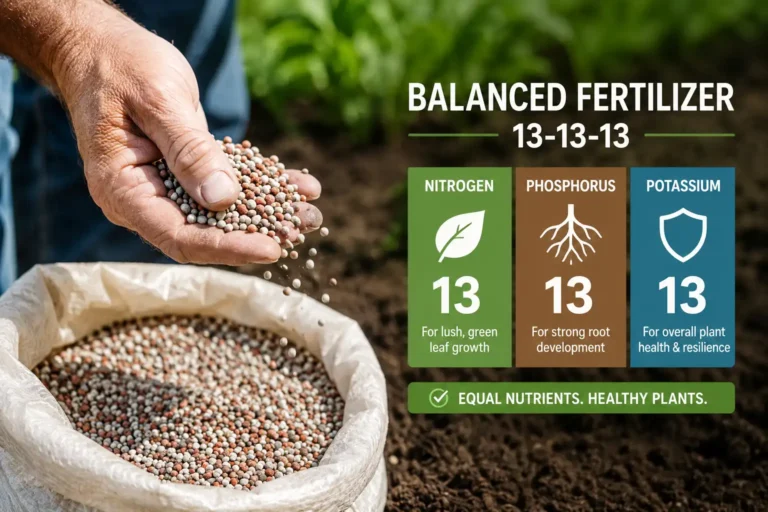
15-15-15 fertilizer is a complete, balanced blend. It carries 15% nitrogen, 15% phosphate, and 15% potash by weight, and the rest of the bag is carrier that helps the granules spread evenly.
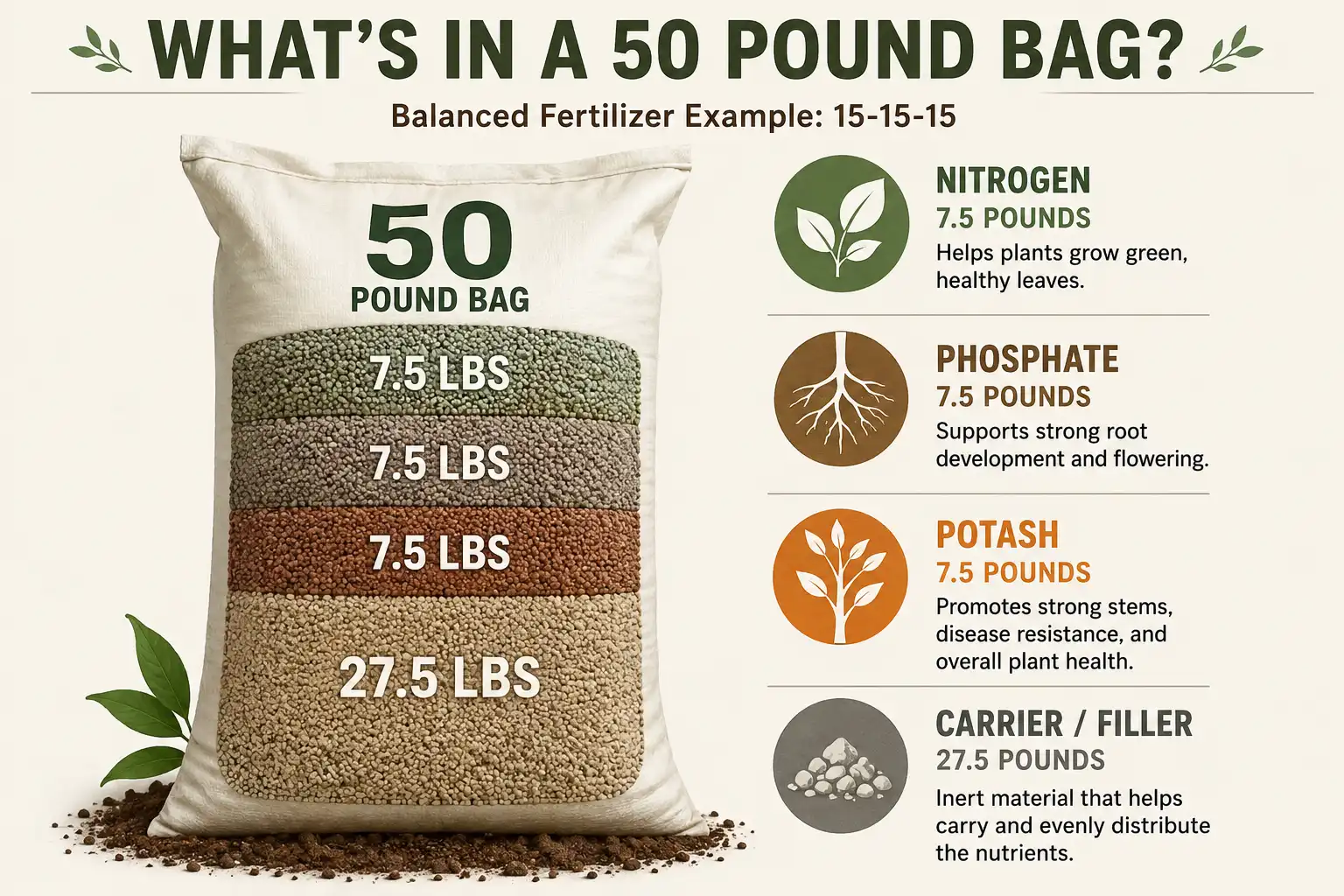
The first number is nitrogen. The middle number is phosphorus, shown as phosphate. The last is potassium, shown as potash. Labels have used that oxide format for decades, so it is not just your bag.
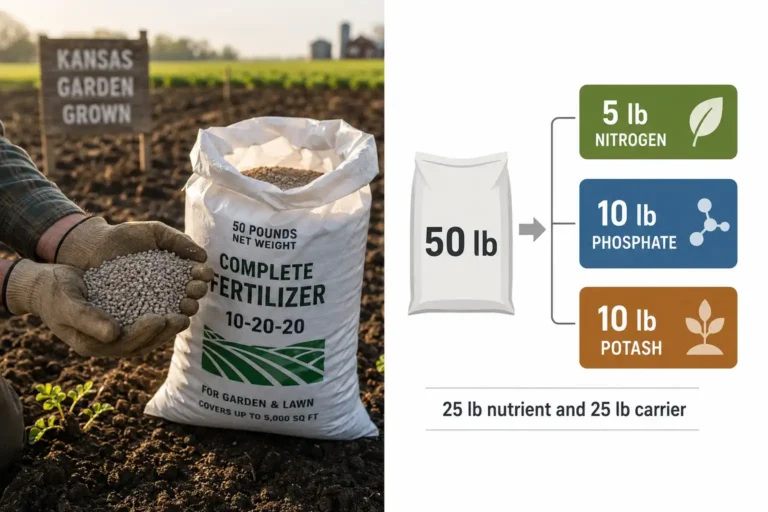
Do the quick math on a 50-pound bag. You get 7.5 pounds each of nitrogen, phosphate, and potash, which is 22.5 pounds of actual nutrients plus filler. Farmers call it triple 15, and it counts as a high-analysis blend because the nutrients top 30% of the bag.
Here is a detail that trips people up. Only about 44% of that phosphate is real phosphorus, and roughly 83% of the potash is real potassium. If the label math still feels fuzzy, the breakdown of how fertilizer numbers work walks through every digit.
What Does Each Number Do for Your Plants?
Each number feeds a different job. Nitrogen pushes leaves, phosphorus builds roots, and potassium toughens the whole plant.
- Nitrogen (N): drives green, leafy growth and feeds chlorophyll for photosynthesis.
- Phosphorus (P): powers root development, flowering, and fruit or seed set.
- Potassium (K): moves water, stiffens stems, and lifts disease resistance and fruit quality.
Get one wrong and the plant tells you fast. Short on nitrogen, leaves go pale. Short on potassium, stems go weak and fruit suffers. Because the three sit at equal levels here, no single nutrient leads, which helps only when a soil test reads low across the board.
What Is 15-15-15 Fertilizer Used For?
Growers use 15-15-15 fertilizer as an all-purpose feed for vegetables, flowers, shrubs, young trees, and new lawns. It earns its keep on small plots and gardens, where one balanced bag feeds a lot of different plants.
- Starting new garden beds, worked in before you plant.
- Feeding flower beds and leafy ornamentals.
- Establishing young trees and shrubs in their first years.
- Giving new lawns a balanced start from seed or sod.
- Feeding container plants and raised beds through the season.
Field growers usually skip it on big acres, since bulk single-nutrient blends cost far less per pound out there. On a home plot or a few beds, though, the all-in-one convenience wins.
Do Your Plants Really Need a Balanced Blend?
Often, no. Most garden soils already hold enough phosphorus and potassium, so a soil test usually asks for nitrogen alone. That is the honest catch with any even blend. You can pay for three nutrients when your ground truly needs one.
Growers who spread triple 15 on the same beds every spring often see tomatoes run all vine and no fruit. Extra phosphorus rarely helps once the soil already has plenty, and too much nitrogen pushes leaves at the cost of fruit.
So test your soil first, then reach for a balanced blend only when it fits. A 15-15-15 makes real sense in a few spots:
- Fresh ground or new beds with no fertilizer history.
- Sandy soil that leaches potassium fast.
- Container and raised-bed mixes that start out lean.
- Any test that reads low on all three nutrients.
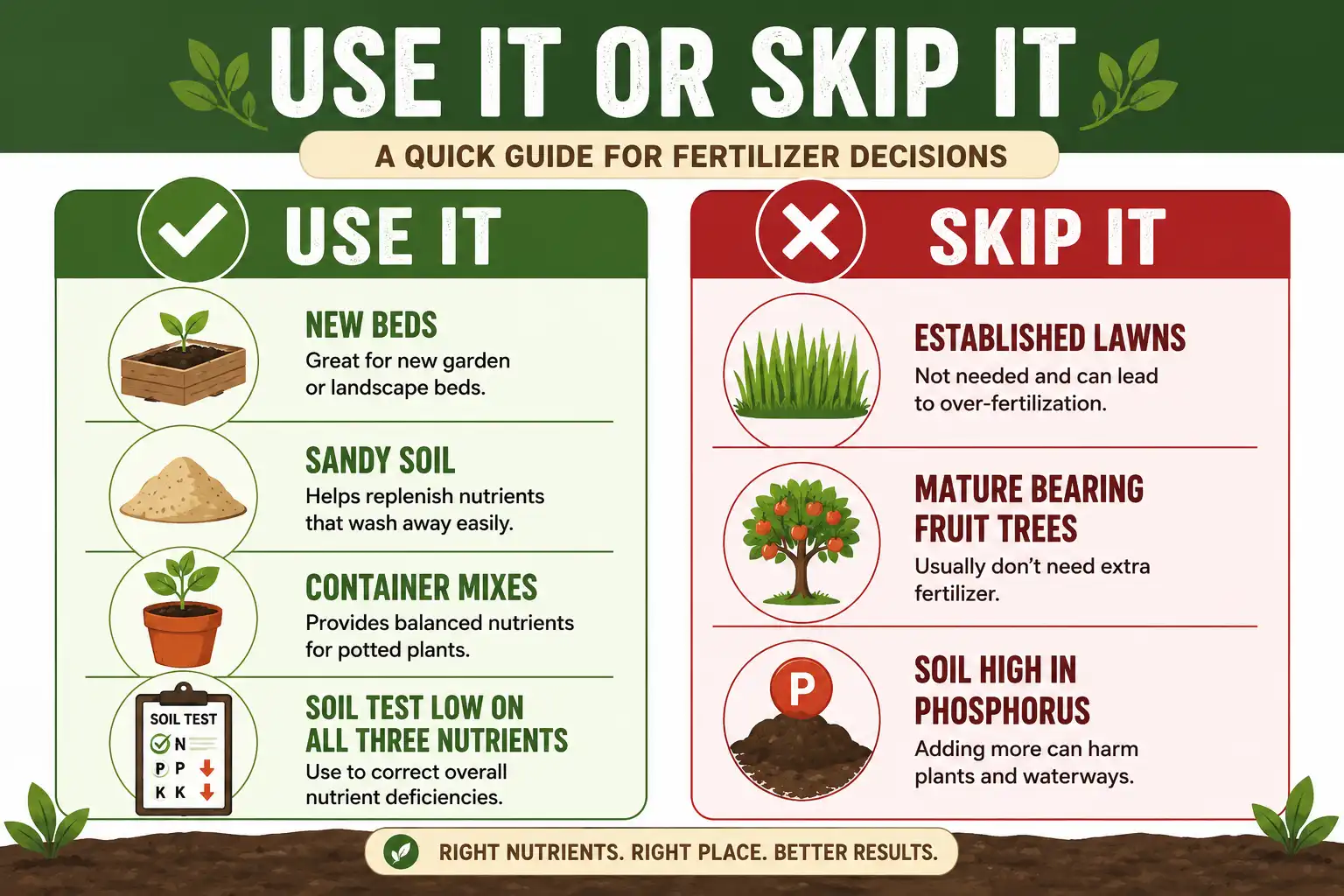
Skip the even blend on an established lawn, a mature bearing fruit tree, or any soil that already tests high in phosphorus.
How to Apply 15-15-15 Fertilizer
Test first, match the rate to the crop, work it in, and water it down. These steps cover beds, lawns, and trees.
- Soil test first, so you feed only what the ground lacks.
- Pick a starting rate from the chart below, then confirm it on the bag.
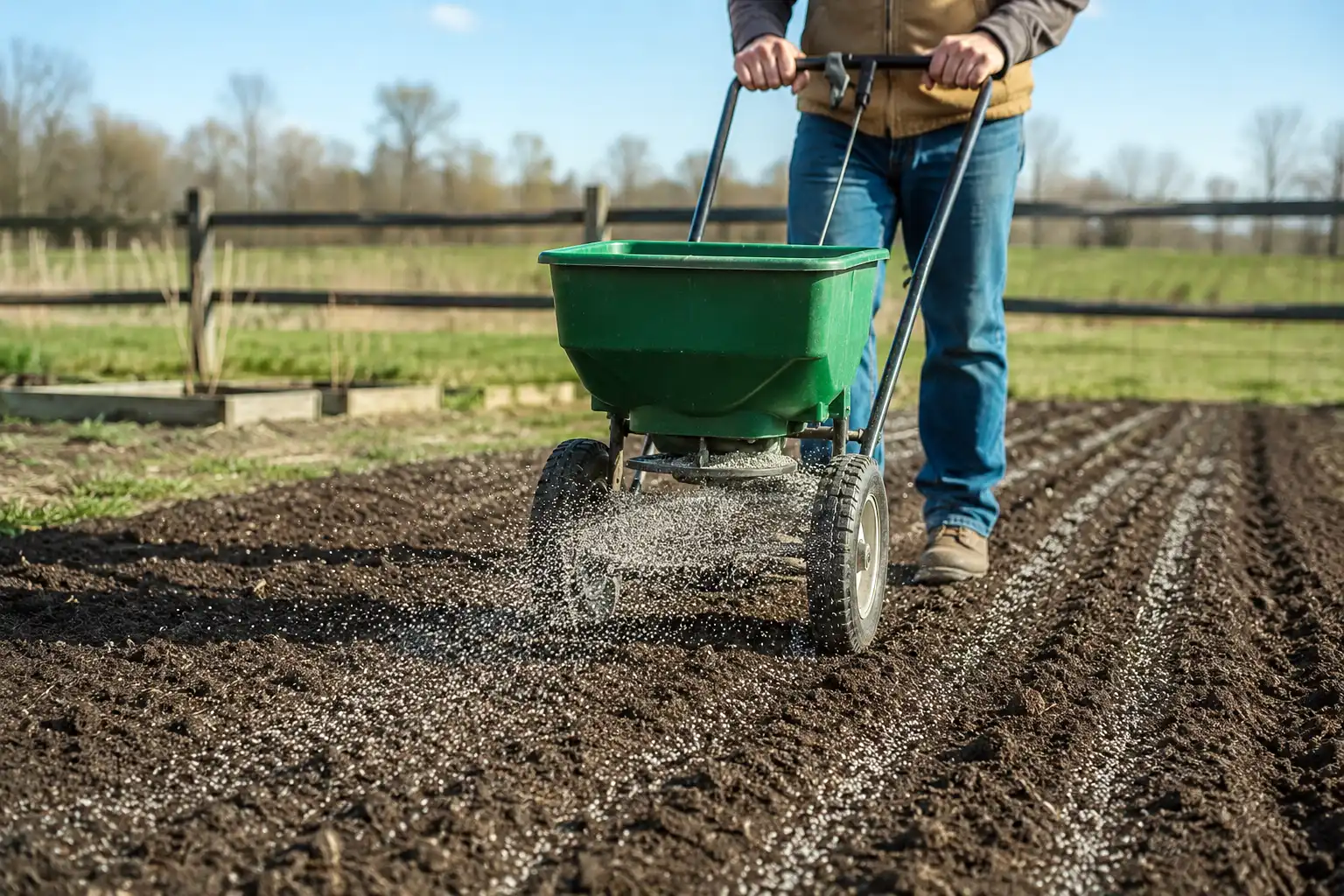
- Spread it evenly. On beds and lawns, a drop spreader lays granules in even rows and beats tossing them by hand.
- Work the granules into the top 3 to 4 inches before you plant.
- Water the area well, since a good soak carries nutrients to the roots and cuts burn risk.
- Split a heavy feed into two lighter passes instead of one big dose.
Here are the starting rates it helps to use. Always confirm with your soil test and the bag.
| Where you feed | Starting rate | How to apply |
|---|---|---|
| New garden bed | About 1 lb per 100 sq ft | Rake into the top 3 to 4 inches before planting |
| Side-dressing vegetables | About 0.5 lb per 100 sq ft | Band beside the rows, then water in |
| New lawn or seeding | About 10 lb per 1,000 sq ft | Rake in before seeding, then water |
| Young tree or shrub | 0.10 lb actual nitrogen per inch of trunk | Ring under the canopy out to the drip line |
| Container or hydroponic | Per label, water-soluble | Mix a measured dose, feed on a schedule |
Ten pounds per 1,000 square feet is a strong single feed for turf, so many growers split it into two passes. The water-soluble powders work a little differently. You mix a measured dose into water, then feed on a schedule through the season. That route suits containers, hydroponics, and precise feeding.
Is 15-15-15 Fertilizer Good for Fruit Trees?
Yes, for young, non-bearing fruit trees that need steady, even growth. Once a tree starts bearing, it usually does better with less phosphorus and a little more nitrogen and potassium.
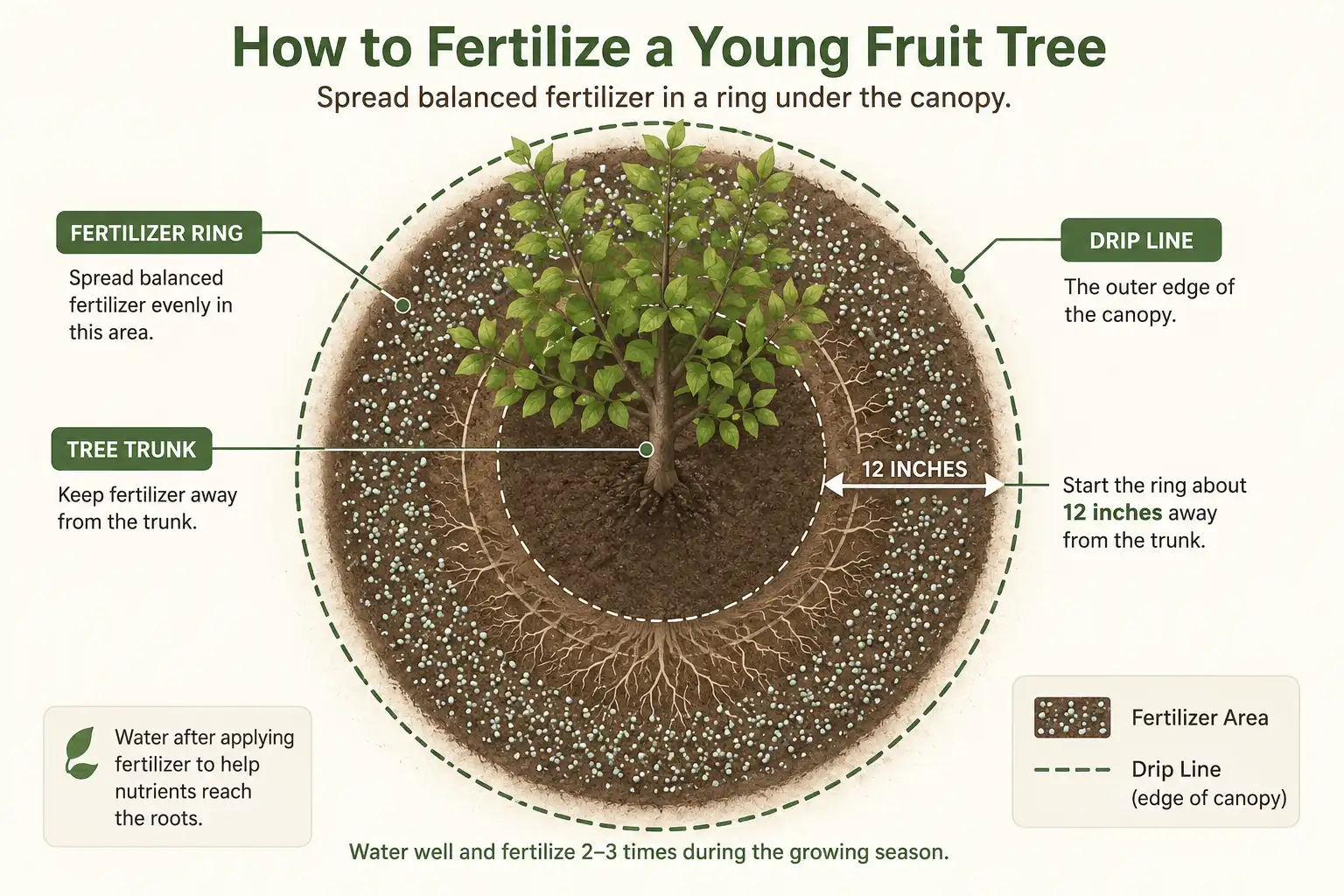
Young trees put their energy into building roots and branches, so a balanced feed fits. Bearing trees change the math. Many orchard soils already hold plenty of phosphorus, and heavy nitrogen pushes leaves at the cost of fruit.
Feed about 0.10 pound of actual nitrogen per inch of trunk diameter each year. Cap it near 1 pound for a big tree. Spread it in a ring under the canopy, from about a foot off the trunk out to the drip line, in early spring before bud break.
Test the soil first, because a high phosphorus reading means you can skip the middle number. The USDA and land-grant extension both warn against heavy nitrogen on bearing trees. Potassium, on the other hand, helps fruit size and flavor.
Is 15-15-15 Fertilizer Good for Grass?
For an established lawn, 15-15-15 is not the best pick. Grass wants far more nitrogen than phosphorus, so a high-nitrogen lawn feed fits better. For a brand-new lawn, though, the balanced formula gives young roots a solid start.
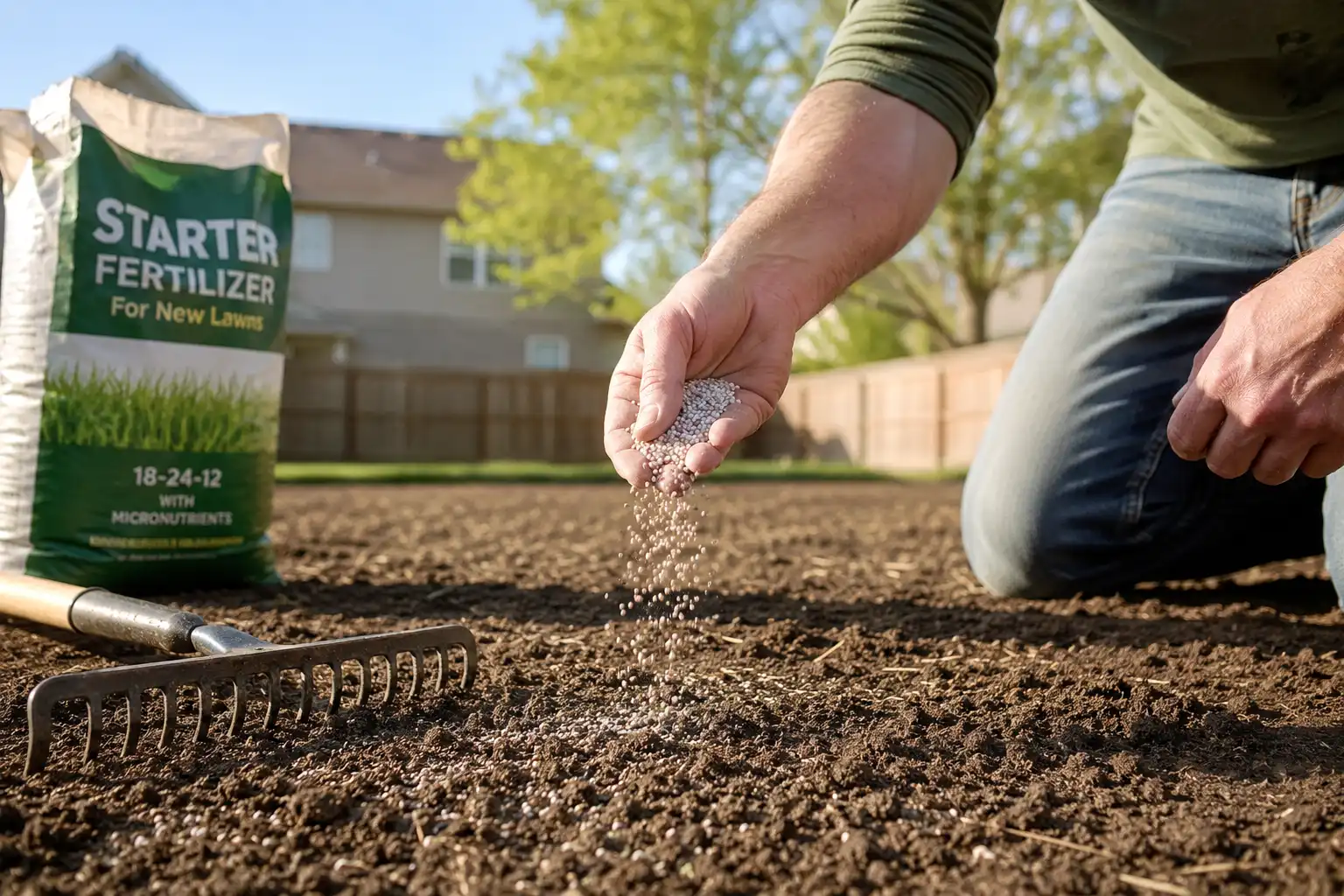
Turf specialists usually aim for a ratio near 3-1-2 or 4-1-2, which leans hard on nitrogen. An even 1-1-1 blend does not match that. Established turf rarely needs much phosphorus, and many states now limit phosphorus in lawn fertilizer to protect lakes and streams.
New seeding is the exception. A starter feed with phosphorus helps young grass roots settle fast, so a balanced blend earns its place for the first few weeks. After the lawn fills in, switch to a high-nitrogen feed for upkeep.
How 15-15-15 Compares to Other Balanced Blends
All even blends share the same 1-1-1 ratio, so they feed plants the same way. The only real difference is strength. Because 15-15-15 packs more nutrients per pound, you apply less to hit the same target.
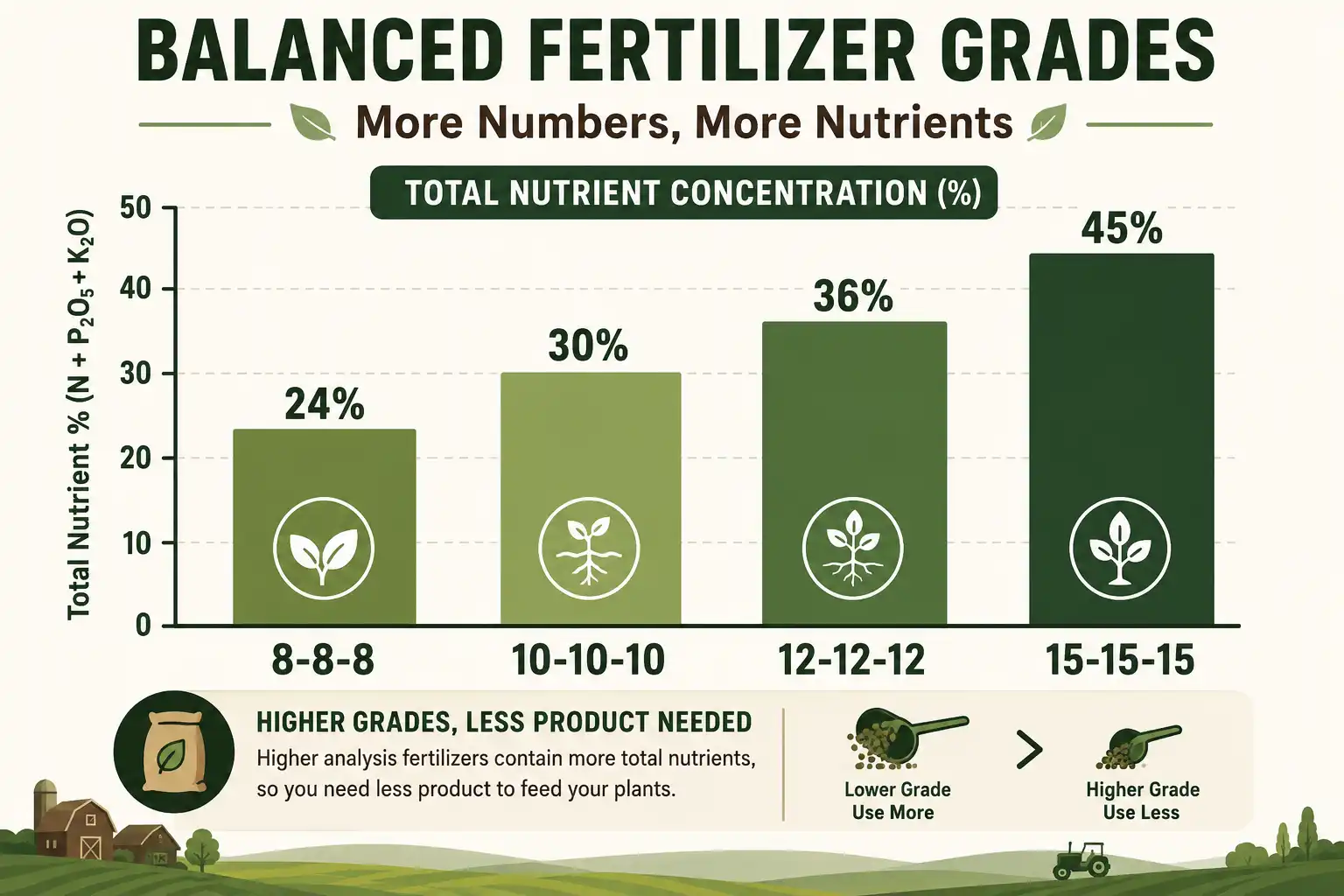
A lighter 10-10-10 blend does the same work at a gentler rate, which suits seedlings and sandy soil. Weaker grades like 8-8-8 or 12-12-12 fit the same jobs with a bit more product. Pound for pound, triple 15 stretches the furthest.
| Blend | Actual nutrients per 50 lb bag | Best when |
|---|---|---|
| 8-8-8 | 12 lb total | Light, frequent feeding and seedlings |
| 10-10-10 | 15 lb total | General garden use |
| 12-12-12 | 18 lb total | Mid-strength all-purpose feeding |
| 15-15-15 | 22.5 lb total | Fewer, stronger applications |
4 Best 15-15-15 Fertilizers to Buy in 2026
Here are the balanced blends. For most gardens and small acreage, the CountryMax 15-15-15 stands out as the top all-around pick. For containers and feed-through watering, Jack’s Professional dissolves clean. And for a brand-new lawn, the Southland starter blend gives young roots a balanced base.
1. CountryMax 15-15-15 All Purpose Fertilizer
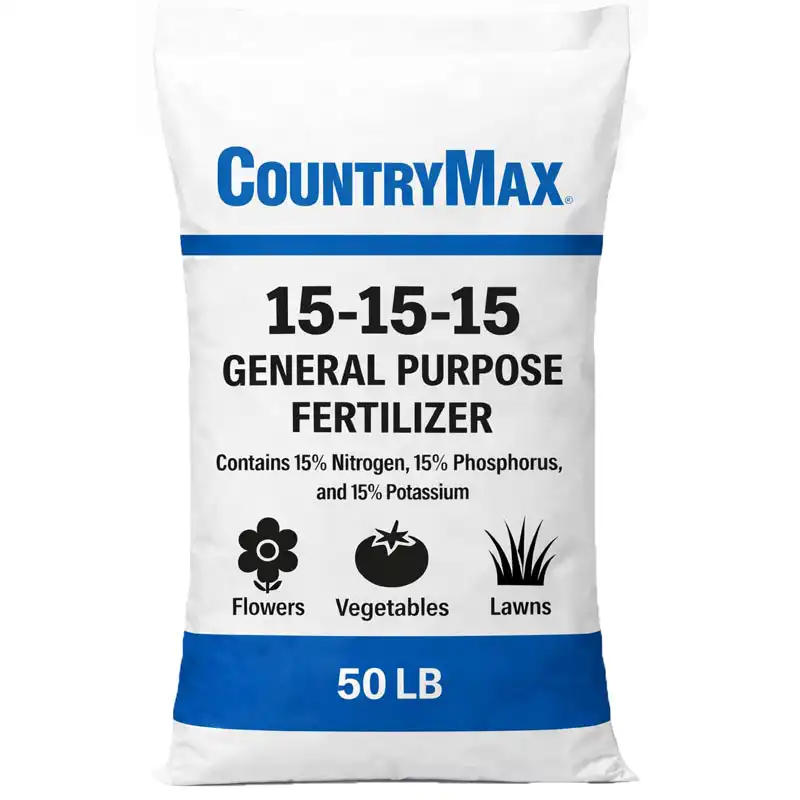
CountryMax triple 15 keeps it simple. You get a straight balanced granular in a 50-pound bag, with 10 and 25 pound sizes too. It spreads evenly, waters in fast, and carries a low burn risk. The label lays out clear rates for lawns, beds, and trees, which takes the guesswork out of feeding day.
- Even, no-burn feeding
- Clear rates on the bag
- 10, 25, and 50 lb sizes
- Safe around edibles
Watch-out: The 50-pound bag is more than a small plot needs, so grab a 10 or 25 pound size to match your space.
2. Jack’s Professional 15-15-15 Water-Soluble Fertilizer
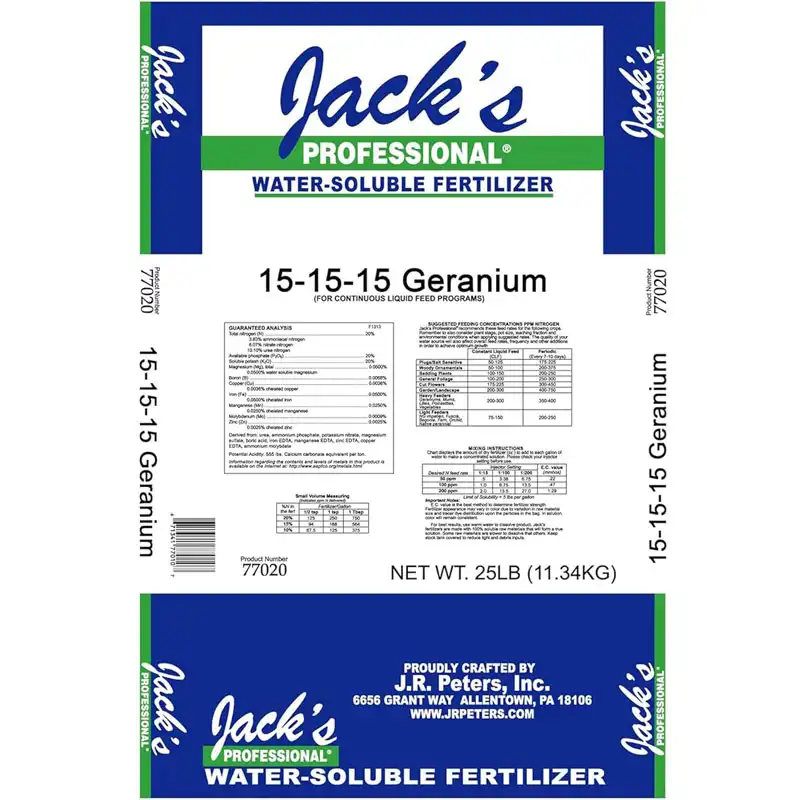
Jack’s turns a measured scoop of powder into gallons of liquid feed. The 15-15-15 mix runs high on nitrate nitrogen and adds micronutrients, so you skip a separate supplement. It dissolves fast with little caking, which suits hydroponics and container plants on a feed-through schedule. Jack’s makes it in the USA, a name growers have trusted for decades.
- Dissolves fast, little caking
- Built-in micronutrients
- Great for hydroponics
- Made in the USA
Watch-out: The 25-pound bag is heavy for a small garden, and it targets continuous liquid feeding. Pair it with a hose end sprayer to feed beds and borders evenly.
3. USEDGDIG 15-15-15 All Purpose Granular Fertilizer
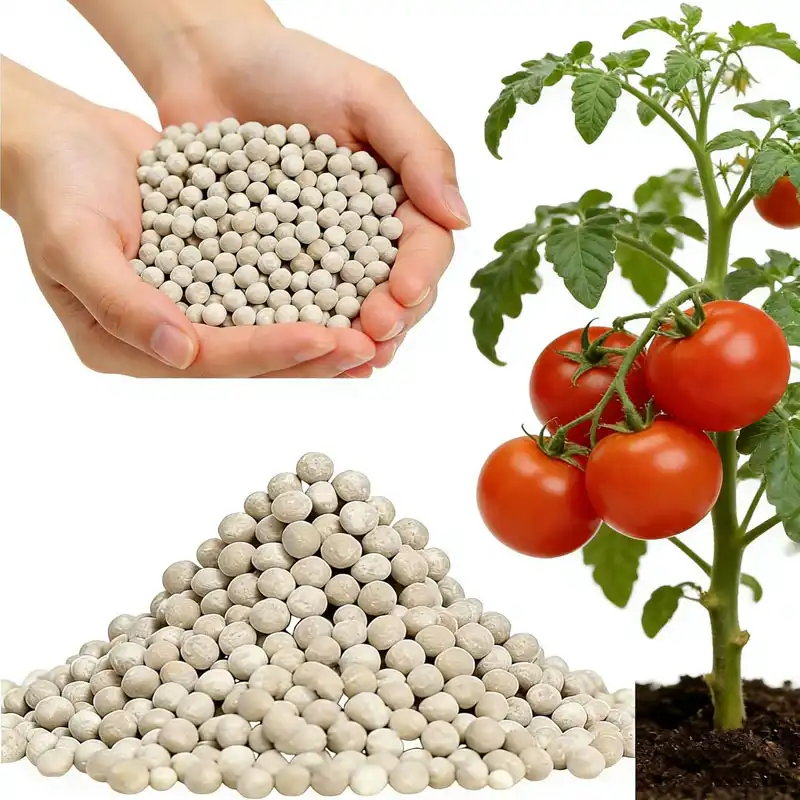
This one ships in small resealable bags, from 1 pound up to about 12. That range fits container growers and raised beds. The granules pair quick-release nitrogen for a fast start with slow-release feeding that lasts. They spread evenly and water in without fuss. For flowers, tomatoes, peppers, and young shrubs, it covers plenty of ground at a gentle rate.
- Small resealable bag sizes
- Quick plus slow-release feeding
- Even, easy spreading
- Wide plant range
Watch-out: Small bags cost more per pound than a big sack, so buy the size that matches your plot.
4. Southland Sod and Seed Starter 15-15-15
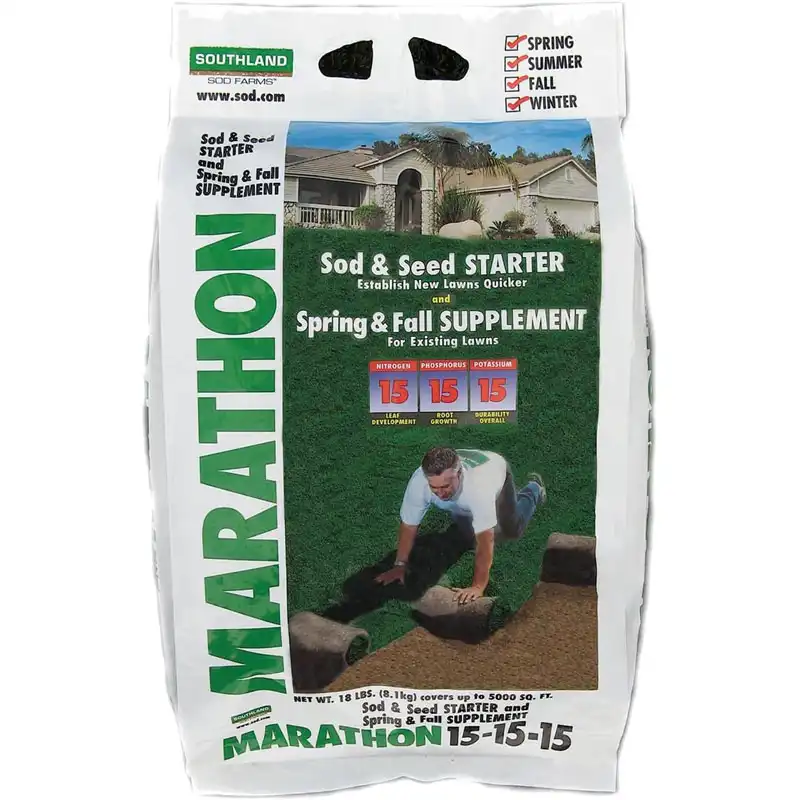
This starter blend carries the same balanced 15-15-15 nutrients in a ready mix for new lawns. You spread an even layer on bare soil, lay sod or sow seed on top, then water it in. The phosphorus helps young grass roots settle fast and eases transplant shock. It works as an establishment tool, not a season-long lawn feed.
- Ready to use, no mixing
- Speeds root establishment
- Eases transplant shock
- Works for sod or seed
Watch-out: Coverage is small, near 18 square feet per bag, so it fits patches and new sections, not a whole yard.
Here is how the four blends compare at a glance.
| Product | Form | Sizes | Best for |
|---|---|---|---|
| CountryMax 15-15-15 | Granular | 10, 25, 50 lb | All-around beds, gardens, lawns, trees |
| Jack’s Professional 15-15-15 | Water-soluble powder | 25 lb | Containers, hydroponics, feed-through |
| USEDGDIG 15-15-15 | Granular | 1 to 11.9 lb | Small gardens, raised beds, flexibility |
| Southland Sod and Seed Starter | Starter blend | 18 lb | New lawns and sod |
How to Choose the Right 15-15-15 for Your Plot
Match the form to the job. Pick a granular blend for beds, borders, and lawns you cover with a spreader. Pick a water-soluble powder for containers, hydroponics, and feeding you control by the gallon. Match the bag size to your space, since small resealable bags waste less on a patio garden. Check for added micronutrients if a soil test flags a minor shortfall.
FAQs about Triple 15 Fertilizer
How much 15-15-15 do I use per acre?
Can I use 15-15-15 on vegetables?
Will 15-15-15 burn my plants?
When should I apply 15-15-15?
Is 15-15-15 good for tomatoes and peppers?
Does 15-15-15 fertilizer expire?
Is 15-15-15 organic?
How is 15-15-15 different from 10-10-10?
Bottom Line for Your Field
Balanced feed is a starting tool, not a cure-all. Keep a bag of granular triple 15 and a jug of the soluble on hand, and reach for them on new beds, young trees, and fresh lawns. Then switching to targeted blends happens once the plants and a soil test show what they need. Test first, follow the bag, and keep building soil health the natural way so you buy less fertilizer every year.