When to Plant Oats for Hay: Spring and Fall Timing Guide
Oat hay lives or dies by planting date. Get it right and you cut soft, leafy bales at peak quality. Miss the window and yield drops fast. The best time to plant oats for hay depends on your region, your soil temperature, and your target cutting stage.
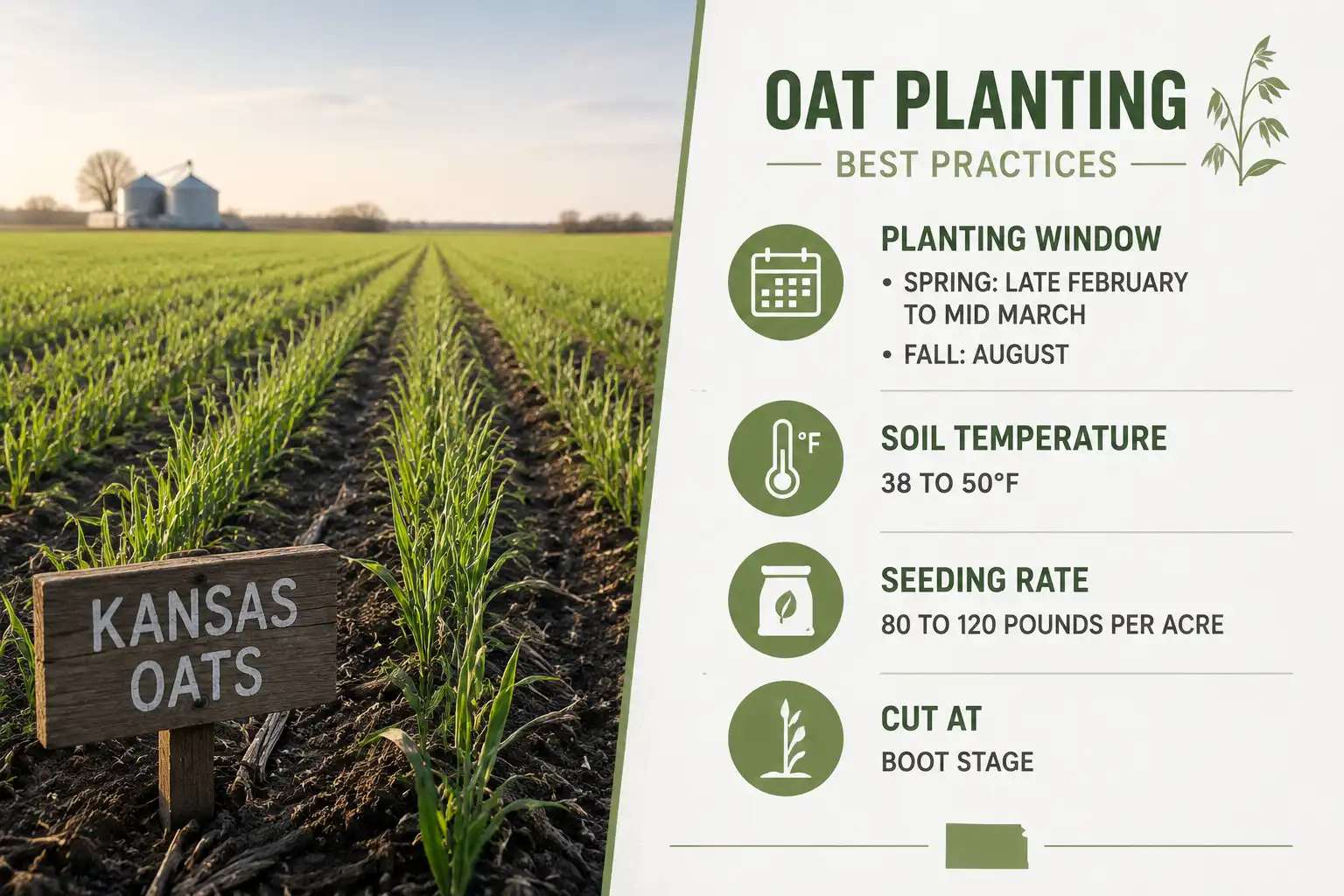
Plant oats for hay in early spring, as soon as the ground can be worked, roughly late February through mid March across the Southern and Central Plains. For fall hay, plant in August so oats bulk up before frost.
When Is the Best Time to Plant Oats for Hay?
Early spring is the best time to plant oats for hay across most of the country. Oats grow as a cool-season annual. They put on the most leaf during the cool, moist weeks before summer heat arrives.
You really get two windows. The main one is early spring, drilled as soon as you can work the ground. The second is late summer for a fall cutting. Spring gives you the bigger crop most years. Fall works well when you need extra forage after wheat comes off.
Late February into mid March, once the soil dries enough to drill. That timing lets the stand reach the boot stage before hot days force it into head too fast.
When to Plant Spring Oats for Hay
Plant spring oats for hay as early as you can work your soil, usually late winter to mid spring depending on where you farm.
Your window shifts with latitude and last frost. In the Southern Plains, like Oklahoma, the sweet spot runs mid February through mid March. The rule-of-thumb cutoff sits near March 10. Across the Central Plains and Kansas, late February through mid March works best. K-State Research and Extension points to that same early window for the most forage. For grain quality, do not push planting past April 10. In the western Corn Belt and Nebraska, the usual window is March 15 to April 1. The third week of March is the target. Farther north and east, in Pennsylvania and Ohio, April into early May is normal.
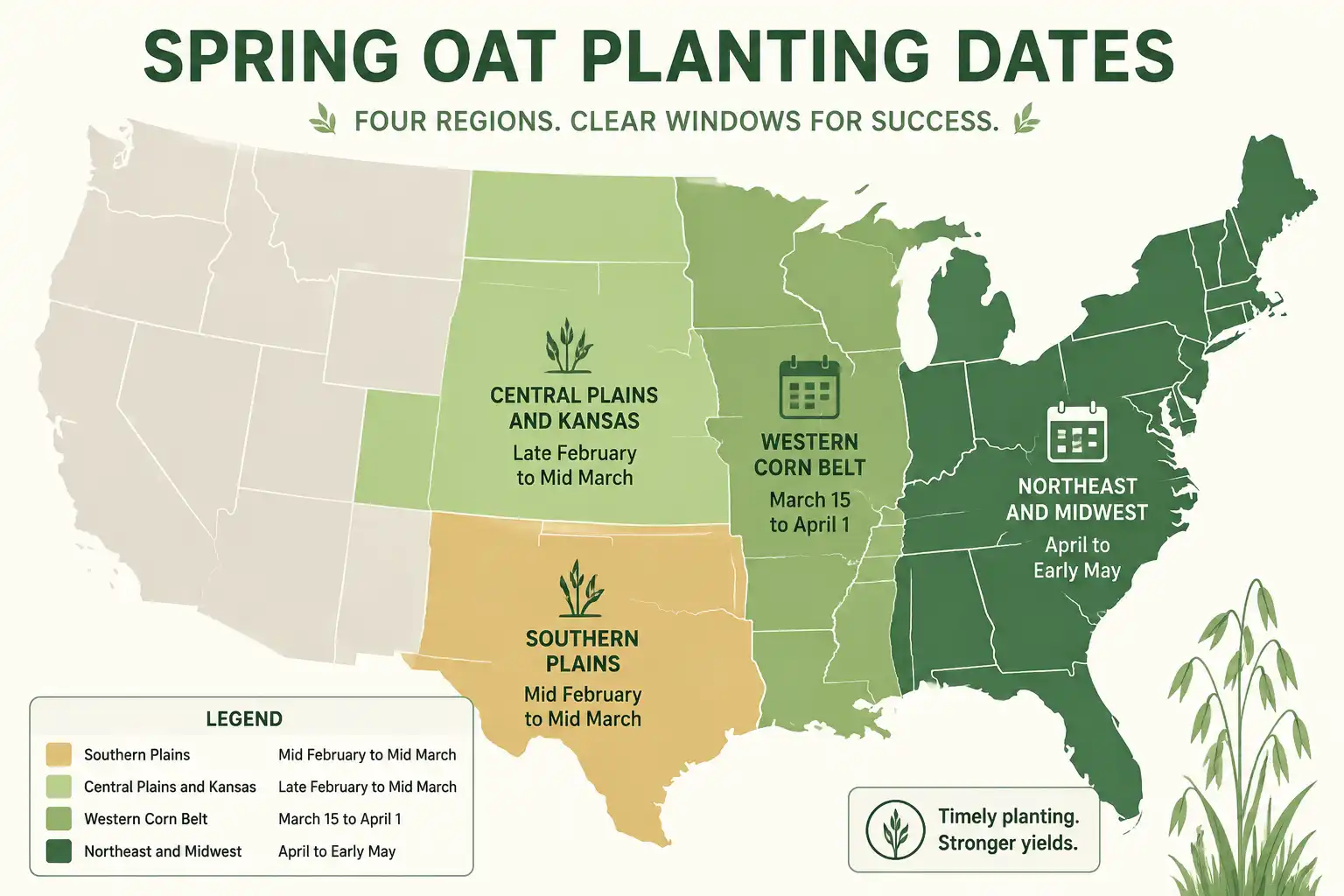
The pattern holds everywhere: plant as early as conditions allow. Every day you wait past the ideal date trims yield. Penn State pins that loss near 1 percent per day. Over two or three late weeks, that really adds up.
What soil temperature do oats need?
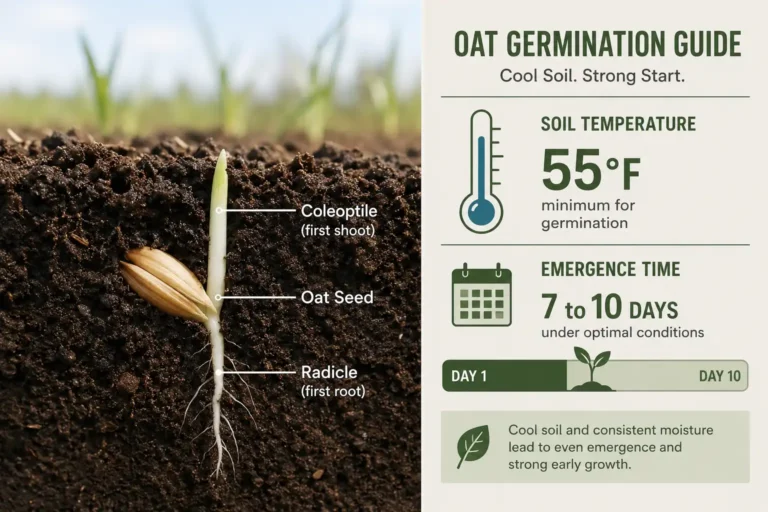
Oats germinate in cold soil. They sprout once the seed zone reaches the upper 30s Fahrenheit. Germination then speeds up as the soil warms into the 40s and 50s. The top 1.5 to 2 inches should be checked with a dependable soil thermometer before fill the drill. Cold, soggy ground invites seed rot and slow, patchy stands. Wait for the soil to drain and warm a touch instead of mudding seed in. Warmer soil is also part of how quickly oats germinate once they hit the ground.
Can You Plant Oats for Hay in Late Summer for a Fall Cutting?
Yes. Late summer planting gives you a fall hay crop, and it fits neatly behind wheat. Drill oats from late July through mid August to build the most tonnage before frost.
Shorter fall days push oats toward leaf instead of seedheads, which is what you want in hay. Plant into wheat stubble once it clears in July. Ohio trials point to August 1 through 10 as the tonnage peak. Wait until early September and yields can slide toward half a ton per acre. That rarely pays for a mechanical cutting.
One catch: oats winterkill. They keep growing until temperatures sit below 28 degrees Fahrenheit for a good stretch, often into November here. For dry hay, cut and cure before hard frost and before fall rains turn drying into a chore. Miss that window and baleage or grazing becomes the smarter play. Need forage in peak summer instead? A warm-season option like cutting sorghum sudangrass for hay fills the July gap.
How Does Planting Date Affect Hay Yield and Quality?
Planting date sets the ceiling for both yield and quality. Plant early and the crop gets a long, cool growing stretch. That builds more leaf and heavier bales. Plant late and summer heat rushes the oats into head. Tonnage drops and feed value falls with it.
The numbers back this up. Spring forage yields often run 1,500 to 2,000 pounds per acre in the Southern Plains. Under good moisture farther north, they reach 2,500 to 5,000 pounds per acre. Late planting shrinks those figures. It also stacks up more insect and disease pressure as the season warms.
Quality tracks the same line. An early stand reaches the boot stage in cool weather, when protein and digestibility peak. A late stand hits boot during heat, then heads out fast. So your cutting window narrows to just a few days.
Match your nitrogen to the crop, too. Most extension guides call for 60 to 75 pounds of actual nitrogen per acre after establishment. That is similar to a grain field.
What Seeding Rate and Depth Work Best for Oat Hay?
Seed oats heavier for hay than for grain. Spring oats form a single stem with little tillering. A thick stand does the work of filling the field. So drill 80 to 120 pounds per acre, and do not cut the rate to save seed. Rates shift with seed size and moisture. So it helps to know how much oat seed you need per acre before you fill the box.
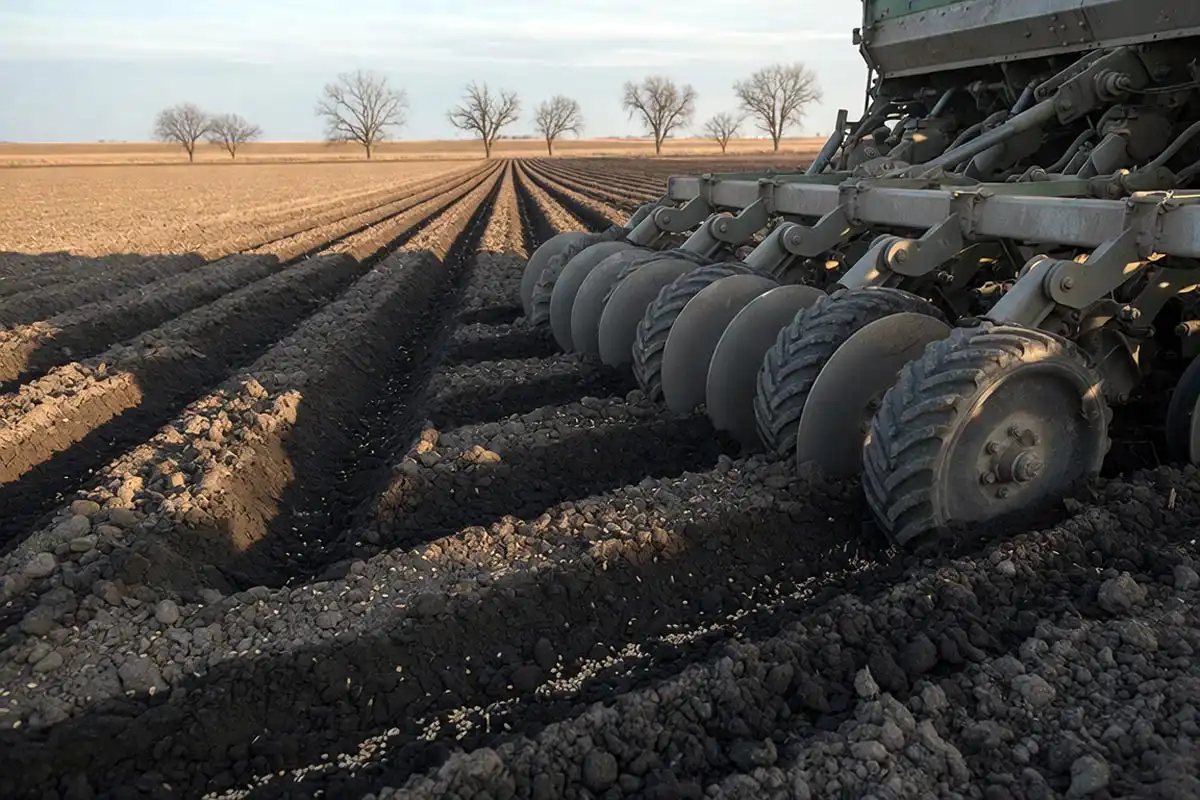
Set your depth at half an inch to three quarters of an inch. That shallow placement speeds emergence and closes the canopy sooner. You can go as deep as 1.5 inches to chase moisture. Still, shallower wins when the top inch is moist. A firm, fine seedbed and clean drilling beat broadcasting every time, since broadcast oats stand poorly. The same fundamentals apply whether you are after hay or grain. The full guide on planting oats walks through seedbed prep and closing the slot.
When to Cut Oats for Hay After Planting
Your planting date sets up your cutting date. From spring seeding, oats usually reach the boot to early heading stage in about 60 to 75 days. That is when you want to mow for hay.
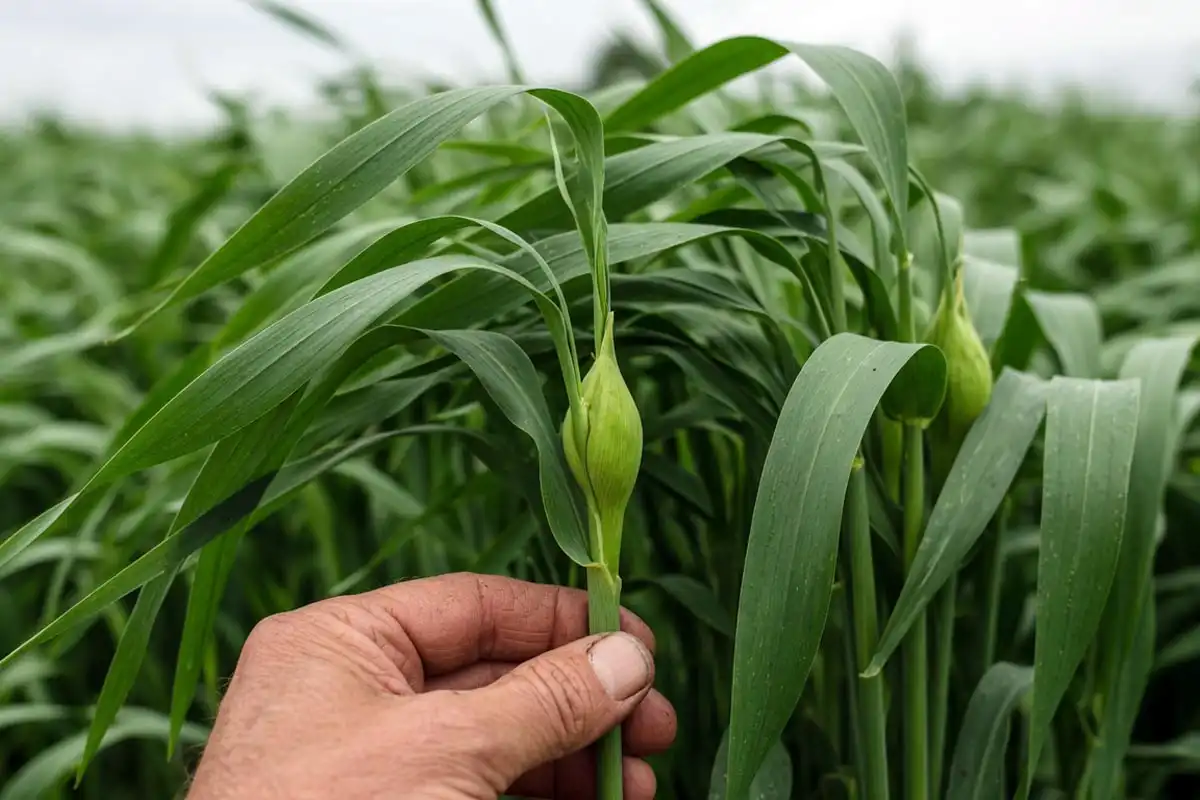
Cut at boot to early heading and you catch peak quality with near-peak yield. Once seedheads emerge, tonnage barely climbs. Feed value then falls as stems take over. So early planting pays twice: a bigger crop and a calmer cutting window in cooler weather. For the full timing breakdown, see our guide on cutting oats for hay at the right stage.
Bottom Lines
Timing is the whole ballgame with oat hay. In spring, drill as soon as the ground works, late February through mid March in the Plains. Plant thick and shallow. For a fall crop, seed in August behind wheat, then cut before hard frost. Nail the planting date and the boot-stage cutting mostly takes care of itself.