5-10-10 Fertilizer: What It Is and How to Use It (2026 Guide)
If your plants throw lots of leaves but few roots or fruit, the fertilizer numbers matter. A 5-10-10 fertilizer keeps nitrogen low and pushes phosphorus and potassium higher. That balance suits root crops, flowering plants, and fruiting vegetables.
5-10-10 fertilizer is a low-nitrogen blend with 5% nitrogen, 10% phosphorus, and 10% potassium. Use it on root vegetables, bulbs, and fruiting crops like tomatoes, where too much nitrogen would grow leaves instead of a harvest.
What Is 5-10-10 Fertilizer?
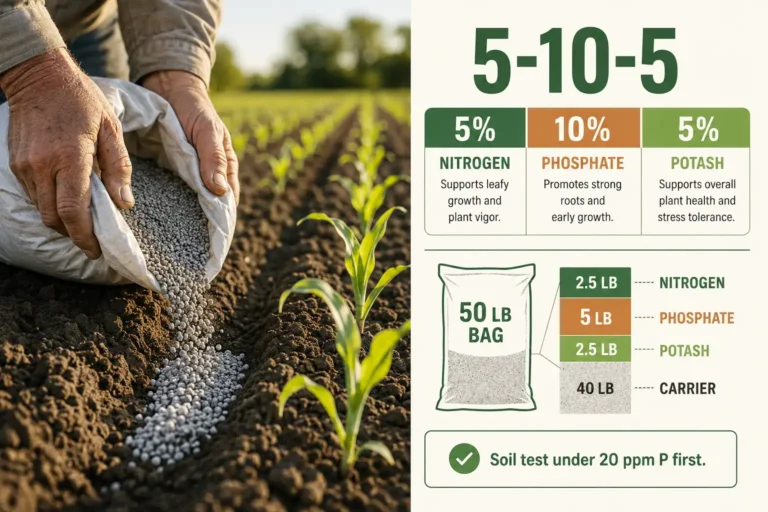
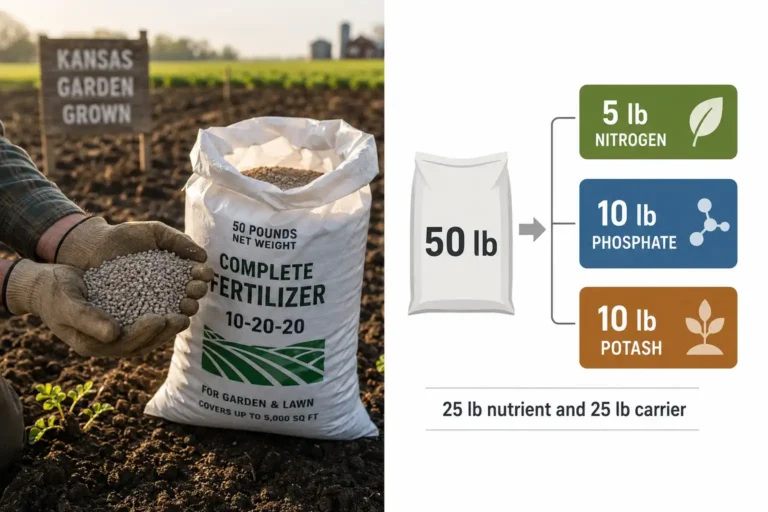
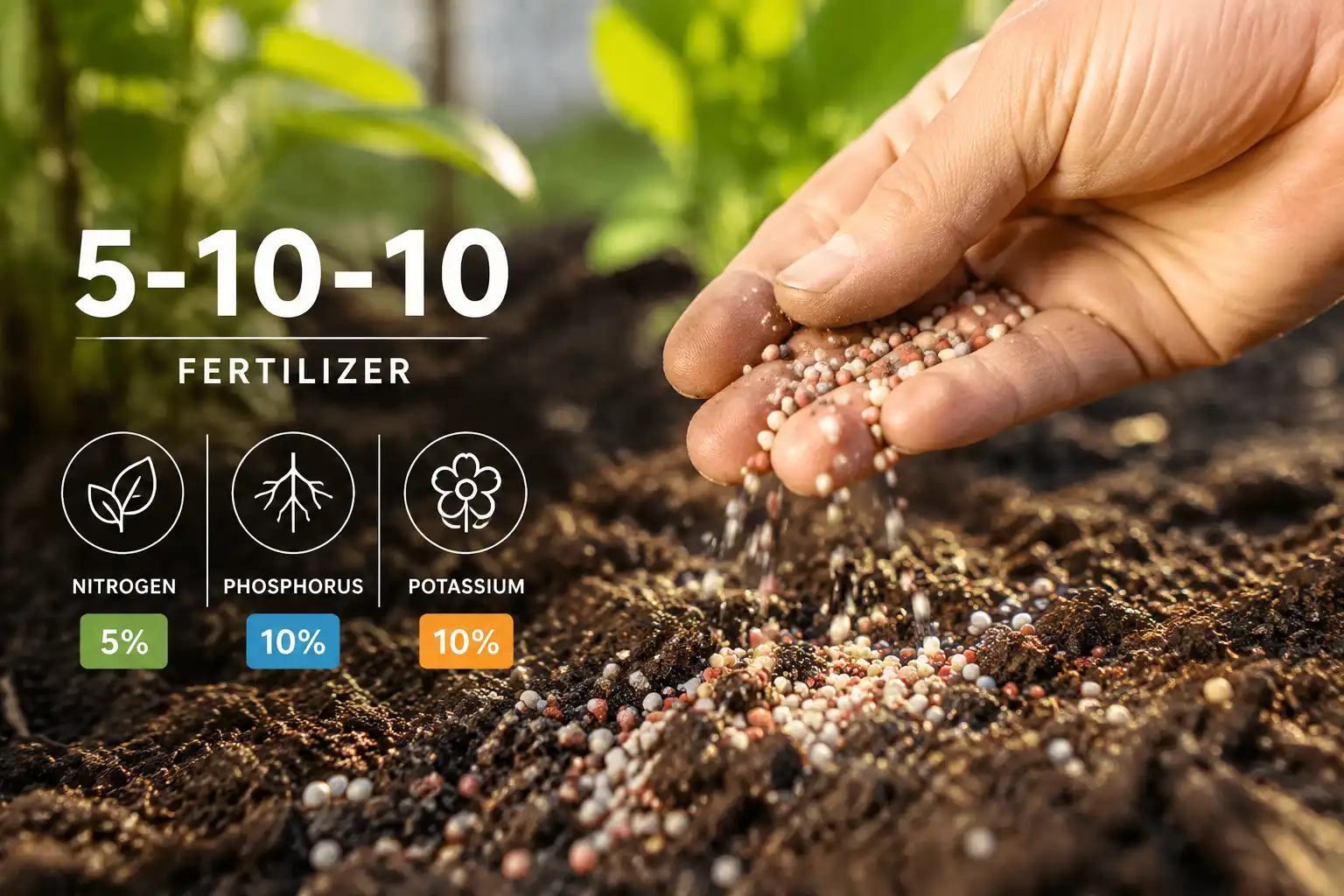
5-10-10 fertilizer is a plant food that supplies 5% nitrogen, 10% phosphate, and 10% potash by weight. Those three numbers, called the NPK ratio, always run in that order. So a 50 pound bag holds 2.5 pounds of nitrogen, 5 pounds of phosphate, and 5 pounds of potash. The rest is filler that helps the product spread evenly.
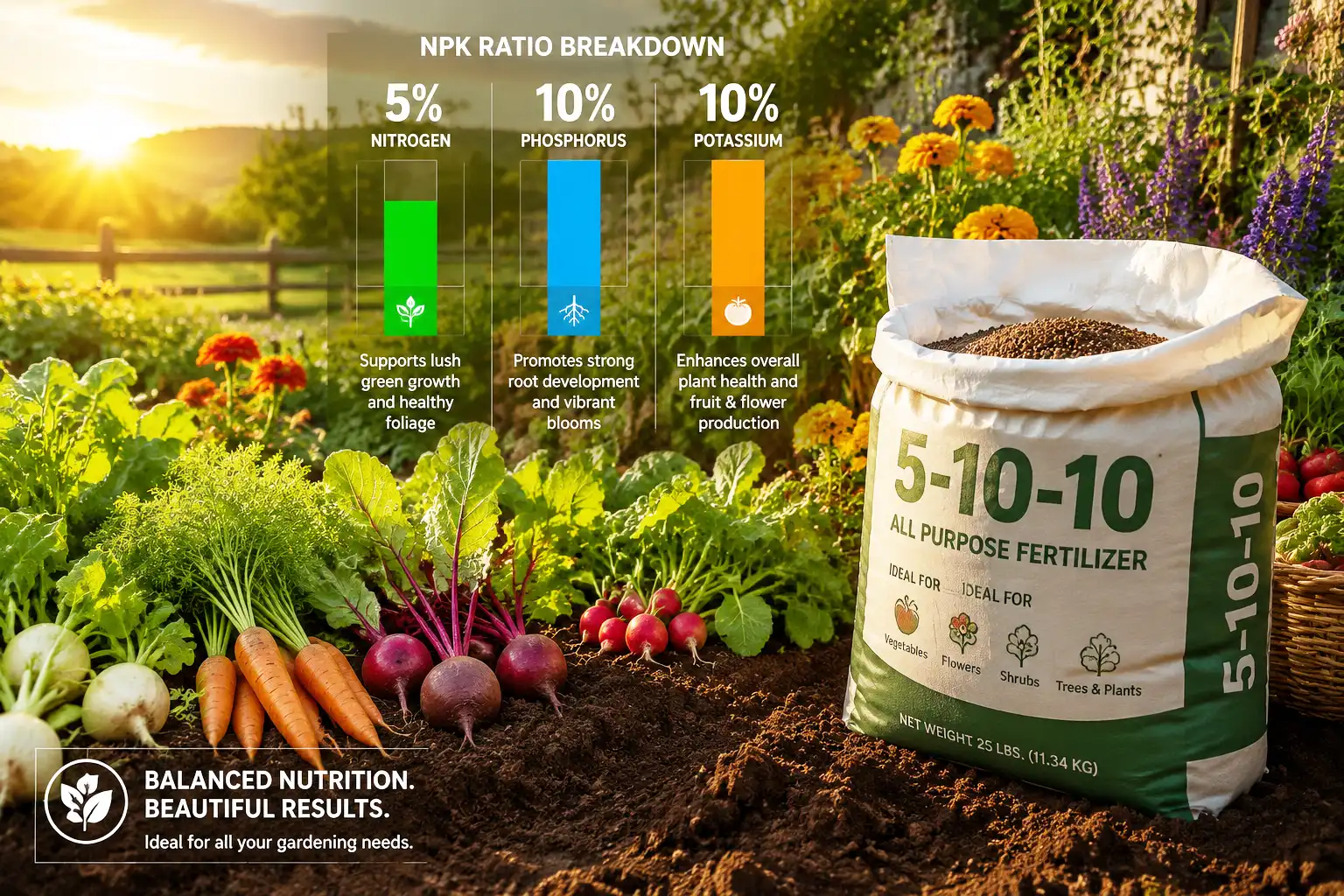
The low first number is the whole point. Nitrogen drives leafy, green growth. When you hold nitrogen down and double the phosphorus and potassium, you feed roots, flowers, and fruit instead of foliage. For the full rundown on how the NPK numbers work across other blends, see this separate breakdown of NPK fertilizer.
What Do the 5-10-10 Numbers Mean?
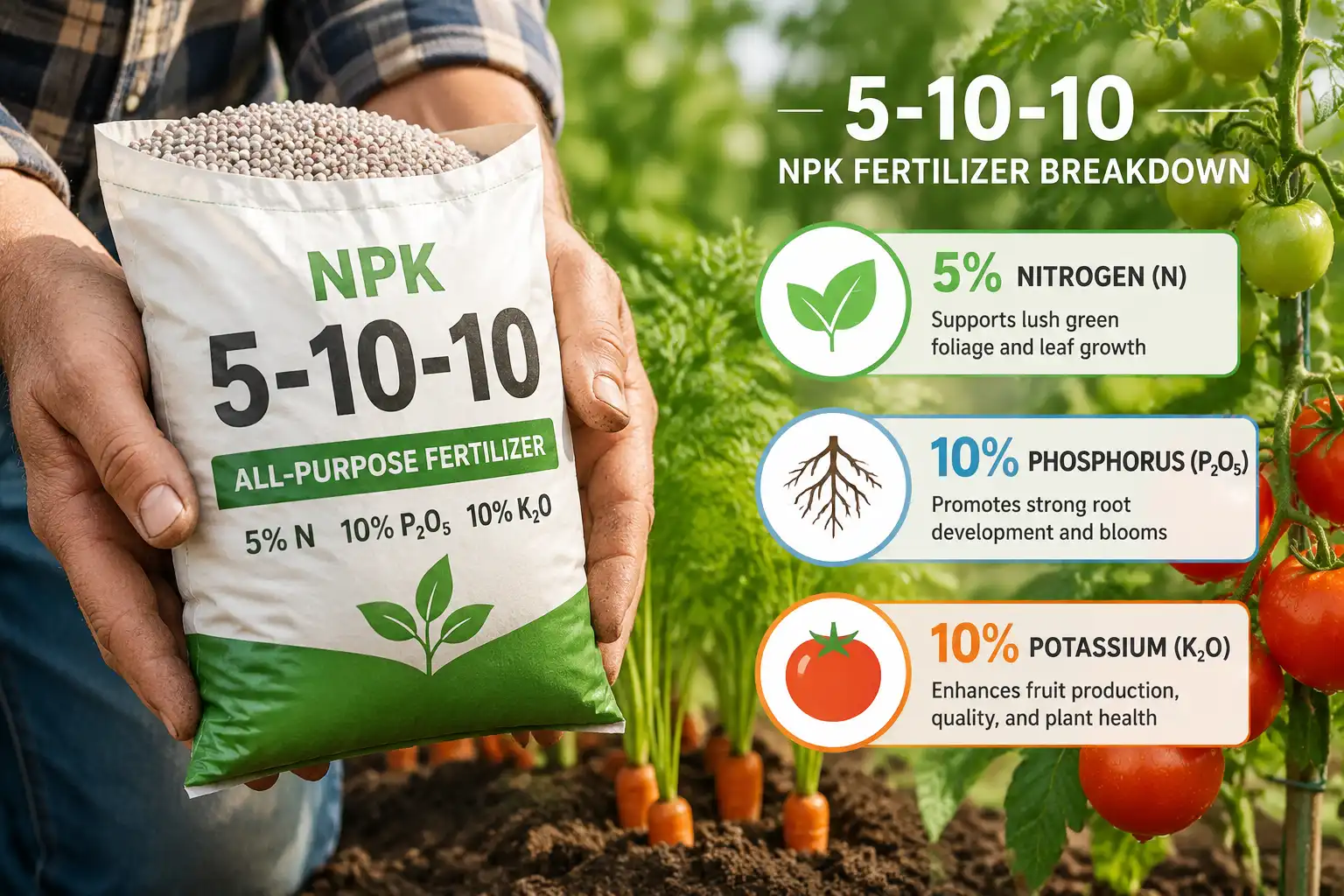
The 5-10-10 numbers mean 5% nitrogen, 10% phosphate, and 10% potash, in that fixed order. Here is the job each nutrient does:
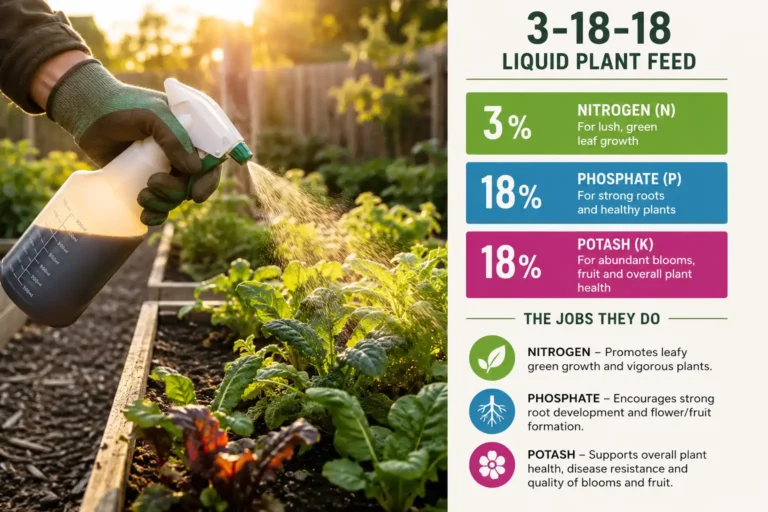
- Nitrogen (N): fuels stems and leaves, and sets the green color.
- Phosphorus (P): drives roots, flowering, and fruit set. Labels list it as P2O5, or phosphate.
- Potassium (K): backs fruit quality, water use, and disease resistance. Labels list it as K2O, or potash.
One detail trips up new growers. The middle and last numbers are not pure phosphorus and potassium. They report phosphate (P2O5) and potash (K2O), the oxide forms. Elemental phosphorus is about 44% of the phosphate figure, and elemental potassium about 83% of the potash figure. You rarely run that math, but it explains why a soil lab report and a bag label can read differently.
What Is 5-10-10 Fertilizer Used For?
5-10-10 fertilizer feeds crops that put their energy into roots, flowers, and fruit rather than leaves. The low nitrogen keeps top growth in check. The doubled phosphorus and potassium then feed the parts you harvest.
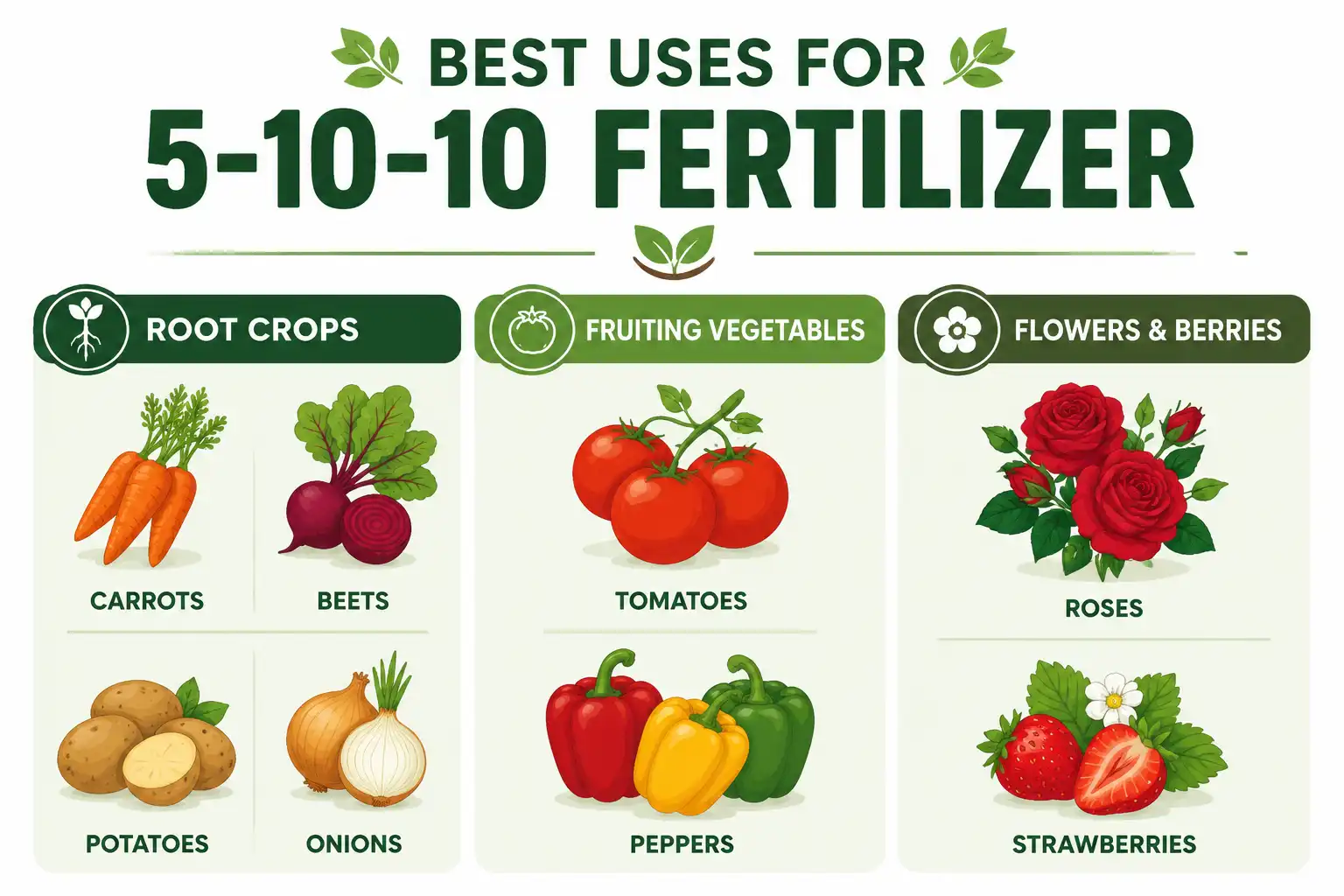
Reach for it in a few clear cases:
- Root and bulb crops. Carrots, beets, potatoes, onions, and garlic bulk up better when nitrogen stays moderate. Too much nitrogen pushes leafy tops and can leave you with hairy or forked roots.
- Fruiting vegetables. Tomatoes, peppers, squash, and cucumbers set more fruit once they quit chasing leaves.
- Perennials and ornamentals. Roses, berry bushes, and flowering shrubs use the extra phosphorus and potassium for blooms and hardiness.
- Fall feeding. A shot of phosphorus and potassium before winter helps perennial roots harden off for the zone 6a cold.
On carrots and beets, timing counts as much as the ratio. Dig into feeding carrots for sweeter, straighter roots in its own guide, since early nitrogen is the usual reason behind splits and forks.
What Crops Is 5-10-10 Good For?
5-10-10 is good for root crops, fruiting vegetables, flowers, and berries. Here is the quick match list in mind:
- Best fit: carrots, beets, radishes, potatoes, onions, garlic, tomatoes, peppers.
- Good fit: squash, cucumbers, melons, strawberries, roses, flowering shrubs.
- Skip it for: leafy greens, sweet corn, and lawns.
Those last three want nitrogen up front to push leaves. So a low-nitrogen blend like 5-10-10 holds them back instead of helping.
Is 5-10-10 Fertilizer Organic?
Most 5-10-10 fertilizer does not carry organic certification, so read the label if that matters to you. A true organic 5-10-10 is hard to blend, because reaching 10% phosphate and 10% potash from natural sources like rock phosphate and sulfate of potash takes a heavy mix. Many bagged 5-10-10 products are mineral based instead. Some brands add micronutrients or sell an organic line, but an OMRI listing is the clearest proof. When in doubt, check the ingredient panel, not the front of the bag.
Is 5-10-10 Fertilizer Good for Tomatoes?
Yes, 5-10-10 fertilizer is good for tomatoes, mainly once the plants start flowering and setting fruit. Tomatoes lean on phosphorus and potassium to size fruit and fight disease. The low nitrogen keeps them from turning into tall, leafy plants with little fruit.
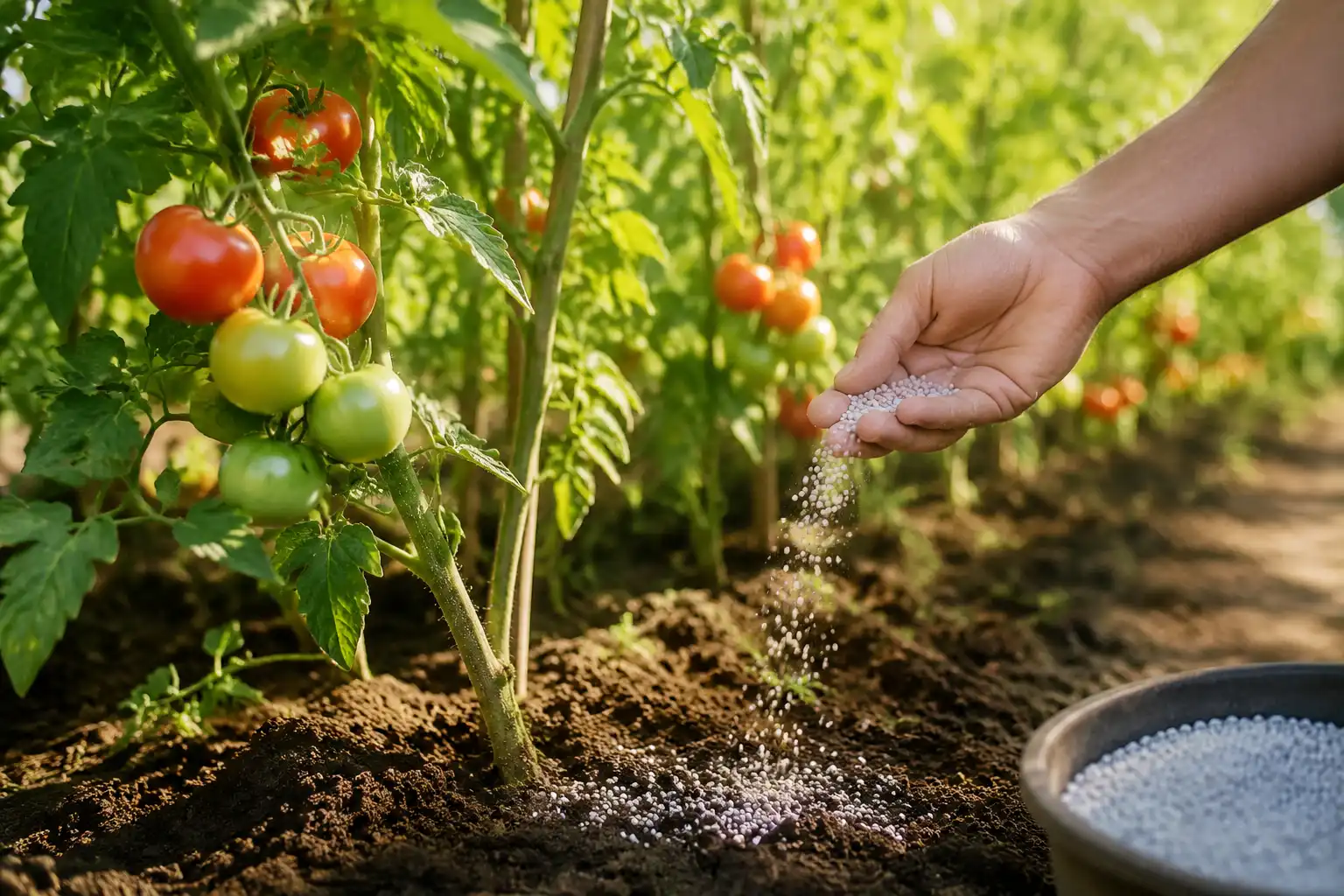
Timing is the key. Young transplants still want a moderate dose of nitrogen to build stems and leaves first. Feed a balanced blend at transplant, then move to 5-10-10 once flowers set. On already-rich soil, some growers run 5-10-10 all season and do fine. University of Missouri Extension warns that too much nitrogen creates excessive vine growth, twisted foliage, and delayed flowering. That matches typical field observations.
Potassium is why this ratio shines at fruiting. It drives fruit size, sugar, and firmness. A shortage shows as yellow leaf edges and pale, uneven fruit. Steady water matters just as much, since moisture swings cause cracking. our guide covers watering tomatoes correctly in a separate guide, because feeding and watering work as a pair.
One caution before you buy. Blossom end rot is a calcium and water problem, not a nitrogen or potassium one. So no NPK blend fixes it alone. Keep moisture even and check your soil calcium if it keeps showing up.
How to Use 5-10-10 Fertilizer
To use 5-10-10 fertilizer, work it into the soil before planting or side-dress it around growing plants, then water it in. The method depends on whether you run a granular or a liquid product. Always start with a soil test, so you know what your ground already holds.
Here is the routine:
- Test first. A reliable soil test kit shows your pH and nutrient levels before you spend a dime. Feeding blind wastes money and can lock up nutrients.
- Correct pH first. Phosphorus locks up outside roughly pH 6.0 to 7.0, so fix pH before you feed.
- Work granular into the bed. Before planting root crops, spread granular 5-10-10 and rake it into the top few inches.
- Side-dress at fruiting. For tomatoes and peppers, band a light dose a few inches from the stem once flowers set, then water it in.
- Repeat on schedule. Most gardens do well with a feeding every two to four weeks in season.
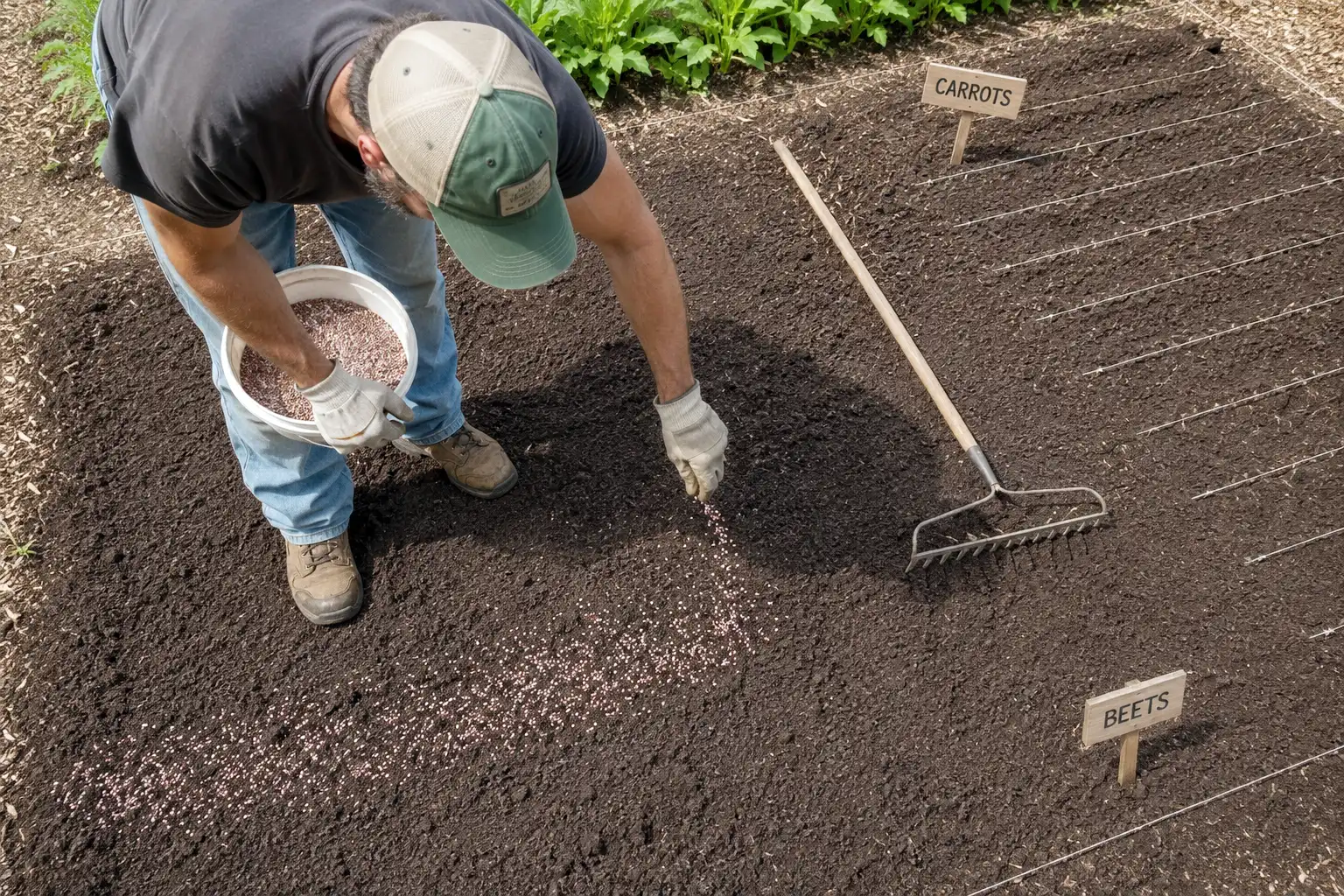
Rates vary by product, so the label is your guide. As a rough start, granular blends often call for about 1 to 2 pounds per 100 square feet worked into the bed. Liquid concentrates usually run near 1 cup per 100 square feet at fruiting. For container plants, about a tablespoon per gallon of water works. Never guess high.
Why Soil pH Decides If the Phosphorus Works
Soil pH decides how much of that 10% phosphate your plants can actually reach. Phosphorus is most available roughly between pH 6.0 and 7.0. Below about 6.0, it binds with iron and aluminum. Above about 7.5, common in alkaline Kansas ground, it locks up with calcium. Either way, the phosphorus sits in the soil where roots cannot use it.
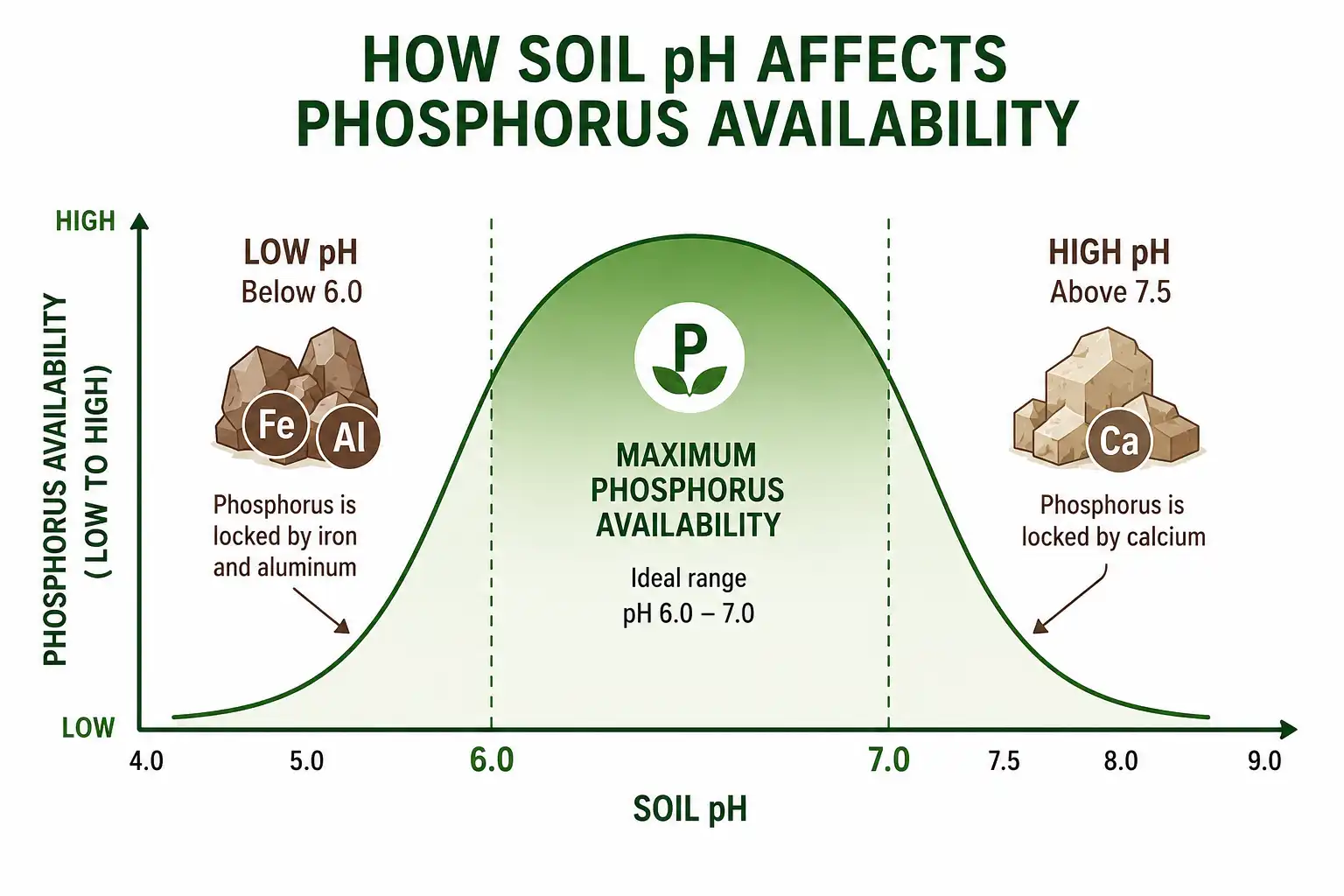
So the ratio on the bag only pays off if your pH is right. That is why testing and correcting pH comes before buying any high-phosphorus blend. On corn ground gone acidic, a little lime frees up more phosphorus than a second bag of fertilizer ever would.
Can You Use Too Much 5-10-10?
Yes, you can use too much 5-10-10, and the extra phosphorus is the main problem. Soil phosphorus does not wash out easily, so it builds up season after season. High soil phosphorus can then block zinc and iron uptake, which shows as pale new leaves. Salts from heavy feeding can also burn roots. Runoff carries the surplus into ponds and streams. So more is not better here. Match the dose to your soil test and stop there.
Granular or Liquid: Which Should You Use?
Granular 5-10-10 works best for feeding beds ahead of planting and for slow, steady release. Liquid 5-10-10 works best for a fast response and for container plants. Granular lasts longer in the soil and costs less per pound. Liquid acts quicker but needs more frequent reapplication. Keep both on hand. Use granular to prep beds in spring, then reach for liquid to give fruiting plants a mid-season push.
Best 5-10-10 Fertilizers
Two products earn a spot in the shed for this ratio. Both carry an honest nutrient guarantee and handle easily. One is a liquid concentrate for fast feeding. The other is a granular blend with added micronutrients for slow release. Here is how they compare, and who each one suits.
1. TPS Nutrients 5-10-10 Liquid Concentrate
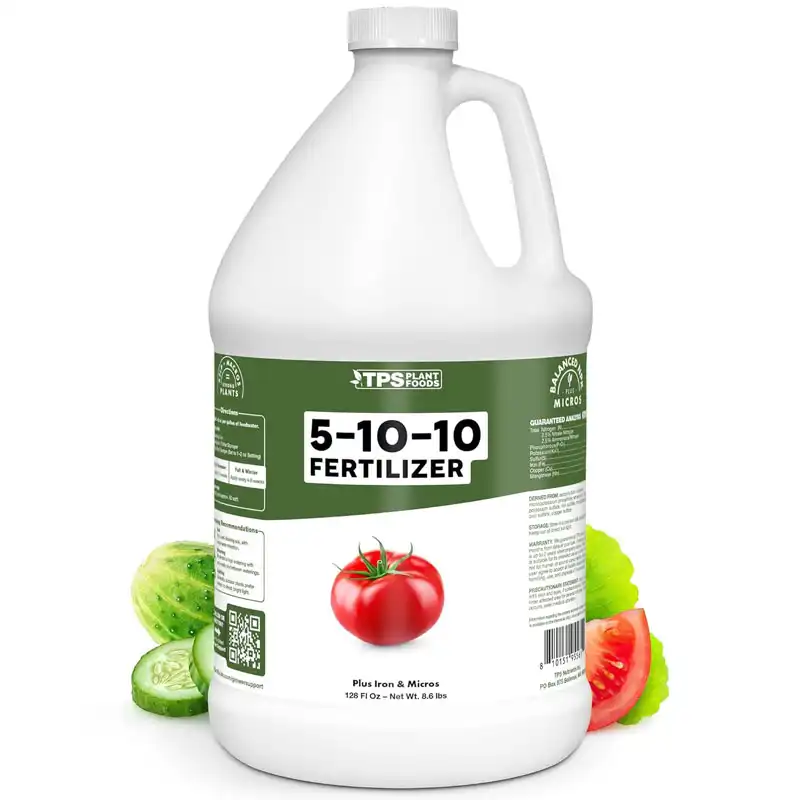
This liquid concentrate is the pick when plants need feed in a hurry. It mixes into a watering can or a hose-end sprayer and reaches roots fast, which helps during flowering and fruit set. One tablespoon per gallon covers houseplants. For outdoor beds, about 1 cup per 100 square feet suits the fruiting stage. It comes in 8 oz, 32 oz, and 1 gallon sizes, so you can match the amount to your plot. Growers report steadier fruiting and stronger roots on tomatoes after the switch. Made in the USA.
- Pros: fast root uptake; easy to mix; flexible sizing; works on many crops.
- Cons: needs frequent reapplication; must dilute before use.
- Best for: container plants, mid-season feeding, quick correction.
- Specs: liquid concentrate; 8 oz, 32 oz, or 1 gallon; NPK 5-10-10; made in USA.
2. Cz Garden Supply 5-10-10 Tomato and Vegetable Fertilizer
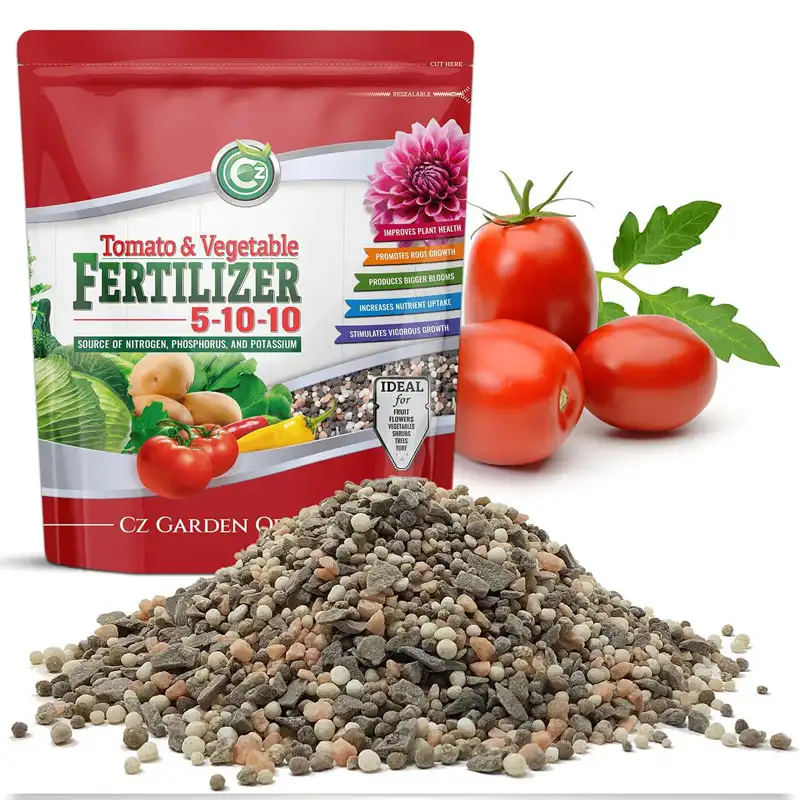
This granular blend works well for prepping beds and slow feeding across the season. It carries 2% iron plus micronutrients. That supports leaf color and helps offset the zinc and iron lockout from high-phosphorus soils. The slow release means you feed less often than with a liquid. It handles tomatoes, potatoes, carrots, flowers, and even lawn grass, so one bag covers a mixed garden. The resealable pouch keeps the rest dry between feedings. Gardeners note heavier blooms and better fruit color on tomatoes and root crops. Made in the USA.
- Pros: slow, steady release; added iron and micronutrients; resealable pouch; broad crop use.
- Cons: slower to act than liquid; label rate is general, so lean on a soil test.
- Best for: bed prep, root crops, hands-off feeding.
- Specs: granular, slow-release; NPK 5-10-10 plus 2% iron; resealable pouch; made in USA.
If you mostly grow root crops and want to feed and forget, go granular. If you chase fast results on tomatoes or containers, the liquid earns its keep.
When to Choose a Different NPK Ratio
Choose a different NPK ratio when your crop wants more nitrogen, or when your soil test already shows high phosphorus. 5-10-10 is not a one size fits all feed. Matching the ratio to the crop and the soil saves money and protects your ground.
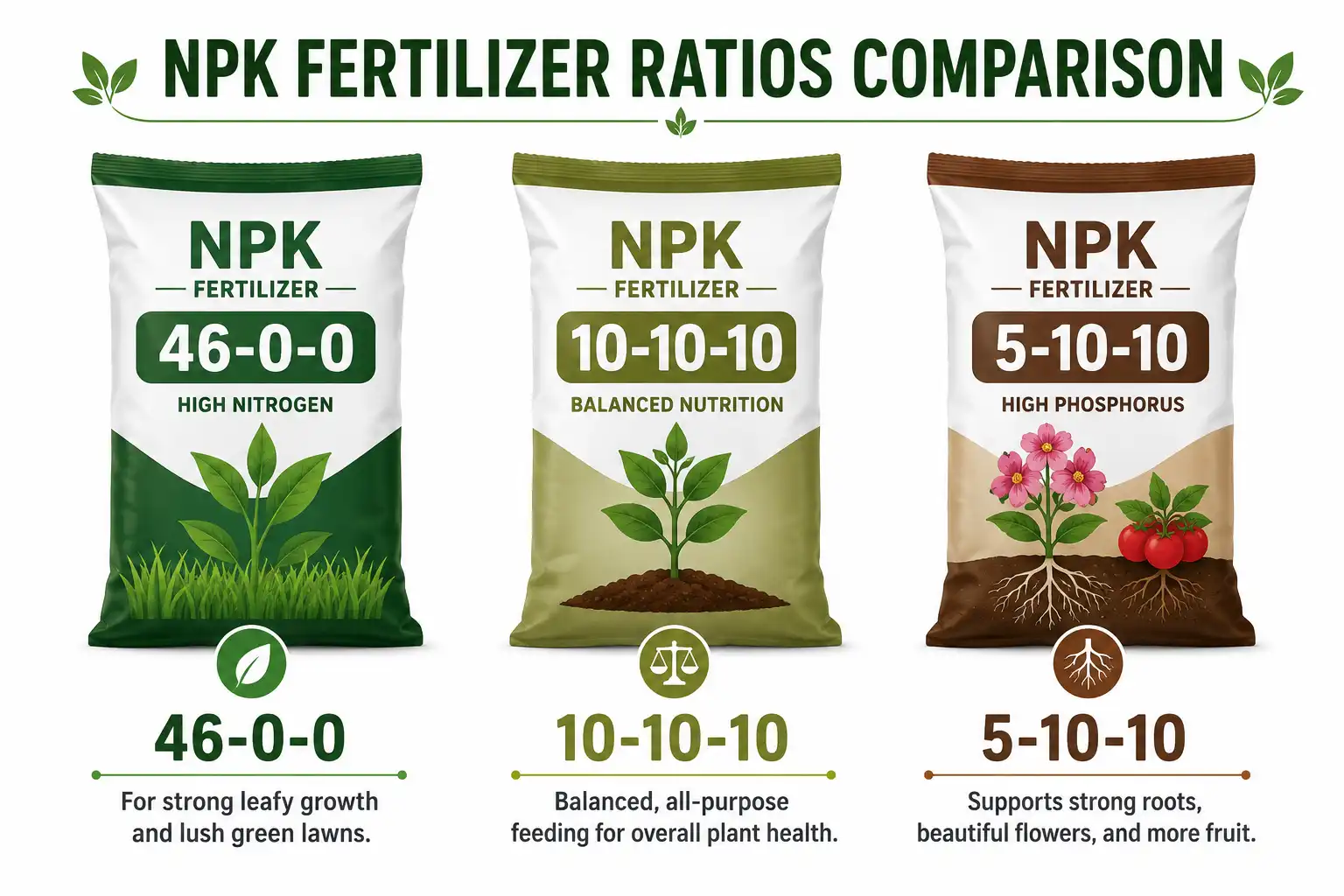
Here is when to switch:
- Leafy and grassy crops. Sweet corn, lawns, and greens want nitrogen up front. So a nitrogen-heavy blend like 46-0-0 fits them better.
- Steady all-around feeding. When a soil test reads balanced and general feeding is the goal, a balanced 10-10-10 does the job.
- High-phosphorus soil. Many older gardens already hold plenty of phosphorus. Adding more with 5-10-10 wastes it and risks runoff. A low-phosphorus or high-potassium product makes more sense there.
Its close cousin, 5-10-5, carries the same phosphorus with half the potash. That blend suits gardens that already test high in potassium. The takeaway is simple. Read your soil test first, then pick the ratio that fills the gap.
Bottom Lines
5-10-10 fertilizer earns its spot when you want roots, flowers, and fruit instead of leaves. Use it on carrots, beets, and tomatoes once they hit the fruiting stage, with granular for beds and liquid for a quick push. Still, every plan starts with a soil test and the right pH. Match the ratio to the crop, keep your water steady, and this low-nitrogen blend pulls its weight in almost any garden.