Will Roundup Kill Soybeans? Roundup Ready vs Conventional
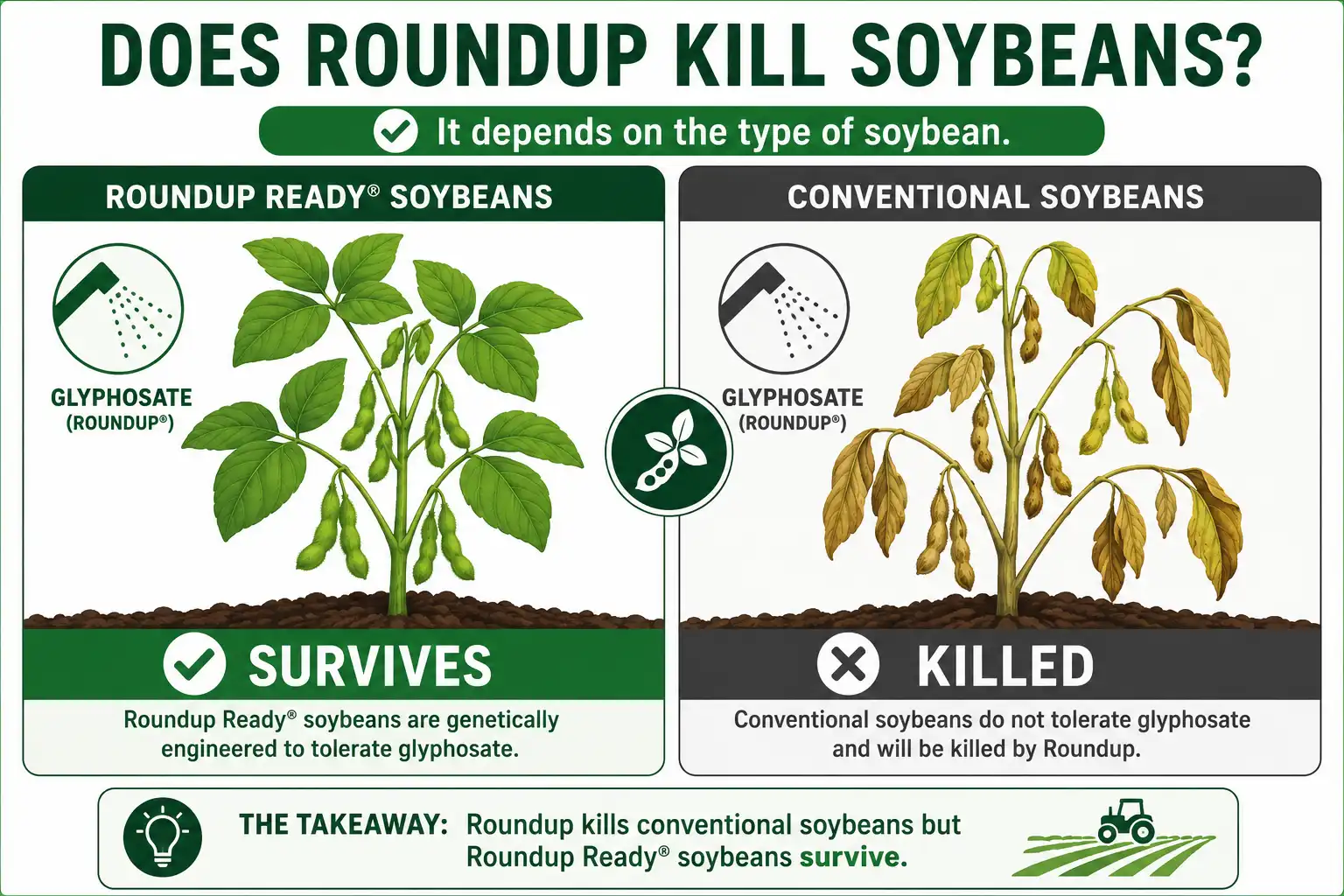
Will Roundup kill soybeans? It depends entirely on the seed you planted. Roundup Ready soybeans shrug off glyphosate. Conventional soybeans do not. Spray the wrong beans and you can lose the whole stand fast.
Roundup (glyphosate) kills conventional soybeans but not Roundup Ready or other glyphosate-tolerant varieties. Tolerant beans carry a gene that blocks glyphosate’s effect. Always confirm your seed tag before spraying, because the trait does not cover every herbicide.
Will Roundup Kill Soybeans?
Roundup kills conventional soybeans and spares glyphosate-tolerant ones. Glyphosate, the active ingredient in Roundup, cannot tell your crop from a weed. It only spares plants built to survive it. Roundup Ready soybeans carry that built-in tolerance. Plant a non-tolerant variety, spray glyphosate over the top, and that stand dies.
In Kansas, this question hits new growers hardest. A bag of conventional beans looks identical to a bag of Roundup Ready beans. The difference sits in the genetics, not the seed coat. So the real question is never just whether Roundup harms beans. It is which trait you are spraying over. Get that wrong and the answer is yes, every time. The rest of growing a healthy soybean crop means nothing if you wipe out your own stand with the sprayer.
How Does Glyphosate Kill a Soybean Plant?
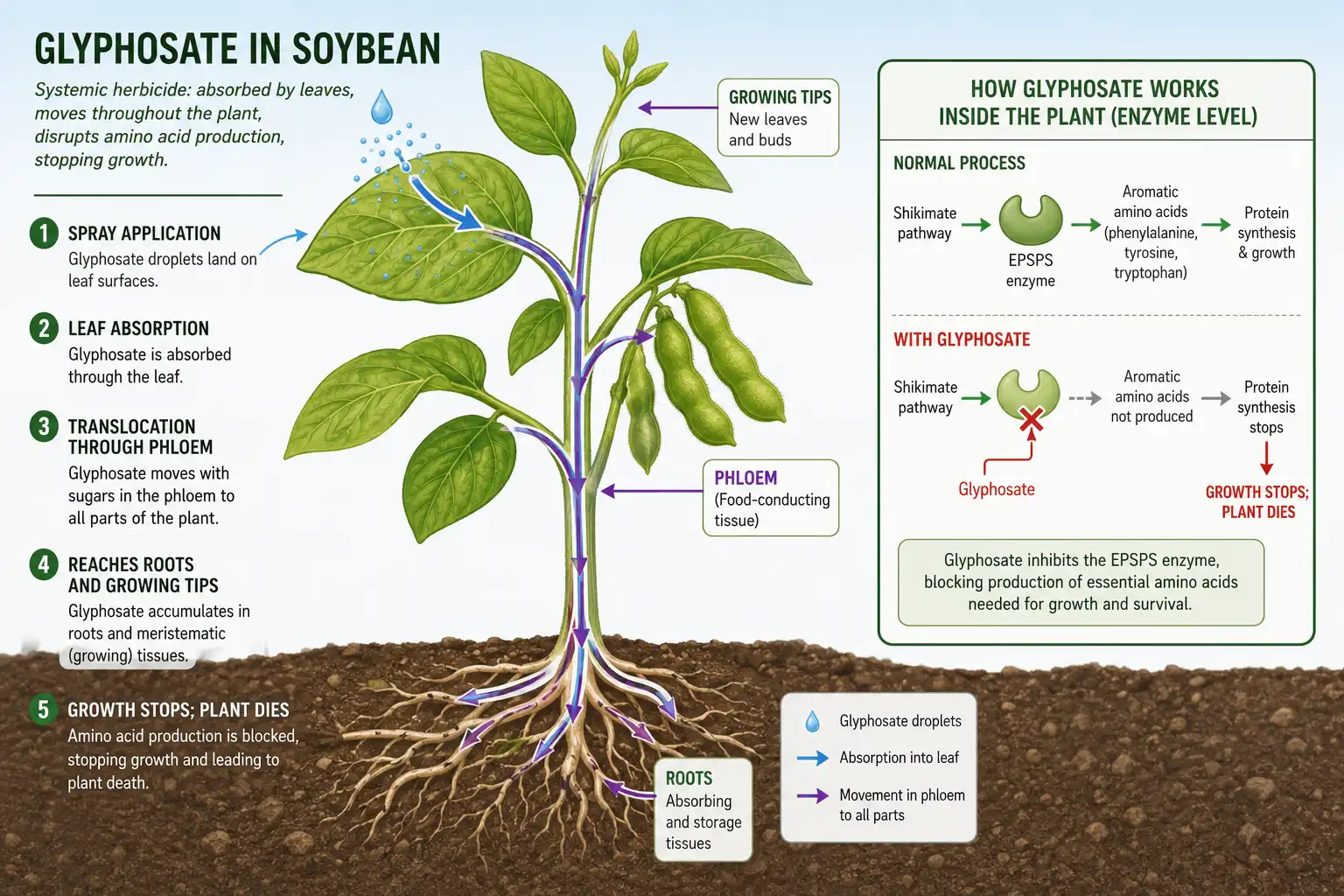
Glyphosate kills a soybean plant by shutting down one enzyme it needs to grow. That enzyme, EPSPS, runs the shikimate pathway. Plants use that pathway to build three aromatic amino acids. Block it, and the plant cannot make the proteins it needs. Growth stops, then the plant starves.
Glyphosate moves through the phloem, so it travels to the roots and growing points. That is why injury shows up on new growth first. According to NC State Extension, the process runs slow. Symptoms take days to weeks to finish a plant off.
One detail matters for your soil. Glyphosate has no residual activity in the ground. K-State Research and Extension and other land-grant programs note that it binds tightly to soil and breaks down. So spraying a field this week will not poison beans you plant next week. Carryover is not the risk. Hitting living, non-tolerant plants is.
What Are Roundup Ready Soybeans?
Roundup Ready soybeans are genetically engineered to survive glyphosate. Scientists inserted a bacterial form of the EPSPS enzyme that glyphosate cannot block. The plant keeps making amino acids after a spray. Weeds around it die. The crop stands clean.
Monsanto launched the first Roundup Ready soybeans in 1996. They reshaped weed control across the Corn Belt and Great Plains. By the mid-2000s, most U.S. soybean acres carried the trait. The version most growers plant today is Roundup Ready 2 Xtend, built on the older Roundup Ready 2 Yield platform.
Which Soybean Traits Tolerate Glyphosate in 2026?
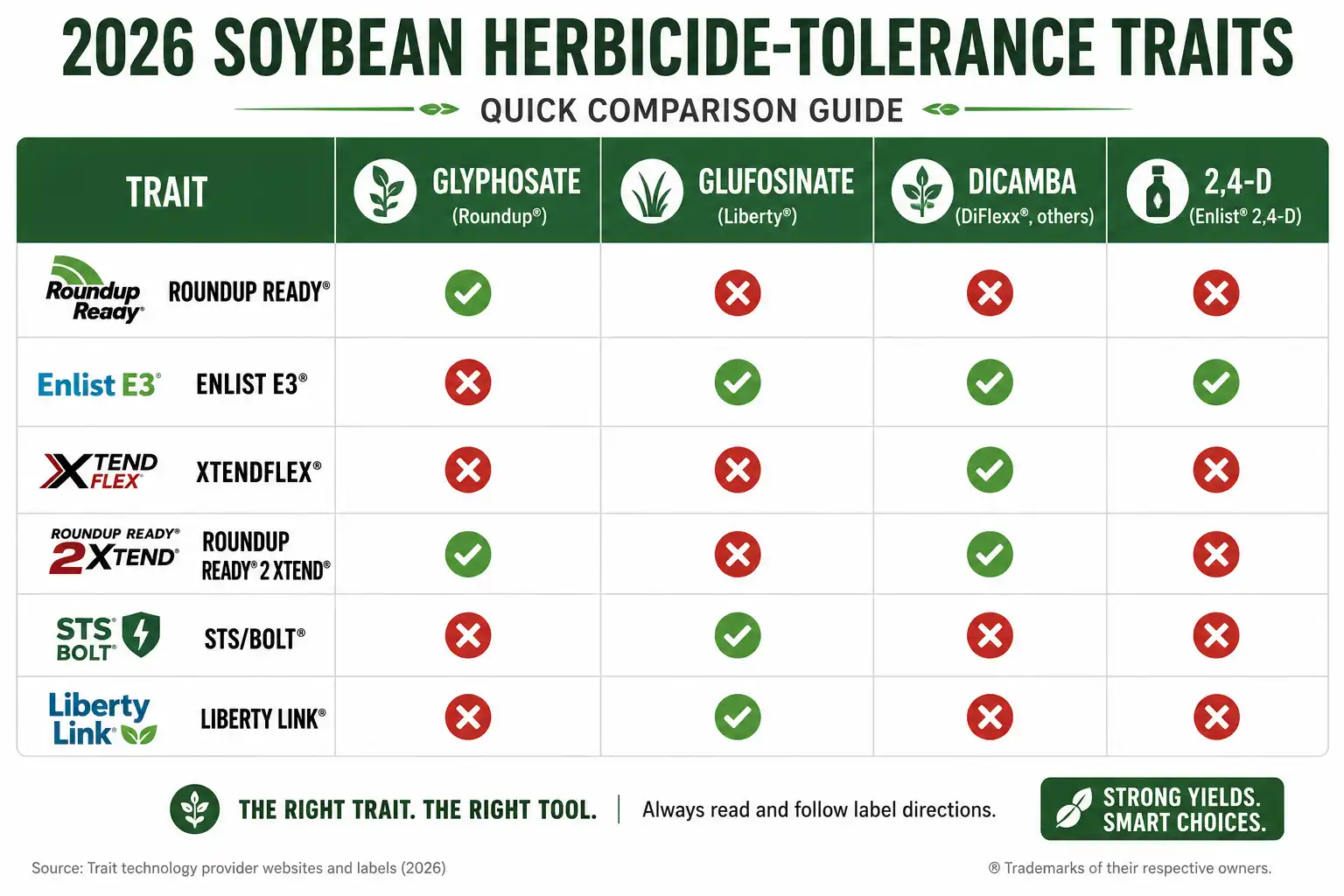
Five of the six soybean herbicide systems sold in 2026 tolerate glyphosate. The LSU AgCenter lists these tolerance packages for the 2026 season:
- Roundup Ready: glyphosate only.
- Enlist E3: glyphosate, glufosinate, and 2,4-D choline.
- XtendFlex: glyphosate, glufosinate, and dicamba.
- Roundup Ready 2 Xtend: glyphosate and dicamba.
- STS/Bolt: glyphosate plus higher rates of certain ALS herbicides.
- Liberty Link: glufosinate only, with no glyphosate tolerance.
Notice the last one. Liberty Link soybeans are modern and genetically modified, yet glyphosate still kills them. The trait protects against glufosinate (Liberty), not Roundup. So “GMO” does not mean “Roundup-safe.”
One important 2026 update concerns dicamba. Xtend and XtendFlex seed is still sold, but no dicamba formulation is registered for in-crop use right now, so you cannot legally spray dicamba on those beans this season. You can still spray glyphosate over them. Always check current EPA and state registrations before you mix anything.
How Do I Know If My Soybeans Are Glyphosate-Tolerant?
Check the seed tag and variety name first. Every bag of certified seed lists its herbicide trait. Roundup Ready, RR2X, Enlist E3, and XtendFlex all print right on the label. Pioneer marks glyphosate-tolerant varieties with an “R” in the product number. If the tag names no glyphosate trait, treat the beans as conventional and keep glyphosate off them.
Saved seed and unlabeled bargain beans are the danger zone. If you cannot confirm the trait, do not risk a glyphosate pass. Run a small test strip first, or skip glyphosate on that field entirely.
Never assume a trait carries across varieties. There is no cross-tolerance among these systems. Enlist beans do not tolerate dicamba. Xtend beans do not tolerate 2,4-D. Spraying the wrong chemistry on the wrong trait causes severe injury or death, even when both seed types are “tolerant” beans.
What Happens When Roundup Hits Conventional Soybeans?
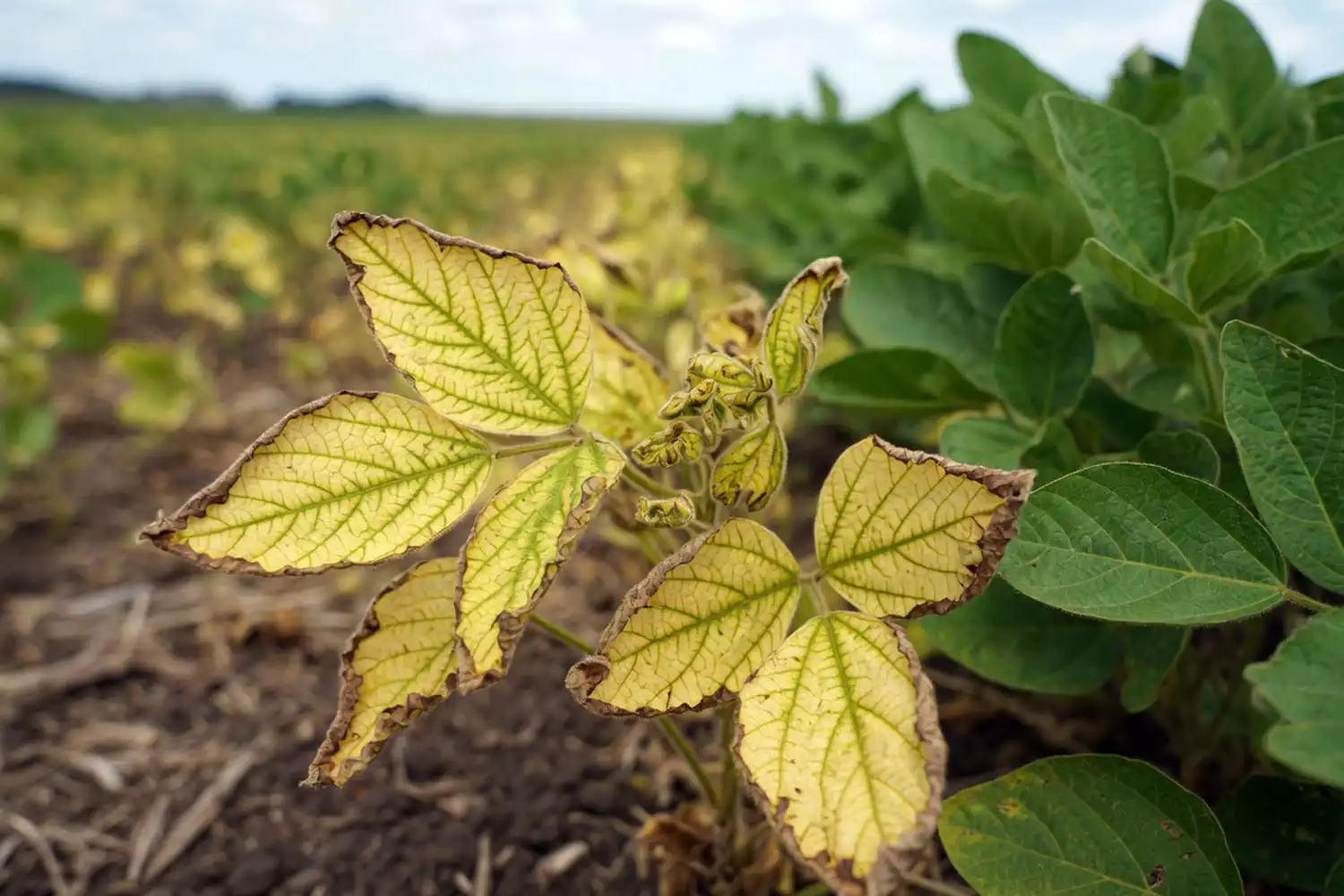
Conventional soybeans hit with glyphosate start dying within days. SDSU Extension reports symptoms in three to five days. Leaves turn pale yellow, much like a nitrogen deficiency. Some take on a purple cast that mimics a phosphorus shortage. New growth yellows between the veins, often worst at the leaf edges. Then tissue browns and dies.
That slow, deficiency-like look fools people. Growers often blame fertility or weather at first. But if the yellowing follows a spray pattern or runs along a field edge, suspect glyphosate. True nutrient problems spread evenly, which is one reason yellowing in soybeans deserves a careful look before you reach for fertilizer.
Whether the crop recovers depends on dose and timing. A light, early brush of drift may not cut yield. A full rate over the top during a key growth stage usually means a total loss on those plants.
Can Glyphosate Drift Damage a Neighbor’s Beans?
Yes, glyphosate drift can damage or kill non-tolerant beans downwind. Physical drift carries spray droplets off-target when wind and timing are wrong. NC State Extension advises spraying only when average wind stays under 10 miles per hour. Spray mid-morning through afternoon to avoid a temperature inversion, when still air traps fine droplets and moves them later.
Buffer your conventional and Liberty Link neighbors. Watch the forecast before you fill the tank. Use coarse-droplet nozzles and the right boom height. A clean glyphosate pass on your Roundup Ready field should never reach the field next door.
When Can You Spray Roundup on Roundup Ready Soybeans?
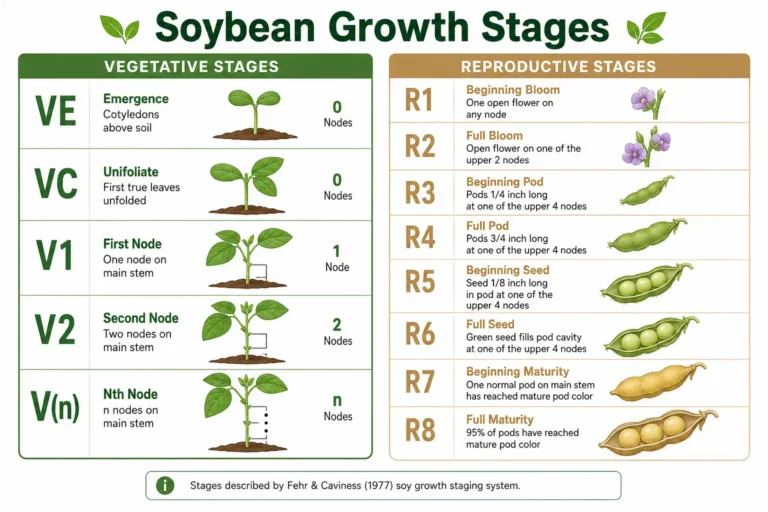
Spray glyphosate on Roundup Ready soybeans from emergence through flowering. Penn State Extension sets that window for glyphosate-tolerant varieties. Cornell recommends a pass around 24 to 30 days after planting under conventional tillage. The goal is simple: keep beans weed-free through about the first five weeks, which protects the most yield.
Two passes beat one in most fields now. Run a residual herbicide before the beans come up, then a post pass that tank-mixes glyphosate with another mode of action. That post pass has to line up with the right growth stage, so staging your soybeans before you spray pays off.
You may see a “yellow flash” after a glyphosate pass, even on tolerant beans. The new leaves yellow for a week or so, then green back up. At labeled rates it rarely costs yield. Heavy rates make it worse, so stick to the label.
Why Glyphosate Alone No Longer Controls Every Weed
Glyphosate alone no longer kills several major weeds. Years of glyphosate-only programs bred resistance. Palmer amaranth, waterhemp, and marestail now survive labeled rates across much of the country. University of Nebraska trials found glyphosate alone failed on most tough species once they topped a few inches.
The fix is mixing modes of action. Start with a soil-applied residual. Follow with a post pass that pairs glyphosate with a different chemistry. Then rotate traits and herbicides across seasons. A planned weed control program holds resistance back far better than spraying glyphosate again and again. This is core integrated pest management thinking, and it keeps glyphosate working on your farm longer.
Glyphosate also shows up well beyond soybeans, which raises questions in other crops too, like whether oats get a glyphosate spray before harvest. The same rule applies everywhere: know what you are spraying, and know what it does to the plant.
What to Watch For Before Spraying Beans in Kansas
Before any glyphosate pass, one thing gets confirmed first: the trait in the ground. Roundup Ready and other glyphosate-tolerant beans take the spray and keep growing. Conventional and Liberty Link beans do not. Check the seed tag, watch the wind, and run more than one mode of action. Do that, and glyphosate stays a tool instead of a costly mistake.