How Late Can You Spray Liberty on Soybeans? The R1 Cutoff
Liberty (glufosinate) controls glyphosate-resistant weeds in tolerant soybeans, but the label ties your last application to a growth stage rather than a calendar date. Knowing how late you can spray Liberty on soybeans keeps the pass legal and protects yield.
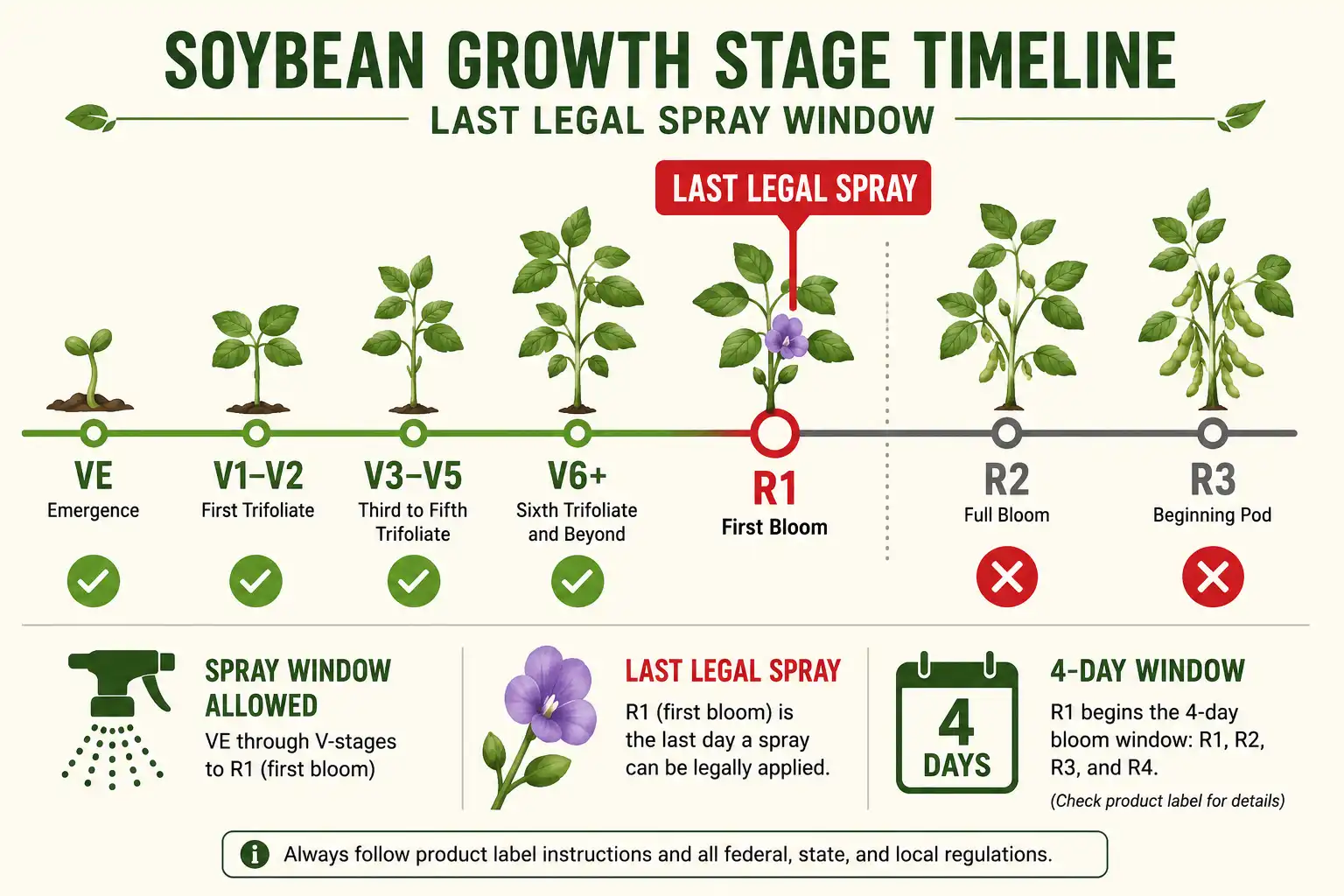
Liberty can be applied to glufosinate-tolerant soybeans from emergence through R1, the beginning of bloom. After R1 the application is off-label. R1 to R2 runs roughly four days, so scout closely and spray early.
What Is the Latest Growth Stage for Spraying Liberty on Soybeans?
The latest stage is R1, the beginning of bloom. R1 begins when one open flower appears at any node on the main stem. That is the hard cutoff for glufosinate on soybeans, according to the Liberty 280 SL and Liberty Ultra product labels.
After R1, beans move into R2 (full flower) in roughly four days. Once flowering advances, a Liberty application falls outside label directions. So the practical answer is to finish the Liberty pass before flowers open, or right as the first ones appear.
The same growth-stage limit applies across glufosinate products. Liberty 280 SL, Liberty Ultra, Interline, Cheetah, and generic glufosinate formulations all carry the R1 soybean cutoff. Always confirm against the label in your hand, because formulations and use restrictions change.
One point trips people up. Liberty is not registered as a harvest aid or desiccant for soybeans. The only labeled soybean use is in-crop weed control with the R1 limit, so there is no second, later window.
Why Does Liberty Have an R1 Cutoff?
The R1 cutoff exists for crop safety and because the federal label sets it there. Glufosinate is a contact herbicide, and flowering is the most yield-sensitive stretch of the season.
Here is what happens inside the plant. Glufosinate is classified as a Group 10 herbicide by the Weed Science Society of America. It inhibits glutamine synthetase, which stops the plant from processing nitrogen and allows ammonia to accumulate to toxic levels. The tolerance trait protects the crop, but only to a point. Applying during reproductive stages raises the risk of yield loss.
The growth-stage restriction is also stricter than the preharvest interval, which means the R1 stage stops you well before any calendar limit becomes relevant. For Liberty on soybeans, R1 is the number that governs timing.
Which Soybean Traits Tolerate Liberty?
Only glufosinate-tolerant soybeans can take a Liberty pass. Applying it over non-tolerant beans will kill or badly injure the crop, so confirming the trait is the first step before filling the tank.
Four trait platforms tolerate glufosinate:
- LibertyLink (LL): the original glufosinate-tolerant line
- LibertyLink GT27 (LLGT27): adds glyphosate and an HPPD-inhibitor tolerance trait
- Enlist E3: tolerant to glufosinate, glyphosate, and 2,4-D choline
- XtendFlex: tolerant to glufosinate, glyphosate, and dicamba
Every one of these still uses the R1 cutoff for Liberty. The extra traits change your tank-mix partners, not your glufosinate timing. Check the seed tag or invoice if you are unsure which system you planted.
Knowing the trait early shapes the whole season, so build it into your spray calendar alongside your expectations for soybean maturity timing.
How Do You Know When Soybeans Reach R1?
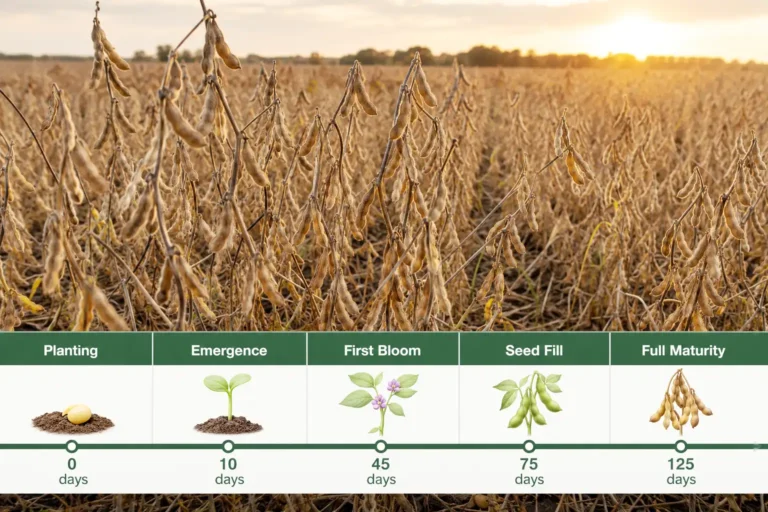
You know it is R1 the moment one open flower appears at any node on the main stem. That single bloom starts the clock. You do not wait for a field full of flowers.
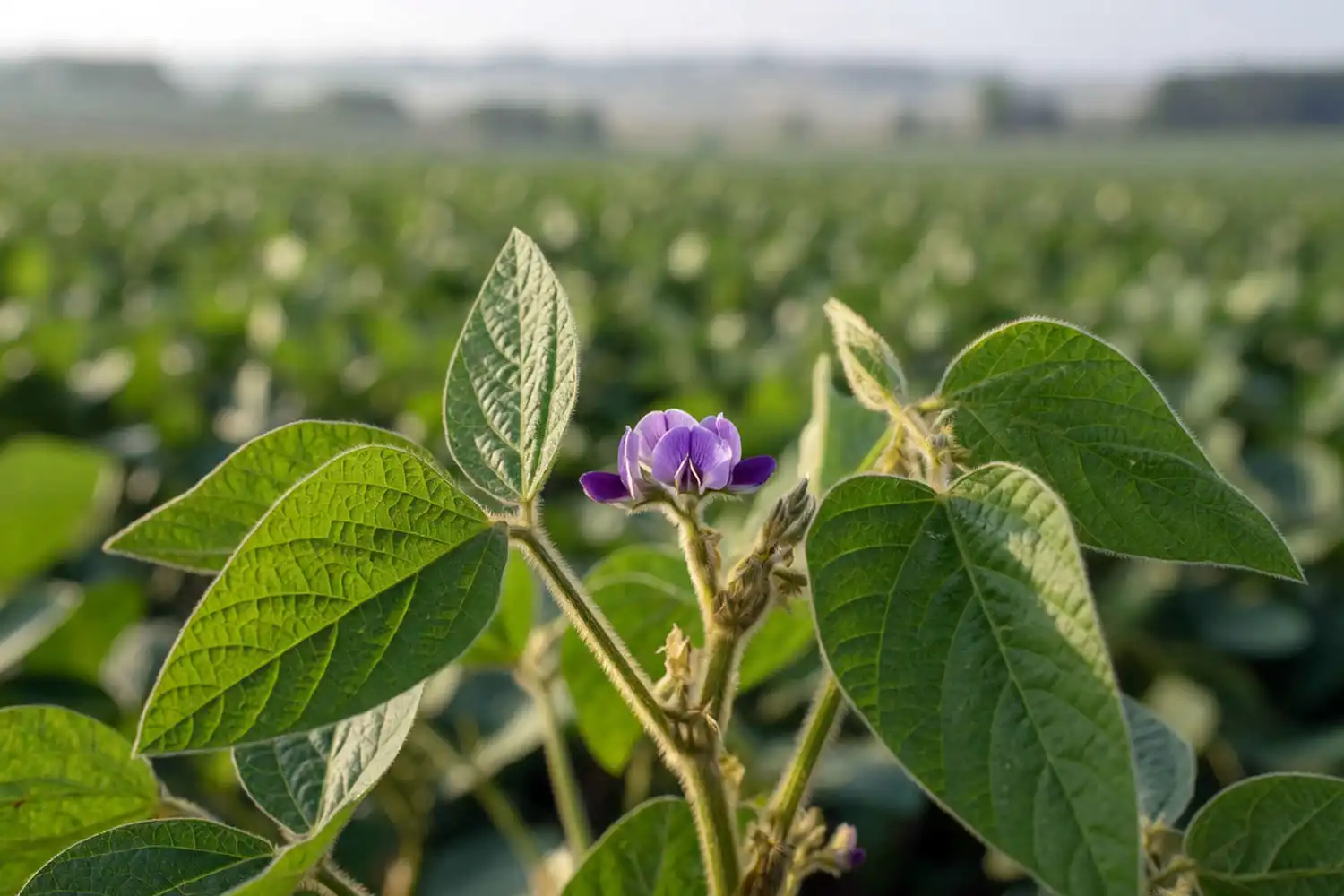
Scout often once beans reach late vegetative stages. Walk into the field rather than checking only the edge. Pull plants from several spots and look closely at the nodes, because flowers are small and easy to miss. A field can move from no flowers to R1 in a day or two in warm weather.
Iowa State University Extension and University of Nebraska-Lincoln Extension both publish soybean reproductive staging guides that define R1 through R8, and either one works as a field reference.
Reading reproductive stages accurately pays off across the season, since the same skill governs fungicide decisions later. A repeatable routine for staging soybeans before a spray prevents accidental applications to a flowering field.
What Happens If You Spray Liberty After R1?
Spraying after R1 is an off-label application with two separate consequences. It violates the product label, which carries legal exposure. It also puts crop safety at risk during the most yield-sensitive part of the season.
Two things tend to go wrong at once. Control drops, because late weeds are usually large and glufosinate performs best on small, actively growing weeds. And the crop takes a harder hit, since a glufosinate pass causes brief leaf yellowing or browning even on tolerant beans. During flowering, that stress can cost pods.
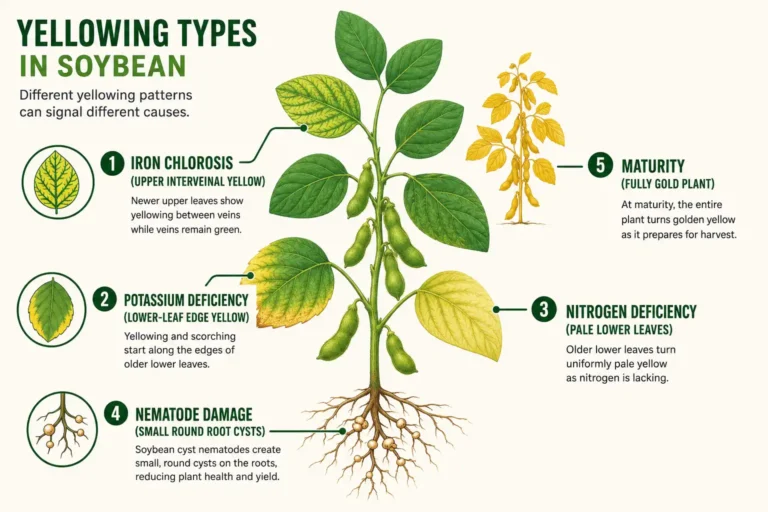
If you notice unexpected yellowing in soybeans after a herbicide pass, herbicide response is one possible cause among several.
The arithmetic rarely favors spraying past the cutoff. Yield protected from weeds gets consumed by crop injury and weaker control.
Liberty vs Liberty Ultra: Does the Cutoff Change?
No, the cutoff does not change. Both Liberty 280 SL and Liberty Ultra carry the same R1 soybean limit. What changes is the rate, not the timing.
Liberty Ultra is BASF’s reformulated glufosinate. Standard glufosinate contains an active L-isomer and an inactive D-isomer. Liberty Ultra shifts more of the product to the active L-glufosinate form, which delivers equivalent activity at a lower use rate.
Label rates run in these ranges:
- Liberty 280 SL: 32 to 43 fluid ounces per acre
- Liberty Ultra: roughly 24 to 29 fluid ounces per acre
Approximately 24 ounces of Liberty Ultra corresponds to 32 ounces of Liberty 280 SL. Confirm the rate on the label for the specific product and container you are using, because rate ranges vary by weed spectrum and by state.
Liberty Ultra also carries Endangered Species Act requirements under EPA registration, so check the label and any Bulletins Live! Two restrictions that apply to your location before spraying.
How to Get the Best Control Before the Cutoff
Best control comes from spraying small weeds in warm, sunny, humid conditions. Glufosinate is a contact product, so coverage and weather matter as much as timing.
What weed size works best?
Target weeds under about 3 inches tall. Larger weeds and tall escapes often survive, so plan passes around weed size rather than the calendar. A timely pass beats a heavy rescue pass every time. This is the same principle behind any effective weed control program.
What weather and time of day are best?
Spray in warm, sunny days with high humidity, ideally 85°F and up. Apply between roughly two hours after dawn and two hours before sunset, since there is a real time-of-day effect with glufosinate. Spraying too early or too late in the day cuts control.
Skip the pass when weeds are stressed. Drought, cold, and long cloudy stretches all drag down performance. Glufosinate works fast in good conditions, usually within 24 to 72 hours.
What about water volume and adjuvants?
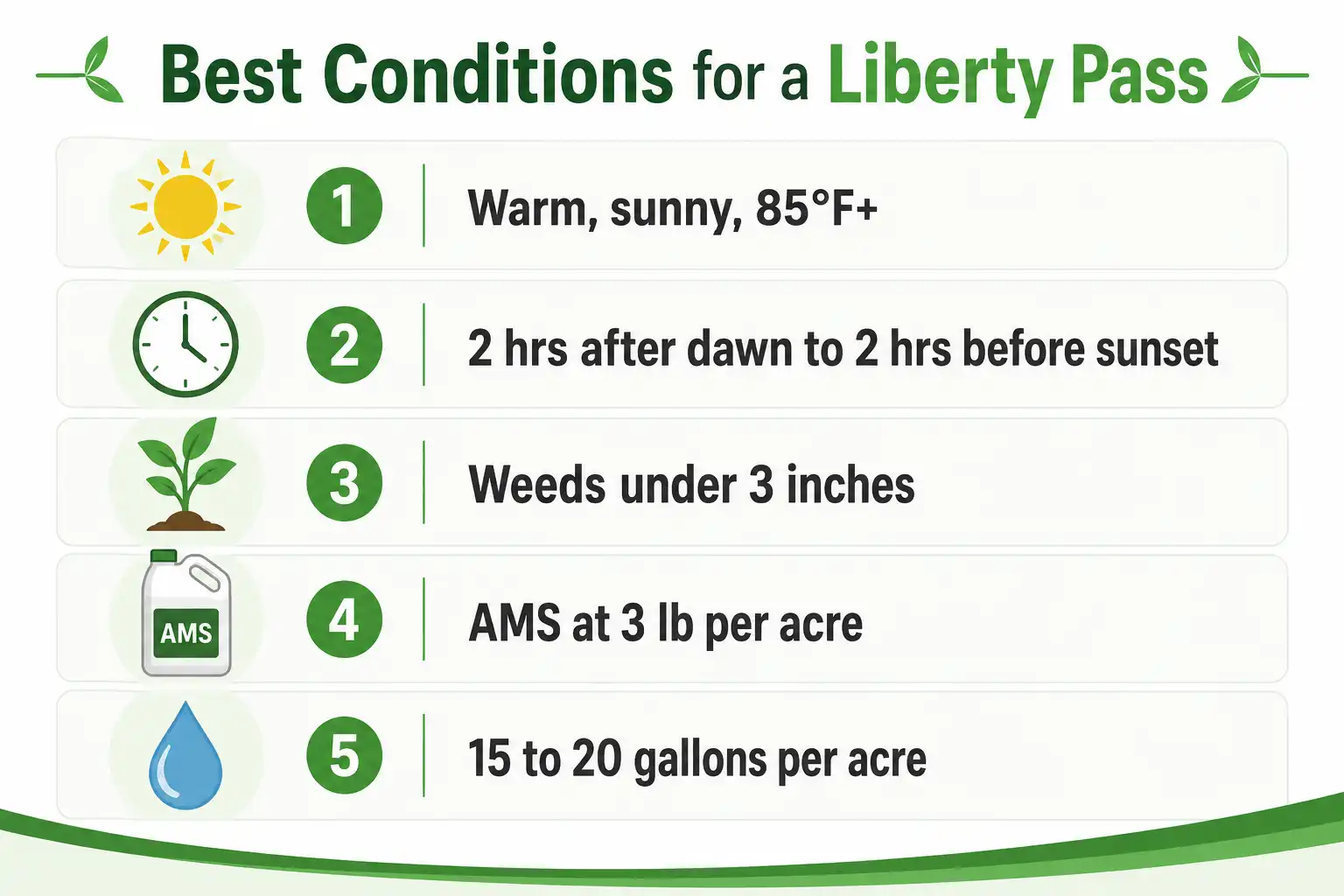
Include ammonium sulfate at the rate specified on the label, and use the carrier volume the label directs. The infographic above reflects commonly labeled ranges of roughly 3 pounds of AMS per acre and 15 to 20 gallons of water per acre, but the label for your product controls both figures.
Flat fan nozzles that produce medium to coarse droplets improve coverage with a contact herbicide, since more water and better droplet placement puts more active ingredient on leaf surfaces.
Adding a residual herbicide to the post pass buys time against the next flush of weeds while the canopy closes. That protects your program and slows the development of glufosinate resistance.
When Does R1 Usually Arrive in the Field?
R1 usually arrives in late June through July across much of the Midwest and Great Plains, but the exact date depends on planting date, maturity group, and the season’s heat. There is no single calendar deadline.
Two factors move R1 earlier or later. Earlier soybean planting dates generally mean earlier bloom. Maturity group also matters: indeterminate beans often begin flowering near the summer solstice as day length shortens, while determinate types respond differently.
Because bloom timing shifts with region and season, plan to complete post applications with margin rather than aiming at the cutoff. A pass a week early carries far less risk than a rained-out window and a field past R1. For dates specific to your area, your state extension service publishes soybean growth stage timing for local maturity groups.
What Are Your Options If Soybeans Are Past R1?
Once beans are past R1, Liberty is no longer an option and expectations should be set lower. Big weeds in a flowering field are hard to remove cleanly.
A few products can be applied later than Liberty, depending on the trait:
- Glyphosate: allowed through R2 (full flower) on glyphosate-tolerant beans
- Enlist One or Enlist Duo: allowed through R1 in Enlist E3 beans
- PPO herbicides such as Cobra or Phoenix: carry their own day-before-harvest limits, and can cause noticeable crop response
Confirm every rate, growth stage, and preharvest interval on the current label before applying any of these, because restrictions differ by product and by state.
These are last-resort moves rather than a plan. Spraying waist-high weeds usually delivers control and crop response in roughly equal measure. The real fix is timing earlier next season, which starts with a soybean weed control plan built before planting.
Bottom Line for Your Field
R1 is the cutoff. Liberty can be sprayed on glufosinate-tolerant soybeans from emergence until the first open flower appears, and after that the application is off-label. Because R1 to R2 runs about four days, small weeds and an early pass beat a late one.
Warm weather, weeds under 3 inches, ammonium sulfate at the labeled rate, and enough carrier volume give the best coverage. Confirm the trait first, confirm the label second, and Liberty will do its job well inside the window.