Why Are Your Soybeans Turning Yellow? Causes and Fixes
Yellow soybean leaves point to a specific problem, and where the yellowing sits tells you which one. If soybeans are turning yellow, the cause is usually a nutrient shortfall, a root pest, disease, or normal maturity.
Soybeans turn yellow from nitrogen or potassium shortfalls, iron deficiency chlorosis on high-pH ground, soybean cyst nematode, disease like sudden death syndrome, waterlogging, or natural senescence at maturity. Where the yellow sits on the plant usually names the cause.
Why Are Your Soybeans Turning Yellow? Start With Leaf Position
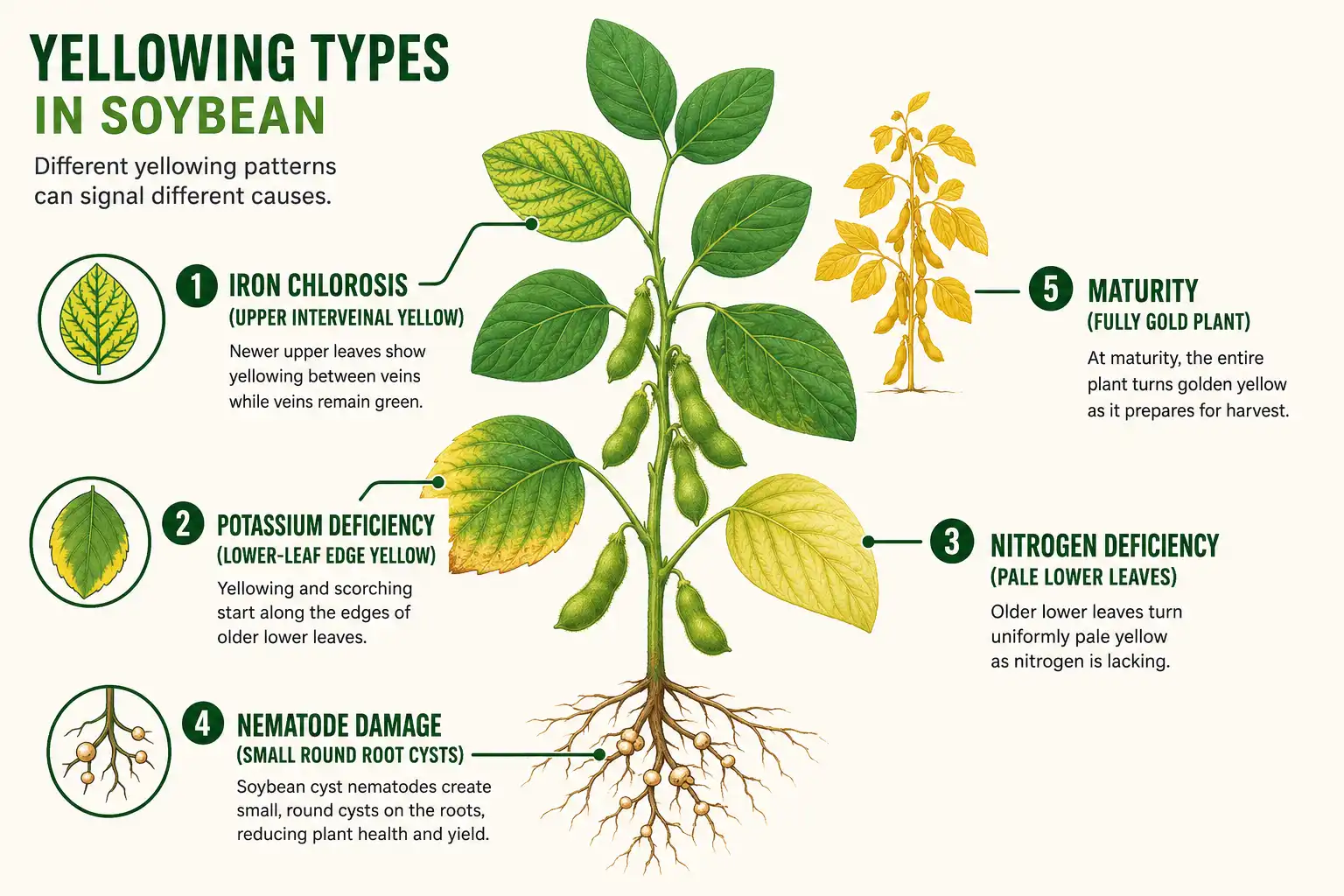
Your soybeans are turning yellow because something is limiting chlorophyll, and the leaf position points straight to what. Yellow on the lowest, oldest leaves usually means nitrogen or potassium. Yellow on the top, newest leaves usually means iron, manganese, or disease. A whole field turning gold at once is often just maturity.
Read the pattern on each leaf, too. Interveinal yellowing, where the veins stay green and the tissue between them goes pale, points to iron, manganese, or a root disease. Yellowing that starts at the leaf edge and works inward points to potassium. A flat, uniform pale-green cast points to nitrogen or aging.
Soybeans (Glycine max) flag stress through their leaves well before yield drops. Reading these signs early, then matching them to the cause below, is the difference between a quick fix and a lost stand.
Nitrogen Deficiency and Weak Nodulation
Pale, uniformly yellow lower leaves with darker green leaves up top usually mean nitrogen deficiency. Soybeans pull most of their nitrogen from Bradyrhizobium japonicum bacteria living in root nodules, not from the soil. When those nodules form late or fail to form, the plant runs short.
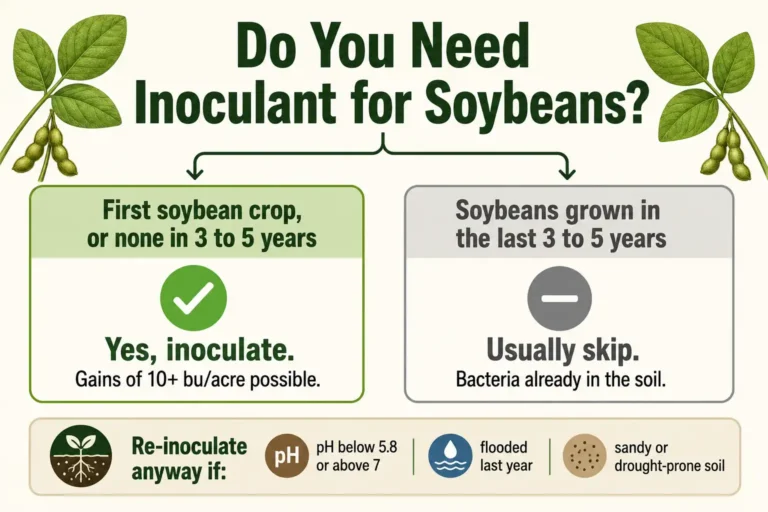
Wet, dry, or hot soil early in the season delays nodule development. Double-cropped beans behind wheat are prone to it. New ground with no soybean history is the worst case, because inoculated seed sometimes still fails to nodulate on those acres.
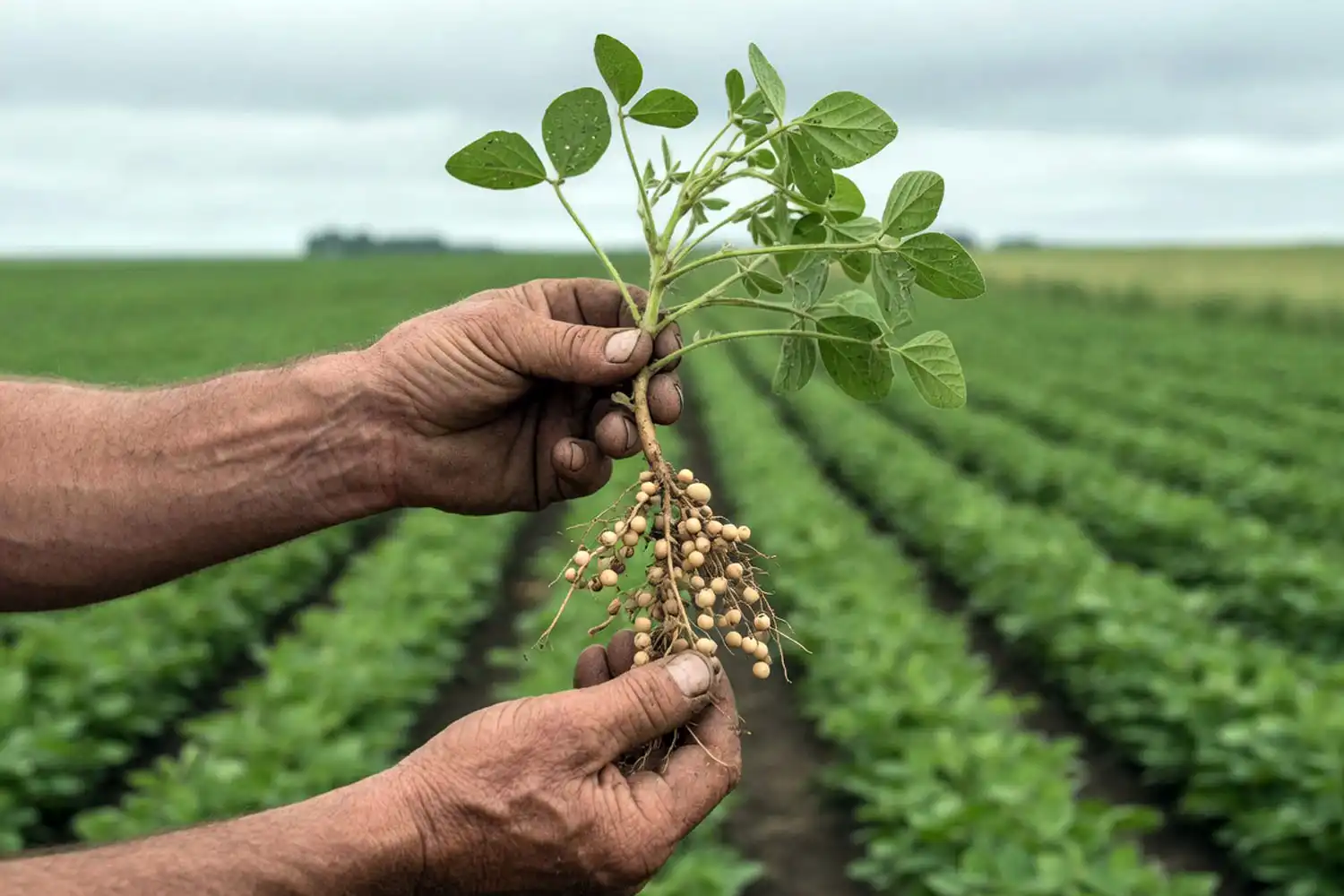
Dig a few plants and slice the nodules open. Active nodules look pink or red inside, and a plant fixing enough nitrogen carries roughly 8 to 20 of them. White or green centers mean little fixation is happening. On fields with almost no nodules, K-State Research and Extension reports a rescue application of 90 to 120 pounds of nitrogen per acre has paid off when applied as soon as you confirm the problem. Fixation normally peaks around the R4 to R5 stage, so timing matters.
Potassium Deficiency Yellows the Leaf Edges
Potassium deficiency shows as yellowing along the outer edges of the lower, older leaves. The tip and margins turn yellow first, then the color creeps inward while the leaf center stays green. It can appear as early as the V3 stage, and severe cases drop the oldest leaves early.
Sandy soils, dry topsoil, and root-limiting compaction all bring it on, since most soil potassium sits in the topsoil where roots struggle in dry weather. Pull a 0 to 6 inch soil sample plus tissue from both good and poor spots, then correct it with the right NPK fertilizer rate for your test numbers.
Iron Deficiency Chlorosis on High-pH Soils
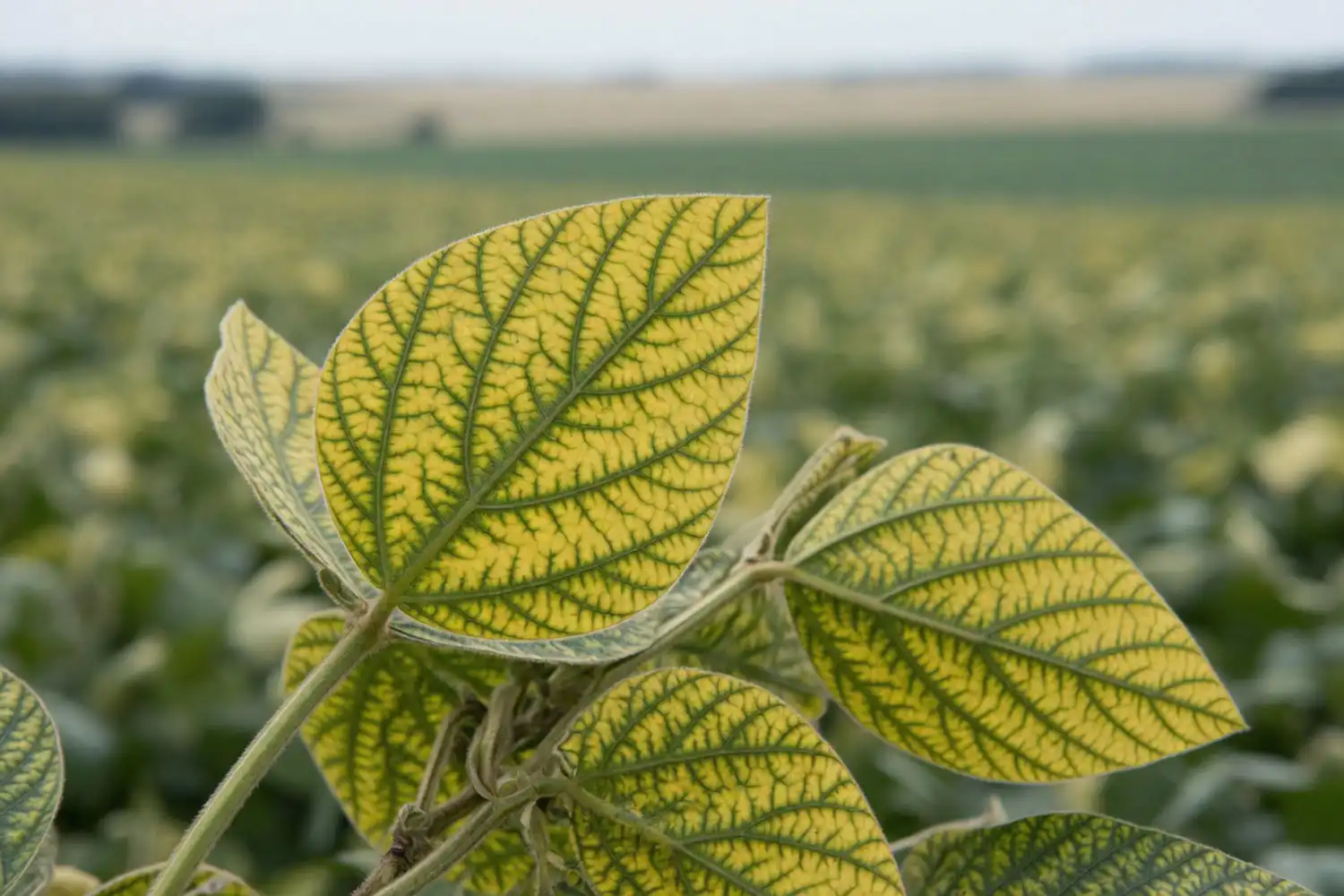
Iron deficiency chlorosis (IDC) turns the newest upper leaves yellow between the veins while the veins stay green. It hits hardest on high-pH, calcareous soils above pH 7, and shows worst in low, wet, salty spots. The soil holds plenty of iron, but calcium carbonate and high pH lock it in a form the plant can’t take up.
Excess soil nitrate makes IDC worse, and so do cool, soggy soils. The yellowing usually shows in patches, not the whole field. A telltale sign on higher-pH bottoms is greener beans right in the old wheel tracks, where nitrate runs lower. Manganese deficiency looks almost the same, interveinal on the upper leaves, on high-pH or high-organic-matter ground, so check a tissue test before you guess between these micronutrient deficiencies.
You manage IDC for next year, not this one. Tolerant varieties are the single biggest lever. Bumping the seeding rate in chlorotic spots toward 200,000 plants per acre helps the stand push through. An in-furrow chelated iron such as FeEDDHA at planting works where IDC is severe, and Iowa State Extension trials back keeping residual nitrate low on those acres.
Soybean Cyst Nematode Hides in Patches
Soybean cyst nematode (SCN) causes yellow, stunted plants, usually in ovals or patches rather than across the whole field. It is the most damaging soybean pest in the country, and it often does its worst with no obvious leaf symptoms at all. Surveys put SCN in roughly 85% of fields in some states.
Continuous soybeans and high-pH ground both favor it, which is why cysts and iron chlorosis often show up together. To confirm it, dig roots mid-season and look for tiny white-to-yellow, lemon-shaped cysts. They sit on the roots like nodules but are smaller. A fall soil test for egg counts tells you how heavy the load is.
Manage SCN with resistant varieties and rotation. The catch is that the common PI 88788 resistance source is breaking down, so rotate to a different source like Peking and build SCN into your crop rotation with a nonhost year. The nematode stays in the soil, but a planned break and the right genetics keep numbers down.
Sudden Death Syndrome and Other Diseases
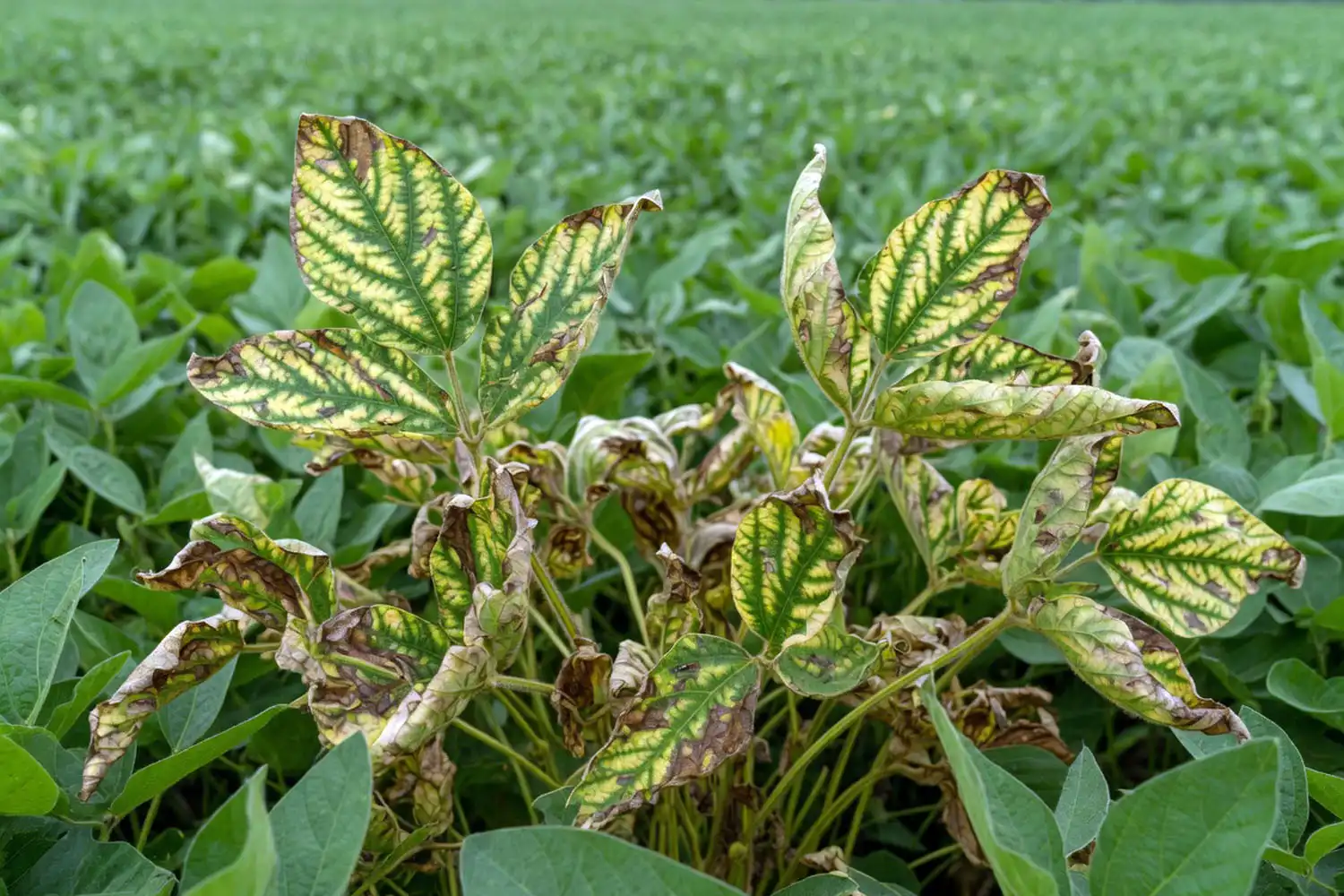
Sudden death syndrome (SDS) starts as interveinal yellow blotches on the upper leaves that turn brown and die while the veins stay green. The leaves cup and drop, but the bare petioles often hang on. The cause is a soil-borne fungus, Fusarium virguliforme, that thrives in cool, wet soils, often after early planting into damp ground.
Split a lower stem to confirm it. With SDS the roots rot but the inner pith stays white. Brown stem rot looks similar on the leaves, but the pith inside the lower stem turns brown. White mold and stem canker can also yellow plants, so scout for other crop diseases before you settle on a diagnosis.
Manage SDS with resistant varieties, a fluopyram seed treatment, less compaction, and better drainage. SDS and SCN travel together, so controlling the nematode helps cut the disease, too.
Too Much Water, Too Little Water, Compacted Roots
Saturated soil and drought both yellow soybeans by cutting the roots off from nutrients. Waterlogged roots can’t breathe, which triggers temporary iron chlorosis and nitrogen loss in low spots. Dry roots can’t reach moisture, so the nodules quit fixing nitrogen and may not restart even after rain returns.
Compaction layers and tillage pans do the same thing by trapping roots in a shallow zone. Any of these stresses can mimic a true deficiency. Fix the drainage or the compaction, and the color often comes back on its own once the roots get going again.
Herbicide Injury and Yellow Flash
Herbicide injury can yellow soybeans, and the pattern usually matches sprayer passes or field edges. ALS-inhibitor and HPPD-inhibitor carryover, atrazine residue from a prior corn crop, and tank contamination are the usual suspects. The damage tends to follow straight lines, overlaps, or a drift edge.
Yellow flash is a milder, separate issue. Glyphosate on glyphosate-tolerant beans can briefly yellow the new growth, then the plant grows out of it in a week or two with no yield hit.
When Are Yellow Soybeans Just Normal?
Yellow soybeans are normal when the whole plant turns gold from the bottom up late in the season. That is natural senescence, the plant moving nutrients into the pods as it ripens toward harvest. The earliest-maturing varieties and the field edges color first, and that is expected.
The pattern is the tell. Uniform, whole-field yellowing late in the year is just maturity. Yellow showing up in clusters while the rest of the field stays green, or yellow during early vegetative stages, is a stress signal worth digging into.
How Do I Pin Down the Cause?
Walk the field, note the pattern, then dig and cut. Where the yellow sits, how it spreads across the field, and what the roots look like will name the cause most of the time.
Start at the leaves. Top-leaf interveinal yellow leans toward iron, manganese, or SDS. Lower-leaf edge yellow leans toward potassium. Flat, pale lower leaves lean toward nitrogen.
Next, dig several plants. Slice the nodules and look for pink centers. Hunt for the tiny lemon-shaped cysts that sit smaller than nodules. Check the taproot for brown or reddish rot.
Then split a few lower stems. White pith with rotted roots points to SDS. Brown pith inside points to brown stem rot.
Last, pull a soil test plus a tissue test, sampling the good and the bad areas separately. That way you can match what you see in the field to real numbers instead of guessing.
Bottom Lines
Most yellow soybeans trace back to one of three things: shaky nodulation early, iron chlorosis in higher-pH bottoms, or plain maturity at the end. Reading the leaves first, then digging, is the recommended approach before spending a dime on inputs. Match the pattern to the cause, fix what you can this season, and write down the trouble spots for variety and rotation calls next year. That one habit keeps growing a healthy soybean crop a lot simpler.