How Many Types of Soybeans Exist? What You Need to Know
Soybeans are not one single crop. Ask how many types of soybeans exist and the honest answer depends on how you sort them. Farmers group them by maturity, growth habit, color, end use, and seed technology.
There is no single number. Soybeans get grouped several ways. Maturity group splits them into 13 classes (000 to X). Other systems sort by growth habit, seed color, end use, and seed technology like GMO or conventional.
How Many Types of Soybeans Are There?
There is no fixed count, because soybeans get classified by several systems at the same time. One bean can sit in a maturity group, a growth habit, a color class, and an end-use category all at once. So the better question is how you plan to use the crop.
Every type still comes from one species, Glycine max. The differences come from breeding, genetics, and the market the bean is headed for. Below I break down the five systems that matter most on a working farm.
Soybean Types by Maturity Group
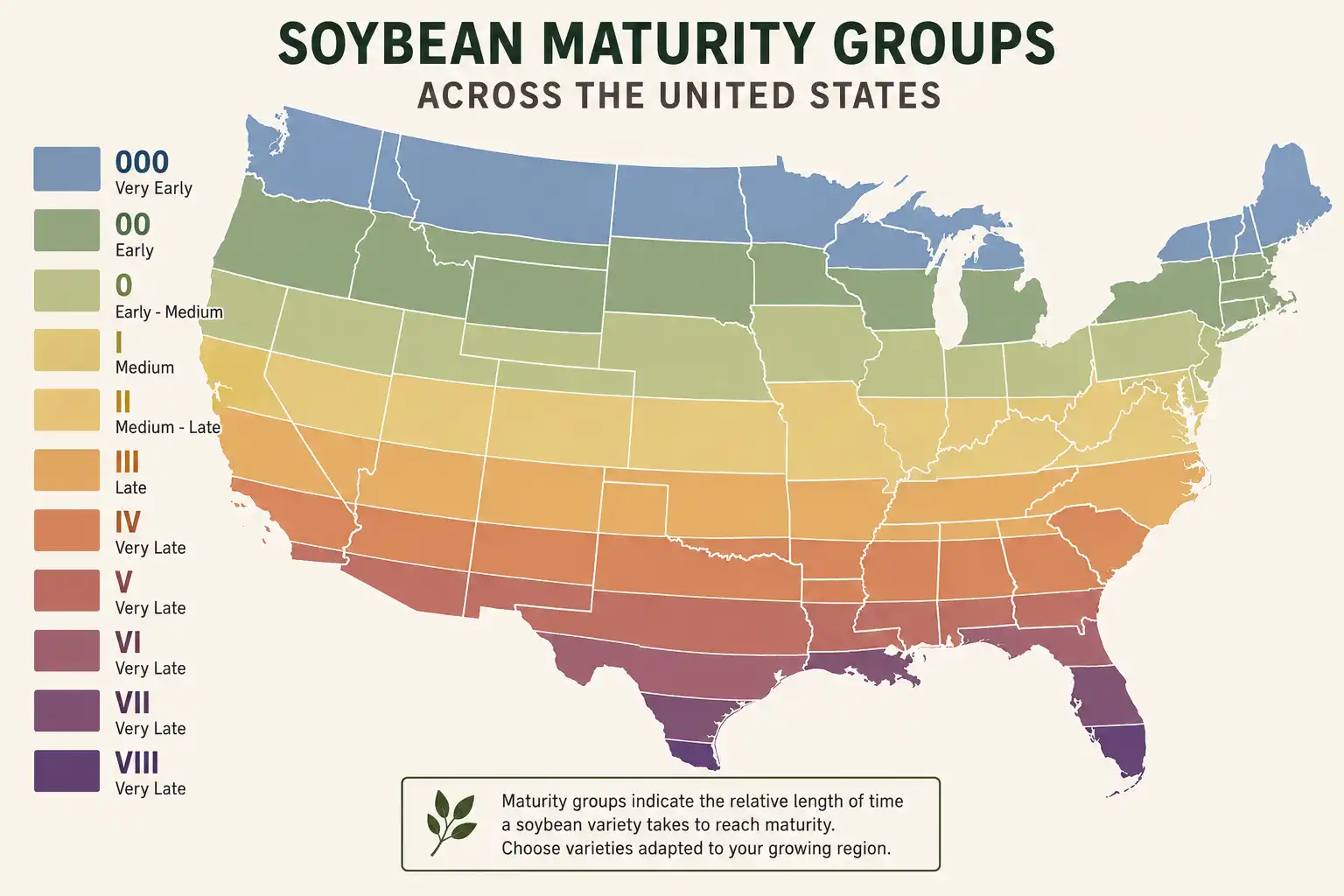
Maturity group is the most important way farmers sort soybeans. The system runs from 000 (earliest) up to X (latest), with 13 groups in total. Across the United States, you mostly see 000 in the far north down to VIII along the Gulf Coast and Florida.
These groups line up by latitude and day length, not by calendar date. The belts run east to west, and each one is only about 100 to 150 miles wide from north to south. Move a variety too far out of its belt and you lose yield. Adjacent groups differ by roughly 10 to 15 days in time to maturity.
Here in Kansas I run mostly Group III and early Group IV, and I shift later or earlier based on the field and my planting date. Matching the right group to your latitude is step one for protecting crop yield. It also drives your whole planting calendar for the season.
Soybean Types by Growth Habit

Growth habit describes when a soybean plant stops growing taller. Three types exist: indeterminate, determinate, and semi-determinate.
Indeterminate plants keep adding height and nodes while they flower. You see them across the North, in Group IV and earlier. Determinate plants stop vegetative growth once flowering starts, so they set most pods over a tighter window. They show up mostly in the South, in Group V and later. Semi-determinate sits between the two.
Why does this matter? Growth habit affects plant height, lodging risk, and how the crop handles stress like drought or a short season. Determinate types tend to stay shorter and more uniform. Indeterminate types can keep flowering through some early stress and recover.
Soybean Types by End Use
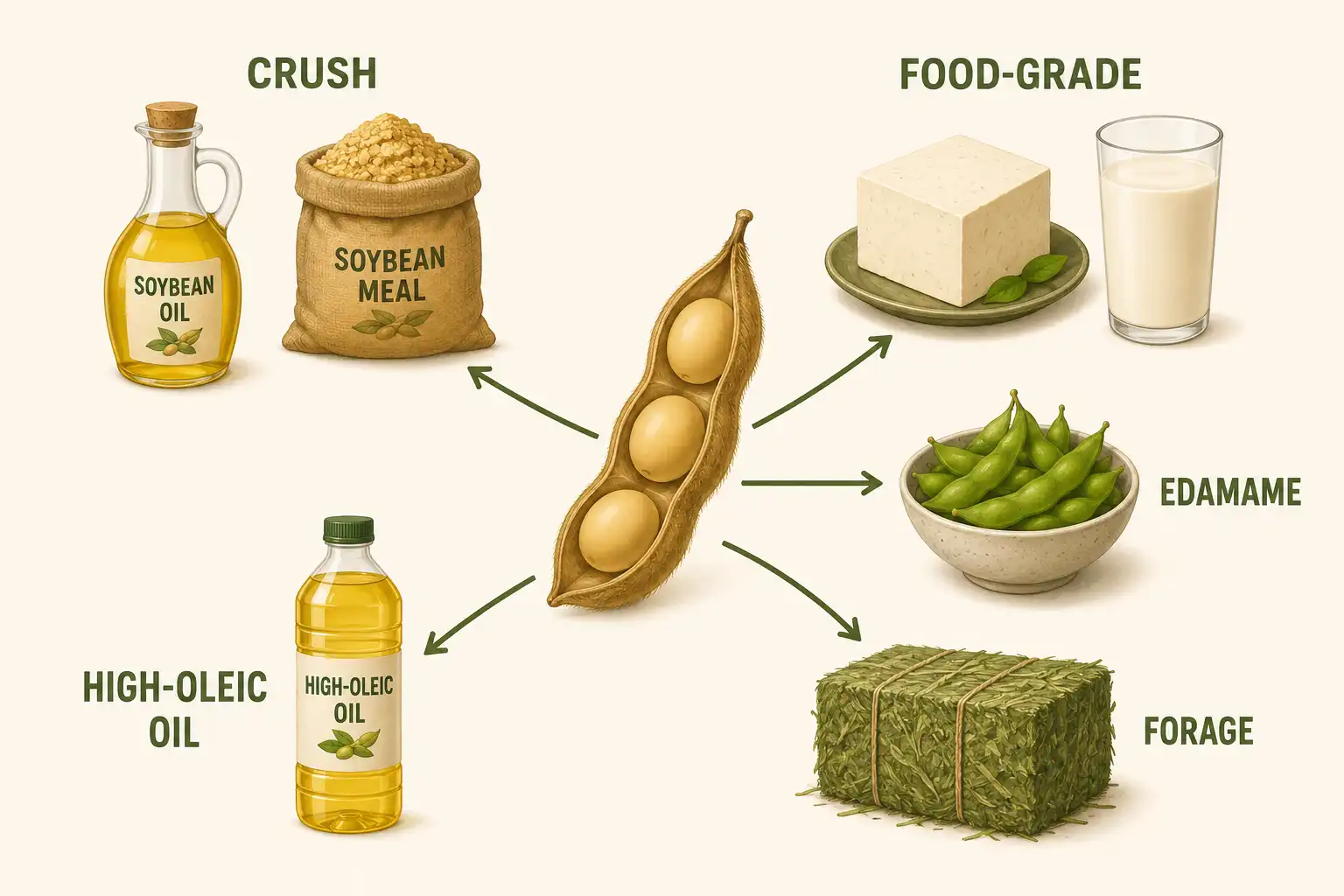
End use is how the bean leaves the farm. Most US soybeans are commodity oilseed beans, crushed into soybean oil and meal for livestock feed. But several specialty types bring price premiums.
Commodity (oilseed) beans make up the bulk of the crop. They are yellow, high-yielding, and almost always rotated with corn. That crop rotation breaks disease cycles and feeds nitrogen back to the next corn crop.
Food-grade beans carry higher protein and sugar and are usually non-GMO. They sell on contract for tofu, soymilk, miso, and soy sauce, and they earn a premium over commodity beans.
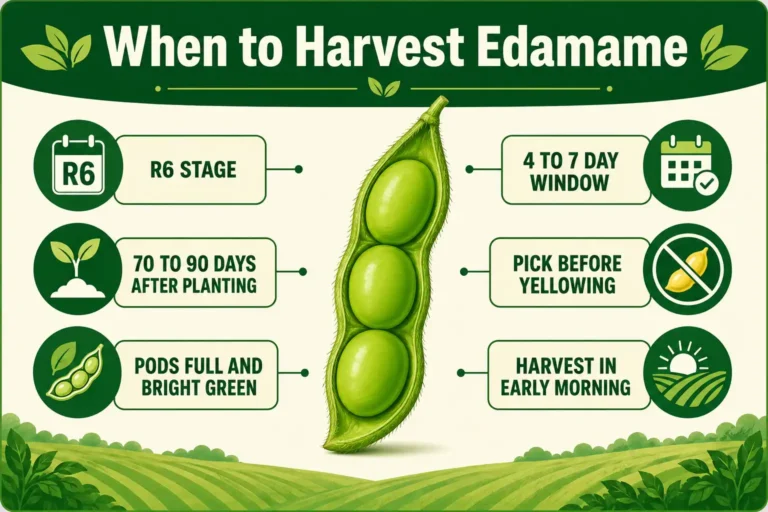
Edamame is a vegetable soybean harvested green and immature. The seed is large, sweet, and soft, meant to be eaten straight from the pod.
Natto beans are small-seeded with high sugar and starch. They get fermented into natto, a sticky Japanese breakfast food.
High-oleic beans are bred for a healthier oil profile and a longer fry life. Corteva launched Pioneer brand Plenish high-oleic varieties carrying the Enlist E3 trait in 2025, and demand keeps climbing.
Forage soybeans grow tall and leafy. Farmers cut them for hay or silage, or graze them, instead of harvesting grain.
Soybean Types by Seed Color
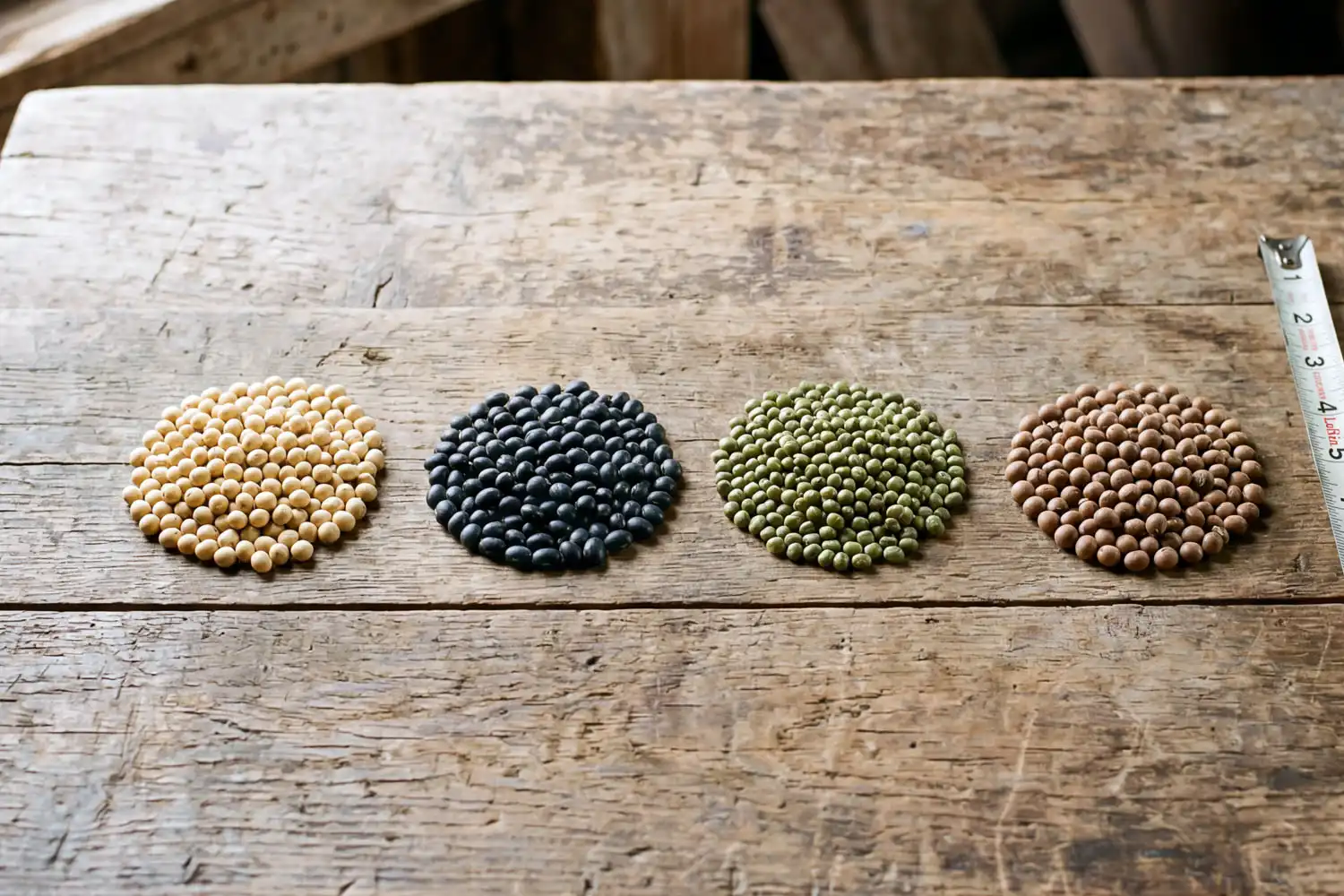
Seed color is the most visible way to tell types apart. Soybeans come in yellow, black, green, brown, red, and speckled.
The USDA recognizes two official grade classes: Yellow Soybeans and Mixed Soybeans. Yellow beans dominate US production and feed the oil, meal, tofu, and soymilk markets. Black beans go into simmered dishes and some natto. Green beans often end up as edamame or specialty food. Brown beans are smaller with a stronger taste, and they show up in certain natto recipes.
One more detail matters for food-grade buyers: the hilum, the small scar where the seed attached to the pod. A clear hilum is prized for soymilk and tofu, since it keeps the finished product light in color.
Soybean Types by Seed Technology and Traits
Seed technology splits soybeans into conventional, genetically modified, and organic types.
Conventional (non-GMO) beans carry no engineered traits. Many food-grade and specialty beans fall here. Soybeans are self-pollinated varieties, not hybrids, so you can save and replant conventional seed (just confirm there is no patent or contract restriction first). If you grow these for the food market, the rules feel a lot like saving open-pollinated or heirloom seeds.
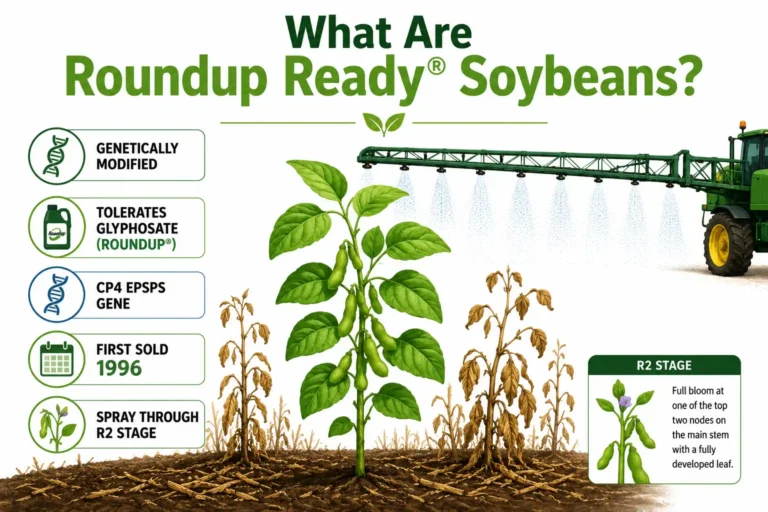
GMO herbicide-tolerant beans cover most US acres. The main platforms today are Enlist E3 (tolerant to 2,4-D choline, glyphosate, and glufosinate), XtendFlex (dicamba, glyphosate, and glufosinate), and LibertyLink GT27 (glufosinate, glyphosate, and isoxaflutole). Enlist E3 and XtendFlex together take the large majority of acres now. The older Roundup Ready system, glyphosate-only, has mostly been replaced.
One current note for 2026: the over-the-top dicamba products (XtendiMax, Engenia, and Tavium) were not labeled for the 2025 season, so many XtendFlex growers leaned on glyphosate and glufosinate instead. Label status can change, so check the current registration before you spray.
Organic beans are grown without synthetic inputs and stay non-GMO. They carry tight premiums but demand careful records and certified practices.
Your trait choice ties straight into your weed control program, since the platform decides which herbicides you can run. That is why picking the right seed type sits close to the heart of choosing the right crop for your operation.
How I Decide Which Soybean Type to Plant
Start with maturity group for your latitude, because the wrong group costs you bushels before anything else. Then pick a trait platform that matches your weed pressure and your spray plan. Decide commodity or specialty based on your market and any contracts in hand. Color and growth habit usually fall out of those three choices. Get the first two right and the rest takes care of itself.