
Weed Control in Farming: 7 Tough Weed Solutions That Actually Stick

Weed control in farming succeeds when a farmer prevents new weeds, stops early competition, and blocks seed production year after year. A workable plan starts with weed ID and scouting, then stacks crop competition, cultivation, cover crops, mulches, and herbicides where they fit. This guide covers the full season from pre-plant cleanup to post-harvest prevention, with clear decision points and safety notes. Use it to build a weed-control program for row crops, vegetables, and perennial systems without chasing problems after they spread.
What is weed control in farming?
Weed control in farming is the set of actions a grower uses to stop unwanted plants from stealing light, water, nutrients, and harvest efficiency. A field stays “under control” when weeds fail to reduce crop growth and fail to add new seed to the soil. A program targets the whole weed life cycle, not only the weeds you see this week.
Crop farming weed control starts early with a clean field, then stays consistent with layered tactics so weeds don’t get a head start. If you’re new to scouting and decision-making, guide to IPM basics for beginners to learn how to track weed pressure and choose the right control layer before problems spread.
How do weeds hurt yield and farm profit?
Weeds reduce profit by competing early, slowing harvest, contaminating produce, and raising drying, cleaning, and labor costs. Early weeds cause the most damage because young crops lose growth that never returns. Late weeds still matter because they drop seed and rebuild next year’s problem.
Before you mix, load, or spray anything, pesticide handling safety on farms so PPE, storage, and cleanup stay tight and you avoid preventable accidents.
When does weed control matter most in a season?
Weed control matters most from planting through early crop growth, because early competition cuts stand strength and canopy closure. A farmer also protects the field late in the season to stop seed set. The season has two priorities: protect yield early, protect the seedbank all season.
Does weed control work better with one method or a system?
Weed control works better as a system that stacks methods, because each method covers another method’s weak spot. Cultivation misses in-row weeds. Mulch struggles against established perennials. Herbicides fail when timing slips or resistance grows. A layered program keeps control stable across weather and years.
How do you build a weed control plan from scratch?
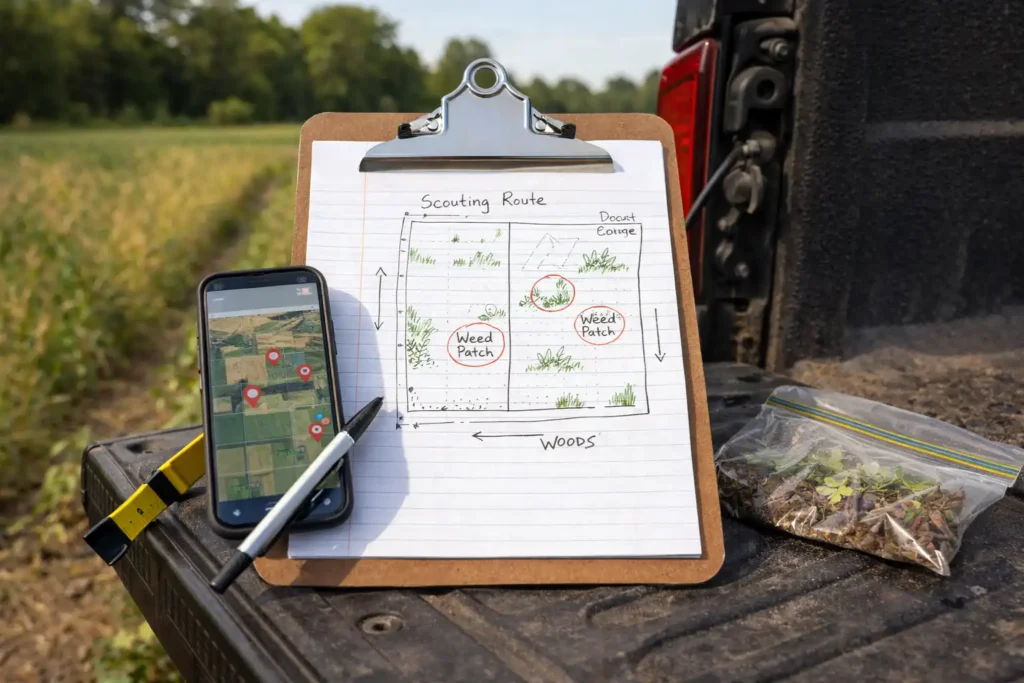
A farmer builds a weed control plan by linking field history to a season schedule with clear action triggers.
- List the top weeds by field. Write species, patches, and worst areas from last season.
- Sort weeds by life cycle. Mark annuals, biennials, and perennials.
- Pick your clean-start method. Choose tillage, stale seedbed, or burndown where legal and appropriate.
- Add a “prevention layer.” Use cover crops, mulches, rotation, and equipment sanitation.
- Add an “in-season layer.” Use cultivation, mowing, hand work, and post options where allowed.
- Set action triggers. Tie actions to weed size and crop stage, not calendar dates.
- Plan escape control. Schedule patch work before weeds set seed.
- Record results. Map misses and wins for next year’s adjustments.
What scouting steps keep weed decisions accurate?
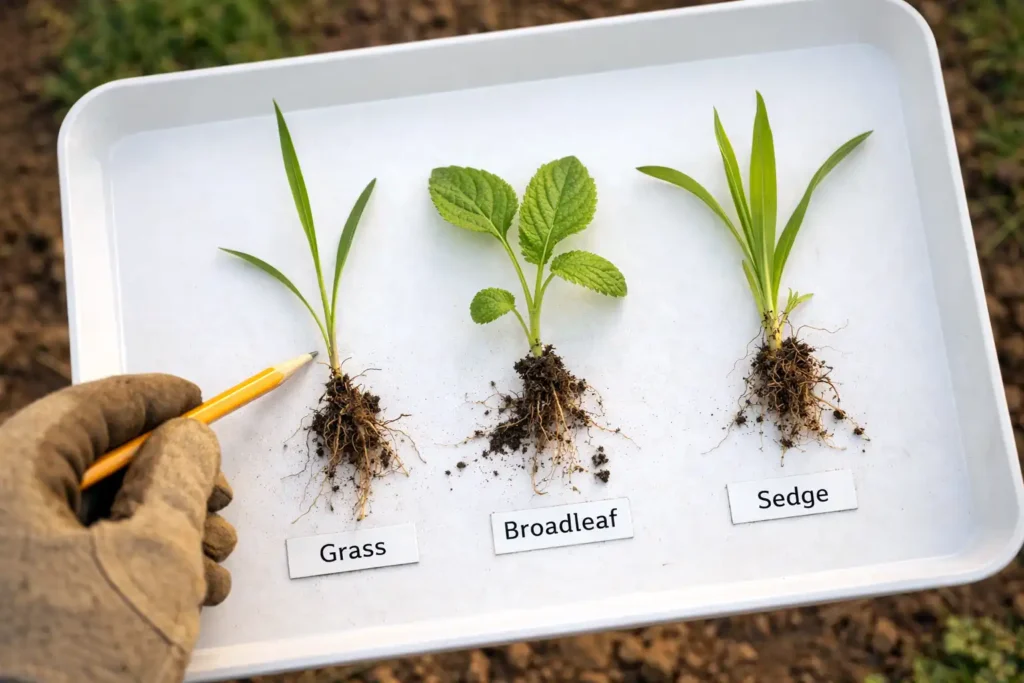
Scouting stays accurate when the farmer identifies weeds early and records size, density, and location.
- Walk a repeatable route. Use the same entry points and check zones each time.
- Identify the weed. Control depends on species, not color.
- Measure weed size. Small weeds respond faster to every control method.
- Flag patches. Perennials and suspected resistance need separate treatment.
- Check after each control pass. A quick return visit confirms success or failure.
Safety note: scouting near roads, ditches, and equipment lanes requires high-visibility clothing and attention to traffic and machinery.
What prevention practices reduce weed pressure before planting?
Prevention reduces the number of weeds that germinate and the number of seeds that spread.
- Equipment sanitation stops seed movement. A combine, grain cart, or tillage tool moves seed from a patch into clean acres.
- Clean edges reduce reinfestation. Field borders, ditches, and fence lines feed the field with new seed.
- Clean inputs reduce introductions. Seed, manure, compost, and mulch carry weeds when quality control slips.
- Escape control protects the seedbank. A few mature weeds reload the soil with seed for years.
How do crop competition and agronomy suppress weeds?
Crop competition suppresses weeds when the crop closes canopy fast and uses resources first.
- Uniform stand shades soil earlier. Gaps invite weed flushes.
- Row spacing affects light. A faster canopy reduces late flushes.
- Fertility placement favors the crop. Banding near the crop row feeds the crop before between-row weeds.
- Rotation disrupts weed cycles. A rotation breaks timing and tolerance patterns.
If you want to tighten the “crop side” of weed control, review planting and seeding fundamentals and soil fertility basics.
How do mechanical controls like cultivation and mowing work?
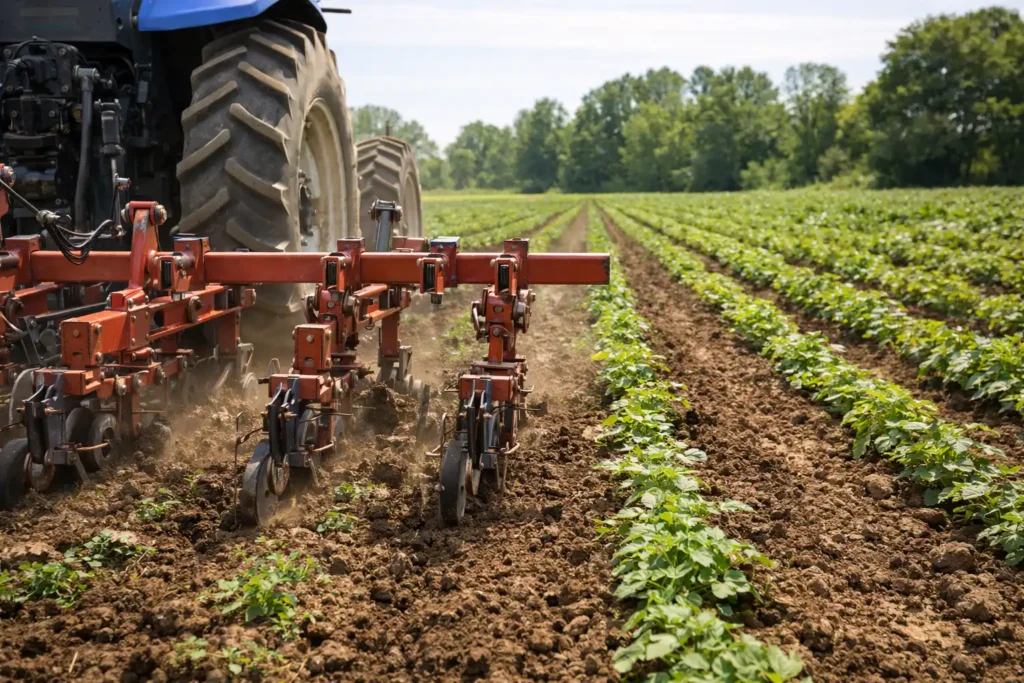
Mechanical control works when the farmer targets small weeds and uses the right tool setup.
- Cultivation cuts or uproots weeds between rows. Shallow passes kill seedlings and protect crop roots.
- Hilling buries small weeds in some crops. Hilling fits crops that tolerate soil movement.
- Mowing prevents seed set on edges. Mowing works best on borders, lanes, and non-crop zones.
- Hand removal protects seed fields and small acreage. Hand work stops seed production in high-value blocks.
A farmer gets better results with sharp sweeps, correct depth, and timing after a flush. Tool choice and setup live here:
How do cover crops, mulches, and stale seedbeds control weeds?
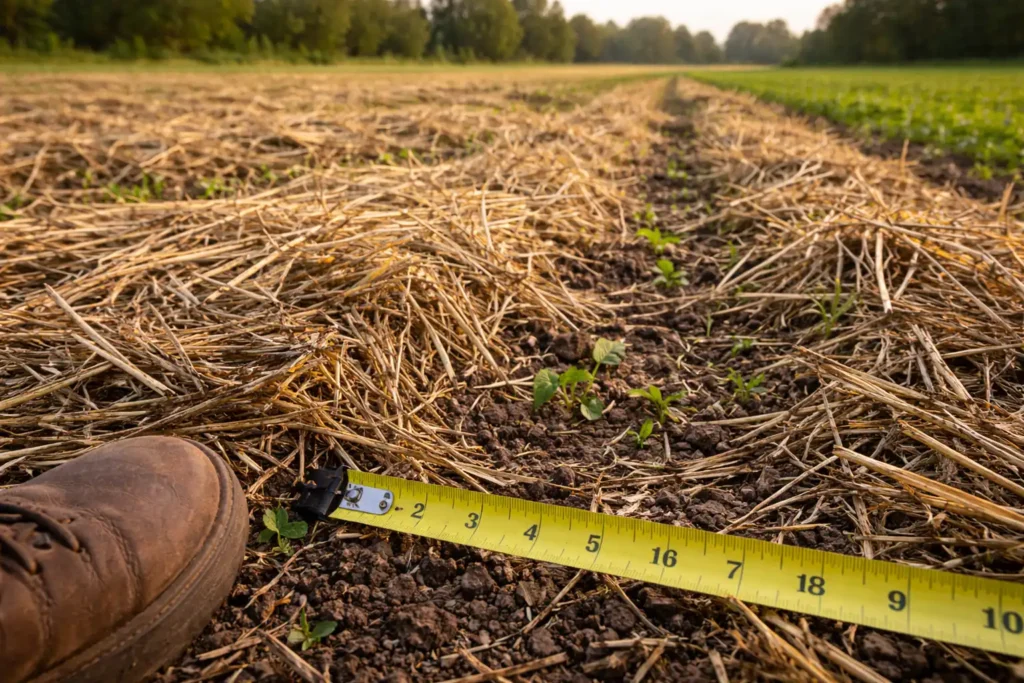
Cover crops, mulches, and stale seedbeds reduce weeds by blocking light and lowering bare soil exposure.
- Cover crops shade soil and compete for space. Termination timing controls whether the crop or weeds get the advantage.
- Residue acts like a weed blanket. A thicker, even residue layer suppresses small-seeded annuals.
- Organic mulches block germination. Mulch works best when the layer stays intact and dry on top.
- Stale seedbed flushes weeds, then kills them. A grower irrigates or waits for a flush, then kills seedlings with shallow tillage or other methods.
Decision point: stale seedbeds fit vegetables and small plots where planting date has flexibility.
How do herbicides fit into a weed control program?
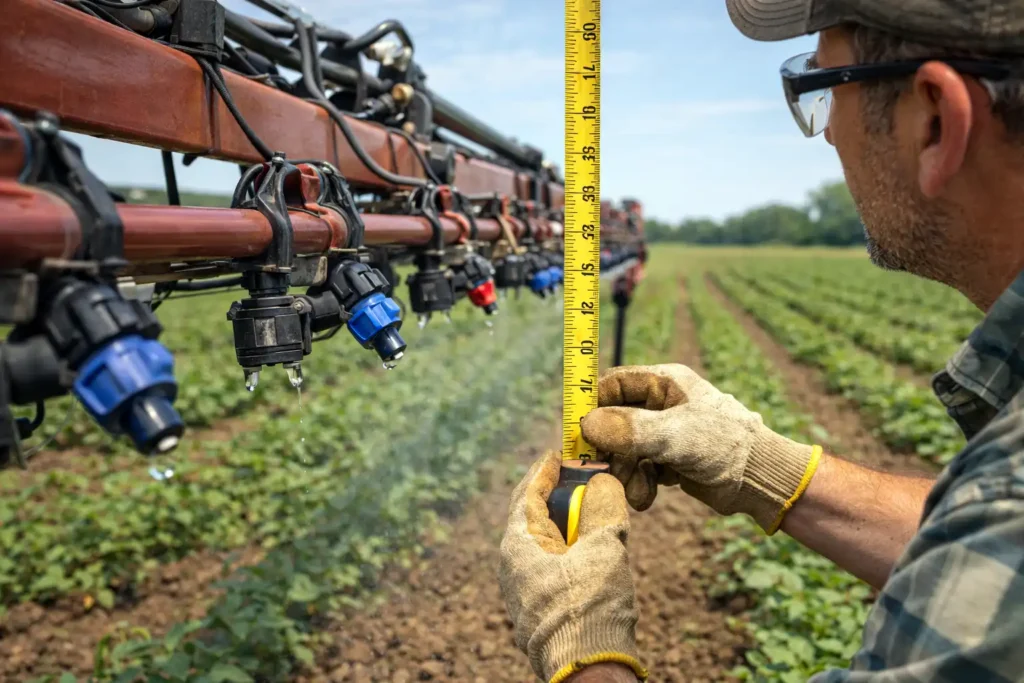
Herbicides fit as one layer when the farmer uses the legal label directions, correct timing, and correct coverage. A label sets PPE, rates, crop stage limits, re-entry intervals, and drift precautions. A farmer treats herbicides as a precision tool, not a rescue plan.
Safety note: chemical handling starts with PPE and mixing discipline. Use farm safety and PPE and keep sprayer equipment maintained through sprayers and application gear.
How do you improve herbicide performance without wasting product?
Herbicide performance improves when the farmer controls weed size, coverage, and conditions.
- Spray small weeds. Small weeds absorb and translocate better than hardened plants.
- Match nozzle and droplet size to the job. Coverage drives contact performance.
- Maintain boom height and travel speed. Stability prevents skips and streaks.
- Avoid drift conditions. Wind and inversions move droplets off-target.
- Use clean water and correct agitation. Poor mixing reduces uniformity.
How do you slow herbicide resistance in the field?
Resistance slows when the farmer changes selection pressure and prevents survivor seed.
- Rotate effective modes of action across seasons. Repetition selects survivors.
- Use multiple effective tools in the same season. Cultivation and cover crops reduce reliance on one chemistry.
- Control escapes before seed set. Seed production spreads resistance traits.
- Treat patches as separate projects. Patch work prevents whole-field spread.
What are practical solutions for common weed types?
A farmer solves weed problems faster by matching the approach to the weed’s life cycle.
What controls annual broadleaf weeds?
Annual broadleaf weeds lose to early control, canopy closure, and stopping seed set. A clean start plus residual control, timely cultivation, and escape prevention keeps annual broadleaves from rebuilding the seedbank.
What controls annual grasses?
Annual grasses lose to early suppression, shallow cultivation, and tight crop competition. A farmer also avoids moving grass seed from patches through equipment sanitation.
What controls sedges?
Sedges persist in wet zones and compacted areas. Drainage improvement, reduced compaction, and targeted control steps reduce sedge pressure. A farmer treats sedge patches early because spread accelerates in wet years.
What controls perennial weeds?
Perennials lose when the farmer repeatedly prevents regrowth and starves roots. Patch mapping, repeated suppression, and edge management keep perennials from expanding. A grower avoids deep tillage that spreads rhizomes in some species.
How do you troubleshoot weed control failures?
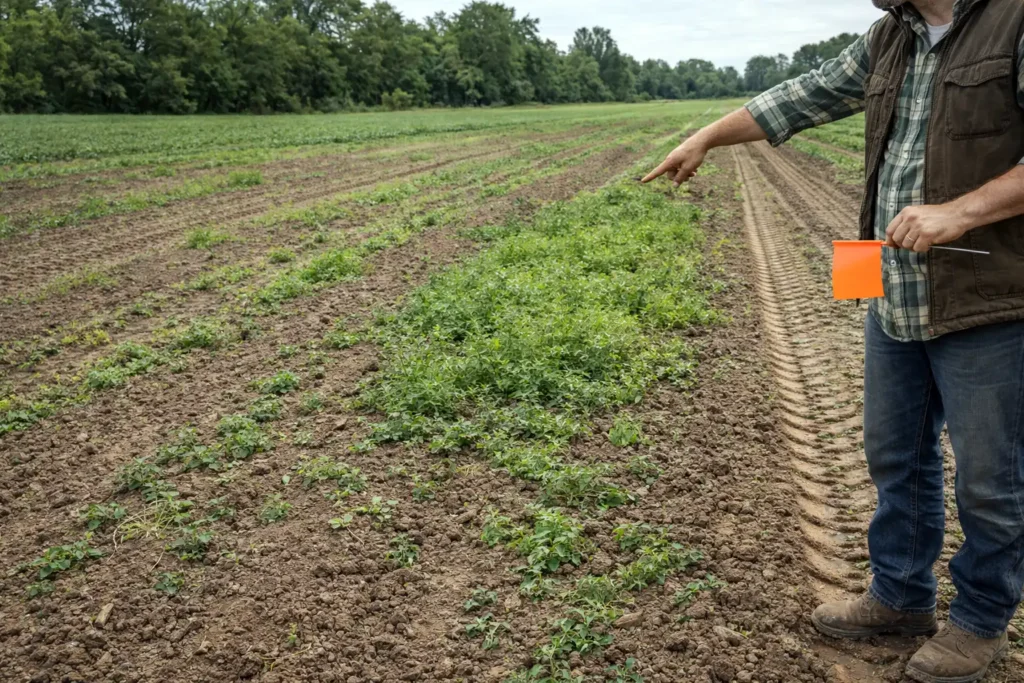
Troubleshooting works when the farmer isolates the failure point and fixes one variable at a time.
- Confirm weed ID and growth stage. Wrong ID leads to wrong tool choice.
- Check timing against weed size. Late control leaves survivors.
- Inspect coverage. Look for streaks, plugged nozzles, uneven boom height, and speed swings.
- Review field conditions. Drought stress, wet soil, and residue change control results.
- Map survivors. Patch survivors suggest skips, soil zones, or resistance.
- Stop seed set fast. Use cultivation, mowing, pulling, or spot work before maturity.
If the same weed survives the same program in the same patches, treat the issue as resistance or a repeated application problem.
What mistakes should you avoid in weed control?
A farmer avoids the biggest weed mistakes by guarding early timing and stopping seed.
- Late starts lose yield. Early weeds take growth that never returns.
- Single-tool programs fail faster. One method breaks when weather, timing, or biology shifts.
- Poor calibration wastes passes. Coverage problems leave streaks and survivors.
- Ignoring borders rebuilds infestations. Edges seed the field.
- Letting escapes mature resets the seedbank. Seed rain multiplies next year’s work.
- Unsafe handling causes injuries. PPE and label discipline protect skin, lungs, and eyes.
What does a full-season weed control schedule look like?
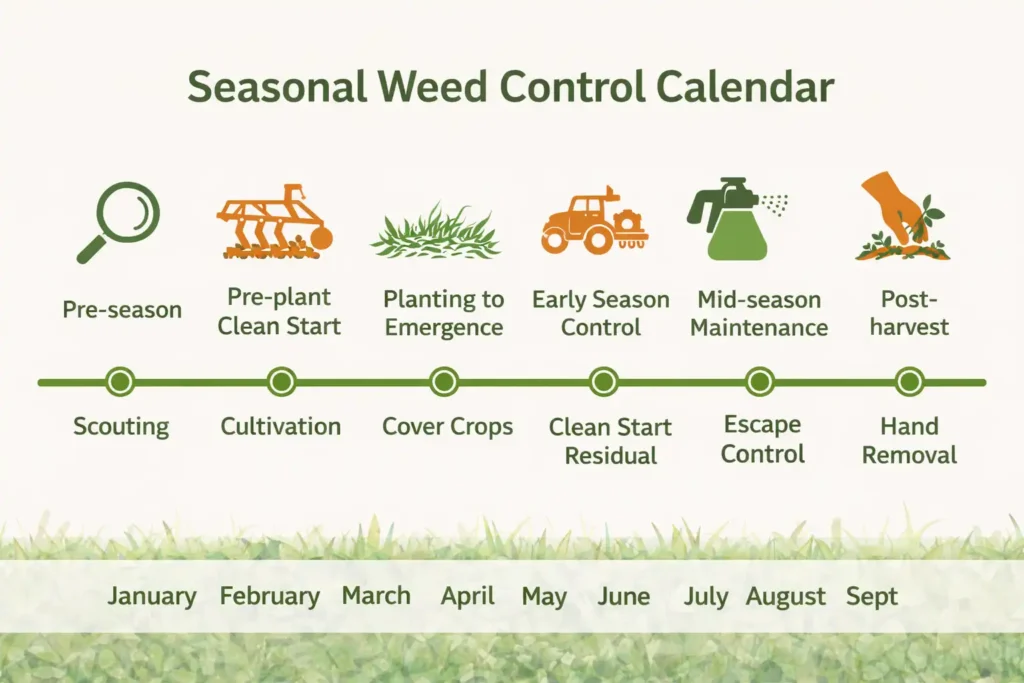
A full-season schedule links actions to weed flushes and crop stages.
- Pre-season: review weed maps, plan rotation, service sprayer and cultivator, order inputs.
- Pre-plant: clean start, then use a prevention layer like cover residue or mulch where it fits.
- Planting to emergence: protect stand, scout the first flush, correct gaps that invite weeds.
- Early season: control weeds while they stay small using cultivation, banding, or post options.
- Mid-season: maintain canopy advantage, treat patches, and stop escapes from setting seed.
- Pre-harvest: reduce harvest interference and prevent late seed production on edges.
- Post-harvest: manage volunteers and fall flushes, then use cover and residue to reduce bare soil.
Conclusion
Weed control in farming stays reliable when a farmer runs a system, not a single tactic. Scouting identifies the target. Prevention reduces new introductions. Crop competition suppresses late flushes. Mechanical tools kill seedlings on time. Herbicides add control when labels, PPE, and coverage stay tight. The season ends with seedbank protection, because a clean harvest with low seed rain makes next year easier.