When to Plant Lettuce in Ohio (Best Timing by Zone)
Timing makes or breaks a lettuce crop. Plant too late in spring and it bolts bitter in the heat. Knowing when to plant lettuce in Ohio comes down to two cool windows, set by your frost dates and soil temperature.
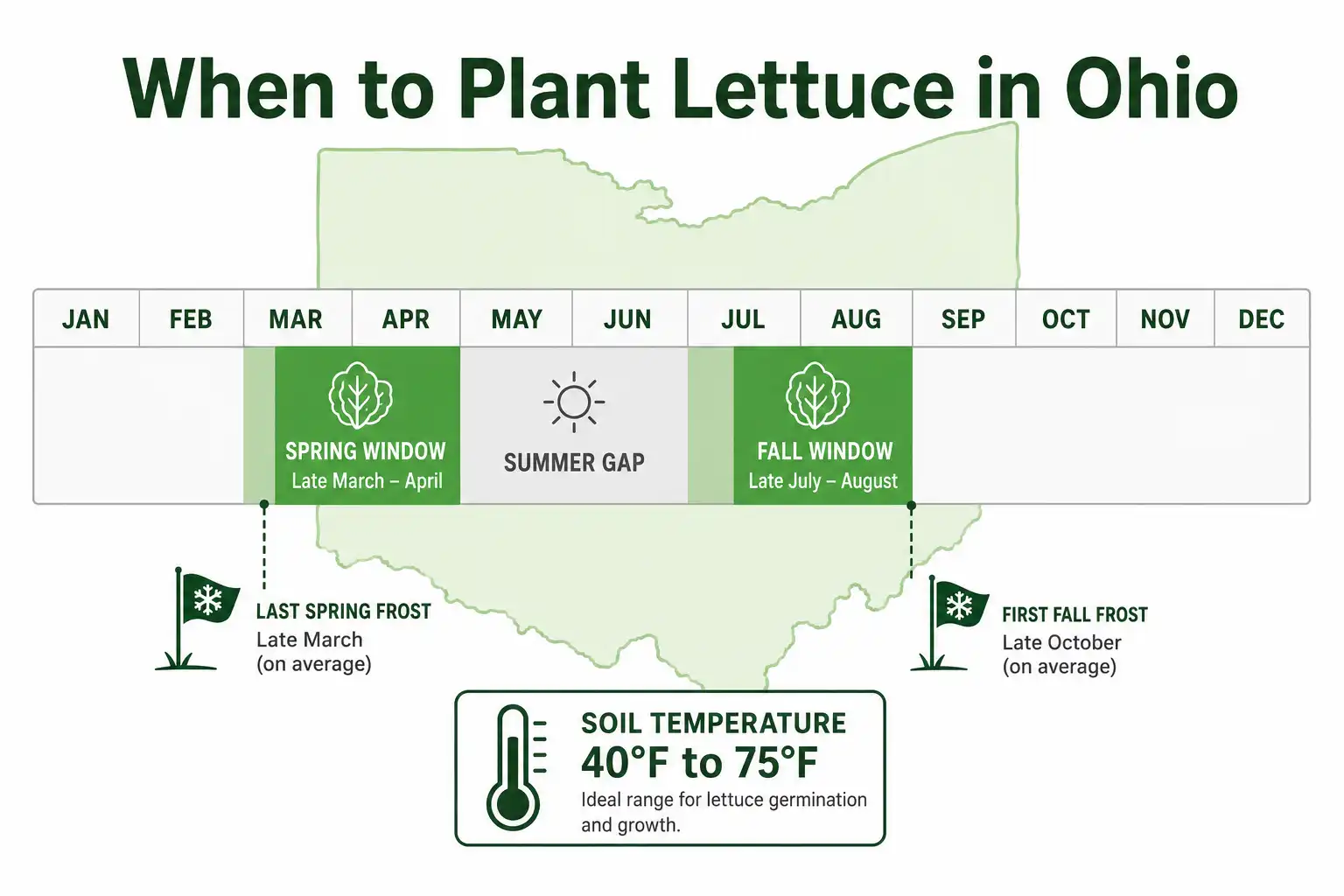
Plant lettuce in Ohio in two windows. Sow or set transplants in spring from late March through April, once soil reaches 40°F. Then plant again from late July through August for a fall crop before the first frost.
When Is the Best Time to Plant Lettuce in Ohio?
The best time to plant lettuce in Ohio is spring and fall. Lettuce is a cool-season crop, so it grows best when soil sits between 40 and 75°F. Most of the state falls in USDA hardiness zones 5b through 6b. That puts the spring window in late March and April. The fall window opens again in late July and runs through August. Lettuce skips the hot middle of summer, because heat triggers bolting.
You get two harvests from these two windows. Own plot near Topeka sits in zone 6a, the same band as much of central Ohio, so these dates line up close to what works there. Cool soil and shorter days keep leaves sweet and crisp. Long days and high heat push the plant to flower instead.
When to Plant Lettuce in Ohio in Spring

Plant lettuce in spring as soon as the soil can be worked, usually late March through April. Lettuce tolerates light frost, so you do not have to wait for the last frost date. In central and southern Ohio, the ground is workable by late March. Up north and in the colder farmland of the northwest, wait until early-to-mid April.
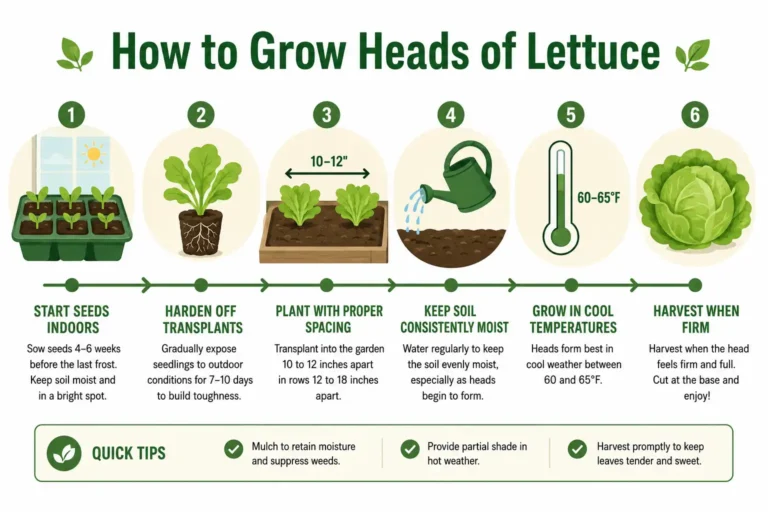
You can start two ways. Direct sowing works once soil reaches 40°F. Transplanting gives you a jump on cold ground. For transplants, sow seeds indoors about 4 to 6 weeks before set-out. That means starting lettuce indoors in February or early March across most of Ohio. Hardened seedlings then move outside 2 to 3 weeks before the average last frost. They handle a light freeze without trouble.
Ohio’s average last frost lands in late April for central and southern counties, and in early May up north. Lettuce does not mind either way. A light frost only sweetens the leaves.
When to Plant Fall Lettuce in Ohio
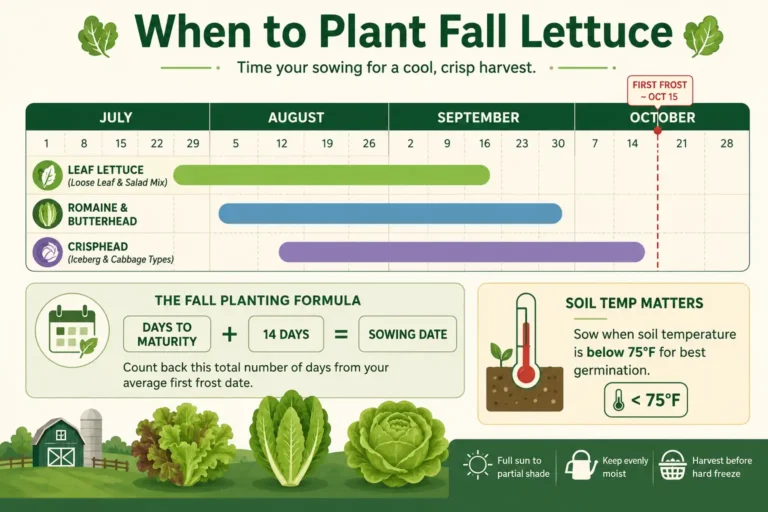
Plant fall lettuce in Ohio from late July through August, timed so heads mature before the first hard freeze. Count back from your first fall frost. Add the days your variety needs, then tack on two cool weeks because growth slows as daylight shrinks. Most leaf types need 45 to 60 days from seed.
The catch is heat at sowing time. August soil can run hot, and lettuce will not sprout above 80°F. Start fall transplants indoors in June, then set them out in late July when you can shade them. Direct sowing works too, but keep the seedbed moist and cool with a board or light mulch until sprouts show. Planting lettuce for a fall harvest rewards you with the sweetest heads of the year, because they finish in cooling weather.
Ohio’s first fall frost usually arrives in early-to-mid October. Columbus averages around October 10. Northern counties frost a little earlier, and the southern river counties a little later. Cool-season lettuce stands light frost and keeps growing until a hard freeze, so a fall crop often outlasts the calendar date.
How Your Ohio Hardiness Zone Shifts the Dates
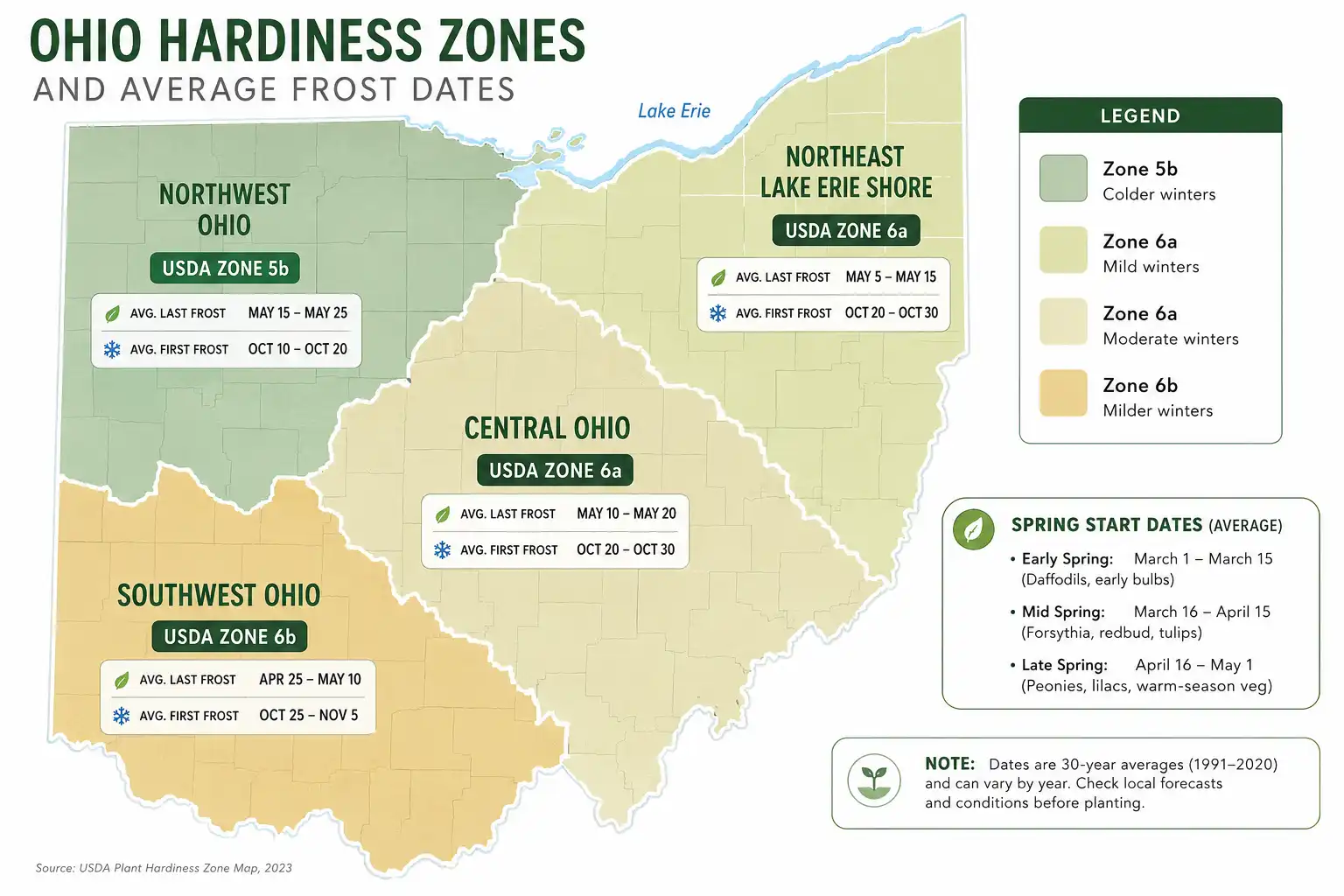
Your region shifts the dates by a week or two. Ohio spans USDA hardiness zones 5b to 6b, with a few 7a pockets warmed by Lake Erie near Cleveland. Colder ground means a later spring start and an earlier fall frost. Warmer ground stretches the window on both ends.
Ohio State University Extension (OSU Extension) sets its planting calendar to zone 6a. So in zone 6b, much of Cincinnati and the Miami Valley, nudge spring dates about a week earlier. In zone 5b, the open farmland of the northwest, push them about a week later. Central Ohio around Columbus runs close to the standard 6a to 6b timing. Along the Lake Erie shore, the water buffers cold snaps, which keeps fall lettuce going a touch longer. The map below lines up frost dates with each part of the state.
What Soil Temperature Does Lettuce Need to Sprout?
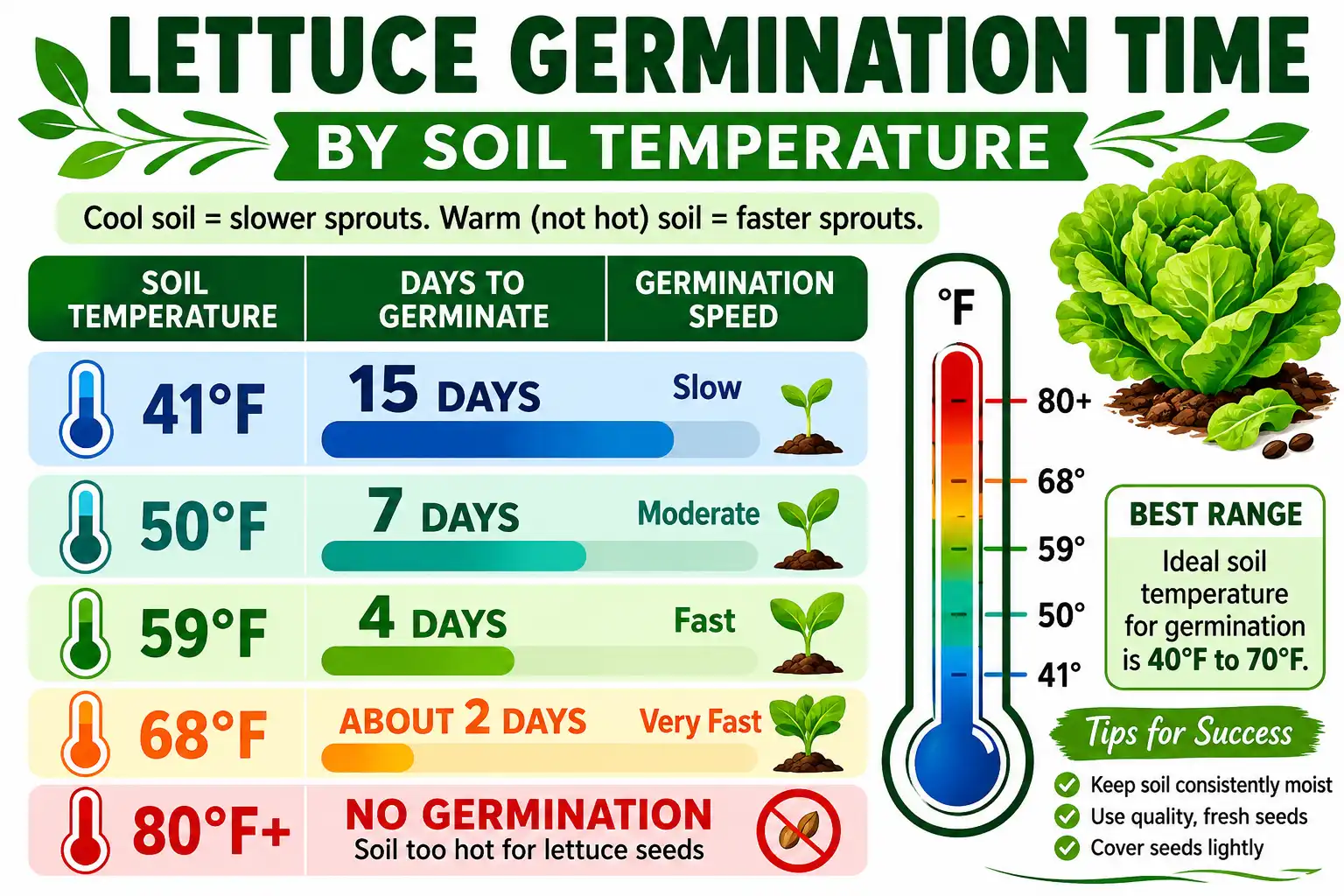
Lettuce sprouts in soil from 40 to 80°F, with 60 to 70°F ideal. Below 40°F, the seeds sit and wait. Above 80°F, they go dormant and often will not sprout at all (a heat block called thermodormancy). That single fact explains both planting windows.
Speed depends on warmth. At 41°F, lettuce takes about 15 days to germinate. At 50°F, about 7 days. At 59°F, about 4 days. At 68°F, just over 2 days. A cheap soil thermometer pays for itself fast, since it tells you when the ground is truly ready instead of guessing by the air.
Keep the seed shallow. This guide covers lettuce seed about a quarter inch, no deeper, because light helps it germinate. Plant it too deep and a clay crust can trap the sprout. Setting the seed shallow and keeping the bed evenly moist gives the most even stand.
Can You Grow Lettuce Through an Ohio Summer?
You can grow lettuce through an Ohio summer, but it fights you. Once days get long and highs push past the 80s, plants bolt, turn bitter, and seed stops sprouting. That is a good reason to leave a gap from about mid-June to late July in the open garden.
A few moves stretch the season. Shade cloth drops leaf temperature and slows bolting. Heat-tolerant leaf varieties like Grand Rapids and oakleaf types hold longer than crisphead. Mulch keeps roots cool and the soil moist. For the full method on keeping summer lettuce from bolting, lean on shade, steady water, and quick-maturing leaf types rather than slow heads.
Which Type of Lettuce Should You Plant?
Pick your lettuce type by how much season you have left. Leaf lettuce is fastest and most forgiving, ready in 45 to 60 days from seed. Romaine takes longer, around 70 days. Butterhead and bibb land in the middle, near 60 to 75 days. Crisphead (iceberg) is the slowest and most heat-shy, needing 75 days or more.
For a fall crop, fast types win. Leaf lettuce sown in mid-August still finishes before frost. Iceberg planted that late usually runs out of time, so save it for the long spring window. When you count back from frost, match the variety’s days from seed to harvest to the weeks you have left.
How to Keep Lettuce Coming All Season
Succession planting keeps lettuce on your table from spring to frost. Sow a short row every two to three weeks instead of one big planting. That way, heads mature in steady waves, not all at once.
In fall, simple covers buy extra time. A row cover or low tunnel protects half-grown plants down toward 20°F once they are hardened. Lettuce is tougher in the cold than most folks expect. So pair succession sowing with a cover, and you can pick fresh leaves well past the first frost. Watch the heads closely so you cut at peak. Here is how to tell when your lettuce is ready to pick.
What to Put on the Calendar for Your Ohio Plot
When to plant lettuce in Ohio really comes down to two windows. In spring, sow or transplant from late March through April, once soil hits 40°F. In fall, plant from late July through August so heads finish in the cool. Skip the hot stretch between them, or shade a heat-tolerant leaf type if you cannot wait. Check your zone, watch your frost dates, and sow a little every couple weeks. Do that, and you will pull sweet lettuce off the same ground spring and fall.