How Deep to Plant Lettuce Seeds for Strong Germination
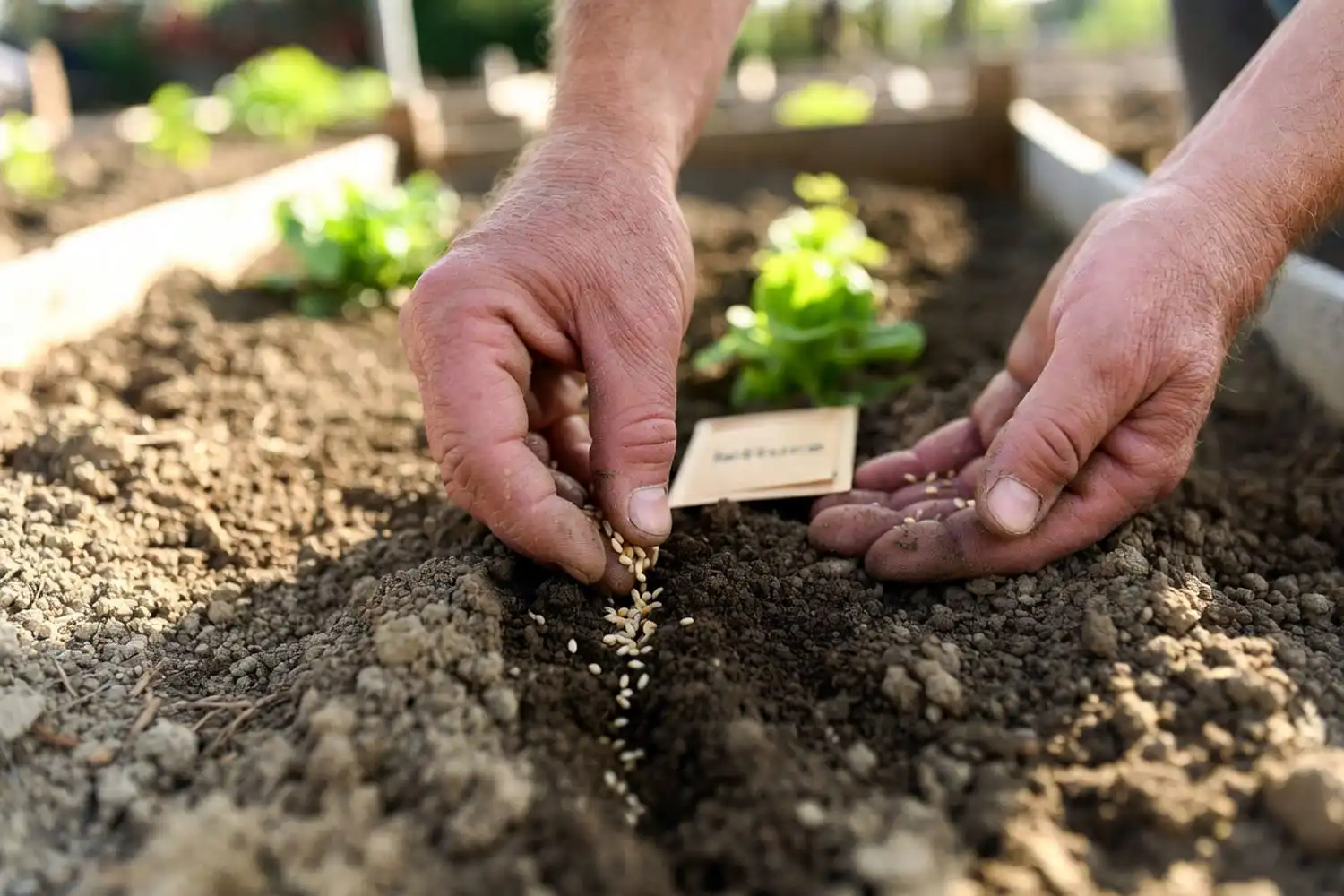
Lettuce seeds are some of the tiniest seeds in the plot, and the most common reason rows fail is planting them too deep. Knowing how deep to plant lettuce seeds is the single biggest factor in whether they sprout at all.
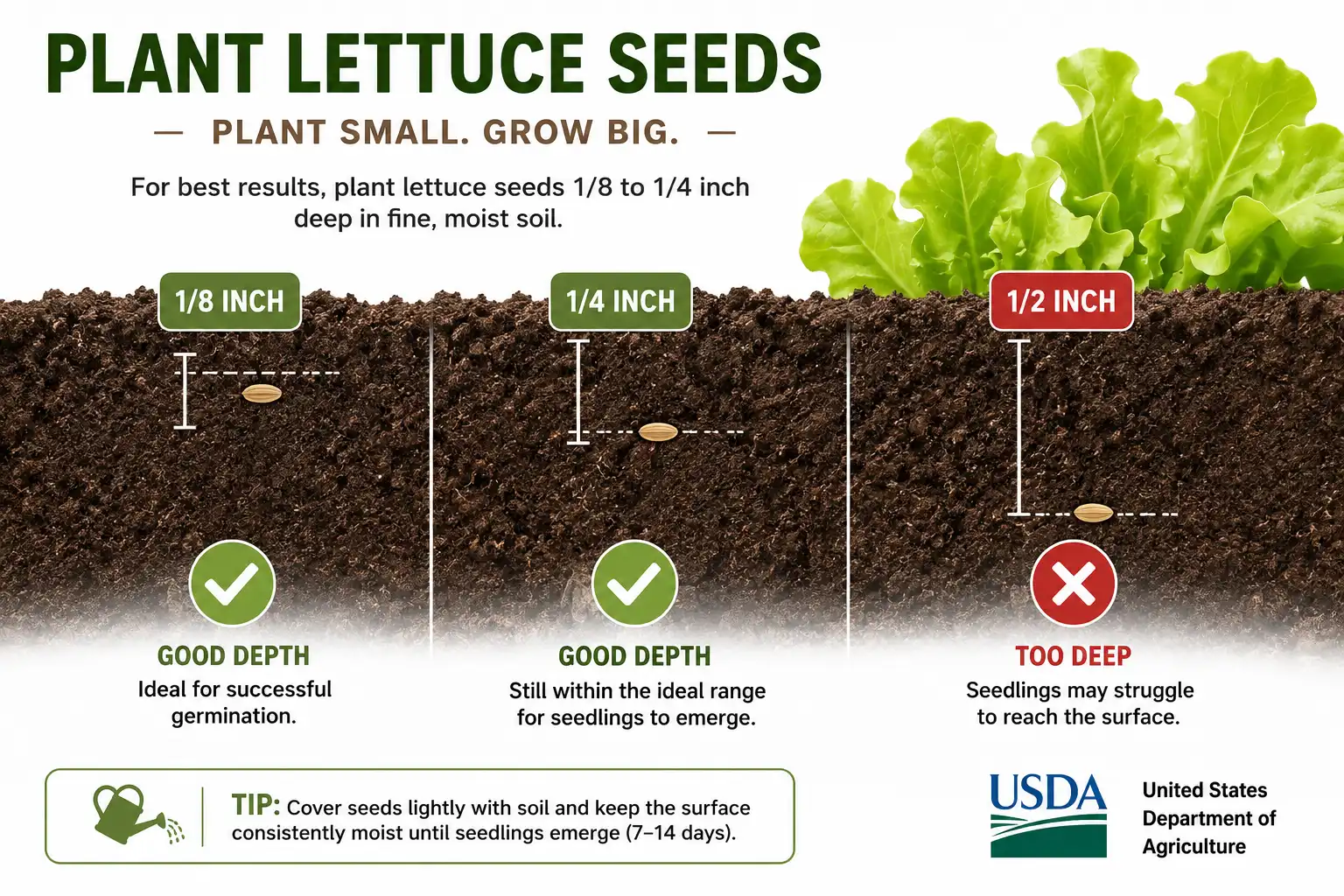
Plant lettuce seeds 1/8 to 1/4 inch deep. Lettuce needs light to germinate, so cover the seeds with only a fine dusting of soil or vermiculite. Anything deeper than 1/2 inch usually fails to sprout.
Why Lettuce Seeds Need a Shallow Planting Depth
Lettuce is a light-dependent germinator. The seed carries a phytochrome response that triggers sprouting when red light hits the seed coat. Bury it under 1/2 inch of soil and that signal never reaches the seed. The seed sits there, takes on water, and rots.
The seed itself is also extremely small, around 25,000 seeds per ounce. It just doesn’t carry the stored energy to push through a thick soil cap. Seeding lettuce at spinach or beet depth is a common cause of stand failure. Lettuce is in its own category.
Exact Planting Depth for Lettuce Seeds
The right planting depth for lettuce seeds is 1/8 to 1/4 inch. Aim for 1/8 inch in the beds and never go below 1/4 inch, regardless of variety. The K-State Research and Extension recommendation lines up with this.
Depth for Leaf Lettuce
Leaf lettuce sits best at 1/8 inch. Loose-leaf types like Black Seeded Simpson and Red Salad Bowl are the easiest to germinate. Broadcasting the seed across a firmed bed, raking lightly, then watering it in is a common approach. The seed ends up resting in the top 1/8 inch naturally.
Depth for Romaine and Butterhead
Romaine and butterhead go in at 1/8 to 1/4 inch. Romaine seed is slightly larger than leaf lettuce seed, so it tolerates the deeper end of that range. Keep butterhead at 1/8 inch since it emerges a bit slower and is more sensitive to soil crusting.
Depth for Iceberg (Crisphead) Lettuce
Iceberg goes in at 1/4 inch. The slightly deeper placement gives the long-season crisphead a more stable moisture environment, which it needs across the 70 to 100 day cycle. Anything past 1/4 inch and germination drops off fast.
How to Plant Lettuce Seeds at the Right Depth
Here is the step-by-step method.
- Prepare a fine, level seedbed. Rake out clods and pull surface trash. Lettuce can’t push through a chunky surface.
- Firm the bed lightly with a board or the back of a rake. A firm surface keeps the seed from falling deeper than you want.
- Make a shallow furrow no more than 1/4 inch deep. A pencil dragged along the row works well on small beds.
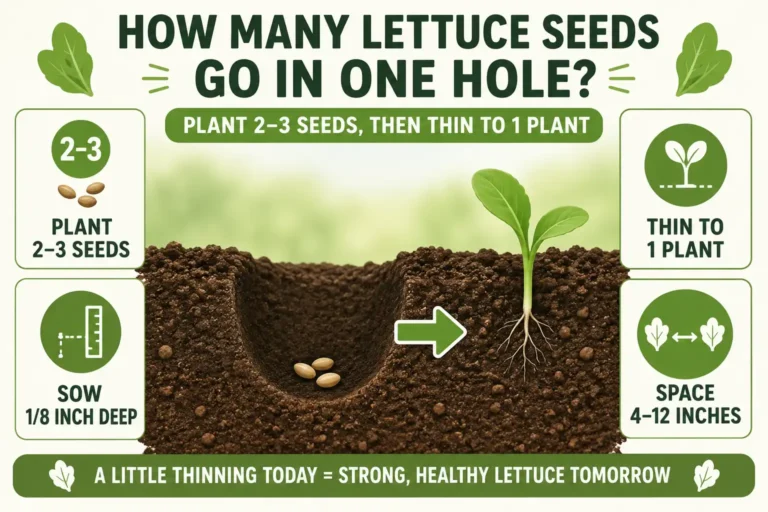
- Drop seeds about 1 inch apart in the furrow. You’ll thin later.
- Cover with 1/8 inch of fine soil or vermiculite. Vermiculite is the preference because it holds moisture and never crusts.
- Water with a gentle mist. A heavy spray washes seeds out of place or drives them too deep.
For a fuller walkthrough of the process from seed packet to first true leaves, see the piece on planting lettuce from seed.
Soil Temperature and Conditions That Matter as Much as Depth
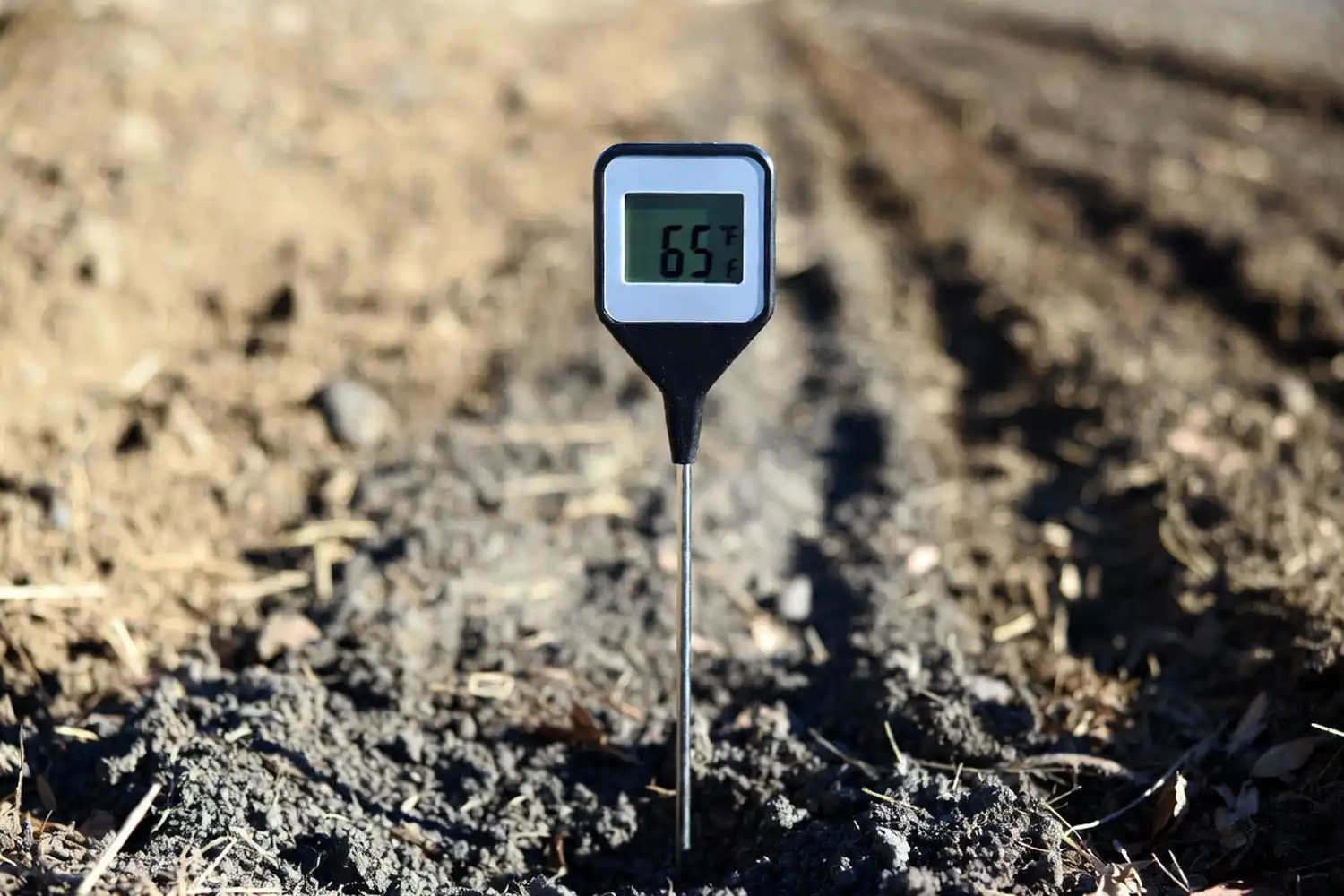
Planting depth only works if soil conditions support it. Lettuce germinates best at soil temperatures between 60°F and 70°F. The seed will sprout as low as 40°F, just slowly. Above 80°F, germination drops sharply and seeds go dormant. That blockage is called thermal dormancy.
Push a soil thermometer 1 inch into the bed before. If it reads above 75°F, wait or shift to an evening sowing followed by a cooling watering.
Lettuce also needs consistent surface moisture. The top 1/4 inch dries out fast, especially under Great Plains wind. Check moisture twice a day for the first week. A light dusting of vermiculite stretches the time between waterings without burying the seed.
For more on getting tiny seeds out of the ground, see what to write about germinating lettuce seeds and how long germination takes for lettuce.
Planting Depth in Raised Beds, Pots, and Open Field
The 1/8 to 1/4 inch rule holds across every setup, but the execution changes.
In raised beds, the loose soil mix makes it easy to push seeds too deep with a fingertip. Sprinkle on the surface and dust over instead. Our guide on lettuce in raised beds covers spacing and succession planting too.
For container planting, the same 1/8 inch depth applies. Potting mix crusts faster than garden soil, so a vermiculite topdress is even more useful. The piece on growing lettuce in pots goes deeper on container size and watering rhythm.
In an open field with a precision seeder, set the unit for 1/8 to 1/4 inch and keep the press wheel light. Too much downforce drives the seed below the light threshold.
Common Mistakes That Bury Lettuce Seeds Too Deep
Most failed lettuce stands trace back to one of these mistakes.
- Using a hoe to cut a 1-inch furrow out of habit. That depth works for beans, not lettuce.
- Watering with a strong hose stream. The water column pushes seeds 1/2 inch or more into loose soil.
- Mulching too soon. A thick straw mulch over freshly sown lettuce blocks light and traps seeds.
- Burying seeds because they look too exposed on top. They are supposed to look that way.
- Heavy rain right after planting. Crusting soil traps seedlings even if your depth was right.
If a crust does form, knock it off with a light rake or a quick mist before the seedling exhausts itself.
What If You Already Planted Too Deep?
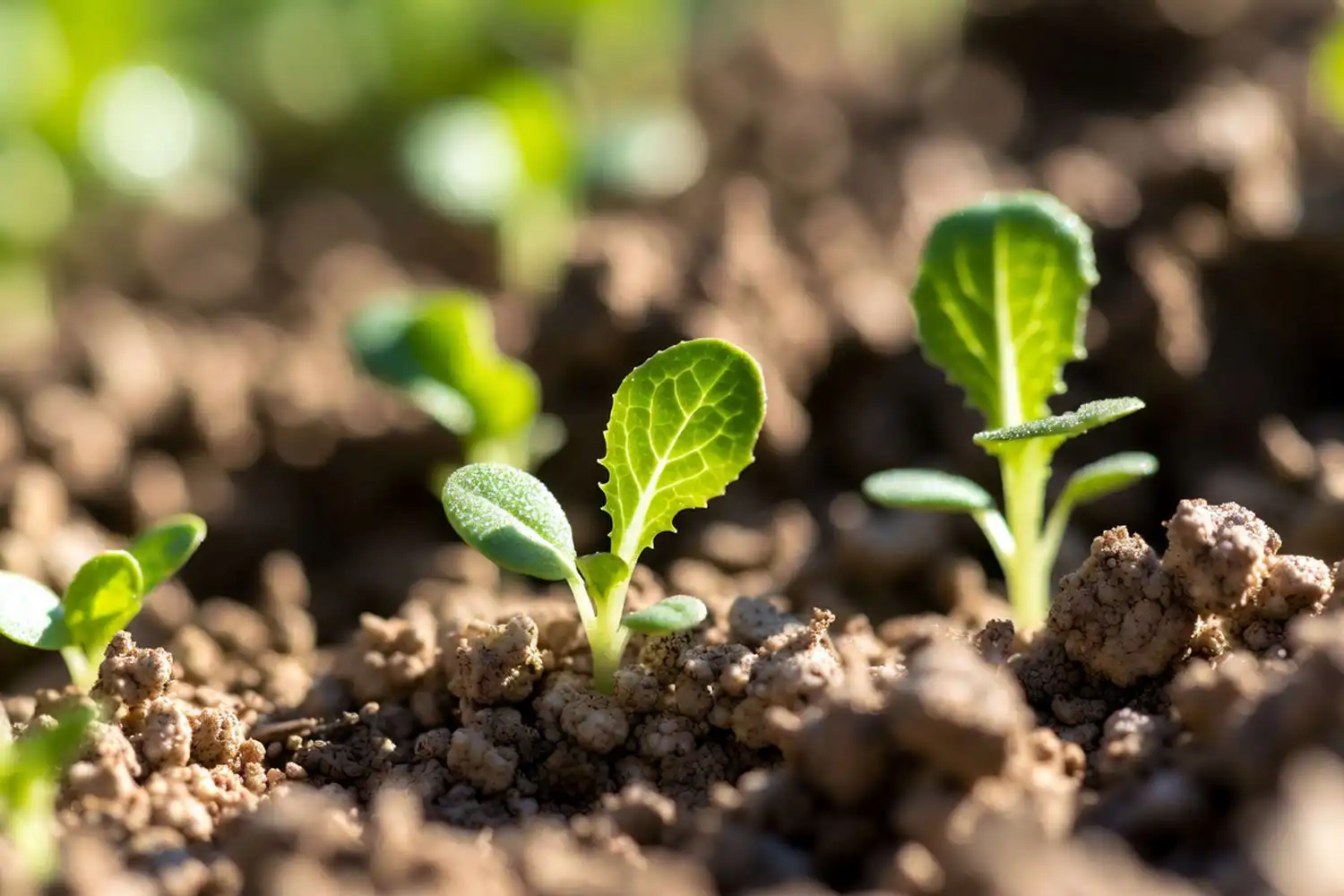
If you’ve already buried lettuce seeds at 1/2 inch or more, the most reliable fix is to overseed at 1/8 inch right next to the original row. Some deeper seeds may still surprise you, but most won’t sprout. Don’t dig the old ones up. Just plant a fresh shallow row alongside.
For first-time growers, knowing what lettuce seeds look like before planting helps a lot. The seeds are so small that it’s easy to drop them in clumps and then over-cover them.
The University of Minnesota Extension lettuce guide has solid published guidance on planting depth and soil temperature ranges that backs up what to do in the plot.
Final Thoughts
If lettuce is new to you, plant at 1/8 inch in cool weather, on a firmed bed, with a vermiculite cover and a misting can. Watch the top 1/4 inch of soil for the first 7 to 10 days. Don’t bury, don’t drown, don’t mulch heavy. That’s the whole game. Once you’ve watched a row sprout under those conditions, you’ll never plant lettuce deep again.