When Is Lettuce Ready to Harvest? Signs and Timing by Type
Knowing when is lettuce ready to harvest comes down to two things: the type you planted and the signs the plant shows. Pick too early and you waste good growth. Wait too long and the leaves turn bitter.
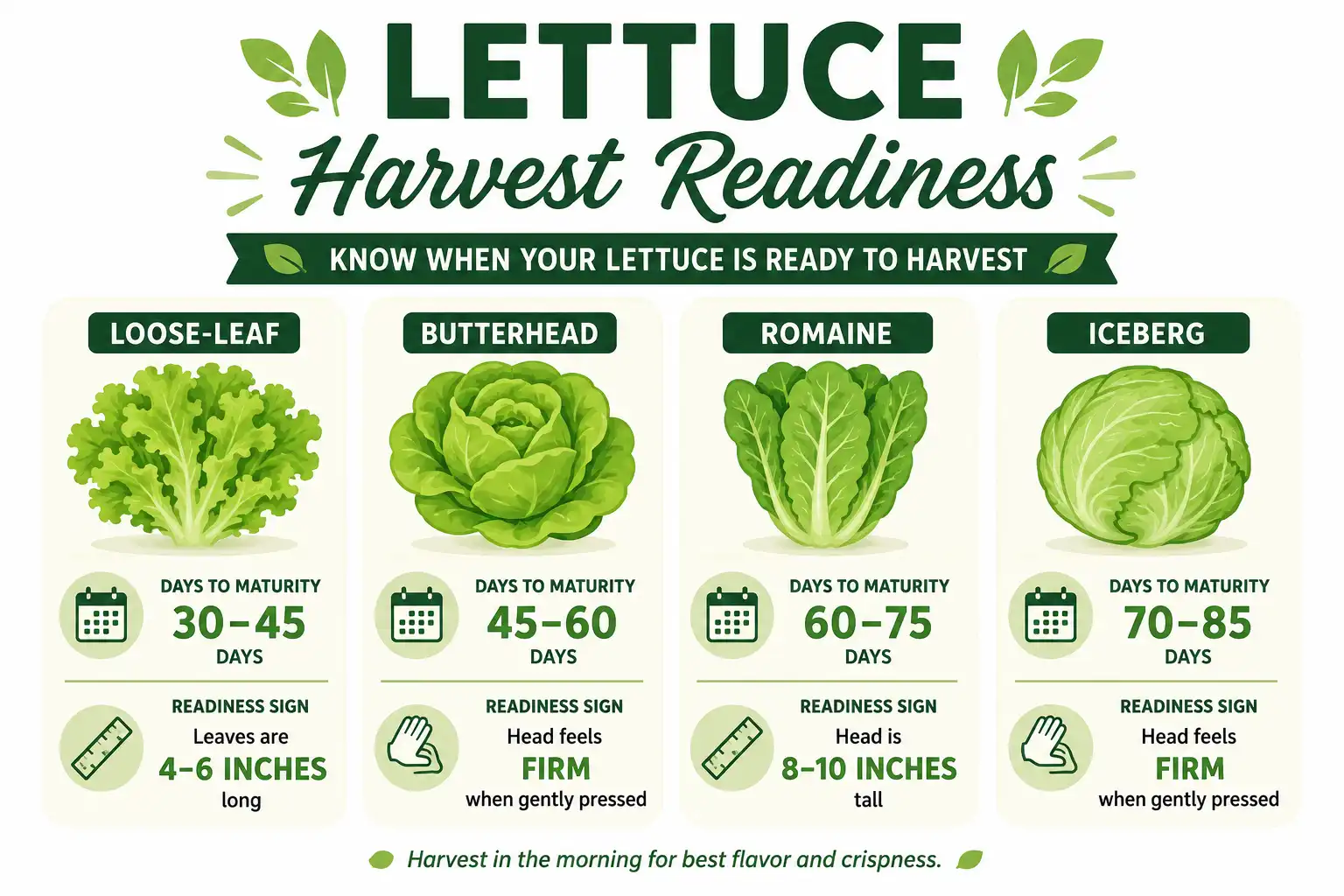
Lettuce is ready to harvest when leaves reach full size. Leaf types are ready near 30 to 45 days at 5 to 6 inches tall. Head types are ready once the center feels firm, around 60 to 90 days.
How Many Days Does Lettuce Take to Reach Harvest?
Lettuce takes 30 to 90 days to reach harvest, depending on the type. Leaf lettuce moves fastest, while head types take the longest. Here is the breakdown in the plots:
- Leaf and loose-leaf: 30 to 45 days for full leaves, 21 to 30 days for baby greens
- Butterhead and Bibb: 55 to 70 days
- Romaine (cos): 60 to 75 days
- Iceberg and crisphead: 70 to 90 days
Your seed packet lists the days to maturity for your exact variety, so check it and mark your calendar. Those numbers assume good growth. Cool weather, steady water, and full sun keep plants on schedule, while heat and drought slow them down. Want the full timeline from sowing to picking? Our guide covers how long lettuce takes to grow from seed in a separate guide.
Also learn: How to Harvest Lettuce From Your Farm
What Are the Signs Lettuce Is Ready to Pick?
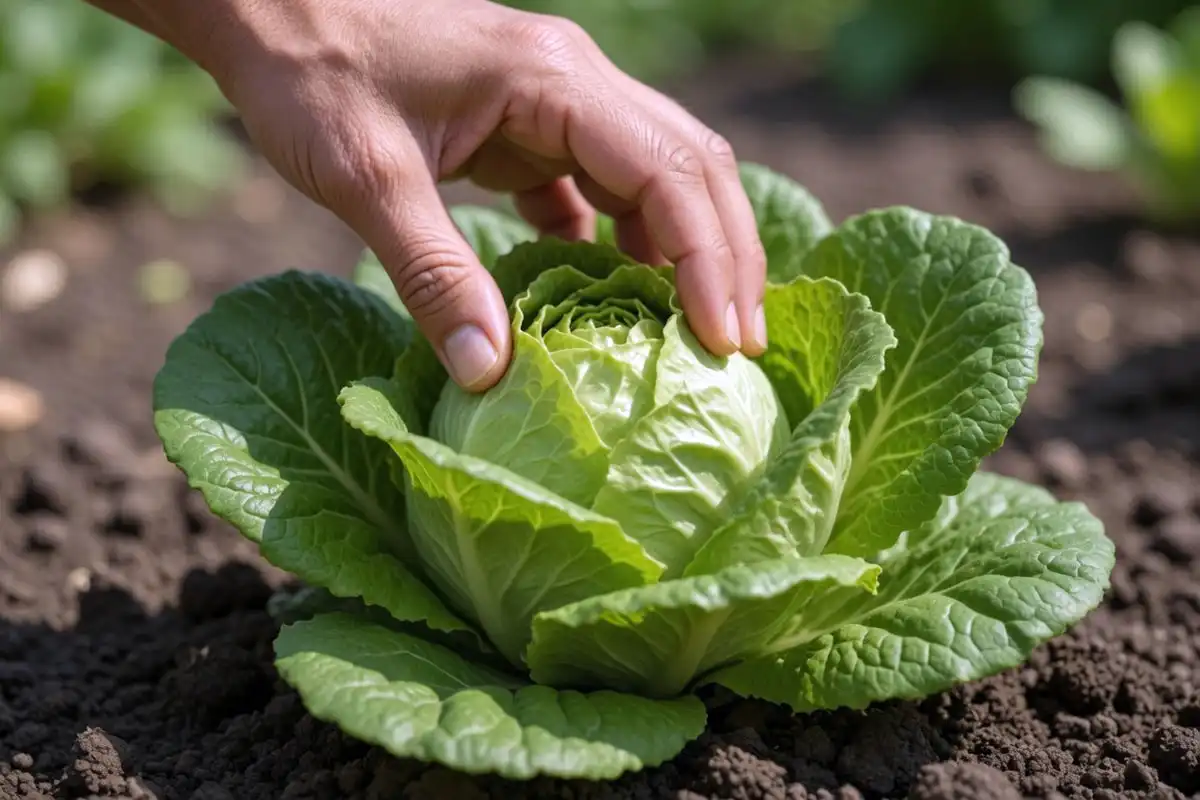
Three signs tell you lettuce is ready: leaf size, head firmness, and no sign of bolting. Size is the first thing to check. Firmness then confirms the head types. A clean center, with no stalk rising, means flavor is still sweet.
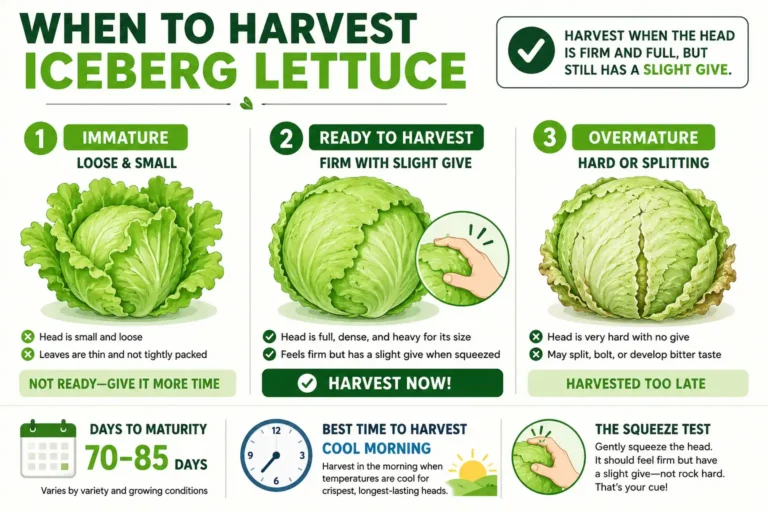
For leaf lettuce, size is the whole story. Once the outer leaves hit 5 to 6 inches, start picking. For head types, gently squeeze the center. It should feel firm but give a little, not rock hard. The University of Maryland Extension puts it plainly: crisphead is mature when the leaves overlap into a compact, firm head.
Taste is your final check. Snap off a leaf and chew it. Sweet and mild means go. Bitter means heat stress has set in, so pick the whole plant fast before it turns worse.
When Is Each Type of Lettuce Ready to Harvest?
Each type of lettuce is ready to harvest at a different size and stage. Leaf types are ready first, judged by simple leaf length. Butterhead, romaine, and iceberg are ready once their heads firm up. Here is how to judge each one.
Leaf and Loose-Leaf Lettuce
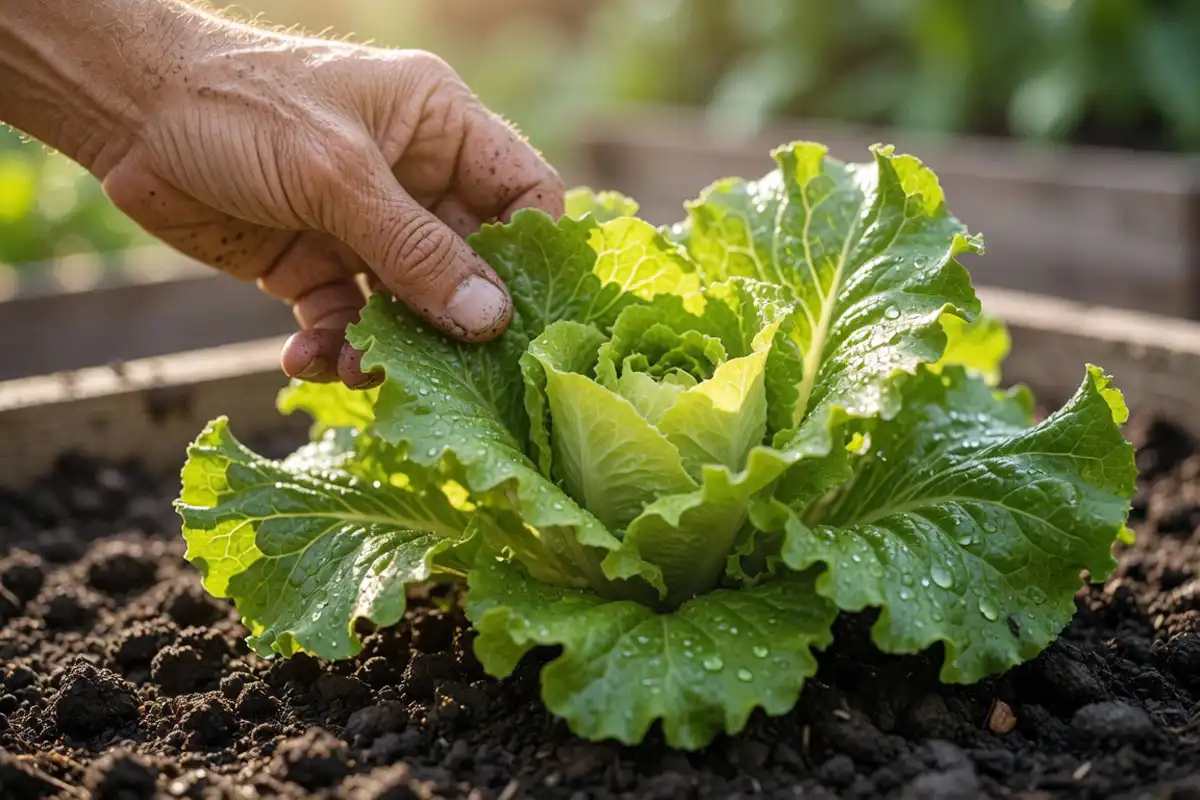
Leaf lettuce is ready when the outer leaves reach 5 to 6 inches tall, usually 30 to 45 days after planting. You do not wait for a head, because these types never form one. Pick the outer leaves and leave the center to keep growing. For a quick baby-greens cut, snip the whole plant at 3 to 4 inches around day 21. Leaf types give you the most flexible harvest window of any lettuce.
Butterhead and Bibb Lettuce
Butterhead is ready when the inner leaves cup inward and the center feels loosely firm, about 55 to 70 days in. The head stays soft, not tight like iceberg. Harvest typically happens once the plant is 6 to 8 inches across and the middle has filled in. Cut the whole head at the base, or pull outer leaves as you need them. For sweet, tender heads every season, our guide covers growing Bibb lettuce step by step in another post.
Romaine (Cos) Lettuce
Romaine is ready when the leaves stand tall and overlap into a loose, upright head, around 60 to 75 days. The University of Maryland Extension describes a head about 4 inches wide at the base and 6 to 8 inches tall. The central rib should feel firm. Cut the whole head at soil level with a sharp knife. Watch the final weeks closely, since romaine can bolt in a heat spell. Our guide on growing romaine without it bolting covers how to keep it sweet through that stretch.
Iceberg and Crisphead Lettuce
Iceberg is ready when the head is firm and dense, like a softball, usually 70 to 90 days after planting. This type tests your patience the most. Squeeze the center: solid means go, soft means wait. Do not let it sit once firm, because a tight head left too long can split or turn bitter. Fall planting gives the sweetest iceberg, since cool weather builds firm heads. If you want heads that stay firm and sweet, the timing and soil matter as much as the variety.
What Time of Day Is Best to Harvest Lettuce?
Morning is the best time to harvest lettuce. Leaves hold the most water in the early hours, after a cool night and before the sun pulls moisture out. That water is what makes lettuce crisp. Heading out right after chores, while the dew is still on, is the recommended timing. By afternoon the same leaves go limp. If you must pick in the heat, chill the leaves in cold water right away to firm them back up.
How Do You Harvest Lettuce So It Keeps Producing?
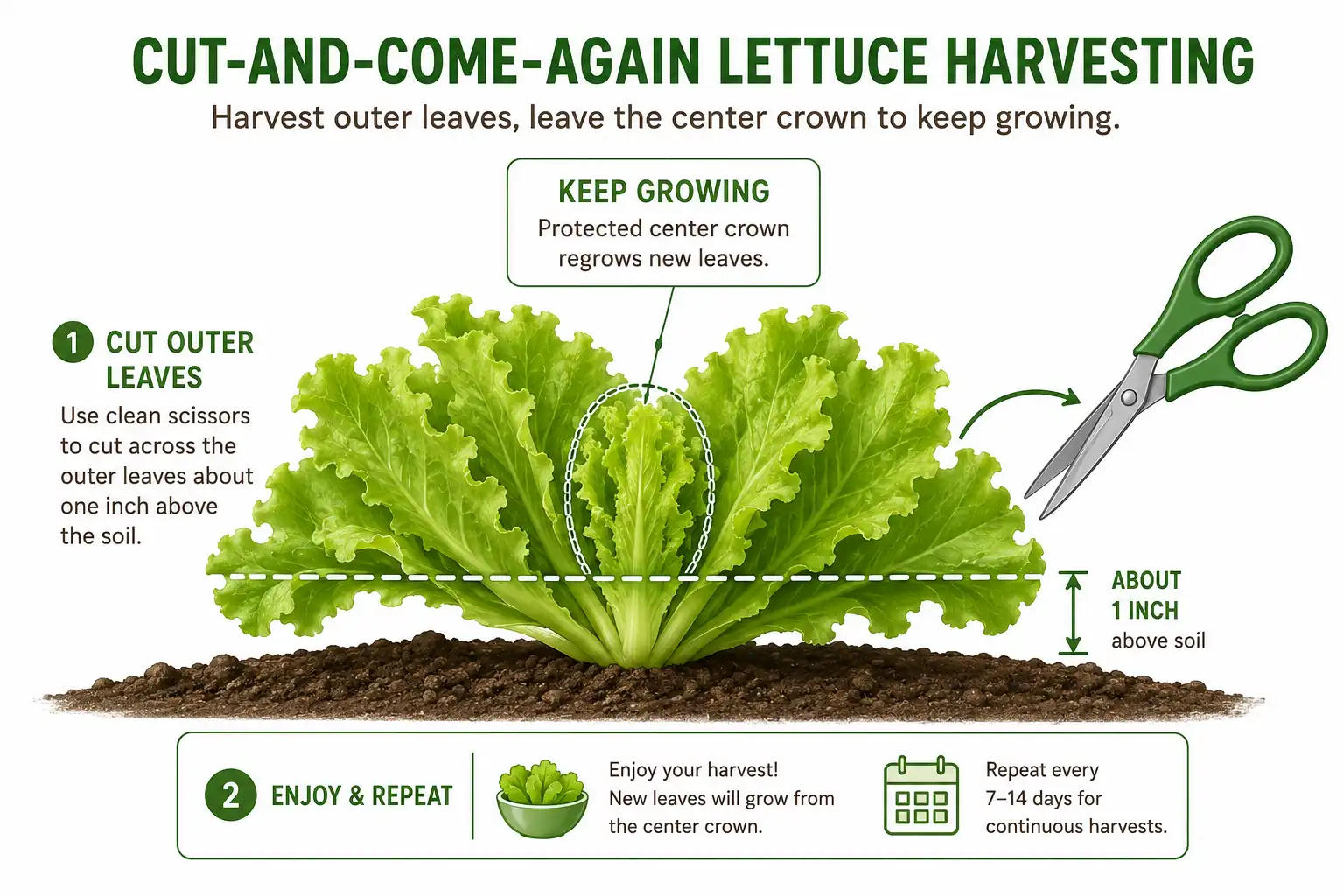
Harvest the outer leaves and leave the center, and the plant keeps producing for weeks. This is called cut-and-come-again, and it is how one planting stretches into a long supply. The growing point sits in the center, so as long as you protect it, new leaves keep coming.
Here is the method:
- Use clean scissors or a sharp knife
- Cut the outer leaves about 1 inch above the soil
- Leave the central crown untouched
- Pick every 7 to 10 days
New leaves regrow in 7 to 14 days, faster in warm light. Done right, a single leaf or romaine plant feeds you for 8 to 12 weeks before it bolts. One note: not every type regrows. Leaf, romaine, and butterhead come back well. Iceberg and stem lettuce do not, so harvest those as whole heads.
What Happens If You Harvest Lettuce Too Late?
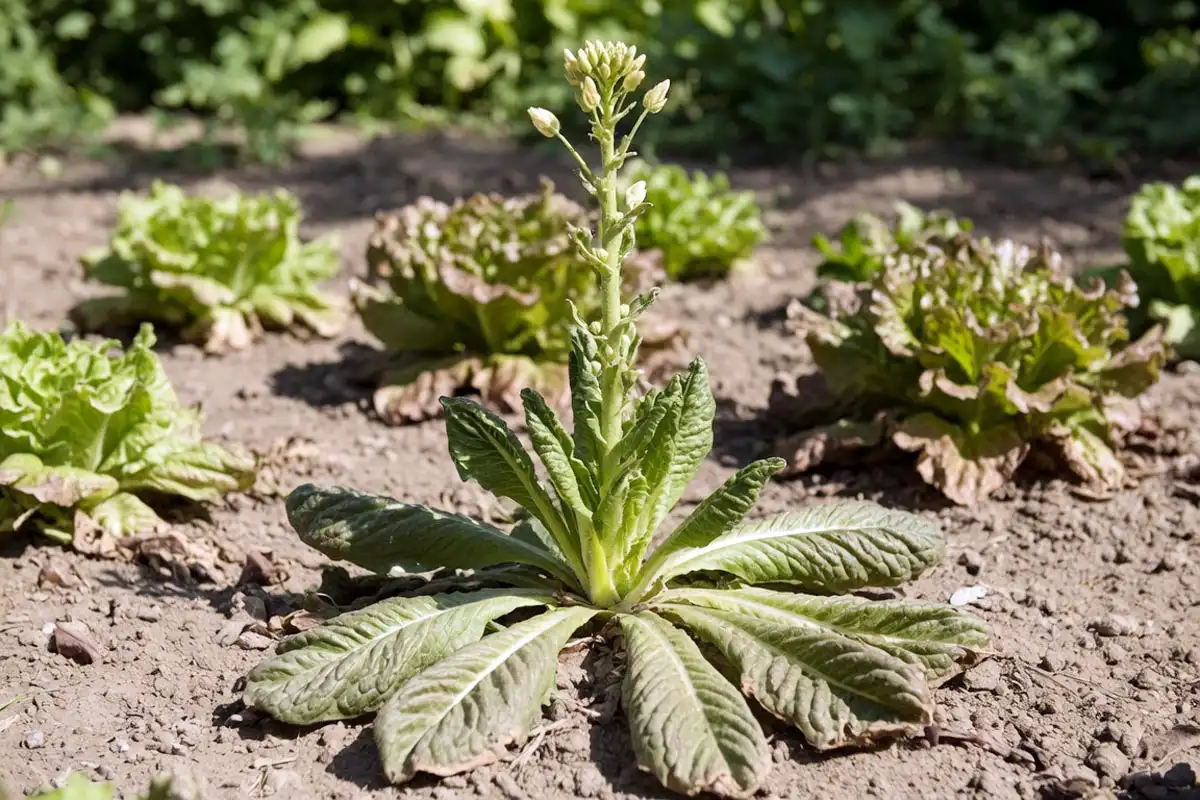
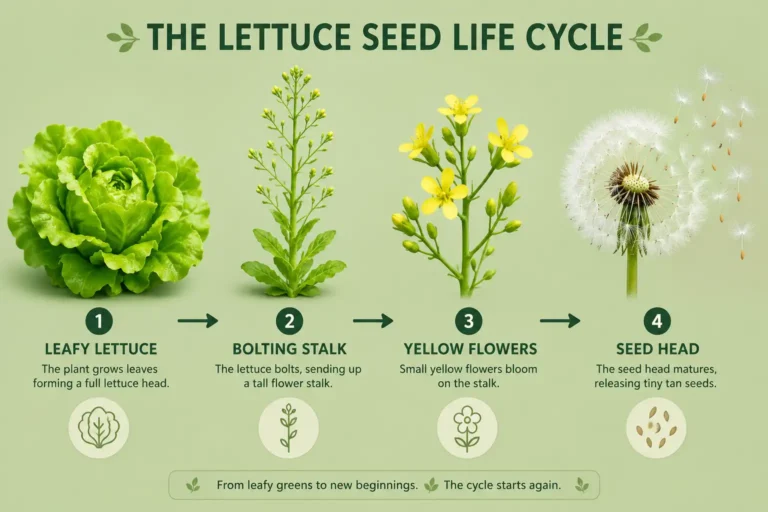
Harvest too late and lettuce bolts, which means it sends up a flower stalk and turns bitter. Heat is the trigger. The University of Minnesota Extension notes that several days above 75°F push lettuce to flower. Once that stalk rises, the leaves load up with sesquiterpene lactones, the natural compounds behind that sharp, bitter taste.
You can spot bolting early. The center stretches upward and the plant looks taller and pointier. At the first sign, pick everything you can use, because flavor only gets worse from there. An ice water soak can tame the edge on mildly bitter leaves, but a fully bolted plant is done. In a hot Kansas July, plan around this by harvesting spring lettuce before the real heat lands. For summer plantings, slow-bolt varieties help, and cover that in growing lettuce through summer heat.
How Should You Store Lettuce After Harvest?
Store lettuce in a loose plastic bag in the refrigerator, and it keeps for 1 to 3 weeks. Rinse the leaves in cool water first, then pat or spin them dry. Wet leaves rot fast, so drying matters. Leaf, butterhead, and romaine hold for about 2 weeks. A firm iceberg head can last up to 3 weeks. Crisp, sweet leaves start with the right planting window. Our guide covers that in planting lettuce for a sweet, crisp harvest.
Bottom Line for Your Lettuce Patch
Watch the plant, not just the calendar. Leaf lettuce is ready at 5 to 6 inches. Head types are ready when the center firms up. Pick in the morning, harvest before bolting, and use cut-and-come-again to keep the leaves coming. That simple routine keeps fresh salad on the table from spring through fall in Kansas.