Best Soil Thermometer for 2026: How to Choose and Use One
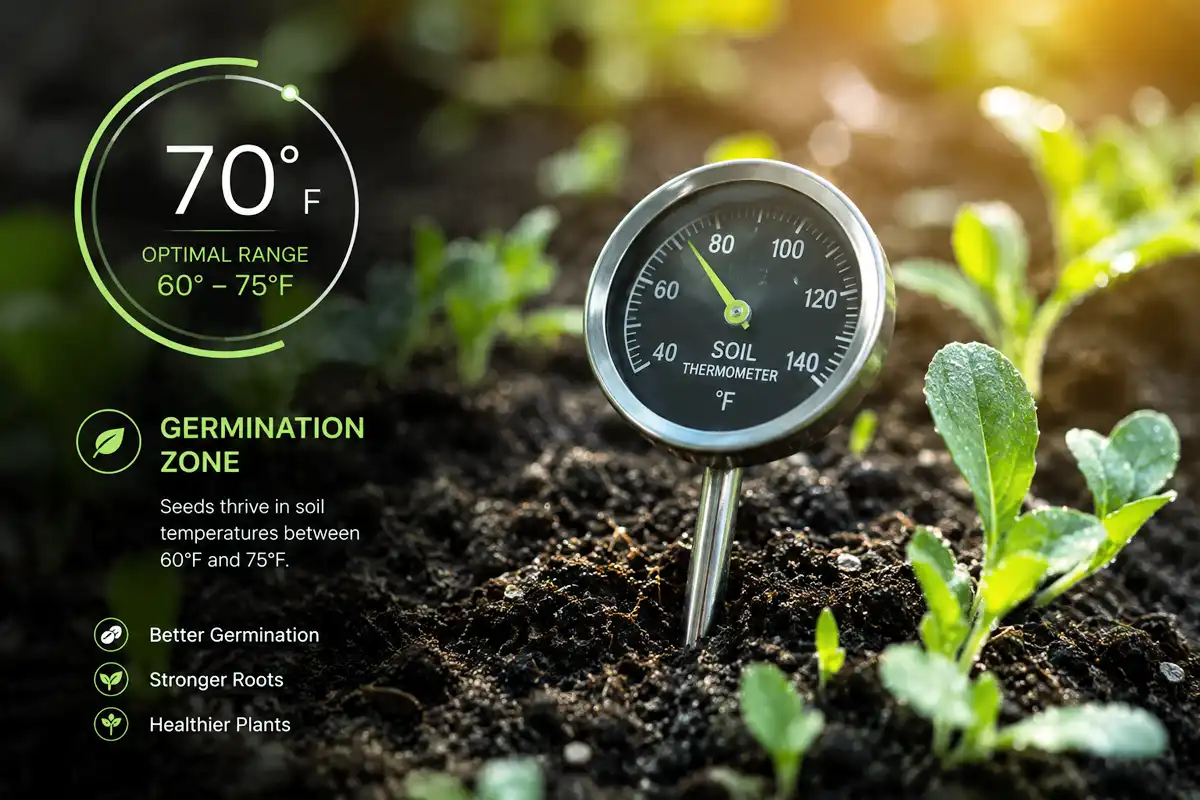
A soil thermometer is one of the most useful tools for farmers and gardeners to check soil temperature before planting. The calendar says go, but cold dirt rots seed and slows germination. Read the ground first, not the date.
The best soil temperature thermometer is the REOTEMP K82-3, because its 5-inch 304 stainless steel probe comes factory calibrated and reads in one second. The Luster Leaf 1630 Rapitest prints planting temperatures for each crop, which helps beginners. For deep compost, the REOTEMP 16-inch reaches 200°F.
Quick Comparison: The Best Soil Temperature Thermometer – Top Picks at a Glance
Here is how the eleven compare at a glance, focused on what matters for reading soil temperature.
| Soil Thermometer | Type | Temp Range | Probe Length | Response Time | Best For |
|---|---|---|---|---|---|
| REOTEMP K82-3 | Analog | 0 to 220°F | 5 in | 1 sec | Seedbeds, transplanting |
| Luster Leaf 1630 Rapitest | Analog | 40 to 90°F | 6.5 in | Under 1 sec | Beginners (planting guide) |
| Luster Leaf 1625 | Digital | 40 to 100°F | 9 in | A few sec | Light digital soil checks |
| REOTEMP K83B1 | Analog (F + C) | 32 to 178°F | 12 in | Under 1 sec | Soil plus small compost |
| YAMRON 4-in-1 | Digital | 32 to 122°F | 8 in | About 10 sec | Moisture, pH, light, temp |
| Yogyro 16-inch | Analog | 40 to 180°F | 16 in | 30 sec | Large compost piles |
| Smart Choice | Analog | 0 to 220°F | 5 in | Under 1 sec | Versatile, recalibratable |
| Taylor (leaf guard) | Analog | 20 to 180°F | 4 in | 1 to 2 min | Veg and flower seed timing |
| Reotemp 20-inch | Analog | 32 to 200°F | 20 in | 2 to 5 min | Deep, large piles |
| REOTEMP 16-inch | Analog | 32 to 200°F | 16 in | 1 to 5 min | Backyard hot composting |
| Yogyro 5-inch | Analog | 40 to 180°F | 5 in | 30 sec | Small bins, raised beds |
How to Choose a Soil Thermometer
The best soil thermometer survives years of jabbing into hard spring ground and still reads true. A cheap one bends, fogs up, or drifts out of calibration after a season. A thermometer covers temperature; a separate soil moisture meter covers the other half of planting readiness. Before buying any soil temperature gauge, six things are worth checking. Each one earns its place in the field.
Probe Length and Depth
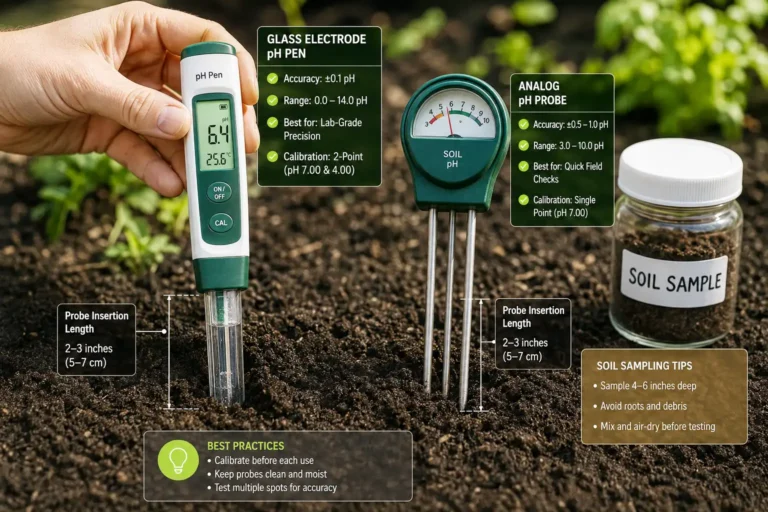
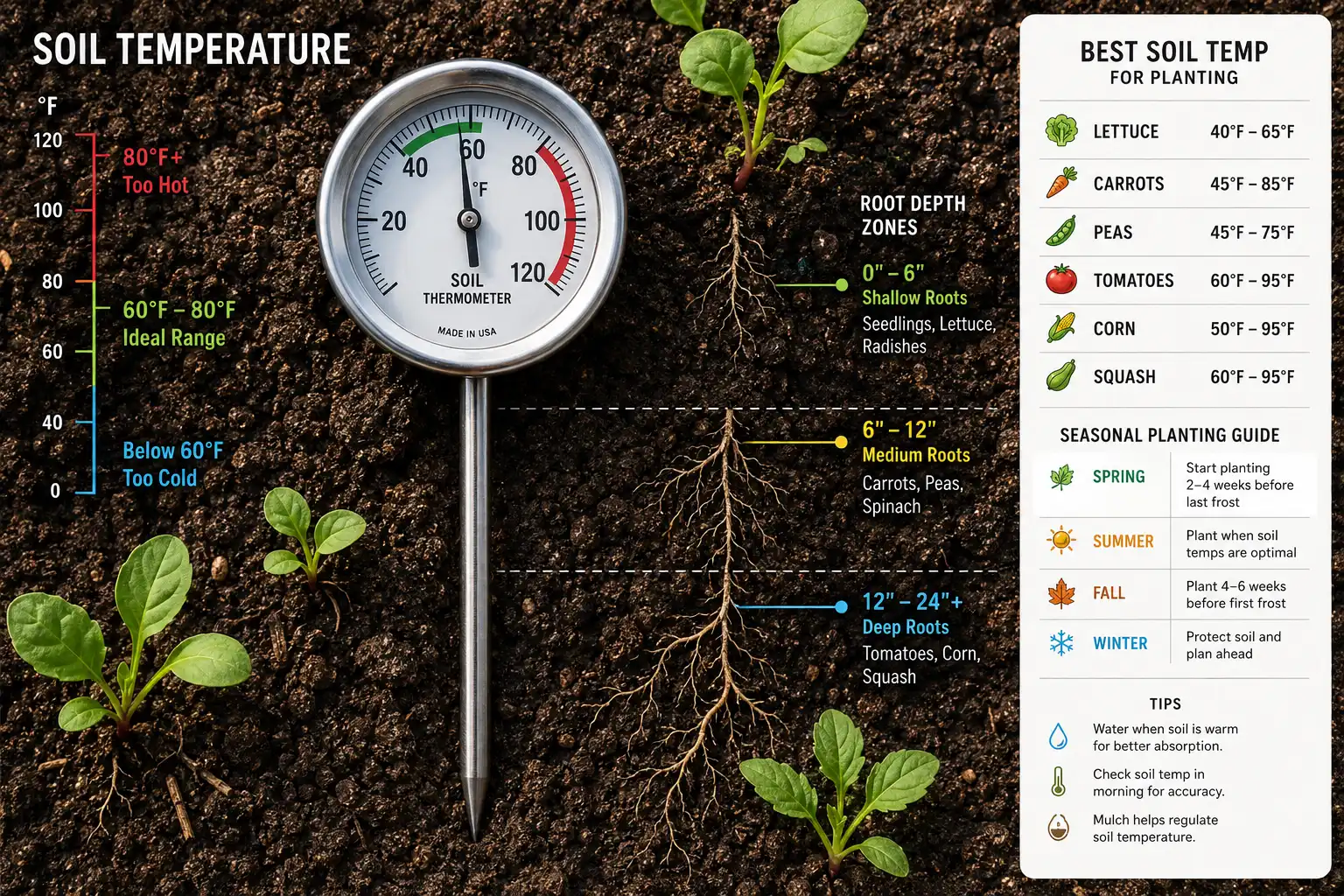
Match the probe length to the job. For seedbeds, a 4 to 5 inch stem reads seed depth fine. For compost piles or deep transplant roots, you want 12 inches or more. Here is the depth rule. Read at 2 to 4 inches for seed, and around 6 inches for transplants. A short soil temp probe can’t reach the root zone where it counts.
Temperature Range and Dual Scale
Aim for a range around 0 to 220°F, with both °F and °C marked. Early spring lows in Kansas sit near freezing. A gauge that only starts at 40°F leaves you blind on the cold mornings that matter most. Any thermometer for soil should still read accurately right near freezing. A wide range also covers compost, which runs hot.
Accuracy and Calibration
Look for ±1 to 2°F accuracy and factory calibration out of the box. A few degrees off sounds small, but it decides whether corn goes into safe ground or cold mud. Better models add a calibration screw, so you can reset the reading against a 32°F ice-water bath. Accuracy checks typically happen every spring before the first planting.
Display and Readability
You read a soil thermometer looking straight down, often in dim morning light. An analog dial needs large, high-contrast numbers. A backlit digital display wins in low light and gives an exact figure. Either works, but skip any face you have to squint at or tilt. Early mornings are when you use it most.
Build Quality and Durability
304 stainless steel is the stem material. It resists rust through wet springs and survives repeated jabs into rocky ground. Look for a hermetically sealed dial, so it won’t fog from the inside. Add a waterproof body that shrugs off rain. Cheap stems bend on the first hard clod and never read straight again.
Response Time
Response time is where digital and analog split. A digital soil thermometer reads in about 3 to 15 seconds. An analog bimetal model needs close to a full minute to settle. Neither is wrong, but if you test several spots each morning, those seconds add up fast.
The 11 Best Soil Thermometers for 2026: Reviews
Here are soil thermometers worth considering, grouped by what growers need. Short 4 to 6 inch probes suit seedbeds, raised beds, and containers. Long 12 to 20 inch stems handle deep compost piles. These are picked for accuracy, build, and real value.
1. REOTEMP K82-3 Soil Thermometer
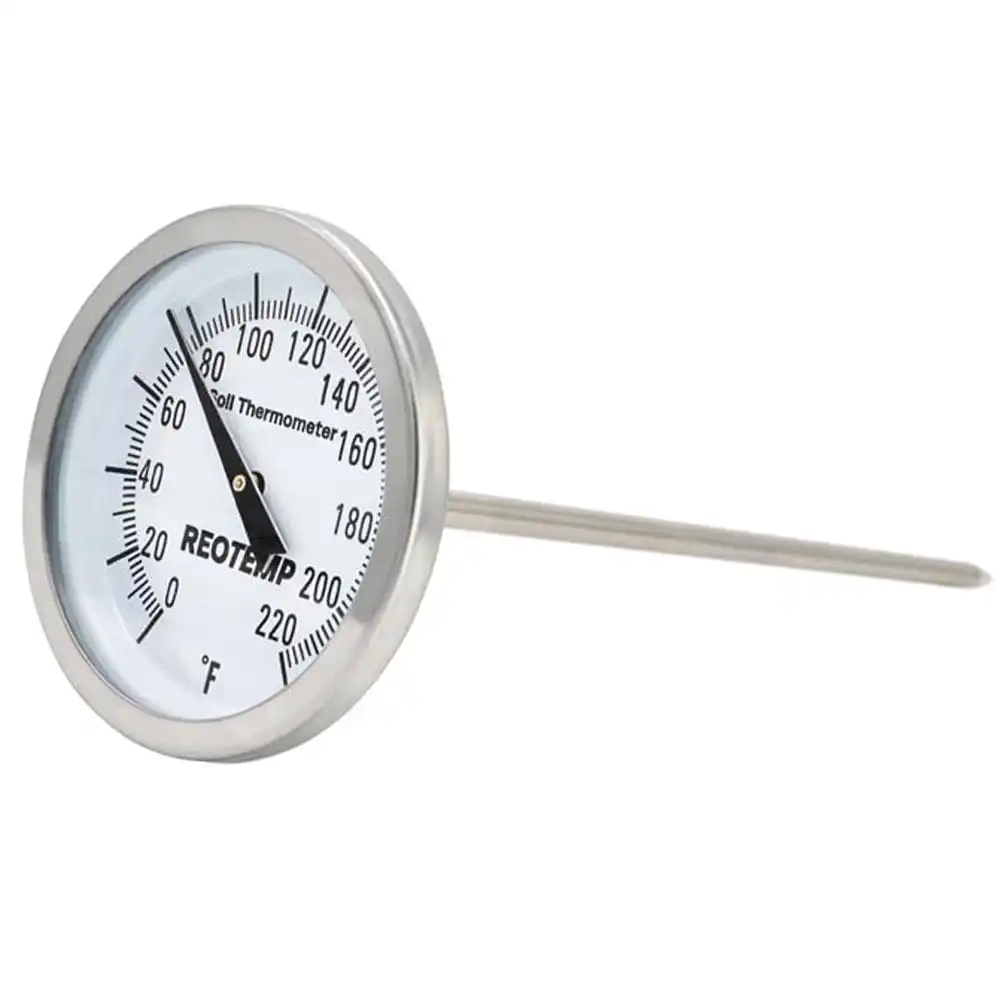
REOTEMP has built thermometers since 1965, and this one shows it. It is a battery-free analog dial with a 5-inch 304 stainless steel stem and a 2-inch face. It comes factory calibrated, so it works right out of the box. Best for spring seeding, transplanting, and raised beds.
PROS
- Reads in one second.
- Tough 304 stainless steel.
- Calibrated and ready instantly.
- Priced right for everyone.
CONS
- Too short for compost.
Specifications
- Range: 0 to 220°F
- Probe: 5 inch stainless steel
- Response: 1 second
- Waterproof body, glass lens, bimetal element
2. Luster Leaf 1630 Rapitest Soil Thermometer
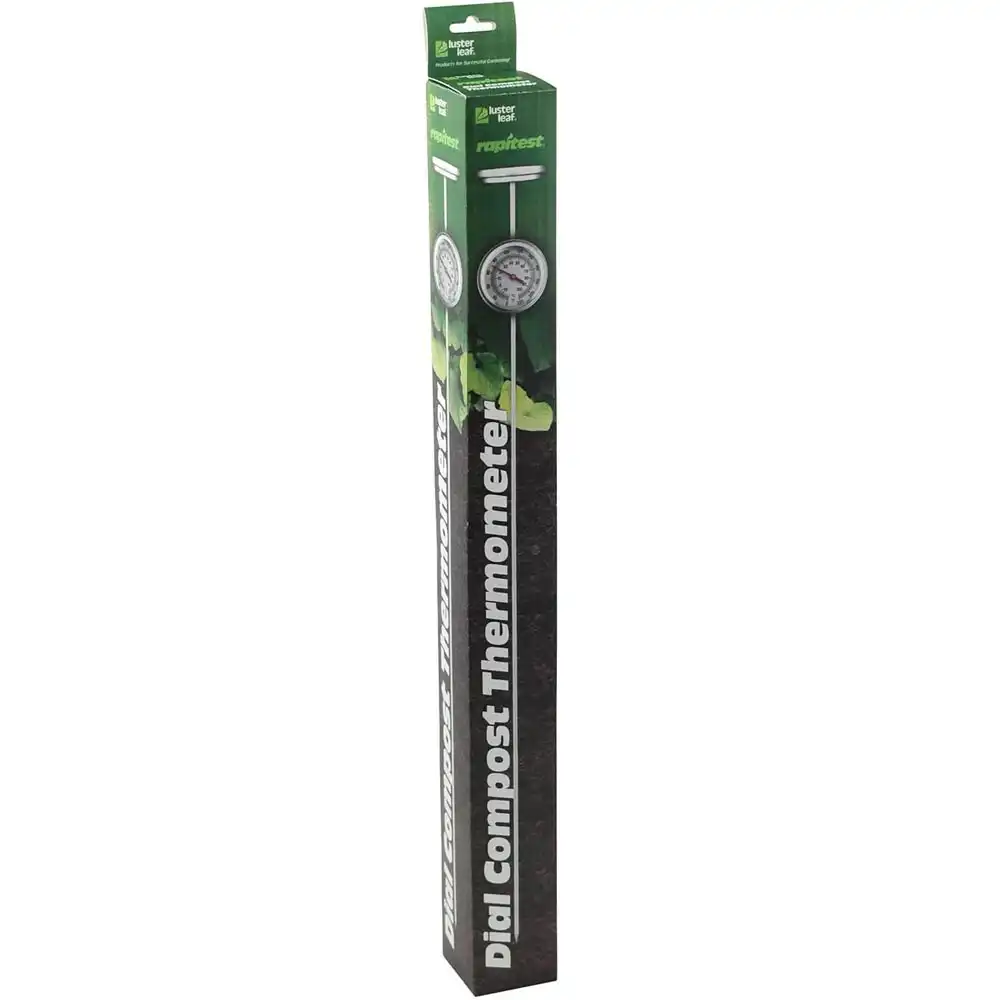
This is the Rapitest dial from Luster Leaf, a trusted name in soil testing. The dial prints germination and transplant temperatures for common crops, so beginners know when to plant. It uses a 6.5-inch stainless steel probe with a glass lens. Best for early-season planting and transplanting.
PROS
- Built-in planting guide.
- Reads from the top.
- Fast half-second response.
- Simple stick-and-read use.
CONS
- Caps at 90°F.
Specifications
- Range: 40 to 90°F
- Probe: 6.5 inch stainless steel
- Response: 500 milliseconds
- Battery-free, glass lens dial
3. Luster Leaf 1625 Digital Soil Thermometer – Best Digital Instant-Read
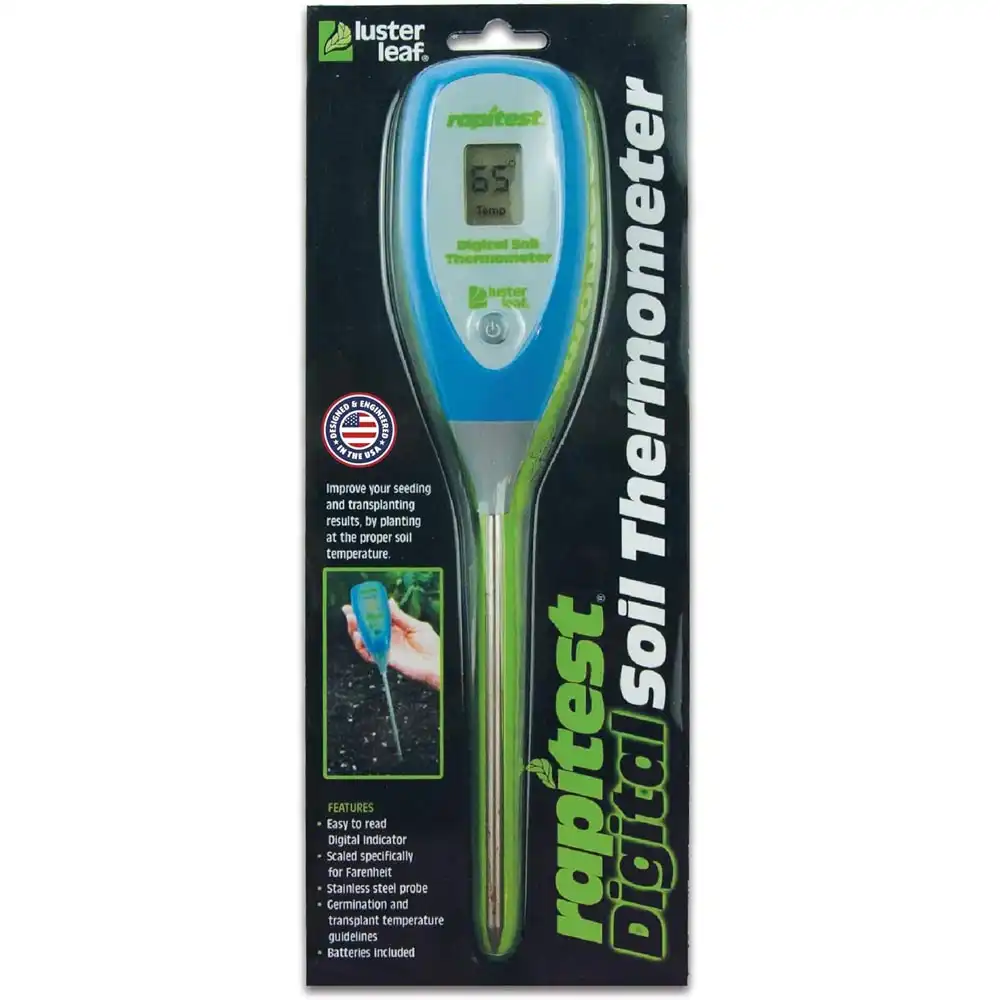
If you want a digital readout, this Luster Leaf model shows soil temperature on an LCD screen. It runs on three AAA batteries, which are included, and customers report fast, accurate numbers. Best for light, occasional spring planting checks. It helps to treat this one gently.
PROS
- Clear digital display.
- Accurate temperature readings.
- Batteries already included.
- Quick, easy reading.
CONS
- Probe separation risk
Specifications
- Range: 40 to 100°F
- Probe: 9 inch length
- Power: 3 AAA batteries
- Digital LCD readout
4. REOTEMP K83B1 Soil & Compost Thermometer
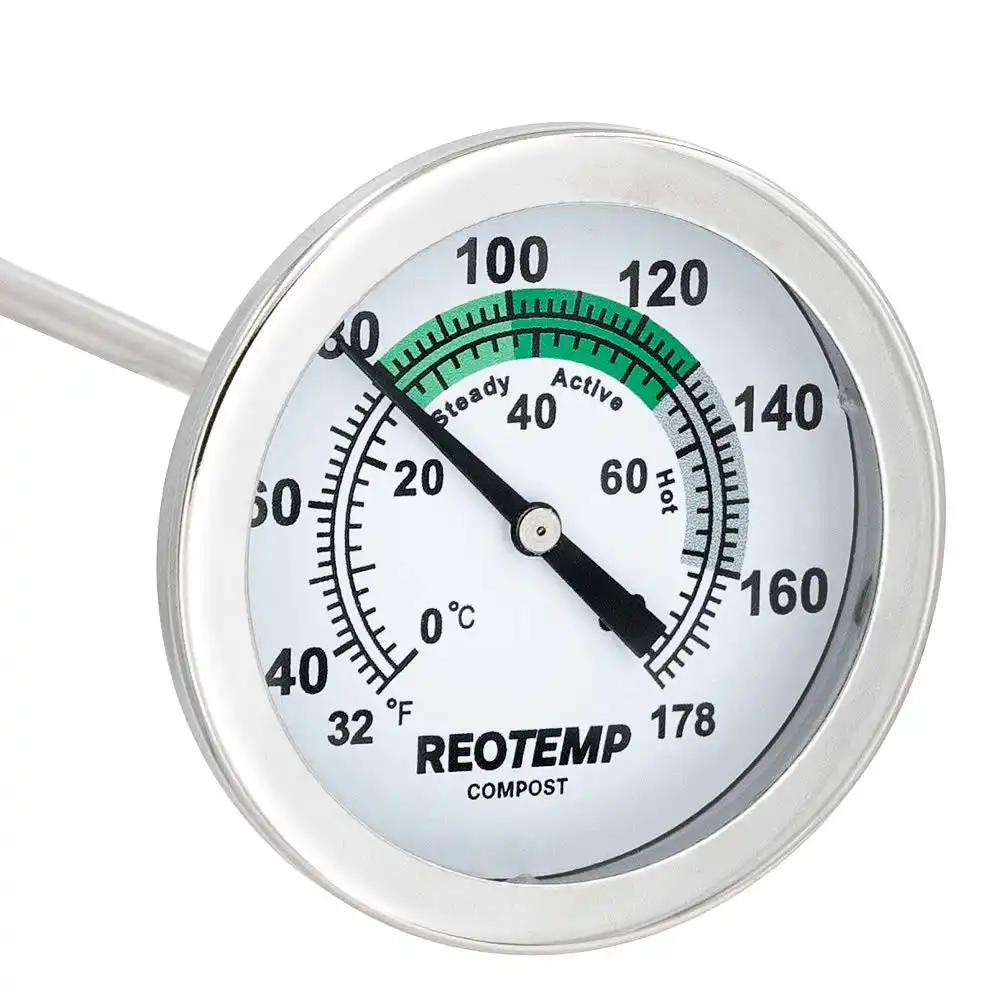
REOTEMP’s K83B1 reads both Fahrenheit and Celsius, which helps when you follow extension data. The 12-inch 304 stainless steel stem reaches deep soil and smaller compost piles. The dial is hermetically sealed, so it won’t fog. A free composting guide is included. Best for compost bins and deep soil checks.
PROS
- Long 12-inch stem.
- Dual Fahrenheit and Celsius.
- Sealed dial won’t fog.
- Free composting guide included.
CONS
- Thin stem in clay.
Specifications
- Range: 32 to 178°F
- Probe: 12 inch stainless steel
- Response: 500 milliseconds
- Hermetically sealed, waterproof, dustproof
5. YAMRON 4-in-1 Soil Moisture Meter
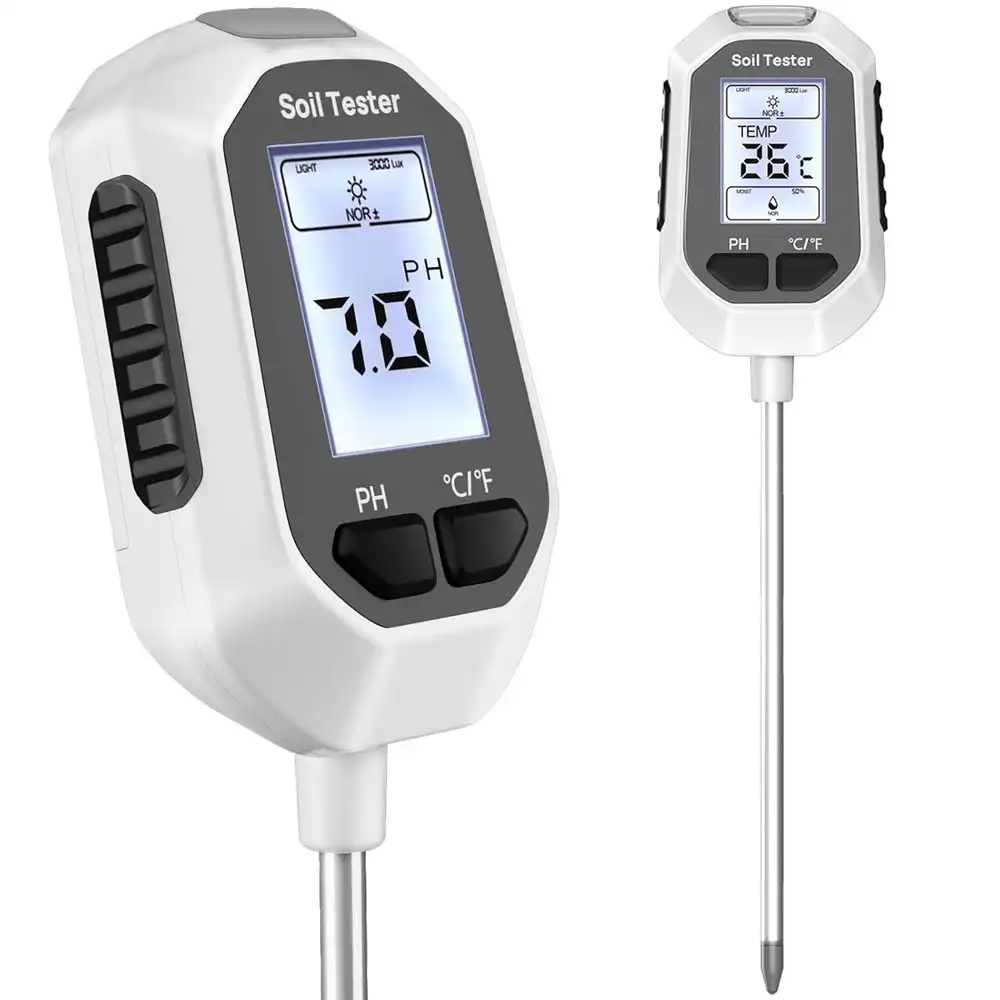
YAMRON’s tool is more than a thermometer. It is a 4-in-1 meter for moisture, pH, sunlight, and soil temperature on one digital screen. The 45-degree rotating head saves your back. Read up on a dedicated soil moisture meter before you lean on its numbers. Best for beginners checking moisture and watering.
PROS
- Four readings, one tool.
- Backlit digital display.
- Rotating head, no bending.
- Handy all-in-one helper.
CONS
- Not waterproof; wipe always.
Specifications
- Temp range: 32 to 122°F
- Accuracy: plus or minus 1.8°F
- Probe: 8 inch stainless steel
- Power: 4 AAA batteries
6. Yogyro Backyard Compost Thermometer (16-Inch)
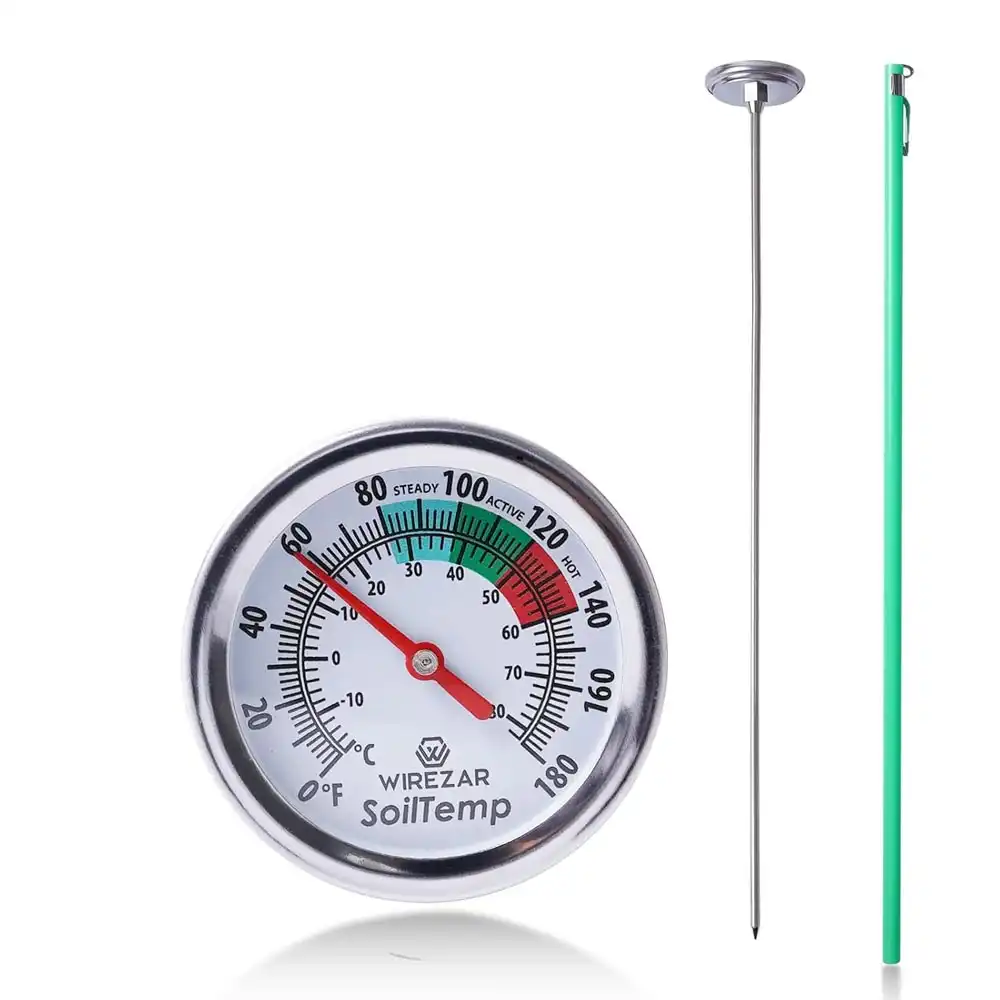
Yogyro’s 16-inch compost thermometer reaches deep into a big pile. The large dial uses color-coded zones (blue, green, red), so you read pile status from a distance. It is fully waterproof, fog-resistant, and made of 304-grade stainless steel. A storage case is included. Best for large compost piles and deep beds.
PROS
- Long 16-inch reach.
- Color-coded status zones.
- Waterproof, fog-free dial.
- Sturdy 304 stainless steel.
CONS
- Slower 30-second reading.
Specifications
- Range: 40 to 180°F
- Probe: 16 inch stainless steel
- Response: 30 seconds
- Waterproof, battery-free
7. Smart Choice Stainless Steel Soil Thermometer
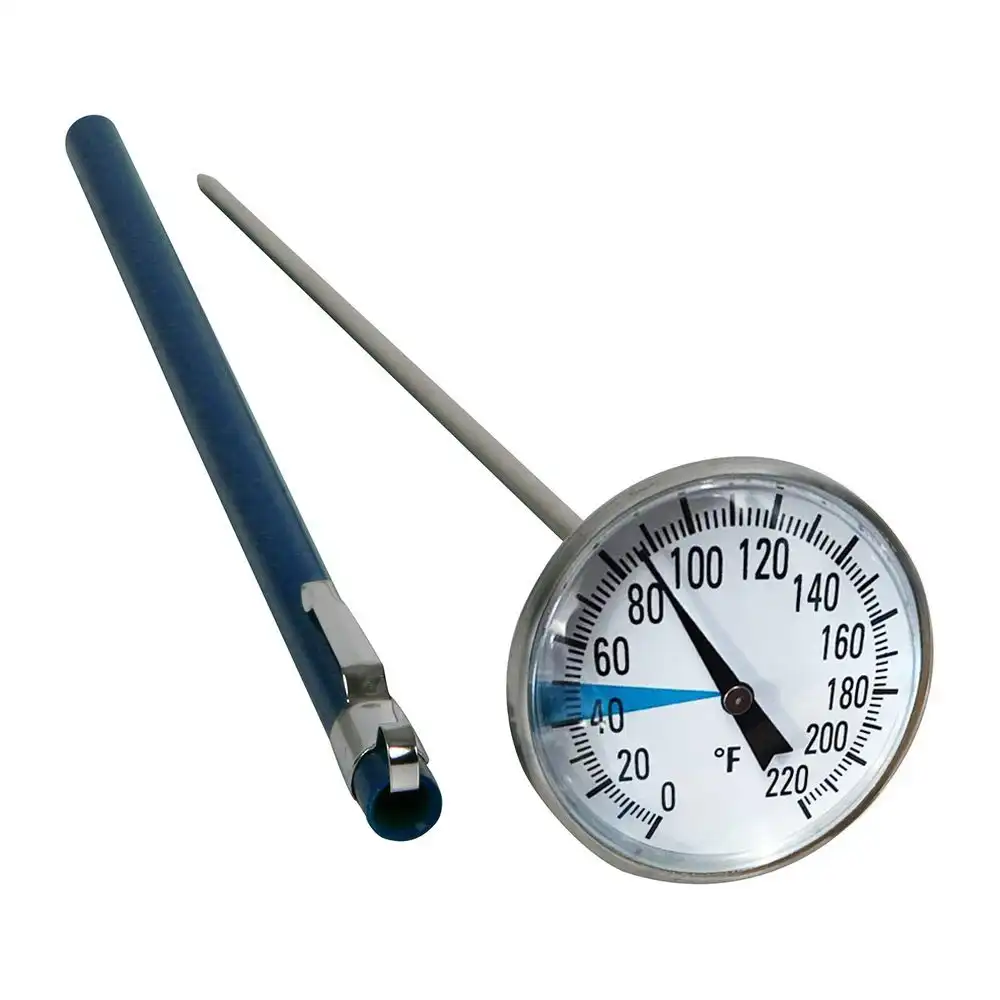
Smart Choice keeps this one simple and accurate. It is a battery-free analog dial with a 5-inch stainless steel probe and a glass-covered face. A hex adjuster on the back lets you recalibrate if it ever drifts. Best for soil, compost, and greenhouse checks.
PROS
- Clear, accurate dial.
- Recalibrate with hex adjuster.
- Works across many uses.
- No batteries needed.
CONS
- Not waterproof; store inside.
Specifications
- Range: 0 to 220°F
- Probe: 5 inch stainless steel
- Response: 500 milliseconds
- Glass-covered dial, calibration adjuster
8. Taylor Soil Thermometer with Decorative Leaf Guard
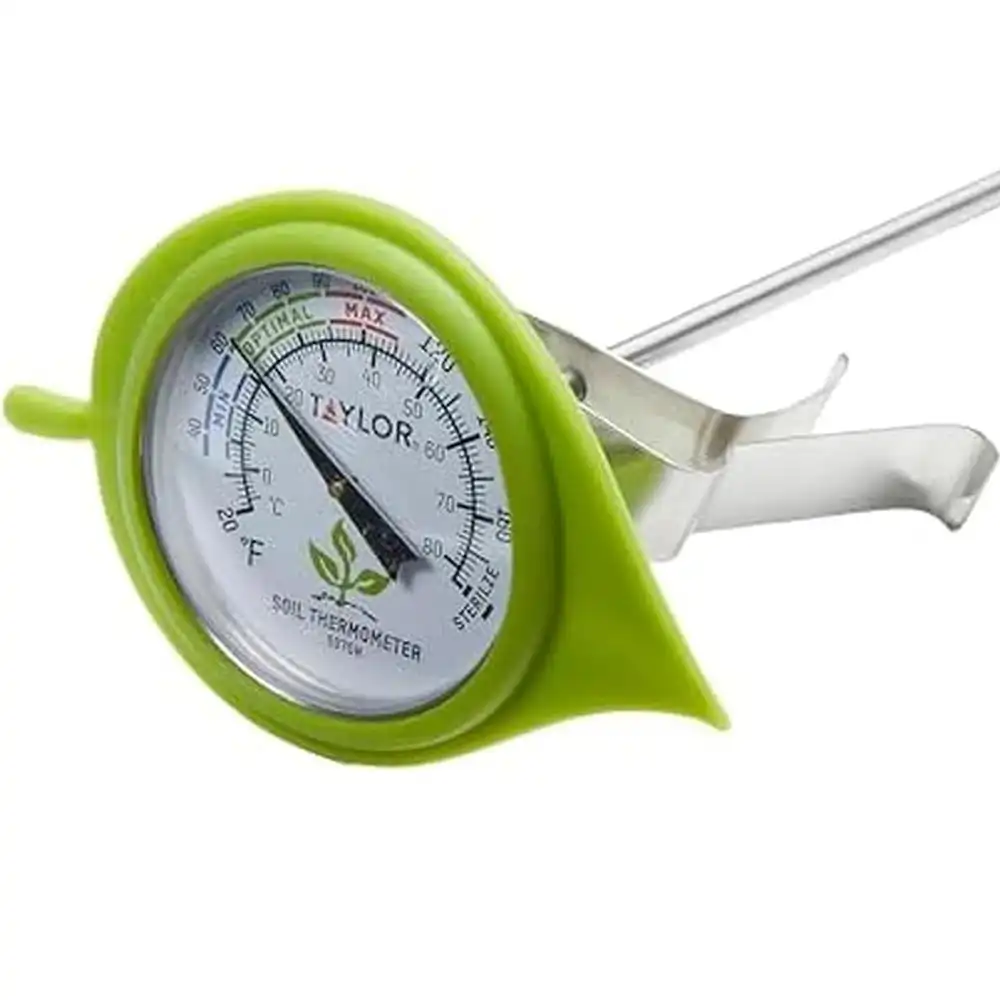
Taylor is a long-time thermometer name, and this model adds a silicone leaf guard for grip and protection. The dial marks safe planting ranges, and the heavy-duty 4-inch stainless steel probe handles seasons of use. Best for vegetable and flower seed timing.
PROS
- Marked safe planting ranges.
- Silicone guard adds grip.
- Heavy-duty stainless steel.
- Light and easy to carry.
CONS
- Only a 4-inch probe.
Specifications
- Range: 20 to 180°F
- Probe: 4 inch stainless steel
- Sensing tip: last 2 inches
- Battery-free, silicone guard
9. Reotemp 20-Inch Backyard Compost Thermometer
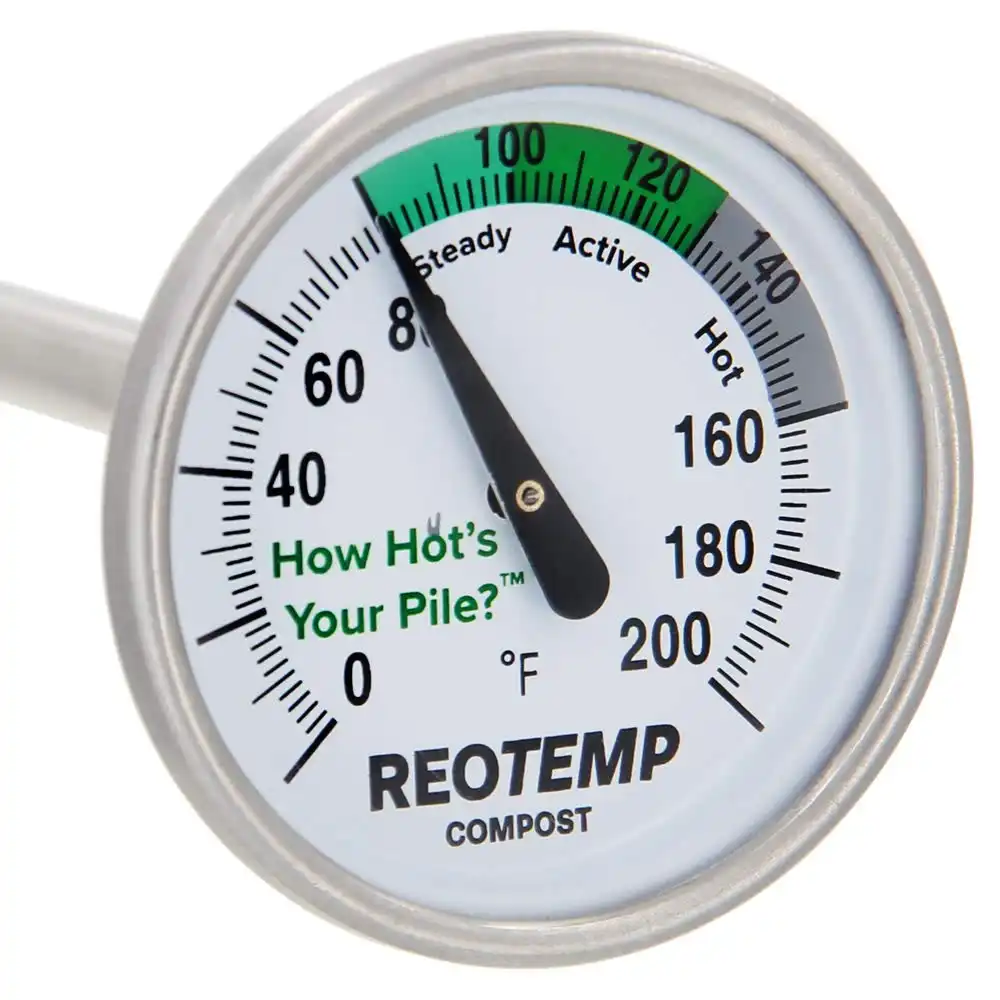
This is REOTEMP’s 20-inch compost thermometer, the one for serious, deep piles. The big 3-inch dial with color-coded zones reads clearly across the yard. The stem is corrosion-resistant stainless steel, hermetically sealed against fog, and a free composting guide comes with it. Best for large hot-composting and deep piles.
PROS
- Reaches deep, 20 inches.
- Large 3-inch dial.
- Built to last years.
- Free composting guide included.
CONS
- Slow 2 to 5 minute reading.
Specifications
- Range: 32 to 200°F
- Probe: 20 inch stainless steel
- Dial: 3 inch, color-coded
- Hermetically sealed, battery-free
10. REOTEMP 16-Inch Backyard Compost Thermometer
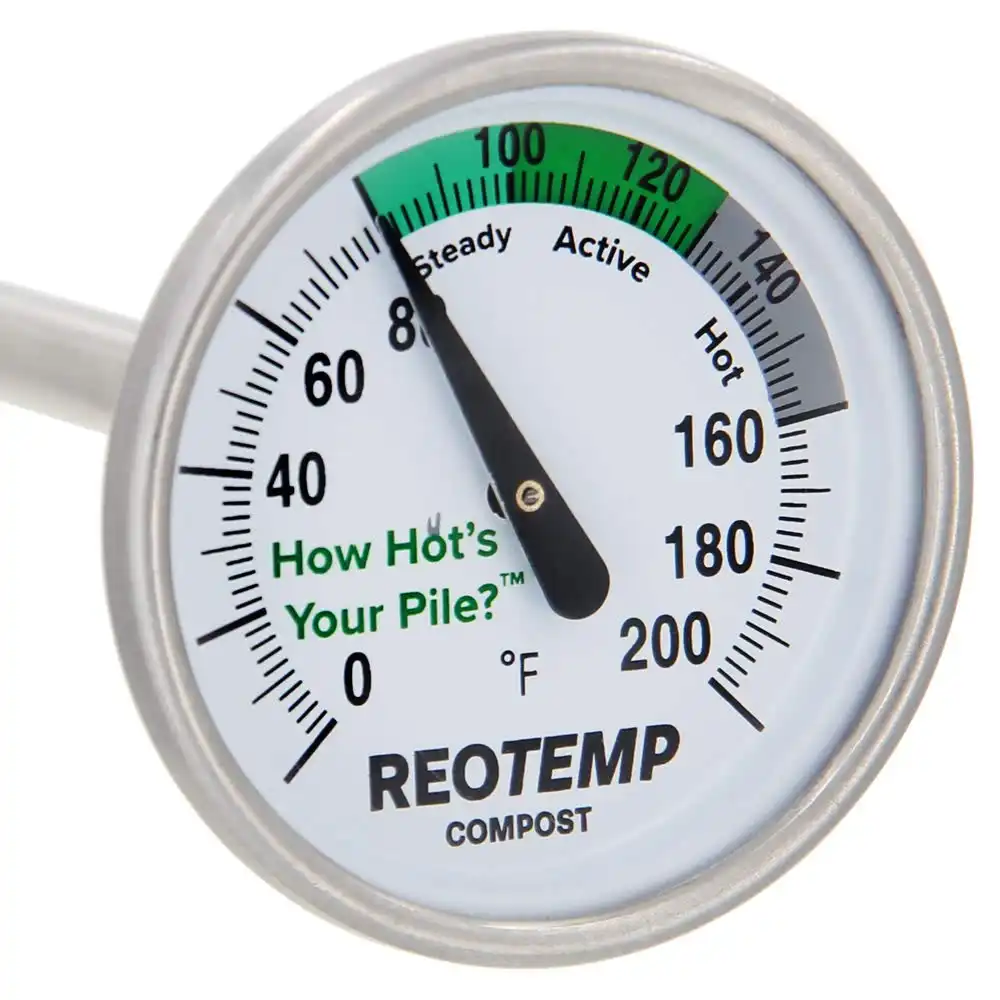
REOTEMP’s 16-inch compost thermometer is the backyard favorite, and a member of the US Composting Council stands behind it. The 3-inch dial shows cool, active, and hot zones at a glance. You can leave it in the pile year-round without rust. It earns its place when you are managing a compost pile all season. Best for backyard hot composting.
PROS
- Long 16-inch stem.
- Color-coded activity zones.
- Sealed dial won’t fog.
- Stays out year-round.
CONS
- Thin stem in clay.
Specifications
- Range: 32 to 200°F
- Probe: 16 inch stainless steel
- Response: 500 milliseconds
- Hermetically sealed, battery-free
11. Yogyro 5-Inch Compost & Soil Thermometer
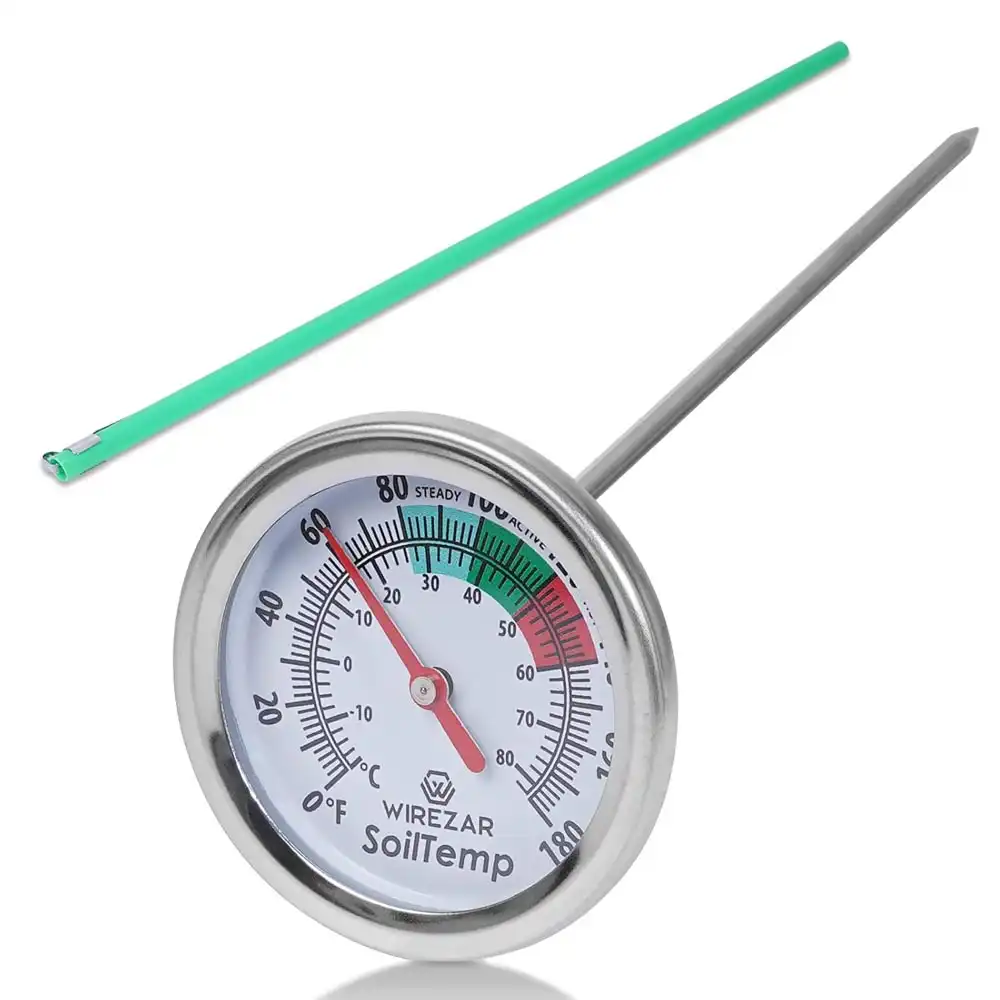
Yogyro’s 5-inch version does double duty for small compost bins and garden soil. The color-coded dial (blue, green, red) shows status fast. It is 304-grade stainless steel, waterproof, and ships with a protective case. Best for raised beds, containers, and small bins.
PROS
- Doubles for soil and compost.
- Color-coded quick reading.
- Waterproof 304 stainless steel.
- Budget-friendly home pick.
CONS
- Short for deep piles.
Specifications
- Range: 40 to 180°F
- Probe: 5 inch stainless steel
- Response: 30 seconds
- Waterproof, battery-free
Analog vs. Digital Soil Thermometers
Analog soil thermometers run without batteries, last for years, and read a little slower. Digital models read fast and exact, but they need batteries that can quit on a cold morning. That is the trade-off in one line.
Analog dials use a bimetal coil that bends with temperature. They are rugged, cheap, and you never worry about power. The downside is speed and a dial that takes a moment to read. A digital soil thermometer pairs a probe with an LCD screen. You get a precise number in seconds, often with a backlight. The catch is batteries and a bit more care in wet weather.
Pick analog if you want a tough, no-fuss tool that reads compost and seedbeds alike. Pick digital if you want speed and exact numbers, especially when you are timing warm-season planting closely.
How to Use a Soil Thermometer for Accurate Readings
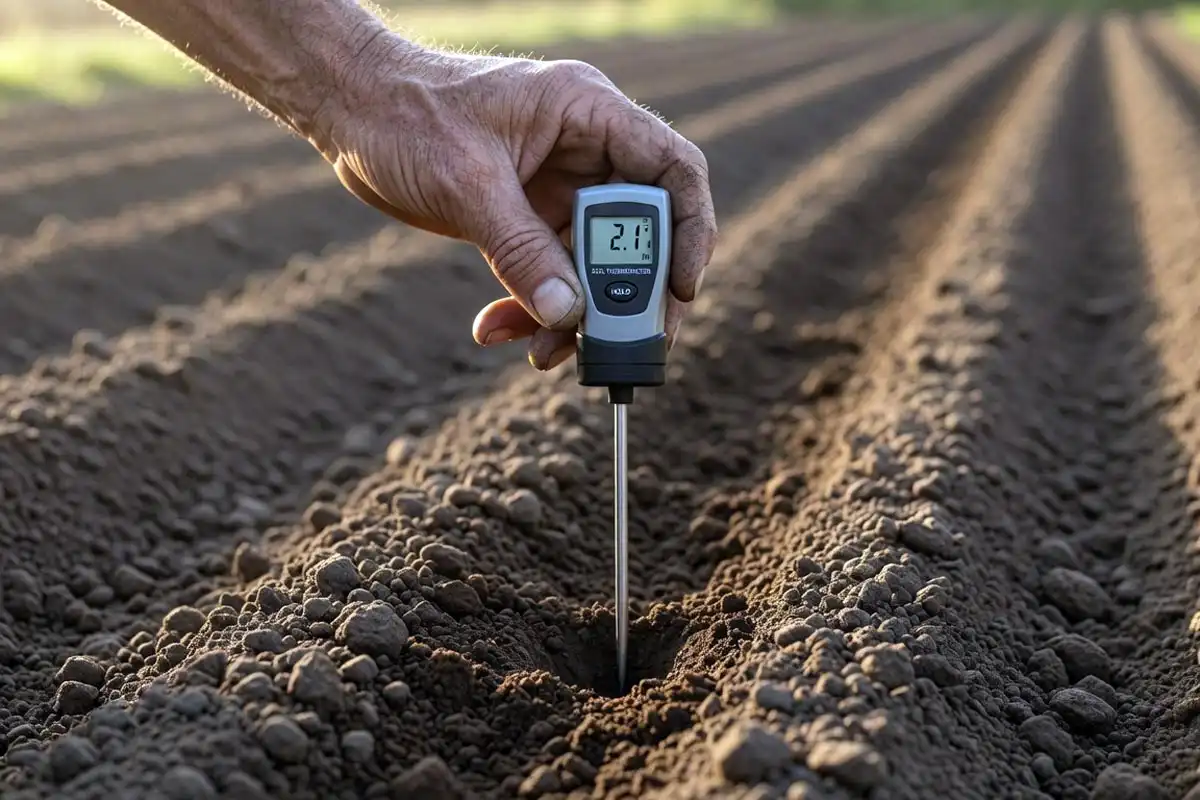
Using a soil thermometer right takes about two minutes, and the habit pays off all season. Here is exactly what to do.
Insert the probe 2 to 4 inches deep for seed, or about 6 inches for transplants. Push it straight into firm, settled ground, not a loose clod. Then let the reading stabilize before you trust it. Analog needs about a minute; digital settles in seconds. Read it while the probe is still in the ground, because pulling it out changes the number fast.
One spot is not enough. Test 3 to 4 spots across the seedbed and average them, since shade, slope, and moisture create small microclimate differences. Take the temperature in the morning, around 9 a.m. at the same time for several days running. Plant on the trend, not a single warm reading. Morning beats afternoon. The day’s sun has not warmed the soil yet, so you see the low the seed sits in overnight. Rinse the probe after each use, both to keep dirt from skewing the next reading and to protect the stem.
Soil Temperature Chart for Planting Common Crops
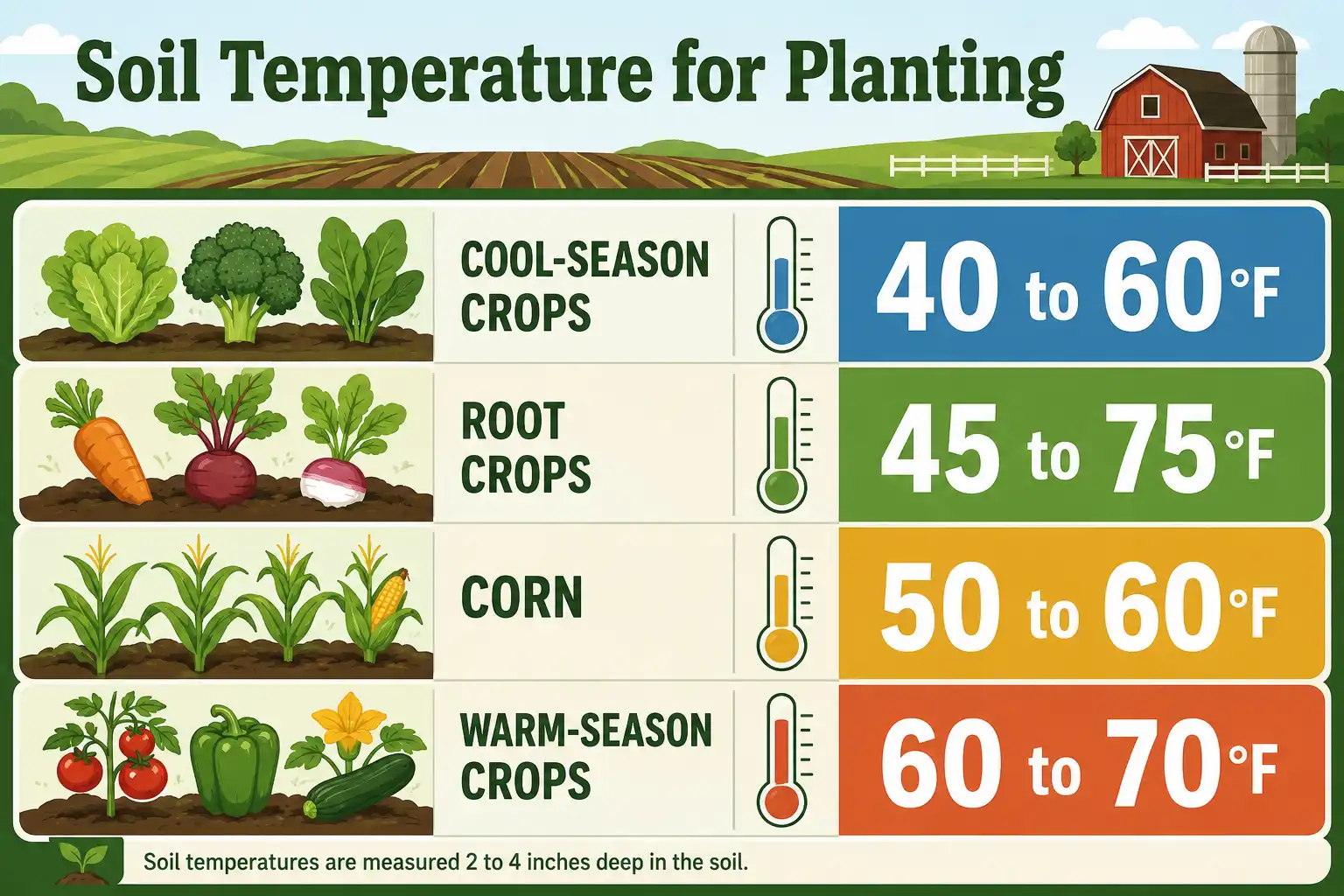
Soil temperature decides whether seed sprouts or just sits and rots. Cool-season crops handle cold ground. Warm-season crops need real warmth before they move. Here are the numbers by, and a soil temperature thermometer takes the guess out of hitting them.
Cool-season crops like peas, lettuce, spinach, and onions germinate as low as 40 to 45°F. They come up faster at 55 to 60°F. Warm-season crops are pickier. Tomatoes, peppers, and cucumbers want a minimum of 60°F and thrive near 70°F. Corn germinates once the ground reaches about 50°F, though sweet corn does better closer to 60°F, especially with untreated seed. Root crops such as carrots and beets handle a wide 45 to 75°F band.
| Crop group | Minimum soil temp | Ideal soil temp |
|---|---|---|
| Cool-season (peas, lettuce, spinach, onions) | 40 to 45°F | 55 to 60°F |
| Warm-season (tomatoes, peppers, cucumbers) | 60°F | 70°F |
| Corn | 50°F | 60 to 85°F |
| Root crops (carrots, beets) | 45 to 50°F | 60 to 70°F |
Cold soil is not just slow. Seed rots, emergence drags out, and cold, wet ground also invites damping off in young seedlings. Corn often shows purple leg, a phosphorus lockout that turns seedlings purple because chilled roots can’t pull up phosphorus.
So let the ground set your planting calendar, not the date. The University of Minnesota Extension publishes germination temperature ranges that line up with typical field observations. Those warm-season numbers are also why timing matters when planting tomatoes in Kansas.
How to Warm Cold Soil Faster in Spring
When the soil temp thermometer reads too low, you can warm the ground instead of waiting it out. It helps to use a few simple tricks. Spring soil across the Great Plains warms slow and uneven.
Lay clear or black plastic over the bed about two weeks before planting. It traps heat and can lift soil temperature 5 to 10°F. Clear plastic warms fastest; black plastic mulch also smothers weeds. Raised beds warm earlier than flat ground. The exposed sides catch sun, and better drainage keeps them from staying cold and waterlogged.
Row covers and low tunnels add a few more degrees and hold warmth overnight. One more thing: don’t drench cold soil with frigid well water right before planting. That cold soak undoes your gains in an afternoon. For longer-term soil warming, mulching practices also play a role. In USDA hardiness zone 6a, these steps can buy a week or two on the early crops.
FAQs about Soil Temperature Thermometer
Can I use a meat thermometer to check soil temperature?
How deep should you insert a soil thermometer?
What is the best time of day to check soil temperature?
How long should you leave a soil thermometer in the ground?
Are digital or analog soil thermometers more accurate?
Do soil thermometers need to be calibrated?
What temperature should soil be before planting?
How to determine soil temperature without a thermometer?
What to Keep in a Tool Bag
The ground matters more than the calendar when timing a planting decision. For seeding and transplanting, the REOTEMP K82-3 is the soil thermometer. It has a tough 5-inch stainless steel probe, factory calibration, and one-second reads. Step up to a 16 or 20 inch stem only for deep compost. Get the probe length and accuracy right. Then check a few spots each morning, so your seed goes into ground that is truly ready.