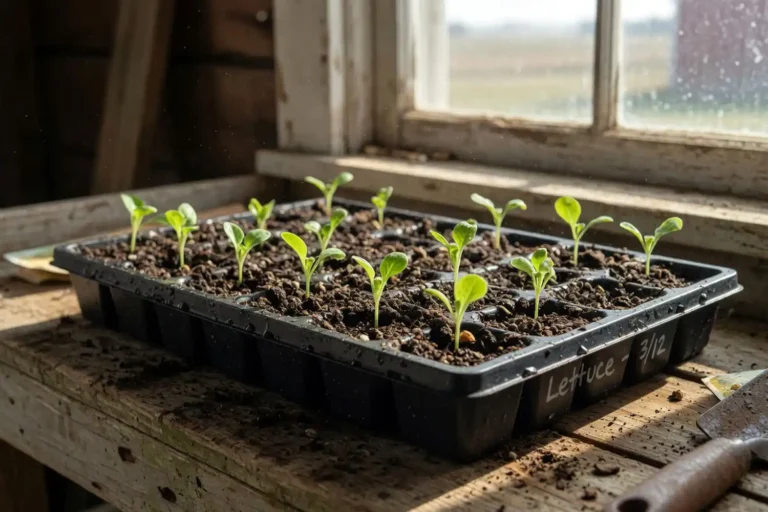
When to Start Lettuce Indoors for Spring and Fall (2026)
Lettuce rewards an early start. Knowing when to start lettuce indoors lets you set out strong transplants before summer heat turns the crop bitter. The window is tighter than most folks think.
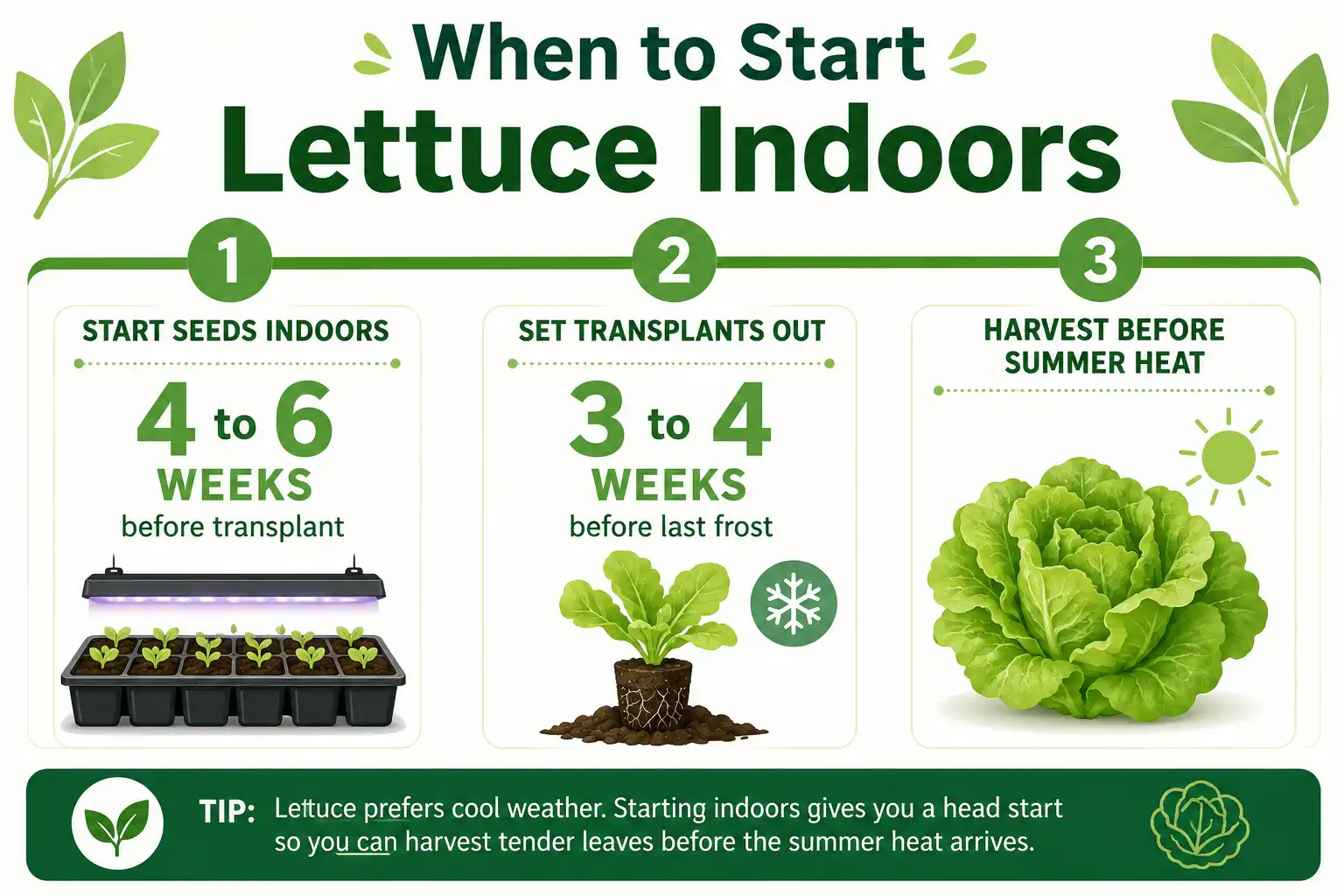
When to start lettuce indoors comes down to your transplant date: begin 4 to 6 weeks ahead. In Kansas, trays typically get sown from early February through early March, then transplanted mid-March to early April, before the last frost.
Why Start Lettuce Indoors Instead of Direct Sowing?
Starting indoors gives you an earlier harvest and helps the crop beat summer heat. Transplants go into the garden already three to five weeks old. That head start means they size up while the weather stays cool, before heat forces them to bolt.
Head and crisphead lettuce especially reward transplanting. K-State Research and Extension notes these types grow most reliably from transplants rather than direct seed. Leaf and butterhead types take to transplanting well too.
You also skip a few headaches. Tiny direct-sown seedlings compete with weeds and struggle in crusted soil. Starting inside lets you control germination temperature, which matters more with lettuce than with most crops. If you are weighing your options, our guide covers direct sowing and transplanting in a separate guide.
When to Start Lettuce Indoors in Spring
In spring, start lettuce indoors 4 to 6 weeks before your planned transplant date. In USDA hardiness zone 6a around Topeka, that sets the window from early February through early March.
The logic is simple. Lettuce takes light frost, so do not wait for the frost to pass. K-State Research and Extension recommends setting plants out in mid-March to early April in Kansas. The average last frost lands near April 20, so that window runs a few weeks ahead of it. Count back 4 to 6 weeks from that transplant window. You land in early February through early March.
Your dates will shift with your region. So find your average last frost first. Subtract a few weeks for the transplant date, then count back again to seed.
How Many Weeks Before Transplanting Should You Start Lettuce Seeds?
Four to six weeks is the sweet spot. Lettuce seedlings grow slowly at the start, so they need that stretch to build roots strong enough to move.
Adjust for your climate. Gardeners in warmer zones often start 6 to 8 weeks out, while cooler-zone growers stick closer to 4 to 6. Avoid starting too early, though. Seedlings held inside too long turn leggy and root-bound, and then they sulk after transplanting.
When to Start Fall Lettuce Transplants Indoors
For a fall crop, start lettuce indoors in June or July. Summer garden soil runs too hot for lettuce seed. Starting inside, where it stays cooler, gets you germination when the ground will not.
You set the transplants out as the season cools. K-State recommends setting out head and romaine types in late July to early August. Leaf and Bibb types go out in mid to late August. Count back 4 to 6 weeks from those dates, and you are seeding in June into July. University of Minnesota Extension likewise points to July for starting fall lettuce seed.
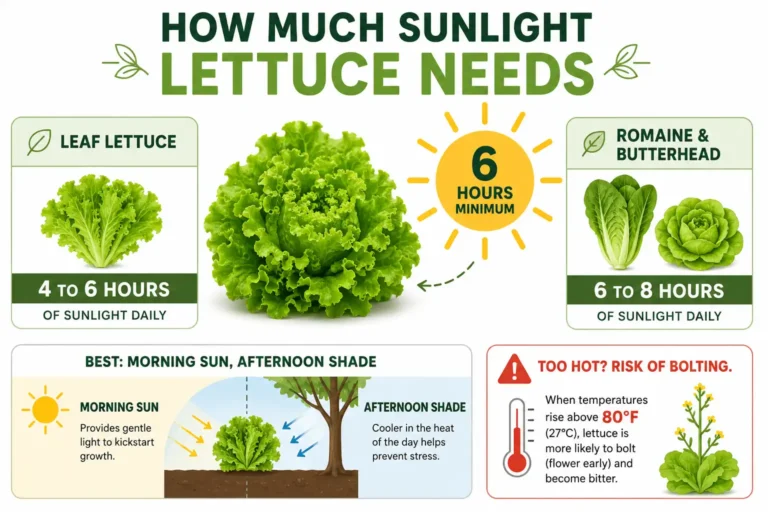
A basement or air-conditioned room works well for these summer starts. That way you sidestep thermodormancy, the heat-triggered dormancy that keeps lettuce seed from sprouting above 80°F. If you would rather grow the crop to harvest inside, that is a separate setup. Our guide covers growing lettuce indoors under a grow light elsewhere.
What Temperature Do Lettuce Seeds Need to Germinate?
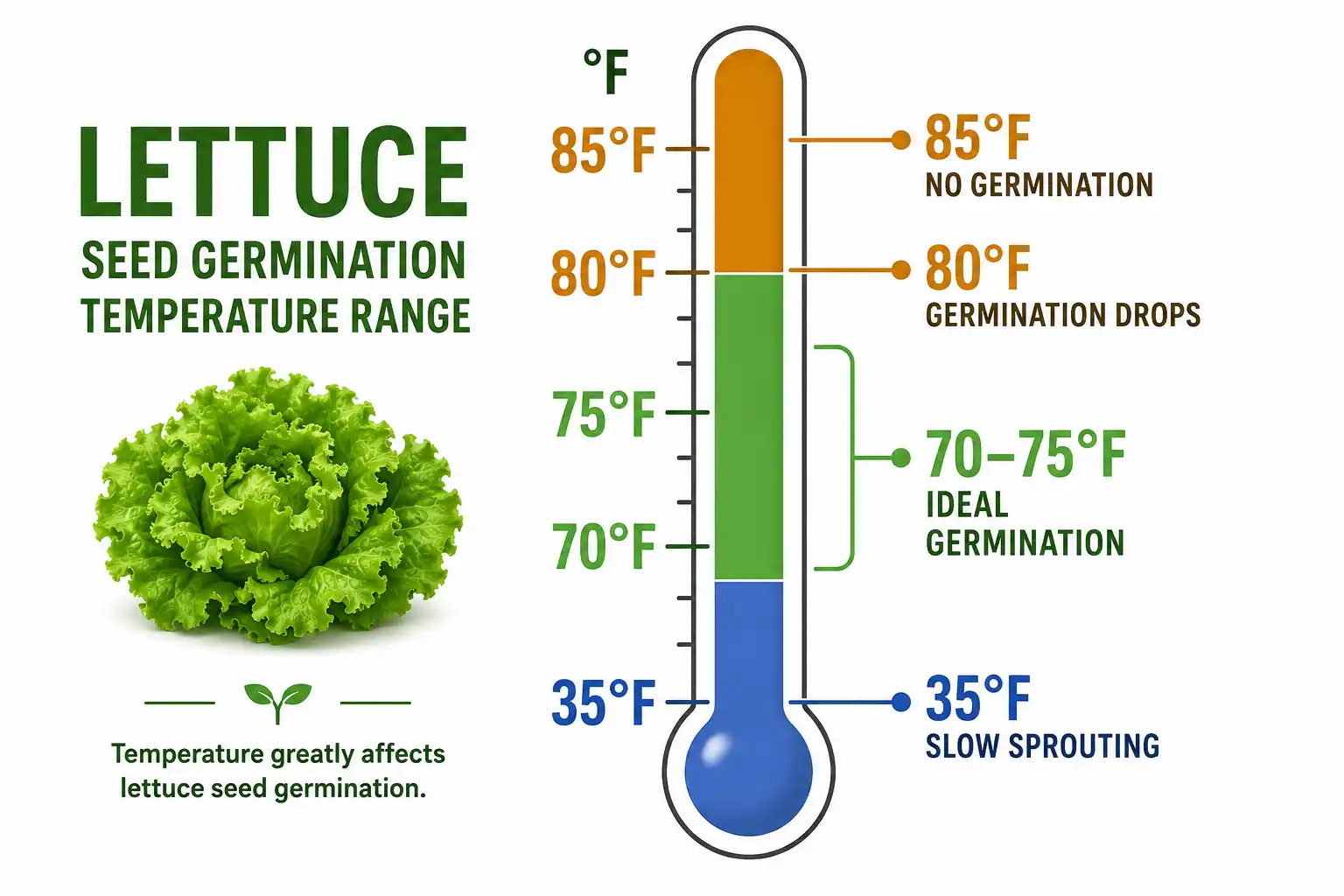
Lettuce seed germinates best at 70 to 75°F. It will still sprout in cooler soil, down to about 35°F, only slowly. Above 80°F germination drops off, and near 85°F it stops completely.
NC State Extension pins the ideal range at 70 to 75°F, with germination possible as low as 35°F. That spread is exactly why seeds get started indoors. You can hold a steady temperature instead of fighting cold or hot ground.
A seed-starting heat mat keeps trays right around 70°F for fast, even sprouting. Lettuce usually pops in 2 to 10 days at that temperature. Once the seedlings show, pull the trays off the mat. Otherwise the warmth makes them stretch and go leggy. For the full rundown on getting lettuce seeds to germinateincluding soaking tricks, check complete guide.
How to Start Lettuce Seeds Indoors
Here is the routine. Lettuce seed needs light to sprout, so barely cover it. Go over the right depth for lettuce seeds in another post.
- Fill cell trays with a moist seed-starting mix. Skip garden soil, which packs down and carries disease.
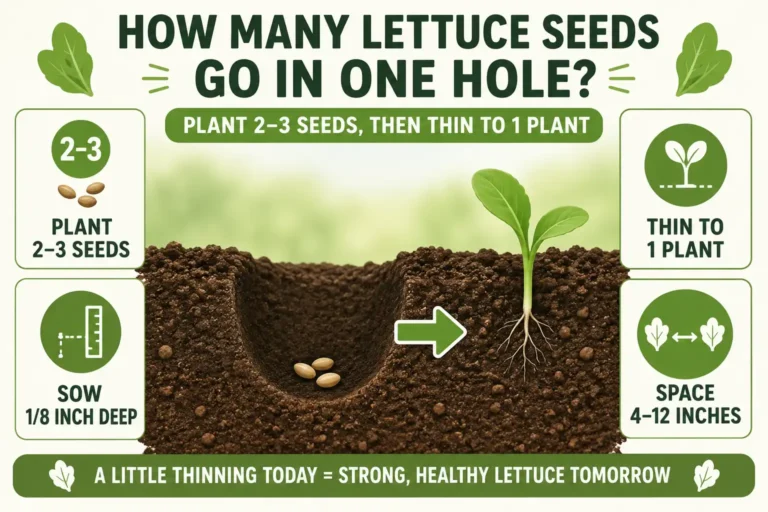
- Sow 2 to 3 seeds per cell at about a quarter inch deep.
- Set the trays on a heat mat near 70°F. A humidity dome holds moisture until sprouts appear.
- Move seedlings under grow lights the moment they emerge. Keep the lights 2 to 3 inches above the leaves for 14 to 16 hours daily. Take the trays off the heat mat now.
- Thin to one strong seedling per cell. Snip the extras with scissors rather than pulling, so the keeper’s roots stay put.
- Feed weekly with a diluted liquid fertilizer if your mix carries no nutrients.
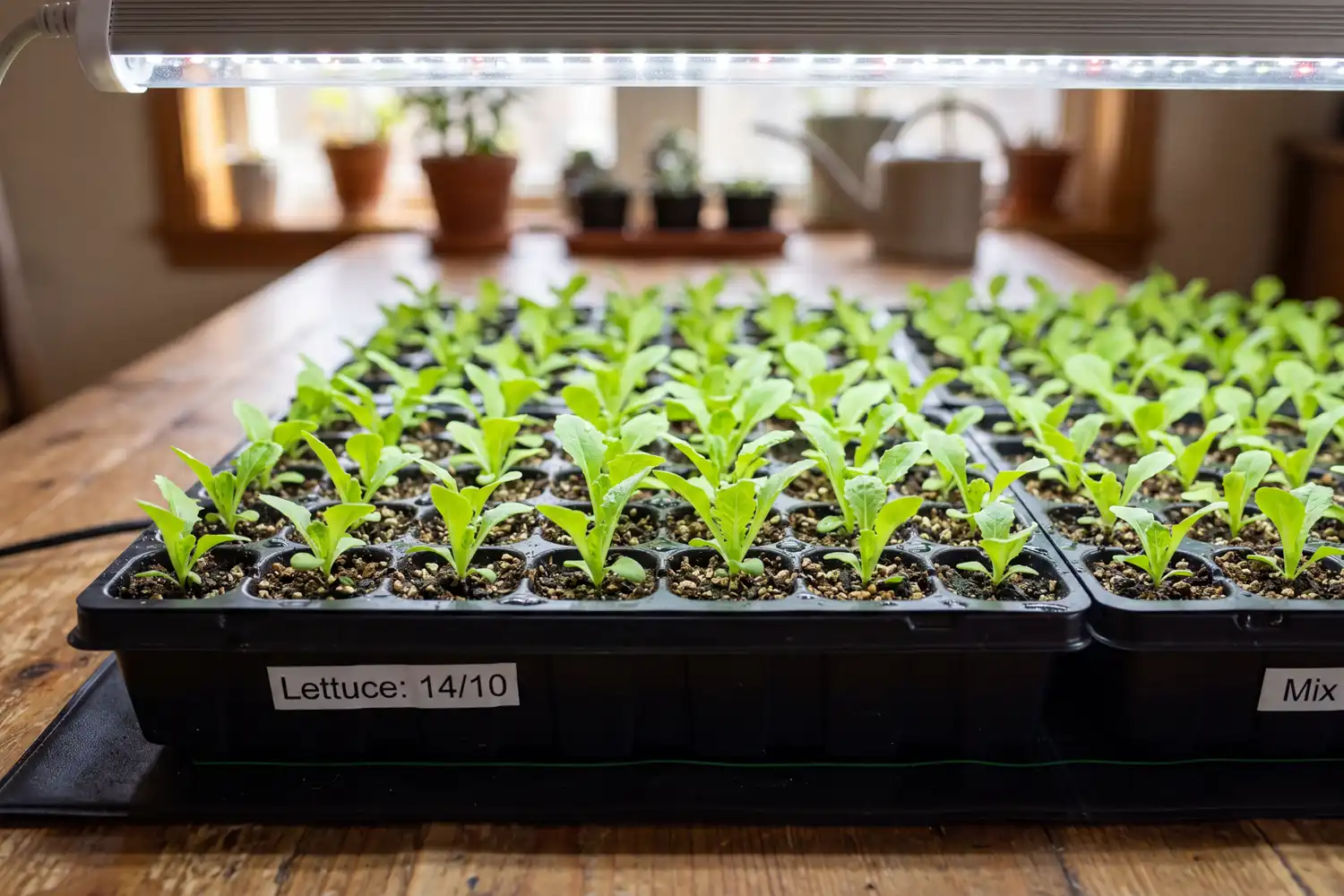
Damping off is the main risk indoors. This fungal collapse hits right at the soil line and topples seedlings overnight. Good airflow and careful watering keep it away. This guide covers preventing damping off in seedlings in a separate guide.
How Do You Harden Off Lettuce Seedlings Before Transplanting?
Harden off lettuce seedlings over 7 to 10 days before they go in the ground. Start with one hour outside in dappled shade, then add an hour or two each day until they take full days out.
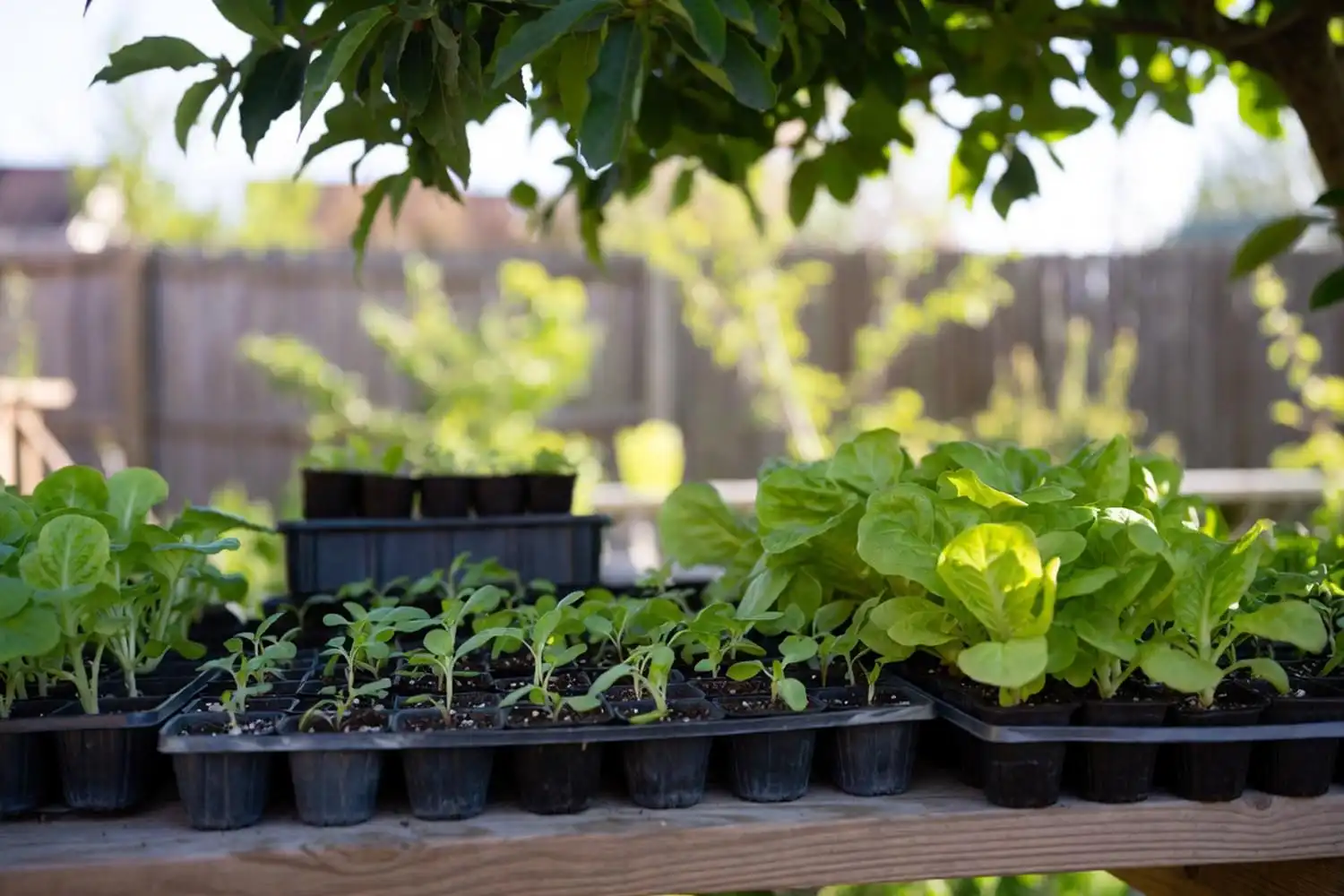
This step toughens tender indoor plants for wind, sun, and temperature swings. Skip it and you risk transplant shock or sunscald. Easing back on water during this stretch and sheltering the trays from hard wind is the recommended approach. When transplant day comes, on an overcast afternoon or in the evening, so the sun does not stress the roots.
When Can You Move Lettuce Transplants Outside?
You can move lettuce transplants outside 3 to 4 weeks before your last frost, and even earlier with cover. Lettuce tolerates light frost, so it does not wait for warm soil the way tomatoes do.
Set plants out from mid-March into early April. The average last frost lands near April 20, so mid-March is about five weeks early. That still works because lettuce shrugs off a light frost, and keep row cover handy. If a hard freeze threatens, throwing an old sheet over the bed overnight is a common protective step. A freeze into the upper 20s damages the leaves. Earlier transplanting also means the crop matures during cool weather, before heat brings on bitterness and bolting. Those cool nights even sweeten the heads, which is covered in the piece on planting lettuce for the sweetest harvest.
Mistakes to Avoid When Starting Lettuce Indoors
A few slip-ups trip up new growers every spring. Starting seeds too early tops the list. Seedlings held inside for eight or ten weeks turn leggy and root-bound, and they never fully recover.
Weak light comes next. A windowsill rarely gives enough, so plants stretch toward it and flop. Grow lights kept close fix that. Leaving trays on the heat mat after sprouting causes the same stretch, so pull them once seeds pop.
Sowing too deep also hurts, since lettuce needs light to germinate. And waiting for warm weather to transplant wastes the cool window lettuce loves. Get the plants out early instead.
What This Looks Like in the Farm
In zone 6a, lettuce trays go under lights in February. Aim to transplant by late March, a few weeks before the April frost date, so heads fill out while nights stay cool. For fall, start a second round indoors in late June and set it out in August.
Get the timing right and lettuce is one of the easiest crops you can grow. Start 4 to 6 weeks before your transplant date, hold seeds near 70°F, give strong light, and harden off before the move. Do that, and you will cut crisp heads long before summer heat shows up.