When to Plant Iceberg Lettuce for Firm, Crisp Heads
Iceberg lettuce rewards good timing more than almost any crop. Plant it right, and you get firm, crisp heads. Miss the window, and it bolts. Knowing when to plant iceberg lettuce comes down to two cool stretches: early spring and late summer.
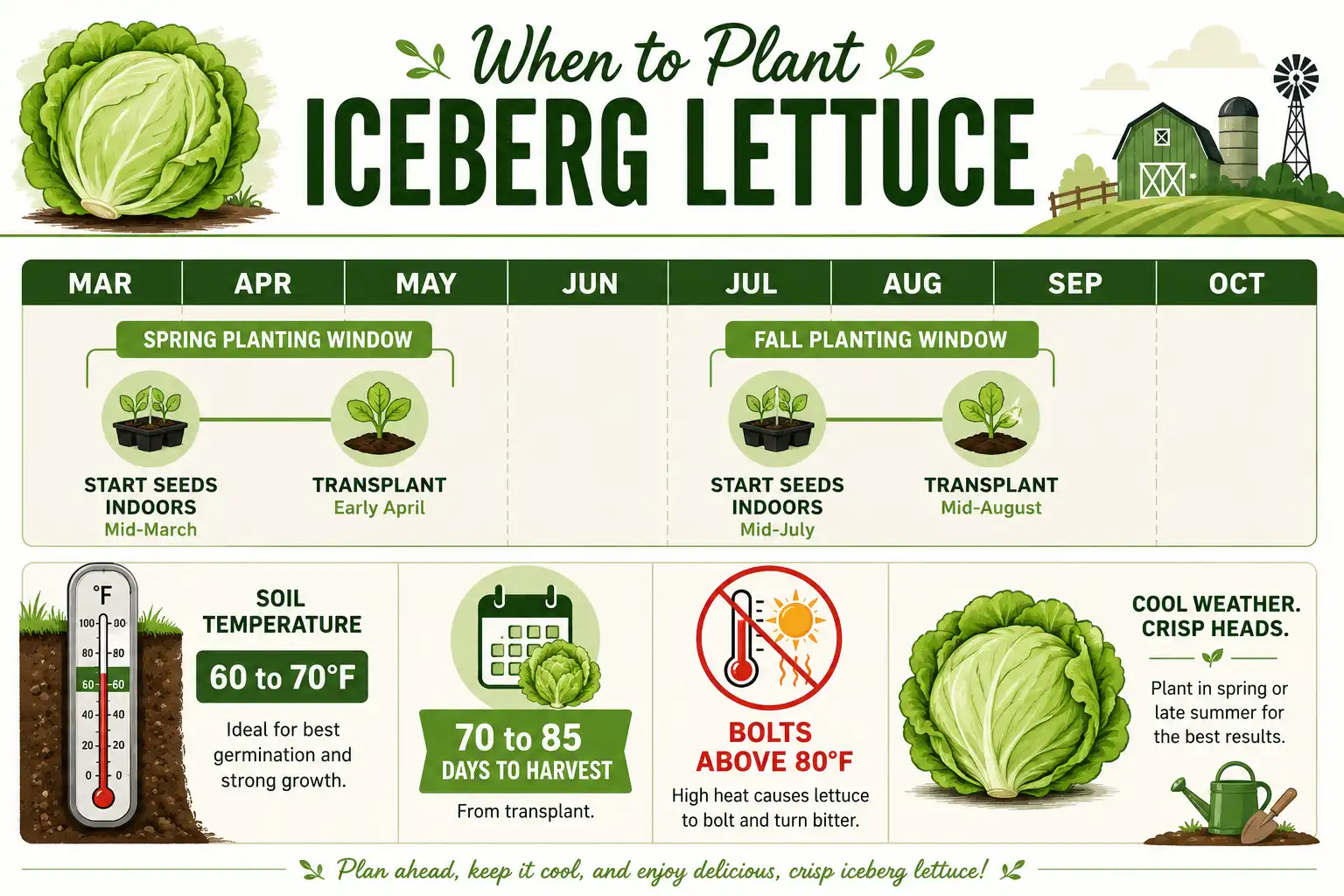
The best time to plant iceberg lettuce is early spring, 2 to 3 weeks before your last frost, and again in late summer for a fall crop. It needs soil near 60 to 70°F to form firm heads.
When Is the Best Time to Plant Iceberg Lettuce?
The best time to plant iceberg lettuce is early spring and late summer, when temperatures stay cool. Iceberg is a crisphead type, and it builds a tight head only in cool weather. In Topeka, that means setting plants out in early April for a June harvest. Plant again in mid-August for a fall crop. Both windows dodge the heat that turns this lettuce bitter.
What Soil and Air Temperatures Does Iceberg Lettuce Need?
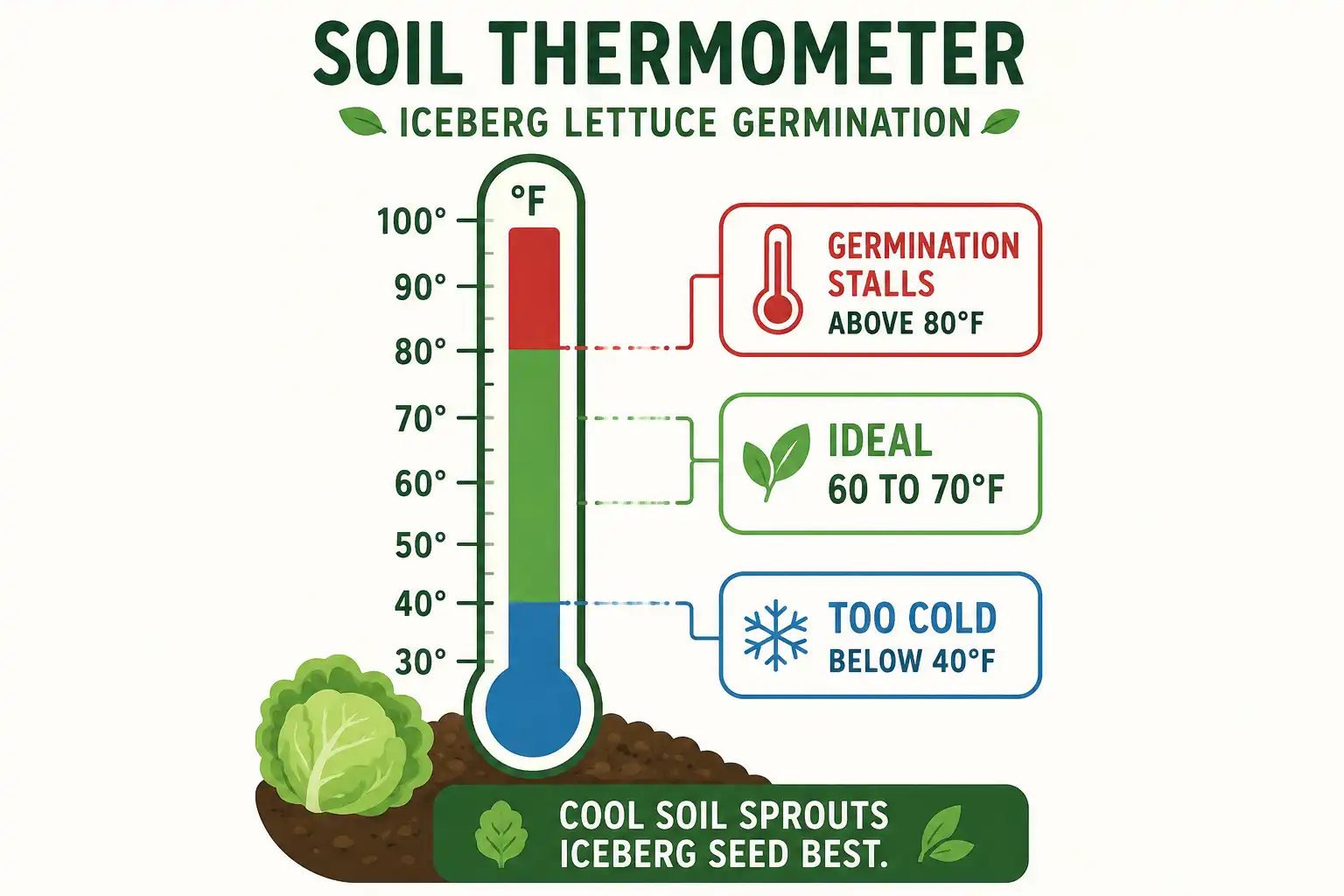
Iceberg lettuce germinates best in soil between 60 and 70°F. It grows best when air temperatures sit between 55 and 65°F. Cool nights matter most. K-State Research and Extension and other land-grant programs list lettuce as a cool-season crop for good reason. Once the soil climbs past about 80°F, the seed often refuses to sprout, a stall called thermodormancy. The seed simply waits for cooler ground.
Air temperature shapes head quality just as much. Texas A&M AgriLife Extension notes that heat above 80°F slows heading and pushes the plant toward a seed stalk. That same heat turns the leaves bitter. So cool, steady weather is what firm heads depend on.
When to Plant Iceberg Lettuce in Spring
For a spring crop, start iceberg lettuce seeds indoors about 6 weeks before your last frost. Transplant once the worst cold passes. In Topeka, the average last frost lands around April 22. Sow seeds in trays in mid-March. Set hardened-off transplants out in early-to-mid April, about two weeks before that frost. Lettuce shrugs off a light frost, so planting a bit early is safe.
Starting Iceberg Seeds Indoors
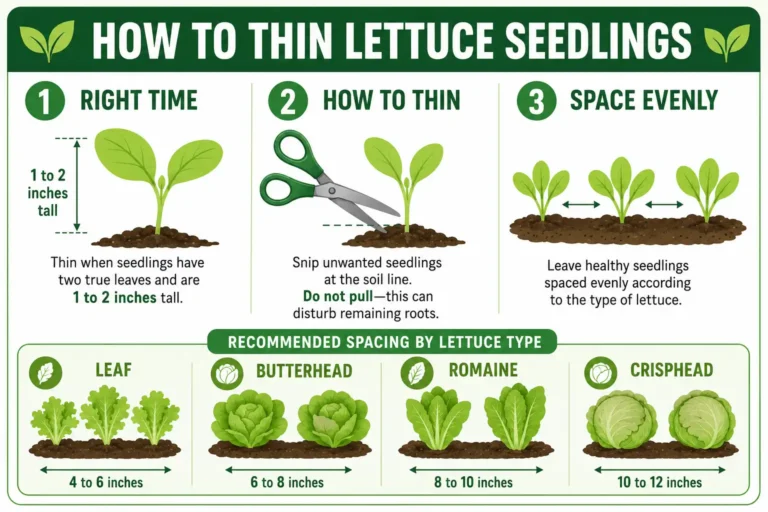
Sow seeds shallow, about 1/8 to 1/4 inch deep, because the seed needs a little light to germinate. Keep the trays near 65°F and the mix moist. Seedlings show up in 7 to 10 days. After two or three true leaves form, thin to one strong plant per cell. For the full method, our guide on starting iceberg lettuce from seed and transplants walks through every step.
Direct Sowing Outdoors
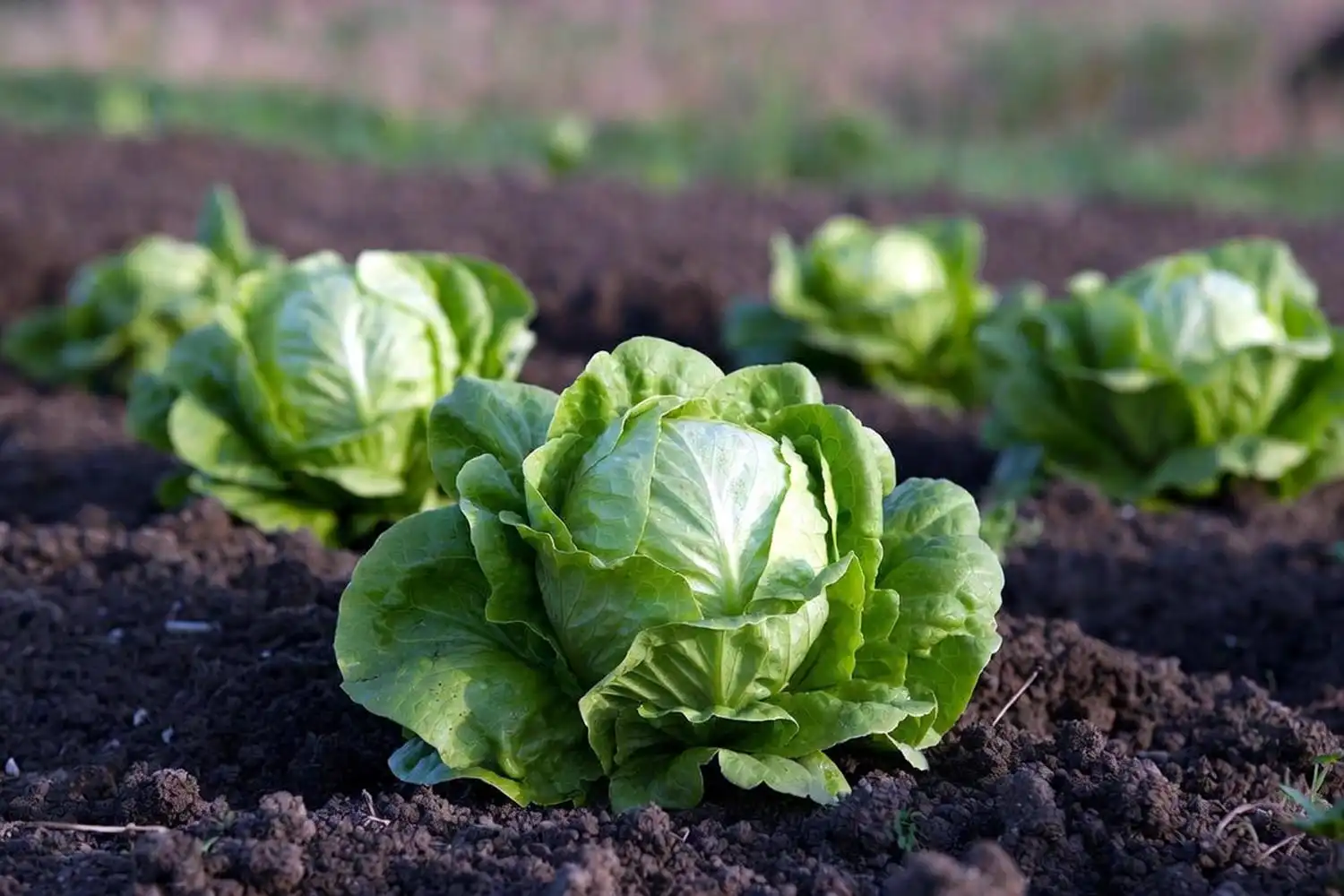
You can direct sow iceberg as soon as the soil can be worked and reaches about 40°F. That usually means late March. Pay attention to how deep you set the seed, then keep the surface damp until it sprouts. Cool spring soil germinates lettuce well, but a slow, cold spring can stretch the wait. Transplants give you a head start and a more even stand, so it helps to use trays for iceberg.
When to Plant Iceberg Lettuce for a Fall Harvest
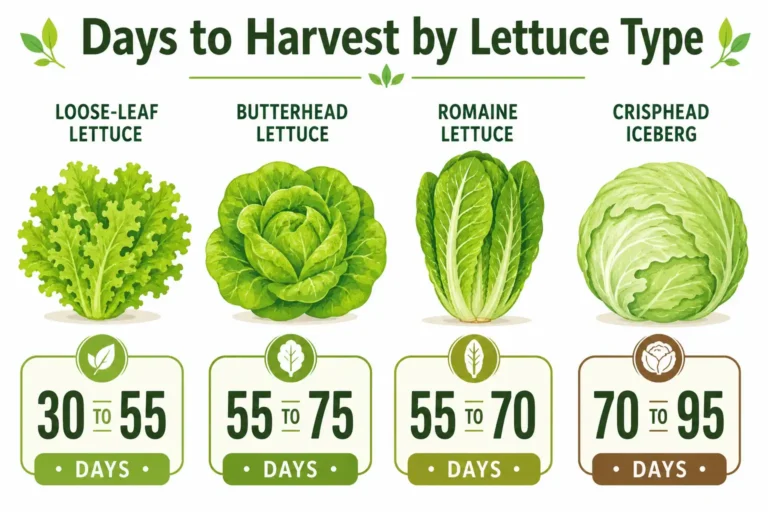
For a fall crop, start iceberg lettuce seeds indoors in mid-July. Transplant in mid-August, about 8 to 9 weeks before your first fall frost. Topeka’s first frost usually arrives around October 13. Iceberg needs 70 to 85 days to mature. So a mid-August transplant lets the heads fill out as the weather cools. Direct sowing in summer rarely works, because hot soil blocks germination. That is a good reason to start fall iceberg in trays in a cooler spot. Move the plants out once the worst heat breaks.
Faster leaf types can go straight into the ground in early September. Iceberg cannot. Its long maturity means you have to start earlier and plan backward from frost.
How Does Your Growing Zone Change the Timing?
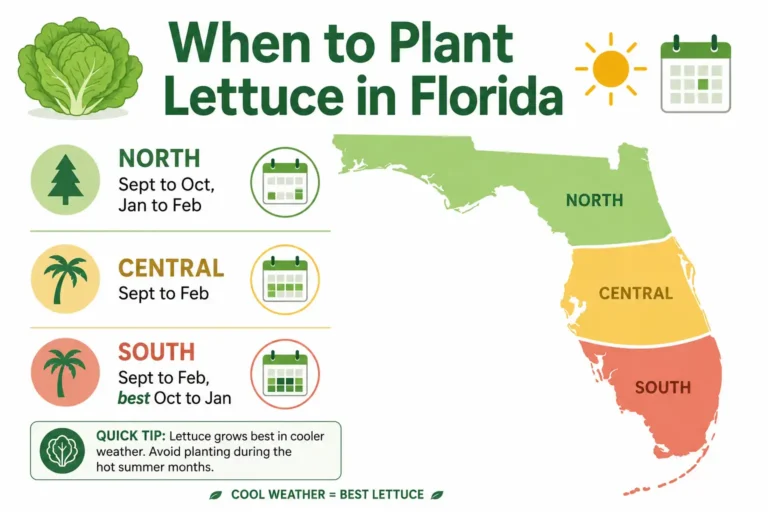
Your USDA hardiness zone and local frost dates shift these windows by a few weeks in either direction. Gardeners in cooler northern zones plant a little later in spring and earlier for fall. Warmer southern zones flip the calendar. They grow iceberg through fall, winter, and very early spring, skipping the hot months.
The reliable way to set your own dates is simple. First, find your average last spring frost and first fall frost from NOAA or your local extension office. Then count back about 6 weeks from the last frost for your spring indoor sowing. For fall, count back about 12 to 13 weeks from the first frost. You need maturity time plus a cushion.
Why Does Timing Matter So Much for Iceberg Lettuce?
Timing matters more for iceberg than for any other lettuce because crisphead is the slowest and least heat-tolerant type. Leaf lettuce shrugs off a warm week. Iceberg does not. It needs a long, cool run to build that dense head. Plant it into heat, and three things go wrong fast. The seed will not germinate, the head stays loose, and the plant bolts. Good timing prevents all three. Want sweeter heads across every type? Our notes on timing lettuce for the sweetest harvest cover the cool-weather sugar boost.
What Happens If You Plant Iceberg Lettuce Too Late?
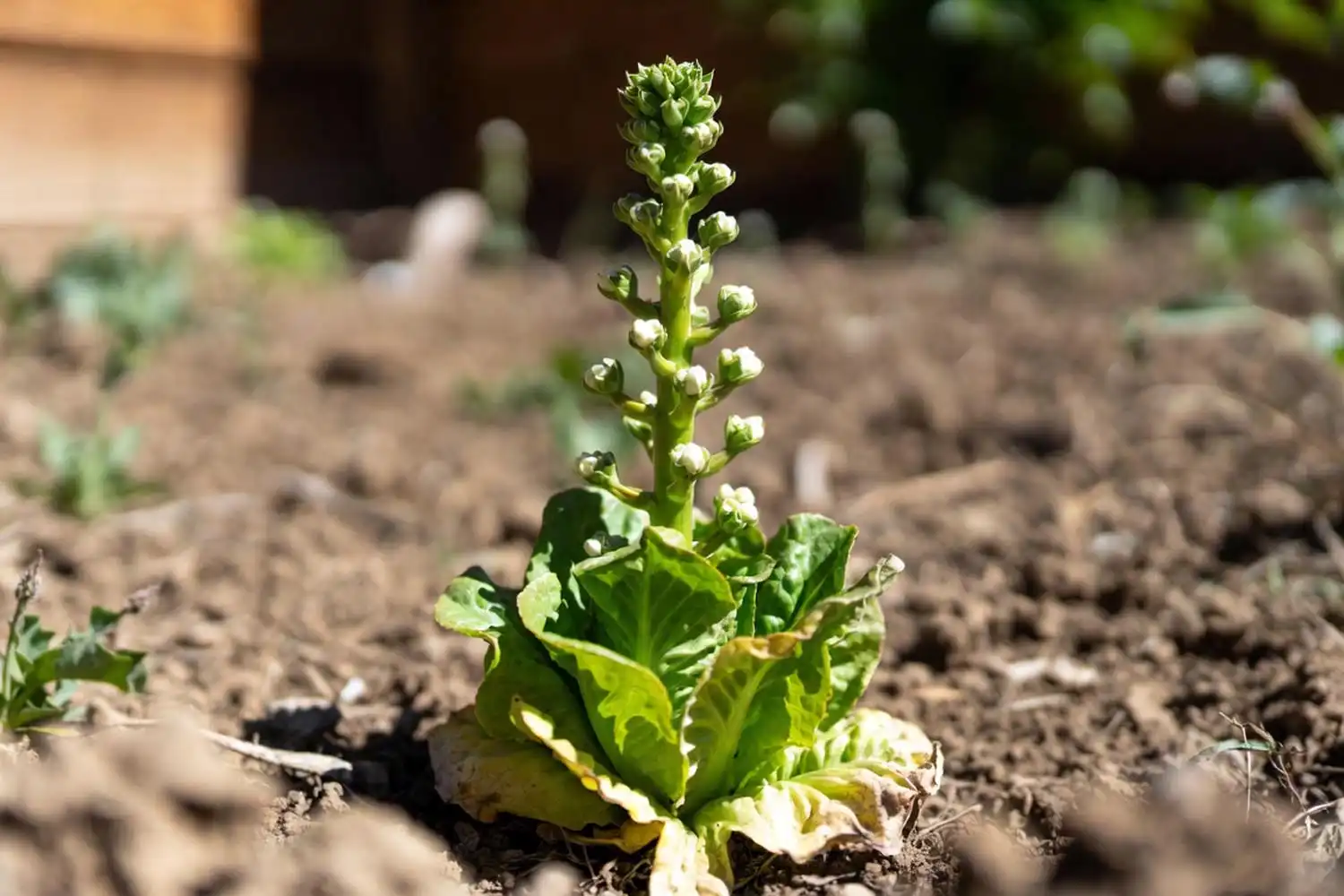
Plant iceberg lettuce too late and it bolts. It turns bitter and sends up a tall seed stalk instead of a firm head. Heat above 80°F triggers this fast. The leaves toughen, the flavor sharpens, and the head never tightens. Once a plant bolts, there is no walking it back. So if a spring planting slips into June heat, pull those plants and wait for the fall window. For summer plantings in any region, choosing slow-bolting varieties and keeping summer lettuce from bolting buys you a little room.
Heat-Tolerant Iceberg Varieties That Widen the Window
A few crisphead varieties hold out longer in warm weather. Great Lakes, Ithaca, and Summertime resist bolting better than older types. They still need cool weather to head up well, but they give you a wider planting window. Crisphead also needs room to form a tight head. So mind how far apart you space plants in rows and beds, and give each one airflow.
How to Time Iceberg Planting on Kansas Fields
Iceberg comes down to beating the heat on both ends. Start spring seeds indoors in mid-March, transplant in early April, and harvest before late June turns hot. Start a fall batch indoors in mid-July, set plants in mid-August, and cut firm heads in early October. Find your frost dates, count backward, and keep this crop in the cool. Do that, and iceberg pays you back with the crisp, heavy heads it is known for.