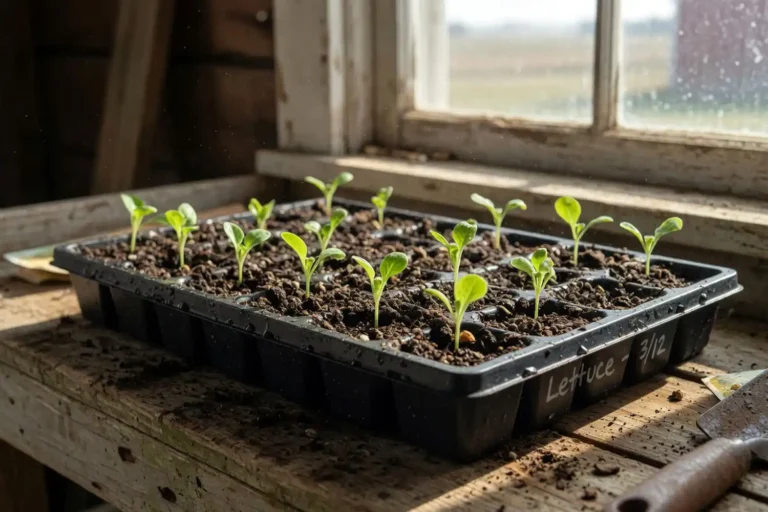
What Do Lettuce Seedlings Look Like? A Grower’s Field Guide
You planted lettuce, a few green sprouts came up, and now you want to be sure they are the crop and not weeds. Knowing what lettuce seedlings look like keeps you from pulling the wrong plants.
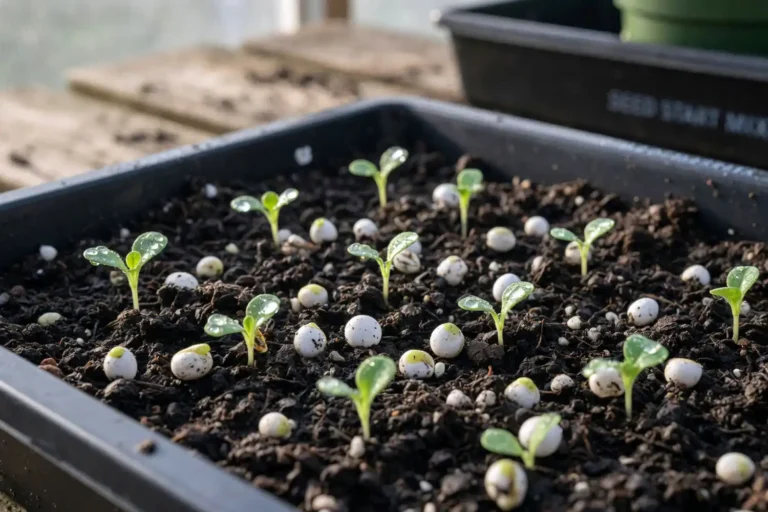
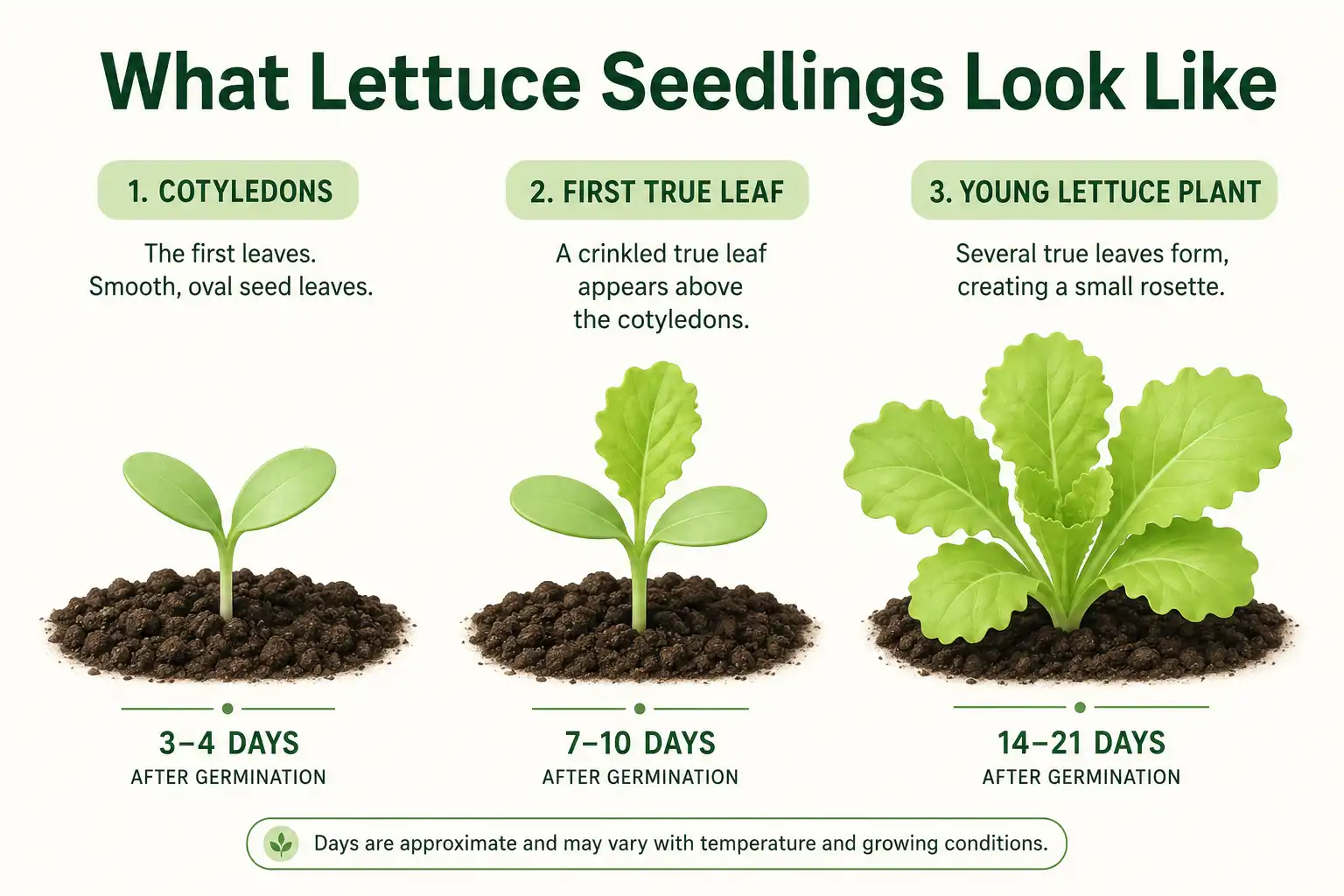
Lettuce seedlings look like two tiny seed leaves at first. These first leaves, called cotyledons, are smooth, oval, and pale green. A week later, true leaves appear above them, slightly crinkled and shaped like the variety you planted.
What Do Lettuce Seedlings Look Like When They First Come Up?
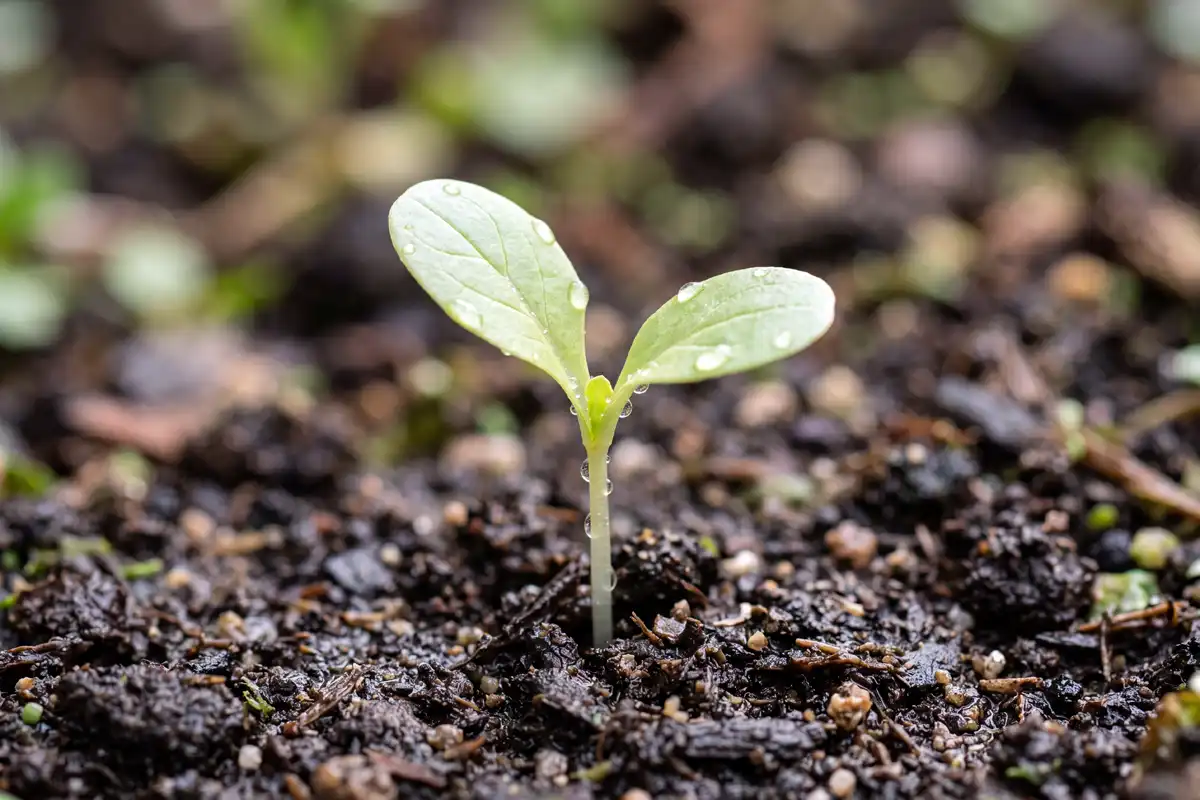
When lettuce first comes up, you see two small leaves shaped like tiny paddles. These are the seed leaves, or cotyledons. They sit low to the ground on a thin, pale stem. Each one is smooth-edged, oval to spoon-shaped, and light green.
At this point the seedling is tiny. The cotyledons measure about a quarter inch across. They open flat to catch light within a day of breaking the surface.
Timing depends on soil temperature. Lettuce germinates best between 55 and 65°F and usually emerges in 7 to 10 days, according to Utah State University Extension. Warm soil above 80°F slows things down or stops germination cold. If you want a closer look at the timeline, our guide covers how long lettuce seeds take to sprout in a separate guide.
Cool, damp conditions bring the most even stands. If a stand comes up patchy, the tips on germinating lettuce seeds evenly can help. Keep the trays right around 65°F and get steady emergence almost every time.
Cotyledons vs. True Leaves: How to Read the Stages
Every lettuce seedling grows two kinds of leaves, and they look different. Telling them apart tells you how old the plant is and what it needs next.
Cotyledons come first. They are part of the seed itself and feed the seedling on stored energy. Lettuce is a dicot, so it always pushes up two of them. Across romaine, butterhead, leaf, and crisphead types, these seed leaves look nearly identical. That is why you cannot ID the variety yet at this stage. For reference, here is what a lettuce seed looks like before it ever sprouts.
True leaves come second. They grow from the center, just above the cotyledons. Unlike the seed leaves, true leaves run the plant on photosynthesis. They also carry the shape and color of the variety. Once they show, the cotyledons slowly yellow and drop off. That is normal, not a problem.
Also know: Difference Between Cabbage and Lettuce
What Do Lettuce Seedling True Leaves Look Like?
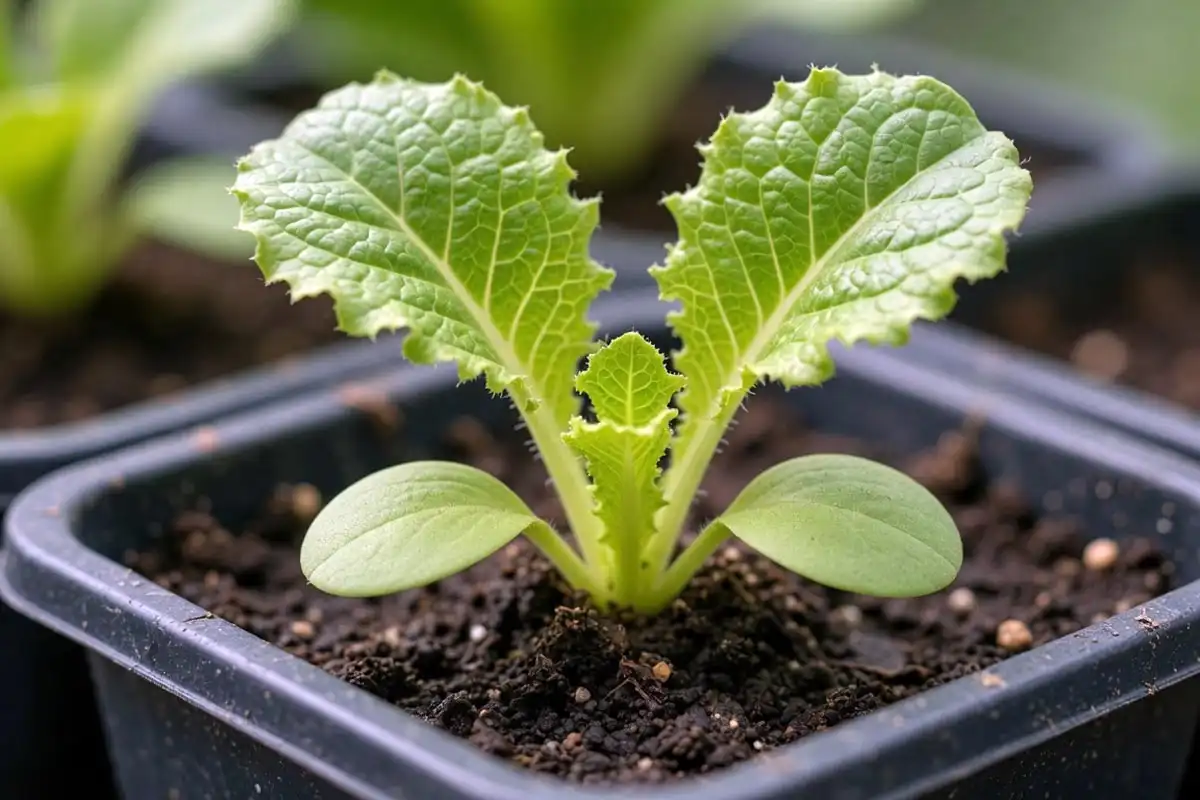
Lettuce true leaves look like miniature versions of the grown plant’s leaves. They appear roughly 3 to 5 days after the cotyledons, growing from the middle of the seedling.
You will notice a clear change in texture. The first true leaf has a slightly puckered or crinkled surface. The edges may be smooth, wavy, or lightly scalloped, depending on type. The leaf is rounder or more oblong than the narrow cotyledons below it.
Color is the next clue. Green varieties stay light to medium green. Red and bronze types, like red leaf or oak leaf lettuce, start to flush color in these true leaves. The red rarely shows in the cotyledons, so an all-green seedling can still grow into a red head.
Here is the early timeline on most spring sowings, give or take a few days for temperature. Day 0 is sowing. Cotyledons break the surface around day 7 to 10. The first true leaf opens near day 12 to 14. By day 21, the seedling usually carries three to four true leaves and a small rosette. That rosette is the base of the head or leaf cluster you will harvest later. Cool weather stretches this out, and warm soil speeds it up.
Do Different Lettuce Types Look Different as Seedlings?
Not at the cotyledon stage. Every lettuce type, from iceberg to romaine, starts with the same smooth oval seed leaves. The differences show up once the true leaves arrive.
Romaine seedlings send up slightly upright, paddle-shaped true leaves early. Leaf types, like black-seeded Simpson, spread more openly and look ruffled. Butterhead seedlings stay soft and rounded. Crisphead, the iceberg group, looks broad and a touch stiffer.
Color sorts the rest. Green varieties read light green throughout. Red and speckled types deepen as they grow. So if you planted a mix, expect look-alike sprouts for the first week and real differences by week two or three.
How Do I Tell Lettuce Seedlings From Weeds?
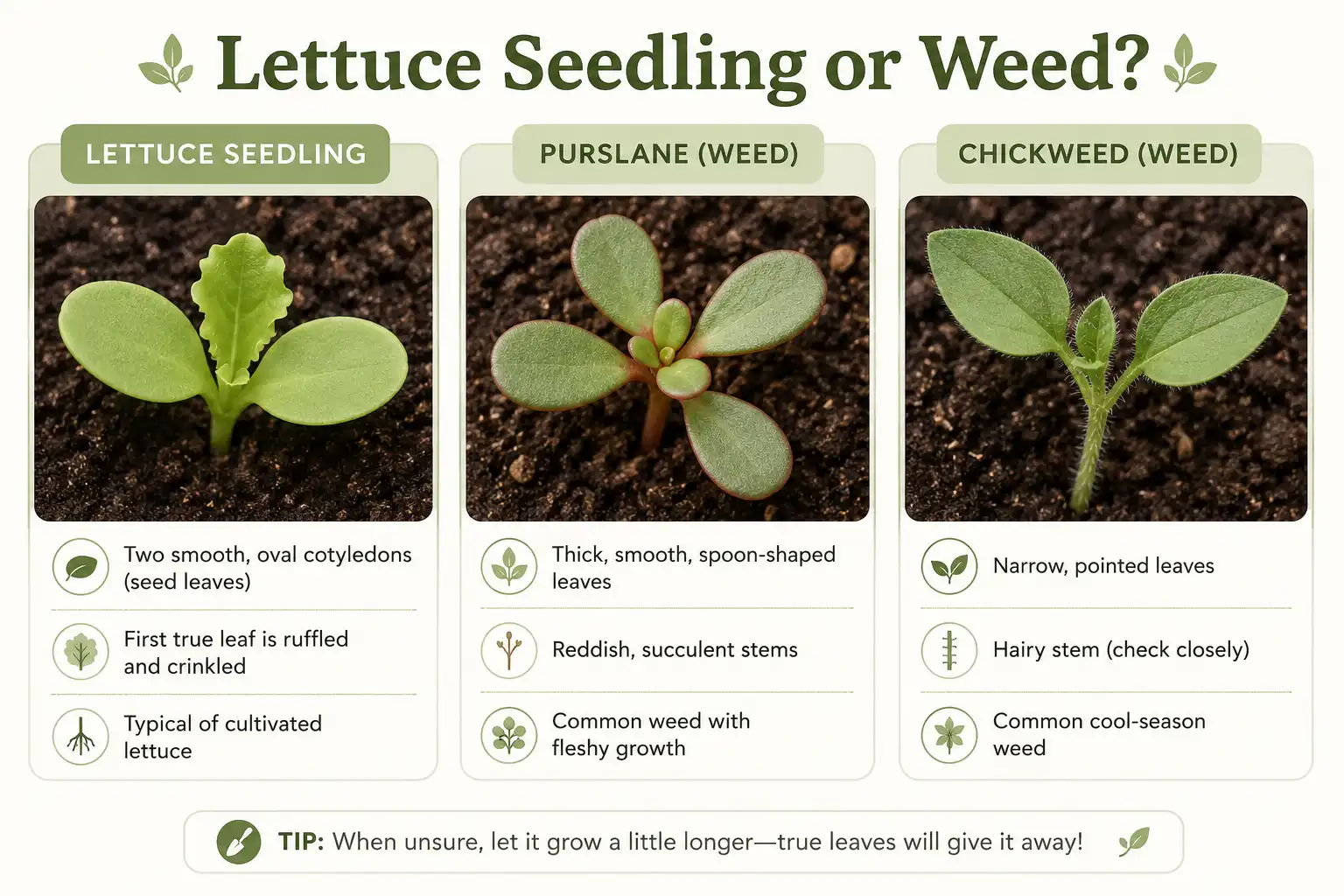
Look at leaf shape and spacing. Lettuce cotyledons are smooth, oval, and matched as a clean pair. Most weed seedlings have a different shape, hairier leaves, or leaves of uneven size.
Two common look-alikes trip people up. Purslane has thicker, fatter leaves and a reddish stem. Chickweed has pointed leaves and a fine line of hairs along the stem. Neither matches the smooth, paired ovals of lettuce.
Spacing helps too. Lettuce comes up in the rows or cells where you sowed it. Random sprouts between rows are usually weeds. When unsure, wait for the first true leaf. The variety shape settles the question fast.
One more clue, though it is faint this early. Lettuce leaves carry a mild milky sap called latex, a trait of Lactuca sativa. You will notice it more as plants size up, so leaf shape stays your best early test.
What Does a Healthy Lettuce Seedling Look Like?
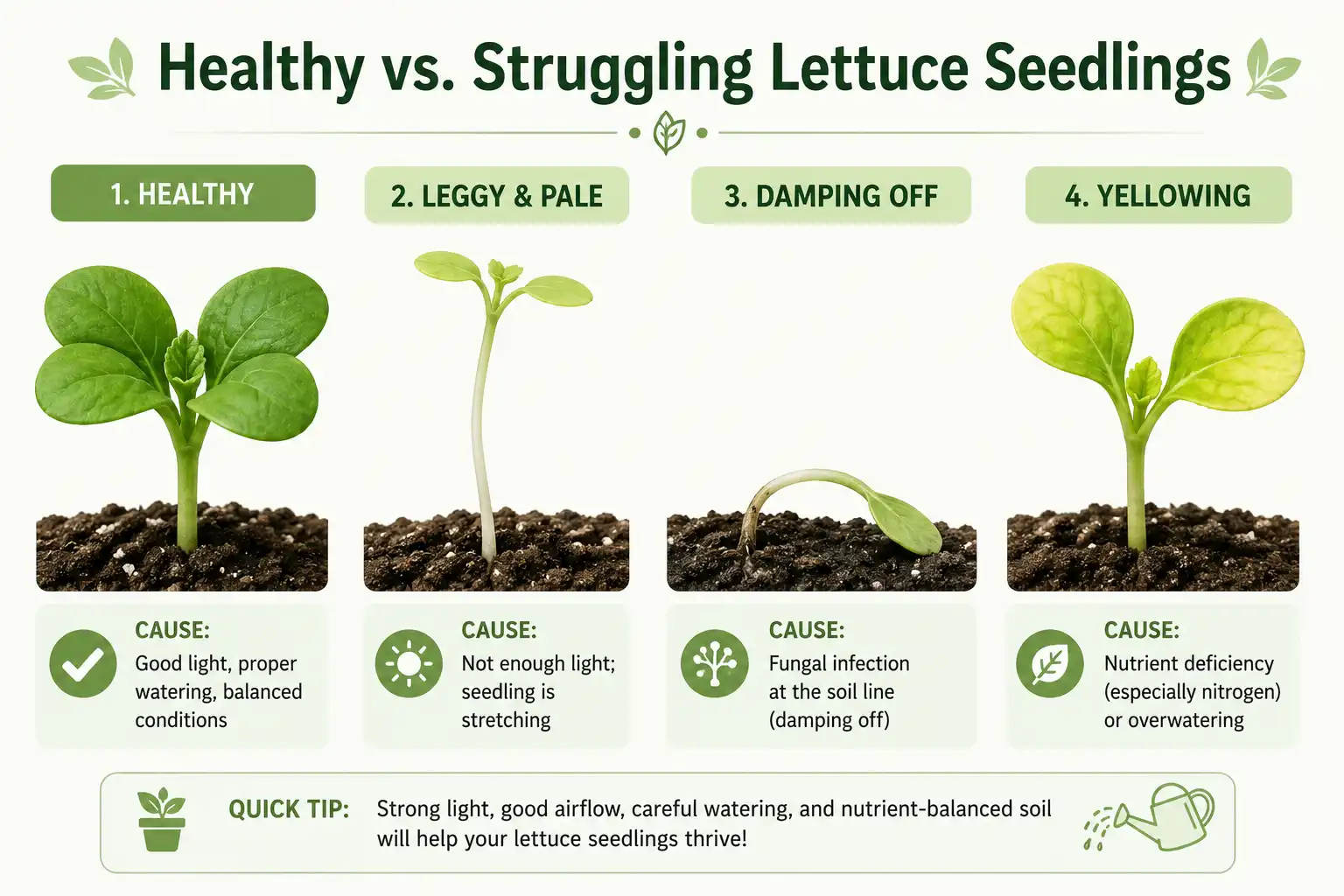
A healthy lettuce seedling looks short, stocky, and deep green, with leaves held up and open. The stem is firm, not stretched. Roots reach down white and branching. Problems usually show as a change from that picture.
Leggy seedlings are the most common issue. The stem stretches long and pale, and the plant leans or flops. That means too little light. Move trays to a brighter window or drop your grow light closer.
Watch the soil line for collapse. If a seedling pinches and falls over right at the surface, that is often damping off, a fungal rot of young plants. Our notes on covers preventiondamping off in seedlings, but the short version is cleaner trays, less crowding, and easier watering.
Color tells you more. Yellow leaves point to overwatering, cold soil, or hungry plants. A purple cast often means cold nights or low phosphorus. Crisp brown edges suggest dry air or salt buildup in the mix.
When Are Lettuce Seedlings Ready to Thin or Transplant?
Thin lettuce seedlings once they show 3 to 4 true leaves. That is when crowding starts to slow them down. Transplant a little later, at 4 to 6 true leaves and about 4 inches tall.
For thinning, snip or pull the weakest seedlings and leave the strongest. Final spacing runs 8 to 12 inches between plants for heads, with 12 to 18 inches between rows, per Utah State University Extension. our guide covers the cut-and-keep method in our guide to thinning lettuce seedlings.
For transplanting, harden off the plants first. Set them outside for a few hours a day over 3 to 5 days so they toughen up. Lettuce moves well, and young plants shrug off light frost down to about 32°F. full steps live in transplanting lettuce seedlings.
One timing note for spring. Cold snaps below 50°F during the 2- to 3-leaf stage can trigger early bolting later. Keep tender seedlings a touch warmer in that first three weeks.
What to Watch For in the Trays
For me it comes down to two leaf types. Smooth oval pairs are the seed leaves. Crinkled, variety-shaped leaves above them are the true leaves and the real growth engine. Once three or four true leaves appear, thinning should follow, then transplanting after hardening off. Get those checkpoints right, and your lettuce starts strong every season.