Seedling Care Damping Off: 9 Proven Fixes for Strong Starts
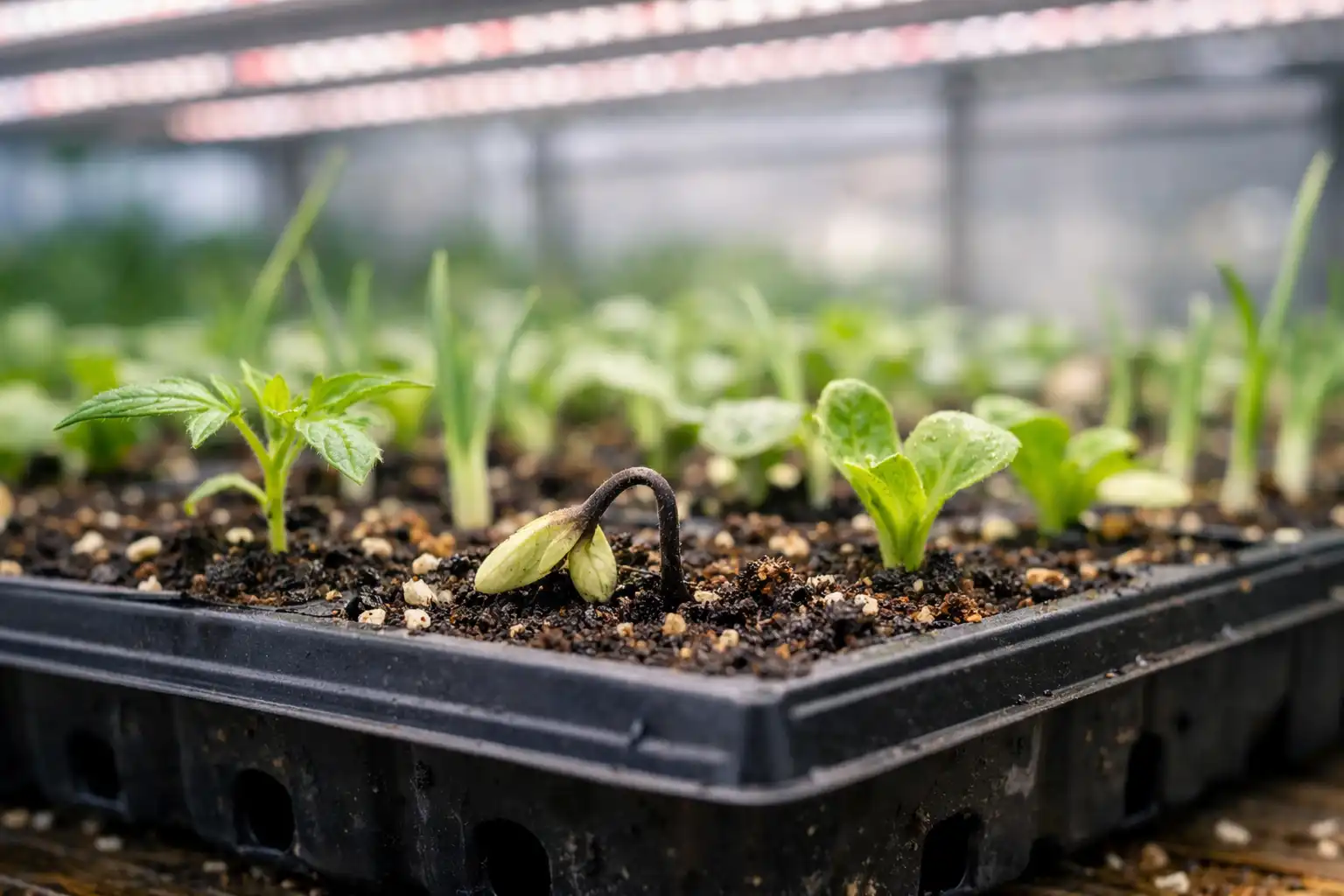
Seedling care damping off prevention starts with controlling moisture, airflow, and sanitation from the day you sow. Damping-off is a seedling disease that rots seeds before emergence or pinches stems at the soil line after sprouting. The loss happens fast because the root zone stays warm, wet, and low-oxygen. A clean setup, a light watering routine, and steady bottom heat produce sturdy stems and healthy roots. This guide walks you through symptoms, causes, prevention, and what to do when you see the first collapse.
What is damping-off in seedlings?
Damping-off is a seedling disease that kills seeds and young plants when soilborne fungi and water molds infect soft tissue. The pathogens enter roots, stems, or germinating seeds and block water movement. Seedlings fall over at the soil line, or seeds fail before they surface.
Crop farming water management is about timing and rate, so rainfall and irrigation soak in instead of running off and taking soil with it.
If you keep losing seedlings indoors, compare direct sow vs transplant to cut down the time plants spend in wet trays and lower damping-off risk.
What causes damping-off?
Damping-off starts when pathogens meet a favorable environment.
Common damping-off pathogens include Pythium, Rhizoctonia, Fusarium, and Phytophthora. These organisms persist in old potting mix, dirty trays, greenhouse dust, and splash water.
Common conditions that increase risk:
- Saturated media that stays wet for hours
- Cool soil with warm air, which slows roots
- High humidity with still air at tray level
- Heavy seeding that shades the soil surface
- Low light that produces thin stems
- Reused trays with residue in corners
Crowded trays trap moisture at the soil line, so following this guide on plant spacing for crops helps keep better airflow between seedlings and reduce damping-off pressure.
What are the signs of damping-off?
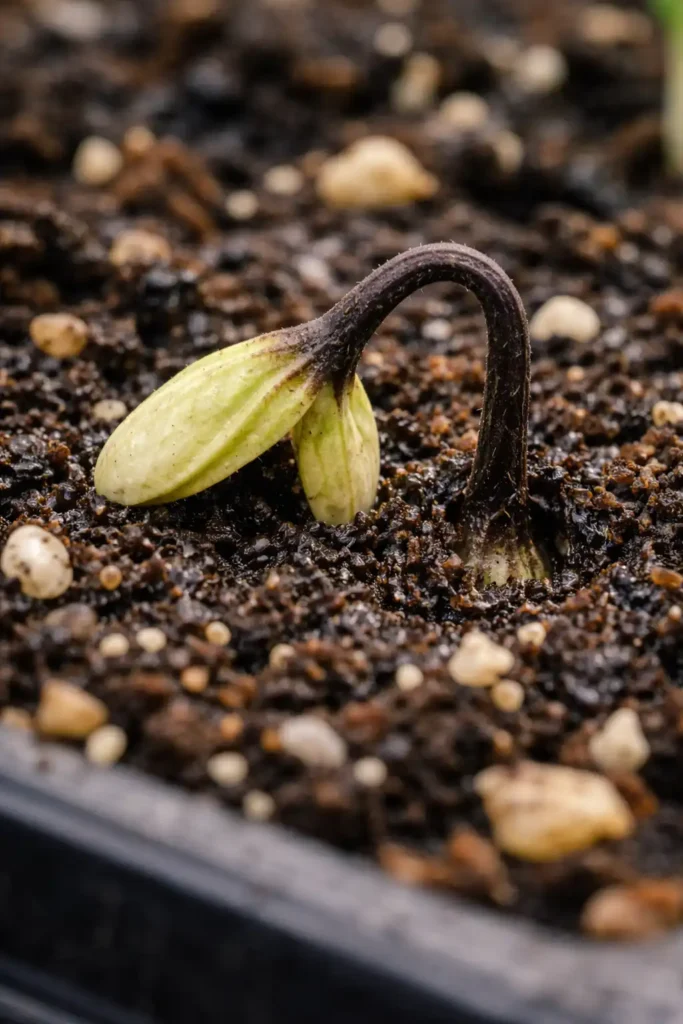
Damping-off shows up in two main windows.
Pre-emergence signs: seeds swell, soften, and disappear, or sprouts stall under the surface and turn brown.
Post-emergence signs: seedlings look healthy at breakfast and lie flat by supper. The stem at the soil line turns watery, narrow, and dark. Cotyledons wilt because the stem can’t move water.
Which seedlings get damping-off most often?
Any species can damp-off, but small-seeded crops and slow starters suffer more because they sit longer in vulnerable stages. Lettuce, onions, and many herbs often show losses in cool, wet trays. Dense sowing increases losses because the soil surface stays shaded and damp.
For crop-specific notes, the crop pages help, like lettuce growing guidance or onion growing guidance.
What tray and media setup prevents damping-off?
A damping-off resistant setup keeps roots warm and the surface dry.
Use a sterile, fine-textured seed-starting mix that drains fast. Avoid garden soil in trays because it compacts and carries pathogens. Pick trays with open drain holes and set them on a rack so water can leave the bottom.
Good equipment choices:
- Clean cell trays or soil blocks
- Solid bottom tray for bottom watering
- Clear humidity dome for the first emergence window only
- Small fan for gentle, constant air movement
- Thermometer to verify media temperature
How do you sanitize trays and tools safely?
Sanitation stops pathogens from moving from last season’s trays into fresh media.
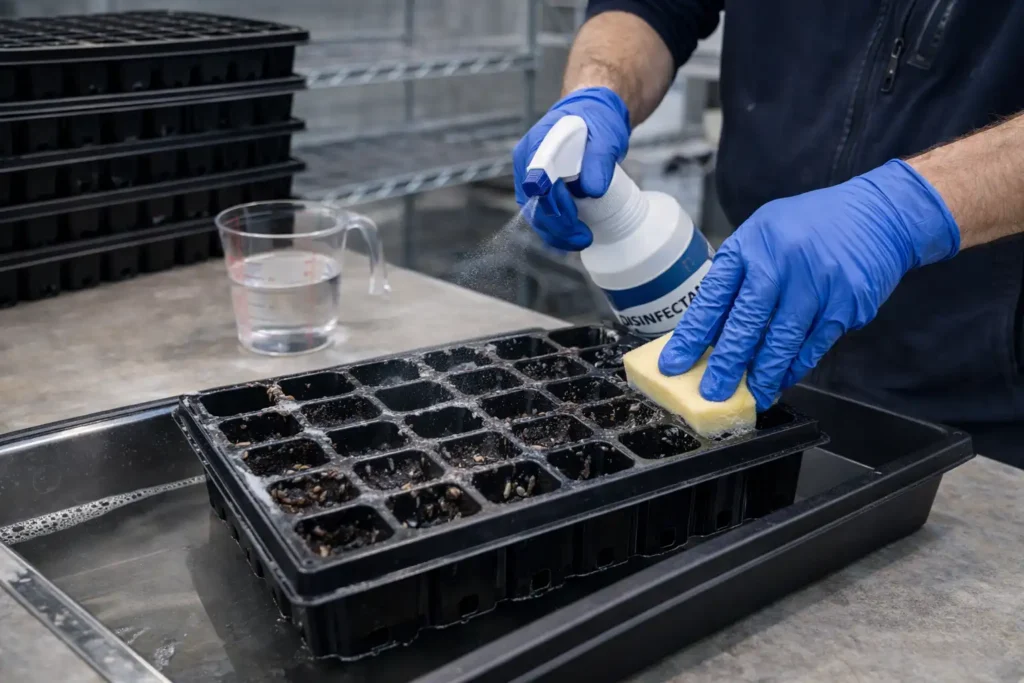
Wash trays with hot water and detergent to remove films. Then disinfect the clean surface with a labeled disinfectant and follow contact time on the label. Rinse and dry. Wear gloves and eye protection during mixing and spraying.
If you need a simple PPE checklist for shop and greenhouse work, use this safety and PPE section.
How wet should seed-starting mix stay?
Seed-starting mix stays evenly damp, not saturated.
Aim for a mix that clumps when squeezed and breaks apart with a light tap. Saturated media shines and smears. Over-wet media removes oxygen from the root zone, and low oxygen slows roots and favors damping-off pathogens.
What watering routine reduces damping-off?
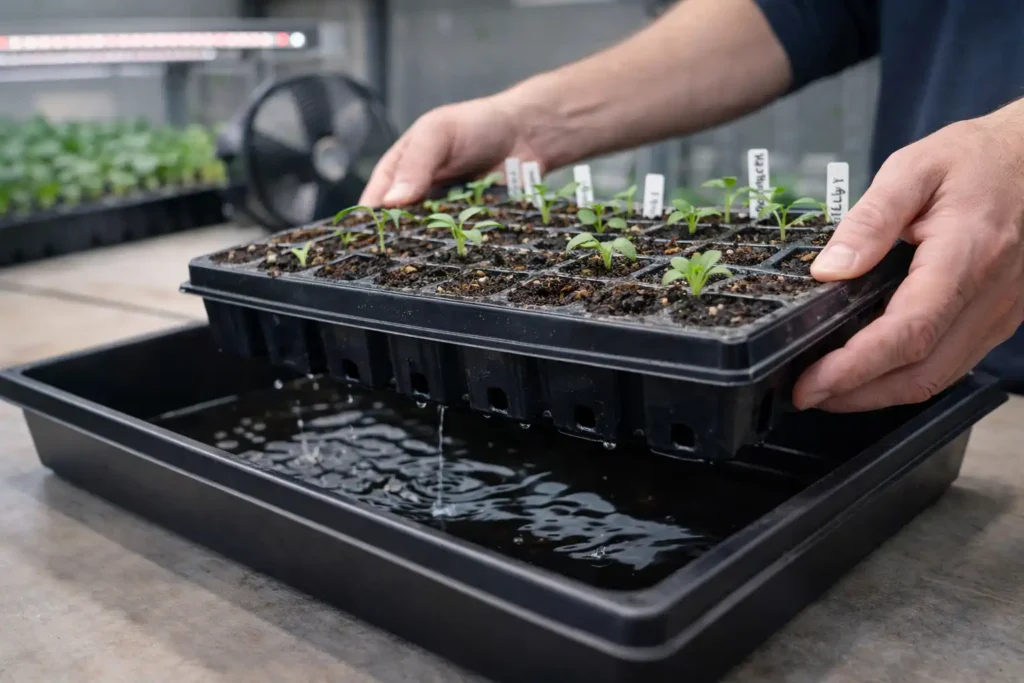
Bottom watering reduces splashing and keeps stems drier.
Use this order when trays first sprout:
- Water from the bottom and let the tray wick for 10 to 20 minutes.
- Lift the tray and drain any standing water.
- Let the surface lighten in color before the next watering.
- Water early in the day so the surface dries before night.
If you want a deeper watering reference for crops and systems, see irrigation and water management basics.
What temperature prevents damping-off during germination?
Temperature control keeps roots active and tissue firm.
Warm soil speeds germination and reduces the time seedlings sit vulnerable. Use bottom heat for germination, then reduce the temperature after emergence. Cooler post-emergence temps slow stretch and thicken stems, which lowers collapse risk.
Practical target: match the seed packet germination range, then drop 5 to 10°F after emergence if the crop tolerates it.
How much light keeps seedlings from getting weak?
Strong light builds thick stems and fast roots.
Place lights close enough to prevent stretch and keep them on long enough for steady growth. Weak light produces tall, thin seedlings that pinch easily at the soil line. Sunlight in a bright window often lacks duration and direction, especially in winter.
How do you improve airflow without drying seedlings out?
Airflow protects stems by drying the surface and reducing humidity pockets.
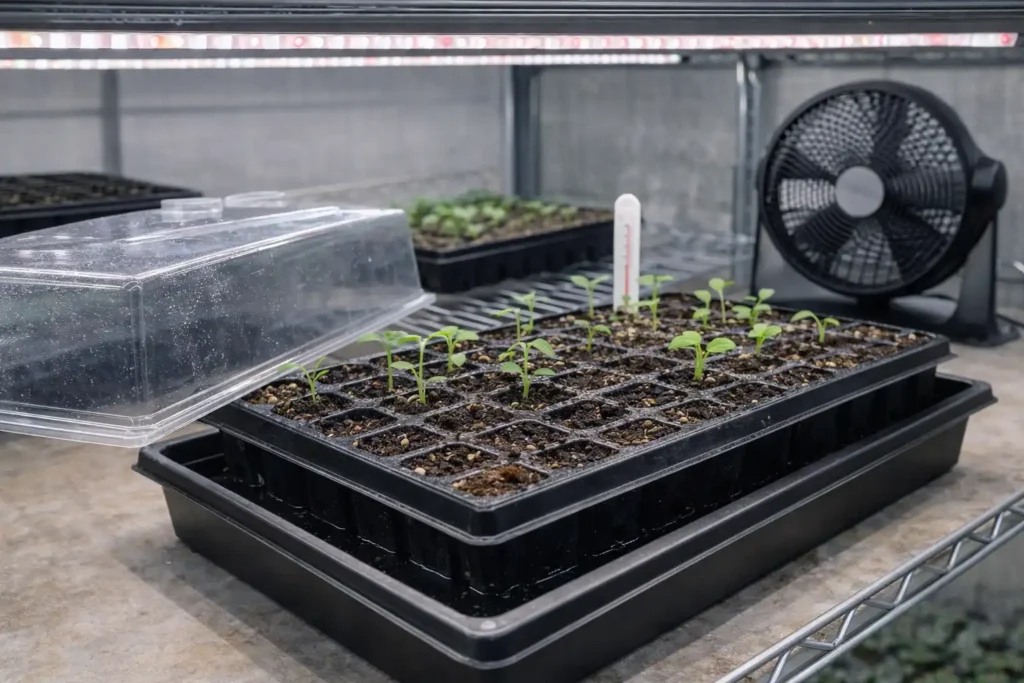
Run a small fan to move air across the tray tops, not straight at them. Use just enough movement to ruffle leaves. Remove humidity domes as soon as most seeds emerge. Domes help germination, but they trap humidity that favors damping-off after emergence.
Does overcrowding increase damping-off?
Overcrowding increases damping-off because it shades the soil and slows drying.
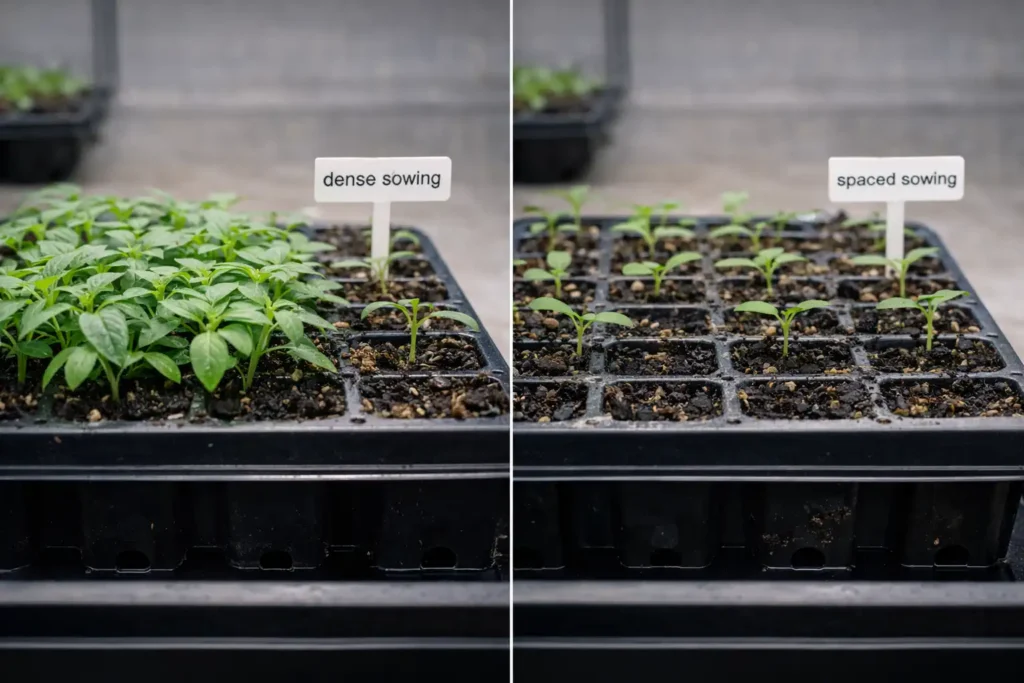
Thin sowing keeps the soil surface brighter and drier. If you broadcast sow in flats, plan an early prick-out date. If you sow in cells, plant one to two seeds per cell and thin to one seedling.
Should you use fertilizer on seedlings to prevent weak starts?
Fertilizer supports growth, but excess salts stress roots.
Start feeding after the first true leaves appear. Use a dilute, balanced fertilizer and apply through bottom watering when possible. Overfeeding produces soft growth and increases stress, which raises disease risk.
Do seed treatments help with damping-off?
Seed treatments help in specific situations, but clean practice carries most home and small-farm setups.
Pelleted or treated seed often includes protection for early emergence. For untreated seed, focus on sanitation, proper moisture, airflow, and temperature. If you use any chemical or biological product, follow the label because rates and timing control results and safety.
What do you do when you spot damping-off in a tray?
Act fast because the disease spreads through wet media.
Use this order:
- Remove and discard collapsed seedlings, including the plug if the rot reaches roots.
- Stop misting and switch to bottom watering.
- Increase airflow at tray level and remove any dome.
- Let the surface dry more between waterings.
- Separate trays so leaves do not touch.
If the tray shows widespread collapse, start fresh with clean trays and new mix. Saving a heavily infected flat often costs more time than a restart.
For broader disease prevention principles, this site’s pest and disease section helps you build a routine that scales.
How do you prevent damping-off when transplanting up?
Transplanting can reset the root zone if you move into clean media and reduce stress.
Handle seedlings by leaves, not stems. Plant at the same depth for most crops, and firm the media so roots contact soil. Water in, drain well, and return to bright light and gentle airflow. Avoid leaving newly potted seedlings in a humid, still corner.
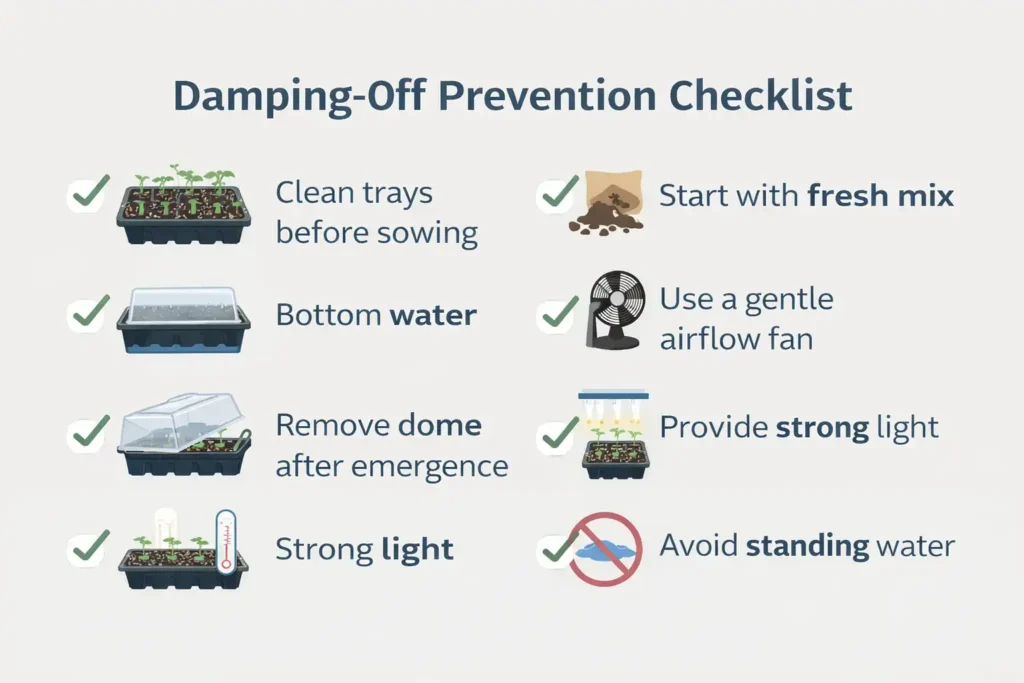
Damping-off prevention checklist for every sowing day
Use this quick scan before you seed:
- Clean tray, clean tools, new or sterile mix
- Drain holes open and trays off the bench on a rack
- Bottom watering plan with no standing water
- Dome used only until emergence, then removed
- Fan running for gentle movement
- Light intensity high enough to prevent stretch
- Seeding rate thin enough for airflow
- Temperature matched to germination stage