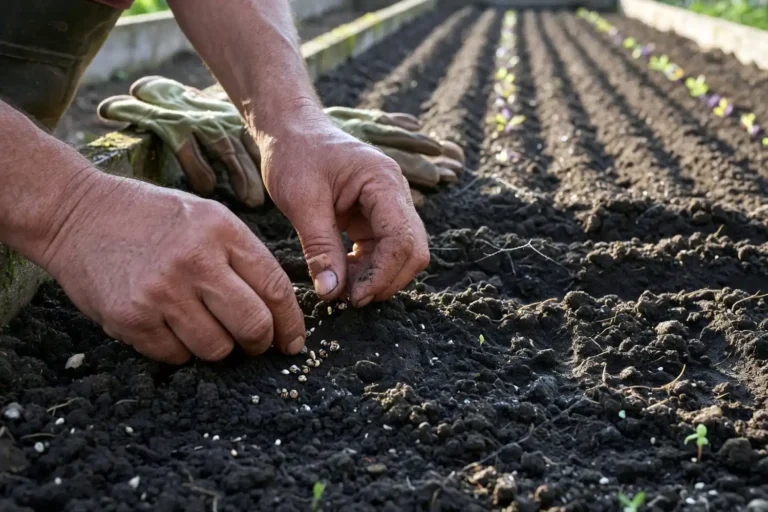
How to Cut Lettuce So It Keeps Growing (2026 Grower’s Guide)
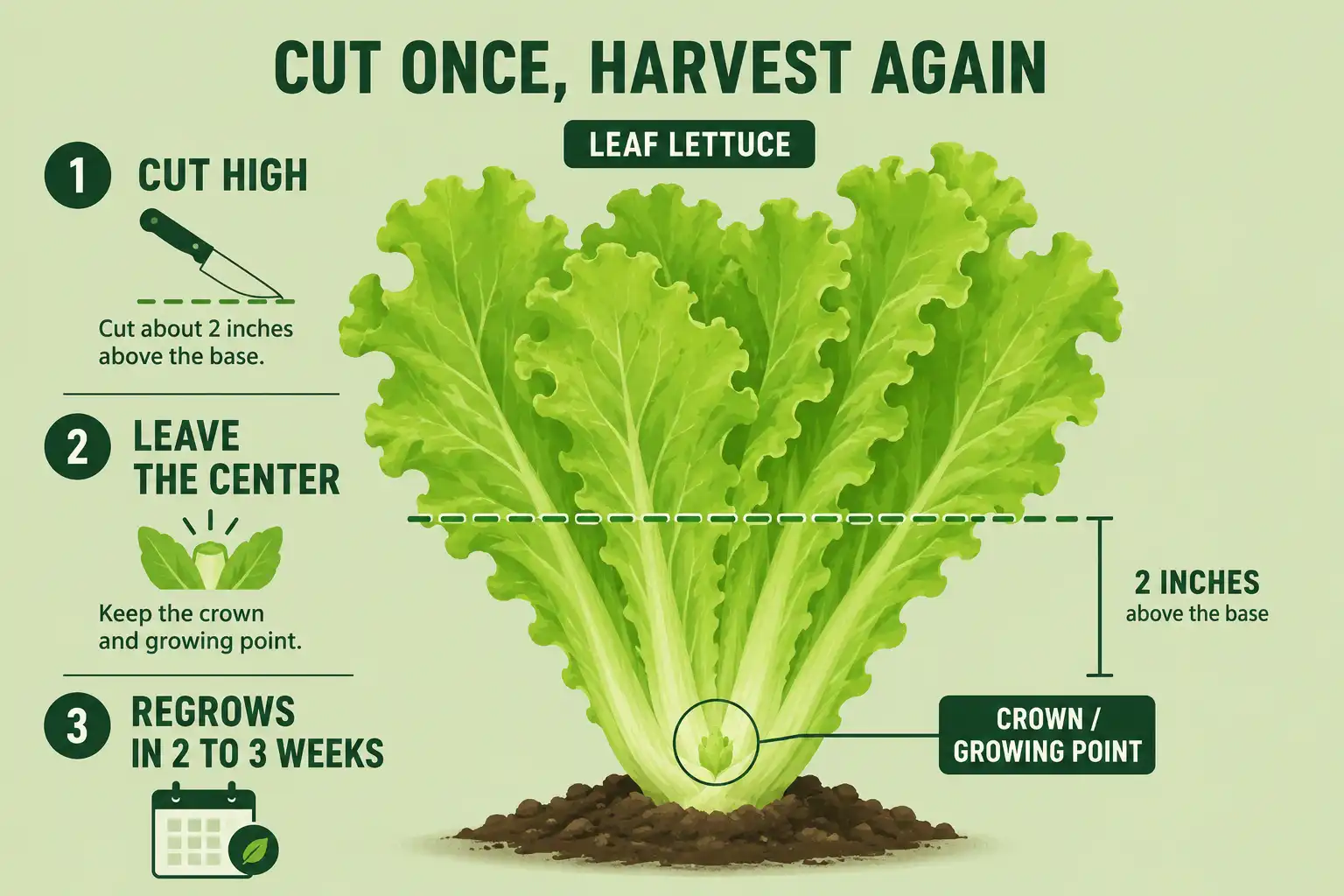
Cutting lettuce the right way means one planting feeds you for weeks. The trick to how to cut lettuce so it keeps growing is simple: leave the crown alone. One row gives me three or four cuttings before summer heat ends it.
The key to how to cut lettuce so it keeps growing is the crown. Snip leaves one to two inches above it and leave the center alone. Fresh leaves return in two to three weeks, right until the plant bolts.
Why Does Lettuce Keep Growing After You Cut It?
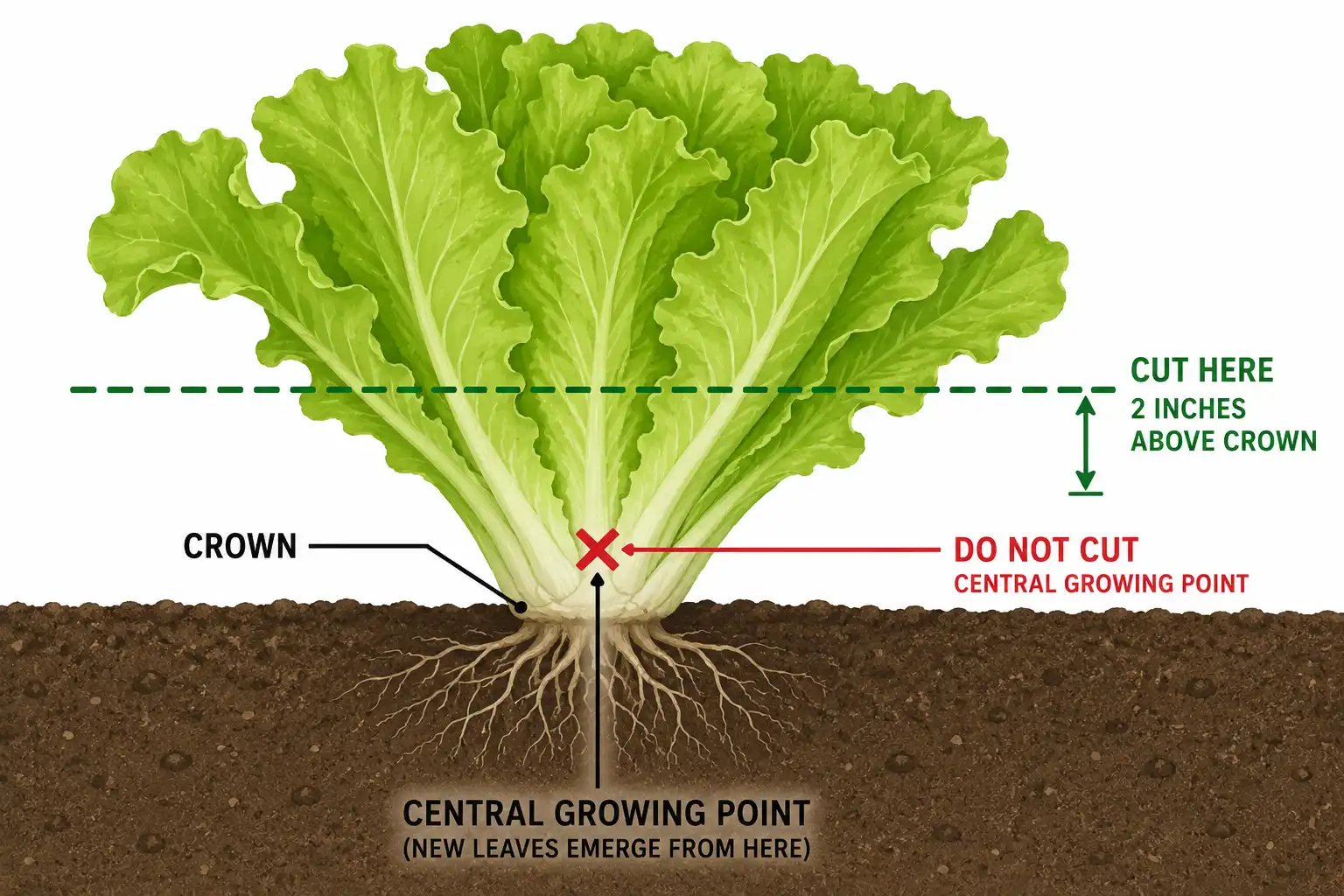
Lettuce keeps growing because it grows from a central crown, not from the leaf tips. That crown sits right at the soil line. New leaves form there and push outward as the plant ages. So the outer leaves are the oldest, and the inner ones are the youngest. When you take outer leaves and leave the crown untouched, the plant simply makes more. Cut into that center growing point, though, and the engine stops. This is why loose-leaf types of Lactuca sativa regrow so well, while a sliced crown means a dead plant.
How High Should You Cut Lettuce?
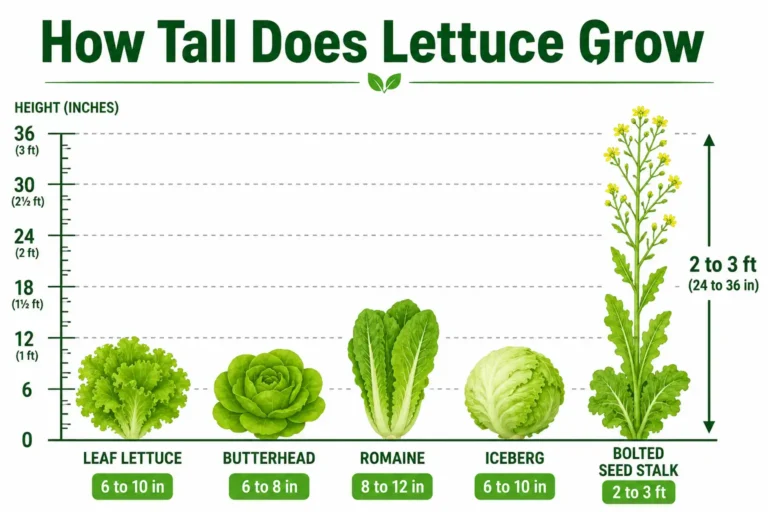
Cut about one to two inches above the crown, and never go lower. That short stub protects the growing point so new leaves can push through. University of Maryland Extension recommends cutting just above ground level with sharp scissors. Do this once plants reach 6 to 10 inches tall. In hot weather, leave closer to two inches. The extra stub holds moisture, so the plant bounces back faster. Cut too low and you slice the crown. Then the plant dies instead of regrowing.
How to Cut Lettuce So It Keeps Growing (Step by Step)
The method comes down to five quick moves, and anyone can do it.
- Harvest in the morning. Leaves hold the most water then, so they stay crisp and last longer.
- Use clean, sharp scissors or a knife. Wipe the blade with rubbing alcohol between plants to stop disease from spreading.
- Pick your method. Take outer leaves only, or shear the whole plant (both covered below).
- Cut one to two inches above the crown. Keep that center bud intact every time.
- Water and feed right after. New leaves then follow in two to three weeks.
Two Ways to Cut Lettuce for Regrowth
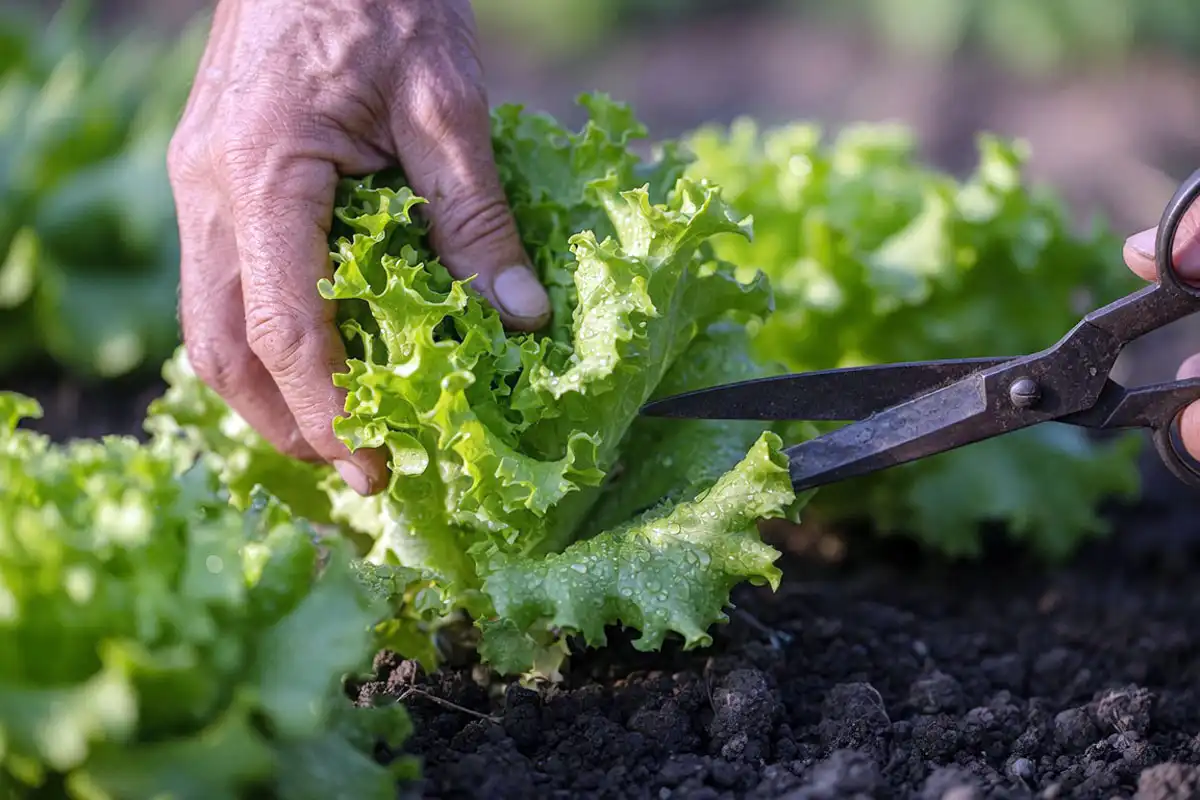
You have two solid methods, and both keep the plant alive. The right pick depends on how much you need at once.
The Outer-Leaf Method
Pick the outer leaves and leave the center to keep growing. Take the oldest, largest leaves from the outside edge first. Snap or snip them near the base. Then stop once you have taken about a third of the plant. The inner leaves keep feeding and shading the crown. As a result, this method gives the longest run of harvests. This works well for butterhead and red leaf types.
The Whole-Cut (Shear) Method
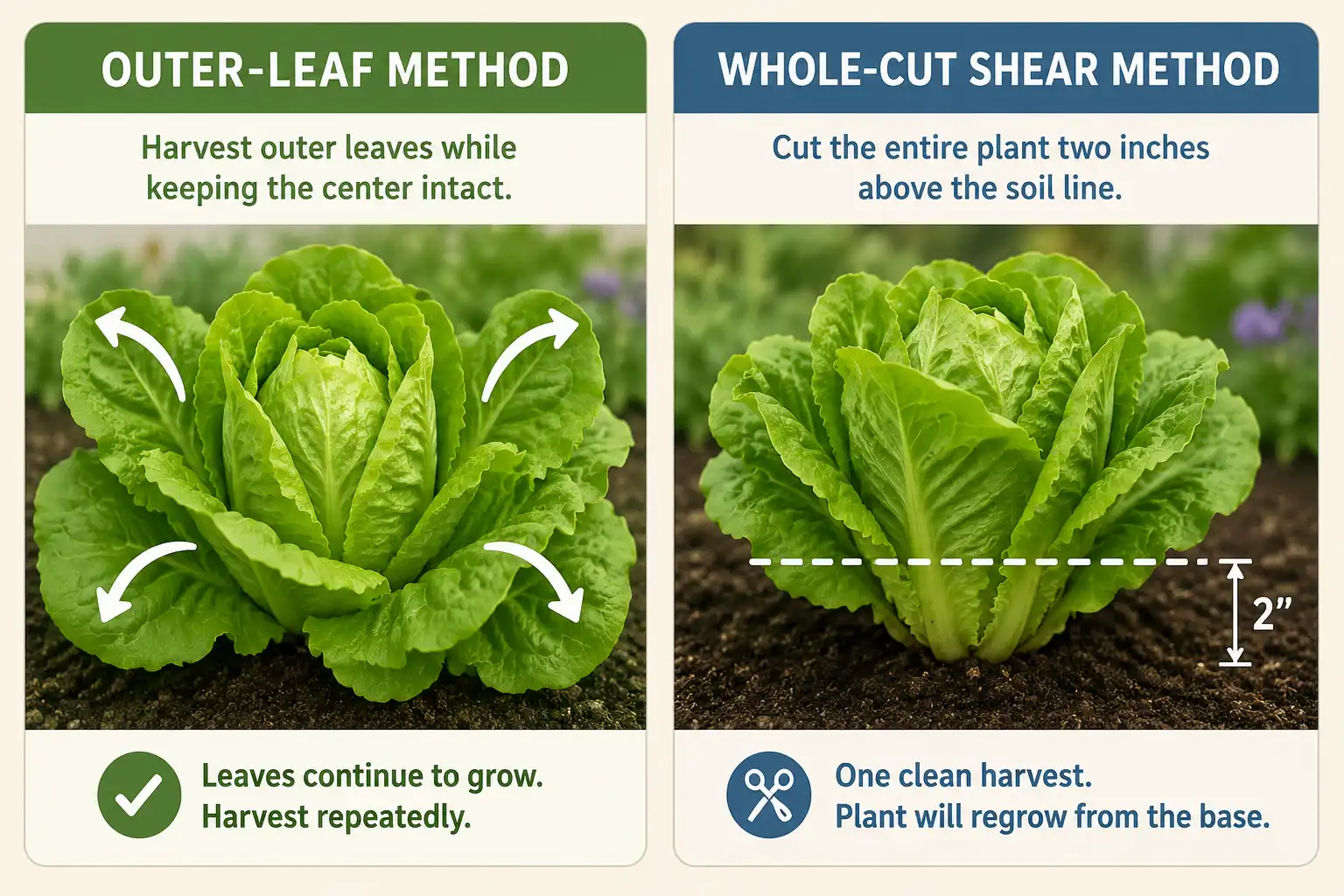
Shear the entire plant at once, one to two inches above the crown. This works best for a thick row of loose-leaf or a baby salad mix. Grab the leaves in one hand. Cut straight across with the other. After that, the crown sends up a fresh flush in two to three weeks. You do get fewer total cuttings this way, since the plant works harder to recover. Still, it is fast and clean for big batches.
Which Lettuce Types Grow Back After Cutting?
Loose-leaf and leaf lettuces grow back best, while crisphead types mostly do not. Here is how the main groups behave.
Loose-leaf lettuces (green leaf, red leaf, oakleaf) are the champions. Cut them high and they reflush many times. Romaine regrows too, as long as you cut high and leave the base, so expect two or three flushes. Butterhead types like Bibb and Boston also rebound well with the outer-leaf method. Crisphead lettuce (iceberg) is the exception. It forms one tight head, so once you cut that head at the soil line, it is mostly one and done. Clemson Extension notes iceberg needs a long, cool season and bolts fast as temperatures climb.
You can even regrow a head from the grocery store. Set its base in shallow water on a windowsill, and small leaves return. The same trick lets you grow fresh leaves from a stem in water indoors. It is a handy way to test regrowth, though field plants give far more. To move a store base outside, follow how to regrow lettuce from a grocery-store head in the bed.
When Should You Make the First Cut?
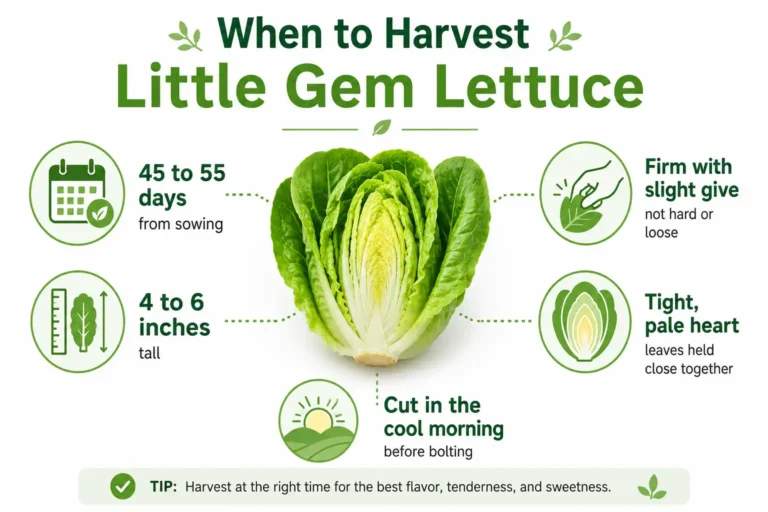
Make the first cut when leaf lettuce reaches about four to six inches tall. That usually lands 30 to 45 days after sowing, depending on the variety and the weather. University of Maryland Extension says leaf lettuce is ready at 5 to 6 inches. Younger leaves taste sweeter, while oversized leaves turn tough and bitter. So cut a little early rather than late. For heads, wait until they feel firm, then cut high if you still want a second flush.
How Often and How Many Times Can You Cut It?
Cut the same plants every two to three weeks, and expect three or four good harvests. After each cut, water and feed lightly, so the crown can send up a new flush. University of Maryland Extension says watered, fertilized plants are ready to cut again in 2 to 3 weeks. Quality does drop over time, though. By the fourth cut, leaves often turn small or bitter. Taste one if you are unsure. When flavor fades, pull the plant and resow. A fresh sowing every couple of weeks (succession planting) keeps greens coming all season.
What Should You Do After Cutting to Keep It Growing?
Water deeply and feed with a little nitrogen right after each cut. Lettuce has shallow roots, so it needs steady moisture to refill fast. Give it about one inch of water per week, and more in sandy soil or heat. A balanced fertilizer with extra nitrogen then pushes leafy regrowth. Side-dress lightly every three to four weeks. Keeping the soil cool and moist also slows bolting. If you are unsure about amounts, our guide covers weekly watering needs for lettuce in detail.
What Stops Lettuce From Growing Back?
Bolting is what ends the regrowth, and heat is the main trigger. When soil and air stay above 75°F, lettuce sends up a central stalk to flower. University of Minnesota Extension confirms that several hot days over 75°F push plants to bolt. Those bolted leaves turn bitter fast. Long days and intense sun speed the process up too. Once a plant bolts and starts setting seed, the regrowth ends. In zone 6a, spring lettuce usually bolts by early-to-mid June. A fall planting then gives me a second clean window. If you want greens through the warm months, our notes on how to keep summer plantings from bolting will help.
Common Mistakes That Stop Regrowth
The fastest way to lose your crop is cutting into the crown. A few other habits stop regrowth just as quickly. Cutting below the growing point removes the part that makes new leaves. Taking more than a third of the plant at once leaves too little to recover. Dull or dirty blades crush the stems and invite rot. Letting the soil dry out stalls the new flush. Harvesting in afternoon heat wilts the leaves and stresses the plant. Avoid those five, and your lettuce keeps coming back.
Bottom Line
Cut leaf lettuce high, water it well, and feed it light. Three or four flushes later, the heat wins and the plants bolt. Pull them and resow. The rule never changes: leave the crown, cut in the morning, and one planting keeps your salad bowl full for weeks.