How Long Does It Take for Lettuce Seeds to Germinate? (2026)
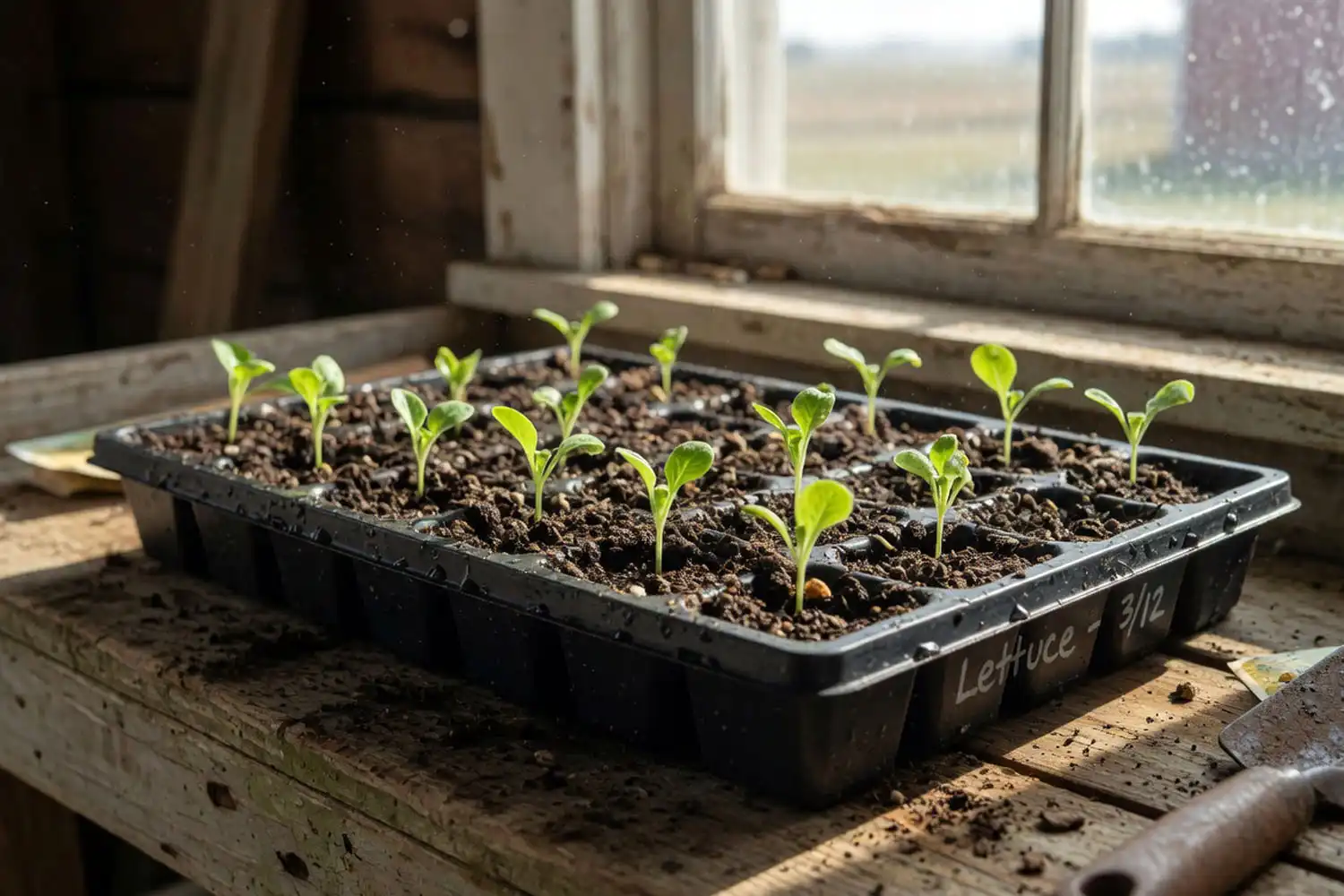
Lettuce is one of the fastest cool-season crops. The time it takes for lettuce seeds to germinate depends mostly on soil temperature, moisture, and variety. Most growers see sprouts within a week if conditions are right.
Lettuce seeds typically germinate in 7 to 10 days at 60 to 70°F soil temperature. Under ideal conditions, sprouts can show in as little as 2 to 3 days. Above 80°F, germination drops sharply due to thermodormancy.
What Affects Lettuce Seed Germination Speed
Five factors decide how fast lettuce seeds break through the soil: temperature, moisture, light, seed quality, and planting depth. Watch these closely every springs, and getting them right cuts germination time in half.
Soil Temperature
Soil temperature is the biggest driver. Lettuce germinates between 32°F and 80°F, but the sweet spot is 60 to 70°F. At 70°F, seeds usually pop in 2 to 3 days. At 40°F, expect 15 days or longer. Above 80°F, many varieties go dormant and refuse to sprout.
Soil Moisture
Lettuce seeds need consistent moisture to germinate. They have a thin seed coat that absorbs water quickly, then dries out just as fast. Seed beds should stay evenly moist but never waterlogged. A light misting twice a day works better than one heavy soak.
Light Exposure
Lettuce seeds are photoblastic, which means they need light to germinate properly. That is why bury them deep. Plant them 1/8 inch deep at most, or press them gently into the surface and cover with a thin dusting of vermiculite. Light penetrates that depth and triggers sprouting.
Seed Variety and Freshness
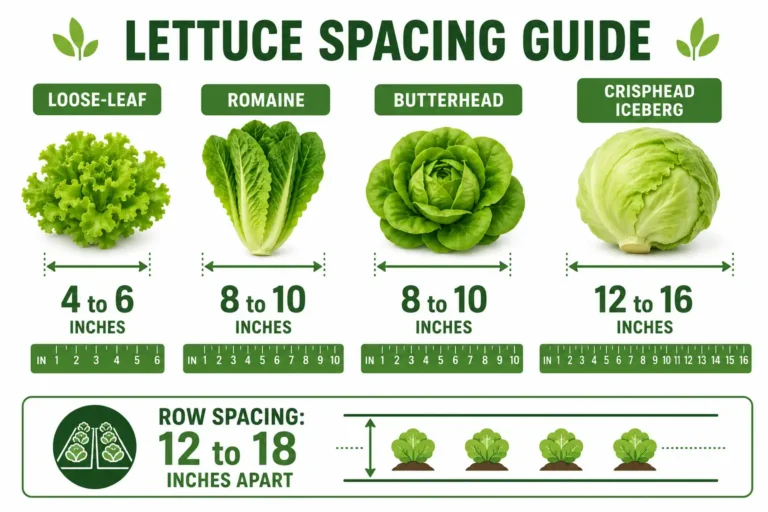
Fresh seed germinates faster. Lettuce seeds stay viable for about 3 years if stored cool and dry, but the germination rate drops each year. Variety matters too. Loose-leaf types tend to germinate faster than crisphead or iceberg. Whether you plant a hybrid seed or heirloom variety also affects vigor and speed.
Planting Depth
Bury lettuce seeds too deep and they will not germinate at all. Anything past 1/4 inch usually fails. Surface sowing with a light vermiculite cover gives the best stand.
Know more: How to Germinate Lettuce Seeds: 7 Steps That Work Every Time
Germination Time by Lettuce Variety
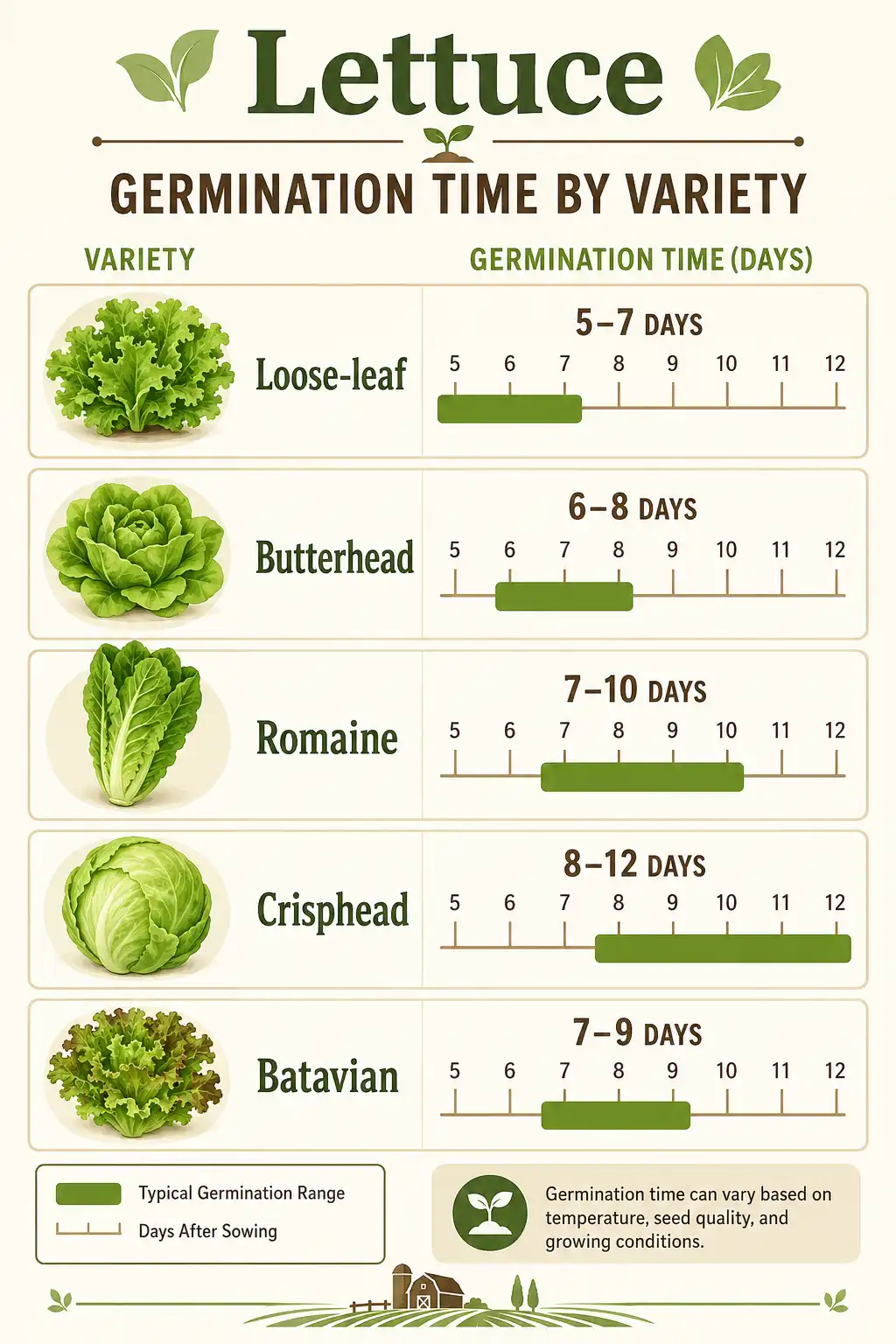
Different lettuce types germinate at slightly different rates. Here is what typically happens across fields at 65°F soil:
- Loose-leaf (Black Seeded Simpson, Salad Bowl): 5 to 7 days
- Butterhead (Buttercrunch, Bibb): 6 to 8 days
- Romaine (Parris Island, Cimmaron): 7 to 10 days
- Crisphead / Iceberg (Great Lakes, Iceberg A): 7 to 12 days
- Batavian (Nevada, Sierra): 6 to 9 days
Pelleted seed often takes an extra day or two because the clay coating must dissolve before water reaches the seed.
Best Soil Temperature for Lettuce Germination
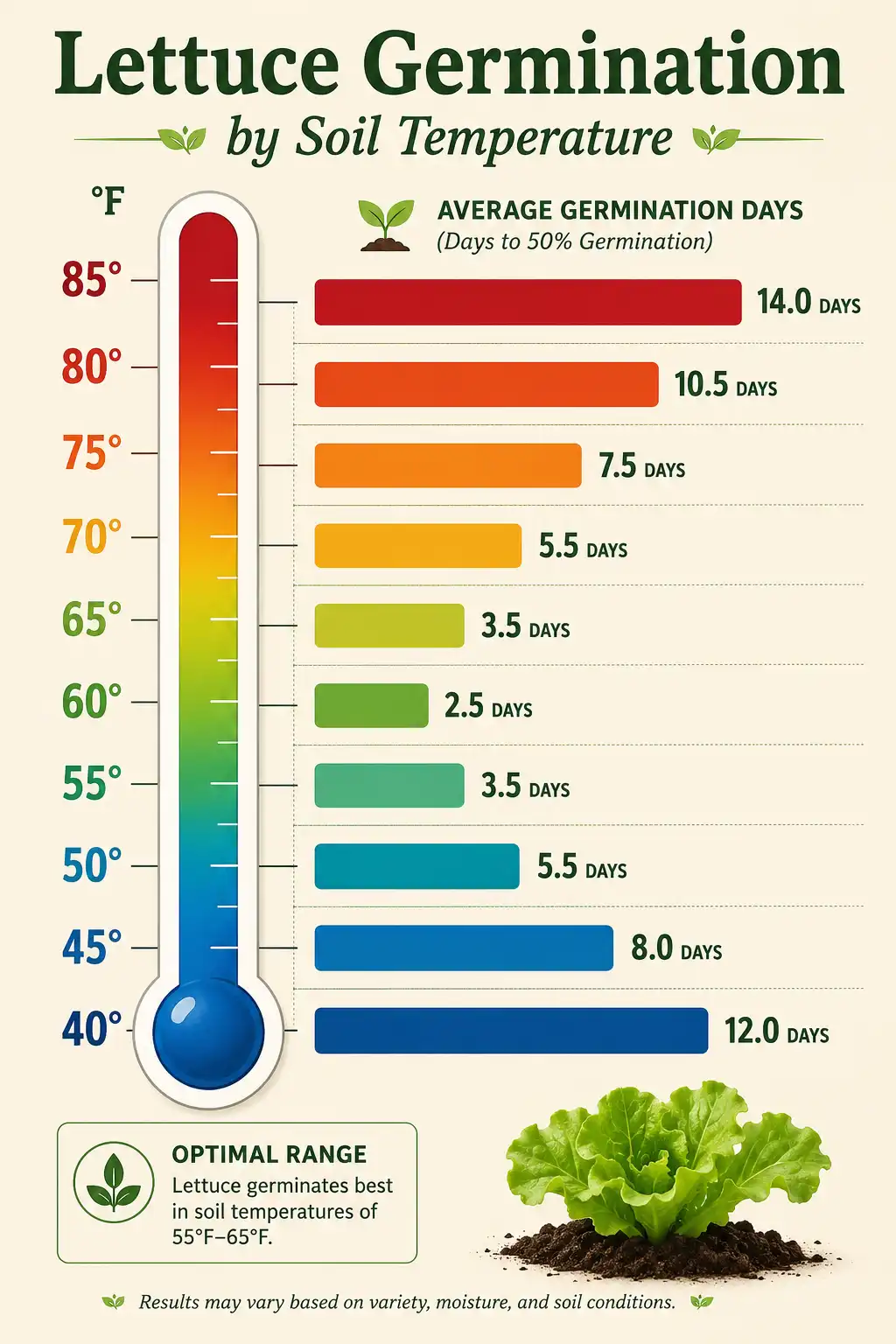
The optimal soil temperature for lettuce germination is 60 to 70°F. At this range, you get the fastest sprouting and the highest germination percentage. Here is the breakdown:
- 40°F: 15+ days, low germination rate
- 50°F: 10 to 12 days, fair rate
- 60°F: 5 to 7 days, strong rate
- 70°F: 2 to 4 days, peak rate
- 80°F: 6+ days, low rate (thermodormancy starts)
- 85°F and above: Few seeds germinate at all
Use a basic soil thermometer pushed 2 inches deep first thing in the morning. That reading tells me whether to plant or wait. For more on getting your seedbed ready, our notes on soil testing for farming cover what to check before sowing.
How to Speed Up Lettuce Seed Germination
Pre-sprouting (priming) your seeds shaves days off germination time. Here is what works:
- Soak lettuce seeds in cool water for 4 to 6 hours.
- Drain and place between damp paper towels.
- Refrigerate at 40°F for 24 to 48 hours.
- Plant immediately into prepared soil.
This breaks dormancy and triggers faster sprouting. A quality seed starting kit with a clear humidity dome also works well for indoor starts. The dome holds moisture and stable temperature, which gets me sprouts in 3 days instead of 7.
For outdoor seeding in late spring, cover rows with shade cloth to keep soil under 75°F. Mulching lightly between rows also stabilizes moisture and temperature.
Why Lettuce Seeds Fail to Germinate
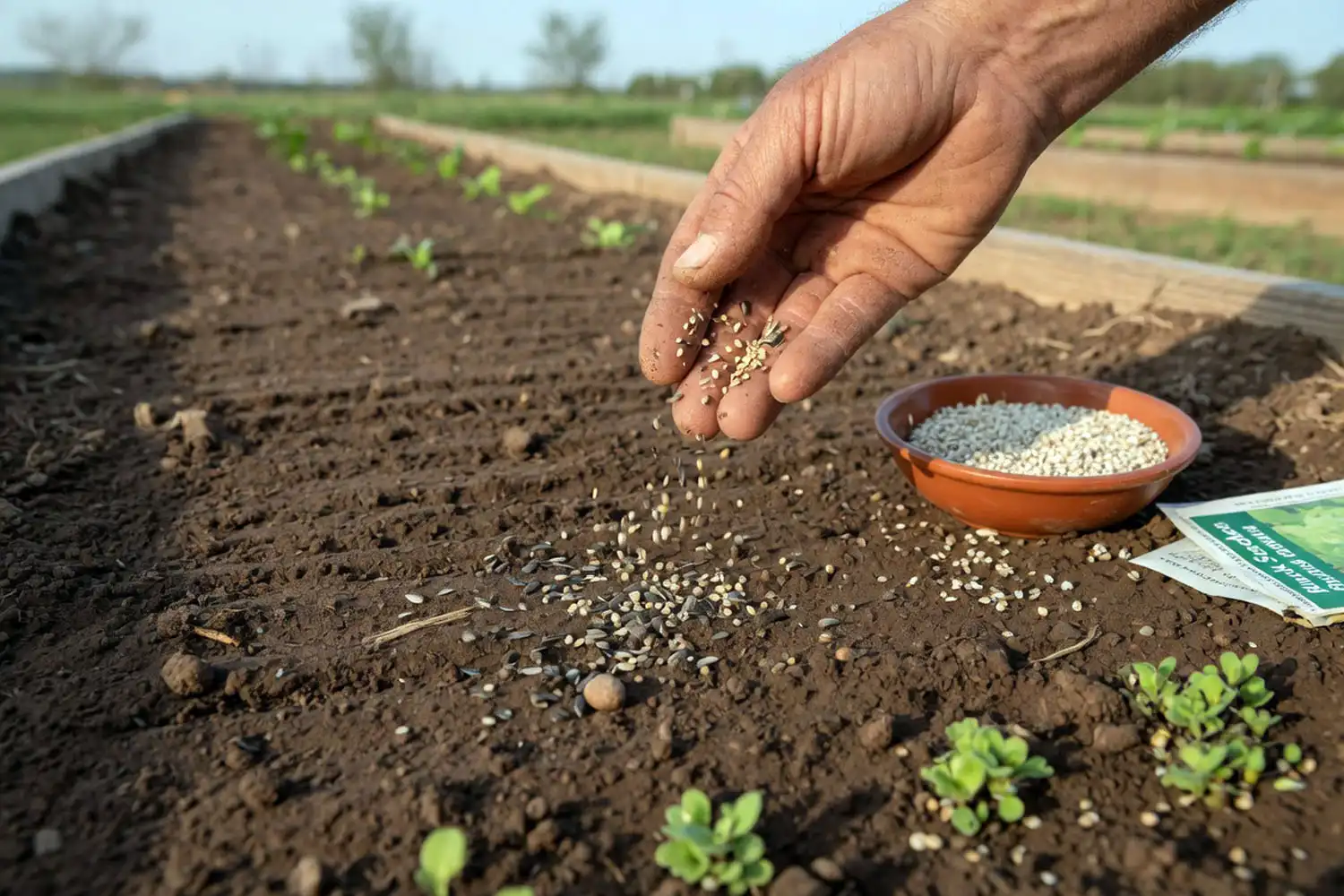
If your lettuce seeds are not coming up, one of these issues is usually the cause.
Soil Is Too Warm
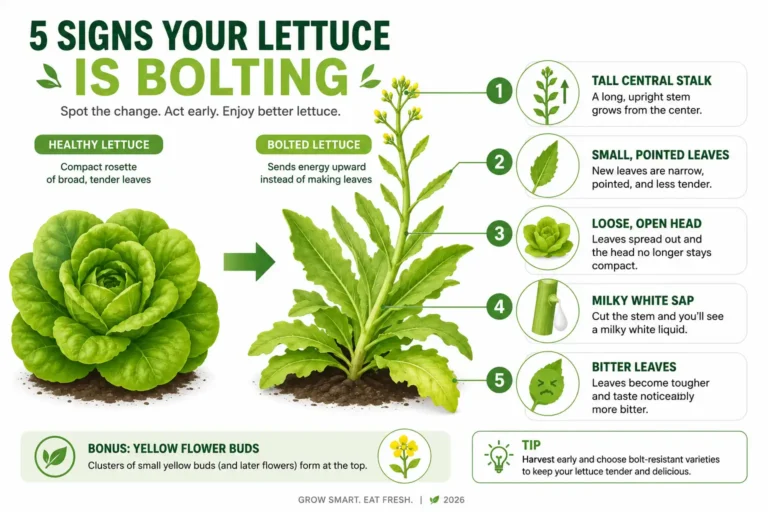
Above 80°F, lettuce enters thermodormancy. The embryo refuses to grow. This is the number one reason summer plantings fail. Move to a cooler location, shade the bed, or wait for fall.
Planted Too Deep
If you covered seeds with more than 1/4 inch of soil, they will not break through. Re-sow at the surface and cover with vermiculite.
Old or Damaged Seed
Seed older than 3 years often shows poor germination. Test viability before planting a full row.
Crusted Soil Surface
Heavy rain or overhead watering can form a hard crust that traps tender seedlings. Lightly scratching the surface with a rake or covering with vermiculite helps prevent this. Damping off can also kill seedlings right after emergence, so good seedling care matters here too.
Insufficient Light
Buried too deep, lettuce seeds lack the light cue they need. Surface sowing fixes this.
When to Plant Lettuce in 2026
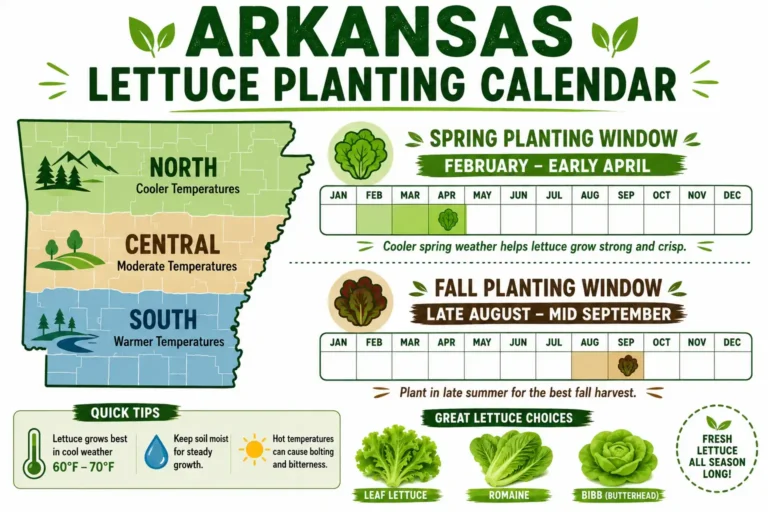
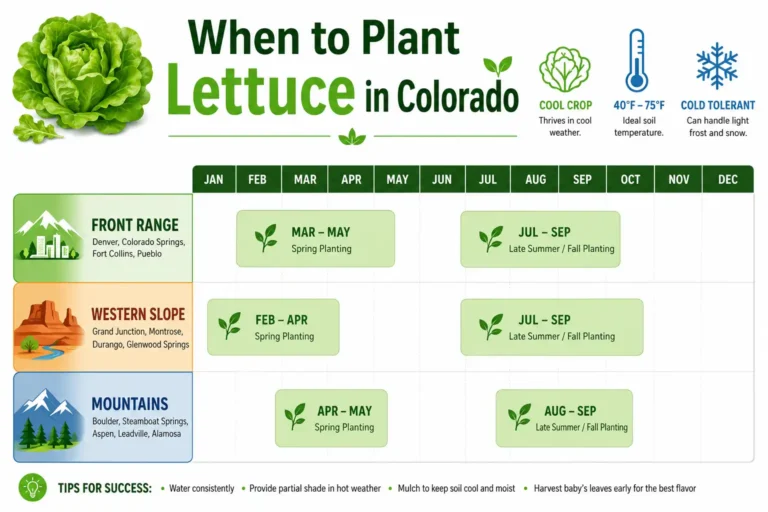
In Kansas, start indoor seedlings in late February for transplant in late March. For direct sowing, wait until soil hits 50°F, usually late March to early April. A fall crop goes in the ground from mid-August through early September once soil temps cool back down.
Your timing shifts based on your USDA hardiness zone and last frost date. Keep a crop planting calendar close at hand to track windows for each crop. If you are choosing between starting indoors or planting outside, our breakdown on direct sowing versus transplanting covers the tradeoffs.
According to K-State Research and Extension, lettuce performs best in the spring and fall windows across the Great Plains, avoiding the heat months of June through August.
How to Test Lettuce Seed Viability
Run a germination test before planting old seed. Place 10 seeds on a damp paper towel, fold it, seal it in a plastic bag, and keep it at 70°F. Check after 7 days. If 8 or more sprout, the seed is good. If fewer than 5 sprout, replace it.
This 7-day test saves me from wasting a whole row on dead seed every spring.
What to Do Each Spring
Lettuce germination comes down to soil at 60 to 70°F, light moisture, shallow planting, and fresh seed. Hit those four targets and you will see sprouts in 5 to 7 days. The first round typically goes indoors in February under a humidity dome, with a move to direct sowing once the ground warms past 50°F. Test old seed, watch soil temps, and you will get a strong stand every spring.