How to Transplant Lettuce Seedlings for Strong, Fast-Rooting Plants
Moving young plants from a tray to the garden is where most lettuce crops succeed or stall. Learning how to transplant lettuce seedlings the right way gives you faster rooting, earlier harvests, and fewer losses.
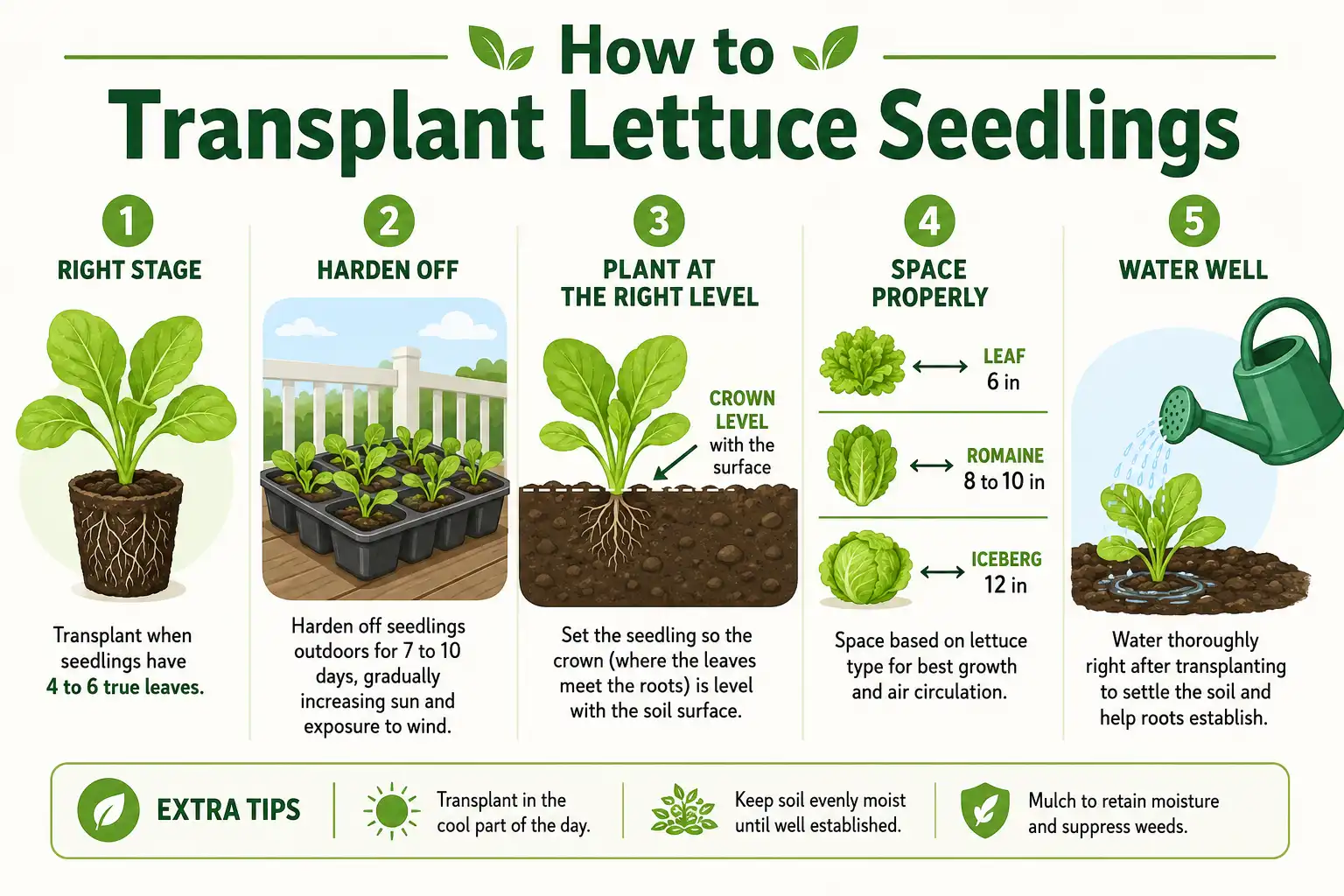
Transplant lettuce seedlings once they have four to six true leaves and firm roots, usually three to five weeks old. Harden them off for a week, set each crown level with the soil, then water in well.
When Are Lettuce Seedlings Ready to Transplant?
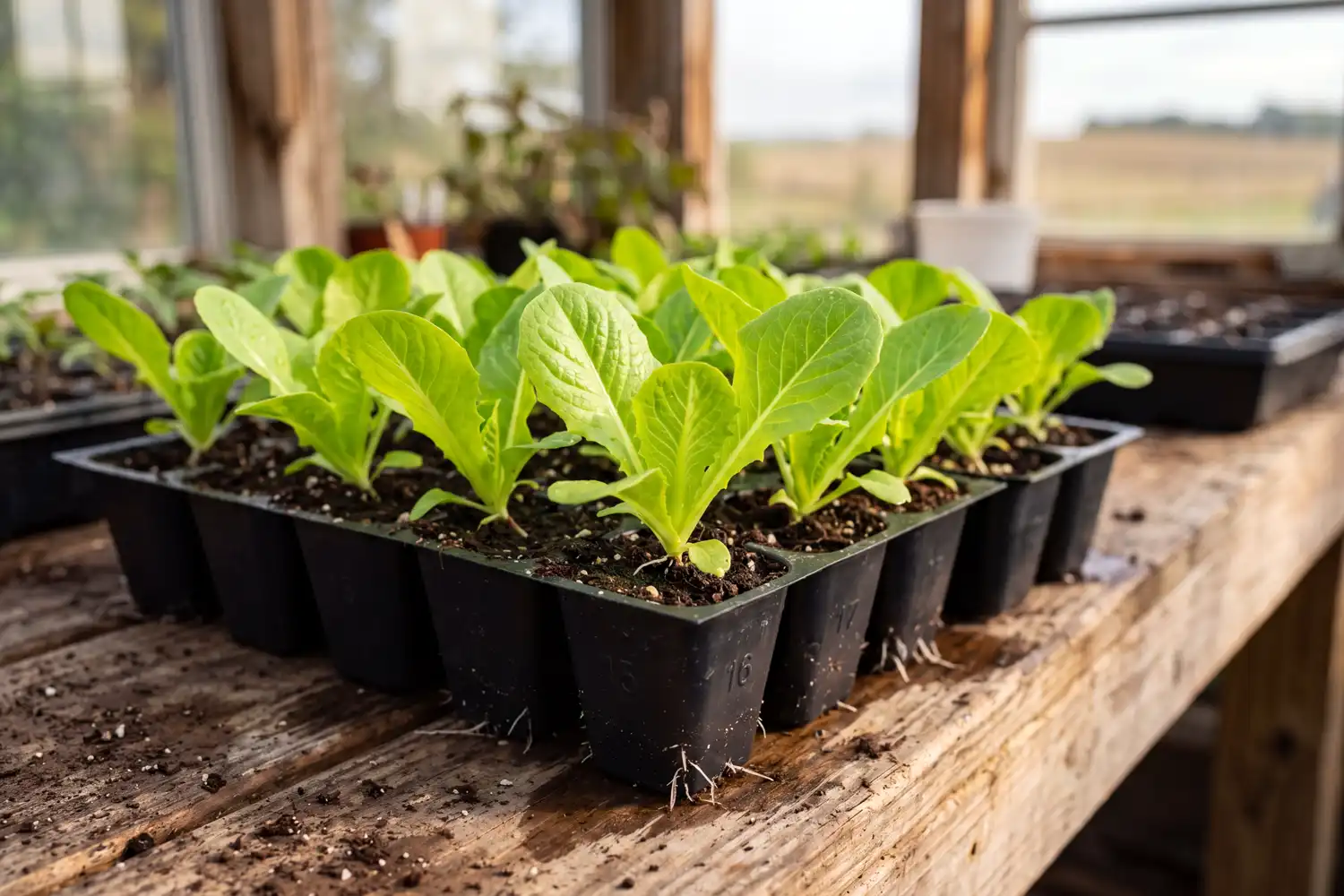
Lettuce seedlings are ready to transplant once they carry four to six true leaves and a firm white root system. That stage usually lands three to five weeks after sowing. Still, growth matters more than the date on the calendar.
True leaves are the second set, not the first. The first pair are seed leaves, and they look rounded and plain. After those come the true leaves, which show the ruffled or oval shape of the variety. Once you count four to six of them, the plant has the leaf area and root mass to settle in fast.
Check the roots too. Slide one plug out of the tray and look. White roots that hold the soil ball together tell you the plant is ready. Sparse or brown roots mean you should wait a few more days. Healthy seedlings also handle the move better. So keep them growing strong and clear of damping off in young seedlings before transplant day.
Most seedlings reach 2 to 3 inches tall at this point. Utah State University Extension lists the same target: four to six mature leaves and a well-developed root system before planting out.
How Do You Harden Off Lettuce Seedlings?
Harden off lettuce seedlings by giving them gradual outdoor exposure over seven to ten days before transplanting. This step toughens soft indoor growth so the move outside does not stall the plant.
Start small. On day one, set the tray in a shaded, sheltered spot for one to two hours, then bring it back inside. Each day after that, add an hour or two and a little more direct light. By the end of the week, the seedlings can sit out overnight as long as no hard freeze threatens.
Skipping this step is a common reason transplants stall. Soft seedlings hit by wind and full sun lose water faster than their roots can replace it. So they wilt, sit still, and sometimes bolt later. A week of hardening off prevents most of that. K-State Research and Extension recommends acclimating cool-season transplants this way before they head to the field.
What Temperature and Timing Work Best for Transplanting Lettuce?
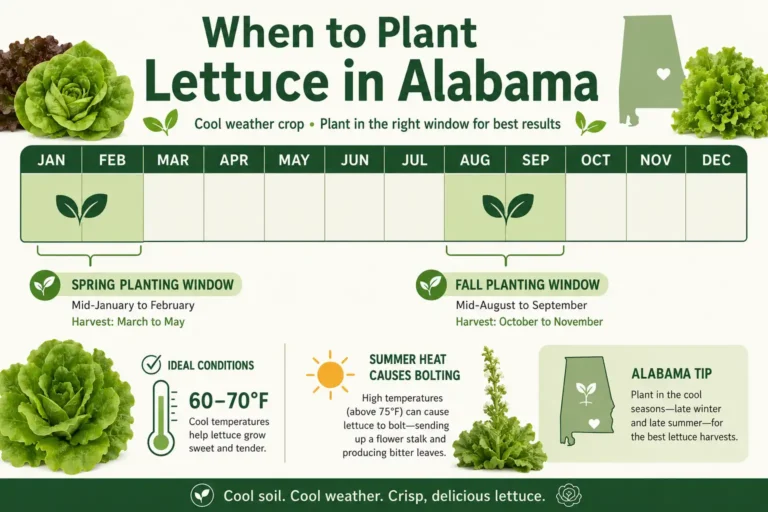
Lettuce transplants do best when soil sits between 55°F and 65°F and daytime air holds under 75°F. As a cool-season crop, lettuce handles light frost well. In fact, Utah State notes that temperatures down to 32°F do not seriously harm young plants. Seedlings hardened off for several days can even survive brief dips near 20°F.
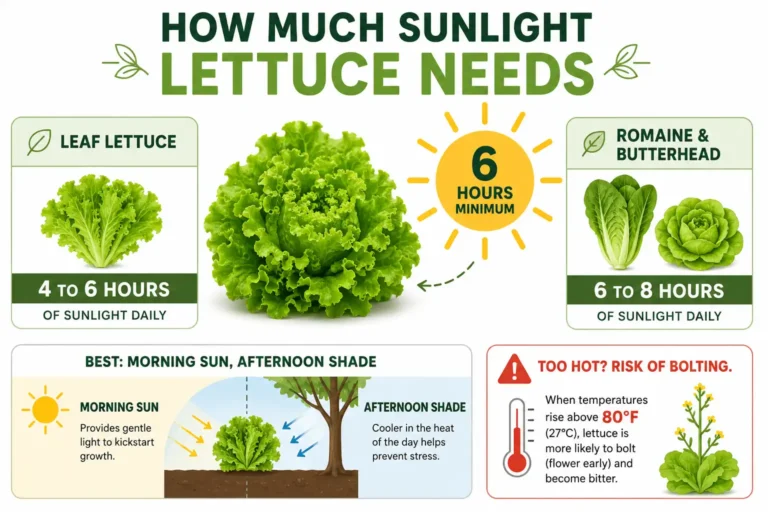
Heat is the bigger threat. Once days climb past 80°F, lettuce stresses, turns bitter, and bolts to seed. So timing the move matters as much as the method itself.
For a spring crop, set transplants out two to four weeks before the average last frost. In zone 6a, that frost lands in mid-to-late April, so transplanting typically happens in early April. For fall, move plants out six to eight weeks before the first hard freeze, which means late August. K-State Research and Extension lists lettuce as a cool-season crop suited to early-spring planting.
Summer plantings need shade and steady water, and even then they push toward seed fast. So if you want greens through July, the tactics for growing summer lettuce without bolting make a real difference.
How to Transplant Lettuce Seedlings Step by Step
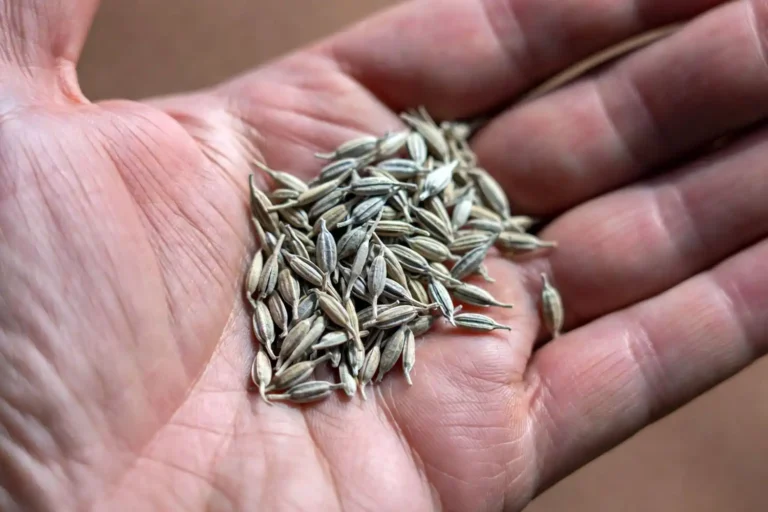
Good results start before transplant day, with getting your lettuce seeds to sprout evenly and a well-hardened tray. Here is the routine when moving day comes.
- Prepare the bed first. Loosen the top 8 to 12 inches of soil. Then work in 2 to 3 inches of finished compost and rake it level. Lettuce roots stay shallow, so a loose top layer is what they need.
- Water the seedlings ahead of time. Soak the tray a few hours before you move plants. Moist plugs slide out clean and hold their shape.
- Dig each hole to fit the root ball. A dibber or a hand trowel makes quick work of it. Keep the hole just deep enough for the roots, no deeper.
- Set the crown level with the soil. This step decides whether the plant thrives or rots. More on it below.
- Firm the soil gently. Press the soil around each plug to close air pockets, but do not pack it down hard.
- Water in right away. Give every transplant a thorough soak so the soil settles tight against the roots.
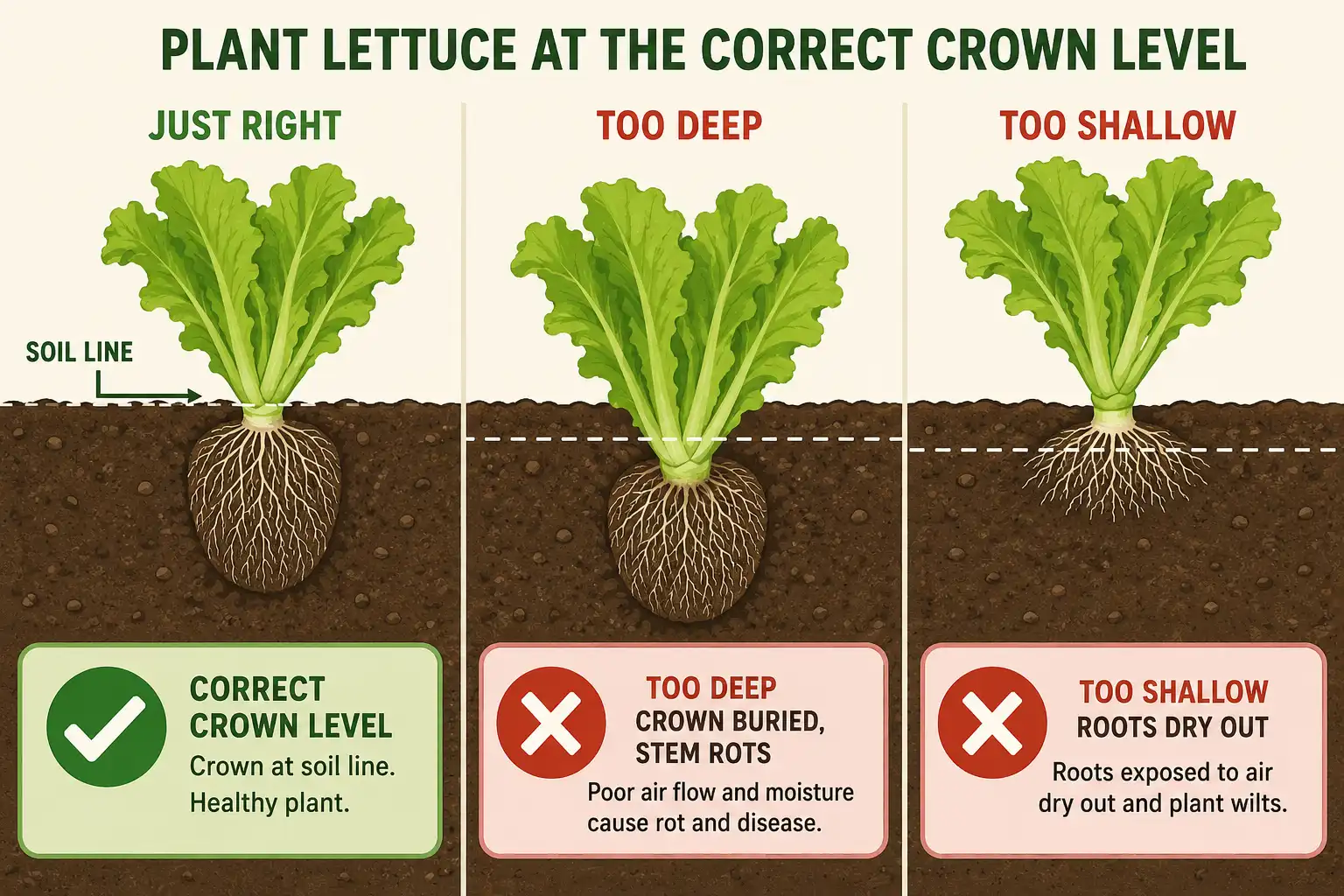
The crown is the spot where the leaves meet the roots. Set it right at the soil line, never below it. Bury the crown and the stem stays wet, which invites rot and kills the plant. Set it too high and the top roots dry out. Leggy seedlings are the one exception. With those, you can sink the stem a little deeper to steady the plant, but keep the growing point above the surface.
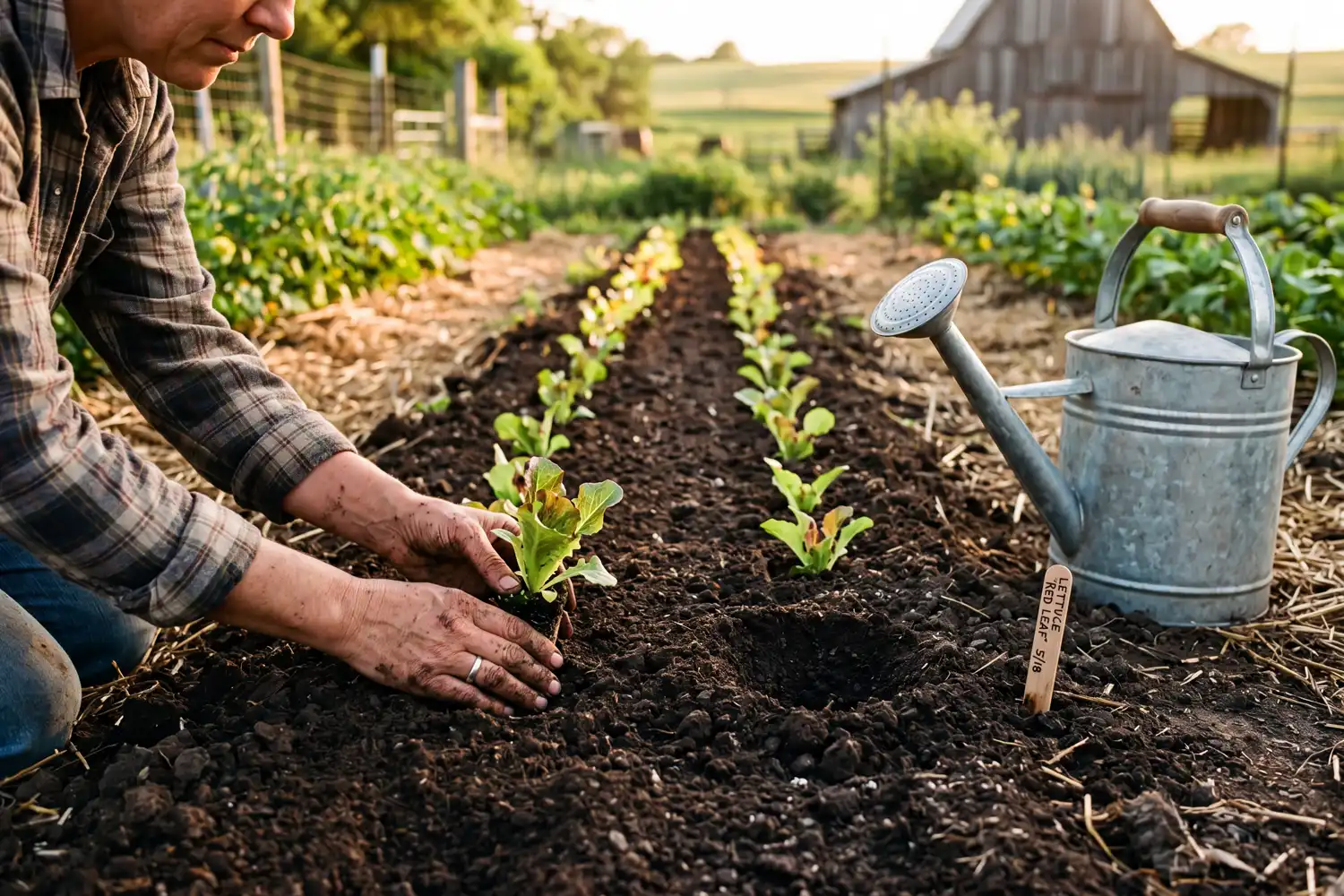
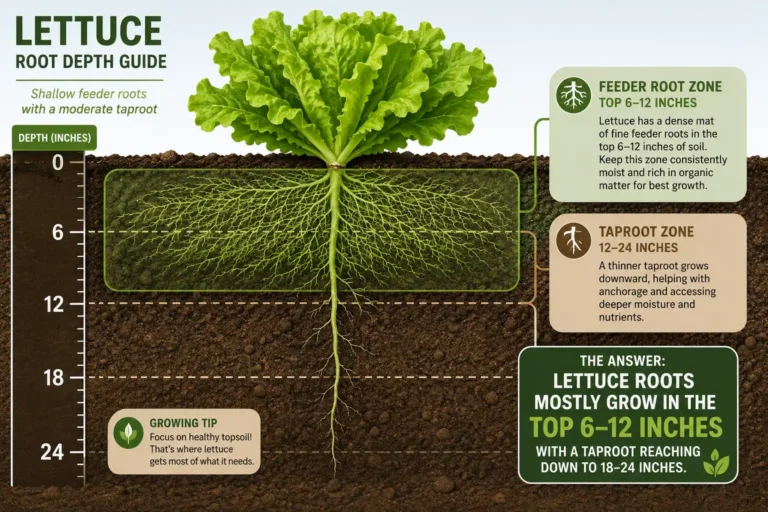
Because lettuce roots run shallow, you do not need a deep hole at all. Knowing how deep lettuce roots reach helps you prep the bed without overworking it. A firm, crumbly top few inches beats a deeply dug, fluffy bed every time.
Learn more: Water Does Lettuce Need Each Week
How Far Apart Should You Space Lettuce Transplants?
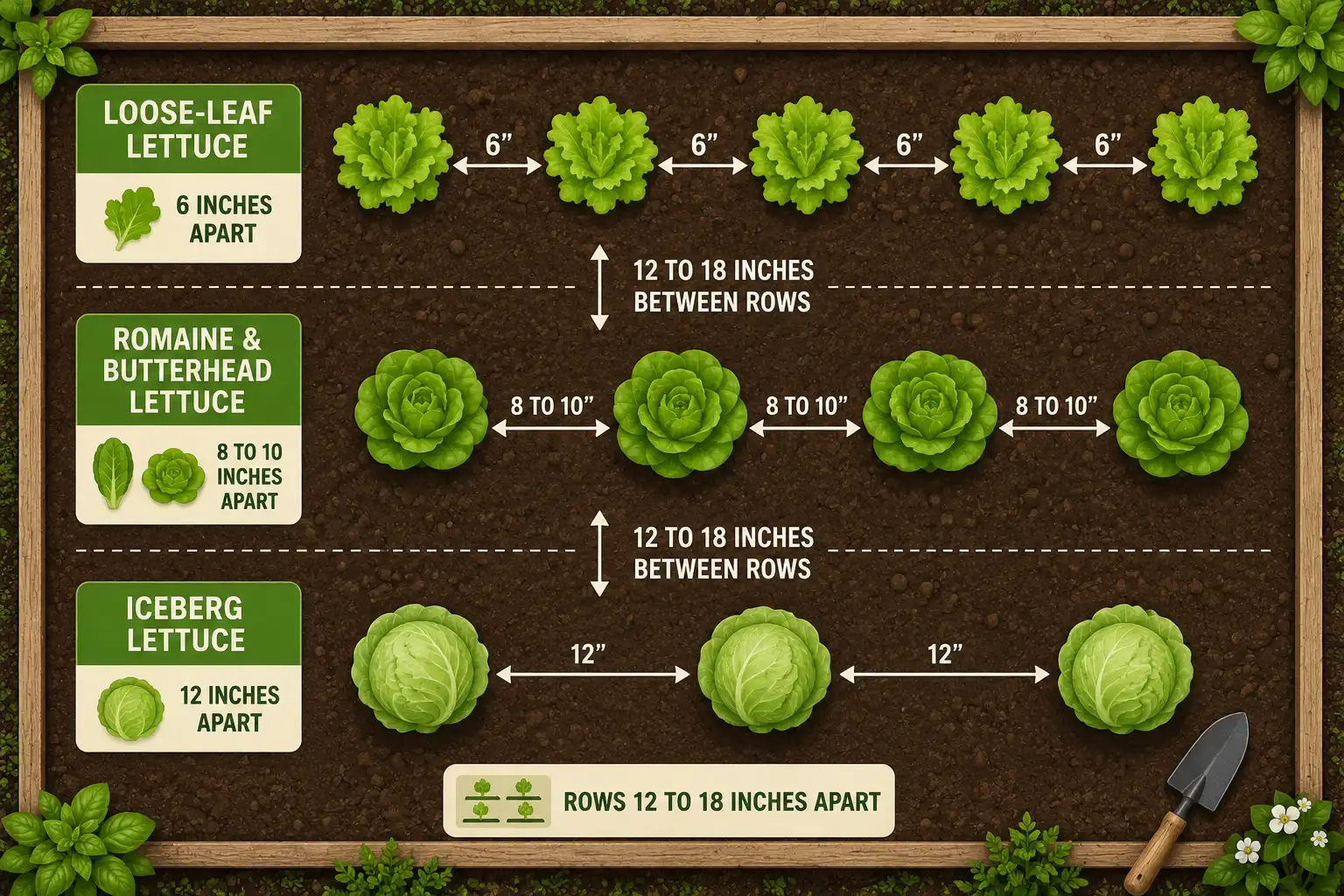
Space lettuce transplants by type. Loose-leaf goes about 6 inches apart. Romaine and butterhead need 8 to 10 inches. Crisphead types like iceberg want 12 inches or more, since they form big heads. Set your rows 12 to 18 inches apart across all types.
Spacing drives head size and airflow. Crowd the plants and you get small heads plus more disease, because leaves stay damp and shaded. Give them room and each plant fills out clean. Planning to cut young leaves instead of full heads? Then plant tighter, around 4 inches, and harvest before they crowd.
Run the rows on the wider end, near 18 inches, so you can hoe between them without bruising leaves. For a closer look at the numbers by variety, this breakdown of spacing lettuce in rows and beds lays it out.
How Do You Care for Lettuce After Transplanting?
Care for lettuce after transplanting in three ways. Keep the soil evenly moist, mulch around the base, and hold off on fertilizer for the first week. Those first two weeks set the pace for the whole crop.
Water frequently at first. Water new transplants daily for the first few days, then every few days once they perk up. The goal is steady moisture, not soggy ground. Lettuce that dries out turns bitter and bolts early, so consistency pays off.
Mulch helps a lot here. A thin layer of straw or grass clippings keeps the soil cool and locks in moisture. Cool roots matter in Kansas, where a mild spring can flip to summer heat fast.
Hold the fertilizer for about a week. Fresh transplants have tender roots, and a hit of fertilizer right away can burn them. Once the plants start putting on new growth, a light feeding pushes them along.
Timing the move helps prevent transplant shock too. So transplanting in the late afternoon or on a cloudy day, never under hot midday sun, is the recommended approach. That way the plants settle overnight instead of fighting heat and wilt from the first hour. Handle seedlings by the leaves, not the stem, and you protect the growing point during the move.
Common Lettuce Transplanting Mistakes to Avoid
A few simple mistakes set lettuce transplants back more than anything else.
- Burying the crown. This causes stem rot. Keep that growing point right at the soil line.
- Skipping hardening off. Soft seedlings stall or die in full sun and wind.
- Transplanting in heat. Hot, sunny moves trigger wilt and early bolting.
- Letting seedlings dry out. Dry roots mean bitter leaves and a quick flower stalk.
- Crowding plants. Tight spacing brings small heads and more disease.
- Planting too late in spring. Lettuce set out near summer heat bolts before it heads.
Avoid these six and your transplants will root fast and grow clean. Whether you start from seed or buy plugs, the same rules hold. Still deciding between direct sowing or transplanting for your beds? Transplants give you the head start and the even stand.
Bottom Line
S, transplanting beats direct sowing for an early, even lettuce stand. Wait for four to six true leaves, harden the tray off for a week, and move plants on a cool afternoon. Set each crown right at the soil line, space by type, and water in hard. After that, keep the bed moist and mulched while the roots take hold. Do those few things. Your lettuce roots fast, heads clean, and reaches the table weeks ahead of a direct-seeded patch.