Where Do Lettuce Seeds Come From and How to Save Your Own

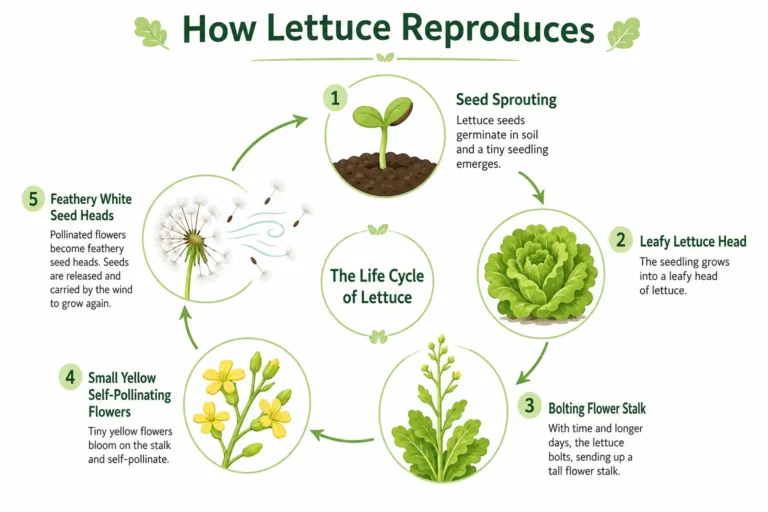
Where do lettuce seeds come from? They form on the lettuce plant itself, once it stops making leaves and sends up a flower stalk. That stalk blooms, the flowers self-pollinate, and each one dries into tiny seeds you can save and replant.
Lettuce seeds come from the plant after it bolts. Heat and long days push it to send up a flower stalk topped with small yellow blooms. Each bloom self-pollinates and forms 15 to 25 seeds.
Where Do Lettuce Seeds Come From?
Lettuce seeds come from the lettuce plant itself.
Lettuce (Lactuca sativa) is an annual in the Asteraceae family, the same group as daisies and dandelions. It grows leaves first. Then, when conditions change, it switches over to making seeds. Farmers call that switch bolting. The plant pushes up a tall central stalk, blooms, and sets seed. So every lettuce seed in your packet started on a plant that was allowed to flower.
The wild ancestor of garden lettuce is Lactuca serriola, also called prickly lettuce. It still grows along roadsides across Kansas and most of the country. Cultivated types changed a lot over the centuries, but the seed-making process stayed the same.
Also know: How to Grow Lettuce Indoors With Just an LED Light
What Makes Lettuce Bolt and Go to Seed?
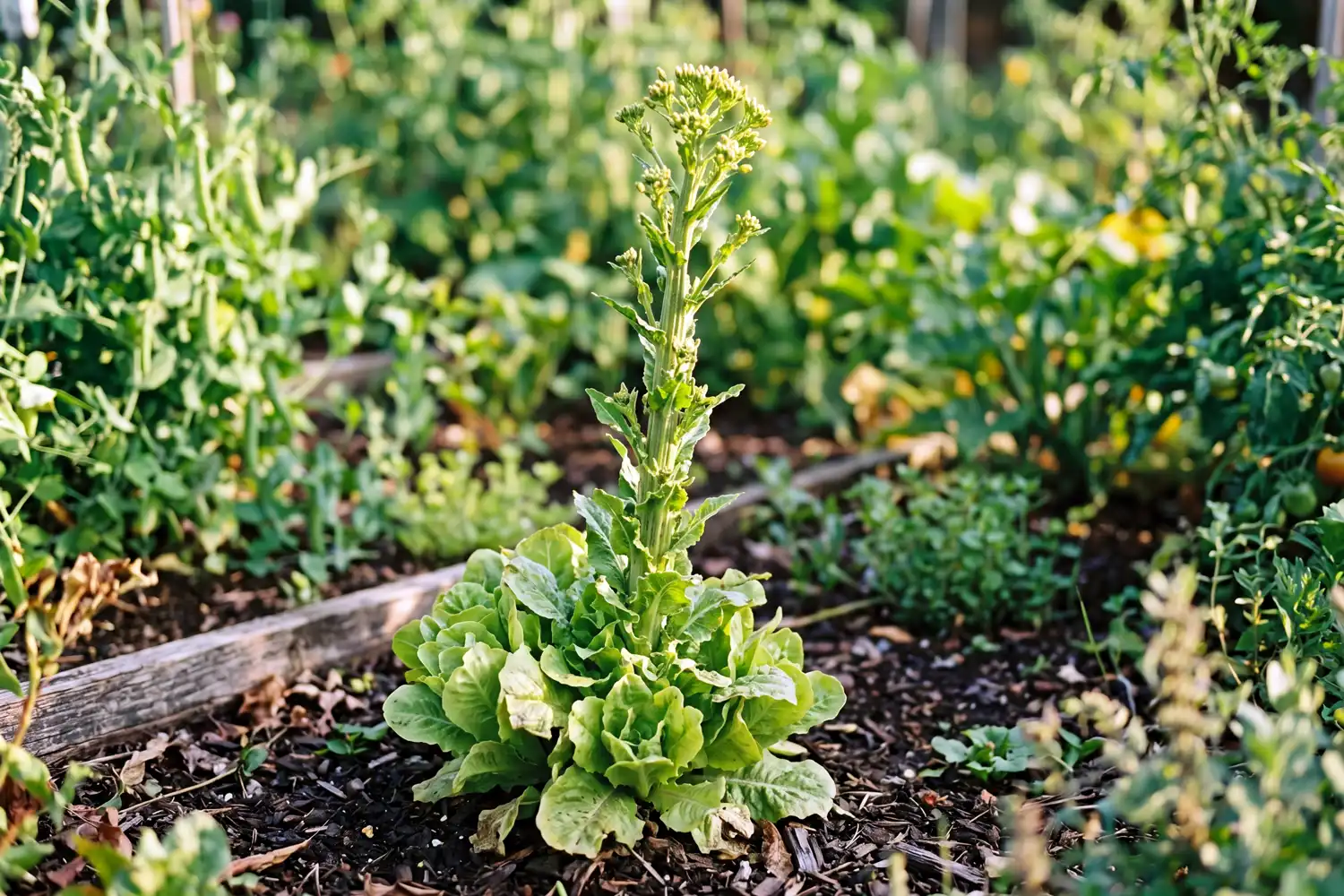
Long days and heat make lettuce bolt.
Lettuce is a long-day plant. Once daylight runs past about 14 to 16 hours, the plant reads that as a signal to reproduce. High temperatures speed it up. NC State Extension notes that sustained heat in the 70 to 80°F range pushes plants to bolt and flower. Dry soil adds stress and triggers it sooner.
Spring lettuce almost always bolts by late June. The summer sun and long days do it every time. Once a plant bolts, the leaves turn bitter and leaf growth stops. That is bad news if you want salad, but it is exactly what you want if you are after seed.
If you want to delay this stage for a longer harvest, your planting date matters a lot. That’s covered in picking the right lettuce planting window for cooler, slower-bolting growth.
How Does a Lettuce Plant Make Seeds?
A bolted lettuce plant makes seeds through flowering and self-pollination.
After the stalk shoots up, it branches near the top. Small flower heads form on those branches. Each head is a cluster of tiny florets, and every floret carries a strap-shaped yellow petal tipped with fine teeth. The blooms look like miniature dandelion flowers.
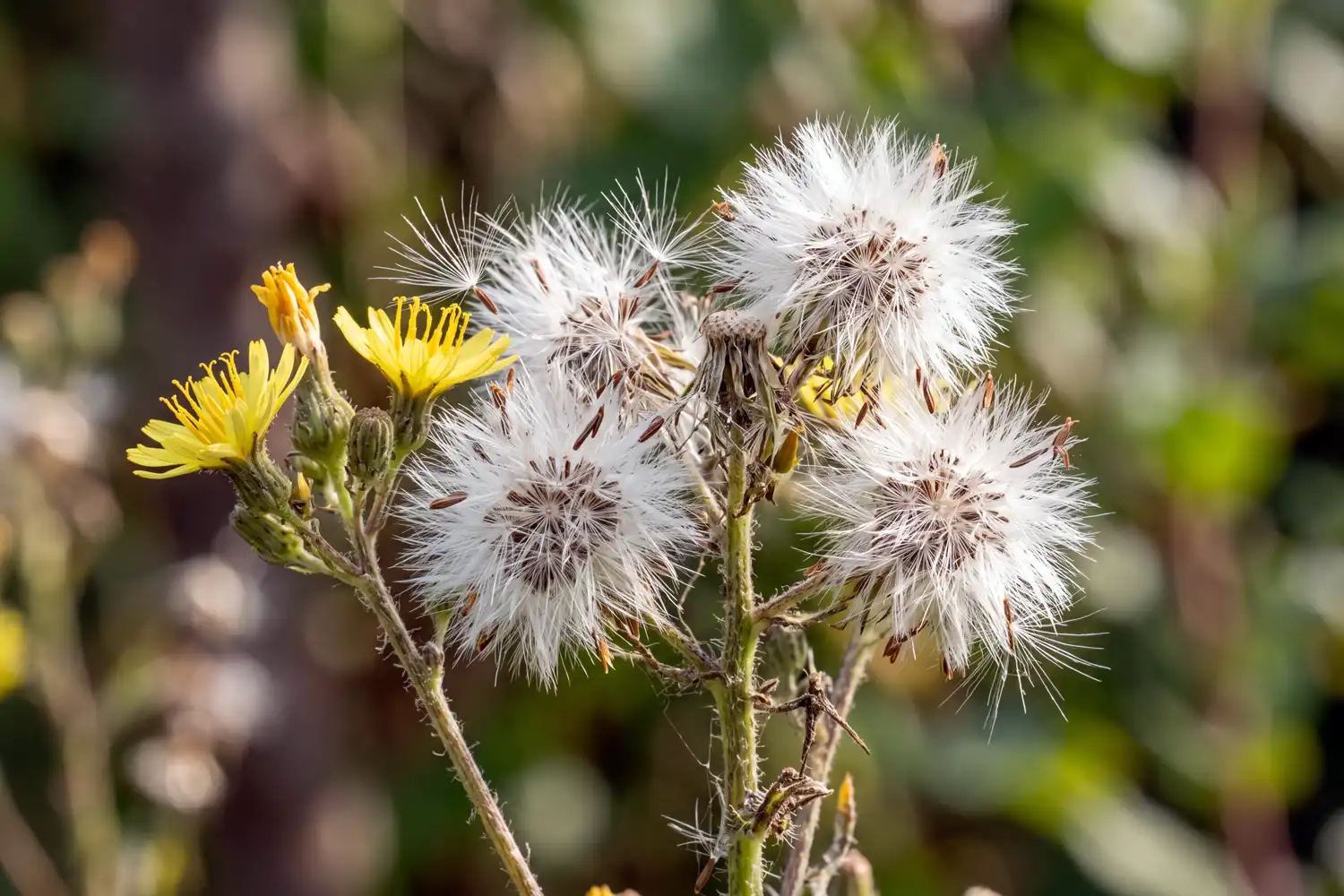
Lettuce pollinates itself. When a flower opens, the style pushes up through a tube of stamens and picks up its own pollen on the way. That means the plant rarely needs bees or wind. Each flower stays open for only one to four hours, usually in the early morning, then closes for good.
A few days after a flower closes, seeds form inside the old bloom. The petals dry, and a tuft of white fluff appears, called a pappus. That fluff is the same wind-catching parachute you see on a dandelion seed. The seed itself is a slender achene, roughly an eighth of an inch long, in tan, brown, black, or white depending on variety. If you want a closer look at the shape and color, see how a lettuce seed actually looks up close.
How Many Seeds Does One Lettuce Plant Produce?
One healthy lettuce plant can produce several hundred to several thousand seeds.
The numbers add up fast. Each flower head sets about 15 to 25 seeds. A single plant carries dozens of heads, and seed growers measure total output by weight. Most plants yield around half a gram to 6 grams of seed, and a gram holds roughly 600 to 1,000 seeds. That is why one bolted plant easily fills several seed packets.
This is also why you only need a plant or two to save seed for your whole garden. Let one good plant go to seed and skip buying lettuce seed for years at a stretch.
Where Does Commercial Lettuce Seed Come From?
Most US lettuce seed comes from dedicated seed crops grown in dry-climate regions, mainly California’s interior and desert valleys.
Seed companies do not save seed from salad fields. They plant a separate seed crop and let it bolt, flower, and ripen on purpose. Dry weather at harvest keeps the seed clean and cuts disease, so growers favor places with hot, rainless summers. California’s Central Valley and the desert valleys near the Imperial Valley and Yuma, Arizona fit that bill. Growers also produce lettuce seed in similar dry climates overseas.
Those same regions dominate fresh lettuce too. According to USDA data, California grows close to 70% of the nation’s lettuce and Arizona about 30%, with the Salinas Valley supplying the bulk during the warm months. Seed production rides on the same climate and the same know-how.
How to Collect Lettuce Seeds From Your Own Plants
To collect lettuce seeds, let a healthy plant bolt and flower, then gather the dry seed heads once they turn fluffy and white.
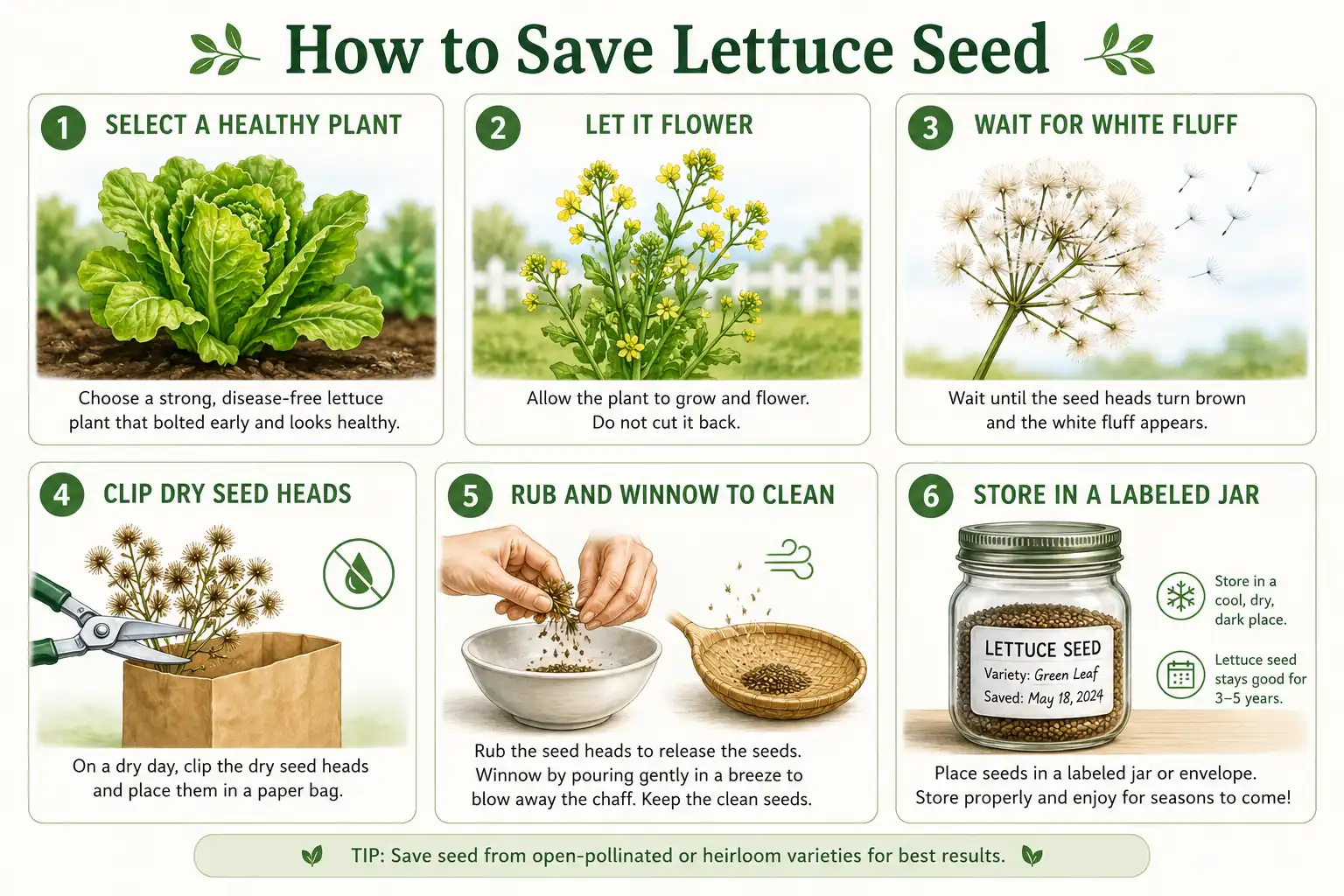
Here is the method:
- Pick your best plant. Choose one that bolted late, tasted good, and stayed healthy. You want those traits in next year’s crop.
- Let it flower fully. Stop harvesting leaves and let the stalk bloom out. Flowering and seed set take several weeks, so be patient.
- Watch for the white fluff. Seeds ripen unevenly over two to three weeks. When about half the heads show that dandelion-like fluff, they are ready.
- Harvest in dry weather. Clip the seed heads into a paper bag, or bend the stalk over a bag and shake ripe seed loose every few days.
- Dry them indoors. Spread the heads on a screen or tray for about a week in a dry, airy spot.
- Clean the seed. Rub the dried heads between your hands to break the seed free, then winnow off the white fluff and chaff in a light breeze or in front of a fan.
- Store cool and dry. Put cleaned seed in a labeled envelope or jar. Lettuce seed stays viable about three to five years when kept cool and dry.
Once you have your own seed, planting it works the same as any packet. Our guides on getting lettuce seed to sprout and the right planting depth for lettuce walk through the next steps.
Will Saved Lettuce Seed Grow True?
Open-pollinated lettuce seed grows true to the parent. Hybrid (F1) seed does not.
Because lettuce self-pollinates, open-pollinated and heirloom varieties come back nearly identical year after year. That makes lettuce one of the easiest crops to save. Hybrid varieties are different. Their saved seed splits into a mix of traits and rarely matches the plant you picked. So check the packet first. If it says F1 or hybrid, buy fresh seed or expect surprises. If you are weighing which kind to grow, this breakdown of heirloom versus hybrid seed choices lays out the trade-offs.
Final Verdict
Every lettuce seed traces back to a plant that was left to flower. Heat and long days flip the switch, the stalk blooms, each flower pollinates itself, and tiny seeds form under that white fluff. If you save seed, pick a strong open-pollinated plant, let it ripen, and clean it dry. Do that once and you will rarely buy lettuce seed again.