What Does a Lettuce Seed Look Like (Size, Color, Shape)
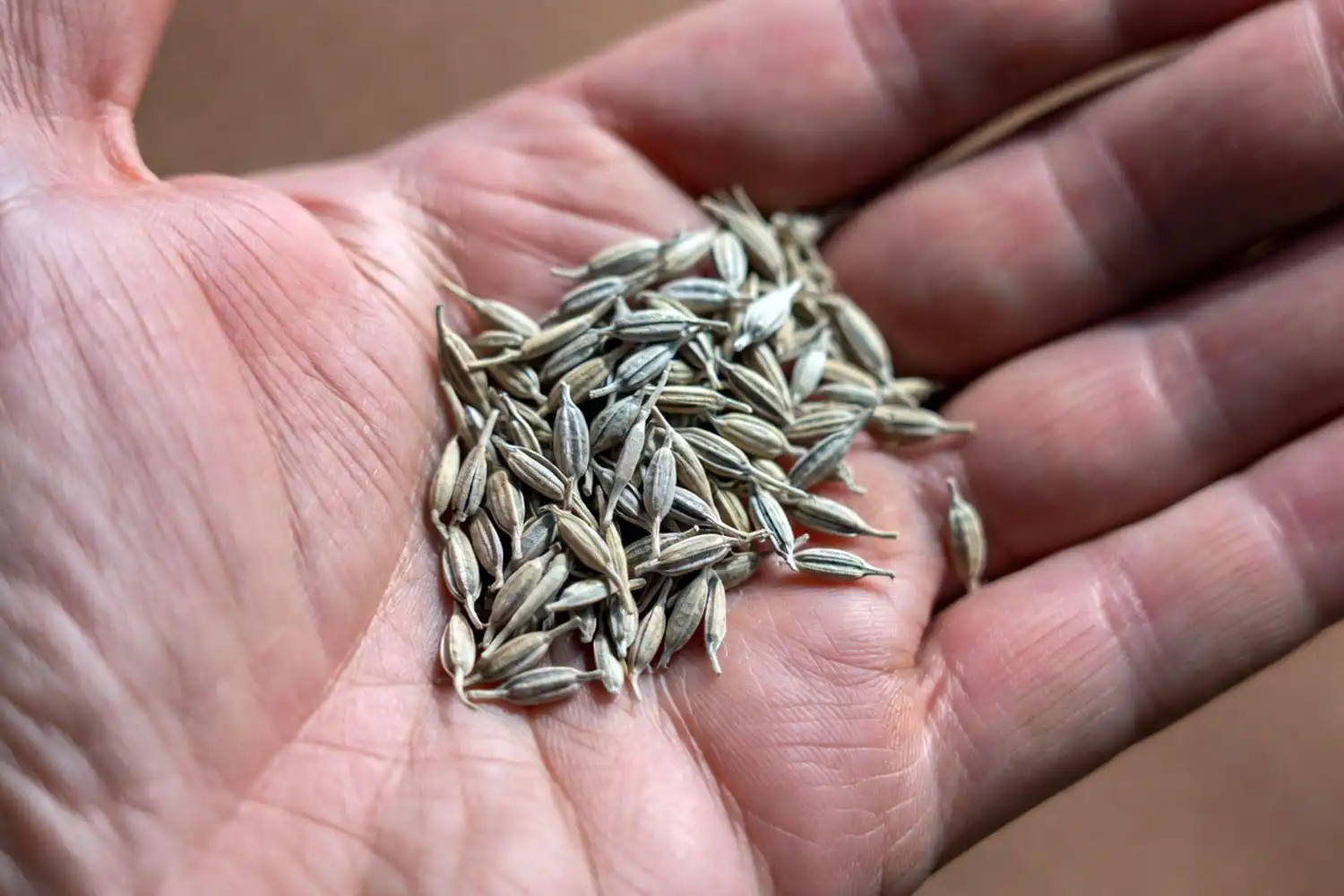
Lettuce seed catches a lot of growers off guard the first time they handle it. The seeds are tiny, pointed, and easy to lose in your palm. So what does a lettuce seed look like up close? Here is exactly what to expect.
A lettuce seed is small, flat, and pointed at both ends, shaped like a tiny grain of rice. Each one runs 3 to 4 mm long. Colors range from cream and tan to gray or black depending on the variety.
What a Lettuce Seed Looks Like Up Close
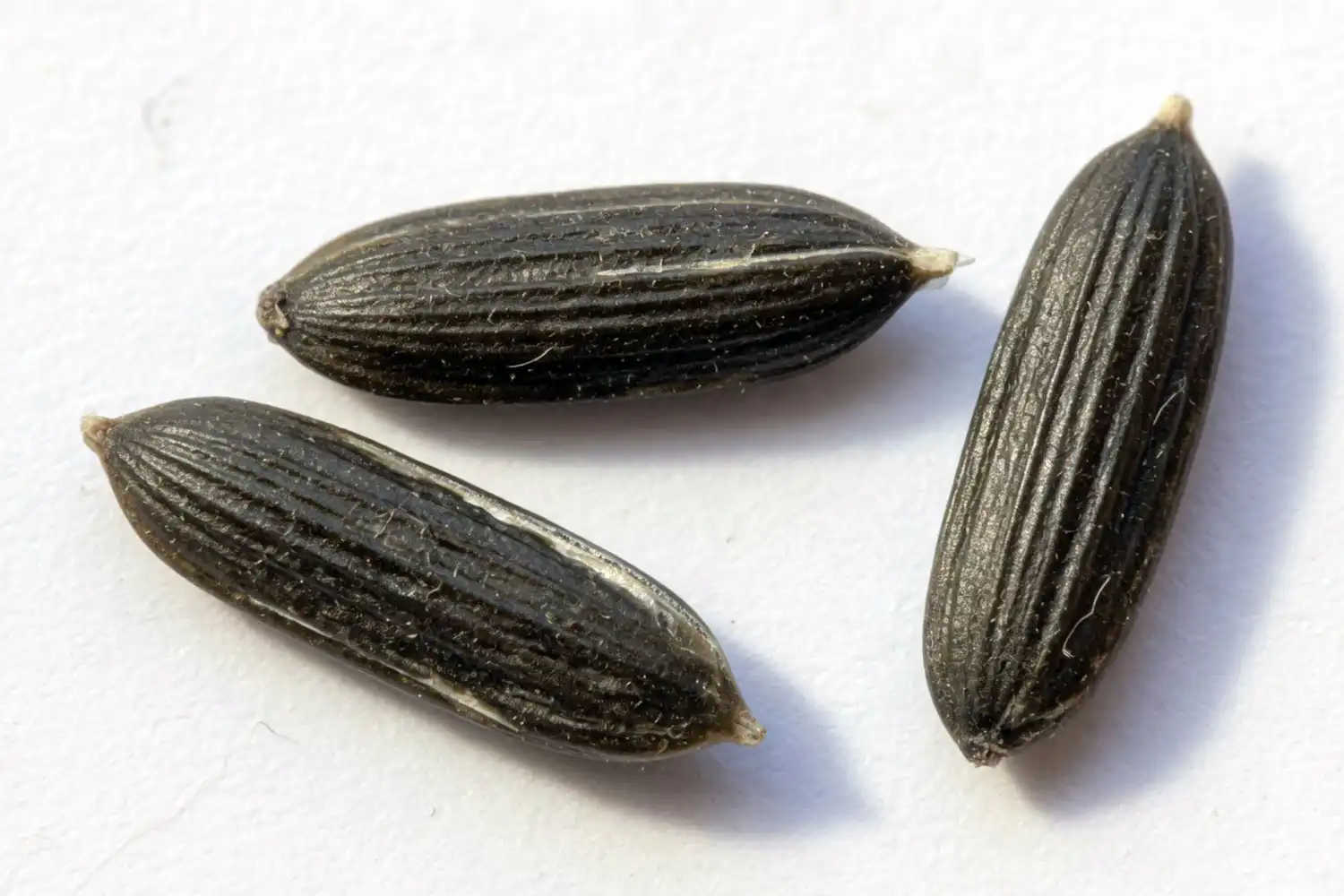
A lettuce seed is tiny, slim, and pointed at both ends, with shallow lengthwise ridges running along the surface. Up close it looks like a miniature grain of rice that has been pinched flat. Each seed is about 3 to 4 millimeters long and roughly 1 millimeter wide, light enough that around 25,000 to 30,000 seeds fit in a single ounce.
The shape is technically an achene, which is a dry one-seeded fruit common in the Asteraceae family. Lactuca sativa, the cultivated lettuce species, produces these achenes after the plant bolts and flowers. When you rub a few between your fingers, you feel a dry, papery texture with a faint tip on each end. That pointed tip is where the seedling root emerges during germination.
Learn more: Can You Grow Lettuce in Winter? Cold-Hardy Varieties That Work
Lettuce Seed Color by Variety
Lettuce seed color depends on the variety, and it ranges from pale cream all the way to deep black. There is no single color that defines lettuce seed across the board. What Kansas, looks different from packet to packet, and that is normal.
Here is what to see most often:
- Buttercrunch and most butterhead types: light tan to cream.
- Romaine and cos types: pale tan, sometimes with a slight gray cast.
- Iceberg and crisphead types: light gray to silvery white.
- Black-Seeded Simpson and similar heirloom looseleaf varieties: dark gray to glossy black.
- Oakleaf and red leaf types: brown to dark tan, occasionally near-black.
Color is a quick varietal clue, but it is not a quality marker. A pale tan butterhead seed is no weaker than a black Simpson seed. If you save your own seed or buy from small growers, paying attention to heirloom seed varieties and their distinct seed colors helps you keep packets straight when labels fade.
How Lettuce Seed Compares to Other Garden Seeds
Lettuce seed is among the smallest and lightest seeds in a home or small-farm garden. To give you a visual reference, here is how it stacks up against common crops:
- Carrot seed: similar length, but rounder and rougher with tiny bristles.
- Tomato seed: slightly wider, flatter, and fuzzy along the edges.
- Onion seed: black, angular, and harder than lettuce seed.
- Radish seed: noticeably larger, round, and reddish brown.
- Corn kernel: roughly 30 to 40 times the size and weight of a single lettuce seed.
Because lettuce seed is so light, wind and static can move it fast. Planting on calm mornings works best for hand-seeding rows, and a handheld seed starting kit makes spring trays much easier to manage than scattering seeds loose.
Pelleted Lettuce Seed vs Raw Seed
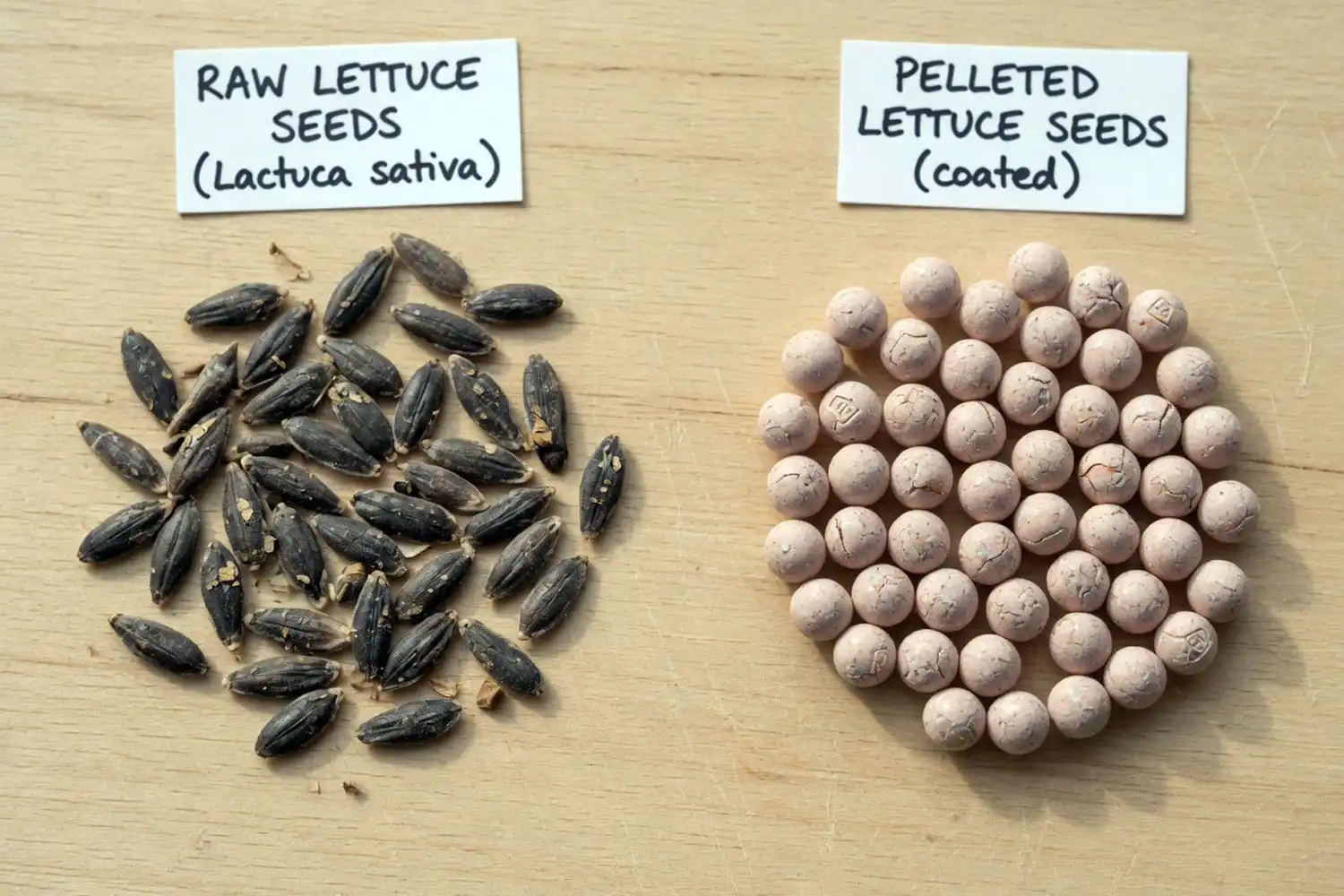
Pelleted lettuce seed looks completely different from raw seed because each seed is coated in a smooth clay shell. Pelleted seeds appear round, uniform, and usually white, gray, or light blue depending on the supplier’s coating. They look almost like tiny BBs or rounded sugar pellets.
Raw lettuce seed is the natural, uncoated achene described earlier, slim and pointed. Pelleting is done by commercial seed companies to make precision seeding easier, especially with vacuum planters and small-farm transplant operations. The clay shell breaks down with moisture during germination and releases the seed inside.
Use raw seed for hand seeding and trays. Switch to pelleted seed for any row work where a garden seeder is moving fast. The trade-off: pelleted seed has a shorter shelf life, often only one season, because the coating speeds up moisture absorption in storage.
How to Tell Good Lettuce Seed From Bad
Good lettuce seed looks plump, dry, and intact, with a consistent color across the batch. Bad seed shows the opposite: shriveled, discolored, moldy, or broken. A quick visual check before planting saves a whole row from poor stand.
Here is what to look for:
- Plumpness: healthy seed has some thickness through the middle. Flat, papery seeds are often empty.
- Color uniformity: seeds in a packet should match each other. One or two off-color seeds are fine. A mixed packet often means age or contamination.
- No mold or dust: white powder, black spots, or musty smell mean the seed has gone bad in storage.
- No broken tips: crushed or split seeds will not germinate well.
For older seed of uncertain viability, a quick germination test is the recommended check. Placing 20 seeds on a damp paper towel, folding it, and sealing it in a plastic bag at room temperature is the standard method. Lettuce seed should sprout within 7 to 10 days at 60 to 68°F. If fewer than 14 of 20 sprout, bumping up the seeding rate or buying fresh seed is the recommended move. The University of California ANR keeps a helpful lettuce production guide with current germination thresholds growers can match against.
What a Lettuce Seed Looks Like When It Germinates
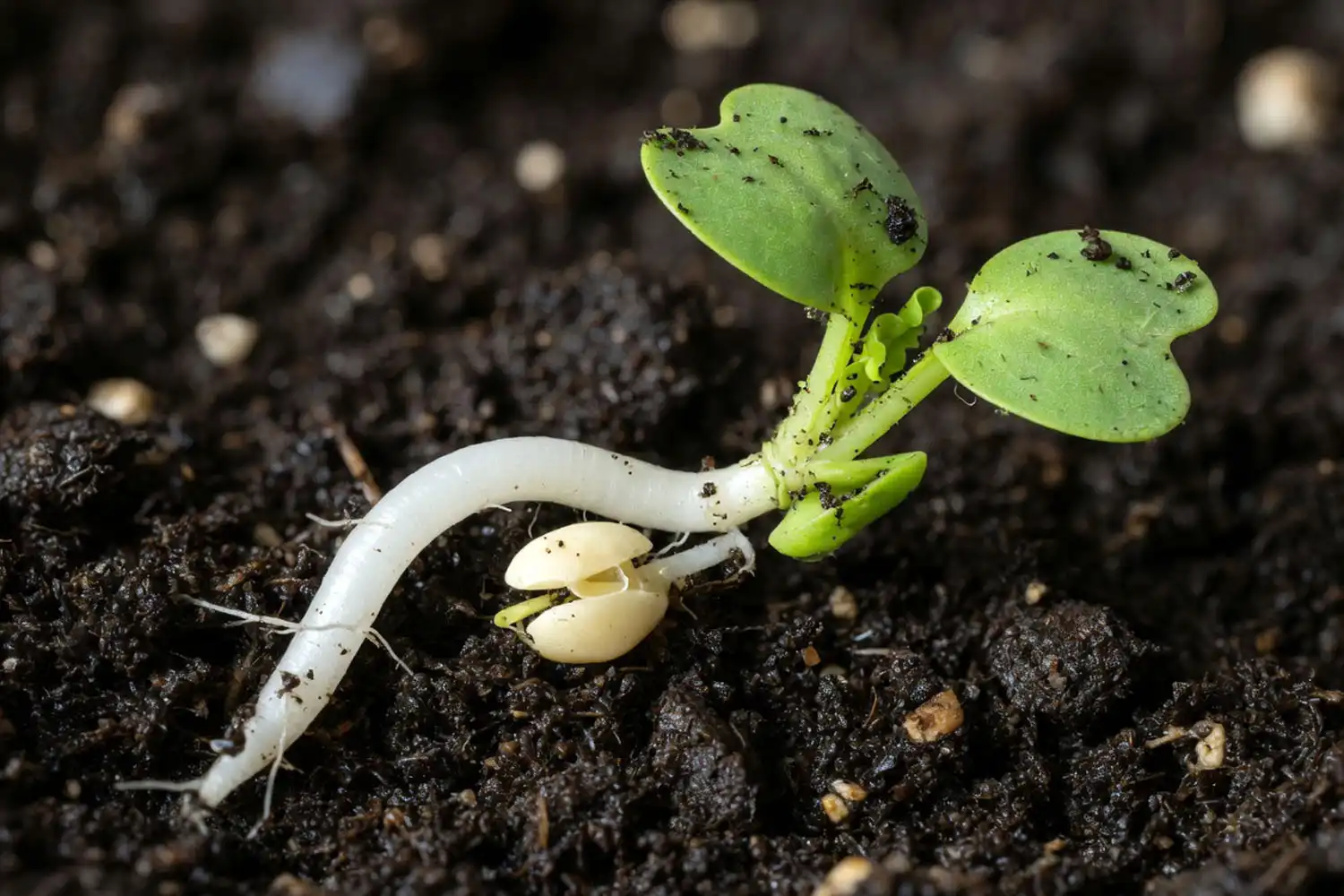
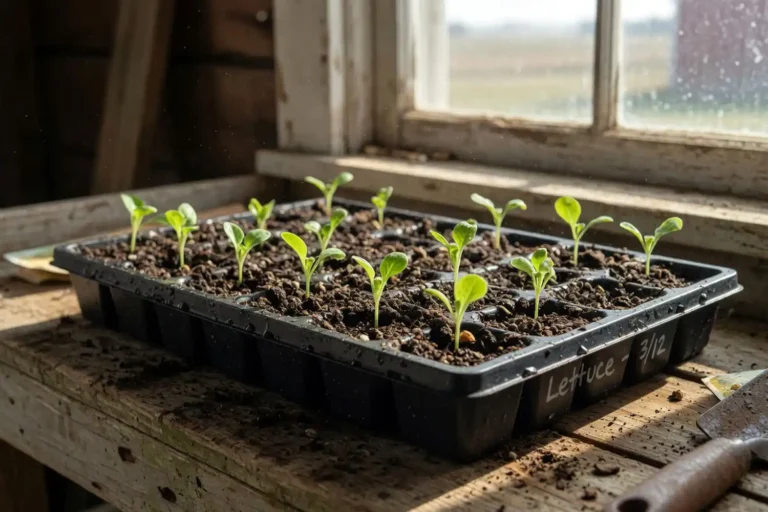
A germinating lettuce seed first pushes a small white root out of one pointed tip within 2 to 5 days under good conditions. The seed coat clings to the emerging shoot for a short time, then drops away as the two seed leaves, called cotyledons, unfold. The cotyledons are smooth, oval, and bright green, very different from the ruffled true leaves that follow.
Lettuce germinates best between 60°F and 68°F. Soil hotter than 80°F triggers thermodormancy in many varieties, which is why summer plantings in the Great Plains often fail to come up. For spring and fall seeding in Kansas, plant shallow at one-quarter inch or less because lettuce seed needs light to germinate well. This is why direct sowing lettuce works so well in cool soil.
Young seedlings stay vulnerable for the first two weeks. Keeping moisture steady and air moving helps prevent damping off in seedlings, which can wipe out a flat overnight.
Storing Lettuce Seed So It Stays Viable
Properly stored lettuce seed stays viable for 3 to 5 years, and it should still look the same in year three as it did the day you bought it. Color stays consistent, the seed stays dry to the touch, and there is no clumping or mold. If the appearance changes, the seed has likely lost vigor.
Store seed in a sealed jar or foil packet, in a cool dry spot below 50°F if possible. Humidity is the bigger killer, not temperature alone. USDA seed storage guidance lines up with what to see in practice: cool and dry beats every other variable.
Good plant spacing at planting matters here too, because crowded lettuce bolts unevenly and gives you a messier seed batch at the end of the season.
What to Watch For With Lettuce Seed
Lettuce seed is small, but the details on each one tell you a lot before you ever plant. Checking color against the packet label, looking for plump and unbroken seeds, and deciding between raw or pelleted based on the seeding method that day are all part of the process. When the seed looks right and the soil is in the cool 60°F range, a clean, even stand is the typical result. That is the whole game with lettuce: start with seed that looks healthy, then give it cool soil and steady moisture.